
There were 3,356 new cases including 559 hospitalizations over the p past 24 hours. This pushes the caseload to 6,147,872.
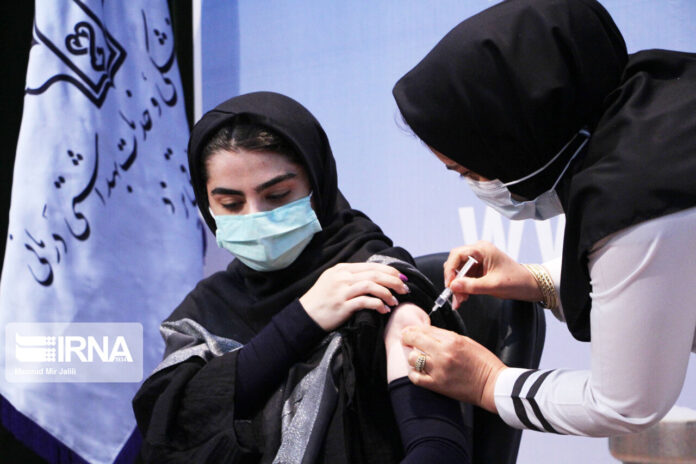
Meanwhile, Iran is pressing ahead with its nationwide vaccination campaign. The total number of doses administered in Iran is now 109,387,244 doses. There has been no change in the number of red zones in terms of risk from Covid-19.
Currently, two cities are marked red, showing they face the highest level of danger from the disease. Meanwhile, 9 cities are orange, 153 yellow, and 284 blue. Blue cities and towns face the lowest level of risk. The number of blue cities has jumped in recent weeks.
Authorities have also relaxed some Covid-related curbs. But they have at the same time demanded people be on the safe side, saying attending meetings and reopening schools amid the cold season, if left unchecked, can shoot up Covid cases
Iran Covid: Number of vaccine doses nearing 110 million mark, 87 new deaths
Iran-P4+1 talks restart in Vienna
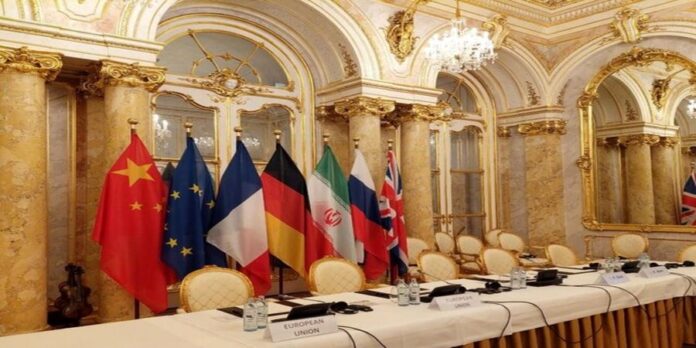
The Iranian negotiators led by Deputy Foreign Minister Ali Bagheri on Thursday morning held one-on-one talks with the EU’s Deputy Foreign Policy Chief Enrique Mora and a three-way meeting with the Russian and Chinese delegations.
On his twitter account Bagheri Kani referred to his talks with Mora and the Chinese and Russia delegations, saying Iran will continue to engage seriously with the P4+1 – Russia, China, Britain, France and Germany – and is determined to reach a good deal that secures the Iranian people’s rights and interests.
Iran’s proposals laid out in two draft documents are expected to top the agenda of talks this time around. One of the drafts is about sanctions removal and the other about Iran’s nuclear activities.
Iran’s Sardar Azmoun scores for Zenit St. Petersburg against Chelsea

Zenit’s Magomed Ozdoev’s 94th-minute goal gave Chelsea a damaging 3-3 draw against the Russian team. Timo Werner scored twice and Chelsea thought they had survived a scare in Russia, but Ozdoev scored deep into stoppage time to ensure Juventus finished as group winners thanks to their 1-0 win over Malmo in Turin. Werner gave the visitors the lead inside 90 seconds but two rapid successive goals from Claudinho (39) and Sardar Azmoun (41) gave Zenit a half-time lead.
Chelsea turned the game on its head as Romelu Lukaku leveled (62) before Werner completed the comeback with five minutes remaining. But substitute Ozdoev netted in the 94th minute for an equalizer and Chelsea were made to settle for second place.
Iran to release list of sanctioned US individuals, entities
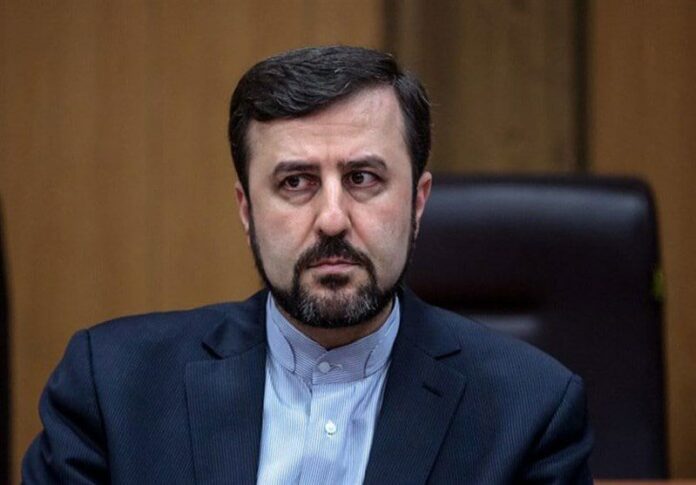
Secretary of Iran’s Human Rights Commission Kazem Ghariabadi made the comment following Washington’s sanctioning of some Iranian real persons and legal entities.
The US banned them citing alleged rights violations.
“Washington’s move is part of its failed maximum-pressure policy against the Iranian nation and amounts to using sanctions as a tool to achieve its political objectives,” said the official.
He said the US has jeopardized the lives of Iranian citizens by blocking their access to medicines and medical equipment; so, it cannot claim to be an advocate of freedom and human rights in Iran.
He underlined the US should be held accountable in the court of public opinion for violence against peaceful protesters and police killings of innocent people.
“By the admission of UN experts and special rapporteurs on human rights, US police brutality against people of color in this country, especially against the black community, represents systematic and institutionalized racism,” he noted.
“Jeorge Floyd was one of countless number of people killed by [US] police in public in the worst manner possible without justice being served,” he explained.
A view of Tehran from Tochal Heights, north of the Iranian capital
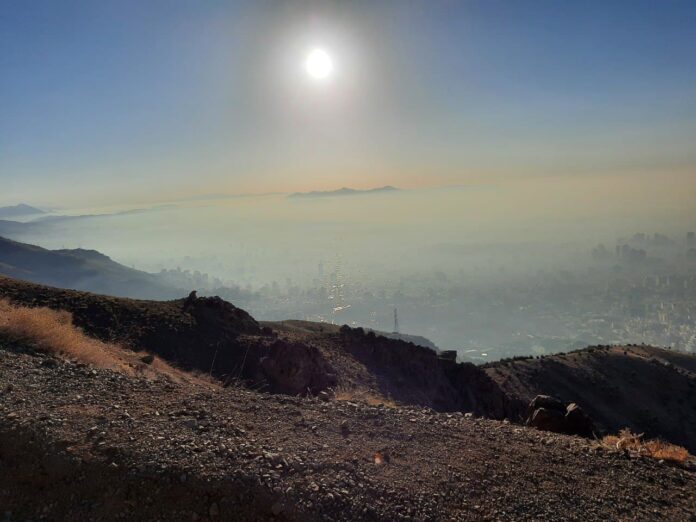
Air pollution exacerbates during cold seasons. In this photo Tehran is seen from a famous nearby resort, while engulfed in heavy pollution.
Israeli government divided over how to influence Biden on Iran
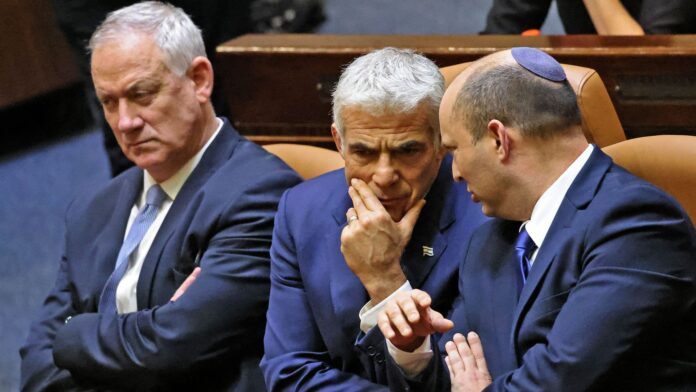
Gantz will visit Washington Thursday as part of a renewed diplomatic push to influence the US position on Iran amid the impasse in the nuclear talks.
Bennett promised President Joe Biden when they met in August that he wouldn’t engage in a Benjamin Netanyahu-style public campaign against a US return to the 2015 nuclear deal.
But only 100 days later, Bennett is doing just that — drifting into a policy of criticizing the US position and publicly opposing any talks with Iran.
Gantz is lobbying for a quieter approach of private engagement with the Biden administration.
Israeli officials say Bennett’s decision to abandon the commitment he gave Biden was influenced by his hawkish foreign policy adviser, Shimrit Meir, who is critical of the Biden administration’s approach.
Although national security adviser Eyal Hulata is the official point person for dialogue with the White House on Iran, Meir is Bennett’s most influential adviser on this issue.
Gantz will land in Washington just as another round of nuclear negotiations begins in Vienna. He’ll meet Thursday with Secretary of Defense Lloyd Austin and Secretary of State Antony Blinken.
Ahead of the trip, Gantz met the new US Ambassador to Israel, Tom Nides.
The director of the Mossad intelligence agency, David Barnea, is also in Washington this week for talks with CIA Director Bill Burns and National Security Adviser Jake Sullivan, according to Israeli officials.
Gantz is expected to stress that the US must convince the Iranians they face a credible US military threat — through additional diplomatic pressure and a projection of power in the region — in order to get Iran to return to the 2015 agreement, Israeli officials say.
While the Israeli government opposes a restoration of the 2015 deal, Gantz and many in the Israeli security establishment believe the current limbo is actually far more dangerous.
Israeli defense officials say Gantz thinks the stalemate in the Vienna talks gives Israel more time to work with the Biden administration on developing a “Plan B”.
Gantz is also expected to raise the delay in congressional approval for $1 billion in aid to replenish Israel’s Iron Dome anti-rocket system. Sen. Rand Paul (R-Ky.) is holding up a vote in the Senate.
The Israeli government is content with the deadlock in Vienna so long as it leads to more sanctions on Iran rather than an alternative approach that’s more favorable to Tehran.
One such option, Israeli officials say, is an interim deal in which the Iranians get wide-ranging sanctions relief in return for suspending their 60% uranium enrichment.
The US floated this idea with the Israelis several weeks ago, but Iran has said it wouldn’t agree to such an interim deal. The Israelis also oppose any interim deal.
Yemeni official says defining moment of Ma’rib battle close

Muhammed al-Bukhaiti told Lebanon’s al-Mayadeen news network on Wednesday that “the defining hours are close in Ma’rib.”
Al-Bukhaiti noted that the Yemeni forces are under popular pressure to liberate the province from the Saudi-backed militants.
Earlier on Wednesday, field sources told al-Mayadeen that the Yemeni army and allied fighters from Popular Committees took control of al-Balaq al-Sharqiyah mountain range, which is located near Ma’rib City.
According to the sources, al-Balaq al-Sharqiyah is “the last height to defend Ma’rib City from the southeastern side.”
Noting that many Saudi-backed militants have fled the battle fronts, the sources noted “it is only a matter of days until the Yemeni army and Popular Committees will fully liberate Ma’rib City.”
Elsewhere in his remarks, al-Bukhaiti stated that the defeat of the Saudi-backed forces in Ma’rib “means their defeat on the remaining fronts,” describing the imminent liberation of the province as “the worst scenario” for the Saudi-led coalition waging war on Yemen.
According to the official, the liberation of Ma’rib province would pave the way for an end to the siege imposed on Yemen, noting that the member countries of the Saudi-led coalition can no longer impose their blockade on Yemen and launch attacks on the impoverished country from a safe location.
Ma’rib, which is located right in the middle of a whole host of other Yemeni provinces, has turned into a focus of the Yemeni army’s liberation operations since last year.
The province’s recapture, towards which many advancements have been made so far, is expected to pave the way for further military victories for Yemen’s armed forces.
Saudi Arabia, backed by the US and its regional allies, launched the war on Yemen in March 2015, with the goal of bringing the government of Yemen’s former president Abd Rabbuh Mansur Hadi back to power and crushing the Ansarullah movement.
The war has left hundreds of thousands of Yemenis dead, and displaced millions more. It has also destroyed Yemen’s infrastructure and spread famine and infectious diseases there.
Despite Saudi Arabia’s heavily-armed and continued bombardment of the impoverished country, Yemeni armed forces and the Popular Committees have grown steadily in strength against the Saudi-led invaders and left Riyadh and its allies bogged down in the country.
Yemen’s Houthi Ansarullah resistance movement has also praised the army’s increasing gains in the campaign of defense against the Saudi-led coalition of invaders, stating Riyadh and its allies are left with no choice but to admit their failure and end the war.
In a tweet on Wednesday night, the movement’s spokesman Mohammed Abdul-Salam wrote that the capabilities of the Yemeni armed forces, their air defense units in particular, are constantly evolving in the face of the Saudi-led aggression.
He hailed the recent downing of a US-made ScanEagle spy drone and a Chinese-made CH-4 combat drone as evidence confirming the progress of Yemen’s air defense units.
“The enemy needs to realize that it has no choice but to take the initiative to announce a halt to the aggression and lift the siege,” Abdul-Salam added.
The Yemeni armed forces regularly target positions inside Saudi Arabia in retaliation for the bloody war.
WSJ: US moves to tighten Iran sanctions enforcement
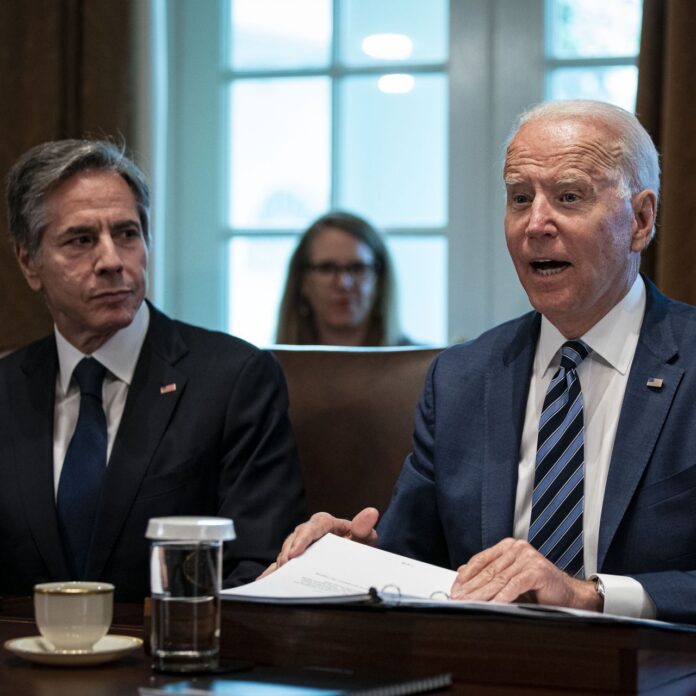
According to senior State and Treasury Department officials, the US will send a top-level delegation, including the head of Treasury’s Office of Foreign Assets Control, Andrea Gacki, next week to the United Arab Emirates.
The UAE is a top US ally but also Iran’s second-largest trade partner and a conduit for Tehran’s trade and financial transactions with other countries.
The US officials will meet with petrochemicals companies and other private firms and banks in the UAE doing billions of dollars of trade with Iran. They will warn that Washington has “visibility on transactions that are not compliant with sanctions“, one of the senior officials stated, adding, ”Those banks and firms face extreme risk if this continues.”
The visit could be followed by sanctions against Emirati and other firms, the officials noted.
The US move comes as the prospects of restoring the 2015 nuclear deal appear increasingly gloomy. Negotiations to revive the agreement continue in Vienna on Thursday among Iran, Russia, China, Britain, France and Germany, although the US delegation will only travel to Vienna at the weekend. Iran refuses to negotiate directly with the US.
US officials say if there is no progress in the nuclear talks, the delegation to the UAE could be the first of several visits to other countries to tighten the economic pressure on Iran by squeezing its ability to evade the US sanctions imposed by the Donald Trump administration.
That could include efforts to tighten sanctions compliance by firms in Malaysia, Turkey and China, Iran’s leading trade partner.
Washington is also working closely with financial firms in Japan and South Korea to track illicit Iranian trade, the officials continued.
Biden set restoring the nuclear deal as a top foreign policy goal, with US officials making clear they would dismantle many of the US sanctions reimposed on Iran when Trump took the US out of the deal in May 2018.
US officials have coordinated the delegation’s visit next week with the UAE government, which Washington has consulted closely with on Iran policy. The UAE is also in discussions with Tehran on regional tensions and the Emirates’ top security official was in Iran earlier this week for talks.
The decision to start ratcheting up enforcement pressure in the UAE partly reflects the role Emirati companies play in Iran trade and is partly aimed at averting a clash with China, Iran’s top trade partner and oil importer.
Western officials want to work with Beijing at the talks to press Iran to compromise and, for now, are using diplomatic efforts to persuade China to stem Iranian oil imports.
Iranian customs officials have said that during the calendar year that ended in March, the UAE was the second-biggest non-oil exporter to Iran, at $9.6 billion, and the third-largest non-oil importer of Iranian goods, purchasing goods worth $4.6 billion.
US officials say Emirati firms have played a major role as a conduit for financial transactions, oil sales and other commerce that Iran is conducting with other countries, including China.
The UAE is a major transshipment hub in the region.
Emirati firms make up “a very important portion of Iran’s continued commerce flows”, senior US officials believe.
After a five-month hiatus, diplomats have resumed negotiations on reviving the nuclear deal, which the United States abandoned in 2018 and reimposed harsh economic sanctions.
Iran has tabled two draft documents in the highly fraught nuclear negotiations in Vienna demanding all sanctions imposed by Washington be removed.
Iran’s top negotiator and Deputy Foreign Minister Ali Bagheri has noted the ball is in the court of the United States over nuclear dispute, and Washington must remove the anti-Tehran sanctions. Iran’s Foreign Minister Hossein Amir Abdollahian has also reiterated that there is no way to revive the landmark agreement without removing all anti-Tehran sanctions.
Putin says expects President Raisi to visit Russia early 2022
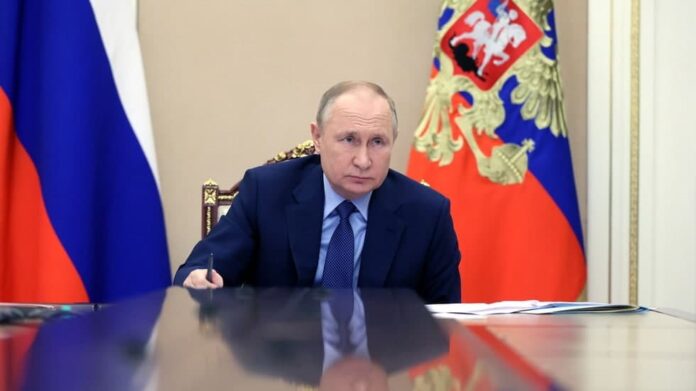
“I hope that my invitation will be accepted by the Iranian president and that he will be able to visit Russia early next year,” Putin told a press conference on Wednesday.
Russia will give Iran details of how the dialogue with the US side on the Joint Comprehension Plan of Action on the Iranian nuclear program is going on, he said.
“We’ll continue discussing this subject during the possible visit by the Iranian president to Russia early next year,” Putin added.
Iran, China deputy foreign ministers discuss Vienna talks
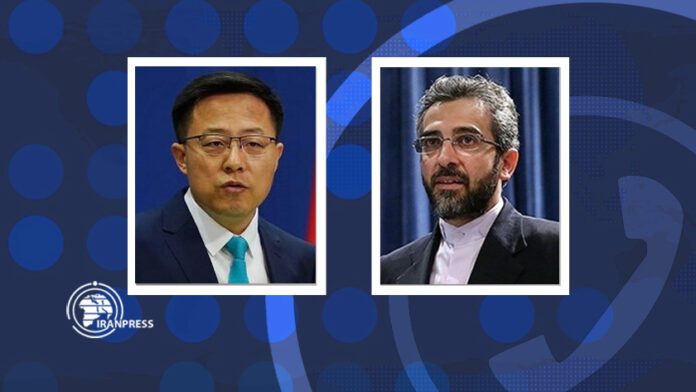
China’s Vice Minister of Foreign Affairs Ma Zhaoxu made the comment during a phone call with the Iranian Deputy Foreign Minister and chief negotiator Ali Bagheri Kani on Wednesday.
The Chinese diplomat also called for continued consultations and coordination with Tehran in connection with the Vienna talks.
Iran and the remaining signatories to the 2015 nuclear deal – Russia, China, Britain, France and Germany – are scheduled to resume their discussions on how to move forward talks aimed at lifting anti-Tehran sanctions, in Vienna on Thursday. It comes after a days-long break the European signatories sought to discuss the proposals, tabled by Iran, with their capitals.
During the phone call, Bagheri also touched on the proposals that concern the removal of the unilateral US sanctions and Iran’s nuclear activities.
Bagheri reiterated that the Islamic Republic’s proposals are “well-founded and fully documented”.
He stressed that the clearest step by the other parties, in response to the constructive measure by Iran, is offering their own viewpoints in a well-founded and fully documented fashion.
The top Iranian negotiator also underlined the “the priority of removal of illegal US sanctions.
