Friday, December 26, 2025
Home Blog Page 2258

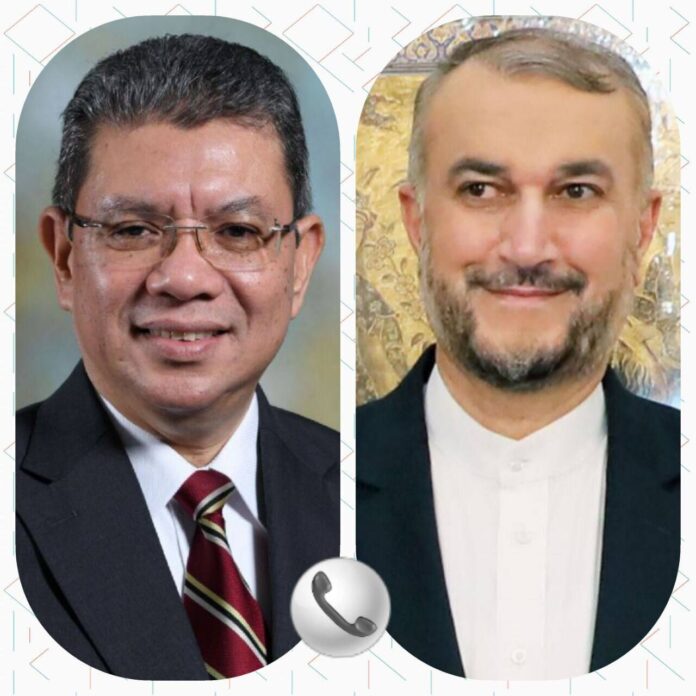
Iran, Malaysia FMs discuss bilateral ties, regional issues

During a phone conversation which was described ‘friendly’ by Iran’s Ministry of Foreign Affairs, Amirabdollahian conveyed President Ebrahim Raisi greetings and invitation to visit Iran to the King of Malaysia.

He also congratulated Malaysia on membership in Human Rights Council (HRC) and expressed hope that Malaysia would help promote human rights and address double standards regarding human rights.

Amirabdollahian clarified on the foreign policy of the new administration in Iran that takes priority over Asian countries.

The foreign minister said that Iran was ready to expand ties with Malaysia in all areas, including tourism, agriculture, technology, energy, science and university as well as finalizing the preferential trade agreement between the two countries.

Amirabdollahian added that the signing and implementation of extradition agreements and judicial assistance between Iran and Malaysia was important, highlighting the significance of prisoners swap between the two states.

He also thanked the Malaysian government for their support of Palestinian people.

The Malaysian foreign minister, too, conveyed the warm greetings of senior Malaysian officials to the President of the Islamic Republic of Iran and highlighted the warm, friendly ties between the two countries.

He said that all the existing capacities were prepared to further expand Iran-Malaysia ties in all areas, including agriculture, tourism, technology, and scientific and academic cooperation.

Abdullah added that Malaysia was aware of the difficulties caused by the sanctions imposed against Iran, adding that nuclear technology was Iran’s rights and he hoped that the talks to be held next week in Vienna to remove sanctions against Iran would be successful.
Baku hails Sochi trilateral meeting as ‘positive’

Russian President Vladimir Putin, Armenia’s Prime Minister Nikol Pashinyan and Azerbaijan’s President Ilham Aliyev sat down for talks in the Russian city of Sochi on November 26.

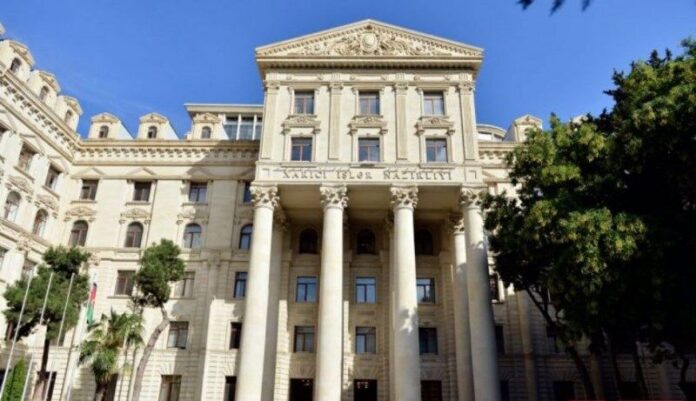
Referring to the signing of a tripartite statement during the meeting on Friday, the Azeri Foreign Ministry said the document fully reflects the position of the Republic of Azerbaijan.

The statement stresses the need to accelerate the implementation of regional projects including the opening of rail and road routes.

According to the Azeri Foreign Ministry, in the post-conflict period, Baku has called for the full implementation of the previous trilateral statements, the opening of all communications in the region, the beginning of the demarcation process between the Republic of Azerbaijan and Armenia, and the normalization of bilateral relations based on international law.

During the meeting on Friday, Putin urged the Armenian and Azeri leaders to ease tensions and resolve disputes after last year’s war over Nagorno-Karabakh.

The meeting came after a flare-up in border clashes earlier this month.

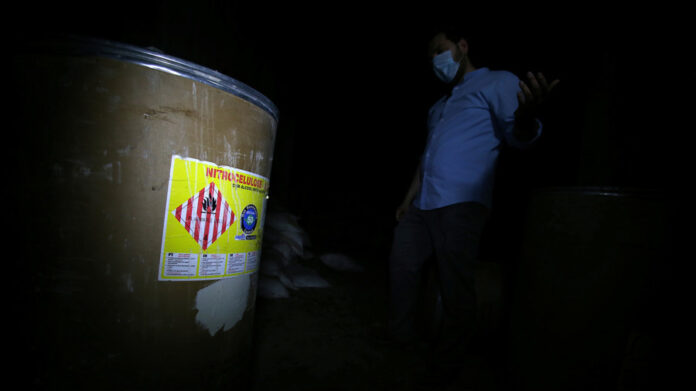
Russia: Militants planning false flag chemical attack in Syria’s Idlib

Militants of the al Nusra Front terrorist group in Idlib have stored containers with toxic substances to organize provocations and accuse Syrian troops of using chemical weapons, Rear Adm. Vadim Kulit, deputy head of the Russian Center for the Reconciliation of Warring Parties in Syria, said.

“The Russian Center for the Reconciliation of Warring Parties received information that militants of the Nusra Front terrorist group (Hayat Tahrir Ash-Sham) have stored containers with toxic substances in an underground shelter near the city of Sarmada, Idlib province,” Kulit noted.

He added that, according to available information, the terrorists intended to organize provocations in order to accuse the Syrian government forces of using chemical weapons against civilians.

The findings mark the latest in a series of similar incidents. Past reports saw members of the terrorist group deliver rockets with toxic agents, as well as plan efforts to stage a chemical attack with the help of the White Helmets.

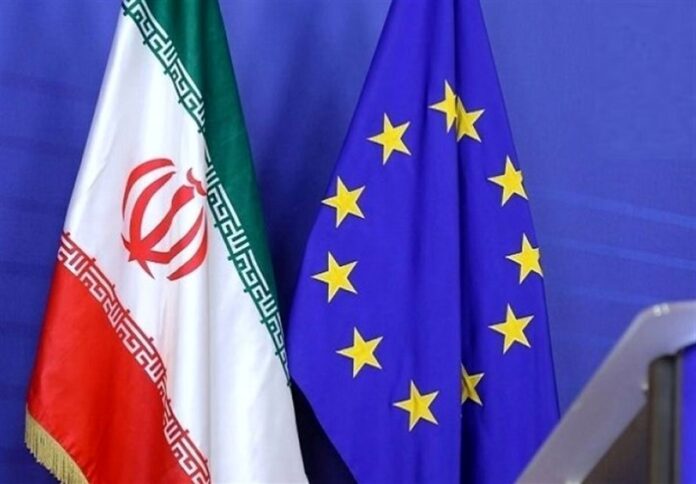
Envoy: Iran seeks normalizing trade ties with Europe

The envoy made the remarks in an interview with Germany’s federal union for economic development and foreign trade (BWA).

“But in the case of absence of the necessary will to use investment opportunities in Iran on the other side, such opportunities will be used by serious business competitors, an issue that greatly weakens Europe’s position in Iran,” the Iranian ambassador stated.

In response to a question about the state of economic relations between Iran and Germany while referring to the positive view of the two countries towards each other and his colleagues’ efforts to promote bilateral relations in various fields, he stressed the high capacity of the two countries to meet mutual needs.

Access to Iran’s large market in various fields, including energy in safe conditions and communication and use of Iran’s young and educated population and the market of 400 million people in Iran and neighboring countries, has provided a unique opportunity for German companies to invest.

Pointing to the developments after JCPOA such as the business trips of various German companies including large, small and medium, he praised investment in Iran which sometimes has historical roots.

This interest can also be seen at the political levels, where the fifth joint economic commission of the two countries was held immediately after the signing of Joint Comprehensive Plan of Action (JCPOA) in 2016, and with the support of various public and private sectors, the volume of exchanges increased to 3.5 billion Euros in 2017.

In this part of the interview, the ambassador referred to the illegal sanctions against Iran and said that the statistics related to the international trade of Iran and other countries, including EU member states, show that following the restrictions caused by the coronavirus crisis the volume of trade between the countries has been decreased.

He continued that some of Iran’s neighbors in the region, as well as some Asian countries, are taking advantage of the opportunity created by Europe’s absence in Iran.

Iran: US in no position to talk about Iran nuclear site

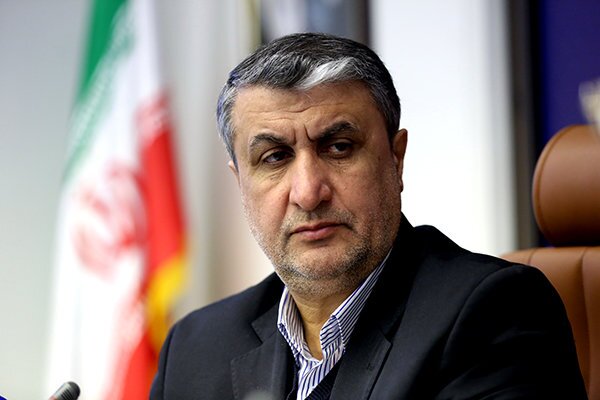
Eslami Iran nuclear chief

Mohammad Eslami was speaking at a ceremony marking the first anniversary of the assassination of Iranian nuclear scientist Mohsen Fakhrizadeh in Tehran. 

He said any comment by the US about the Tessa Complex is unacceptable to the Islamic Republic of Iran. 

Eslami also said the US didn’t fulfill its commitments under the nuclear deal but Iran fully did. 

The director of the AEOI underlined that the upcoming Vienna talks are not about nuclear issues but are about the JCPOA and the adherence of the other side to its obligations under the agreement. 

He said Iran will no longer stick to the deal unilaterally and the other parties must prove their compliance in practice. 

According to Eslami, only after Iran has verified the other sides’ adherence to the JCPOA will it comply with its commitments under the accord. 

He also rejected Western media claims that the visit of the International Atomic Energy Agency’s chief to Iran was not successful. He said Rafael Grossi admitted that there was no diversion in Iran’s nuclear activities and that his talks in Tehran were constructive, though inconclusive. The director of the AEOI added that Iran’s talks with the IAEA are transparent and in line with the safeguards agreement and the Non-Proliferation Treaty. 

He reiterated that Iran is completely serious about its nuclear activities because the atomic program is vital for electricity, industries, agriculture and medicine.

Iran: US must remove sanctions in one go

Saeed Khatibzadeh was reacting to speculations about an offer to lift sanctions on a step-by-step basis.

Khatibzadhe noted that the sanctions removal must also be verifiable, saying the new Iranian government has stated this in a clear manner.

Khatibzadeh also noted that Iran’s focus in the Vienna talks will be on removing the oppressive sanctions and that Tehran is sitting at the negotiating table with a firm resolve to achieve that goal.

He described Iran’s stance as decisive, clear and logical. The Foreign Ministry spokesman said Iran and the 4+1 group of countries pursue one goal and that is the removal of the sanctions reinstated on Tehran by former US president Donald Trump.

Khatibzadeh’s comments came after the New York Times reported the US has offered to unlock part of Iran’s frozen assets and remove some sanctions in exchange for Tehran to suspend some of its nuclear activities.

Iran Covid deaths lowest in 8 months; No pandemic red zone

Since Thursday, Covid has killed 86 people in Iran. That’s according to the Iranian Health Ministry. The deaths push to 129,462 the number of people killed by the Coronavirus since the start of the pandemic in early 2020.

The Health Ministry also said there were 4,384 new cases including 720 hospitalizations. Since the start of the pandemic, 6,102,056 people have contracted Covid in Iran. The majority of them, that is, 5,841,870 people recovered from the disease.

The high rate of vaccination in Iran has been credited for the downward trend. The number of total doses administered so far has reached 104,284,578. The number of first doses is 57,248,013. Meanwhile, 46,115,125 people have received the second dose. The number of the third doses, also known as the booster shot, administered is 921,440.

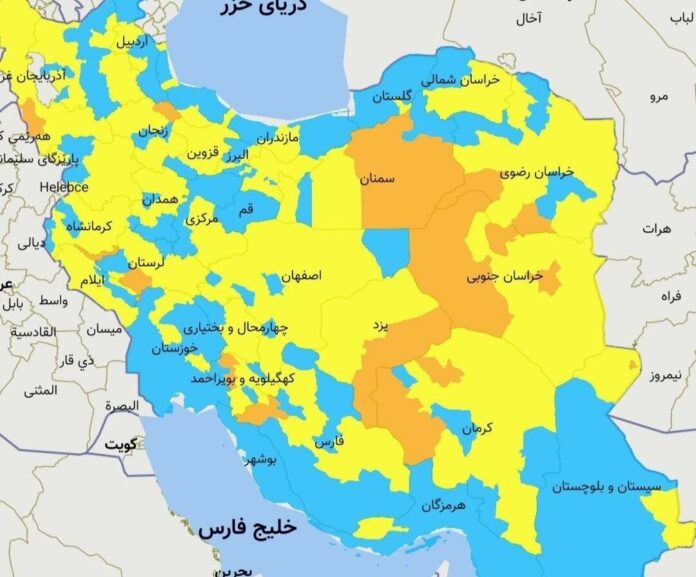
Other good news about Covid is that for the first time in 289 days, there no red cities in the country. Red zones are areas where the risk from the pandemic is highest. Currently, 22 cities are orange, 207 yellow and 219 blue, with the latter indicating the lowest risk from the disease.

Iran FM: Reaching good agreement in Vienna talks possible

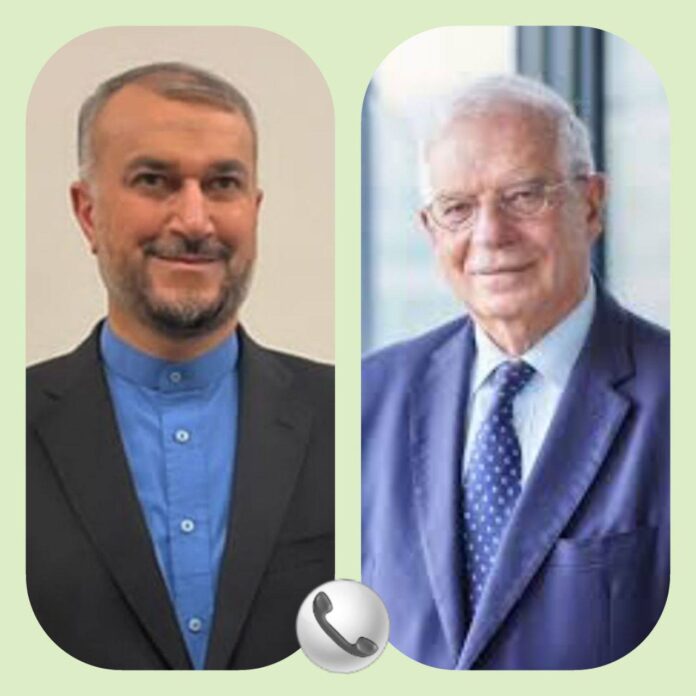
Hossein Amir Abdollahian made the remarks in a Friday phone talk with Josep Borrell, the European Union Foreign Policy Chief.

The two sides exchanged views over the upcoming Vienna talks slated for the November’s end.

The Iranian foreign minister said despite the violation of the nuclear deal by the US and the European troika, Iran will attend the Vienna talks in good faith and seeks a good and verifiable agreement.

He added that returning to the JCPOA must in practice mean adherence to all its provisions and content.

The Iranian foreign minister thanked Borrel for his efforts as the coordinator, saying it is clear that six rounds of talks in Vienna failed to produce the final results, so all issues that must be resolved have been taken into consideration by the Iranian negotiating team.

Amir Abdollahian stressed that there must be adequate and serious guarantees that the US, which is not trustworthy, will not quit the JCPOA again.

The Iranian foreign minister referred to the US’s contradictory behavior and their failure to translate their words into action. He said the White House has in two stages imposed sanctions on Iranian individuals and companies in recent weeks while at the same time declaring readiness to return to the JCPOA. Therefore, Amir Abdollahian said, everyone must see serious action and determination in practice to completely remove the sanctions.

The Iranian foreign minister said the West must come to Vienna with a new and constructive approach.

In the phone call, Josep Borrell also referred to his contacts with all sides as the coordinator of the JCPOA’s joint commission. Borrel said intensive and detailed negotiations must be held over pending issues and the sanctions removal and it’s likely that all sides can return to the original form of the JCPOA.

Borrel also spoke of the US obligations, saying sanctions can only be removed through reviving the nuclear deal. He added that this will enable Iran to achieve its rights and the international community to ensure the peaceful nature of Iran’s nuclear program.

Borrel expressed hope at the end that all parties will enter the Vienna talks with a positive and pragmatic approach and with a firm determination for negotiations over disputed issues and the removal of sanctions.

Report: Israel concerned US may strike partial nuclear deal with Iran

While US officials have characterized such a deal as the product of brainstorming, Tel Aviv claimed that a partial deal with Iran would be a gift to the new government of Iranian President Ebrahim Raisi.

Despite the purported brainstorming, no proposals or initiatives have yet been finalized.

“Israel is very concerned that the US is setting the stage for what they call a ‘less for less’ agreement,” an unnamed senior Israeli official told the WSJ.

Such an agreement would be detrimental and would only benefit Iran, the official stated, adding it would be an enormous gift to Tehran.

In May 2018, then-US President Donald Trump unilaterally pulled the US out of the Joint Comprehensive Plan of Action (JCPOA) – also known as the Iran nuclear deal – and re-imposed sanctions that crippled the Iranian economy. Soon after, Tehran also abandoned its commitments under the agreement.

Following the election of a Democratic US president, negotiations to revisit the agreement kicked off in April but stalled in June, when Raisi was elected.

Both nations have since confirmed that talks regarding sanctions and the nuclear deal are scheduled to resume in Vienna on November 29.

Earlier this week, Israeli Prime Minister Naftali Bennett asserted that Iran is at “the most advanced stage of its nuclear program”, but was “much more vulnerable than is commonly thought”. The PM warned that Tel Aviv’s modern-day advances in cyber technologies could be used to achieve its desired result over Tehran.

Iran has accused Israel of conducting a number of attacks against its nuclear program, including the June 2021 drone attack on the Karaj Nuclear Centre for Medicine and Agriculture and the November 2020 assassination of Mohsen Fakhrizadeh, a top Iranian nuclear scientist.

A recent New York Times report detailed that US officials warned Israeli counterparts that attacks targeting Iran’s nuclear program were “ultimately counterproductive”, as it allows Tehran to rebuild a more efficient enrichment system. Israeli officials, however, have “no intention of letting up”, per the report.

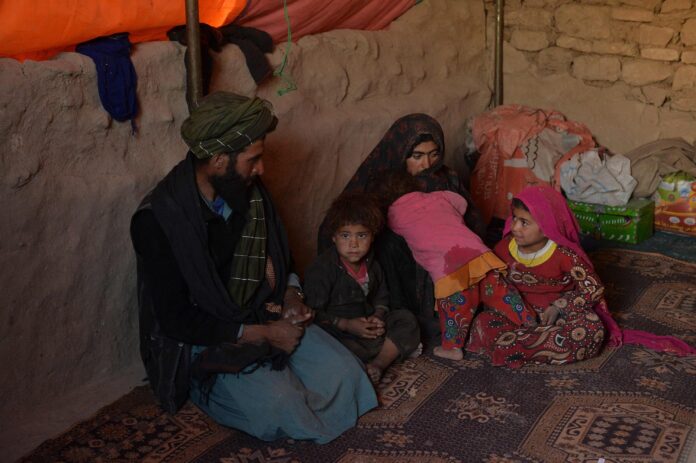
Report: 500k internally displaced in Afghanistan in 2021

The report which has been conducted between 11-21 November 2021, has found that only 667,900 people have been internally displaced between January 1 and November 21.

The report has also identified the number of refugees who have been returned back to Afghanistan during the current year from Pakistan and Iran.

Over 1.146 million undocumented Afghan refugees have been returned from Iran and Pakistan during the year 2021, the majority of whom have returned from Iran.

This comes as, on the other hand, hundreds of thousands of Afghans have also emigrated to Iran, Pakistan, Turkey, India, Europe, England, US, and Canada in the last 100 days, since the Taliban took over Afghanistan by force.

The country went into chaos as talks with expectations to a political settlement failed following flee of Afghan President Mohammad Ashraf Ghani.

Unverified reports suggest that over 95% of Afghan citizens leave under the poverty line since August 15 and the country’s economy has fallen by over 35% since then.

Many western countries launched an emergency humanitarian evacuation program to help certain categories of Afghans in fleeing the country to a safe place.

A number of Afghan women leaders, journalists, rights activists, attorneys, and judges have been evacuated by the western countries.

Still, there are a large number of vulnerable Afghans stuck in Afghanistan who are waiting to receive assistance.

Several women rights activists and journalists have recently spoken to Khaama Press who are in Kabul and Mazar-e-Sharif cities waiting for flights out.