Friday, December 26, 2025
Home Blog Page 2257

ME nations ban African travellers over new virus

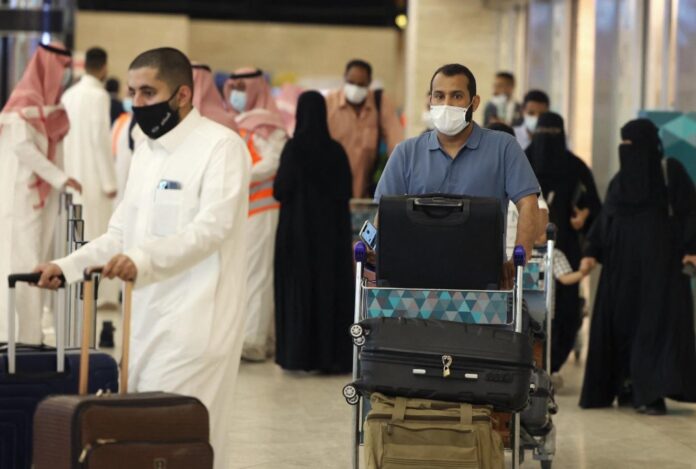
Oman and Qatar on Saturday announced bans on travellers from several African nations after reports of a new Covid-19 variant first detected in southern Africa, following similar measures imposed on Friday by Egypt, Iran, Saudi Arabia, the United Arab Emirates, Bahrain, Morocco, and Jordan.

On Thursday, South African scientists stated they had detected a new B.1.1.529 variant, and said it had at least 10 mutations, compared with two for Delta and three for Beta variants.

The World Health Organization (WHO) declared the recently discovered strain to be a “variant of concern”, renaming it “Omicron”.

The variant has a spike protein that is significantly different to the one in the original coronavirus on which current vaccines are based, the UK Health Security Agency announced, raising fears about how current vaccines will fare.

“As scientists have described, [this is] the most significant variant they’ve encountered to date,” British Transport Secretary Grant Shapps told Sky News.

Qatar Airways said on Saturday it had banned entry to travellers from South Africa, Zimbabwe and Mozambique.

Omani authorities will from Sunday suspend entry to people coming from South Africa, Namibia, Botswana, Zimbabwe, Mozambique, Lesotho, and Eswatini, according to the Oman News Agency.

The Saudi and Emirati lists included all the same countries except Namibia.

In Saudi Arabia, the ban includes flights to and from those countries, according to the Saudi Press Agency. The new guidelines, however, said nationals of the African countries may enter the kingdom if they had spent the previous 14 days in a third country and comply with Saudi health protocols.

The UAE will impose the ban on Monday, according to the official Emirati news agency, WAM. It will include travellers coming from those African countries, regardless of the airline, and will also include transit passengers.

Bahrain announced similar measures targeting six African countries, including South Africa, the official BNA news agency reported. Iran did the same.

The Jordan’s Interior Ministry, acting on recommendations from its Health Ministry, also announced a ban for non-Jordanian travellers coming from South Africa, Botswana, Namibia, Zimbabwe, Mozambique, Lesotho, and Eswatini.

The North African kingdom of Morocco banned travellers from those same countries due to fears over the new coronavirus variant.

Meanwhile, Egypt and Israel, which has detected a case of the new variant, on Friday suspended flights from Botswana, Eswatini, Lesotho, Mozambique, Namibia, South Africa, and Zimbabwe.

Belgium said on Friday it had detected the first announced case of the new variant in Europe in an unvaccinated person returning from Egypt via Turkey.

The European Union has proposed member states stop all flights to and from southern Africa following the variant’s discovery, EU chief Ursula von der Leyen noted on Friday.

The UK has also banned flights from South Africa and neighbouring countries, asking returning travellers to quarantine.

The US will restrict travel from South Africa and seven other African countries starting on Monday in an effort to control the spread of the new omicron variant of COVID-19.
Wife of assassinated nuclear scientist becomes peace envoy

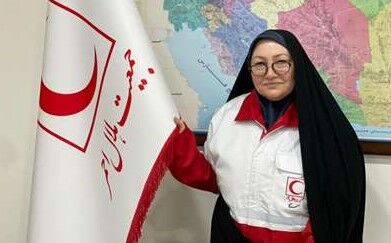
In a meeting with head of the Red Crescent Society of Iran Pir Hossein Kolivand, Karami was also granted voluntary membership of the Red Crescent.

Massoud Alimohammadi was an eminent nuclear scientist and a distinguished professor of elementary particle physics at the University of Tehran.

He was killed by a remote-controlled bomb in January 2010 in Tehran, as he was leaving home for university. 

According to western intelligence agencies, the terror attack was carried out by Israeli agents as part of the regime’s efforts to sabotage Iran’s nuclear program.

“Iran navy to unveil modern maritime equipment soon”

Iran has the highest capability and potential, equipped with the most modern technology in the field of operation, submarines and heavy- and light-destroyers in different classes, Irani stated.

Today, lifting or imposing sanctions in the military field has no value for Iranian people, the Iran’s army navy force commander said.

Speaking in a news conference on the occasion of Iran’s Army navy Day on Saturday, Irani pointed to the salient achievements of navy Force of the country and said that Iran’s navy Force is shining like a gem in the Persian Gulf region.

7th of Azar (Nov. 27) shows the bravery and self-sacrifice of Iranian soldiers and combatants who managed to cut the malicious hands of enemies in a tough condition and unequal war during the eight years of Sacred Defense (Iraqi imposed war against Iran in 1980-1988).

Apart from carrying out its maritime operation from Strait of Hormuz to North Persian Gulf, today, Iran’s navy Force is carrying out very vital and sensitive operations in depth of Indian Ocean and Red Sea and has shown excellent maritime operation in line with bringing about security for while region and the world, he emphasized.

In response to a question on the impacts of sanctions on defense industries, Iran’s top navy commander noted that, benefitted from high potentials and capabilities, sanctions imposed against the country have not had any impact on Iran’s navy force.

He then pointed to the joint Zolfaghar-1400 drill recently held in the country and added that Iran’s navy managed to gain salient achievements in the drill in maritime sector successfully.

Stating that navy Force is an equipment-oriented, scientific-, political-, military- and international force, Irani stressed, “Accordingly, Iran’s navy force will unveil most modern maritime equipment in the very near future in line with meeting the domestic demands and thwarting the future threats against the country.”

The top commander has also unveiled plans to manufacture a new homegrown heavy submarine.

Irani said the navy is designing a new class of heavy submarine, called “Be’sat”, adding the construction of the new submarine will begin soon.

Highlighting the navy’s success in combating threats to Iranian vessels, the commander stressed the security of the trade ships has been provided a hundred percent.

Vowing Iran’s continued strong presence in international waters, the commander noted Iran has maintained its naval equipment updated and seeks to develop new gear and increase the number of vessels.

Dual-nationality Iranians can freely return home: MP

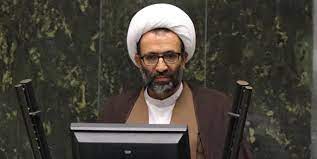
“In fact, there are no impediments to Iranian expats returning to their homeland,” said Aliraza Salimi, the chairman of the parliament’s Iranian Expatriates’ Caucus.

He said only minor red tape might exist, and added any bureaucratic restrictions should be eased.

“The approach of the administration, the foreign ministry, the Judiciary and the eleventh Parliament toward Iranians residing abroad has changed and they follow up on the expats’ affairs with special attention,” said the lawmaker.

“Different organizations and institutions such as the foreign ministry and the Judiciary have taken giant steps toward resolving the problems facing Iranians residing abroad and [facilitating] their making investment in the country,” he added.

He said Iranian expats’ affairs should be taken care of, and their return home should be facilitated.

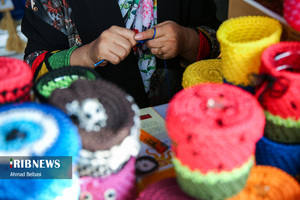
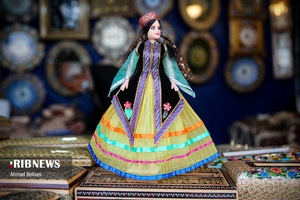
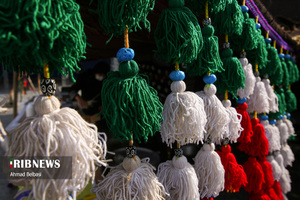
Iran ethnicity festival kicks off in Tehran

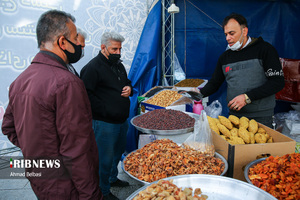
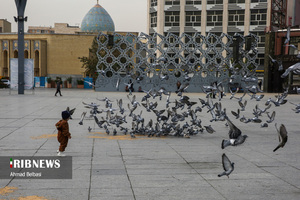
Iran ethnicity festival kicks off in TehranIran ethnicity festival kicks off in TehranIran ethnicity festival kicks off in TehranIran ethnicity festival kicks off in TehranIran ethnicity festival kicks off in TehranThe festival features local clothing, handicrafts and food from different parts of Iran and will run through November 28.
Putin calls meeting with Aliyev and Pashinyan “useful”

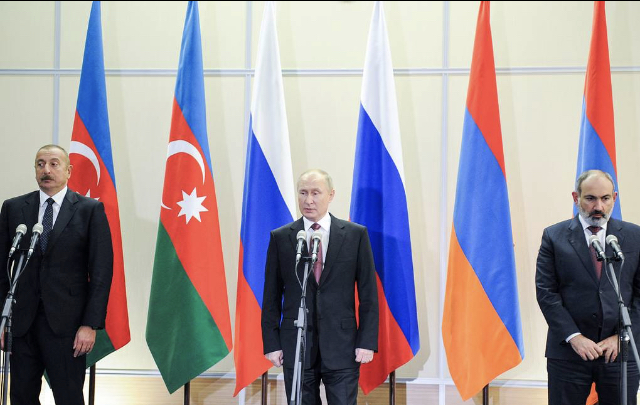
“I would like to stress that the meeting was utterly useful and timely,” he said after the trilateral talks in Sochi.

“I have a present for the Armenian and Azerbaijani friends – this is an olive branch, which symbolizes peace and prosperity. I hope very much that today’s agreements will be observed and will create conditions for further steps towards the normalization of relations in the South Caucasus,” he stated.

According to the Russian president, the three leaders issued a joint statement on the results of their joint work in Sochi.

“It tells in detail about what we did and what we agreed,” he added.

Putin, Aliyev and Pashinyan stressed that there is a need to launch specific projects to unlock the economic potential of Nagorno-Karabakh in the joint statement of leaders after talks in Sochi.

The leaders “gave a high appraisal of the activity of the trilateral working group founded in accordance with the Statement of January 11, 2001 under joint chairmanship of deputy prime ministers of the Republic of Azerbaijan, the Republic of Armenia and the Russian Federation for unlocking all economic and transport ties in the region”.

“The need for the soonest possible launch of specific projects for purposes of unlocking the economic potential of the region,” the statement reads.

Putin said he hopes the new agreements reached during his talks with Aliyev and Pashinyan will have a positive effect on the situation in Nagorno-Karabakh.

“Let us hope the agreements we reached today will develop positively and as quickly as possible,” he stated at the beginning of his bilateral meeting with the Armenian prime minister.

According to the Russian leader, the meeting was useful and timely.

“We gathered to prevent any tragic developments at the border and between the two countries and peoples in general, to go forward, move ahead. Naturally, all countries of the region, Russia, and Armenia, and Azerbaijan, are interested in it,” he stressed.

Mechanisms of the demarcation and delimitation of the Armenian-Azerbaijani border will be created before the end of this year, Putin said.

“We reached agreements on a number of issues, which are of key importance to my mind. The first one of them is the establishment of mechanisms of the demarcation and delimitation of the border between the two states – we agreed to do it before the end of this year,” he noted.

“I hope it will be done as soon as possible. There are no obstacles that may hamper the establishment of these mechanisms,” he added.

Iranian daily predicts no outcome from Vienna talks in 2021

The daily says in an opinion piece that no outcome should be expected from the talks in 2021 and that all eyes are focused on negotiations that will probably be held next year.

Kayhan has quoted French analyst Harold Hyman as saying that the Europeans have taken a tough stance, but unlike in the past, Iran has abandoned passivity and has consolidated its position, and this is similar to the game of poker, which is not what the Europeans want.   

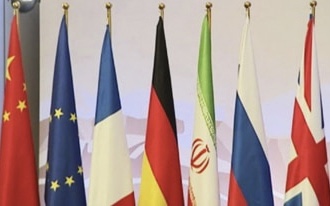
Iran and the P4+1 group namely, Russia, China, Britain, France and Germany will resume their negotiations in the Austrian capital Vienna next week.

U-S representatives will also be in the city but not in the same room as Iranians won’t directly talk to the party that unilaterally withdrew from the international nuclear deal.

Between April and June, the Islamic Republic and the P4+1 held six rounds of talks in Vienna to find a path back into compliance with the Joint Comprehensive Plan of Action. 

The JCPOA is currently in tatters because the United States withdrew from it in 2018, the European parties have failed to abide by their commitments or make up for damage from the U.S. withdrawal and Iran has rolled back some of its commitments in response to violations by the Western parties.

Iran insists that negotiations with the remaining JCPOA parties must lead to the removal of all sanctions against Tehran and the U.S. must offer guarantees that it will not withdraw from the deal again.

Iran’s rights, interests must be secured during Vienna talks

“The Islamic Republic of Iran’s straightforward and clear stance is that the Iranian nation’s rights and interests must be ensured at the negotiating table and sanctions must be lifted,” said Iranian Foreign Minister Hossein Amir Abdollahian in a video message where he elaborated on the performance of the Ministry of Foreign Affairs during the 100 days since the administration of Iranian President Ebrahim Raisi took office. 

“We hope we will be able to take major and successful steps forward during the Vienna negotiations,” the top diplomat added. 

“We are serious during the talks about reaching an agreement,” he said.

“We will kick off the Vienna talks this week. The Islamic Republic of Iran’s hands will definitely not be tied. We have different options available to us. We will begin with the option of dialog in Vienna,” said the top diplomat.

Elsewhere in his remarks he touched upon the national campaign to contain the coronavirus pandemic.

“On the first day of my work as foreign minister, I had a joint meeting with the health minister as well as top officials from the Central Bank, the Red Crescent Society and the Customs Office, which were supposed to help facilitate vaccine imports,” Amir Abdollahian explained. 

He said efforts were made to import large numbers of COVID-19 vaccines in the early days while local researchers were working, at the same time, to develop vaccines inside the country. 

“Today, I’d like to announce with pleasure that over 100 million doses of vaccines have been administered to our fellow countrymen nationwide, and now we are able to export part of our domestically-developed vaccines,” the foreign minister explained. 

The head of Iran’s diplomacy apparatus also referred to Tehran’s permanent membership in the Shanghai Cooperation Organization (SCO).

He said the document on Iran’s permanent membership in the SCO was approved in a recent meeting of the organization in the Tajik capital, Dushanbe, describing the development as a “success.” 

“Given the process of Iran’s permanent membership in the SCO, we will, in the coming year, see Iran gradually achieving success and promote trade and economic cooperation at the level of the SCO region and with SCO member states,” he said.

He also said meetings have been held with Iranian expatriates to get a first-hand account of their problems and address the issues they are facing.

Hezbollah chief says new Iranian oil tanker in Syria within days

Nasrallah stated Hezbollah had spent more than $10 million on free and subsidized fuel from Iran for the Lebanese people throughout the first stage since September.

In a televised speech on latest developments, Nasrallah said $2.6 million worth of fuel had been provided for free to Lebanese NGOs, municipalities, government hospitals and other organizations, while more than $7.5 million had been sold at subsidized rates.

“The value of diesel grants provided by Hezbollah throughout the first stage reached two million and six hundred thousand (2,600,000$) dollars,” he continued, adding that the value of subsidy to selling diesel in the first stage reached 7 million and 750 thousand (7,750,000$) dollars.

The Hezbollah leader deplored ruthless accusations claiming Hezbollah was gaining profits from selling diesel to Lebanese.

“Some blocked minded sides accused Hezbollah of profiting from selling diesel, simple calculations to importing costs would prove otherwise,” he noted.

“During the first stage, we bore $10 million of diesel aid costs to alleviate the sufferings of Lebanese and address shortages in a crushing crisis,” Nasrallah explained.

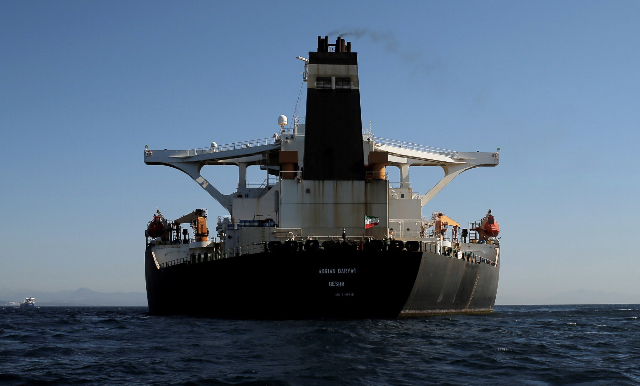
He said a new Iranian oil vessel will reach Syria in the upcoming few days, indicating that “US pressures on the government urged us to import diesel via Syria despite difficulties.”

“We’re not planning to replace oil companies, all we want is to ease the oil crisis,” Nasrallah added.

However, Nasrallah announced that the second stage will start in the coming days and would be for families living in areas at 500m above sea level.

“The price will be 100,000 L.L. less than the market for every 20 Liters, and 1 million L.L. less for every one barrel,” he continued.

“We have so far imported 4 Iranian oil tankers, adopting a rather slow and complicated selling and distributing mechanism. This is normal since the verification process takes some time to ensure the diesel doesn’t go to black markets,” the Hezbollah leader said.

Nasrallah tackled in his speech the recent hike in Coronavirus cases, stating such rise in cases and fatalities was critical, offering help to the new Health Minister regardless of political affiliations.

“The world is witnessing an upsurge in Covid-19 cases and in Lebanon causalities are increasing. I call on the government and people to take this matter seriously and not underestimate it,” Nasrallah added, stressing the importance of abiding by all precautionary measures. He expressed Hezbollah’s readiness to offer any help needed amid this crisis.

Hezbollah leader called on the government to revisit its decision to cut medicine subsidies, stressing, “Lifting subsidies in such careless manner without any backup plan is extremely irresponsible.”

“Cuts could be applied to other unimportant things, medicine is an absolute priority to citizens,” Nasrallah said, adding that there are several sources of funding whether through debts, loans or cutting out on the budgets of other ministries and government institutions.

His eminence, hence, announced that Hezbollah decided to activate its institutions and medical clinics to secure the highest number of medicine citizens need.

Nasrallah decried the selectivity and politicization in the Beirut port blast probe as well as in the judiciary’s response to legal motions filed by the accused ex-PM and former ministers.

“All available data confirms that judges in charge of Beirut Port blast case are under accusation and suspicion,” Nasrallah noted, indicating that the course of judicial investigation into the Port Blast case is discretionary and won’t achieve any results.

“Is there a judge today in the Lebanese judiciary who dares to take a decision to dismiss the investigative judge (Tarek Bitar)? There is a judge (Habib Mezher) who moved in that direction, but they threatened him and fought him,” Nasrallah added.

“Continuing this course with Tayouneh case is alarming, and might drag the country into sedition,” he pointed out, saying, “The Military Court has come under very huge pressure from political and religious sides that are pressing for the release of the rest of the detainees. Even those lecturing us to resort to the judiciary refused to go to the judiciary and some of the fugitives are present in Maarab and are being protected there so that they don’t get arrested.”

“This is underestimating the martyrs, their families and all the parties they belong to, those who took part in the killings must be put on trial and continuing the current course is dangerous,” he went on to say.

Concerning latest documents circulated on social media alleging they’re issued by Hezbollah, Nasrallah said they were fake and the one who fabricated them was almost not Lebanese. 

“Unfortunately, some dealt with these documents with a high level of absurdity, ignorance and triviality. This is an enormous war waged on Hezbollah,” Nasrallah deplored.

“There were even reports claiming we ordered some Shia brothers in Lebanon to marry from other districts to get more voters,” Nasrallah ridiculed.

He began his speech with the Independence Day controversy which he said should be settled, urging Lebanese to make it a genuine one.

“When Lebanon is abandoned from using its oil in such hard times, or remains under daily Israeli threats, then we are still in the heart of Independence battle,” he added, vowing that Hezbollah will “undoubtedly achieve an undebatable independence and stability to our country”.

Iran, Malaysia FMs discuss bilateral ties, regional issues

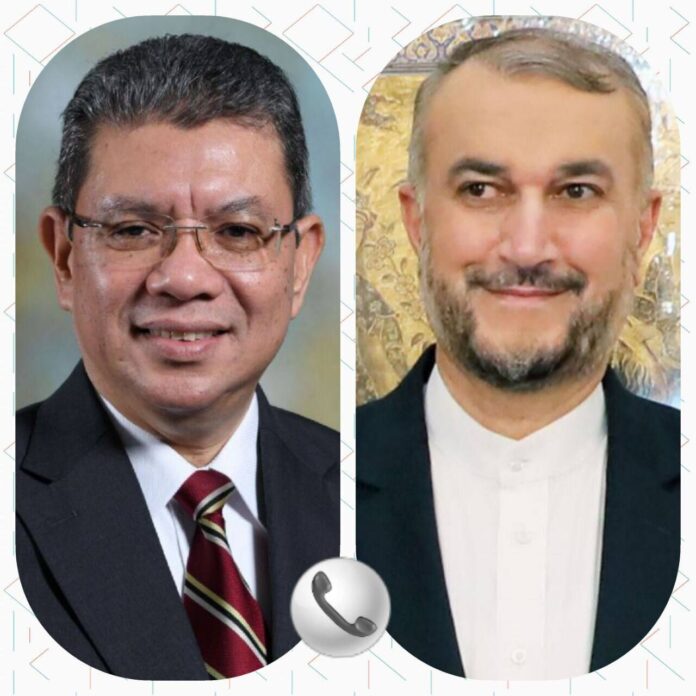
During a phone conversation which was described ‘friendly’ by Iran’s Ministry of Foreign Affairs, Amirabdollahian conveyed President Ebrahim Raisi greetings and invitation to visit Iran to the King of Malaysia.

He also congratulated Malaysia on membership in Human Rights Council (HRC) and expressed hope that Malaysia would help promote human rights and address double standards regarding human rights.

Amirabdollahian clarified on the foreign policy of the new administration in Iran that takes priority over Asian countries.

The foreign minister said that Iran was ready to expand ties with Malaysia in all areas, including tourism, agriculture, technology, energy, science and university as well as finalizing the preferential trade agreement between the two countries.

Amirabdollahian added that the signing and implementation of extradition agreements and judicial assistance between Iran and Malaysia was important, highlighting the significance of prisoners swap between the two states.

He also thanked the Malaysian government for their support of Palestinian people.

The Malaysian foreign minister, too, conveyed the warm greetings of senior Malaysian officials to the President of the Islamic Republic of Iran and highlighted the warm, friendly ties between the two countries.

He said that all the existing capacities were prepared to further expand Iran-Malaysia ties in all areas, including agriculture, tourism, technology, and scientific and academic cooperation.

Abdullah added that Malaysia was aware of the difficulties caused by the sanctions imposed against Iran, adding that nuclear technology was Iran’s rights and he hoped that the talks to be held next week in Vienna to remove sanctions against Iran would be successful.