Thursday, December 25, 2025
Home Blog Page 2245

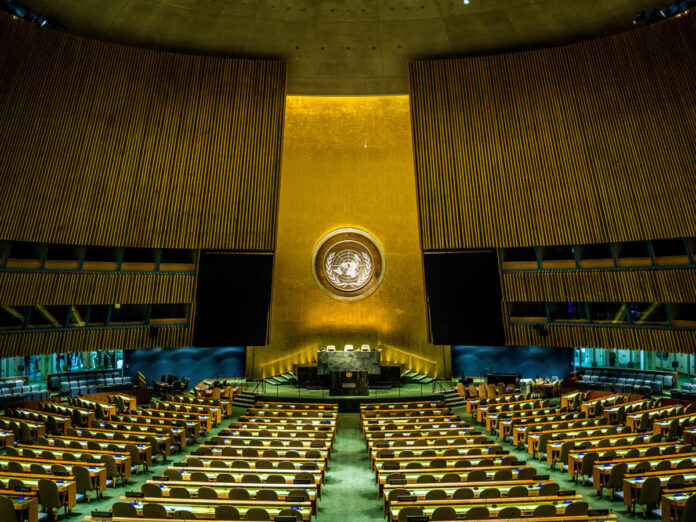
Taliban fails to get a seat at UN

The seats for both were delayed for the time being.

The UN committee was convened on Wednesday and delayed the decision over who will represent Afghanistan’s Taliban-led government and the military junta in Myanmar.

The decision means that the representatives of the Islamic Emirate of Afghanistan and Military Junta will not be allowed to have seats at the 193-member world body for now.

The decision comes hours after the UN nominee of the Taliban Sohail Shaheen in a series of Tweets stated the people of Afghanistan have fought for their independence and they have the right to have representatives at the UN.

After the Taliban recapture on August 15, the Taliban are desperate for world recognition as the country is going through the worst humanitarian situation with nearly half of the population starving.

Meantime, Afghanistan Ministry of Foreign Affairs said that an Afghan delegation led by the acting foreign minister Amir Khan Motaqi met with representatives and ambassadors of 16 countries on Wednesday in Qatar’s Doha.

The countries include, Germany, Canada, Finland, New Zealand, Italy, South Korea, EU, Spain, the US, Norway, Sweden, Netherland, Australia, England, and Japan.

A statement released by the Afghan Foreign Ministry reads that the meeting was concentrated over security, humanitarian, economic, political and health-related issues.

“In the meeting, developments in the areas of security and politics by the Islamic Emirate of Afghanistan were applauded and asked for urgent humanitarian aids to the people of Afghanistan.” the statement added.

The Afghan delegation assured the representatives of providing security while delivering aids to the Afghan people and asked the countries to reopen their embassies in Afghanistan.

The meeting comes a day after the Afghan delegation conducted two-day talks with the US delegation led by the special envoy Thomas West.

Border clashes not to happen again: Taliban

The announcement came after clashes erupted between Iranian border guards and the Taliban when the Afghan forces opened fire on Iranian farmers.

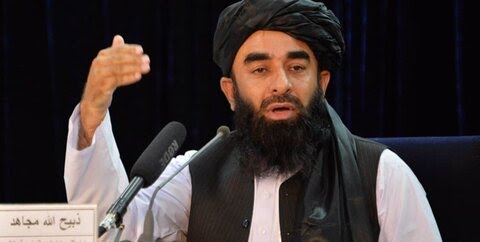
Taliban Spokesman Zabiullah Mujahid said in tweet that the incident was the result of a misunderstanding, and added the issue has been settled now with both sides’ agreement.

Wednesday’s clashes began over a misunderstanding, triggered by Taliban border guards mistaking the wall for the Iranian border.

It took place after a group of Iranian farmers passed the wall, and the Taliban guards opened fired on them, imagining they had breached the Afghan territory. The Taliban fire was reciprocated by the Iranian forces.

Tehran-based Tasnim News Agency also cited an informed source as saying that the reports on the Taliban seizing Iranian border posts during the clashes are “basically false”.

The report said the footage published on the clashes also shows the initial moments of skirmishes and Iranian border guards are now in full control of the Iranian side of the border.
Latest reports suggest calm has returned to the area.

Iran presents two draft documents to negotiating parties in Vienna

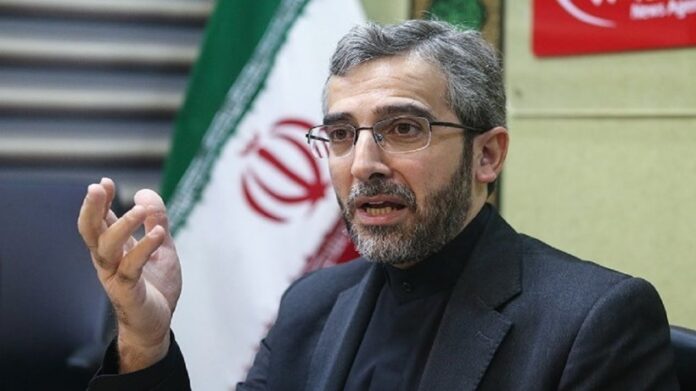
Ali Bagheri Kani told reporters that one of the documents pertains to Iran’s stances on the lifting of cruel sanctions, and the other is bout Iran’s nuclear activities.

“Naturally, the other side should study these documents and get prepared for serious talks with the Islamic Republic of Iran bout the texts presented to them,” he added.

He also warned the other signatories to the talks not to allow “outside players” to disrupt the process of the negotiations.

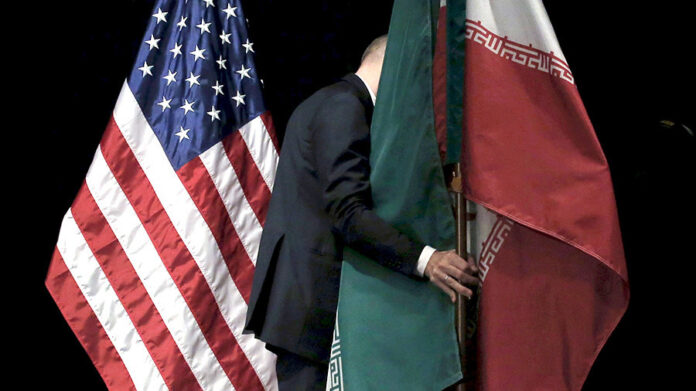
Negotiations have been underway between Iran and the 4+1 group of countries, namely Russia, China, Britain, France and Germany, at different levels in Vienna since November 27, 2021.

Iran says this round of talks should focus on the lifting of Washington’s illegal and cruel sanctions.
Iran says it will not renegotiate the agreement as it has already been finalized and agreed upon.

Lebanon launches cash card aid despite funding shortfall

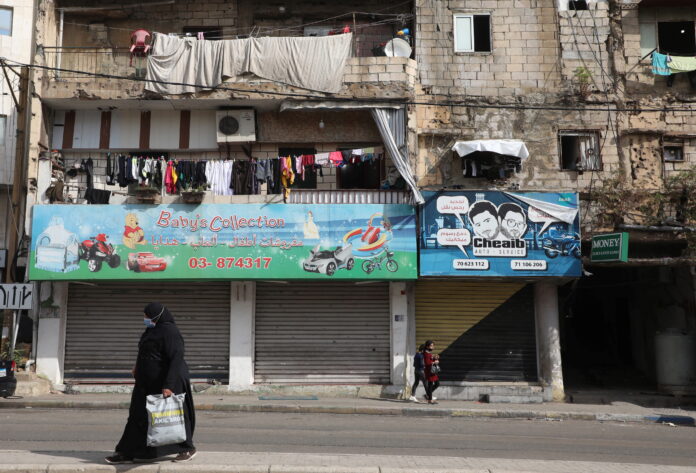
A woman wearing a face mask walks near closed shops in Chiyah, Lebanon January 26, 2021. Picture taken January 26, 2021. REUTERS/Mohamed Azakir

Social Affairs Minister Hector Hajjar said at the launch event at the Grand Serail in downtown Beirut, where Prime Minister Najib Mikati, lawmakers, and diplomats were in attendance, that the cash assistance initiatives are only meant to provide temporary relief.

“These programmes are not the solution,” he added.

Registration for the initiatives will remain open until the end of January.

First announced last September under former Prime Minister Hassan Diab’s caretaker government, the roll-out of the programmes had been hampered by technical and administrative problems, stated officials.

But funding shortfalls have also been an issue.

The World Bank has secured a $246m loan to fully fund one programme – called Aman – that aims to give 150,000 families roughly $150 a month each and cover $200 in school costs for 87,000 secondary students. All payments for the Aman programme will be denominated in United States dollars.

But the ration card programme, which comes with an estimated price tag of $556m to provide up to $126 a month for eligible families, has yet to secure a confirmed source of funding. It is also unclear whether the cash will be distributed in US dollars or in Lebanese pounds – a crucial distinction given the pound is subject to sudden, violent depreciations that can easily erode the benefit’s purchasing power.

Hajjar noted that talks between the government and World Bank are in “advanced stages” to secure funding for the ration card programme.

World Bank Regional Director of the Mashreq Department Saroj Kumar Jha told Al Jazeera that the Lebanese government has sent a formal request to secure funding, but that no amount has been confirmed yet. He also added that he does not expect the World Bank will fund the entire programme, and that the Lebanese government needs to earmark funds for the programme from its 2022 national budget.

“This is how sustainability comes,” Jha said, stating, “You need to better allocate resources for the need of the people.”

For more than two years, Lebanon has been in throes of a crippling economic crisis that has decimated lives and livelihoods. Over three-quarters of the population now lives in poverty, while the Lebanese pound has lost 90 percent of its value.

With the economy in tatters and no viable productive sector, the government has resorted to taking out loans from multiple lenders simultaneously to try and keep the country functioning at a bare minimum.

The government initially intended to introduce the targeted cash assistance programmes as an immediate replacement for expensive blanket subsidies for petrol, fuel, wheat and medicine that cost the state around $7bn every year.

With foreign reserves dwindling at the Banque du Liban, the central bank, the government and some economic experts have argued that directing what’s left of the country’s financial resources to the poorest households would be far more effective than universal subsidies, especially in the absence of a viable social security programme.

However, due to political squabbling and paralysis, Lebanon started to lift subsidies without the cash assistance programmes in place to cushion the blow for the poorest households.

Over the summer, the government started to roll back fuel and petrol subsidies. It partially withdrew medicine subsidies last month, and continues to gradually hike bread prices.

Hajjar insisted that the government has been working “nonstop” to roll out cash assistance and that the failure to time the withdrawal of subsidies with the implementation of the new benefits was due to administrative and technical problems.

“Despite all our efforts, the worsening economic crisis was faster, especially with the lifting of subsidies of key goods,” he continued.

Activists and the international community continue to urge Lebanon to pass and implement anticorruption and transparency laws. But corruption remains endemic.

During Wednesday’s press conference, Hajjar and Central Inspection Bureau Director Georges Attieh tried to alleviate fears that corruption and political nepotism will determine who is eligible for cash assistance.

Families apply through a digital platform and have to go through what the authorities describe as a rigorous vetting process to ensure that they meet requirements. The United Nations’ World Food Programme, World Bank, and eventually an independent third-party company are supposed to follow up and monitor the programme’s implementation.

“Everything is fully digitised without any chance for someone to interference or doctor the data,” Hajjar said, adding, “I will repeat this because people say this is an elections card.”

But elections are slated for late March – the first parliamentary elections in Lebanon since the economic crisis took hold. Activists and economic experts have speculated that the cash card programmes will be used by Lebanon’s ruling parties as a patronage tool to cement political loyalty.

Even more concerning, experts say, is that the programmes are launching in the absence of a wider financial and economic recovery plan – which means recipients may face worse conditions than the aid is designed to deal with. The Lebanese pound continues to fluctuate daily, and inflation is soaring.

The government hopes to reach a preliminary agreement with the International Monetary Fund for a bailout by the end of the year. But the past two years have seen virtually no movement by subsequent governments on producing a credible reform blueprint that is a precondition for unlocking billions of dollars in international aid.

Postdoctoral research fellow in finance at University College Dublin Mohamad Faour told Al Jazeera that without such reforms, the cash assistance programmes will only bring partial relief to struggling families.

“It’s merely an ad hoc measure, if we are to assume that it’s done in good intentions – as difficult as it is,” he said, adding, “Given that it’s implemented in the absence of a broader economic and financial stabilisation plan, there are questions about its viability in the medium to long term.”

Faour says he can’t help but feel “very sceptical” about the timing of the programme’s launch on Wednesday, given elections are right around the corner.

“The way things are moving, the political class wants to move in the direction where we have a society that is heavily dependent on aid,” he added.

Turkey’s finance minister resigns amid plunge in lira

The appointment, announced in Turkey’s Official Gazette, follows the lira crashing 27% in the last month alone. It hit a series of record lows over the direction of economic policy.

Nebati was a deputy minister of treasury and finance and studied international relations, political sciences and public administration, according to his resume on the ministry website.

Elvan, a former deputy prime minister and longtime member of the ruling AK Party, held the finance post for just over a year after having replaced Berat Albayrak, Erdogan’s son-in-law.

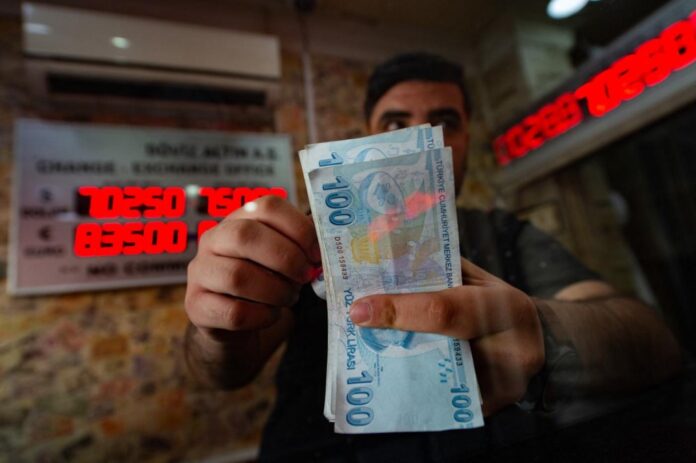
The lira , which had weakened as far as 13.87 to the dollar on Wednesday, ended the session at 13.40 following the appointment. It lost more than 44% of its value against greenback this year. It traded at 13.48 at 0443 GMT.

The departure marks the latest in a rapid turnover at top economic positions including Erdogan’s abrupt firing of three central bank governors in the last 2-1/2 years, moves seen to have battered the credibility of policymaking.

Economic analysts stated mismanagement and policy uncertainty have left inflation stuck in double digits and official foreign reserves low, while the lira has shed two-thirds of its value in four years, by far the worst in emerging markets.

As the central bank shifted in September to a dovish stance, Elvan was seen as one of the last ministers who might convince Erdogan to reconsider given what analysts see as the bank’s tattered credibility.

The uncertainty over the new economic model in which Erdogan endorsed further interest rate cuts despite soaring inflation prompted the central bank to intervene on Wednesday to stabilize the volatile currency for the first time since 2014.

Elvan was appointed in November last year amid a dramatic cabinet shakeup in which his predecessor Albayrak, a divisive figure in the AK Party, abruptly resigned on Instagram, stunning the president and his conservative government.

Elvan, along with then newly-appointed central bank governor Naci Agbal, were market-friendly technocrats who pivoted to more orthodox economic policies that began to reverse a years-long exodus of foreign investment that picked up under Albayrak.

But the mood reversed in March when Erdogan abruptly sacked Agbal following interest rate hikes to 19%, paving the way to a subsequent 36% drop in the lira that accelerated into a meltdown this past week.

The central bank, now run by Sahap Kavcioglu, began easing in September and cut rates on Thursday by another 100 points to 15% in a move many analysts called reckless given Turkey’s deeply negative real yields.

The resulting currency crash has eaten deeply into Turks’ earnings, sharply raised foreign debt obligations and prompted opposition calls for early elections to reset economic policy.

Iran allocates export guarantee funding for trade with Syria

The organization’s director says Iran has forged good political and military ties with Syria but trade relations have been lagging behind, stressing that Tehran is now after getting the private sector enter Syria.

“[Despite war] the Syrian private sector is rich financially and there are good opportunities for investment in the country. We seek the greater portion of the investment by our private sector to take place in Syria’s free trade zones,” Alireza Peymnapak told Tonight’s Headlines program on the national broadcaster.

“For expansion of our country’s private sector trade with the regional and neighboring countries, establishment of chambers for trade of goods, not only in Damascus, but with all neighboring countries are on our agenda, but Syria has no good to be traded with ours.”

He stressed that Syria exports only 800 million dollars of products a year and due to the current situation in the country it only produces cotton. He said Iran needs cotton, but that requires a safe transport route with Syria, which is now lacking.

Peymanpak added that the Iranian shipping lines can consider subsidies for transport to and from Syria to enable regular maritime transport with the country. This, he said, will remove part of the problem and enable Iranian investors to enter cotton trade with the country.

Heads of several parliamentary commissions, which were also present at the program, called for facilitation of the Iranian private sector’s presence in Syria.

Four Iranians among world’s top Greco-Roman wrestlers

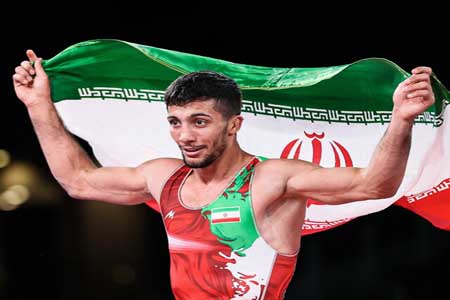
Maysam Delkhani crowned the champ in the 63-kg category in Norway competitions, 67-kg Gold medalist in the Tokyo Olympics and Norway contests. Mohammadreza Geraee, and Aliakbar Yousefi, the top wrestlers in the 13-kg category in international Norway games, were introduced as the top wrestlers of their own weight category.

Mohammadhadi Saravi, the Toyo bronze medalist and winner of the gold medal in Norway competitions, was also picked as the runner-up in the 97-kg category.

The UWW pays a total cash prize of $600,000 to top wrestlers in ten weight categories in freestyle, Greco-Roman and women’s competitions. The breakdown of the cash award is as follows:

1st-place wrestler: $10,000
2nd-place wrester: $7,000
3rd-place wrestler: $3,000

United World Wrestling (UWW) is the international governing body for the sport of amateur wrestling; its duties include overseeing wrestling at the Olympics.

It presides over international competitions for various forms of wrestling, including Greco-Roman wrestling, Freestyle wrestling, Grappling, for men and women, as well as others.

The flagship event of UWW is the Wrestling World Championships. It was formerly known as the FILA ,French: “Fédération Internationale des Luttes Associées”, literally , “International Federation of Associated Wrestling Styles”, having assumed its current name in September 2014.

Russia: Despite differences, there are chances for agreement on JCPOA

But he stated the parties have a chance to come to an agreement.

The Russian envoy recalled that Iran has already moved away from the JCPOA in many positions.

“However, it is important to understand that this happened not because of Tehran’s ill will, but as a reaction to the irresponsible policy of maximum US pressure with extraterritorial sanctions and other forms of pressure on Tehran. Tehran is resisting. And this could have been expected, no surprise,” Ulyanov noted.

The seventh round of talks to reinstate the JCPOA started on November 29 in Vienna, after a hiatus that lasted from June due to elections in Iran. During the six rounds from April to June the negotiators determined which US sanctions against Iran are to be lifted and compiled a list of steps for Tehran to make to return to its obligations.

Iran’s foreign minister has expressed hope the negotiating teams in the Austrian capital, Vienna, will arrive at an agreement over lifting of Iran’s sanctions if the Western parties to the talks act in good faith.

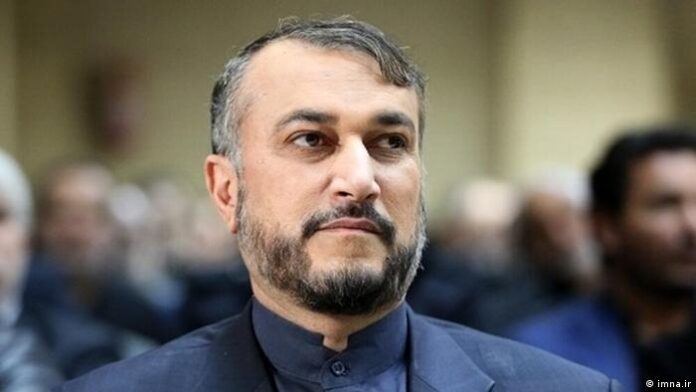
“Good deal within reach if the West shows goodwill,” said Hossein Amir Abdollahian in a tweet.

“We seek rational, sober & result-oriented dialogue,” he added.

“Vienna Talks proceeding with seriousness and sanctions removal as fundamental priority. Expert talks are continuing too,” the top diplomat further said.

He noted Iran is in contact with its chief negotiator Ali Bagheri Kani on a daily basis.

Deal close at hand in Vienna talks if West shows goodwill: Iran FM

“Good deal within reach if the West shows goodwill,” said Hossein Amir Abdollahian in a tweet.

“We seek rational, sober & result-oriented dialogue,” he added.

“ViennaTalks proceeding with seriousness and sanctions removal as fundamental priority. Expert talks are continuing too,” the top diplomat further said.

He noted Iran is in contact with its chief negotiator Ali Bagheri Kani on a daily basis.

Talks aimed at removing the anti-Iran sanctions are ongoing in Vienna’s Coburg Hotel between the Iranian delegation and representatives of the 4+1 group of countries.

The senior negotiators form what has been described as the sanctions removal working group are seeking to set a prospect for the continuation of the talks, with the lifting of the bans topping their agenda.

Meanwhile, Bagheri Kani met with the EU’s Deputy Foreign Policy Chief Enrique Mora on Wednesday as Iran and the 4+1 group – Russia, China, Britain, France and Germany- are trying to clinch a deal.

Most diplomats attending the negotiations have described them as positive.

Most experts and members of the delegations of both sides believe an agreement is possible though the road ahead is bumpy.

Iran says it will return to full compliance with the 2015 Iran nuclear deal known as the Joint Comprehensive Plan of Action (JCPOA) if the other signatories to the deal keep their side of the bargain and the US lifts its sanctions on Tehran before Washington rejoins the deal.

Qalibaf: Fair outcome possible if Europeans meet commitments

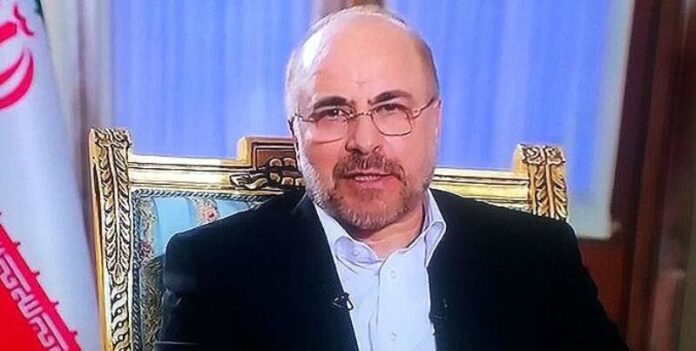
“If Europe meets its obligations, we are sure to obtain an honorable agreement through honorable negotiations,” Mohammad Baqer Qalibaf said in a live interview with the national broadcaster IRIB.

The speaker also said sanctions are the main reason for the current situation in the livelihood of the people in Iran.

Qalibaf added that some commitments Iran undertook under the 2015 nuclear deal, including the implementation of the Additional Protocol, were to be in return for removal of certain sanctions, but the US and Europeans “took no step” to remove the bans.

Since the US withdrawal from the nuclear deal in 2018, Iran has repeatedly called on the European signatories to the nuclear deal to live up to their words and act independently from the US on the issue of sanctions amid their foot-dragging on their pledges to compensate for the US pullout.

Iran says the Europeans’ failure to act according to their pledges eroded the economic benefits of the nuclear deal to the point that it was forced to take remedial steps to reduce its own obligations under the accord.

Iran and the remaining signatories to the nuclear deal, namely Russia, China, Britain, France and Germany continued their intensive talks in Vienna on Wednesday with the aim of removing the anti-Tehran sanctions.