Friday, December 26, 2025
Home Blog Page 2222

Iran Speaker calls for removal, neutralization of sanctions

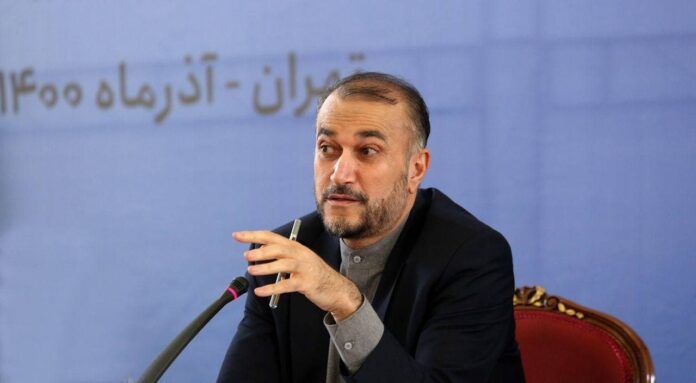
In a meeting with heads of Iranian diplomatic missions in neighboring countries, Ghalibaf said one of the issues that is directly related to ambassadors and the field of diplomacy is the issue of neutralization and lifting of sanctions.

“We should focus on these two issues in the field of foreign policy… and the Foreign Ministry should be in the forefront,” the parliament speaker noted.

He referred to the sanctions removal talks between Iran and the P4+1 group saying a good negotiation can lead to a satisfactory agreement.

“It is important that an agreement within the framework of the JCPOA will lead to economic benefits, so we must all join hands and help each other in the field of lifting sanctions, and of course, we must also work to neutralize sanctions,” Ghalibaf added.

He also said in the current situation and despite the sanctions, by relying on domestic capabilities, Iran can devise a five-year plan to achieve a 2 to 3% growth and economic stability.

Iran president congratulates Olaf Scholz on election as German chancellor

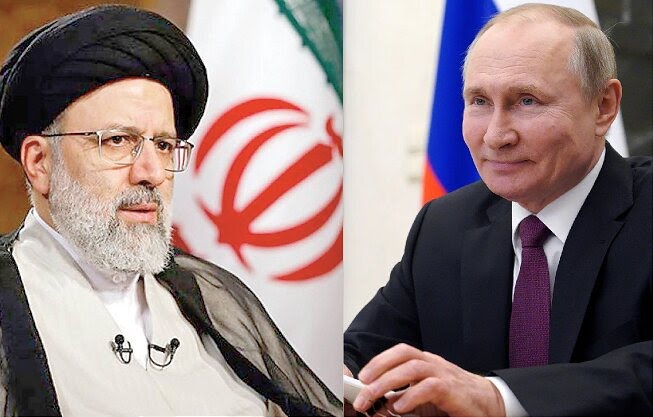
In the message, Raisi said the historical relations between Iran and the Federal Republic of Germany, which are over one hundred and fifty years old and based on large and diverse capacities, have provided a valuable legacy for the further development of political, economic and cultural ties between the two civilized nations.

“I believe that by taking advantage of this opportunity, the two countries can establish useful and valuable cooperation in bilateral relations based on mutual respect and interests”, Raisi added.

The Iranian president noted that the world today faces significant challenges at the international and regional levels and that successfully addressing challenges requires understanding of shared international responsibility and working together to bring peace, stability and prosperity to the world nations.

Raisi said Iran is ready to expand interactions with Germany to that end. He also underlined the determination of the Islamic Republic of Iran to maximize cooperation with all countries, adding, “I hope that relations between the two countries will expand more than ever before during your tenure”.

The president wished success for the new German chancellor and well-being for the German people.

Iran, India, Uzbekistan discuss facilitating product transit through Chabahar port

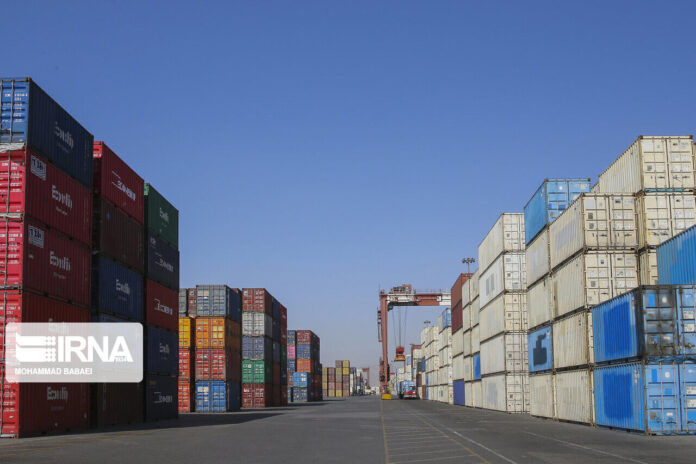
Ali Akbar Safaei was speaking at the second three-way meeting of the Islamic Republic of Iran, the Republic of India and Uzbekistan in Tehran.

He said, “With Uzbekistan joining the Chabahar Memorandum, in the near future we will see the smoothing of the transit route between India, Iran and Uzbekistan”.

Safaei also said over the past few years and with the implementation of the Chabahar Memorandum, traffic in Shahid Beheshti port has increased significantly and Iran hopes that with the full cooperation of India, Afghanistan, Uzbekistan and other Central Asian countries, the activity of Chabahar port will be increased more than ever before. Meanwhile, Sanji Branjan, India’s Deputy Minister of Ports, Shipping and Waterways also said at the meeting the Chabahar Agreement between Iran, India and Afghanistan has allowed Afghanistan to have access to open seas and has enabled the development of the Chabahar port in Iran.

He added that Chabahar port, in recent years, has become a transit hub for the region, connecting India to Central Asian countries.

Also, Abdolsamad Momenov, Deputy Minister of Transport of Uzbekistan said India, Iran and Uzbekistan have a lot of historical and cultural commonalities and trade between them has been going on in the past.

He stressed that trade between Uzbekistan and India has increased significantly in the past year, emphasizing that the port of Chabahar can play a significant role in facilitating transportation and logistics between regional countries.

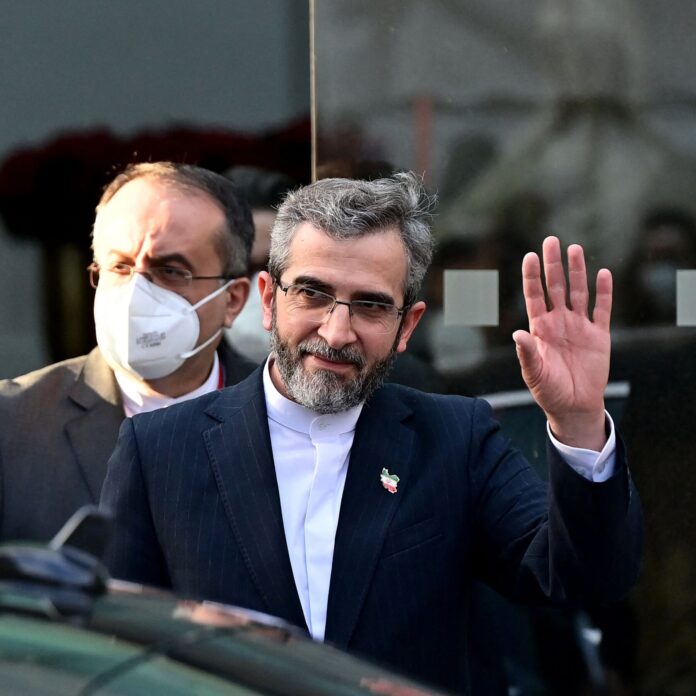
Iran top negotiator: Serious talks on sanctions removal yet to begin

In an interview with Iran’s Press TV English news channel, the deputy foreign minister stressed that any sanctions that are contrary to the Joint Comprehensive Plan of Action must be lifted immediately, whether they were imposed during the administration of former presidents Barack Obama, Donald Trump or the current occupant of the Oval Office Joe Biden.


“The sanctions that have been imposed and re-imposed against the Iranian people are in contradiction with international law, international regulations, international principles, as well as with the…JCPOA and also UN Security Council Resolution 2231,” The chief negotiator stated, adding that all sanctions imposed as part of Trump’s so-called maximum pressure campaign should also be lifted because they were linked to the JCPOA.


Asked about reports that claim Iran is trying to buy time in the ongoing negotiations, Bagheri blamed such accusations on the Israeli regime, saying it is trying hard to prevent the talks from making progress.


Later during the interview, the deputy foreign minister said there is still disagreement over the issues of guarantees and verification.


Iran has repeatedly said that the United States must remove its sanctions in a verifiable manner and offer guarantees that it will not abandon the JCPOA again if it wants to return to the 2015 deal.

“In my opinion, if the other side has a serious will and is practically ready to fulfill all its obligations under the JCPOA without any exceptions, then I really believe that in a short time we will be able to reach a deal agreed by both sides,” the chief Iranian negotiator added.

Covid daily death toll jumps in Iran

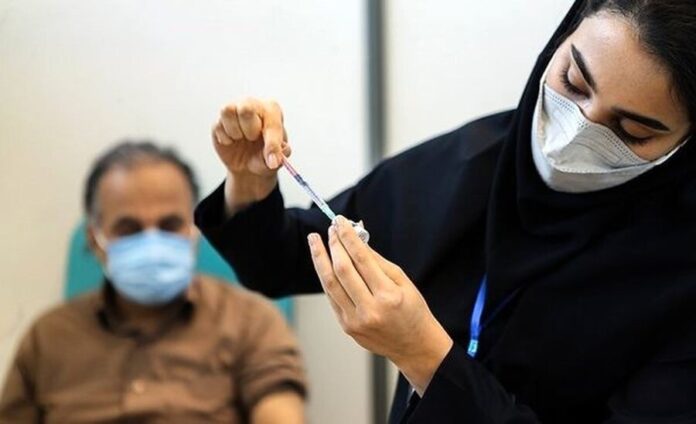
The total Covid fatalities stand at 130,831. Since Monday, 2,784 new infections of Covid were logged including 433 hospitalizations. The total caseload is 6,160,303 people. The majority of them, that is, 5,980,566 people have recovered from Covid.

Meanwhile, the total number of vaccine doses administered in Iran is now 111,558,663 doses. The shots include 2,971,806 booster shots.

Despite the downtrend in deaths and infections, authorities say the vaccination process will continue forcefully until the entire population is inoculated. Currently there are no red zones in Iran in terms of Covid risk while 321 cities and towns are marked blue, the lowest level of danger from the disease.

Meanwhile, 8 cities are orange and 119 ones are yellow.

Top general: Iran armed forces ready to take part in peace, truce processes

Major General Mohammad Bagheri made the comments during a meeting in Tehran with Iranian envoys in neighboring countries.

He underlined the need for coordination between the strategies and actions of the armed forces and the country’s foreign policy.

“In response to the hostilities against our dear country, a series of measures and strategies were put on the agenda of the defense sector …. which pushed the country’s defense industry to a point, in terms of growth, improvement, maturity and deterrence, that no power now dares to launch an aggression against the Islamic motherland,” Bagheri said.

The general stressed that Iran’s strategies are based on the circumstances and the threats the country could be facing.

“Our forces, despite trust in the country’s deterrence, have never underestimated threats, versus the enemy, and in strategic terms, and proportionate to the situation of the enemy, have the utmost preparedness and awareness in the face of tiniest threats,” he said.

Bagheri also said Iran is ready for closer defense cooperation with other countries, especially among its neighbors.

“Seeing the potential and capabilities created in the armed forces … we are ready to take up roles in peace and truce processes in the region and beyond, which are facing conflict and tensions,” he said.

Iran’s ‘Cinema Verite’ underway in Tehran

Iranian’s “Cinema Verite” was launched in 2007 and now it is known as the most important documentary cinema event in Iran and the Middle East.

The festival has three categories of short, semi-long and feature-length documentaries with national and international competitions, plus its Avini Award section. 

The event also includes national and international side sections, an international documentary market, and specialized workshops.

This year, 30 short films, 28 semi-long films, and 23 feature films are taking part in the festival.

In the international section, 2,611 films from 73 countries applied to take part in the festival, but finally 12 feature films, 7 semi-long documentaries and 10 short films managed to qualify.

Depicting the history and culture of the Iranian-Islamic society, protecting the national identity based on religious and Iranian ideas, strengthening the Iranian creative documentary cinema, and familiarizing the country’s filmmakers with the latest developments in world documentary cinema are among the goals of this festival.

US says diplomacy best option for Iran nuclear talks

Speaking at a news conference in Indonesia, Blinken stated Washington was actively engaging with its allies and partners regarding alternatives.

“We continue in this hour, on this day, to pursue diplomacy because it remains at this moment the best option, but we are actively engaging with allies and partners on alternatives,” he noted.

The US State Department has announced it is too soon to say whether Iran has returned to nuclear talks with a more constructive approach. State Department deputy spokeswoman Jalina Porter made the comment during a briefing call with reporters on Monday.

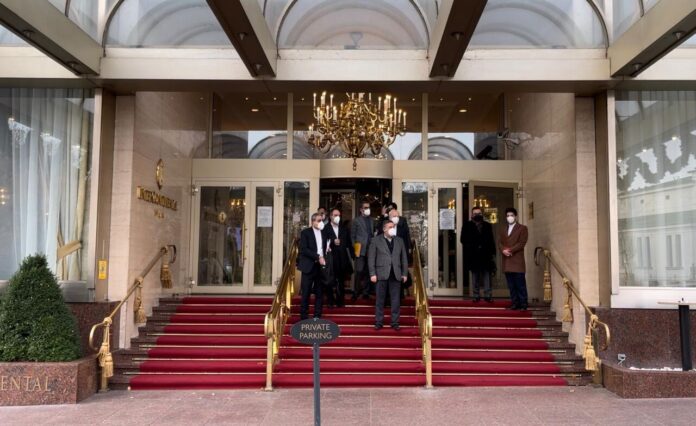
Iran’s top nuclear negotiator, Ali Bagheri Kani, noted over the weekend that good progress had been made in nuclear talks with world powers in Vienna that could quickly pave the way for serious negotiations.

But on Monday, senior British, French and German diplomats claimed major powers and Iran have yet to get down to business at talks on rescuing the 2015 nuclear deal, which will very soon become “an empty shell” without progress.

“As of this moment, we still have not been able to get down to real negotiations,” the diplomats from the so-called E3 said in a statement about the Vienna nuclear negotiations in which they are shuttling between US and Iranian officials.

“Time is running out. Without swift progress, in light of Iran’s fast-forwarding of its nuclear programme, the JCPOA will very soon become an empty shell,” they added, referring to the deal, whose full name is the Joint Comprehensive Plan of Action (JCPOA).

“We are losing precious time dealing with new Iranian positions inconsistent with the JCPOA or that go beyond it,” the E3 diplomats said in their statement.

“This is frustrating because the outline of a comprehensive and fair agreement that removes all JCPOA-related sanctions, while addressing our non-proliferation concerns, is clearly visible – and has been so since last summer,” they added.

Iran on Tuesday accused Western parties to the nuclear deal of “persisting in their blame game”.

“Some actors persist in their blame game habit, instead of real diplomacy. We proposed our ideas early, and worked constructively and flexibly to narrow gaps,” Bagheri Kani wrote on Twitter.

“Diplomacy is a two-way street. If there’s real will to remedy the culprit’s wrongdoing, the way for a quick, good deal will be paved,” he stated.

Iran says won’t accept IAEA demands beyond Safeguards Agreement, NPT

Eslami Iran nuclear chief

“What is being published in media, in the news and elsewhere, is part of the psychological warfare against Iran and has to do with politics. We are encountered by people, who by no means tolerate technological and scientific development of the Islamic Republic of Iran and use the accusations, propaganda and psychological warfare to pretend that Iran has illegitimate objectives and is not committed to nuclear non-proliferation,” Mohammad Eslami said.

Eslami added that Israel is fueling the accusations, which have never been proven. He stressed that this “commotion” will not affect how Iran moves forward with its nuclear program.

“The issue of the Karaj [nuclear] site and other issues, which were mentioned in the Joint Comprehensive Plan of Action [nuclear deal], are beyond the Safeguards Agreement,” he said.

“When they [other signatories to the nuclear deal] do not fulfill their obligations and impose severe and cruel illegal sanctions and expand them every day, that leaves us with no reason to stay committed to the JCPOA obligations they are pressuring us to meet. We act within the framework of the Safeguards Agreement and the NPT and accept nothing beyond that.”

Eslami further stressed that it is impossible for Iran to fulfill its share of the agreement while other parties do not meet their commitments. 

He said these are the issues Iran is discussing with the IAEA to find a path forward.

UN envoy: Iran victim of US and Israel cyber-attacks

Takht Ravanchi made the remarks addressing the First Substantive Session of the Open-ended Working Group on Security of and in the Use of information and telecommunications technologies.

The full text of the Iranian envoy’s statement is as follows:

Mr. Chair,

I congratulate you on your assumption of leadership of our Group and extend my gratitude to the Secretariat for its support in organizing this meeting. I avail myself with the NAM statement made by Indonesia.

We are happy to witness the realization of a request to end parallelism and to lead the ICT process through the OEWG, the UN’s first-ever inclusive, transparent and multilateral intergovernmental process.

Iran has been the victim of a number of cyber-attacks, including the 2010 Stuxnet malware attacks against its critical infrastructure by the US and Israel. Since 2010, these illegal acts have intensified and still continue. We believe that this Group is in the best position to address this irresponsible behavior and build upon the desire to end such reckless activities.

Mr. Chair,

Among other factors, the Group’s success is contingent on consistently adhering to its mandate.

We remain committed to our stances on major concerns, which have been articulated repeatedly during the previous OEWG. Given the ongoing discussions and developments, Iran underlines the following  essential points: respecting the sovereignty of states; non-inference in the internal affairs of the states using ICTs; accountability of platforms and transnational corporations; avoiding action-oriented recommendations without due attention to the said principles; the need for codifying and implementing a legally binding instrument and developing the current international law as well as further norms of responsible state behavior; the non-compulsory designation of repositories; applying ethics and justice to the ICTs; responsible behavior of non-state actors, including digital platforms; ensuring and facilitating the cooperation of the relevant digital platforms and transnational corporations with the states; application of ICTs exclusively for peaceful purposes and rejecting justification of threat or use of force using ICTs; and last but not least, equal status of all national initiatives within the OEWG.

In addition, while the principles of international law as well as the principles and purposes of the UN Charter apply to the ICTs in the context of international security, we believe that the existing international law cannot adequately meet the requirements of cybersecurity such as securing safe cyberspace.

Therefore, to fill numerous legal vacuums in this field, we need a legally binding instrument in which the rights and responsibilities of all stakeholders can be defined in a balanced manner.  In this way, relying on customary international law and limiting the discussions on the implementation of the 11 norms should not overshadow the need for legally binding obligations. Reiterating the mandate given to the previous OEWG as contained in resolution 75/240, we underline the need for further discussions and development of the issues of concern. This includes the consideration of any relevant outcome of the GGE, by members and non-members of the GGE alike.

Reminding of our previous proposals to establish subgroups as envisaged by resolution 75/240, we suggest to commence the discussions on this proposal in the legal subgroup within the OEWG. This, in turn, will contribute to CBMs.

In the context of the said resolution, it is necessary to adopt further new rules, norms and principles on the responsible behavior of non-state actors, including digital platforms.

Given the number of unresolved issues and ambiguities around the developments in ICTs in the context of international security, any recommendation on such

n-oriented outcome is completely premature, and the implementation phase should start only when those issues are resolved. A practical method to address this issue is to start negotiating the outstanding issues reflected in the final report of the previous OEWG and the annex thereof. Our proposal regarding the next rounds of substantive sessions on a rolling text basis of the negotiations remains on the table. It needs to be emphasized that all the national initiatives and proposals should be treated equally.

Finally, it is unfortunate to note that the Host Country has once again failed to issue a visa in a timely manner for the only member of my delegation from the Capital. This is unacceptable. We urge the UN family and the Secretariat to use all available means to call upon the Host Country implement the Headquarters Agreement in good faith.

I thank you, Mr. Chair.