
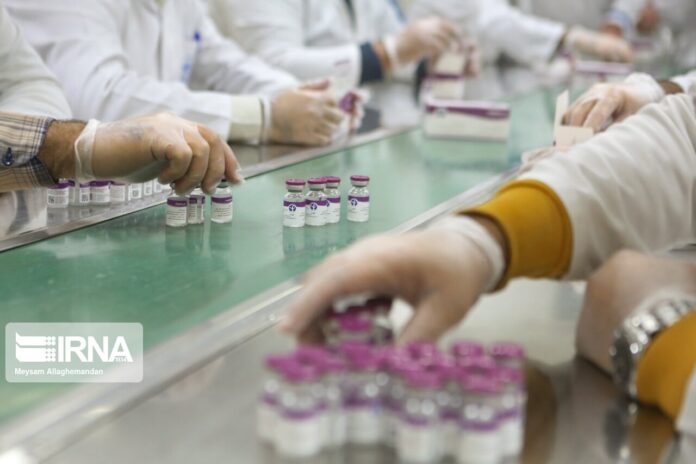
According to the head of the Recombinant Products Formulation Department of Pasteur Institute, Iran is now capable of producing the jab steadily and this process is continuing forcefully.
Alireza Rahimi added that Pasteur Institute has the capacity to make 6 million doses of both vaccines per month.
Rahimi noted that Pastocovac and Pastocovac Plus rival peers produced by advanced countries and that strict monitoring of the production process has yielded a safe, effective jab.
The vaccines have been approved for emergency use by Iran’s Food and Drug Organization.
Iran has produced several vaccines since the Covid pandemic began some two years ago that have helped control the outbreak along with imported jabs.
The vaccination process has seen some 120 million doses administered so far with millions of people being triple-vaxxed.
Iran Pastocovac jab production exceeds 10 million doses
Russia: Participants in Vienna talks determined to draft final agreement
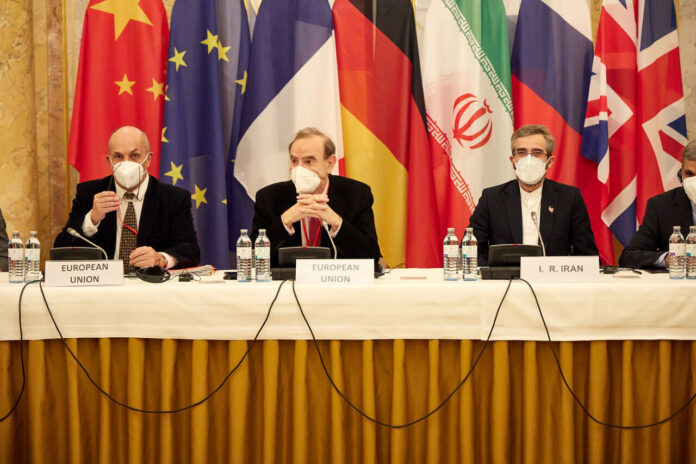
The Russian Foreign Ministry said in a statement that cooperation among the participants in the talks will continue in various formats including the working groups of sanctions removal, nuclear issues and the future agreement implementation.
Earlier, Russian representative to the international organizations in Vienna Mikhail Ulyanov said in a tweet that said there was an indisputable progress in the Vienna negotiations.
Ulyanov added that the working group of nuclear issues held a useful meeting and sanctions removal was also actively discussed in informal settings.
China also said the talks have produced positive results while the European parties to the 2015 deal also said some technical progress had been made in the last round of talks to accommodate Iran’s demands.
Talks aimed at reviving the Iran nuclear deal, JCPOA, will continue till this Thursday and due to the Christmas holidays, there will be a hiatus. The parties to the talks have agreed to resume the talks next Monday.
Iran, Iraq launch Shalamcheh-Basrah railway project
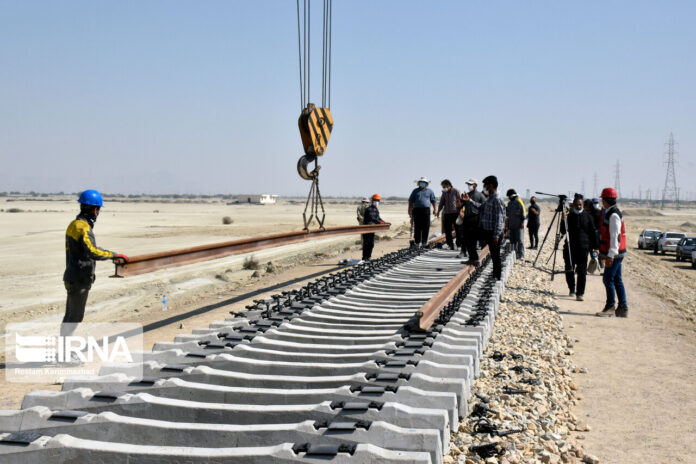
“The subject of the construction of the railway line from Shalamcheh to Basra is, in fact, the completion of the wide east-west corridor, which currently has a gap,” Iran’s Deputy Minister of Roads and Urban Development Miad Salehi said during a visit to Iraq on Tuesday.
The announcement was made a day after Iranian Minister of Transport and Urban Development Rostam Qasemi declared the signing of a deal between the Islamic Republic and Iraq for completing the nearly 40-kilometer railway.
The Islamic Republic of Iran Railways and the Iraqi Republic Railways are implementing the project jointly.
This issue has been on the table for a long time and its supporters have been looking for its realization for 20 years, Salehi explained.
“Our goal is to establish transit corridors and fix them if there is a defect, and in this regard, we have signed an operational roadmap for this project, which will remove the obstacles,” Iran’s deputy minister of roads and urban development stated.
“The Shalamcheh-Basra railway is important because Basra is connected to Karbala by railroad and can be used as a railway line for Iranian pilgrims. Basrah is also connected to Jordan from the east of Iraq and to Syria from the northeast. It could provide Iran with access to Syrian markets,” Salehi added.
UN envoy: Civilians killed in air raids on Sana’a
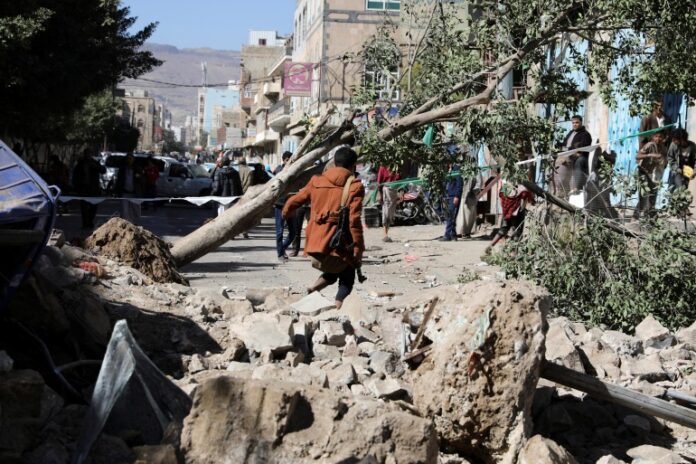
Hans Grundberg has denounced the recent major military escalation in Yemen and called on the warring parties to immediately de-escalate.
He stressed that this escalation undermines the prospects of reaching a sustainable political settlement to end the conflict in Yemen. The envoy also emphasized that violations of international humanitarian and human rights law in Yemen cannot continue with impunity.
“The escalation in recent weeks is among the worst we have seen in Yemen for years and the threat to civilian lives is increasing. Airstrikes on Sana’a have resulted in loss of civilian lives, and damaged civilian infrastructure and residential areas. The continued offensive on Ma’rib and the continued missile attacks on the governorate are also resulting in civilian casualties, damage to civilian objects and mass displacement,” the envoy said.
Grundberg further expressed his concern about the sustained attacks against Saudi Arabia which also resulted in civilian casualties and damaged civilian infrastructure.
“Any targeting of civilians and civilian objects as well as indiscriminate attacks by any actor is a flagrant violation of international humanitarian law and must stop immediately. The parties must also preserve the civilian character of public infrastructure,” he added.
Grundberg further expressed dismay about the impact of the escalation on an already deteriorating humanitarian situation.
“2021 is ending on a tragic note for Yemenis, millions of whom are struggling with poverty, hunger and severe restrictions on their freedom of movement. In this regard, I reiterate the United Nations’ call for the opening of Sana’a airport and for removing obstacles hindering Yemenis’ ability to move within or between governorates inside Yemen,” he stated.
He noted that he stands ready “to work with the parties to find immediate solutions to de-escalate the violence, address urgent humanitarian needs, and enable a political process aimed at sustainably and comprehensively ending the conflict in Yemen”, and he urged the parties to engage positively with the United Nations efforts in this regard.
Saudi Arabia and its allies launched a war against the Arab world’s most impoverished nation in March 2015. The war has been seeking to restore power in Yemen to Riyadh’s favorite officials.
The death toll of the war, now in its seventh year, will reach an estimated 377,000 by the end of 2021, according to a recent report from the UN’s Development Programme.
The fighting has seen some 80 percent of the population, or 24 million people, relying on aid and assistance, including 14.3 million who are in acute need.
Taliban forces open fire on protesting women
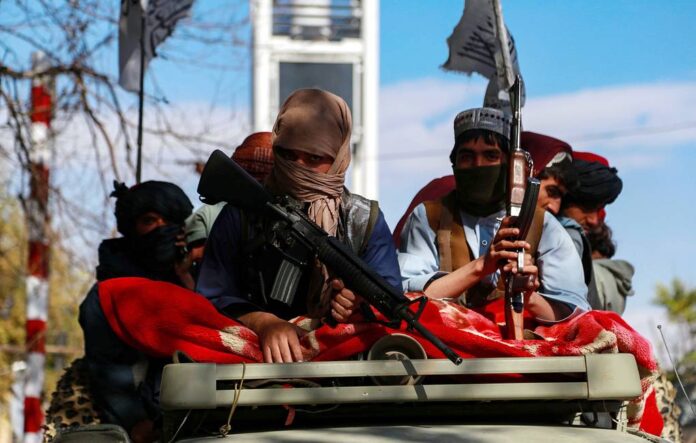
The Taliban members on Tuesday opened fire on protesters in Kabul near a building that housed the ministry of women’s affairs in past, a participant of the demonstration told Sputnik.
“Taliban opened fire on protesters to stop or suppress protest,” she said, adding that filming of the demonstration was not allowed.
According to the demonstrator, on Tuesday women came out in protest, demanding “employment, food and freedom”.
Another source told Sputnik that the Taliban members were firing in the air. While people close to the Taliban movement claimed that the firing was opened “at a considerable distance” from the place where the demonstration was held.
After the Joe Biden administration had announced the end of Washington’s 20-year-long military operation in Afghanistan and the launch of its troop pullout, the Taliban embarked on an offensive against Afghan government forces.
On August 15, Taliban fighters swept into Kabul without encountering any resistance and gained full control over the Afghan capital within a few hours. Afghanistan’s President Ashraf Ghani stated he had stepped down to prevent any bloodshed and subsequently fled the country. On September 6, the Taliban declared a complete victory in Afghanistan and on September 7 formed an interim government that hasn’t yet been officially recognized by any country.
Russia: ‘Indisputable progress’ in Vienna talks
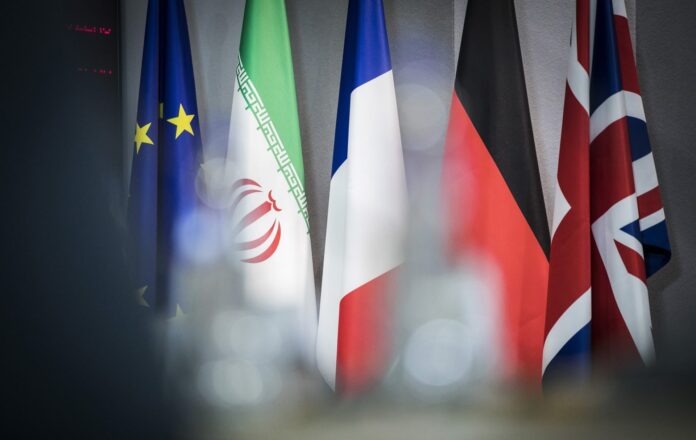
“Today in the course of Vienna Talks on JCPOA the working group on nuclear issues held a useful meeting. We observe indisputable progress. Sanctions lifting is being actively discussed in informal settings,” Permanent Representative of the Russian Federation to international organizations in Vienna Mikhail Ulyanov wrote on Twitter on Tuesday.
The eighth round of talks aimed at removing anti-Iran sanctions began Monday in Vienna. Iran has already put forth two draft documents during the previous rounds which it says will be the basis of talks in the Austrian capital.
Iran’s top nuclear negotiator Ali Bagheri has renewed Tehran’s demand for concrete guarantees for the removal of sanctions on the Islamic Republic.
He also said any sanctions removal must be verifiable, adding that Tehran is fully ready for serious interaction and advancement of talks.
Bagheri has stressed reaching a deal in Vienna by the end of next January depends on the serious will and readiness of the other side on the removal of the anti-Tehran sanctions.
Iran, P4+1 set date for next round of talks
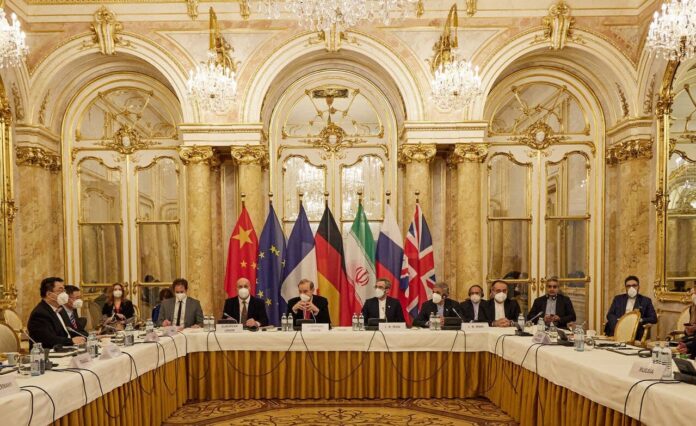
The parties to the talks have agreed to hold bilateral and multilateral meetings on sanctions removal at the level of heads of delegations.
Meanwhile, the nuclear issues working group convened a session on Tuesday. This round of talks will continue until Thursday given that the venue of talks will be closed with the beginning of the Gregorian New Year. Talks will resume next Monday.
Earlier, Iranian Foreign Minister struck a note of optimism about the outcome of the talks in
Vienna. Hossein Amir Abdollahian said the negotiations are going in the right direction.
He added that if the other sides continue talks in good faith and with seriousness, a win-win deal is possible in the near future.
Amir Abdollahian also referred to the draft texts put forth by Iran during the previous round of talks, saying Tehran and the P4+1 are now working to patch their differences as they press ahead with the negotiations. The drafts lay out Iran’s proposals regarding sanctions removal and the country’s nuclear activities. Iran and the P4+1 say the negotiations will go ahead based on the two drafts.
Iran police deal heavy blows to drug traffickers in border area
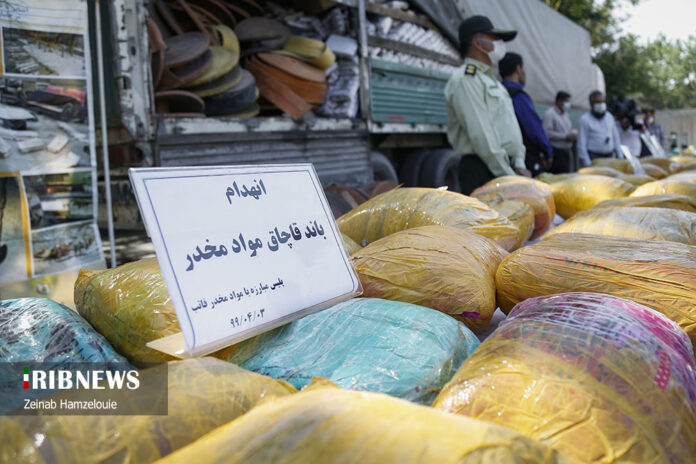
Brigadier General Ahmad Taheri said police carried out more than 5,000 successful operations eliminating over 57 drug trafficking gangs over the past nine months.
He said over 104 tons of narcotics were seized from the traffickers in the same period, adding that many of the operations against the gangs involved clashes with them.
Taheri said one of the main plans of law enforcement forces in the province is confronting the heads of narcotics trafficking networks.
Law Enforcement Force of the Islamic Republic of Iran has been praised internationally for its achievements against organized crime and drug trafficking especially in border areas.
Kremlin: Russia and Iran preparing for highest level contacts
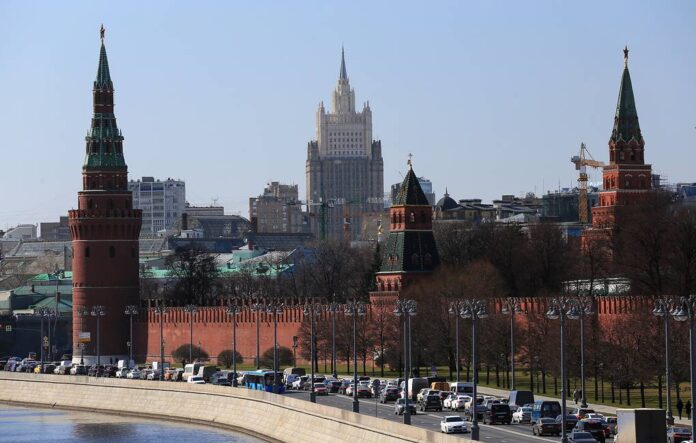
“Russian-Iranian contacts at the highest level are being prepared,” he said.
Earlier, Iranian government spokesman Ali Bahadori Jahromi reported that Iranian President Ebrahim Raisi would visit Russia in the beginning of 2022 at the invitation of his Russian counterpart Vladimir Putin.
UN flights into Yemen capital resumes following air attacks
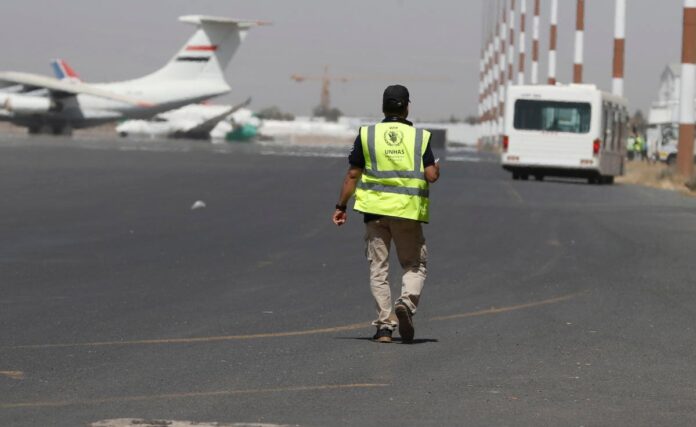
The aviation authority run by the Houthi administration in Yemen has allowed temporary resumption of flights by the United Nations and other organizations to Sanaa international airport on Monday, Saba news agency reported.
The Iran-aligned Houthi movement said earlier this month that the capital’s airport had been put out of operation after air raids carried out by the Saudi-led coalition fighting in Yemen.
The coalition claimed it only attacked military targets at the airport, from where drone strikes have been launched against Saudi targets.
The airport has been closed to civilian flights since 2015, after the Houthis ousted the Saudi-backed government from Sanaa, although UN planes have been permitted to land there.
The Houthi-run aviation authority announced in a statement on Monday it allowed the resumption of the UN flights “after the malfunctions in communications and navigational devices were temporarily fixed”.
The authority complained that it could not guarantee the long-term continuity of these old devices, and urged the UN to help the entry of new devices that it had purchased.
Saudi Arabia and its allies launched a war against the Arab world’s most impoverished nation in March 2015. The war has been seeking to restore power in Yemen to Riyadh’s favorite officials.
The death toll of the war, now in its seventh year, will reach an estimated 377,000 by the end of 2021, according to a recent report from the UN’s Development Programme.
The fighting has seen some 80 percent of the population, or 24 million people, relying on aid and assistance, including 14.3 million who are in acute need.
