Thursday, December 25, 2025
Home Blog Page 2182

Ex-UK diplomat: Assassination of Gen. Soleimani US ‘systematic deception’

Monday marked two years since the US assassination of Soleimani, which comes less than a week after the 15-year anniversary of Iraqi President Saddam Hussein’s execution.

“It is helpful when a counter-narrative with the ring of truth eventually emerges, because cumulatively the United States is establishing a track record of systematic deception,” Ford said.

“When the US kills or captures its eminent enemies, deception is standard operating procedure (SOP),” he added.

On December 30, 2006, Hussein was executed after the United States invaded Iraq on the pretext of searching for weapons of mass destruction – which were never found.

Following Hussein’s arrest at the end of 2003, the Pentagon claimed that the former Iraqi president was found hiding in an eight-foot-deep hole under a farm. However, a former interpreter with US forces told Sputnik that Hussein was in a room and unconscious at the time of his arrest.

“In the endgame of the illegal invasion of Iraq the US was terrified lest Saddam emerge as a hero, defeated but unbowed. Regardless of truth the politics demanded that Saddam be arrested in humiliating conditions,” Ford stated.

“It can’t be proven, of course, but seen in this light the interpreter’s denial of the story that Saddam was found cowering in a hole must be seen as highly likely to be true,” he noted.

With respect to Soleimani, killed by a US drone strike in Baghdad on January 3, 2020, Ford recalled that “no proof was ever provided” to support Washington’s allegations that the Iranian commander was planning imminent operations against US troops.

“The same SOP was used, obviously, to justify the original invasion of Iraq with fabricated charges of production of weapons of mass destruction. Similarly Syria was framed with crisis actors for alleged use of chemical weapons,” Ford continued.

Libyan ruler Muammar Qaddafi, he added, was liquidated after the United States invented a story that his troops were aiming at a bloodbath in Benghazi.

Ford said the US government continues to fabricate these tales basically because “it gets away with it.”

“Most international media uncritically relays the US narrative,” Ford concluded.

“Occasionally, as with Iraqi Weapons of Mass Destruction (WMDs), the US gets found out, but by that time the caravan has moved on,” he noted.

Iran envoy: President Raisi Russia visit turning point in mutual ties

Kazem Jalali, Iran Ambassador to Russia
Kazem Jalali, Iran’s ambassador to Russia

Kazem Jalali added that no long-term pact or agreement for comprehensive cooperation is planned to be signed during the visit.

“The reason is that a draft agreement has been prepared by the Islamic Republic of Iran and it, naturally, requires the Russian side to also express its viewpoints on the draft, and this will take time,” he said.

“Expansion of ties with neighboring countries is a primary principle of the foreign policy of the new administration and Russia, as our large neighbor and the power bordering Iran on the north, is one of the countries with great potential for this purpose.”

Jalali further explained that Raisi’s meeting with his Russian counterpart Vladimir Putin will cover mutual, regional and international developments.

The envoy added that Iran and Russia first signed a 20-year cooperation agreement in 2001, which would have expired in 2021. He said, however, that the agreement contains a mechanism that allows its automatic extension for another five years if both sides agree to do so.

Jalali noted that the draft Iran has prepared is based on consensus among top officials of the two countries to update the 20-year agreement, before its extension. He said the updates documents will then require the approval of Iranian and Russian parliaments to come into force.

US-Turkey top diplomats discuss normalization of ties

“The talks, which took place in the run-up to NATO and OSCE meetings, touched upon tensions between Russia and Ukraine, the activation of the strategic mechanism (to normalize relations between Ankara and Washington), the Turkish-US relations, and the developments in Sudan, Ethiopia and in the Caucasus,” a source at the Turkish Foreign Ministry told TASS.

In the early hours of December 31, US President Joe Biden held a phone conversation with his Russian counterpart Vladimir Putin. The conversation lasted 50 minutes. Kremlin Aide Yury Ushakov told journalists that the Kremlin was satisfied with the conversation which generally was constructive. According to him, the upcoming talks on security guarantees were the main subject and both leaders agreed to control them personally and maintain phone contacts.

On January 10, Geneva will host Russian-US talks on security guarantees. On January 12, Russia will discuss its concerns in the security sphere in Europe as well as the Russian projects on security guarantees at a meeting of the NATO-Russia Council in Brussels and on January 13 – at a meeting of the OSCE Permanent Council in Vienna. On December 17, the Russian Foreign Ministry published the draft agreements between Moscow and Washington on security guarantees and the measures of ensuring the security of Russia and NATO member states. These drafts were submitted to Assistant Secretary of State for European and Eurasian Affairs Karen Donfried on December 15.

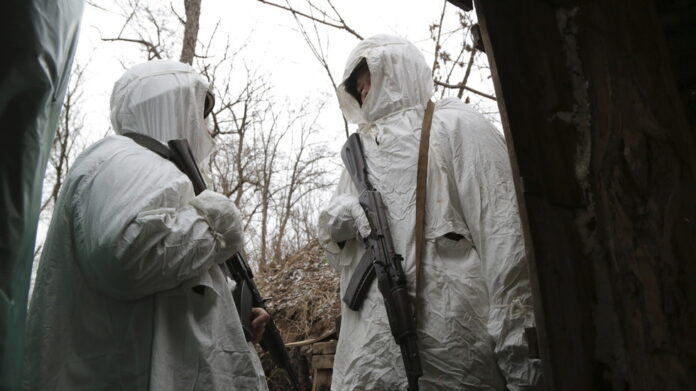
Lately, in the West and Ukraine, the claims of an alleged possible Russian “invasion” into Ukrainian territory are being touted increasingly more often. Kremlin Spokesman Dmitry Peskov branded such information as the empty and groundless escalation of tension, emphasizing that Russia does not represent a threat to anyone. That said, he did not exclude the possibility of provocations being whipped up in order to justify such claims and warned that attempts to resolve the problem in southeastern Ukraine through the use of force would have the most serious consequences.

Iran police seize half a ton narcotics shipment

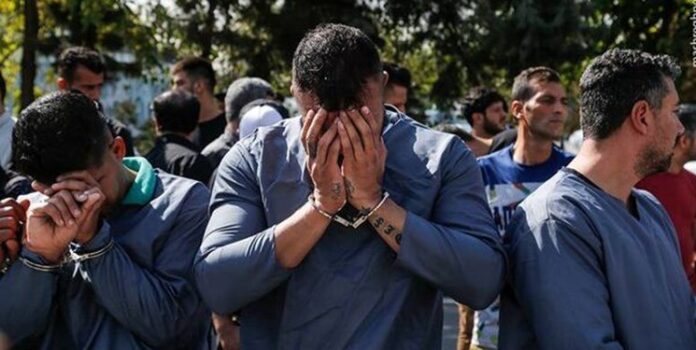
Ali Sokhangoo, Rigan County’s prosecutor in the southeastern Province of Kerman stated on Monday the Iranian intelligence forces managed to identify a big shipment of narcotics in Rigan city.

According to the judicial official, the shipment contained 221 kg of opium, 157 kg of hashish, and eight 35-liter gallons of liquid used to produce industrial narcotics.

Sokhangoo added that the security forces will identify the members of the drug trafficking group and take legal action against them.

Iran is at the forefront of the fight against drug trafficking and thousands of Iranian forces have been so far martyred to protect the world from the danger of drugs.
Despite high economic and human costs, the Islamic Republic has been actively fighting drug trafficking over the past decades.

Iran has spent more than $700 million on sealing its borders and preventing the transit of narcotics destined for European, Arab, and Central Asian countries.

Iran govt. paper hits out at Worker House for criticism over budget draft

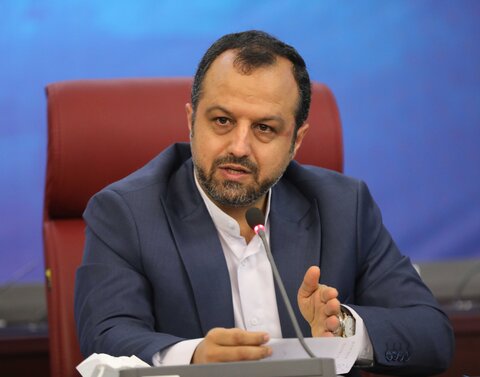
“The political party of Worker House after eight years of silence on the economic developments of the country and the problems of the workers’ community, in a strongly-worded statement, criticized the 13th administration for eliminating the subsidized foreign currency rate of 42,000 rials in the next year’s budget,” Iran Daily wrote.

The daily accused the Worker House of engaging in political activity under the cover of a workers’ association, to help its favorite candidates obtain seats in the parliament and the local councils of cities and towns as well as government positions.

The daily said Worker House failed to address workers’ problems despite protests in several major industrial plants, including Hepco and Haft Tappeh, because the protests were held during the reformist-leaned administration of former President Hassan Rouhani.

Ali Rabiee, a Labour minister and later government spokesman in Rouhani’s administration, is now a member of the central committee of the Worker House.

The association had lambasted the incumbent government of President Ebrahim Raisi for the removal of the subsidized exchange rate for the dollar, saying it destabilizes the economy.

Worker House also dismissed the government’s talk about the benefits of its move saying it is a deceitful way to pay for part of the budget deficit by devaluing the national currency.

8 dead in Fars province floods; 2 missing

The province’s deputy head of Red Crescent Society search and rescue operations said eight people died in severe flooding in the cities of Lar, Mehr and Darab, and five others were injured and taken to medical centers. Two people are also missing.

The relief forces of the Red Crescent Society have provided assistance to thousands of the affected people, and dozens more were given emergency accommodation over the past week, he added.

Iran Meteorological Organization had forecast heavy rains for Fars Province days before the latest downpour, with authorities in different cities announcing their readiness to deal with possible impact, but many of the cities of Fars Province have been inundated.

2 killed in Israeli military copter crash

The maritime “Atalef” helicopter crashed into the Mediterranean Sea off the coast of Haifa city during a training flight with an aerial observer and two pilots on board, a military spokesperson said in a statement.

The aerial observer was moderately injured and sent to the Rambam Hospital in Haifa. He was “in a stable condition” and treated for hypothermia, Micky Halbertal, director of the Rambam Hospital, told reporters.

The two pilots were found after a rescue search and were declared dead “after extensive resuscitation efforts,” the statement added.

Israeli Air Force Commander Amikam Norkin has ordered the suspension of training flights as well as the use of the “Atalef” helicopters.

Israel’s state-owned Kan TV news reported that the cause of the crash appeared to be a technical failure that set the chopper ablaze.

Israeli Defense Minister Benny Gantz wrote on Twitter that the air force will investigate the incident to “draw the necessary lessons.”

Iran says has not banned imports of Covid vaccines

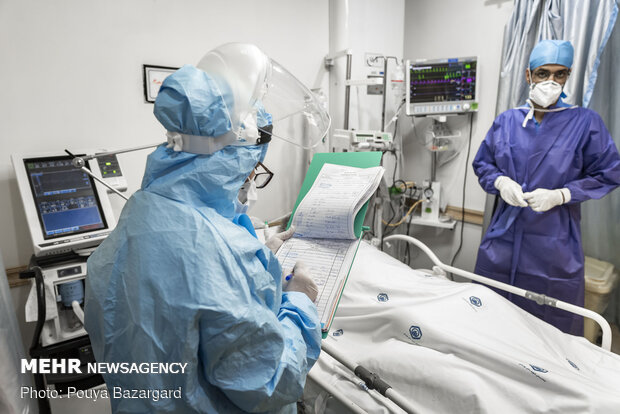
“According to an announcement by the National Taskforce Against the Coronavirus, the import of coronavirus vaccine is not prohibited and vaccine imports from abroad will continue if need be,” Food and Drug Administration’s head Bahram Darayi said on Monday.

“The priority of the 13th administration is to supply vaccines from domestic and foreign channels, and with the increase in domestic production, the approach of the National Taskforce Against the coronavirus is to reduce imports, and if the country’s needs are fully met with Iranian vaccines, import restrictions will be imposed,” the head of Iran’s Food and Drug Administration explained.

On Sunday, some media outlets quoted Darayi as saying that the country has banned Covid-19 vaccine imports.

Over 175 million doses of Covid-19 vaccine have been supplied in Iran so far out of which 156 million shots have been imported and the rest were domestically manufactured.

“A Hero” nominated for awards in CFCA

The announcement was made by the CFCA. It said the nominations are in the Best Screenplay and the Best Non-English Foreign Movie categories.

“Drive My Car”, “Petite Maman”, Totane” and “The Worst Person in the World” are other nominees in this category.

The winners of the CFCA awards will be announced on January 8. 

“A Hero” has received 8 international awards so far and has had 20 nominations in the film awards season to date, and is the representative of Iranian cinema in the 94th Academy Awards.

Iranian taxi apps down

The IRIB said on its website that the two apps went down simultaneously.

Snapp and Tapsi are still trying to get back online.

The cause of the disruption is not known.

The two apps offer round-the-clock online transportation services to people in hundreds of cities across Iran on a daily basis.

Snapp recently said it has employed nearly a million drivers across Iran.