Tuesday, January 13, 2026
Home Blog Page 2173

Ex-Afghan president blames US for his govt. fall

“It became an American issue, not an Afghan issue,” Ghani stated during an interview with BBC’s Today Program on Thursday.

“I was painted in total black… we were never given the opportunity to sit down with them,” he continued, adding, “They erased us.”

The US reached a deal with the Taliban in February 2020 on the withdrawal of 12,000 US troops from Afghanistan in exchange for the Taliban’s halting of their attacks on foreign forces. Under the deal, the former US President Donald Trump administration promised to bring the number of US forces in Afghanistan to zero by May 2021. US President Joe Biden pushed that date back to September 11.

The US-Taliban deal was the result of peace talks in the Qatari capital, Doha, from which the Afghan government was excluded.

The government of Afghanistan rapidly collapsed on August 15 in the face of lightning advances by the Taliban amid the foreign withdrawal. On September 7, the Taliban announced the formation of a caretaker government in Afghanistan.

No country has formally recognized the Taliban government in Afghanistan since the group took over the country in mid-August.

Ghani said he fled Kabul due to his security team’s incapability to defend him, stressing that he had no idea that he was going to leave the country.

“On the morning of that day, I had no inkling that by late afternoon I would be leaving,” Ghani noted, adding, “[My] national security adviser and the chief of the President Protective Service (PPS) came and said the PPS has collapsed.”

“If I take a stand, they will all be killed and they will not be capable of defending me,” he continued.

Ghani said he hoped to evacuate Kabul for the eastern province of Khost, but his national security adviser told him that the city had fallen, as had Jalalabad, the capital of Nangarhar Province.

“My instructions had been to prepare for departure to Khost… I did not know where we were going. Only after we had taken off did it become clear that we were leaving,” he added.

Ghani fled Afghanistan for Tashkent, the capital of Uzbekistan, before claiming political asylum in the United Arab Emirates. He has been bitterly criticized by former ministers for suddenly leaving the country as Taliban forces entered Kabul.

In a video streamed on Facebook in September, Ghani said his security personnel had advised the secret departure, adding that he had left Kabul to prevent further bloodshed.

“Leaving Kabul was the most difficult decision of my life, but I believed it was the only way to keep the guns silent and save Kabul and her 6 million citizens,” he added.

The Taliban first ruled Afghanistan from 1996 to 2001, when the United States and its allies invaded the country and toppled the Taliban-run government on the pretext of fighting terrorism following the September 11 attacks in the US.US-Taliban
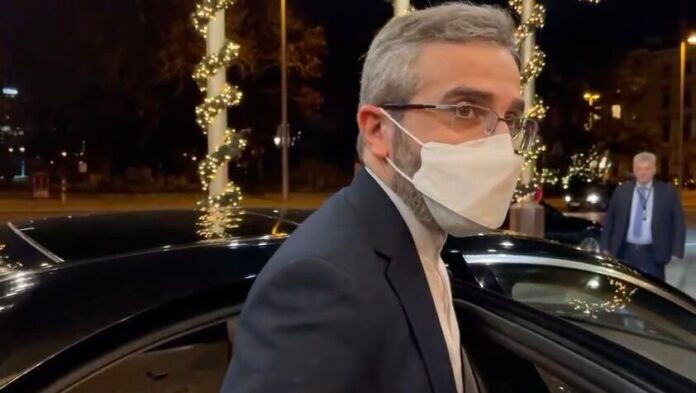
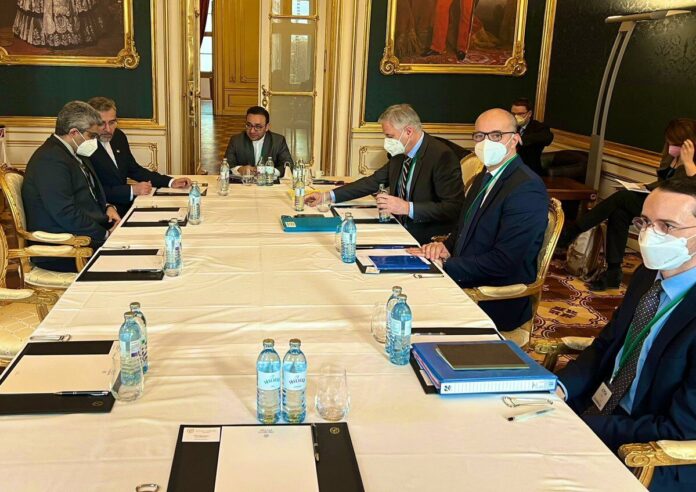
Iran negotiator: Good progress made in Vienna on sanctions removal

The main focus of the eighth round of talks has been on lifting sanctions, Ali Bagheri Kani said on Thursday afternoon as delegations prepared to go back to their countries for a New Year break before they return to Vienna on January 3.

He expressed hope that after the break, the issue of lifting sanctions will be pursued by different parties more seriously.

Dialogue and interactions between the Iranian side and the other side continued in several areas, including several verification sessions; both with the JCPOA Joint Commission coordinator and the European side, Bagheri said about the eighth round of talks which began on Monday.

Differences between the parties involved in the negotiations in the Austrian capital seem to be diminishing, with hopes of reaching a final agreement increasing.

The Islamic Republic of Iran has emphasized that if the other parties continue the negotiations in good faith, a good agreement is within reach.

“We believe that if the other sides continue the talks, which have just started in this phase, with goodwill, it will be possible for all parties to reach a good agreement and we can realize this goal,” Iranian Foreign Minister Hossein Amir Abdollahian said earlier this week.

The current negotiations are the eighth round of talks this year between Iran and the P4+1 group namely Russia, China, Britain, France and Germany.

They are trying to find a way to remove sanctions against Iran and allow the United States to return to the 2015 nuclear deal.

Tehran insists that the U.S., which unilaterally withdrew from the deal in 2018, must remove sanctions in a verifiable manner and provide credible guarantees that it will not abandon the JCPOA again if it wants to return to the deal.


Iran chief negotiator meets with EU’s Mora and E3 envoys

The Vienna talks between Iran and the P4+1 is ongoing, but teams will go to a three-day New Year break as of Thursday and will resume talks on January 3.

Delegations from Iran and the P4+1, China, France, Germany, Russia, and the UK, returned to Vienna, Austria, on Monday after a Christmas recess.

Mora who co-chaired the JCPOA (Joint Comprehensive Plan of Action) Joint Commission meeting on Monday evening told reporters that the upcoming break was only due to Palais Coburg’s suspension of services.

The ongoing round of talks – the eighth round – was originally set to be held after the New Year holiday, but the teams decided to reconvene between the two holidays as an indication of seriousness.

In the meantime, some media have attempted to keep up with their deviated narrative of the talks in the Austrian capital, reporting that negotiations have come to no result and the teams were going to put an end to the talks.

Meanwhile, Bagheri Kani stated reaching an agreement on effective removal of sanctions against Iran is the key to success of the eighth round of talks in Vienna to revive the 2015 Iran nuclear deal.

Almost all representatives of the participant countries had underscored the priority of removing the illegal sanctions against Iran, Bagheri Kani told Iranian reporters, referring to the meeting of the JCPOA Joint Commission on Monday evening in the Austrian capital.

It was agreed that the removal of sanctions be put on the agenda in experts meetings and the joint meetings between Iran and the P4+1, he added.

The Iranian top negotiator also said that the delegations have agreed to consider in the issue of sanctions removal the two main deliberations of Iran, i.e. verification of sanctions removal and assurances for that.

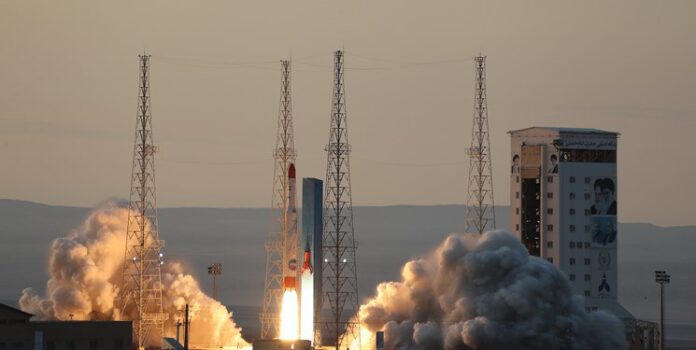
Iran launches 3 research ‘shipments’ into space

“In this research space mission, for the first time three research shipments were simultaneously launched to an altitude of 470 kilometers [above earth] at a speed of 7250 meters per second,” said Ahmad Hosseini, the spokesperson for space affairs at the defense ministry.

He said the achievement followed earlier breakthroughs in the country’s space industry.

“After the country developed domestic space potential as well as the capability to launch small satellites on Safir and Qassed satellite carriers, the development of launchers with higher capabilities was put on the agenda,” he said.

“Accordingly, the design and development of the Imam Khomeini space station and the Simorgh satellite carrier was put on the agenda,” he added.

He said the recent launch took place as planned.

“In this launch, the components of the space stations had the right performance and the stages of the launch of the satellite carrier went as planned, and finally, the research objectives of the launch were met,” said the spokesman.

Iran Covid: Number of vaccines administered surpasses 119mn

The latest Iranian Health Ministry figures published on Thursday show that over 51,800,000 people have been fully vaccinated and nearly 7,500,000 have received their booster shots.

Iran has been reporting record low fatalities and infection cases over the past days largely thanks to an intensified inoculation program.

On Thursday, the country registered 45 new deaths from Covid-19 taking the total official death toll to 131,572.

Iranian health officials have expressed concern about the new coronavirus strain known as Omicron that has seriously affected many parts of the world and has spread to at least a dozen provinces of Iran.

Iranians have been urged by the health ministry to fully observe protocols and get their booster shots to avoid another wave of the deadly disease.

Iran bans entry of ship crew members from eight countries

The coordinator of the National Task Force for Fighting Coronavirus said the countries are Zimbabwe, Mozambique, Namibia, Malawi, South Africa, Eswatini,  Lesotho and Botswana. 

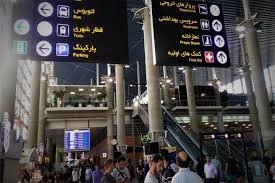
Earlier, Iran Air, commonly known as Homa, said in a statement travellers on international flights need to meet new conditions before travelling to Iran.

Iran Air added that non-Iranian travelers who have resided in France, Britain, Denmark and Norway in the past 14 days, or who have been on a transit route to those countries cannot enter Iran until further notice.

All travellers aged above 13 onboard flights to Iran must have proof of negative PCR test in English done 72 hours before their flight.

All passengers over the age of 12 with non-Iranian citizenship, in addition to the PCR test, must have a coronavirus vaccination card in English and must have received the vaccine within the past 14 days, according to the Homa statement.

Omicron has overwhelmed healthcare systems in some European countries.

A small number of the strain have been detected in Iran. This has prompted authorities to exercise vigilance.


Iran negotiator: Vienna talks going on well; US must first lift bans

Bagheri Kani made the comment after bilateral and multi-lateral meetings with the heads of the negotiating teams of the European troika and the EU’s Deputy Foreign Policy Chief Enrique Mora in Vienna on Wednesday. Bagheri Kani also said talks are going on well.

Following their meetings with the Iranian delegation, the European troika diplomats went to a hotel across from Coburg Hotel in the Austrian capital where they held talks with the US delegation.

Reports coming out of Vienna say differences between Iran and the European troika have narrowed and talks have made good progress regarding sanctions removal. Most of the diplomats participating in the talks reportedly underline the need to reach a final deal to revive the JCPOA.

Bagheri says both sides will reach an agreement soon if the other parties are serious and ready to accept the mechanisms Tehran has proposed for the lifting of anti-Iran bans, especially the issue of verification of the sanctions removal.

Meanwhile, Russian negotiator in the Vienna talks Mikhail Ulyanov said in a tweet that participants in the negotiations and the US delegation met this evening and exchanged views on the current state of affairs and that they all were pleased with the positive trends and businesslike atmosphere of the discussions.

Talks between Iran and the P4+1 group – Russia, China, Britain, France and Germany- will continue until Thursday and there will be a break for Christmas holidays. Then the parties to the Vienna negotiations will resume their consultations next Monday.

Iran slams Israel’s move to hold cabinet session in Golan

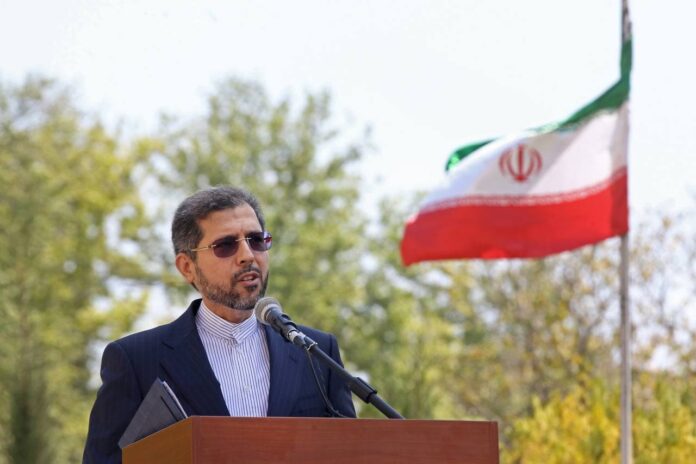
Iranian Foreign Ministry spokesman Saeed Khatibzadeh described this act of aggression by the Zionists as provocative, saying the occupied Golan Heights is an integral part of the Arab Republic of Syria as confirmed by UN Security Council Resolution 497.

Khatibzadeh stressed that Israeli settlement expansions and an increase in the number of migrant Zionists in the occupied Golan Heights cannot change this reality and Zionist settlers should understand that they cannot remain in usurped territories forever.

The Iranian Foreign Ministry spokesman reaffirmed Tehran’s solidarity with and its unwavering support for Syria.

The Zionist regime on Sunday said it intends to double the population of Zionists residing in the occupied Golan Heights in the coming years.

Israeli Prime Minister Naftali Bennett made the announcement at a special Cabinet meeting held in the Golan Heights.

Syria on Monday vociferously condemned the Israeli regime’s announcement.

Israel occupied the Golan heights in 1967 following the 6-day war which it fought against several Arab countries. Tel Aviv has defied countless calls by the UN to end its occupation of the Syrian territory.

Iran petrochemical exports expected to rise to $14bn by year end

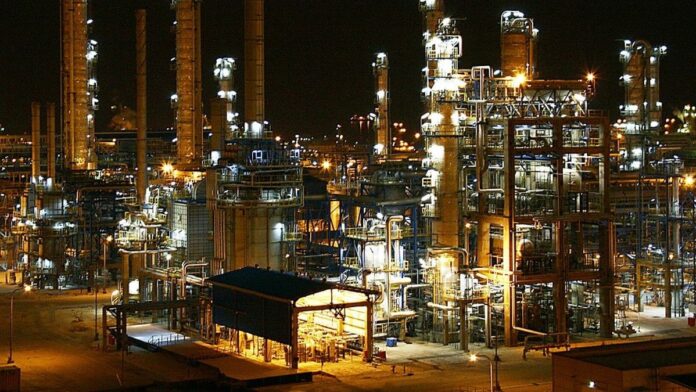
Ahmad Mahdavi Abhari, secretary general of the occupational association of employers of the petrochemical industry told reporters on the occasion of the National Petrochemical Industry’s Day that the industry is trying to overcome the problem of trade in raw materials. That is part of a national plan to focus on exports with maximum added value.

Abhari said the industry now has a production capacity of 93 million tons a year. That, he said, is a result of an eight percent increase in national production over the past nine months, during which $10.5bn of petrochemicals have been exported.

Abhari added that the petrochemical industry has also produced 76 percent more foreign currency inflow compared to the year to March 2021.

The official stressed that the industry has produced Iran $11bn of income, thanks to its exports.

Over the past years, Iranian officials have focused on investment in the petrochemical sector to prevent trade in crude oil in its raw form.

The focus on petrochemicals allows the country, as the holder of one of the largest crude reserves in the world, to multiply oil revenues through exports of the strategic resource in processed form.

Minister: Fajr Intl. Film Festival to feature ‘Haj Qassem’ special section

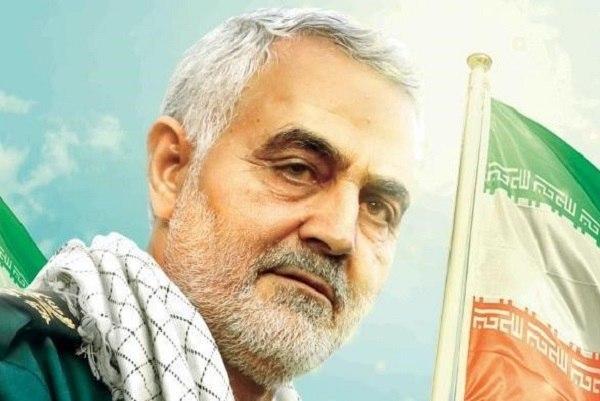
General Soleimani

Esmaeili made the comment as preparations are in place to commemorate the second anniversary of the assassination of the former senior Islamic Revolution Guards Corps commander.

He was assassinated in a US drones strike near Baghdad Airport on January 3, 2020, while accompanied by senior commander of the Iraqi Popular Mobilization Units Abu Mahdi al-Mohandis.

“The Islamic Republic has launched a clear strategy and has managed to bring change to this region. Fighting oppression and promoting resistance are messages of the revolution, which have come to be known as the school of resistance, and over the past three decades, this has been the school of Haj Qassem [Soleimani] and he has been a symbol of this strategy,” Esmaeili said.

The minister also praised the character of the late general in terms of rationality, morality and spirituality as well as the sacrifices he made. He said this should be reflected in the cultural domain, especially in media, amid at what he called the “war of narratives” with enemies.

Esmaeili added that his ministry is also cooperating with other state bodies to support relevant popular moves including dozens of festivals of theater, visual arts and music.