Friday, May 1, 2026
Home Blog Page 2150

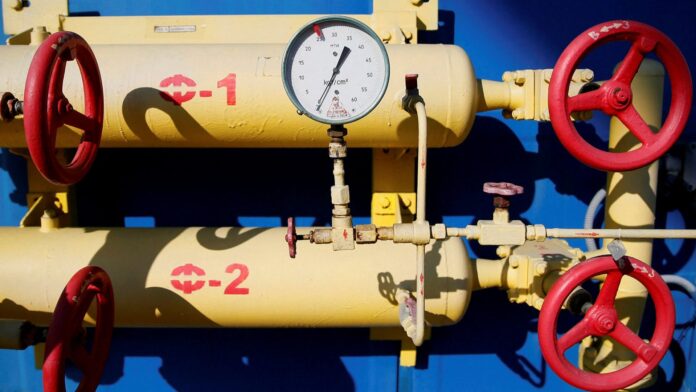
EU in gas talks with US, Qatar, Azerbaijan amid standoff with Russia

“We are prepared in case diplomacy fails and we are looking at all options. This includes improving our resilience, including by working with partners like the US, Qatar, and Azerbaijan, on the issue of gas supply in case Russia decides to reduce or halt deliveries,” he wrote in his blog. 

Earlier, Bloomberg, citing its sources in the EU, reported that the EU is discussing the possibility of a swap deal with a number of countries in order to avoid interruptions in gas supplies to Europe, which, in particular, may be caused by the situation around Ukraine. According to the report, the EU is discussing swap deals with Qatar and Norway. At the same time, Brussels is in close contact with Algeria and Egypt, as well as Asian countries, to find out if this kind of deal is possible. 

In recent months, statements have been made in the west, as well as in Kiev, about a possible Russian invasion of Ukraine. The Kremlin called the allegations baseless, aimed at escalating tensions. 

NATO Secretary General Jens Stoltenberg has also suggested that Europe diversify its energy supply. 

“We are concerned about the energy situation in Europe because it demonstrates the vulnerability of being too dependent on one supplier of natural gas and that’s the reason why NATO allies agree that we need to work and focus on diversification of supplies,” Stoltenberg stated on Sunday. 

Russia, which supplies close to a third of Europe’s natural gas, was not directly referenced, but the recent escalation in tensions between Russia and NATO over Ukraine is thought by some to be a catalyst for his comments. 

NATO allies have discussed wide-ranging sanctions and military action should Russia invade Ukraine. However, the European Union, of which many nations are NATO members, is heavily dependent on Russian energy exports. 

In 2019, 60.7% of the EU’s energy came from imports. Russia was the largest supplier of coal, crude oil, and natural gas, and, over the past decade, the EU has become increasingly reliant on Russian natural gas. 

The growing demand for Russian natural gas led to the development of the Nord Stream 2 pipeline. The pipeline runs under the Baltic Sea connecting Russia and Germany and has long been a politically divisive topic within NATO. 

One primary stated concern was the ability for Russia to use energy as a bargaining chip. The pipeline was completed in September of 2021. 

Europe is also in the midst of an energy crisis. The continent had to dip into energy reserves during an exceptionally hot summer and has seen lower than anticipated energy production from wind turbines. 

In the fourth quarter of 2021, natural gas prices at the Dutch TTF contract, the European benchmark, were at a record high of $31.14/MMBtu. Prices have dropped in the first quarter of 2022, but supply remains low compared to recent averages. 

On Sunday, Pentagon spokesperson John Kirby said the US is looking at deterrents against Russia’s aggression toward Ukraine “the likes of which we have not looked at before,” though he stated that there is still “room and space for diplomacy.” 

“Fox News Sunday” host Dana Perino asked Kirby what efforts are being made to signal the possible consequences from the US if Russia invades Ukraine. 

“I think we’ve been very clear with Mr. [Vladimir] Putin about the economic consequences that could come his way and the way the Russian people should he further incur — invade inside Ukraine. And one of the things about sanctions is once you once you trip that, then the deterrent effect is lost,” Kirby added.  

“I think we’ve been very, very clear that we’re going to look at sanctions and economic consequences, the likes of which we have not looked at before even considering even as far back as 2014,” he

nued. 

However, Kirby also said during his interview that “it doesn’t have to come to conflict.” 

“We still believe there’s room and space for diplomacy and we’d like to see that be the solution here,” he added. 

US Ambassador to the United Nations Linda Thomas-Greenfield has also said Russia would not have amassed such a large military presence along the Ukrainian border without the intention of using it. 

“We’ve seen the Russian playbook before. They are using disinformation. They’re encouraging Ukrainians not to worry about an attack, but we know that the attack is possible,” Thomas-Greenfield said on ABC’s “This Week” on Sunday. 

“You don’t amass 100,000 troops if you don’t have intentions to use them,” she added of the Russian troops along the border. 

Her remarks come as concerns about a potential Russian invasion of Ukraine mount. 

Last week, President Joe Biden announced that he would send a small number of US troops to the eastern Europe in the “near term”. 

“I’ll be moving troops to Eastern Europe in the NATO countries in the near term,” Biden said on Friday to reporters at Joint Base Andrews, adding, “Not too many.”
US says Kurds recapture Syria prison after Daesh assault

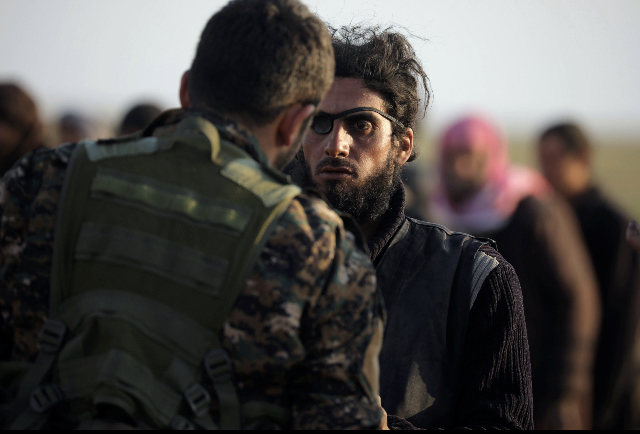
In a statement, national security adviser Jake Sullivan said the Syrian Democratic Forces (SDF) were able to “re-take full control” of Hasakah prison, ending the prison break attempt from Daesh (ISIS or ISIL). 

“Thanks to the bravery and determination of the SDF, many of whom paid the ultimate sacrifice, ISIS failed in its efforts to conduct a large-scale prison break to reconstitute its ranks,” Sullivan announced in a statement.  

Sullivan added Sunday that ISIS’s violent prison break attempt showed why the terrorist organization must be contained, saying nations “must work together to address the thousands of ISIS detainees in inadequate detention facilities.” 

“ISIS remains a global threat that requires a global solution. The United States remains committed to working with our partners in Iraq and northeast Syria, and the Defeat-ISIS Coalition, to counter the ISIS threat to our homelands,” Sullivan concluded in his statement. 

The forces’ commander, Mazloum Abadi, tweeted that all fugitives had been arrested.  

Assailants broke into the sprawling Ghwayran prison complex near the city of Hasakah on January 20, sparking days of heavy fighting that killed 270 people. 

The SDF announced that it had recaptured the prison on Wednesday, but “mop-up operations” continued. About 3,500 Daesh members surrendered, but others barricaded themselves inside the prison. 

The violence prompted 45,000 people to flee Hasakah, the UN announced. Many took refuge in relatives’ homes, while hundreds more have slept in the city’s mosques and wedding halls. 

The fighting also raised concerns among NGOs about the fate of some 700 children of Daesh fighters housed in the prison, who the SDF calls “Caliphate Cubs”. 

The SDF has called on the UN to urge countries that have Daesh nationals detained in Syria to “accelerate the pace of their repatriation” – primarily children and women. 

UN Under-Secretary-General Vladimir Voronkov told the Security Council on Thursday the deadly prison siege underscored the need to deal with those allegedly linked to the armed group in prisons and camps in Syria’s northeast. 

Daesh lost its last patch of territory near Baghouz in eastern Syria in March 2019. Since that time, it largely went underground and waged a low-level battle, including roadside bombings, assassinations, and hit-and-run attacks mostly targeting security forces. 

In eastern Syria, fighters carried out 342 operations over the last year, many attacks on Kurdish-led forces, according to the Syrian Observatory. 

The prison break in Hasakah was its most sophisticated operation yet. It was part of a recent uptick in attacks that have stoked fears the armed group is gaining momentum in Syria and Iraq.

Iran: We will make each and every effort to end ordeal of Yemenis

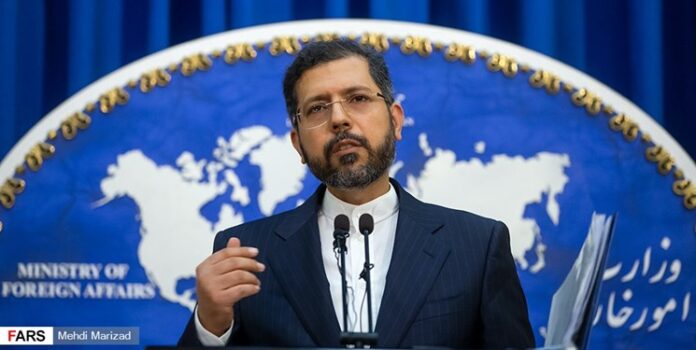
 Speaking to journalists in his weekly news briefing, Khatibzadeh warned that the tragedy in Yemen is worsening due to the Saudi-led attacks against the country in recent days. 

He noted that the Islamic Republic of Iran believes the Yemen crisis has no military solution and it can be resolved only through political means and the cessation of military aggression against the country.

Khatibzadeh also spoke of the Vienna talks that aim to revive the Iran nuclear deal, JCPOA. He said if the other parties to the negotiations respond positively to Iran’s righteous demands and inalienable rights the day after delegations return to the Austrian capital, then a good and lasting deal will be within reach and there will be no need for artificial deadlines. 

He however noted that the parties have made considerable progress in the talks over sanctions removal, nuclear obligations, verification and guarantees in recent weeks. 

Khatibzadeh urged the US to recognize Iran’s rights and to not demand anything beyond the JCPOA. 

The Foreign Ministry spokesman underlined that Iran will not accept anything beyond the deal. Khatibzadeh further responded to a question about the visit of the Israeli president to the UAE. He said the fake regime creates crises and depends on terrorism and violence for survival.

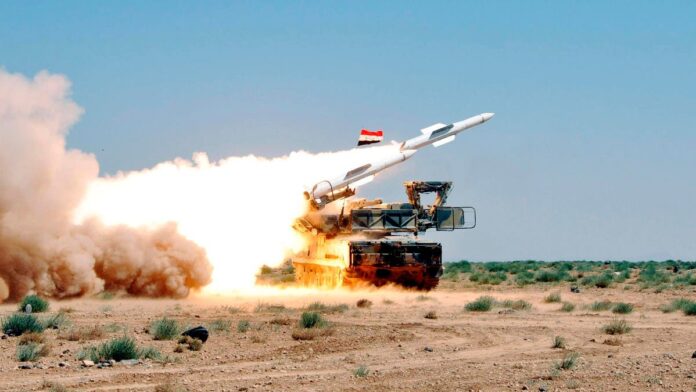
Syria air defenses repel Israeli attack on Damascus

Syria’s official news agency SANA, citing a military source, reported that several Israeli missiles were fired from the direction of the eastern Lebanese town of Rayaq at some targets near Damascus on Monday. 

The source added that Syrian air defenses managed to destroy most of the missiles, noting that the strikes had caused some “material damage.” 

There were no immediate reports of casualties, however. 

Syria has been gripped by foreign-backed militancy since March 2011. The Syrian government says the Israeli regime and its Western and regional allies are aiding Takfiri terrorist groups that are wreaking havoc in the country. 

Israel frequently targets military positions inside Syria, especially those of the resistance movement Hezbollah which has played a key role in helping the Syrian army in its fight against the foreign-backed terrorists. 

The Tel Aviv regime mostly keeps quiet about its attacks on Syrian territories which many view as a knee-jerk reaction to the Syrian government’s increasing success in confronting terrorism. 

Israel has been a key supporter of terrorist groups that have opposed the government of President Bashar al-Assad since the foreign-backed militancy erupted in Syria.

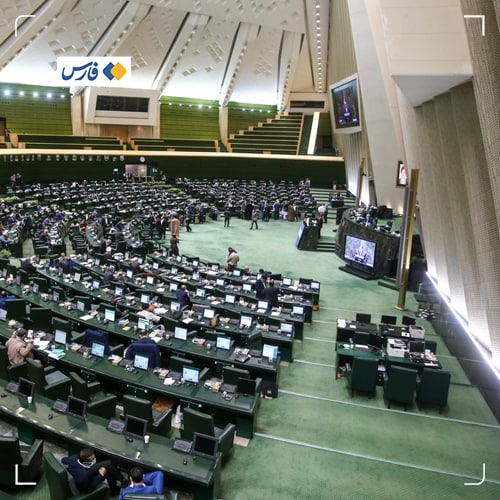
Number of Covid cases soaring among Iran MPs

Mojtaba Yousefi a member of the Iranian Parliament’s Presiding Board has said 

said the tally doesn’t include the employees who have contracted the virus. He said if they are added to the figure, the number of Coronavirus virus cases in Parliament will be way higher. 

Yousefi also said, “As per guidelines of the National Taskforce for Fighting Covid, we must shut down parliamentary sessions under the current circumstances, but given the important issues facing our country, we are going to hold a 2-hour session tomorrow and on Wednesday”.  

According to him, from next week, social distancing will be observed in the legislative body and open meetings will be held in three sections. 

During the previous Covid waves, the parliamentary sessions were also held in the parliament floor, the constitutional hall and the integration commission.

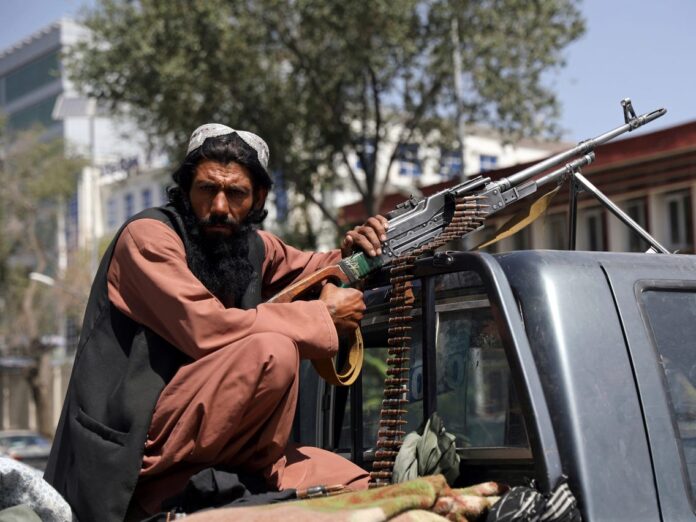
UN: Dozens of ex-Afghan officials purportedly killed since Taliban takeover

Secretary general Antonio Guterres said in a report that “more than two thirds” of the deaths were alleged to have resulted from extrajudicial killings by the Taliban or its affiliates, despite the Taliban’s announcement of “general amnesties” for those affiliated with the former government and US-led coalition forces. 

The UN political mission in Afghanistan also received “credible allegations of extrajudicial killings of at least 50 individuals suspected of affiliation with ISIL-KP”, the Islamic State terror group operating in Afghanistan, Guterres added in the report to the UN Security Council. 

In the report, obtained by the Associated Press on Sunday, he stated that despite Taliban assurances, the UN political mission had also received credible allegations “of enforced disappearances and other violations impacting the right to life and physical integrity” of former government and coalition members. 

Guterres said human rights defenders and media workers also continue “to come under attack, intimidation, harassment, arbitrary arrest, ill-treatment and killings”. 

Eight civil society activists were killed, including three by the Taliban and three by Islamic State terrorists, and 10 were subjected to temporary arrests, beatings and threats by the Taliban, he added. Two journalists were killed – one by IS – and two were injured by unknown armed men. 

The secretary general announced the UN missions documented 44 cases of temporary arrests, beatings and threats of intimidation, 42 of them by the Taliban. 

The Taliban overran most of Afghanistan as US and NATO forces were in the final stages of their chaotic withdrawal from the country after 20 years. They entered Kabul on 15 August without any resistance from the Afghan army or the country’s president, Ashraf Ghani, who fled. 

The Taliban initially promised a general amnesty for those linked to the former government and international forces, and tolerance and inclusiveness towards women and ethnic minorities. However, the Taliban have renewed restrictions on women and appointed an all-male government, which have met with dismay by the international community. 

Afghanistan’s aid-dependent economy was already stumbling when the Taliban seized power, and the international community froze Afghanistan’s assets abroad and halted economic support, recalling the Taliban’s reputation for brutality during its 1996-2001 rule and refusal to educate girls and allow women to work. 

Guterres noted, “The situation in Afghanistan remains precarious and uncertain six months after the Taliban takeover as the multiple political, socio-economic and humanitarian shocks reverberate across the country.” 

He stated Afghanistan today faces multiple crises: a growing humanitarian emergency, a massive economic contraction, the crippling of its banking and financial systems, the worst drought in 27 years and the Taliban’s failure to form an inclusive government and restore the rights of girls to education and women to work. 

“An estimated 22.8 million people are projected to be in ‘crisis’ and ‘emergency’ levels of food insecurity until March 2022,” the UN chief continued, adding, “Almost 9 million of these will be at ‘emergency’ levels of food insecurity – the highest number in the world. Half of all children under five are facing acute malnutrition.” 

On a positive note, Guterres reported “a significant decline” in the overall number of conflict-related security incidents as well as civilian casualties since the Taliban takeover. The UN recorded 985 security-related incidents between 19 August and 31 December, a 91% decrease compared with the same period in 2020, he said. 

The eastern, central, southern and western regions accounted for 75% of all

corded incidents, he added, with Nangarhar, Kabul, Kunar and Kandahar ranking as the most conflict-affected provinces. 

Despite the reduction in violence, Guterres said the Taliban faced several challenges, including rising attacks against their members. 

“Some are attributed to the National Resistance Front comprising some Afghan opposition figures, and those associated with the former government,” he continued, adding, “These groups have been primarily operating in Panjshir province and Baghlan’s Andarab district but have not made significant territorial inroads”, although “armed clashes are regularly documented, along with forced displacement and communication outages”. 

Guterres stated intra-Taliban tensions along ethnic lines and competition over jobs had also resulted in violence, pointing to armed clashes on 4 November between between Taliban forces in Bamyan city. 

In the report, the secretary general proposed priorities for the UN political mission in the current environment, urged international support to prevent widespread hunger and the country’s economic collapse, and urged the Taliban to guarantee women’s rights and human rights. 

Guterres said Pakistan and Iran have shown unforgettable generosity in hosting millions of Afghans. 

“I will never forget the generosity of countries like Pakistan and Iran, which — for decades — have hosted millions of Afghans in need,” the UN chief stated at a Security Council debate on Afghanistan. 

“At this moment, we need the global community — and this Council — to put their hands on the wheel of progress, provide resources, and prevent Afghanistan from spiraling any further,” he added. 

Also on Sunday, President Joe Biden called for the release of US Navy veteran Mark Frerichs, who was taken hostage in Afghanistan nearly two years ago. 

Frerichs, a civil engineer and contractor from Lombard, Illinois, was kidnapped in January 2020 from the capital of Kabul. He is believed to be in the custody of the Taliban-linked Haqqani network. 

“Threatening the safety of Americans or any innocent civilians is always unacceptable, and hostage-taking is an act of particular cruelty and cowardice,” Biden said in a statement to mark the second anniversary of the kidnapping on Monday. 

“The Taliban must immediately release Mark before it can expect any consideration of its aspirations for legitimacy. This is not negotiable,” he added.

Direct talks between Iran, US unlikely: Analyst

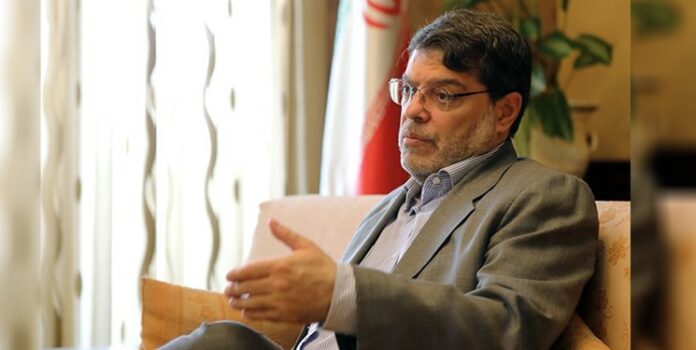
Mohammad Marandi added “serious differences” remain while negotiations are underway between Tehran and the other negotiators in the Austrian capital. 

He said outstanding issues remain in three areas: The lifting of sanctions, verification and giving guarantees. 

“The Americans and Europeans should make important decisions in order for us to reach agreement,” said Marandi, who is also a senior political analyst and an expert in US studies. 

He said the Europeans should make decisions and act accordingly if they really want to reach a deal. 

“Russia and China support Iran’s stances in all areas and believe Iran has made rightful demands,” he explained. 

“The main difference is due to the fact that the Westerners want everything without giving anything in return,” Marandi noted, 

“The Western countries want Iran to accept nuclear limitations, but at the same time they intend to retain sanctions in order to tighten the noose on Iranian people,” he said. 

He quoted European Union envoy Enrique Mora as saying that the eighth round of talks which kicked off on December 27, 2021 has been one of the longest of all negotiations ever since. 

Several blasts heard over Abu Dhabi sky

Various Arabic-language media outlets reported the explosions early on Monday. 

Earlier, Yemen’s al-Masirah television network cited spokesman of the country’s armed forces, Brigadier General Yahya Saree, as stating that the “forces are to announce a large-scale military op. in the Emirati depth in the coming hours.” 

The UAE is Saudi Arabia’s main partner in a 2015-present war that Riyadh and its allies have been waging against Yemen to change the impoverished country’s ruling structure. 

The military campaign has killed hundreds of thousands of Yemenis and turned the entire Yemen into the scene of the world’s worst humanitarian crisis. 

The Yemeni forces that feature the army and its allied fighters from the Popular Committees have, however, vowed not to lay down their arms until the country’s complete liberation from the scourge of the Saudi-led invasion. 

Confirming Saree’s remarks, the alkhabaralyemeni.net news website reported that the planned “unprecedented and destructive” counterblow was to target as many as 50 “sensitive spots” across the UAE. 

The website, which was citing the “Military Information” department of Yemen’s National Salvation Government in the capital Sana’a, added that the retaliatory operation was to use as many as 300 drones, 50 ballistic missiles, and 46 cruise missiles. 

The aircraft and the projectiles, it said, were to crush “the UAE’s vital economic arteries.” 

Earlier this month, Yemen’s joint defense forces carried out two operations codenamed the “Yemen Storm 1” and “Yemen Storm 2”, which saw them striking targets deep inside Dubai and Abu Dhabi. A few days after the first operation, the Emirates grounded most private drones and light sports aircraft. 

Sabereen News has reported that the Emirates had grounded all flights at the airports lying in the two Emirati cities amid fears of the pending retaliation. 

The Emirati ministry of defense alleged that the country had intercepted and destroyed a ballistic missile fired from the direction of Yemen. 

Sabereen News, however, said the projectile had hit a shipbuilding factory in Abu Dhabi’s Mussafah industrial area. 

The missile counterstrike comes as Israeli President Isaac Herzog is visiting the UAE in the first such trip, more than a year after Abu Dhabi and Tel Aviv signed a United States-brokered normalization agreement that provoked a sharp backlash in the region. 

Reuters alleged that Herzog would continue his planned visit to the UAE regardless of the missile strike. 

Yedioth Ahronoth, an Israeli newspaper, however, cited the Israeli regime’s intelligence apparatus as asking him “to leave UAE immediately.”

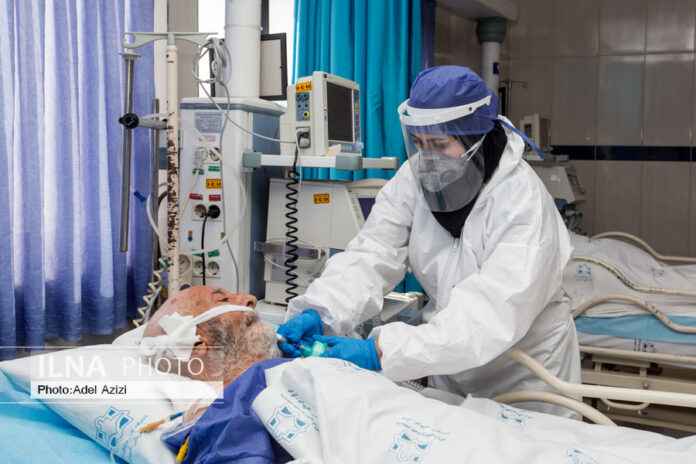
Iranian official: Covid 6th wave to reach climax in 4 weeks

Hamidreza Jamaati said such measures must be taken as soon as possible so the next wave of the disease can be contained to a large extent. 

He warned that it’s going to take 4 weeks before the sixth wave of Covid reaches its climax. 

Jamaati complained Iran’s National Taskforce for Fighting Covid relaxed protocols aimed at preventing a new wave of the Coronavirus and people did not observe them. 

According to him, all this caused Iran to be hit by another wave of Covid. 

Jamaati also spoke of measures put in place to treat Covid patients if the new cases soar. He said, “We in the Coronavirus Scientific Committee have updated the treatment protocol for Covid…this protocol stipulates that by setting up outpatient clinics, when we face the peak of disease, we will perform a three-day treatment using remdesevir …in this way, we can prevent a high rate of hospitalizations, as we did in the fifth wave of Covid and were able to provide necessary services to patients”. 

Jamaati’s comments come as the head of Parliament’s Health Commission has ruled out closure of schools and universities. Shahriari said in all countries of the world, educational institutions are among the last centers to be closed due to the Covid pandemic. 

He added that the destructive impacts of school closures will be known in the next 2 years.