Thursday, December 25, 2025
Home Blog Page 214

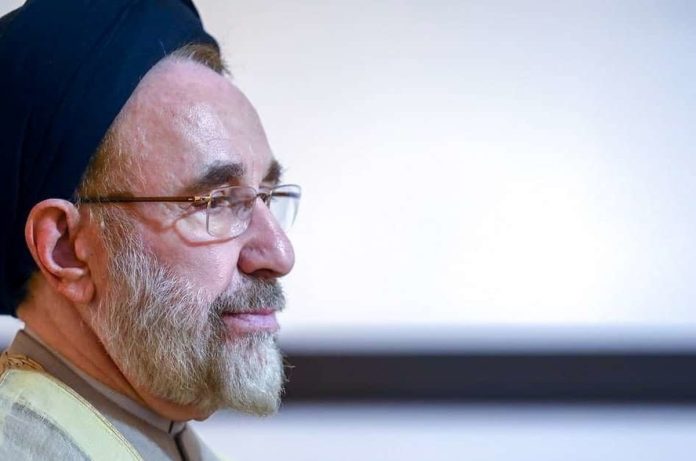
Iranian politician: Larijani’s appointment as Security Council head signals shift away from hardliners

In remarks to Entekhab news outlet, Falahatpisheh said the move reflects a belated effort to correct the course set by radical elements in Iran’s political system.
He expressed hope that the next step would be holding those responsible for past extremist policies accountable.

Falahatpisheh argued that hardliners had placed Iran in direct confrontation with the US and missed key diplomatic opportunities, particularly during the final months of former president Hassan Rouhani’s administration.

He also criticized state media for still giving platforms to ultra-conservative voices and suggested that parts of the establishment had profited from sanctions and unrest while silencing reformist figures.

Addressing President Massoud Pezeshkian and Foreign Minister Seyed Abbas Araghchi, he urged them to honor the public’s desire for de-escalation, warning that failure to do so would blur distinctions between their leadership and the so-called “shadow government.”

Falahatpisheh concluded that stronger resistance to hardliners might have prevented the current crises.

Iran’s fiber optic production plant launched in Venezuela

Iran’s Minister of Communications and Information Technology, Seyed Sattar Hashemi, said that in line with expanding technology diplomacy and exporting Iran’s technical capabilities to other countries, a fiber optic production facility has been launched and put into operation in Venezuela by Iranian knowledge-based companies.

The Iranian fiber optic plant in Venezuela was established with a $10 million investment. It aims to meet Venezuela’s domestic needs—which previously imported fiber optic equipment worth $2 million annually from Iran—and to become a regional hub for exporting telecommunications equipment to Latin American countries.

According to Amirhossein Mirabadi, head of the Center for International Interactions at the Vice-Presidency for Science, Technology, and Knowledge-Based Economy, with the inauguration of this plant, Iranian knowledge-based companies have established a presence in a region often described as the United States’ backyard.

Earlier, Iran and Oman had also agreed to establish a new corridor for data and internet transit—a route beginning in northern countries such as Russia and Central Asia, passing through Iran, and extending southward to the Persian Gulf, India, and even East Africa.

The purpose of this agreement is for Iran, leveraging its domestic infrastructure, to become one of the main data transit routes in the region. The initial capacity of this corridor is 4.5 terabits per second.

Iran says it cannot trust US after attack on nuclear facilities

Esmael baghaei

Speaking with Press TV, Baghaei said Washington colluded with Israel to violate Iran’s sovereignty and sabotage ongoing diplomatic efforts during the occupying regime’s 12-day war of aggression against Iran.

Israel launched a large-scale attack against Iran on June 13, assassinating many high-ranking military commanders, nuclear scientists, and ordinary civilians. More than a week later, the United States also entered the war by bombing three Iranian nuclear sites. The war came amid indirect talks between Tehran and Washington on the former’s nuclear program.

“There is no plan for any sort of negotiations with the US, but we have always repeated that Iran has never left the negotiating table,” Baghaei said.

He made clear that “If we come to the conclusion that through negotiations we can resolve an issue or we can take care of our national interests, we would not hesitate to do that.”

Baghaei added that negotiations should be purposeful and solution-oriented and should not deprive Iran of its inalienable rights under the Nuclear Non-Proliferation Treaty (NPT).

Iran and the United States had held five rounds of indirect talks on Tehran’s peaceful nuclear program before the beginning of Israel’s acts of aggression.

Mediated by Oman, the 6th round of talks was planned to be held in the Omani capital of Muscat on June 15, but was called off due to the anti-Iran attacks.

It is ‘up to Israel’ whether to occupy all of Gaza: Trump

When asked on Tuesday about reports that Israeli Prime Minister Benjamin Netanyahu has decided to occupy the entire Palestinian territory, Trump said he is focused on getting “people fed” in Gaza.

“As far as the rest of it, I really can’t say. That’s going to be pretty much up to Israel,” the US president told reporters.

Washington provides Israel with billions of dollars in military aid annually, assistance that significantly increased following the start of Israel’s war on Gaza in October 2023.

Israel has used forced displacement orders to squeeze Palestinians into ever-shrinking pockets in Gaza, turning 86 percent of the territory into militarised zones.

But increased military operations in the remaining part of the territory would further endanger the lives of Palestinians, who already endure daily bombardment and Israeli-imposed starvation.

Netanyahu’s purported plans to conquer Gaza have also raises concerns about the safety of the remaining Israeli captives held in the enclave by Hamas and other Palestinian groups.

Israel withdrew its forces and settlements from the Palestinian territory in 2005, but legal experts have said that the enclave remained technically under occupation, since the Israeli military continued to control Gaza’s airspace, territorial waters and ports of entry.

Since the start of the war in 2023, right-wing Israeli officials have called for the re-establishment of Israel’s military presence and settlements inside Gaza.

Netanyahu has also suggested that Israel aims to remove all Palestinians from the enclave, in what would amount to ethnic cleansing, a plan that Trump himself echoed in February.

Trump, at the time, proposed clearing Gaza of its people to construct a “riviera of the Middle East” in its stead.

The recent reports about Israel’s intention to expand its ground operations in Gaza come amid growing international outcry over the deadly hunger spreading across the territory.

Israel has blocked nearly all aid from entering Gaza since March, making US-backed GHF sites almost the only places for Palestinians to get food.

Hundreds of Palestinians have been shot by the Israeli military while trying to reach GHF facilities deep inside Israel’s lines of control. Nevertheless, the US has continued to support the organisation, despite international pleas to allow the UN to distribute the aid.

The Israeli military has also been accused of targeting aid seekers trying to reach assistance trucks away from GHF sites in northern Gaza.

On Tuesday, Trump reiterated his often-repeated claim that the US has provided $60m in aid to Gaza. His administration had provided $30m to GHF.

“As you know, $60m was given by the United States fairly recently to supply food – a lot of food, frankly – for the people of Gaza that are obviously not doing too well with the food,” he told reporters.

“And I know Israel is going to help us with that, in terms of distribution and also money. We also have the Arab states [which] are going to help us with that in terms of the money and possibly distribution.”

Israel’s assault on Gaza has killed more than 61,000 people and flattened most of the territory in what rights groups and UN experts have called a genocide.

US official says Trump to host Armenia, Azerbaijan leaders for peace negotiations

The official stated on Tuesday that there is a possibility a framework for a peace agreement could be announced at Friday’s meeting in Washington, DC.

The leaders of Armenia and Azerbaijan met in Abu Dhabi, in the United Arab Emirates, for peace talks last month, but no breakthrough in the decades-old conflict was announced.

The two South Caucasus countries have been in conflict with each other since the late 1980s, when Nagorno-Karabakh broke away from Azerbaijan with support from Armenia.

The region, which was claimed by both Azerbaijan and Armenia after the fall of the Russian Empire in 1917, had a mostly ethnic Armenian population at the time.

Azerbaijan recaptured Nagorno-Karabakh in September 2023, prompting almost all of the territory’s 100,000 Armenians to flee to Armenia.

Armenia has accused Azerbaijan of “erasing all traces” of the presence of ethnic Armenians in the contested territory, in a case before the International Court of Justice (ICJ).

The case stems from the 2020 war over Nagorno-Karabakh, which left more than 6,600 people dead, one of three full-scale wars that the two countries have fought over the region.

The United Nations’s top court has ordered Azerbaijan to allow ethnic Armenians who fled Nagorno-Karabakh to return. Azerbaijan says it is committed to ensuring all residents’ safety and security, regardless of national or ethnic origin, and that it has not forced ethnic Armenians, who are mostly Christian, to leave the Karabakh region.

Azerbaijan, whose inhabitants are mostly Muslim, links its historical identity to the territory, too, and has accused the Armenians of driving out Azeris who lived near the region in the 1990s.

The meeting in Abu Dhabi last month between Armenian Prime Minister Nikol Pashinyan and Azerbaijani President Ilham Aliyev came after the two countries finalised a draft peace deal in March.

The two leaders “agreed to continue bilateral negotiations and confidence-building measures between the two countries”, but no more concrete steps were outlined in the final statement from the talks.

Ceasefire violations along the heavily militarised 1,000km (620-mile) shared Armenia-Azerbaijan border surged soon after the draft deal was announced in March, but later diminished.

Iran executes two men for ties to Daesh, Mossad espionage

Iran Prison

Mehdi Asgharzadeh was convicted of membership in the Daesh terrorist group.

Operating under aliases “Abu Khaled” and “Hesam,” he had received military and ideological training in Syria and Iraq and sustained injuries during combat in Syria, according to the judiciary.

Authorities said he later infiltrated Iran with a five-member terror cell intending to conduct attacks on religious sites using grenades, firearms, and suicide vests. The cell was dismantled before any attack could be carried out.

Asgharzadeh was found guilty of “corruption on earth” and sentenced to death, a verdict upheld by the Supreme Court.

The second individual, Rouzbeh Vadi, was executed for espionage on behalf of Israel’s Mossad spy agency.

The judiciary said he met with Mossad officers five times in Austria and provided classified information, including intelligence related to a nuclear scientist who was recently killed in an Israeli strike.

Vadi, employed at a sensitive Iranian institution, was found guilty after trial.

Both executions were carried out following Supreme Court approval and legal proceedings, according to Iranian authorities.

Gaza death toll from Israeli war tops 61,000

A ministry statement said that 87 bodies were brought to hospitals in the last 24 hours, while 644 people were injured, taking the number of injuries to 150,671 in the Israeli onslaught.

The ministry also added that eight more people died from starvation and malnutrition over the past day, pushing the death toll since October 2023 to 188, including 94 children.

It also noted that 52 Palestinians were killed and 352 injured while trying to get humanitarian aid in the past day, bringing the total number of Palestinians killed while seeking aid to 1,568, with over 11,230 others wounded since May 27.

‏On Friday, UNICEF warned that children in Gaza are dying at an “unprecedented rate” amid famine and deteriorating conditions caused by Israel’s war.

According to estimates by the World Food Program (WFP), one in four Palestinians in Gaza faces famine-like conditions, and 100,000 women and children are suffering from acute malnutrition.

The Israeli army resumed its attacks on the Gaza Strip on March 18 and has since killed 9,519 people and injured 38,630 others, shattering a ceasefire and prisoner exchange agreement that took hold in January.

Last November, the International Criminal Court issued arrest warrants for Israeli Prime Minister Benjamin Netanyahu and his former Defense Minister Yoav Gallant for war crimes and crimes against humanity in Gaza.

Israel also faces a genocide case at the International Court of Justice for its war on the enclave.

Iran demands security guarantees before resuming U.S. talks

Iran US Flags

He confirmed that indirect messages between Iran and the U.S. are still being exchanged through mediators like Oman.

However, he condemned the recent Israeli and American strikes as a “betrayal of diplomacy,” warning that such actions shattered trust during sensitive negotiation periods.

“Before we begin any new talks, we must be assured that these attacks will not happen again,” he stated, stressing that diplomacy must not be undermined by force.

Takht-Ravanchi reiterated that Iran will only consider negotiations based on mutual benefit and equality. “We will not accept any imposed outcomes,” he said.

He also addressed U.S. and Israeli allegations about Iran’s nuclear ambitions, reaffirming that Supreme Leader Ayatollah Khamenei’s fatwa banning nuclear weapons remains in effect.

“We are enriching uranium for peaceful purposes only, and within our rights under the NPT,” he added.

Larijani appointed Secretary of Iran’s Supreme National Security Council

Ali Larijani

The appointment comes just weeks after the end of the 12-day war between Iran and the Israeli regime, and two days after the official establishment of a new body called the “Defense Council,” operating under the SNSC.

Larijani, a seasoned political figure, previously held the same post between 2005 and 2007.
He is expected to bring his extensive experience and political gravitas to the position during a period of heightened regional tension and strategic recalibration.

In his official decree, President Pezeshkian cited Larijani’s “commitment, extensive management experience, and strategic vision” as key reasons for the appointment.

The president tasked Larijani with overseeing the SNSC Secretariat, coordinating inter-agency efforts, identifying emerging security threats—including technological ones—and advancing a people-centered and smart national security strategy aligned with Supreme Leader Ayatollah Khamenei’s guidelines.

The SNSC plays a central role in shaping Iran’s foreign and security policy.

EU seeking to impose sanctions against China: Politico

Beijing has refused to take part in the the Western sanctions imposed on Moscow after the escalation of the Ukraine conflict in 2022. China has maintained close economic ties with Russia while repeatedly calling for a diplomatic resolution. In recent months, the West has stepped up efforts to target Russia’s major trading partners, including China, in an attempt to isolate Moscow and reduce its export revenues.

The trigger for the EU’s current shift appears to be an investigative report released by Reuters in July, which cited customs data and unnamed Western officials as claiming that Chinese companies supplied Russia with equipment that could reportedly have military applications, including parts for drones, radar, and fighter jets.

“The report is accurate and it shows China is escalating its role, both quantitatively and qualitatively,” the diplomat told Politico, claiming that the conflict “would look very different right now” without China’s alleged support.

Earlier this month, Beijing denied similar allegations from US officials, telling the UN Security Council that Washington is playing a “meaningless blame game.” Chinese envoy Geng Shuang called the accusations “false” and “completely unacceptable.” He defended China’s economic ties with Russia, stressing that neither the US nor the EU has halted trade relations with Moscow.

The criticism came shortly after a group of US senators introduced legislation that would require the administration of President Donald Trump to target Chinese “entities and individuals” that have allegedly helped sustain the Russian defense industry amid international sanctions.

The US has also told the UN Security Council that China is “the most important supplier” to the Russian military.

Russia has never confirmed the existence of military-related imports from China. It has also condemned the Western sanctions as illegal and counterproductive, calling them a “double-edged sword.”