Thursday, December 25, 2025
Home Blog Page 215

Russia says ‘no longer considers itself bound’ by nuclear treaty with US

Russian Foreign Ministry

The INF Treaty, which banned ground-launched missiles with ranges of 500–5,500km, collapsed in 2019 when Washington withdrew, citing Russian violations. Moscow has denied the claims, accusing the US itself of developing banned missiles. Russian President Vladimir Putin has warned that the collapse of the INF will significantly erode the global security framework.

“The Russian Foreign Ministry notes the disappearance of conditions for maintaining the unilateral moratorium on the deployment of similar weapons and is authorized to state that Russia no longer considers itself bound by the corresponding self-imposed restrictions previously adopted,” the statement reads.

According to the ministry, the “actions of Western countries” are creating a “direct threat” to Russian security. It also noted that last year, the US deployed a Typhon missile launcher in the Philippines. The statement also referenced the Talisman Sabre exercise in Australia, where the US Army also fired Typhon.

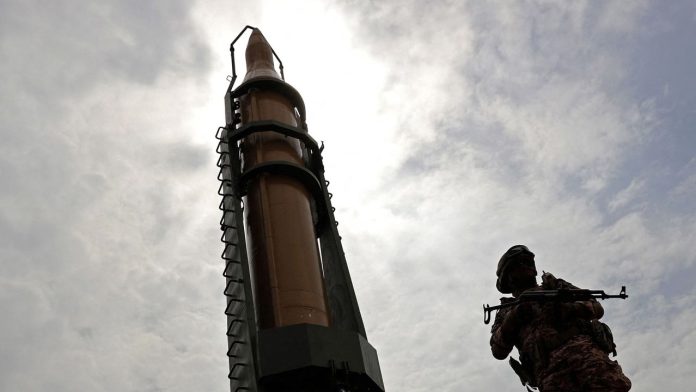
The Typhon is a mobile ground-based launcher designed to launch Tomahawk cruise missiles (range up to 1,800km) and SM-6 multipurpose missiles (range up to 500km).

The Foreign Ministry also took notice of the Australian Army testing an American Precision Strike Missile (PrSM) for the first time in July. The PrSM is a has a maximum range beyond 500km and “is central to strengthening Australia’s land and maritime strike capability,” according to the country’s Defense Ministry.

The Russian statement added further: “Decisions on specific parameters of response measures will be made by Russia’s leadership based on an interagency analysis of the scale of the deployment of American and other Western ground-based intermediate-range and shorter-range missiles, as well as the overall development of the situation in the field of international security and strategic stability.”

Moscow has repeatedly voiced the possibility of lifting the moratorium, for example, after the US announced plans to deploy long-range weapons in Germany in 2026. In November, Russian President Vladimir Putin said that Russia is developing intermediate- and shorter-range missiles in response to Washington’s actions. The Kremlin has not ruled out deploying the missiles in the Asia-Pacific region.

US President Donald Trump, who during his first term withdrew from the INF and the 1992 Open Skies Treaty which allowed conducting surveillance flights over each other’s territory, has suggested that he would resume negotiations on maintaining the existing restrictions on nuclear weapons with Russia.

US House Democrats call on Trump administration to recognize Palestinian state

Pro-Palestine Rally

In a letter addressed to the US President Donald Trump and Secretary of State Marco Rubio, lawmakers wrote: “This tragic moment has highlighted for the world the long overdue need to recognize Palestinian self-determination.”

The lawmakers highlighted French President Emmanuel Macron’s recent pledge to recognize Palestinian state at a UN meeting in September, which Rubio strongly rejected.

“We encourage the governments of other countries that have yet to recognize Palestinian statehood, including the United States, to do so as well,” the letter said.

Representative Ro Khanna, who is leading the initiative, told Axios that he “just started outreach this past week” and that “the response has been overwhelming.”

“The recognition would come by embracing the 22 state Arab League Plan just passed this week that calls for a Palestinian state and the recognition of Israel as a Jewish democratic state,” Khanna stated.

He pointed out that over 147 countries have recognized a Palestinian state, saying: We cannot be isolated from the rest of the free world.”

France, Britain, Canada, and Malta have indicated plans to recognize a Palestinian state in September, while Australia has signaled it may follow.

Spain, Norway and Ireland officially recognized a Palestinian state in May 2024, followed by Slovenia in June, bringing the total number of UN member states recognizing Palestine to 149 out of 193.

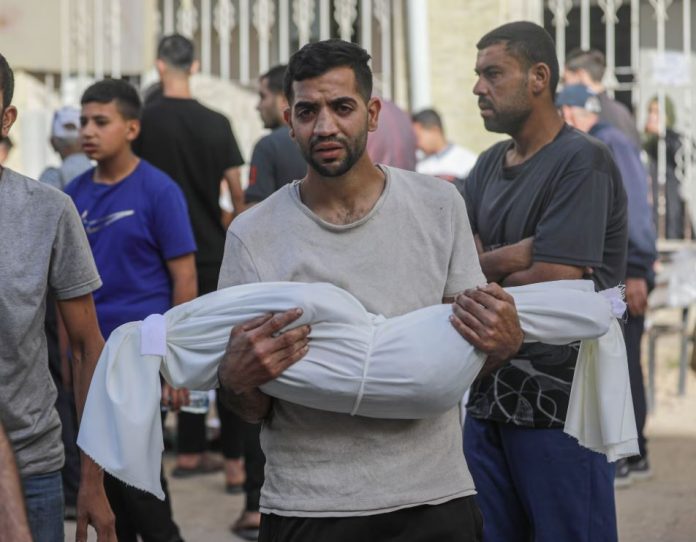
The Israeli army has pursued a brutal offensive on Gaza since Oct. 7, 2023, killing almost 61,000 Palestinians. The relentless bombardment has devastated the enclave and led to food shortages and deaths by starvation.

1,500 Gazans killed while seeking aid since May: UN

Gaza War

“The Office for the Coordination of Humanitarian Affairs says that many people reportedly continue to be killed and injured, including people seeking food along the UN convoy routes and militarized distribution points. Some 1,500 people have been reportedly killed since May,” Farhan Haq, UN deputy spokesperson, told reporters.

Since May 27, a US- and Israeli-backed aid scheme in Gaza has been widely criticized as being ineffective as well as being a “death trap” for starving civilians.

Asked by Anadolu whether the UN secretary-general believes the UN’s reputation and effectiveness can be salvaged given its failure to stop Israel’s actions, including plans to expand the annexation of Palestinian land, Haq responded: “He certainly does.”

Haq said the UN’s record includes “successful diplomatic negotiations” and humanitarian aid that continues to “keep billions of people alive.” He emphasized that lack of international unity, particularly within the UN Security Council, hinders the organization’s effectiveness.

Gaza’s Government Media Office announced Monday that Israel had allowed in just 674 aid trucks since July 27 – only 14% of the strip’s minimum daily requirement of 600 trucks.

It added most of the 80 trucks that entered on Sunday were looted amid what it called “a deliberately engineered climate of chaos and starvation,” accusing Israel of weaponizing hunger to undermine Palestinian resilience.

Rejecting international calls for a ceasefire, the Israeli army has pursued a brutal offensive on Gaza since Oct. 7, 2023, killing nearly 61,000 Palestinians, almost half of them women and children. The military campaign has devastated the enclave and brought it to the verge of famine.

28 children killed daily in Gaza: UNICEF

Gaza War

“Death by bombardments. Death by malnutrition and starvation. Death by lack of aid and vital services,” said a post by UNICEF on X.

“In Gaza, an average of 28 children a day — the size of a classroom — have been killed.”

The agency stressed that children in Gaza are in urgent need of food, clean water, medicine and protection, adding: “More than anything, they need a ceasefire, NOW.”

Rejecting international calls for a ceasefire, the Israeli army has pursued a brutal offensive on Gaza since Oct. 7, 2023, killing nearly 61,000 Palestinians, almost half of them women and children. Israel’s military campaign has devastated the enclave and brought it to the verge of famine.

Last November, the International Criminal Court issued arrest warrants for Netanyahu and his former Defense Minister Yoav Gallant for war crimes and crimes against humanity in Gaza.

Israel also faces a genocide case at the International Court of Justice for its war on the enclave.

Multiple Iranian provinces announce shutdowns amid unprecedented heatwave

According to official announcements, the provinces, including the capital Tehran, have either declared full closures or reduced working hours.

The decisions were made by local energy committees and approved by provincial governors.

In most provinces, government offices, banks, educational institutions, and public organizations will remain closed on Wednesday. Some provinces, such as West Azarbaijan, East Azarbaijan, and Khuzestan, have extended the closures to Tuesday as well.
Essential services, including hospitals, emergency units, and select bank branches, will continue operations.

The closures aim to stabilize the national electricity network, which has been under severe stress due to record-high temperatures. Officials have urged citizens to minimize energy use and cooperate with ongoing conservation efforts.

This marks the second consecutive week of midweek closures in some provinces, reflecting the increasing urgency of Iran’s energy management challenges during the summer heat.

Magnitude 5.4 earthquake strikes Iranian provinces of Sistan-Baluchestan, Kerman

Earthquake Iran

According to the Seismological Center of the Institute of Geophysics, University of Tehran, the quake occurred at 08:36 local time.

The epicenter was recorded at a depth of 28 kilometers, near the town of Zahakloot in Jazmourian County.

The nearest cities to the epicenter were Zahakloot (47 km, Kerman Province), Masjed Hazrat Abolfazl (64 km, Sistan-Baluchestan), and Galmourti (70 km, Sistan-Baluchestan).

Mohammad Ali Arabnejad, Deputy Director of Crisis Management in Kerman Province, confirmed that the quake occurred in an uninhabited area and caused no damage or casualties.

He stated that emergency teams remain on full alert and field assessments are ongoing.

Officials said the seismic activity has not disrupted local services and urged residents to remain calm while staying informed through official channels.

Iran sits on several major fault lines and is prone to frequent seismic activity.

Iranian parliament speaker: Majlis is offspring of Constitutional Revolution

Mohammad Bagher Ghalibaf

Speaking at the opening of Tuesday’s parliamentary session, Ghalibaf said, “The Majlis is the offspring of the Constitutional Revolution and a valuable legacy entrusted to us.”

He called the revolution, which began on August 5, 1906, a significant turning point in modern Iranian history, rooted in public demands for justice and the rule of law.

While acknowledging the challenges faced by the movement, including foreign interference and internal setbacks, Ghalibaf described the revolution as a grassroots effort inspired by the Iranian people’s religious and social consciousness.

He said the Constitutional Revolution was not merely a political transformation but a foundation for Iran’s early experiences in establishing religious democracy and resisting tyranny.

Its legacy, he added, lived on in the nationalization of the oil industry and the Islamic Revolution.

Ghalibaf concluded by honoring the memory of constitutional-era martyrs and figures such as Sheikh Fazlollah Noori, reaffirming the Parliament’s commitment to uphold its historical and legal responsibilities.

Kurds, Syrian government forces clash in Aleppo province

In a post on X, the group, which controls much of northeastern Syria, claimed the incident took place early on Monday morning in the Deir Hafer area.

The allegation comes just months after the SDF and the Syrian interim government signed a landmark integration agreement in March.

Government-linked factions launched an assault on four of the SDF’s positions in the village of Al-Imam at 3am on Monday morning, the SDF said, noting that the ensuing clashes lasted for 20 minutes.

“We hold the Damascus government fully responsible for this behaviour, and reaffirm that our forces are now more prepared than ever to exercise their legitimate right to respond with full force and determination,” the SDF added.

The latest incident came after the Syrian government accused the SDF of injuring four soldiers and three civilians in the northern city of Manbij on Saturday.

The Defence Ministry called the attack “irresponsible”, saying it had been carried out for “unknown reasons”, according to Syria’s state news agency SANA.

Meanwhile, the SDF, which allied with the United States to help defeat ISIL (ISIS) in the region, blamed the Syrian government, saying it had responded to an unprovoked artillery assault against civilians.

Such skirmishes have cast a shadow over the integration pact the SDF made with Damascus in March, following the fall of longtime President Bashar al-Assad in December.

As part of efforts to reunify the country after almost 14 years of ruinous war, which killed hundreds of thousands and displaced millions, the agreement seeks to merge Kurdish-led military and civilian institutions with the state.

As well as its clashes with the SDF, Syrian President Ahmed al-Sharaa’s new government is grappling with the fallout from sectarian violence that broke out on July 13 in the southern province of Suwayda between Bedouin and Druze groups, during which government troops were deployed to quell the fighting. The bloodshed worsened and Israel carried out strikes on Syrian troops, and also bombed the heart of the capital Damascus, under the pretext of protecting the Druze.

Despite the ongoing ceasefire there, four deaths were reported in the province over the weekend, with the Syrian Observatory for Human Rights saying that three of the victims were government soldiers and one was a local fighter. Syria’s state media reported on deaths among security forces.

The Syrian government announced in a statement that gangs in the area had “resorted to violating the ceasefire agreement by launching treacherous attacks against internal security forces on several fronts”.

Mercenaries from Asia and Africa fighting for Russia in Ukraine: Zelensky

During a visit to the 57th Separate Motorized Infantry Brigade, which is defending the Vovchansk sector, Zelensky met with commanders to discuss the battlefield situation, troop needs, and combat operations, including the use of drones and direct funding for brigades.

Vovchansk, located just five kilometers (3 miles) from the Russian border, has seen intense fighting since Russia launched a new ground offensive in Kharkiv Oblast in May 2024.

“The soldiers on this front are recording the participation of mercenaries from China, Tajikistan, Uzbekistan, Pakistan, and African countries in the war. We will respond,” Zelensky said in a statement.

He added that the discussions also focused on recruitment issues and increasing access to drone technology — a critical factor in Ukraine’s ongoing defensive and reconnaissance efforts.

Zelensky stated in April that “several hundred” Chinese nationals were taking part in the war on Russia’s side. One detainee reportedly paid a middleman 300,000 rubles (about $3,500) to enlist in exchange for Russian citizenship.

China has denied involvement, claiming it urges its citizens to avoid armed conflicts. Moscow has also used some 12,000 North Korean troops deployed by Pyongyang to counter the Ukrainian incursion in Kursk Oblast.

Multiple reports suggest that Russia is recruiting foreign nationals to participate in its full-scale war against Ukraine. An April investigation by Russian independent outlet Important Stories identified more than 1,500 foreign fighters from 48 countries who had joined Russia’s army.

Trump pledges to raise tariff on India over Russia oil purchases

New Delhi quickly pushed back, saying the move was unjustified and vowing to protect its interests.

Trump’s heightened pressure on India comes after he signaled fresh sanctions on Moscow if it did not make progress by Friday towards a peace deal with Kyiv, more than three years since Russia’s invasion.

Moscow is anticipating talks this week with the US leader’s special envoy Steve Witkoff, who is expected to meet President Vladimir Putin.

On Monday, Trump said in a post to his Truth Social platform that India was “buying massive amounts of Russian Oil” and selling it for “big profits.”

“They don’t care how many people in Ukraine are being killed by the Russian War Machine,” Trump added.

“Because of this, I will be substantially raising the Tariff paid by India to the USA.”

He did not provide details on what tariff level he had in mind.

Even before the threat, an existing 10 percent US tariff on Indian products is expected to rise to 25 percent this week.

“The targeting of India is unjustified and unreasonable,” India Foreign Ministry spokesman Randhir Jaiswal said in a statement, after Trump’s announcement.

“Like any major economy, India will take all necessary measures to safeguard its national interests and economic security.”

India has become a major buyer of Russian oil, providing a much-needed export market for Moscow after it was cut off from traditional buyers in Europe because of the war.

That has drastically reshaped energy ties, with India saving itself billions of dollars while bolstering Moscow’s coffers.

But India argued it “began importing from Russia because traditional supplies were diverted to Europe after the outbreak of the conflict.”

The world’s most populous country is not an export powerhouse, but the United States is its largest trading partner.