Friday, January 2, 2026
Home Blog Page 2131

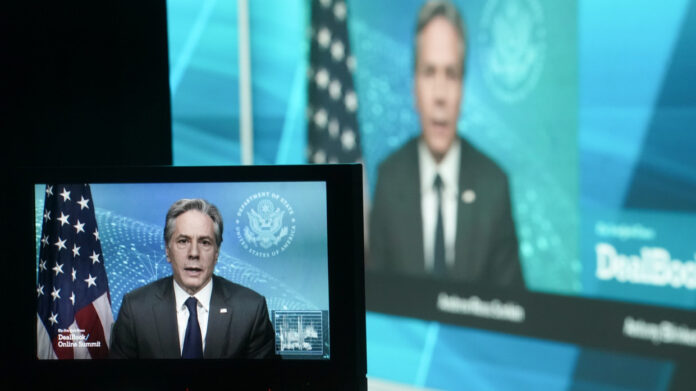
Blinken: Trump JCPOA withdrawal ‘one of worst decisions in US foreign policy’

“We had stopped them. The nuclear agreement that was reached some years ago by the [Barack] Obama administration put Iran’s nuclear program in a box,” Blinken said in an interview with US public radio station NPR.

“And one of the worst decisions made in recent American foreign policy was to walk away from that agreement,” the secretary of state added.

The Joint Comprehensive Plan of Action (JCPOA) was inked by Iran and six world powers in 2015. Under the deal, Tehran agreed to put limits on certain aspects of its nuclear activities in exchange for the removal of draconian international sanctions imposed against the country.

In 2018, however, the US pulled out of the pact and reinstated sanctions under the so-called ‘maximum pressure campaign’ against Tehran, effectively depriving Iran of the deal’s benefits by forcing third parties to stop doing business with Iran.

Iran remained patient for an entire year, after which it began to take incremental steps away from its nuclear obligations, especially after Europeans failed to salvage the deal under the US pressure.
The Islamic Republic’s decision to ramp up its nuclear activities prompted other parties to revive talks earlier this year.

“And as a result, we are in a challenging situation where, far from getting a new and so-called better agreement – that hasn’t happened – Iran has moved forward with its program in increasingly dangerous ways,” Blinken stated.

Tehran denies seeking nuclear weapons, stressing it wants to master nuclear technology for peaceful purposes.

There are only “a few weeks” left to save the Iran nuclear deal, and the United States is ready to look at “other options” if negotiations fail, the top diplomat noted.

“We still believe that if we can get back in the weeks ahead – not months ahead, weeks ahead – to the JCPOA, the nuclear agreement, that would be the best thing for our security and the security of our allies and partners in the region. But, we’re very, very short on time. The runway is very short,” the US secretary of state said.

Iran has rejected US officials’ remarks about a deadline for reaching an agreement and stressed the country is only after a good agreement.

“So we have, I think, a few weeks left to see if we can get back to mutual compliance. That would be the best result for America’s security. But if we can’t, we are looking at other steps, other options, again, closely coordinated with concerned countries,” he added.

Iranian officials have repeatedly stressed Tehran reserves the right to respond to any adventurism by the United States and Israel.

Iran and the five remaining parties to the JCPOA — Germany, Britain, France, Russia and China — began the talks in the Austrian capital in April with the aim of removing the sanctions after the US voiced its willingness to return to the agreement.

During the seventh round of the Vienna talks, the first under President Ebrahim Raeisi, Iran presented two draft texts which address, separately, the removal of US sanctions and Iran’s return to its nuclear commitments under the JCPOA. Tehran also said it was preparing a third draft text on the verification of the sanctions removal.

The eighth round of talks kicked off in Vienna in late December. The negotiations seek to restore the JCPOA in its original form and bring the US back into the agreement.

Iran insists that the talks must lead to the removal of all American sanctions that were imposed against Tehran following Washington’s unilateral withdrawal from the landmark agreement in May 2018. Tehran has also demanded credible guarantees that Washington will not abandon the deal again.
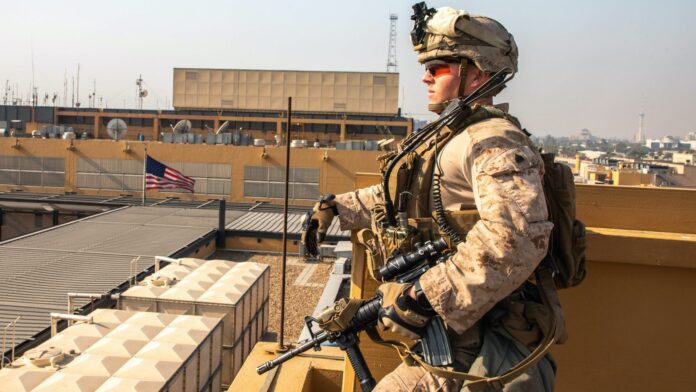
4 rockets target US Embassy in Baghdad

Us Troops

Three of the missiles struck within the perimeter of the US Embassy, the officials stated.

Another hit a school located in a nearby residential complex, injuring a woman and a girl, the official added. The school was in the al-Qadisiyah residential complex near the diplomatic facility.

The officials spoke on condition of anonymity because they were not authorised to talk to the media.

There was no immediate claim of responsibility for the attack.

An Iraqi military statement said the rockets had been launched from the Dora neighbourhood of Baghdad.

In a statement, the US Embassy in Baghdad announced its compound had been attacked by “terrorist groups attempting to undermine Iraq’s security, sovereignty, and international relations.”

The embassy’s C-RAM defence system – supposed to detect and destroy incoming rockets, artillery and mortar shells – was heard during the attack.

The Green Zone hosts most foreign diplomatic missions, including the US Embassy and the premier’s house.

It has been repeatedly targeted by rocket attacks since the assassination of top Iranian anti-terror commander Lieutenant General Qassem Soleimani and Iraqi commander Abu Mahdi al-Muhandis in a US drone attack in January 2020.

Last week, a series of attacks targeted American troops in Iraq and Syria.

Washington blames Tehran-backed armed groups for rocket attacks on foreign diplomatic missions, the US and foreign troops in Iraq.

The armed groups have vowed revenge for Gen. Soleimani’s assassination and have conditioned the end of the attacks on the full exit of American troops from the country.

Baghdad and Washington agreed in a fourth and final round of the strategic dialogue on July 26 to withdraw US forces from Iraq by the end of 2021.

Some 2,500 troops will remain as the coalition shifts to an advisory mission to continue supporting Iraqi forces.

Raisi: Iran won’t tie neutralizing sanctions to Vienna talks

Raisi made the comment in a tweet. He added that at a time when Iran is still under sanctions, the country’s oil sales have to some extent increased.

He added that Iran is no longer worried about the matter and the Islamic Republic is collecting revenues from the oil sales.

The Iranian president however noted that his administration will seriously pursue the issue of removing the bans.

The US under former President Donald Trump imposed hundreds of layers of sanctions against Iran with some bans targeting the country’s oil industry.

The sanctions were part of Trump’s so-called maximum pressure campaign against Tehran whose stated goal was to bring the country to its knees. But the sanctions, as many officials in the US admit, failed to achieve that goal and the US under current President Joe Biden is struggling to return to the Iran nuclear deal from which his predecessor withdrew in 2018.

Ali-Asgari dismisses resignation from Persian Gulf holding as ‘fake’

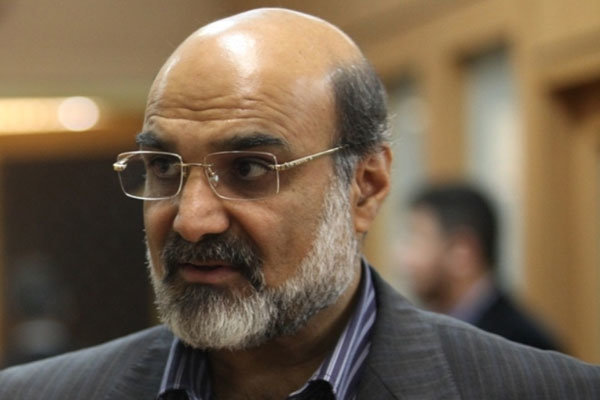
Ali-Asgari, a former head of the Islamic Republic of Iran Broadcasting, was on Wednesday appointed as the new managing director of the Persian Gulf Petrochemical Industry Commercial Company (PGPICC), drawing criticism.

His installation faced outcry on social media, with Mohammad Sarafraz, also a former IRIB head, ironically tweeting that Ali-Asgari, who prevented the collapse of the IRIB and resolved all its problems, will now address the government’s financial shortages.

Talking to Fars News Agency, Ali-Asgari said he has started work at the company, holding meetings on its future plans since the first day of his appointment.

“We have plans on the development of the economic company and the work has started,” he underlined.

The PGPICC’s newly-appointed chief added that the company belongs to the Iranian people and its management intends to increase its profits in the first step and its stocks by appropriate plans in the second step.

With more than 15 manufacturing and service companies, the Persian Gulf Petrochemical Industry Commercial Company is the second-largest holding company of its kind in the Middle East.

Minister: Iran, Syria to establish joint free zone

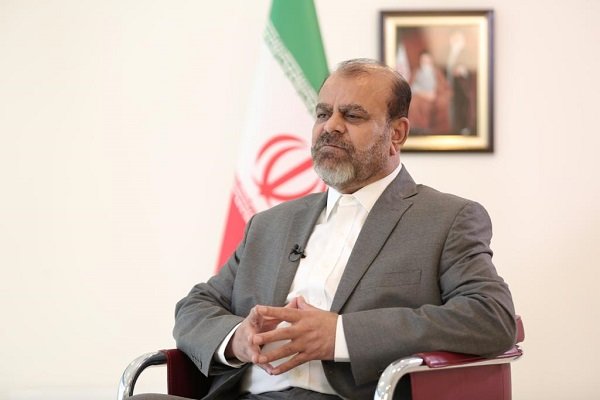
Rostam Qassemi added that the head of Iran’s free zones will pay a visit to Syria to discuss the joint free zone and ink the agreement.

Qassemi, who recently held talks with Syria’s economy minister in Damascus, said he discussed the increase in Iran’s production in Syria, including the manufacturing of tractors and agricultural machinery, the elimination of tariffs, increase in the two sides’ exports, and customs-related issues.

Elaborating on his latest meetings and talks in Syria, Qassemi said he exchanged views with Syrian President Bashar al-Assad on the war-hit country’s economic issues and current economic problems the two countries are faced with.

The two sides made good decisions in the meetings, said the minister, adding, “We agreed to run a joint committee. Of the many memorandums of understanding already signed by the two countries, some have not been implemented and we decided to set up a joint committee to address the problems and give the go-ahead to the MoUs.”

Shifting to his meeting with the Syrian foreign minister, Qassemi said they discussed diplomatic issues between the two countries.

He also said the two sides decided to set up a joint bank in Syria, adding Iranian and Syrian banks will have branches in the two countries.

He also elaborated on a meeting with his Syrian counterpart and said, “Transportation in different sectors is an important infrastructure that plays a major role in the country’s development. The country’s Civil Aviation Organization head would follow up the related executive issues.”

Iran FM in Beijing for talks with Chinese officials

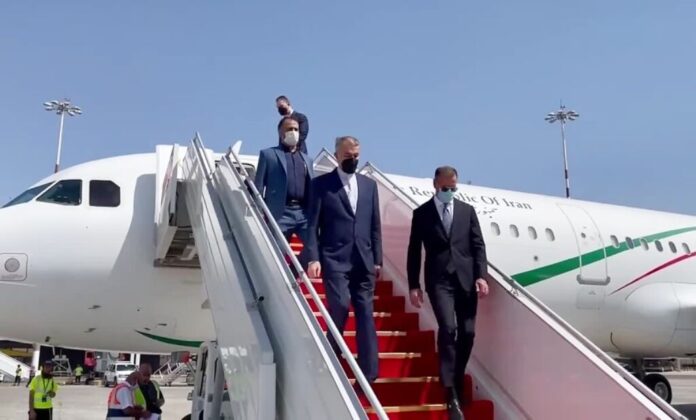
Upon his arrival at Wuxi Airport in China, Iranian Foreign Minister Hossein Amir Abdollahian said by visiting China, he aims to hold talks with Chinese officials over bilateral political ties and also over ways of implementing agreements between the Islamic Republic and China over economic cooperation.

The Iranian foreign minister is visiting China at the head of a high-ranking political and economic delegation and at the invitation of his Chinese counterpart Wang Yi.

Amir Abdollahina is scheduled to hold talks with China’s top diplomat over the latest state of the 25-year cooperation agreement between Tehran and Beijing.

China is Iran’s number one oil customer. The two countries also enjoy close political relations.

Tehran and Beijing have signed a 25-year strategic cooperation agreement which they have pledged to implement.

Under the comprehensive strategic partnership agreement, the Chinese government will increase investment in Iran’s energy, transportation and other key sectors.

The agreement will boost military and intelligence cooperation between the two countries as well.

International and regional issues are also on the agenda of negotiations during Amir Abdollahian’s visit to China.

Iran’s nine-month trade with neighbors tops $36.8bn, up 42%

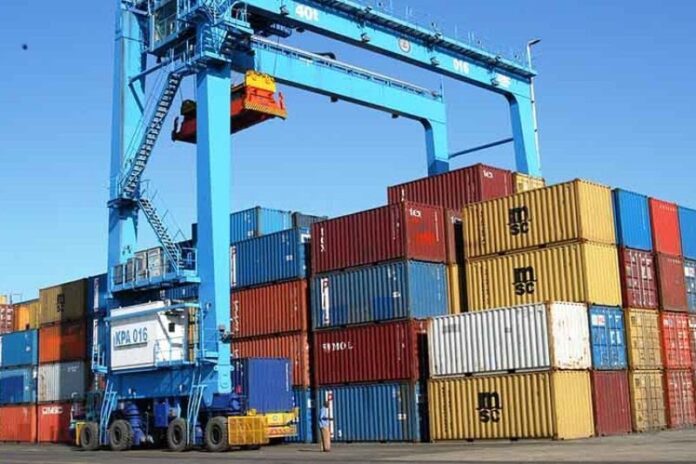
Alireza Moqaddasi, who made the statement on the sidelines of his visit to the Customs Office of Shahid Rajaei Port in the southern province of Hormuzgan, said the products shipped between Iran and neighboring states surpassed 75 million tons, showing an 18 percent increase in terms of weight.

According to the IRICA chief, the traded commodities were valued at more than $36.8 billion.

One of the main policies of the 13th government is the expansion of economic ties with the neighboring countries, said Moqaddasi, adding the IRICA has taken strides toward achieving the goal by formulating various plans to increase the country’s exports, facilitate the imports of necessary products, and expand the transit process.

Moqaddasi explained that Iran has exported 57.335 million tons of products worth over $18.766 billion to the neighboring countries over the nine months, adding the figures show a nine percent hike and 24 percent growth in terms of weight and value, respectively.

According to the official, the top five importers of the Iranian products were Iraq ($6.8 billion), Turkey ($4.131 billion), the United Arab Emirates ($3.433 billion), Afghanistan ($1.412 billion), and Pakistan ($911 million).

Shifting to Iran’s imports from the neighboring states, Moqaddasi said, “Out of 30 million tons of imported products valued at over $37 billion, 17.682 million tons worth over $18 billion have been shipped from the neighboring countries that were mainly basic goods, raw materials, and machinery.

The country’s imports in the mentioned nine months witnessed a 62 percent increase in terms of weight and a 68 percent growth in terms of value.

The head of the Islamic Republic of Iran Customs Administration further said the top five neighboring exporters to Iran were the UAE ($11.497 billion), Turkey ($3.7 billion), Russia ($1.224 billion), Iraq ($880 million), and Oman ($409 million).

Iran approves Covid vaccine SpikoGen for third dose

Dr. Kamal Heidari, in a letter to the universities’ deputy chancellors for health affairs and universities of medical sciences, wrote, “Based on conducted studies, the authorization of Iran’s Food and Drug Administration, and the approval of the National Covid-19 Vaccine Committee, SpikoGen has been approved as the booster for all vaccines used in the country and can be injected at least three months after the second dose.

He added that SpikoGen is being injected as the first and second doses for people aged 18 to 50 and as a booster for the above-18 persons.

SpikoGen has been developed in the Iranian company CinnaGen in collaboration with the Australian Company Vaxine and has received the emergency use license.

Iran is also jointly producing Covid-19 vaccines with Russia and Cuba.

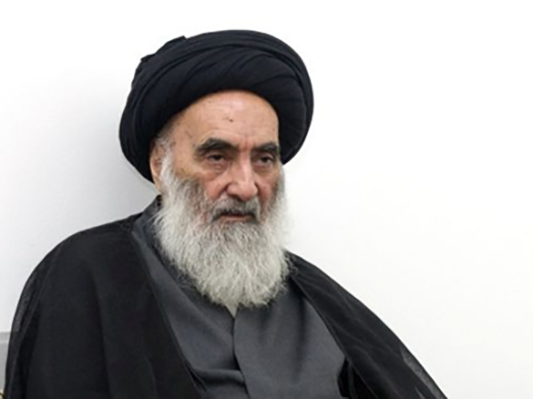
Ayatollah Sistani: Pig kidney transplant permissible

Iran's President Lauds Ayatollah Sistani’s Vital Role after Controversy

Asked whether a pig kidney transplant is allowed under Islam, Ayatollah Sistani responded that it is permissible.

The remark comes days after a U.S. man with a life-threatening disease received a heart from a genetically modified pig in a groundbreaking eight-hour surgery.

The 57-year-old patient has been doing well after the operation on Friday.

The breakthrough has been giving hope to a very large number of patients with failing organs worldwide amid an acute shortage of organs available for transplantation.

Russia warns US against imposing sanctions on Putin

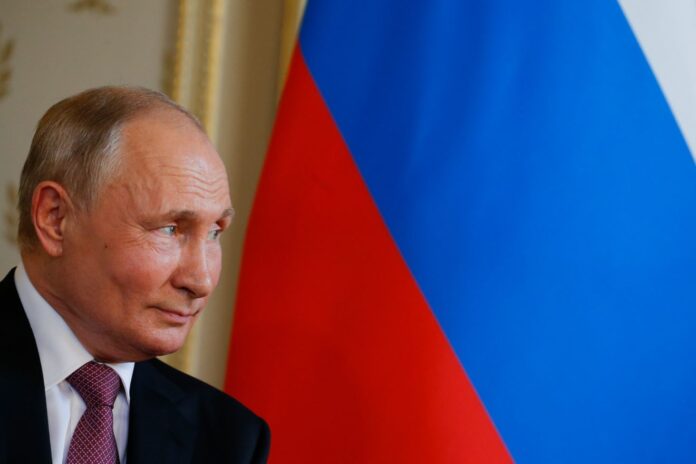
“Levying sanctions against the head of state, against the President of Russia, I repeat once again, would be an over-the-top measure that is comparable to severing relations,” the Kremlin spokesman emphasized.

“Russia is always ready and will always do what best suits the interests of our country,” Peskov said, answering a question about whether Moscow would be ready to introduce similar measures.

Earlier on Wednesday, a group of Democrat legislators led by Senator Bob Menendez of New Jersey introduced a bill to the US Senate on restrictions against Moscow if tensions around Ukraine escalate. It involves, among other things, sanctions against Putin, the prime minister, heads of the Foreign Ministry, the Ministry of Defense, the chief of the General Staff of the Russian Armed Forces, and other members of the military leadership. In addition, restrictive measures may affect the Nord Stream 2 gas pipeline.

The initiative submitted to the Senate of the US Congress was called the Defending Ukraine Sovereignty Act of 2022. Later, the document will be considered by members of the Senate Foreign Relations Committee chaired by Menendez. To come into effect, the bill should be approved by both houses of Congress and signed by the US President. Emily Horn, spokeswoman for the White House National Security Council, announced earlier that the US administration supports the senators’ initiative.

The draft of new anti-Russian sanctions proposed in the US Congress can be likened to an initiative to break off relations, since an equal response will inevitably follow from Russia, Peskov noted.

“The simultaneous timing of these statements and negotiations [on security] is an attempt to put pressure on Moscow. It is a priori meaningless, because we are talking about sanctions, which as such and considering the inevitable equal response, can be equated to an initiative to break off relations. It is impossible to interpret the wording in any other way,” he continued.

The Kremlin official stressed that Moscow strongly denounces the draft of new US anti-Russian sanctions.

“Especially in the context of the ongoing series of negotiations, albeit unsuccessful ones, but still negotiations,” he stated.

“They do not contribute to the further search for mutually beneficial solutions, do not contribute to the formation of a constructive atmosphere during the continuation of these three-stage talks. Today there will be a third stage, which is the final one of this phase. Therefore, the answer is definite: [our attitude is] negative,” Peskov stressed.

The consultations between Moscow and Western states on Russia’s proposals for European security are held in three stages. The first stage was held in Geneva on January 10 as negotiations between representatives of Russia and the United States. The meeting of the Russia-NATO Council held on January 12 became the second stage of consultations. The third stage will take place on January 13 in Vienna as part of the OSCE.

Nord Stream 2 is a commercial project, and linking it to security is “absurd”, this once again confirms that this is an attempt at unfair competition, Peskov said, commenting on possible US sanctions against the Russian-led project.

“Nord Stream [2] is generally a commercial project, and linking [it]… with security issues in Europe is absurd. This is absurd. This is just another confirmation of what is behind all this. Attempts to pressure Russia, attempts at the unfair economic competition”, Peskov added.

The Nord Stream 2 pipeline is capable of pumping up to 55 billion cubic metres of natural gas from Russia to Europe every year. Its construction was completed in September 2021, but the project is yet to be approved by German regulators.

Washington imposed a number of sanctions on the project, claiming it poses a danger to European security, which Moscow and Berlin both rejected.