Thursday, January 1, 2026
Home Blog Page 2130

Yemen says Iran peace plan can resolve crisis

Yemen

“The Iranian initiative offers a solution, deals with the war and blockade in Yemen, and provides a mechanism for inclusive intra-Yemeni dialogue as well as ways to de-escalate the status quo,” Abdullah said.

The foreign minister of the Yemeni National Salvation Government added, “The study or slight modifications of the Iranian initiative will help resolution of the lingering crisis in Yemen, and everyone should consider the plan.”

In April 2015, Iran proposed a four-point peace plan for Yemen. The plan called for an immediate ceasefire and end of all foreign military attacks, humanitarian assistance, a resumption of broad national dialogue and “establishment of an inclusive national unity government.”

Abdullah noted that Saudi Arabia was looking for a pretext to prolong its devastating military aggression against Yemen.

“What we want to tell them is the fact that they will not manage to defeat the Yemeni nation through their onslaught. All we want is negotiations in good faith,” Abdullah stated.

“Massacre and destruction is not the right way,” he said, adding, “We are fighting for our nation. We do not want anything from Saudi Arabia, but Riyadh seeks dominance over our country.”

He called on the Saudi-led coalition to end its support for Takfiri terrorist groups in Yemen, stressing that the foreign-backed extremists would not help peaceful settlement of Yemen crisis by any means.

Abdullah also lambasted Saudi Arabia for having used footage from a documentary on the 2003 US invasion of Iraq to accuse Yemeni armed forces of stockpiling ballistic missiles in the besieged Red Sea port city of Hudaydah.

The top Yemeni diplomat stated the footage was nothing but a piece of cinematic work, and it was meant to invent pretexts for a strike on Hudaydah.

He then slammed the international community’s stance vis-à-vis the Saudi war on Yemen.

“Every country pursues its own interests. That explains why many world states are silent [on Yemen war] and standing idly by. Their interests are close to those of aggressors, particularly Saudi Arabia,” Abdullah underlined.

He underscored that the Yemeni nation has the right to live in a free and independent country, and that Yemen seeks peaceful relations with others.

Saudi Arabia, backed by the US and regional allies, launched the war on Yemen in March 2015, with the goal of bringing the government of former Yemeni president Abd Rabbuh Mansur Hadi back to power and crushing popular Ansarullah resistance movement.

The war has left hundreds of thousands of Yemenis dead, and displaced millions more. It has also destroyed Yemen’s infrastructure and spread famine and infectious diseases.

The Yemeni armed forces and allied Popular Committees, however, have grown steadily in strength against the Saudi-led invaders, and left Riyadh and its allies bogged down in the country.

Russia: Activities to sabotage advancing talks in Vienna ‘senseless’

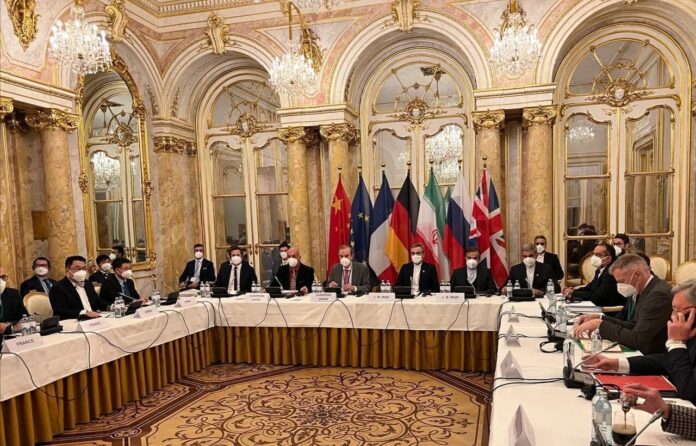
In a tweet on Friday, Russia’s representative to Vienna-based international organizations Mikhail Ulyanov drew attention to a rise in activities and “provocative” moves of the nuclear deal’s opponents in the “public space” as Iran and the P4+1 states “move ahead at the Vienna talks.”

“Regrettable and senseless. The absolute majority of states, incl. P5, aim at restoration of the nuclear deal and sanctions lifting,” he added in his tweet.

Iran and the P4+1 states — Russia, China, France, Britain plus Germany — resumed their talks on January 3 following a short pause with the goal of securing the United States’ return to deal and removing the sanctions it imposed on Iran after leaving the accord, officially titled the Joint Comprehensive Plan of Action (JCPOA).

The US is not allowed to directly join the talks since it is not currently a party to the JCPOA.
On Friday, Iran’s negotiating team, led by Deputy Foreign Minister Ali Baqeri Kani, sat down for talks with delegates of the three European signatories, with EU deputy foreign policy chief Enrique Mora, in attendance.

Meanwhile, Russian Foreign Minister Sergei Lavrov spoke of “real progress” in Vienna.
“There is a real desire, between Iran and the US, first and foremost, to understand concrete concerns and understand how these concerns could be accounted for in the general package,” he said.

The negotiators “have already penetrated minute details of this negotiation matter” and “are making good progress,” Lavrov said. “I am knocking on wood, but we expect the agreement to be achieved.”

Ties with Iran a priority in Pakistan’s new Natl. Security Policy

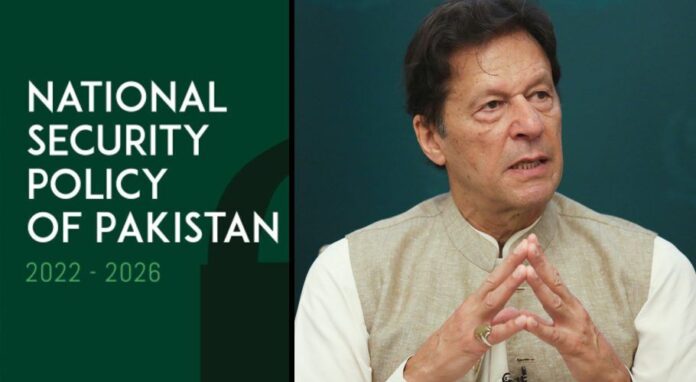
During a ceremony on Friday, Pakistani Prime Minister Imran Khan launched the public version of the country’s National Security Policy 2022-2026, which is described as the Pakistan’s first strategy paper of its kind that spells out the national security vision and guidelines for achieving those goals.

The ceremony was attended by Pakistan’s senior officials as well as diplomats and envoys of other countries, including Iranian Ambassador to Islamabad Seyyed Mohammad-Ali Hosseini.

The strategy paper lays emphasis, among other things, on economic diplomacy and expansion of ties with neighbors. It pays attention to common interests of the two countries, which it considers as two partners in efforts to establish peace and security in the region.

In the new national security vision, Pakistan considers a promotion of intelligence exchanges with Iran and border patrolling as a factor that could positively impact bilateral relations and cooperation.

At the ceremony, Khan said that the foremost aim of Pakistan’s foreign policy and military capability would be peace and stability in the region and beyond, and that the country’s foreign policy will also focus much more on pursuit of stepped-up economic diplomacy.

National Security Advisor Moeed Yusuf also said the National Security Policy centered around economic security and the geo-strategic and geo-political imperatives to strengthen Pakistan’s security and standing in the world.

Iran Covid: 24 people killed since Thursday

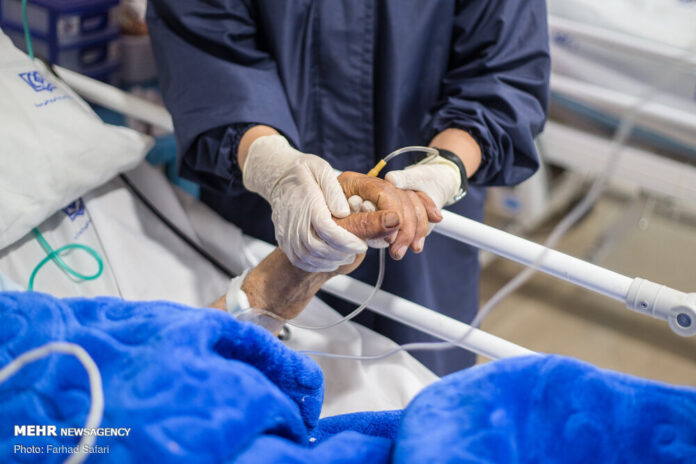
The fatalities pushed to 132,026 the death toll since the start of the pandemic some two years ago.

The Health Ministry also logged 2,539 Covid cases from Thursday to Friday. The new cases include 285 hospitalizations.

Meanwhile, the vaccination campaign continues in Iran with the number of the boosters administered so far reaching the 12 million mark.

The figures showed that so far 11,974000 booster shots have been injected to people in Iran while the total number of vaccine doses stands at 125,262,221.

Iranian authorities are urging citizens to get their third doses, saying that will boost their immunity to any new strain of Covid like Omicron, which is the latest variant of the disease. Official figures show around 1,000 cases of Omicron contraction have been registered so far in Iran.

The highly contagious disease has overwhelmed much of Europe and the US.

Harsh weather leaves two hikers dead in heights of northern Iran

Local officials said the pair, who had started the hike on January 1, sent distress signals on Thursday due to heavy snowing and freezing temperatures in the heights of Mount Alam, in the Alborz Mountain range.

Rescue teams were immediately dispatched in helicopters to the site at of height of 4,700 meters, they said.

One of the climbers was, however, found dead and the other, who was severely affected by freezing, died amid the transfer operation.

Mount Alam is the second highest peak in Iran after Damavand, with an elevation of 4,805 meters, and supports permanent snow and glaciers.

The mountain, which sits near the Caspian Sea, is commonly known as the paradise of mountaineers due to its steep foothills, beautiful glaciers and snowfields and challenging technical routes.

Iran opens first extra heavy crude oil refinery on key Qeshm Island

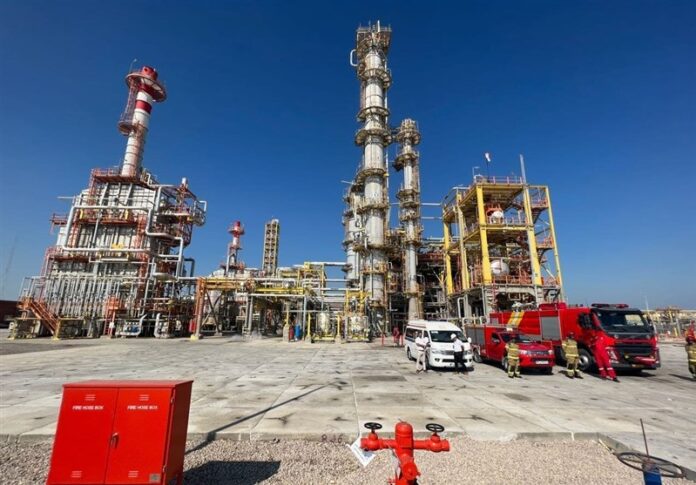
The first phase of the refinery was inaugurated during a ceremony on Friday, with Iranian President Ebrahim Raisi in attendance.

With the facility becoming operational, some 35,000 barrels of extra heavy crude oil will be processed, on a daily basis, into other oil by-products such as bitumen, which will account for half of the refinery’s products, in addition to naphtha, gasoline, and light crude oil.
The facility’s products will be exported in their entirety to other countries.

With the completion of the second phase, which is still under construction, the processing capacity is expected to reach over 70,000 barrels per day.

Experts say the refinery will carry an added value of $857 million per year and will thus constitute a significant source of foreign currency income.

At the ceremony, Oil Minister Javad Owji said the private sector had invested more than $220 million in the project.

He said four more refinery projects were on the Oil Ministry’s agenda, which would increase the processing capacity of entire Hormozgan Province to 1,550,000 barrels daily, up from 850,000.

Qeshm, one of the world’s largest islands, hosts a free zone jurisdiction and lies strategically in the Strait of Hormuz, the most sensitive transportation choke point for global oil supplies.

Iran’s president: Threats and sanctions no obstacle to progress

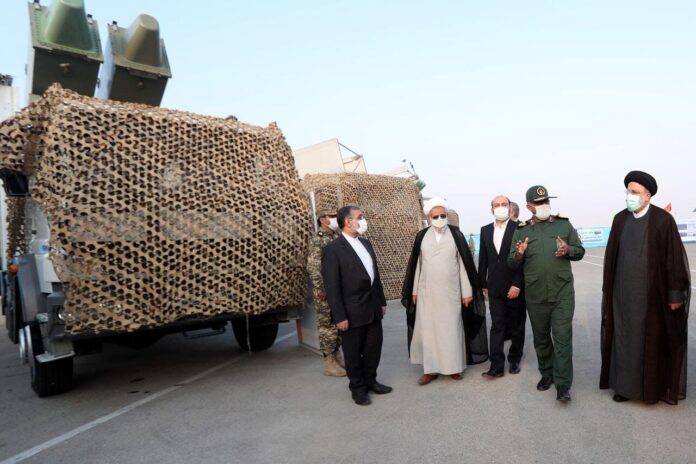
Raisi made the remark after visiting an exhibition of the IRGC Navy’s capabilities and achievements in Hormozgan Province on Friday.

He said the exhibition is a proof that threats and sanctions are no obstacle to progress.
Raisi added what he saw at the exhibition of the IRGC Navy is a symbol of the country’s clout.

The president noted that Iran’s military and nuclear industries have borne the brunt of sanctions but they have made the biggest progress in spite of the bans.

Raisi noted that what has empowered Iran is its steely resolve.

Raisi also spoke of Iran’s military capabilities, saying people now have no worries regarding threats against the country as Iranian armed forces are keeping close tabs on everything.

During his visit to the IRGC Navy’s exhibition, the Iranian president was briefed on achievements made over the past 1.5 years including the manufacturing of drones, missile systems, electronic warfare systems, rocket- and torpedo-launching vessels, missile-launching warships, speedboats and flying boats.

Iran has beefed up its military capabilities over the past years amid continued saber-rattling by adversaries like the US and the Zionist regime.

AFC officially kicks Iranian giants out of Champions League

The AFC has announced its draw for the Asia Champions League 2022 (ACL2022) with the two giants eliminated from the list.

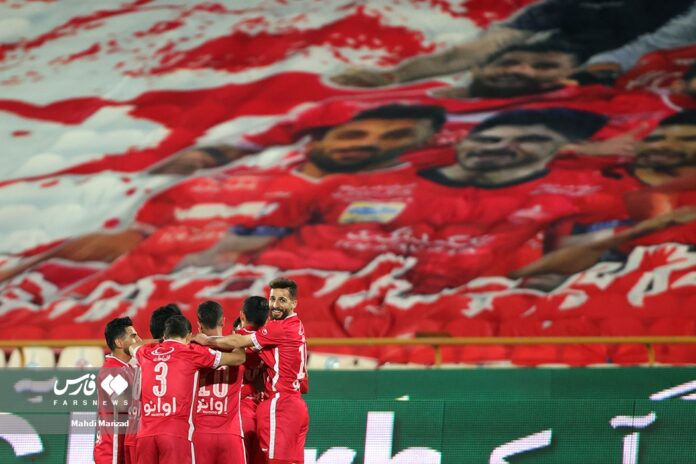
Two-time Asian Champions League finalists Persepolis from Iran will not play in the 2022 edition after having their licenses to participate withdrawn, according to the AFC.

Tehran-based Persepolis, who lost in both the 2018 and 2020 finals of Asia’s elite club competition, are one of three Iranian clubs to have had their licenses revoked.

Esteghlal, winners of the 1970 and 1991 Asian Club Championship – the forerunner to the Asian Champions League – and Gol Gohar Sirjan are the others.

According to the draw released on Friday, the two clubs Sepahan Esfahan and Foolad Khuzestan will represent Iran in the ACL2022.

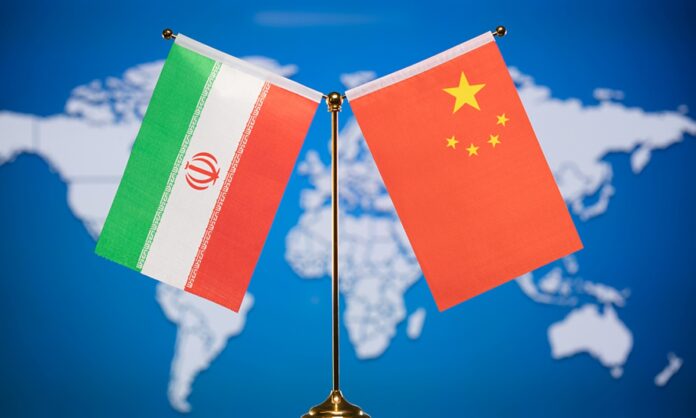
Iran FM: Tehran and Beijing enjoy stable and strong relationship

Confucius, a famous educator in ancient China, said: It is always a pleasure to greet a friend from afar.

With the best wishes of the Iranian people to the Chinese friends, I am visiting China on the occasion of the beginning of 2022 and on the eve of the Chinese New Year of the Tiger and 1401 solar year.

Our two countries will celebrate the 51st anniversary of the establishment of diplomatic relations and will enter the second half of the century of bilateral exchange, which opens a new page of our relationship. Especially coinciding with the Chinese Communist Party entering the journey of its second 100 years, the visit will be a promising new horizon for our promotion and development of cooperation in various domains.

Iran and China accomplished the first half century of relations with the meeting of the heads of states of two countries, high-level interactions, talks and consultations on bilateral and regional issues, signing a Comprehensive Cooperation Plan, fulfilling the role as two active actors in the international arena and mediating for reducing international tensions and conflicts. The two countries ‘cooperation in various fields, including the fight against the COVID-19 and the mutual support of each other’s positions in international institutions and organizations, as well as China’s support for Iran’s permanent membership in the Shanghai Cooperation Organization, paved a new way for the second half-century of the relations.

Together, Iran and China resolutely defended their territorial integrity and national sovereignty, protected multilateralism, and opposed unilateralism. They criticized the approach of introducing democracy as a patent of superpowers and, with their indigenous democratic systems, demonstrated to the world true democracy, common values of human society, justice and freedom. Iran and China criticized the sanctions system as The Long Arm Jurisdiction and stood against the double standards of human rights. They called for the fair and effective implementation of international law and the development of a just system of governance. The two countries criticized the politicization of sports issues and emphasized the development of commonalities and common human values.

Now, at the birth of the second half of the century, Iran stands by China as a strategic partner with a foreign policy based on smart and balanced diplomacy, defending its regional interests and those of its neighbors, inspired by the Global Development Initiative with a shared future. For many years the peace and stability in the Persian Gulf and the Middle East has been in danger due to the domination and greed of extravagant superpowers that on the one hand claim sticking to international law and, on the other hand, act in violation of international law and regulations. In such a difficult atmosphere, defending the peace and stability of the region has always been one of Iran’s special priorities.

By implementing the 2015 agreement (JCPOA), Iran sent a message to the world that the pursuing of regional interests is its priority. Even after the withdrawal of the United States from JCPOA, Iran, by adhering to its commitments for two years and sacrificing part of its inalienable rights and interests, has illustrated more and more to the world that it is steadfast in this direction. China’s role as a member of the UN Security Council and as an active player in the international arena, which by a rational and logical approach, during the negotiations that facilitated the reconciliation process and the return of JCPOA’s violators, is really admirable. No matter what happens in the field of international relations, China and Iran, along with their other trade and regional partners, will be on the right side of history, forever. Iran will not allow hegemonic countries to decide for the Middle East or send troops under the guise of peacekeepers, causing tension, unrest and chaos in the region.

We believe that peace and stability in each region will be protected by the actors of that region. What really unites countries is political dialogue and win-win cultural, economic and trade cooperation, not arms rivalries or military and security alliances.

At various points in history, Iran, along with China as a trading partner, has displayed this fact to the world and reiterated that in the new era, the approach of confrontation, militancy and sanctions policy are obsolete and being rejected. Such illegitimate policies have lost its effectiveness leading to a negative reaction from other actors on the international stage. In this regard, Iran welcomes China’s Global Development Initiative and for its implementation proposes a mechanism of cooperation for balanced development. The group of Friends of the Global Development Initiative formed in UN by the suggestion of China could be the core of this cooperation.

In the second half of the century, the various cultural and political commonalities between Iran and China, ground for continuation of cooperation in the following high priority areas:

-Development of economic and trade cooperation and implementation of Comprehensive Cooperation Plan

-Consensus and consultation on various regional and international issues and playing an effective role in mediating relationships to effectively resolve challenges and tensions

-Fight against the COVID-19 and cooperation in joint vaccine production projects

-Helping strengthen the mechanism of cooperation for advancing global development with a common future

-Promoting multilateralism and countering double standards through the proposal to reform the international governance system

-Countering terrorism and extremism and helping bring all oppressed countries back to the international community

-Constructive and effective cooperation in the field of Belt and Road Initiative and helping China to use this project effectively

-Continuation of executive arrangements for Iran’s permanent membership in the Shanghai Cooperation Organization and taking advantage of the opportunity of cooperation with other member countries in accordance with the Global Development Initiative

We hope that in the second half of the century of relations and in the new chapter of cooperation that is based on the consensus of the leaders of the two countries, we see more and more development of cooperation and multi-faceted promotion of relations.

As a great civilization with a cultural history of 7,000 years, and along with China, Iran is ready to take responsibility of the international community’s cultural development. Meanwhile, with the achievements of joint economic cooperation, Iran would play its role in global development and building a shared future worthy of human society.

A shared future, adorned with shared human values.