Thursday, January 1, 2026
Home Blog Page 2129

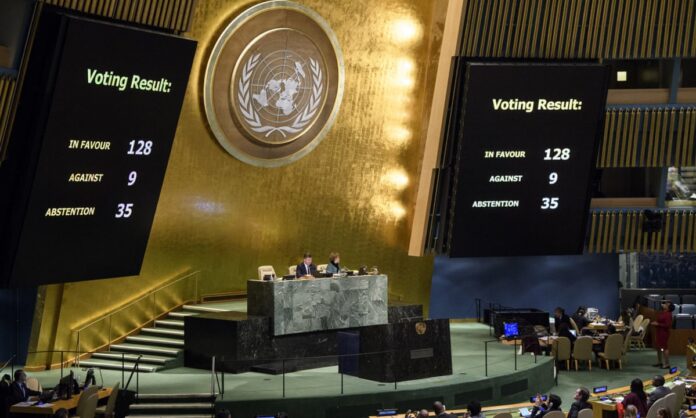
Iran envoy seeks ending suspension of UN voting right

Majid Takht Ravanchi commented on the suspension of Iran’s right to vote in the United Nations because of bans blocking its payment of the United Nations dues and hoped Iran’s efforts to end this will bear fruit soon.

Talking to IRNA on Friday, he said that Iran as a very active member of the international body has always paid its dues on time but unfortunately, due the unfair anti-Iran sanctions, it has failed to do so for the second consequent year now.

He added that the US anti-Iran sanctions which has affected routines in many areas including medicine and medical equipment has also impeded procedures in the United Nations.

Last year, following discussions with the UN officials, he stated, Iran finally managed to tackle the issue using its sources outside the country.

Iran does have the resources to pay its dues on time but the oppressive and unilateral sanctions imposed on Iran is preventing Tehran from paying them, he continued.

Takht Ravanchi noted the Iran is already discussing the issue with the UN officials and hoped it will be solved in shortest time possible.

Foreign Ministry Spokesman Saeed Khatibzadeh, too, in reaction to suspension of Iran’s voting right in United Nations has stated that unfortunately for the 2nd consecutive year due to the unjust and illegal US sanctions Tehran faced difficulties in payment of membership fees to the UN.

Iran, as one of the founding and active members of the United Nations naturally considers itself committed to full payment of its membership fees to the United Nations and other international organizations and agencies, Khatibzadeh said.

He added that despite the created numerous shortages, the government of the Islamic Republic of Iran has provided the required sources for payment of its membership costs to the UN and is engaged in necessary negotiations for resolving the matter.

“Meanwhile, providing a safe channel for fast payment of the membership cost is under consideration,” he continued.

The FM spokesman at the end proposed that the UN secretary general and Secretariat, too, will keep in mind the special conditions with which Iran and some other countries are entangled due to the illegally imposed US sanction and assist in resolving the problem.
Source: Parties bridge many differences in Vienna talks

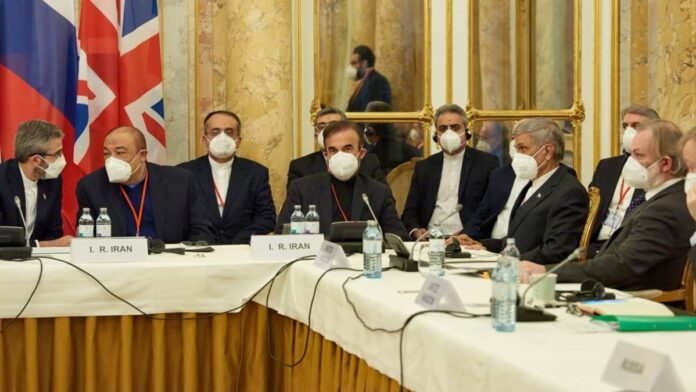
“At the moment, we are at a stage of the negotiation where we are discussing tough issues and how we can translate the issues agreed upon in principle into words and into the documents,” the source, who spoke on condition of anonymity, told the Islamic Republic News Agency (IRNA) on Friday evening.

He noted that many of the gaps regarding sanctions and nuclear issues have been filled, and that the parties are currently increasingly working on how to implement and sequence their commitments.

Regarding sequencing, he explained that this is a matter of steps that Iran and the United States must take to fully implement the 2015 agreement and that these actions need to be verified.

“This is one of the most tedious, long and difficult parts of the negotiations, but it is absolutely essential to achieving our goal,” the source explained.

He stressed that this is a complex negotiation, in the sense that everything depends on everything. The informed source however, noted that the atmosphere of the negotiations has improved.

The eighth round of talks between Iran and the P4+1 group namely Russia, China, Britain, France and Germany began in the Austrian capital on December 27. 

On Friday evening, based on an agreement reached among the heads of delegations, the senior negotiators of the Islamic Republic of Iran and the three European countries temporarily returned to their capitals for consultations.

The diplomats are trying to find a way to revive the 2015 nuclear deal known as the Joint Comprehensive Plan of Action. 

The JCPOA has unraveled since former U.S. President Donald Trump unilaterally withdrew from the deal and imposed sanctions against Iran

Heavy downpour triggers flooding in western Iran, causing damage

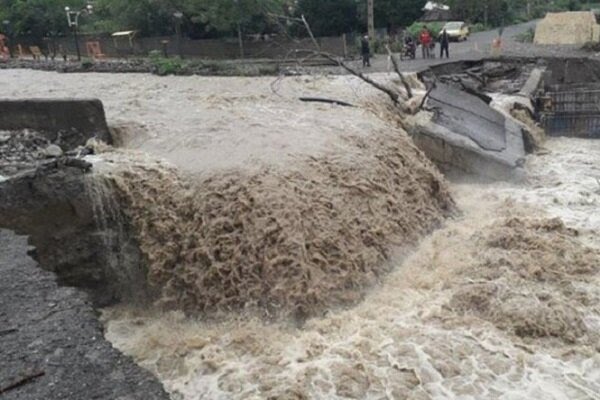
“Following rain today and overnight, a river passing through the middle of the [provincial] town of Mormori burst its banks, inflicting heavy damage on people’s homes,” said a local official.

“The water getting into homes and business buildings was as deep as a meter, which caused damage to household appliances and livestock that locals keep,” the official added.

The province got around 1 meter of rain in a matter of hours, causing rivers to overflow and bridges to submerge.

Flooding has relatively subsided now, and relief teams are on the ground reaching out to the stricken people.

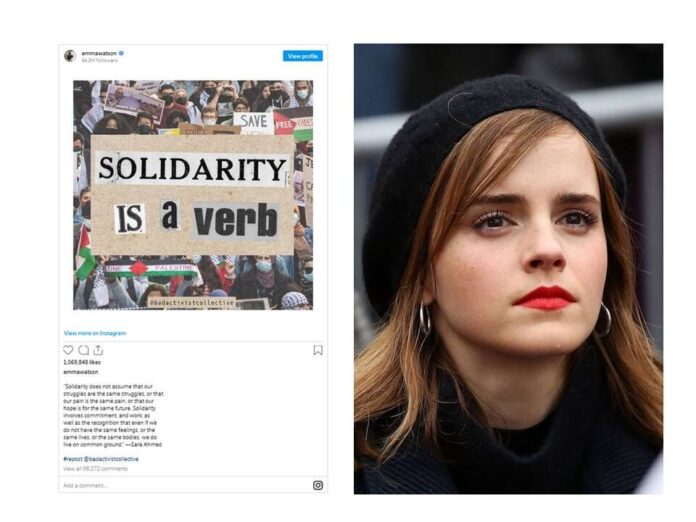
Film stars back Emma Watson on Palestinian solidarity post

“We join Emma Watson in support of the simple statement that ‘solidarity is a verb’, including meaningful solidarity with Palestinians struggling for their human rights under international law,” the film stars said in a statement. 

The film stars also said, “We stand against ongoing Israeli attempts to forcibly displace Palestinian families from their homes in the East Jerusalem neighborhoods of Sheikh Jarrah , Silwan and elsewhere in the occupied Palestinian territory.” 

In their statement, the film professionals explicitly condemned antisemitism, Islamophobia and all forms of bigotry.

Last week, an Instagram post on Watson’s account shared a picture from a pro-Palestinian rally with the sentence, “Solidarity is a verb”. Zionist officials quickly condemned the post that was liked by more than one million social media users.

The British actress is perhaps best known for her role as Hermione Granger in the Harry Potter films. 

Other signatories to the pro-Palestinian missive include award-winning screenwriter James Schamus, Oscar-nominated directors Asif Kapadia, Mira Nair and writer/producer Oren Moverman.

‘Iran, Syria discussed activating strategic economic cooperation deal’

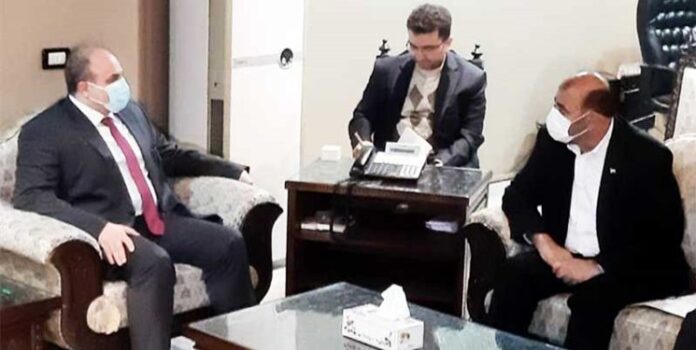
In an interview with the Alahednews Portal, Mohammad Samer al-Khalil said he had held talks with Rostam Qassemi in Damascus on solutions to remove the obstacles hindering bilateral cooperation.

He described Tehran-Damascus economic cooperation as “vital” for Syria, which is emerging from a decade-long campaign of terror and destruction.

Khalil said bilateral trade had been slowed down as a result of issues with transportation and financial transactions, which were discussed in detail in the meeting.

During the meeting, he added, the two sides discussed how to activate the major articles of the 2019 strategic economic cooperation deal.

“This is an important agreement with many different articles and it will promote economic and trade relations. Both sides have a serious determination and, God willing, this resolve will bear fruit via the committees that are supposed to follow up on the measures in the next stage,” he added.

Khalil explained that Iran and Syria had reached complete agreements on trade and economic cooperation, “but their provisions have yet to be activated, including customs tariffs, facilitating the entry of goods into the two countries and commodities that are exempt from the free trade agreement, as well as investment projects that Iranian companies can carry out in Syria.”

Qassemi traveled to Damascus earlier this week at the head of an economic delegation. He said Thursday that Iran and Syria agreed to set up a joint bank and special economic zones.

EU’s Borrell: Deal with Iran possible “in coming weeks”

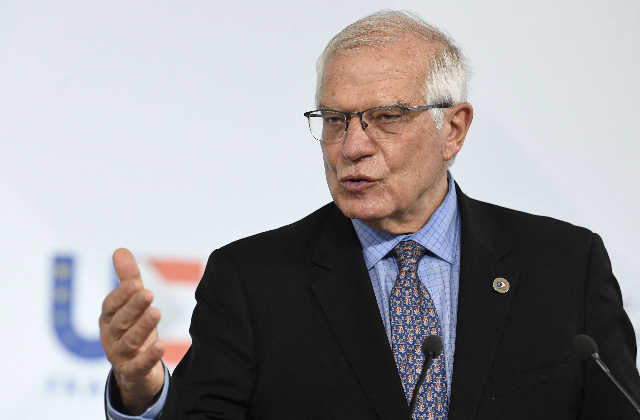
After an informal meeting of EU foreign ministers, Borrell said a renewed deal with Iran over its nuclear programme remained “possible” as talks in Vienna advance in a “better atmosphere”.

“We’re arriving at the end of a long process… there’s a better atmosphere since Christmas — Before Christmas I was very pessimistic. Today I believe reaching an accord is possible,” he added.

He stated a final deal could be concluded “in the coming weeks”.

“I still maintain the hope that it would be possible to remake this agreement and have it function as it did before the American withdrawal,” he noted.

But Borrell spoke alongside French Foreign Minister Jean-Yves Le Drian, who reiterated his view that the talks are progressing “much too slowly to be able to reach a result”.

“We now have to conclude and come to a decision: Either the Iranians want to complete this, in which case we have the impression that there will be flexibility in the Americans’ stance,” Le Drian said.

“Or they don’t want to complete this, and in that case we will be faced with a major proliferation crisis,” he added.

“There will be nothing more to negotiate if nothing happens,” he warned.

The eighth round of talks kicked off in Vienna in late December. The negotiations seek to restore the Joint Comprehensive Plan of Action (JCPOA) in its original form and bring the US back into the agreement.

Iran insists that the talks must lead to the removal of all American sanctions that were imposed against Tehran following Washington’s unilateral withdrawal from the landmark agreement in May 2018. Tehran has also demanded credible guarantees that Washington will not abandon the deal again.

Tehran announced Friday that Iran’s chief negotiator Ali Baqeri Kani and his European counterparts would temporarily return to their respective capitals, under an agreement reached among heads of the delegations, to handle affairs related to their political posts and for certain consultations.

Iran’s annual non-oil exports expected to touch $46bn

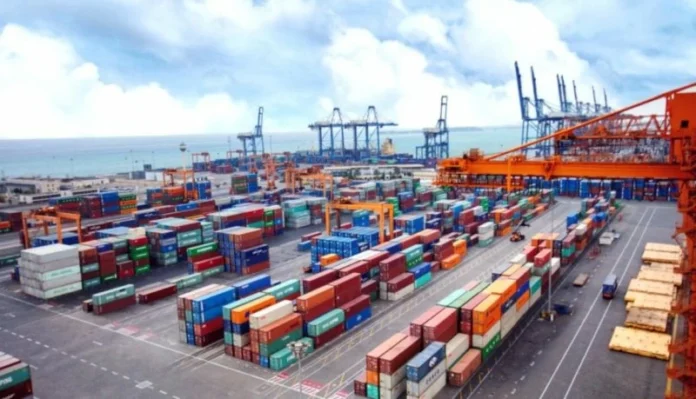
Given the growing trend of exports, the country’s revenues from the shipping of non-oil products could reach $46 billion, said the IRICA deputy chief for technical affairs.

The country’s average value of monthly non-oil exports in the first half of the Iranian calendar year (starting March 21, 2021) equaled to $3.5 billion, Foroud Asgari added.

The revenues have witnessed a considerable increase since late August, rising to $5 billion and bringing the total earning to $36 billion up to now, said the official, noting the rise in non-oil exports was behind it.

Elaborating on the reasons behind the increase in non-oil exports, he said the Central Bank of Iran (CBI) official in charge of currency returns was moved to the Ministry of Industry, Mine and Trade and thanks to the ministry’s import and export policies, the volume soared and motivated the exporters.

Iranian FM says Tehran-Beijing start implementing strategic agreement

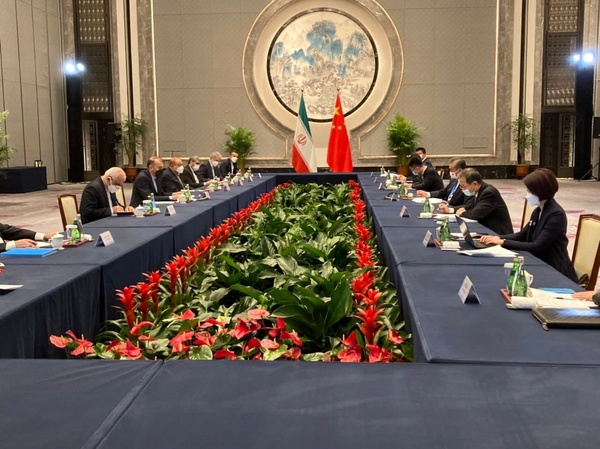
Amir Abdollahian told reporters Friday is the starting day of the execution of the deal.

The foreign minister added that to this end, he submitted to Chinese Foreign Minister Wang Yi Iranian President Ebrahim Raisi’s letter to Chinese President Xi Jinping.

He also said he held detailed talks with Wang over the Vienna talks.

Amir Abdollahian praised the Chinese and Russian chief negotiators in Vienna for their positive role in supporting the nuclear rights of the Islamic Republic of Iran.

Earlier, the Iranian Foreign Ministry said on its website that Amir Abdollahian and Wang held talks over a broad range of political, economic, trade, consulate, cultural, regional and international issues and explored ways of expanding bilateral cooperation between Tehran and Beijing.

During the talks, the Chinese foreign minister underlined his country’s readiness to expand cooperation with Iran in the financing, energy, banking and cultural sectors despite the illegal sanctions against the Islamic Republic.

He described the 25-year strategic cooperation deal between Iran and China as highly important and said Tehran and Beijing’s agreement to start executing the deal is a significant development that paves the way to fundamentally transform bilateral ties.

Wang announced China’s full support for Iran’s logical stance on the arrogant policies of the United States regarding the Iran’s nuclear deal, JCPOA. The top Chinese diplomat said Beijing’s policy is to continue supporting Iran’s position during the JCPOA talks and underscored that the US must redress its mistake of leaving the deal.

Amir Abdollahian also reaffirmed Iran’s support for the One China Policy and announced Iran’s readiness to expand ties with China in all areas.
He appreciated China for supplying Iran with 110 million doses of Covid Vaccine.

The Iranian foreign minister further outlined the latest state of cooperation between Iran and China in all areas, underlining Tehran’s determination to implement all infrastructure agreements with Beijing. Amir Abdollahian said expanding ties with neighbors and friendly nations is a foreign policy priority for the Islamic Republic of Iran.

Top negotiators temporarily leave Vienna as expert talks continue

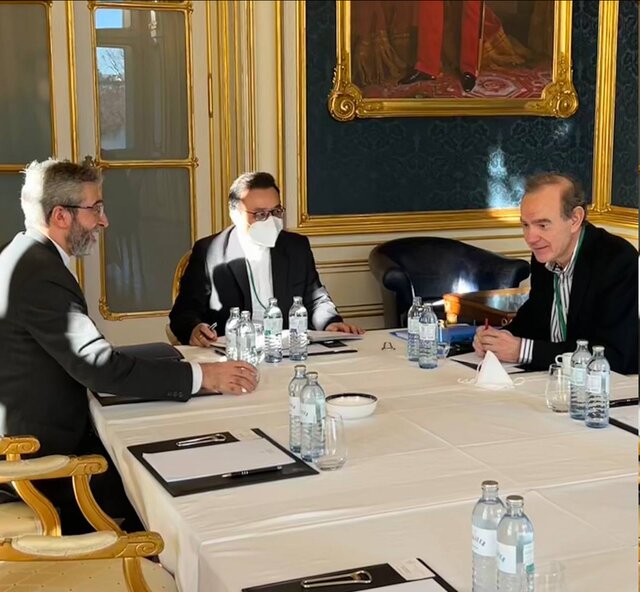
Iranian foreign ministry announced Friday that Iran’s chief negotiator Ali Baqeri Kani and his European counterparts would temporarily return to their respective capitals, under an agreement reached among heads of the delegations, to handle affairs related to their political posts and for certain consultations.

Expert talks will, however, continue non-stop in Vienna, according to the report.

The reports said the pause, which will last for two days, does not mean a suspension of the eight round of talks between Iran and the P4+1 group of states, namely France, Britain, Germany, Russia and China, on revitalizing the nuclear deal.

The fate of the agreement has been in doubt since 2018, when the US unilaterally left it.

The diplomatic process in Vienna is meant to remove the sanctions that Washington imposed on Iran after leaving the deal and to secure a US return to its contractual obligations.

Russian FM: Raisi visit to Moscow ‘very important’

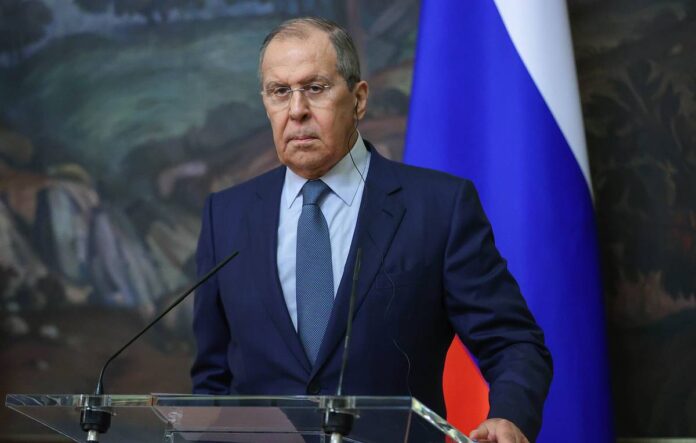
“The visit, in short, is very important. It’s time to resume contacts at the highest level, which are traditionally close and regular among us and which also fell victim to the coronavirus infection,” Lavrov said during a press conference on Russian diplomatic activities in 2021 on Friday.

“The significance (of the visit), first of all, is the need to take an inventory of our entire agenda taking into account changes in the leadership of Iran,” he added.

In late December, Iranian government spokesman Ali Bahadori Jahromi noted Raisi would visit Russia in the beginning of 2022 at the invitation of his Russian counterpart Vladimir Putin. Later, Kremlin Spokesman Dmitry Peskov announced Moscow and Tehran are preparing contacts at the highest level.

On nuclear talks, Lavrov stated real progress has been achieved.

“There has been real progress […] on the Iranian nuclear program; there is a real desire, between Iran and the US, first and foremost, to understand concrete concerns and understand how these concerns could be accounted for in the general package,” the minister said.

The top diplomat added that “it could only be a package solution,” just like the nuclear deal itself.

“The Joint Comprehensive Plan of Action was a package solution,” he noted.

According to the Russian FM, the experienced negotiators in Vienna “have already penetrated minute details of this negotiation matter” and “are making good progress.”

“I am knocking on wood, but we expect the agreement to be achieved,” he concluded.

The eighth round of talks kicked off in Vienna in late December. The negotiations seek to restore the JCPOA in its original form and bring the US back into the agreement.

Iran insists that the talks must lead to the removal of all American sanctions that were imposed against Tehran following Washington’s unilateral withdrawal from the landmark agreement in May 2018. Tehran has also demanded credible guarantees that Washington will not abandon the deal again.