Thursday, January 1, 2026
Home Blog Page 2116

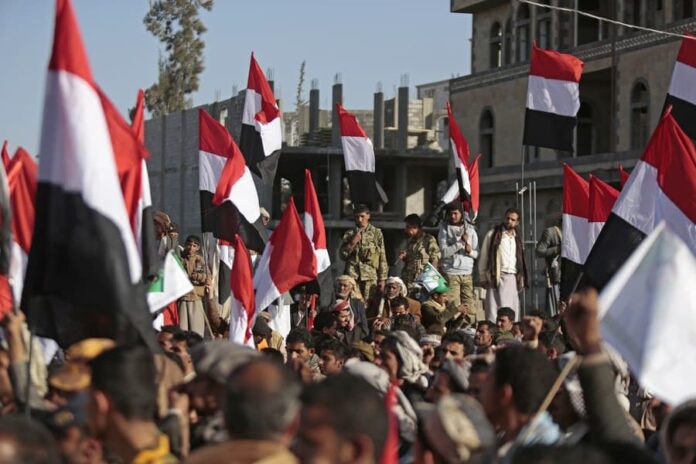
WSJ: Yemeni forces can strike targets lying 1,000 miles away

The report came a day after the war-torn country’s defense forces staged their latest bout of retaliatory strikes against Abu Dhabi and parts of Saudi Arabia.

The Yemeni forces “have hit the UAE before, but this was the first time the Emiratis acknowledged it”, wrote the daily.

The strike showed how the Yemeni forces have become emboldened in striking members of the Saudi-led coalition after emerging stronger from years of Saudi war, The Journal added.

With its strikes on Abu Dhabi’s airport and a state-owned oil facility, the Yemenis were ostensibly retaliating for the UAE’s intensified role supporting the Saudi-led coalition in the Yemen war.

The Yemeni counterstrikes was a display of the military advancements made by forces “that less than a decade ago relied on machineguns and rocket launchers.”

Now, they could hit targets lying “1,000 miles (1,600 kilometers) away from their Yemeni mountain strongholds”, the paper said.

The Saudi kingdom and several of its allies, most notably the Emirates, have been attacking the Arab world’s already poorest nation since March 2015 in an unsuccessful bid to change its ruling structure in favor of its former Riyadh-aligned officials.

At the beginning of the war, the WSJ said, the Yemeni forces were only equipped with light weaponry, such as rocket and grenade launchers.

According to a confidential report by the United Nations Security Council, seen by The Journal, they “have developed the ability to build drones, short-range missiles, and other weapons using materials such as engines and electronics that they buy locally….”

Describing the Monday counteroffensive in further detail, The Journal cited a preliminary Emirati investigation as saying that the counterblow had involved “drones, cruise missiles, and ballistic missiles”, and also quoted Saudi officials as saying that the Yemeni forces had targeted the kingdom with “nine drones”.

Spokesman for the Yemeni Armed Forces Brigadier General Yahya Saree has stated the targets in the UAE were attacked by five ballistic and cruise missiles and a large number of drones.

The death toll of the Yemen war, now in its seventh year, will reach an estimated 377,000 by the end of 2021, according to a recent report from the UN’s Development Programme.

The fighting has seen some 80 percent of the population, or 24 million people, relying on aid and assistance, including 14.3 million who are in acute need.
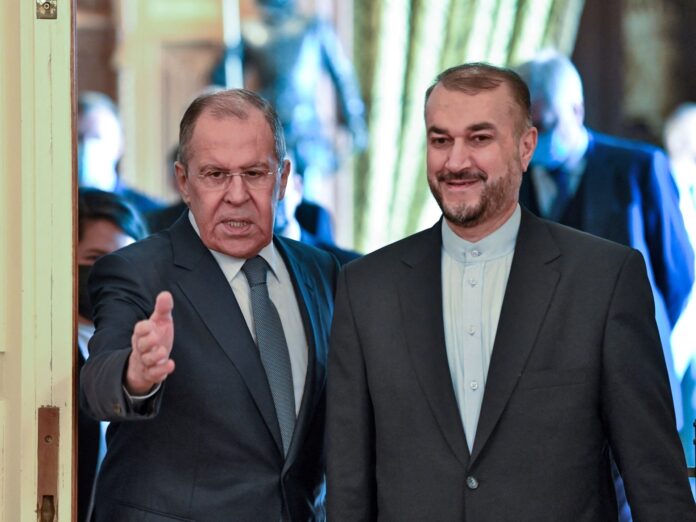
Amir Abdolahian: Iran, Russia redoubling efforts to nullify US sanctions

In an interview with Iran’s Nour News published on Tuesday night, Hossein Amir Abdollahian said there is a strong desire on the part of the private and public sectors in Iran and Russia to cement their trade ties, despite the restrictions created by Washington’s unilateral sanctions against Tehran.

“High on the agenda are the development of trade cooperation between the two countries, the expansion of long-term cooperation, and the removal of some obstacles, including infrastructural weaknesses, financial and investment resources, as well as efforts to neutralize international sanctions against the two countries,” he added.

The remarks came ahead of Iranian President Ebrahim Raeisi’s Wednesday departure of Tehran for Moscow.

Raeisi is scheduled to meet with his Russian counterpart, Vladimir Putin, and address the plenary session of the Duma, the lower house of the Russian parliament.

According to the Kremlin, Raeisi and Putin will discuss all issues related to bilateral cooperation, including the implementation of joint projects in economic and trade fields, as well as important international and regional developments.

Amir Abdollahian explained that there are a variety of issues over Tehran-Moscow relations that need to be addressed.

“We regard Putin’s Russia as different from the Soviet Union,” he stated, noting that the two countries’ strategic view of foreign relations is a foundation to build on.

“Syria has been a successful model of regional cooperation between the two countries in recent years,” he continued.

The Iranian foreign minister further noted that Iran’s principled stand is that regional security must be provided only by the region’s countries.

“The Islamic Republic of Iran has always emphasized its principled policy of strengthening good neighborliness, building trust, and holding dialog with its neighbors and deems lasting security possible only through cooperation, partnership and peace,” he stated.

Elsewhere during the interview, Amir Abdollahian described the Raeisi administration’s foreign policy as balanced, dynamic, and smart.

He named the administration’s three top priorities as “a neighbor-centered policy, an Asia-centered policy with a focus on looking to the East, and an economy-centered diplomacy.”

“Dr. Raeisi’s visit to Russia is a turning point in the policy of good neighborliness and looking to the East,” he added.

According to the chief Iranian diplomat, Tehran has succeeded to resolve issues with neighboring countries such as Turkmenistan and Iraq and is making diplomatic overtures to Persian Gulf countries, including Oman, Qatar, Kuwait, the UAE, and also Saudi Arabia.

“Finally, I shall point out that initiatives, endeavors, actions, and policies in the field of foreign policy are a process and bear fruit when given enough time. Therefore, the results of these political actions will emerge in the medium- and long-term,” he said.

Iran oil, economy ministers discuss ties with Russian counterparts

iran-russia flag

Their meetings were held as Iran’s President Seyyed Ebrahim Raisi left Tehran for the Russian capital on Wednesday morning to start a landmark visit to the neighboring state.

Javad Owji, the Iranian oil minister and the head of Iran-Russia Joint Economic Commission, held separate talks with Russian Energy Minister Nikolay Shulginov and also the Russian chief of the commission, as well as with Russian Deputy Prime Minister Alexander Novak. 

Owji and the top Russian officials discussed the ways to expand economic relations, particularly cooperation in the energy sector, remove obstacles to banking transactions, boost customs exchanges, and strengthen the two countries’ cooperation in the infrastructure field.

Their energy talks also included oil and gas cooperation, the OPEC+ agreement, and transfer of technology.

In addition, Owji talked about options for shipping Iranian natural gas to Pakistan and India with the participation of Russian companies, and manufacturing of oil industry equipment.

“The two sides also discussed preparation and the agenda for the next meeting of the Russian-Iranian government commission on trade and economic cooperation,” the Russian Energy Ministry said in its statement on the energy talks. 

In the meantime, Iranian Minister of Economic Affairs and Finance Seyyed Ehsan Khandouzi met with Russian Finance Minister Anton Siluanov in an effort to cement the two countries’ economic relations.

Khandouzi described Russia as an important partner for Iran, saying President Raisi’s trip to Moscow is a turning point in the two countries’ ties.

The minister earlier had a meeting the Iranian businessmen in Moscow, discussing the economic, banking and customs obstacles.

Raisi: Iran-Russia ties build regional security, counter unilateralism

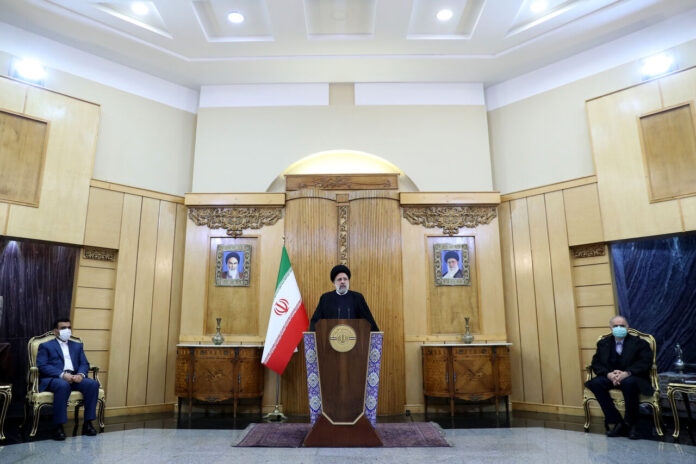
Speaking at Tehran’s Mehrabad International Airport on Wednesday morning, the Iranian president said he was leaving for Moscow at the invitation of his Russian counterpart, Vladimir Putin, and “Efforts would be made during the trip to promote neighborly and regional diplomacy.”

He said, “Without any doubt, our relations with all neighbors, especially Russia, are good, and given the political, economic and commercial relations between the two countries, this trip could be a turning point for bolstering our ties with Russia.”

The Iranian president said issues of bilateral significance in the fields of politics, economy, energy, trade and aerospace will be on the agenda of his talks in Moscow.

“We have shared interests with Russia and these interactions and common interests will definitely build security in the region and counter unilateralism there,” Raisi said. “Mutual cooperation can be highly effective in the current regional and international circumstances.”

He said both Iran and Russia are powerful and influential in the region and thus dialog between such states can boost regional economic cooperation.

The president said Iran and Russia are party to many political and economic circles in the region, in which Moscow plays a significant role, including the Shanghai Cooperation Organization (SCO).

He said Iran, which was recently granted permanent membership in the SCO, will have good cooperation with all members, particularly Russia.

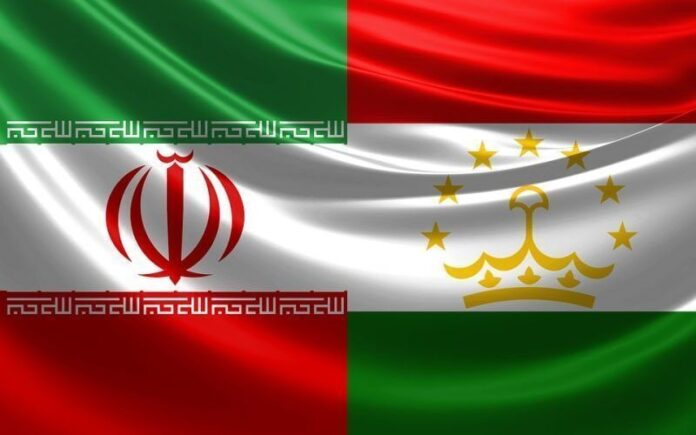
Envoy: Iran exclusive exhibition in Tajikistan a desirable opportunity to boost trade ties

Talking in a webinar on Iran-Tajikistan trade cooperation hosted by Mashhad, northeastern Iran, Mohammad-Taqi Saberi also added the fifth solo exhibition of Iran in Tajikistan helped the two countries sign several economic contracts.

The envoy continued the sixth exhibition is aimed at introducing Iran’s products and services and also exploring all avenues for expanding economic and trade cooperation with Tajikistan.

Earlier the Khorasan Razavi deputy governor general for coordination of economic affairs said that the northeastern province will hold the solo exhibition in the Tajik capital of Dushanbe from February 26 to March 1, 2022.

Morteza Ashrafi added that the specialized exhibition will be organized by Mashhad International Exhibition Company. The Company held Iran’s exclusive exhibitions in Dushanbe in 2004, 2005, 2006, 2011 and 2019.

Iran-Tajikistan trade volume

The head of Iran’s Trade Promotion Organization’s (TPO) Central Asia office, also speaking in the webinar, said the trade between Iran and Tajikistan is expected to hit 500 million dollars by 2030.

Rahmatollah Khormali added that the Iranian products recently exported to Tajikistan constituted six to seven percent of the three-billion-dollar market of that country, expressing hope the outlined plans on bilateral relations would help achieve the goals in the near future.

Based on the economic goals for the next four years, Iran should increase its exports to Tajikistan from 55 million dollars to 200 million dollars, he explained.

Tajikistan is in dire need of foodstuff, petrochemical products and construction materials, Khormali concluded.

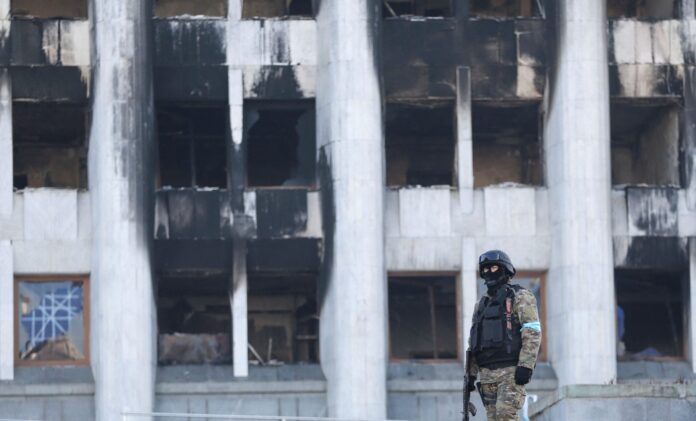
State of emergency lifted in Kazakhstan

The end of the emergency measures in the Central Asian country brought life back to normal, especially in the national capital Nur Sultan, the country’s largest metropolis Almaty, and the provinces of Atyrau, Jambyl, Kyzylorda, and Mangistau.

Security measures on the streets were lifted, along with a curfew imposed at certain hours. Restrictions on travel into and out of cities were also lifted.

Presidential press spokesman Berik Uali said in a statement that thanks to the unity and solidarity of the people and the actions of security and law enforcement forces at the expense of their lives, order and peace have been ensured throughout Kazakhstan.

After peaceful protests turned to a violent uprising with a decree signed Jan. 5 by President Kassym-Jomart Tokayev, a state of emergency was declared. It was lifted Jan. 13 in some regions before the specified time.

At least 225 people were killed in unrest following protests triggered by a fuel price increase, the prosecutor general’s office announced Saturday.

Demonstrations that began Jan. 2 later turned into clashes with police, with the most violent occurring in Kazakhstan’s former capital and largest city of Almaty.

Tokayev turned to a Russia-led military bloc for help, And peacekeepers from Russia, Belarus, Armenia and Tajikistan soon arrived and backed Kazakh law enforcement in restoring order.

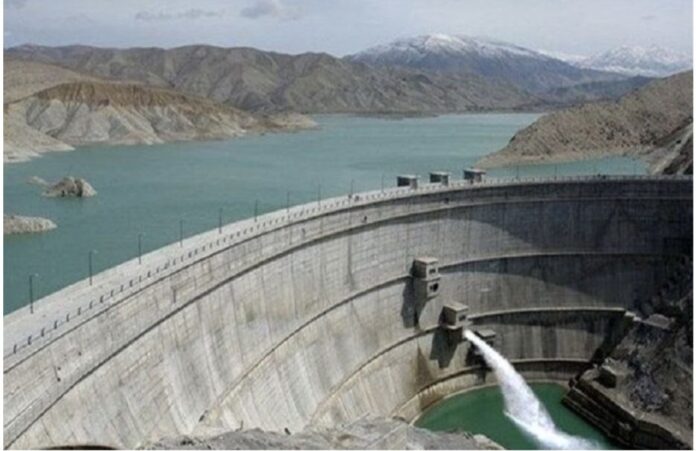
Helmand flowing into Iran again as Taliban reopen gates of border dam

Iran’s Deputy Ambassador to Kabul Hassan Mortazavi said Tuesday the caretaker Taliban officials ordered the re-opening of the gates of the Kamal Khan Dam following consultations between the two sides in Tehran during acting Foreign Minister Amir Khan Muttaqi’s visit.

Talks will continue on ways to resolve the long-running dispute over Iran’s share of water from the Helmand River, he added.

“We hope that the water will reach our country’s border by tomorrow noon,” he said.

Mortazavi criticized the construction of the Kamal Khan Dam by the Western states aimed at fully blocking the flow of water into Iran.

“In the weeks to come, intensive talks will be held with the Kabul government to fully resolve the problems created by the ex-Afghan government for the shared waters on the border,” he said.

Meanwhile, Iran’s special representative to Afghanistan thanked the Taliban for delivering on their promise to free the water.

The Helmand originates near Kabul, flows southwest through desert areas for a total of about 1,100 kilometers before emptying into Lake Hamun on the Iranian border.

Under the 1973 Helmand River Treaty, Afghanistan is committed to sharing the water with Iran and supplying 26 cubic meters of water per second, or 850 million cubic meters per annum.

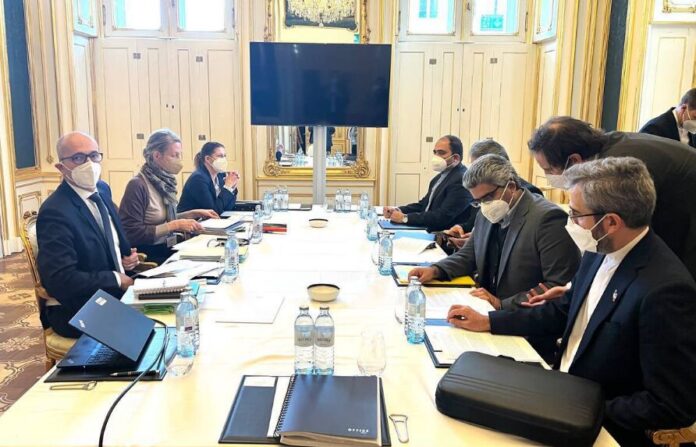
Iranian negotiating team meets European Troika delegations in Vienna

Iran’s chief nuclear negotiator Ali Bagheri headed the Iranian team in the meeting. Some experts were also in attendance. Bagheri, who arrived in the Austrian capital Monday morning, met last night for the first time with representatives of the European Union and three European countries.

At the same time, expert meetings on various topics continued.

Meanwhile, Russia’s envoy to international organizations in Vienna said on his Twitter account that Russian and US delegations were meeting to discuss the situation surrounding the talks to revive the Iran nuclear deal, JCPOA.

Mikhail Ulyanov said, “We reviewed the situation of the Vienna talks with a focus on outstanding issues”.

He added that at the current advanced stage of the negotiations, this is being done in other formats as well in reference to expert talks between Iran and the P4+1. The 8th round of talks on lifting the sanctions on Iran began Monday, December 27, 2021, and the negotiating teams say the talks have made progress.

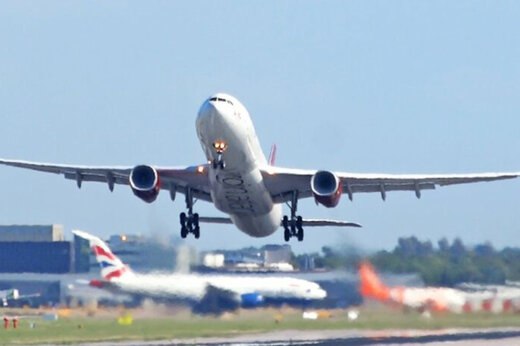
Iranian airliner in emergency landing at Sabzevar airport

The weather in Mashhad was foggy on Tuesday and flights to Mashhad airport were canceled for hours.

The Saha Airlines flight to Mashhad had poor visibility and unfortunately could not land at Mashhad airport, so the pilot requested to land at Sabzevar airport, which was the closest flight route, public relations manager of Mashhad’s Hasheminejad Airport said.

The plane landed at Sabzevar airport without any problem, but due to a technical defect, the passengers were taken to Mashhad in buses.