Thursday, January 1, 2026
Home Blog Page 2117

Iran says ready to help end Yemen war

Khatibzadeh said Iran has always supported a political solution based on ending the blockade on the Yemeni people, ending the war and preserving the country’s territorial integrity.

He added that Tehran also underlines the need to prevent an escalation of the humanitarian catastrophe in Yemen.

The Iranian Foreign Ministry spokesman said the Islamic Republic of Iran always believes that the Yemen crisis is an internal issue and must be resolved by Yemenis themselves without foreign meddling.

He added that no regional crises can be resolved through war and violence and peace and stability can be achieved in the region through avoiding the continuation of tensions and the cycle of violence.

Khatibzadeh noted that the siege of Yemen and the war on the country are no solution to the crisis and such acts will only escalate tensions in the region.

His comments came a day after Yemeni forces launched a deadly drone attack on targets in the UAE capital Abu Dhabi that took the Emiratis unawares. Yemen says the attack was in response to the UAE’s relentless assistance in the Saudi-led war on the Yemeni people.

Meanwhile, according to Al Mayadeen TV network, in the Saudi-led coalition’s airstrikes on Yemeni capital, Sana’a, 23 were killed on Monday.

Iranian FM: New roadmap will be drawn for ties with Russia

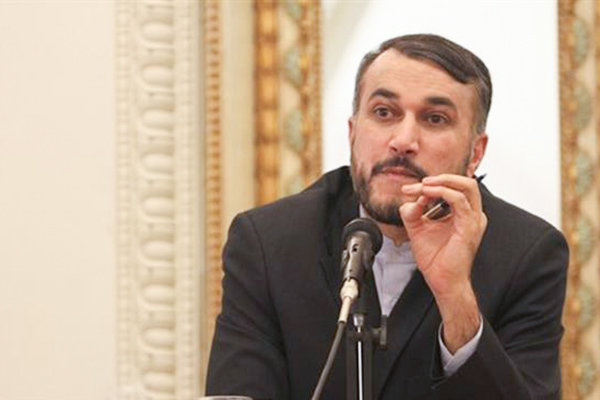
Amir-Abdollahian

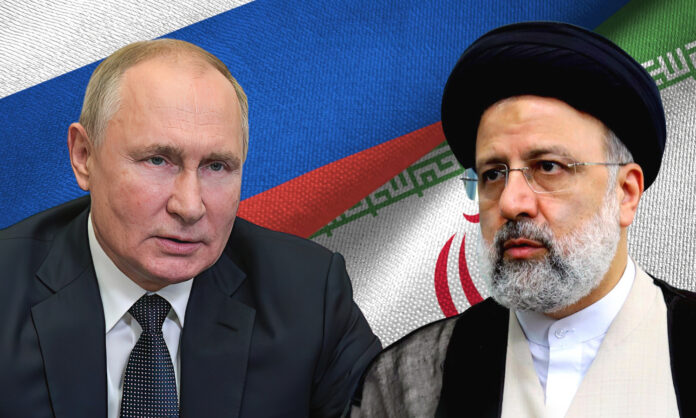
Amir Abdollahian made the comment in an Op-Ed released by the Russian news outlet Sputnik.

He added that in bilateral relations, the two countries are determined to update the treaty which forms the basis of mutual relations and principles of cooperation in line with global developments.

Amir Abdollahian said the new Iranian administration has put in place a new roadmap for foreign ties that is balanced, dynamic and smart.

He noted that the roadmap underlines the need to work with neighbors, most notably Russia.

Amir Abdollahian said the new government of the Islamic Republic of Iran views Russia as a strong neighbor and friend on the basis of “cooperation, respect and mutual interests” and is interested in a significant leap in ties in various fields.

He also spoke of the prospects of economic ties between Tehran and Moscow. The foreign minister said the beginning of the process of Iran’s membership in the Shanghai Cooperation Organization and the cooperation between the Islamic Republic and the members of the Eurasian Economic Union has become a factor in strengthening economic relations between the two countries.

Amir Abdollahian also touched on security cooperation between Iran and Russia. He said Iran and Russia work together at the United Nations and other regional and international bodies to strengthen information security and combating organized crime.

In the Op-Ed, the Iranian foreign minister also spoke of military ties between Tehran and Moscow. He said in the field of defense and law enforcement, relations between the Islamic Republic of Iran and Russia are growing and the joint exercise of Iran, Russia and China in the North Indian Ocean and the Sea of Oman shows the seriousness of the three countries.
Amir Abdollahian maintained that Iran and Russia, as two regional powers, have a unique role in resolving regional conflicts and in fighting terrorism.

“The two countries share the common view that the Middle East region has suffered from a number of problems, including war, instability and insecurity, due to foreign intervention,” he said.

To address these issues, Amir Abdollahian said, consultations are ongoing between the two countries on ways of stabilizing Afghanistan, Syria, Yemen and Libya. Regarding the Iran-Russia cooperation in Syria, the top Iranian diplomat said the two countries have had joint and successful regional cooperation as guarantors of the Astana peace process and this successful experience can serve as a model in other areas, including in the reconstruction of Syria and the establishment of lasting stability and security in the country.

He noted that the regional cooperation between Iran and Russia is not limited to West Asia, but it also includes other regions, including the South Caucasus, Central Asia and the Caspian Sea.

Amir Abdollahian also said Iran and Moscow have worked together at the international level too, adding that the two countries stand united against the US’s inhumane and unilateral sanctions and the West’s meddling in the internal affairs of other countries.
He said Iran believes that unilateralism has failed and the age of illegal acts is over.

Elsewhere in the Op-Ed, the Iranian foreign minister spoke of the Vienna talks, saying Tehran has attended the negotiations with a pragmatic and result-oriented approach for the purpose of reaching a good deal.

He stressed that Russia played a positive role in the negotiations that led to the signing of the 2015 nuclear deal, JCPOA and has taken positive steps toward helping remove anti-Iran sanctions in the current talks in Vienna.

The Iranian foreign minister’s Op-Ed comes as President Ebrahim Raisi will go to Moscow on Wednesday for talks with Russian officials including President Vladimir Putin. Iranian and Russian leaders will discuss various issues of mutual interest.

Experts believe the visit will be a turning point in ties between Tehran and Moscow.

Iranian interior minister: Classes must be held on in-person basis

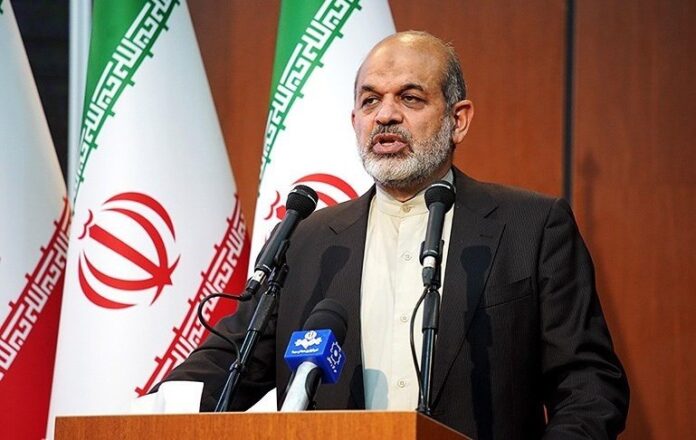
Vahidi was speaking on the sidelines of a gathering of the Iranian Educaiton Ministry’s councils on Tuesday.

He added that at the meeting of Iran’s National Taskforce for Fighting Covid, it was repeatedly emphasized that the schools should be open, and the governors were notified that if they face any shortages in this regard, they must take action to solve it.

Vahidi added that school exams were held on an in-person basis and no new cases of Covid were detected among students as a result of their participation in the exams.

He said the Education Ministry should pave the way for the formation of in-person classes so that there is no studying failure on the part of students.

Iran ambassador: West seeking to undermine Tehran-Moscow cooperation

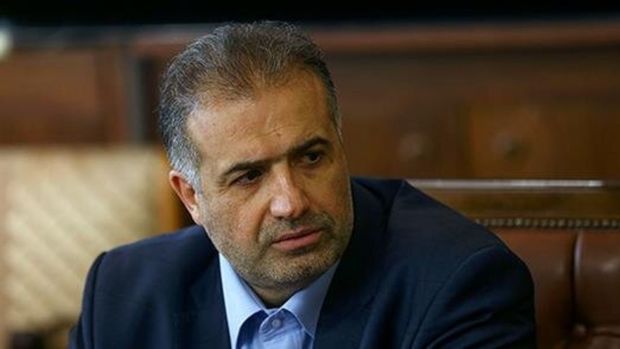
“I believe that the British and American psychological operations and propaganda machine are seeking to depict Russia as evil, and to promote hatred of Russia and propagate that the Russians are bad, dangerous, unreliable and unpredictable, and that there is no difference between Tsarist Russia, the communist Soviet Union and modern Russia…to provoke the public against the consolidation of Iran’s relations with the new Russia,” Jalali said in an interview with Iran Newspaper ahead of the Iranian president’s trip to Moscow.

Some Iranians have been skeptical about Iran’s deepening ties with the northern neighbor because of a difficult shared history between the two stretching back centuries. The problem is that the Iranians’ knowledge about Russia goes back to the Tsarist era and the Soviet Union, and with the same reasoning, they judge today’s relations, the Iranian ambassador to Russia said.

“By likening modern Russia to negative and ingrained perceptions of the historical behavior of Tsarist Russia as well as the hegemonic tendencies of the Soviet Union during the communist rule, some undermine any consolidation of relations between Iran and modern Russia,” the Iranian ambassador stated.

The independent view is that Russia is a powerful country in Iran’s northern neighborhood. Naturally, the Islamic Republic of Iran, regardless of its relations with other countries, is interested in having strong relations with Russia, as its northern neighbor, based on its national interests, Jalali added.

Asked about Iran’s exports to Russia, he said the export volume is far from satisfactory.

Jalali explained that securing an estimated 5 billion dollar share of Russia’s 240 billion dollar import market and at least 20 billion dollars in transit revenue for Iran from the north-south corridor between Russia and Iran are achievable results of strengthening relations with Moscow.

“If we think of only one percent of exports to Russia, it would be 2.5 billion dollars. Surely, as a neighboring country, we can export much more products by carefully examining the Russian economy and its needs,” he noted.

The Iranian ambassador said through cooperation with the Russian Federation, Iran can launch a north-south transit route which would help bolster Iran’s national security.

Asked whether Russia has the potential to become a strategic partner, Jalali said Iran views Russia as a powerful country with great economic, political, security and defense capabilities.

“We can stand together and have serious cooperation, and of course the Caucasus is a region where we can work with them. We can work together on the Caspian Sea, the fight against extremism and terrorism. The West’s plan within the Central Asian region is to increase terrorism and extremism, and there is room for that. Here we need to work together in that regard,” he added.

IRNA: Raisi’s major mission in Moscow

iran-russia flag

According to the Islamic Republic News Agency (IRNA),
Iran and Russia currently view each other as an opportunity to establish a strategic corridor and equal partnership.

The current status of the international relations system has also increased the incentives for Eastern bloc countries to seek strategic relations as they grapple with the US-led global hegemony.

Experts believe that the Iranian president’s visit to Russia could be a turning point in Tehran-Moscow relations and raise the quality of bilateral ties to a strategic level.

Regional partnerships are being completed. This path started with Iran’s permanent membership in the Shanghai Cooperation Organization, then efforts were made at the ECO meeting to complement that, and the path continued with the recent implementation of the 25-year strategic agreement between Iran and China. Now it’s time for the implementation of the 20-year agreement with Russia.

The Iranian government has a strategy to implement 20-year cooperation deals with major neighboring countries.

Meanwhile, it needs to persuade the public that its Look to East Policy is justified.

The current Iranian administration, especially the Foreign Ministry must provide the public with accurate and clear information about the benefits of convergence with Russia, India, China, Turkey, Iraq and other Eurasian neighbors and countries.

Apart from the history of Western pressure campaigns, especially those launched by the United States against Iran, according to many experts, global power and wealth is shifting from the West to the East, and this is providing many countries including Iran with numerous opportunities.

Over the past month, Western media have been trying to promote Russophobia because they are aware of the importance of Raisi’s trip to Moscow especially because it comes after Iran’s full accession to the Shanghai Cooperation Organization.

In fact, they are worried that one day the Russians may decide to expand the Collective Security Treaty Organization and add new member states like Iran. These opponents are somehow worried about the achievements of this trip.

The convergence of the Eurasian giants provides the capacity to challenge the U.S. government’s economic hegemony and Washington’s coercion and threats against other governments.

Washington seeks to drive a wedge between Russia and countries like Germany, China, Turkey, Ukraine, India and Iran.

And for this purpose, the United States uses a suspicion and mistrust strategy.

Meanwhile, observers believe that shared interests and commonalities in the economic, political, and cultural spheres have also led Tehran and Moscow to work together.

Common stances on many regional and international issues, like counter terrorism efforts, opposing U.S. bullying approach and advocating multilateralism are among the reasons for closer cooperation between Tehran and Moscow.

And last but not least, experts believe that Tehran needs to diversify its foreign relations especially in the economic field. Such diversification forms the cornerstone of the Greater Eurasian Partnership initiative proposed by Russia.

Expert: Removal of sanctions to help further expand Iran-Russia ties

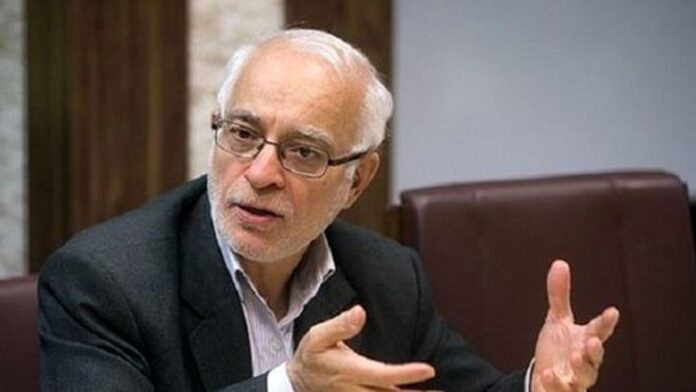
Hassan Beheshtipour told the IRIB one prong concerns nuclear cooperation between Tehran and Moscow, which is completing the second and third phases of the Bushehr Power Plant in Iran.

The Russian and Caucasus affairs expert added that obstacles to the expansion of the Iranian nuclear program with Russia’s help, which are mainly financial, are being removed.

According to Beheshtipour, the second prong regarding the Russia-Iran ties is their military and defensive cooperation, for which the ground is paved after the arms embargo on Iran was terminated.

He added that the third prong is about the Iran-Russian cooperation in the southern Caucasus.

Beheshtipour said Tehran and Moscow are approaching the issue with a 3+3 format consisting of Azerbaijan Republic, Armenia, Georgia, Russia, Iran and Turkey.

He also noted that Iran and Russia can play a significant role in Afghanistan and in restoring stability to the country after the withdrawal of the US forces.

The Iranian political expert added that Russia can also help decide the share of the Caspian Sea’s littoral states though the main stakeholders are Iran and Azerbaijan Republic and a couple of other ex-Soviet republics. Beheshtipour also spoke of Russia’s role in the Vienna talks. He said Russia is a positive player in this regard. He noted that removing anti-Iran sanctions will be highly conducive to expansion of ties between Tehran and Moscow.
Two Israeli soldiers injured in training explosion

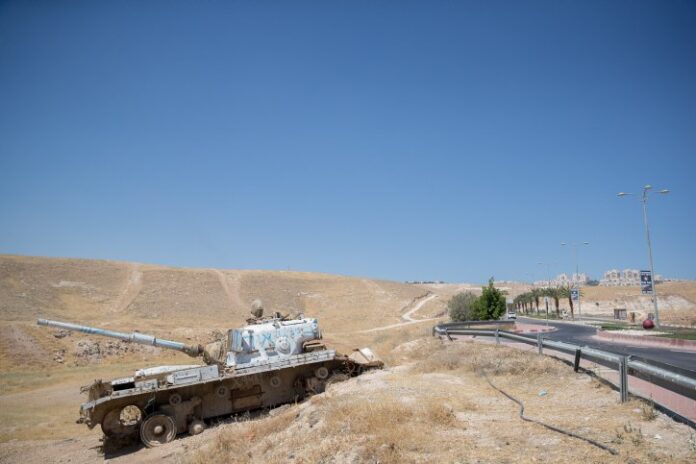
According to the Israeli army, the incident occurred as “military ordnance” exploded during an exercise at a training range in the central West Bank.

The two soldiers have been taken to a Jerusalem hospital for treatment, the army says.

The soldiers were wounded moderately and lightly in the incident.

The military added it is investigating the blast.

Yemeni army says winged, ballistic missiles used to hit UAE targets

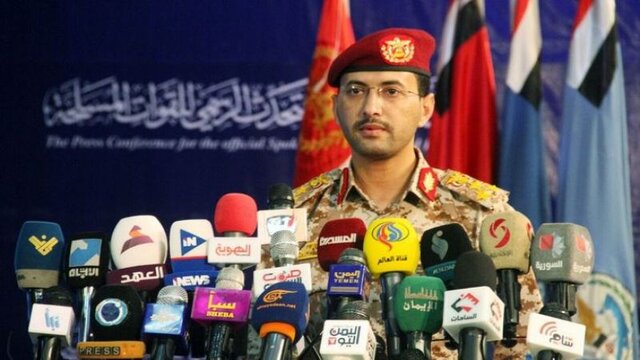
“Missiles used during the Yemen Storm operation were Quds-2 winged projectiles. The oil refinery in al-Mosfah area and Abu Dhabi Airport were hit with four missiles of this type,” Yahya Saree said in a tweet.

“A Zolfaghar ballistic missile was also used to hit Abu Dhabi Airport. Samad 3 drones were also deployed to hit important and sensitive targets.”

Al-Mosfah is a key industrial zone in the southwestern part of the Emirati capital and is one of the UAE’s most important economic zones.

The area hosts the country’s oldest port facility as well as major businesses.

An official of Yemen’s Ansarullah movement Mohammad Nasser al-Bukhaiti also warned the UAE that any escalation in tensions will not be in its interest.

He warned that other key Emirati sites including oil facilities and airports will be targeted if the country continues its aggression on Yemen.

That was also echoed by the commander of the armed forces of Yemen.

“If these series of aggressions and crimes and their attempt to occupy this country continue, this will, in the future, bring real threats against the economy of the UAE and investment there,” Mahdi al-Moshat said.

The UAE, which is fighting alongside Saudi Arabia, in the war on Yemen strongly condemned the Monday attacks on its territory as a “heinous crime”. It vowed punishment for the Yemenis.
The attacks killed three people and injured ten others.

Kremlin: Putin, Raisi to discuss JCPOA, joint economic projects

“It is planned to discuss the whole range of issues of bilateral cooperation, including the implementation of joint projects in the trade and economic sphere, as well as current international and regional issues,” the Kremlin said in a statement.

“In addition, it is planned to pay attention to the implementation of the Joint Comprehensive Plan of Action on the Iranian nuclear program,” it added.

The meeting will be Raisi’s most important official visit abroad since he took office in August 2021, and the first visit by an Iranian president to Russia since 2017.

Raisi at the invitation of Putin will depart Tehran for Moscow on Wednesday.

Also, delivering a speech at Russia’s State Duma, meeting with Iranians residing in Russia, and holding a meeting with Russian businesspeople are among Raisi’s plans in Moscow.

Speaking during a telephone conversation with Iranian Foreign Minister Hossein Amir Abdollahian, Russian Foreign Minister Sergei Lavrov has expressed pleasure with the upcoming visit of Raisi to Moscow.

Lavrov and Amir Abdollahian described Raisi’s trip as an important development in the relations between the two countries and a good opportunity to expand and deepen bilateral ties.

Iran and Russia enjoy good economic and political relations.
Russia is a signatory to the P4+1 group of countries which are currently engaged in the Vienna talks over reviving the 2015 nuclear deal with Iran known as the JCPOA.

During the talks, Russia, along with China, has supported Iran’s stance and its push for the removal of US sanctions against Tehran.

Several injured in Pakistan train explosion

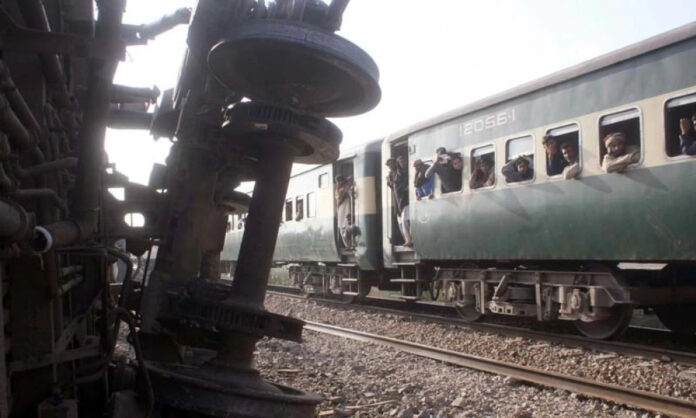
The incident happened a few minutes after the train left the provincial capital of Quetta, an official with the media cell of the Pakistan Railways told Xinhua on condition of anonymity as they were still gathering details of the blast to compile the initial report.

He said that four compartments and the engine of the train derailed as the result of the explosion.

“A bomb was fixed near the track and it went off as soon as the train passed by it,” he added.

According to local media reports, the incident left several people injured who have been shifted to a hospital in Quetta.