Friday, December 26, 2025
Home Blog Page 208

Three terrorists killed in armed clashes in Iran’s Sistan and Baluchestan

Iran Police

According to the Sistan and Baluchestan Police Information Center, the clashes occurred in the city of Saravan when security forces on patrol in the city came under attack by armed individuals.

In response, security forces killed three of the armed attackers and are pursuing the remaining assailants.

One Iranian security officer was martyred and another wounded in the clashes.

Leader advisor: Iran will block American corridor in Caucasus with or without Russia

Ali Akbar Velayati

Velayati said the corridor would pose a threat to regional security and a shift in the geopolitical map.

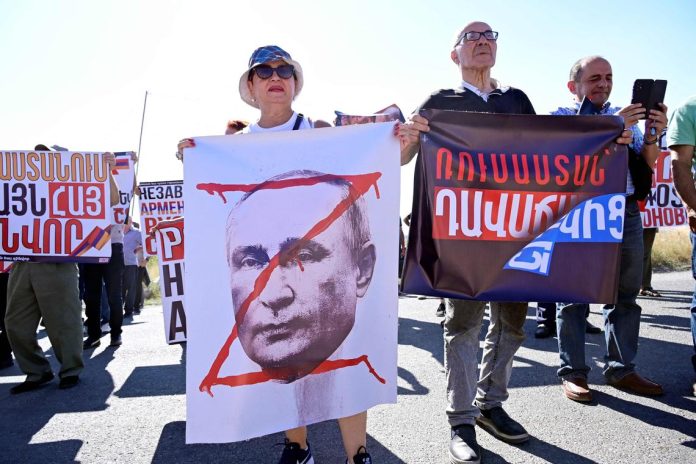
Speaking to Tasnim News Agency, Velayati dismissed US President Donald Trump’s claim of leasing the “Zangezur Corridor” for 99 years as “naïve” and compared it to “renting the Panama Canal from across the world”.

He stressed Iran’s longstanding opposition to the corridor, saying it aims to alter borders, undermine Armenia’s territorial integrity, and enable NATO’s presence between Iran and Russia.

Velayati recalled that when Turkey and Azerbaijan pressed ahead with the plan, Iran’s armed forces conducted multiple drills in the northwest to demonstrate readiness to stop it.
He went on to say that linking Nakhchivan to mainland Azerbaijan requires no special corridor, as transit through Iran is available.

The advisor to Iran’s leader underscored that the project is a political plot disguised as a trade route, warning that NATO’s encroachment on Iran’s northern borders will be met with firm resistance.

“Prevention is better than cure”, he said, reaffirming Iran’s determination to defend its interests.

Zelensky risks angering Trump: NYT

Volodymyr Zelensky

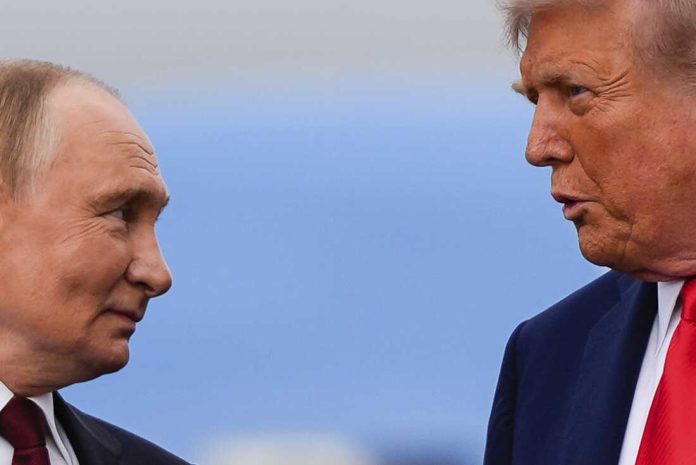
Trump will be meeting with his Russian counterpart, Vladimir Putin, in Alaska next Friday in a bid to find a way out of the conflict.

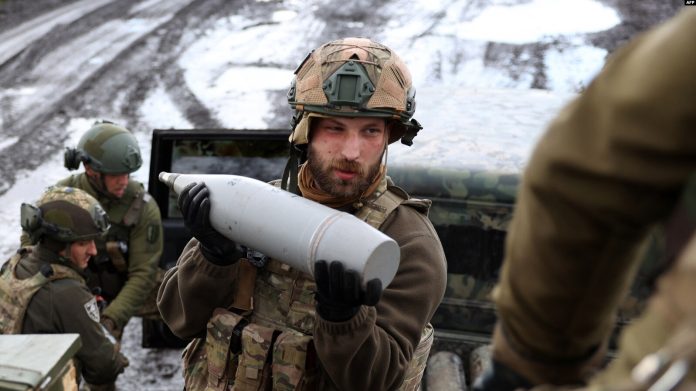
Russia insists that the Lugansk People’s Republic, the Donetsk People’s Republic, Zaporozhye and Kherson regions all became part of its territory following referendums held in 2022. However, Moscow currently controls only the former in its entirety, with active hostilities continuing in the neighboring DPR.

Russian forces have so far secured part of the other two regions. Additionally, the Russian military is in control of patches of land along the border in the Ukrainian regions of Kharkov and Sumy.

In an article on Saturday, the NYT reported that Zelensky’s “blunt rejection” of Trump’s suggestion “risks angering Mr. Trump,” who the newspaper noted, previously criticized Kiev for being “not ready for peace.”

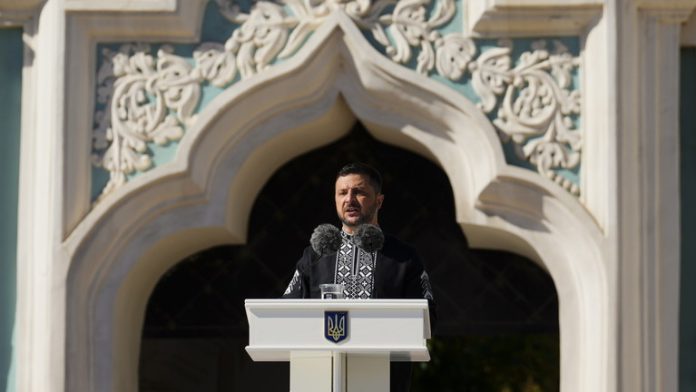
In his regular video address on Saturday, Zelensky stressed that Ukraine’s borders are enshrined in its constitution and that “nobody can or will” make concessions on the issue.

“The Ukrainians will not give their land to the occupiers,” he insisted.

Earlier this week Zelensky acknowledged, however, that Ukraine is not in a position to forcibly retake Russian territories it claims.

On Friday, President Trump said that a peace agreement between the two belligerents would likely involve “some swapping of territories to the betterment of both” sides, but stopped short of providing any specifics.

Following a meeting between President Putin and Trump’s special envoy, Steve Witkoff, in Moscow on Wednesday, Kremlin aide Yury Ushakov told reporters that Washington had made an “acceptable” offer to Moscow, but declined to go into further detail.

British Police arrest 474 people at protest over Palestine Action ban in London

On Saturday night, the Metropolitan police announced: “Parliament Square and Whitehall are clear. As of 9pm, 466 people had been arrested for showing support for Palestine Action.

“There were a further eight arrests for other offences including five assaults on officers.”

The Met added that the total of 474 was the most arrests it had made related to a single operation in at least the past decade.

Before the planned event in the capital, the Met said it had drawn officers from other forces to help form a “significant policing presence”. It was anticipated the event would result in large numbers of people being detained.

By Saturday afternoon, hundreds of people had gathered in Parliament Square for a demonstration organised by the campaign group Defend Our Juries, who announced “approximately 1,000 sign-holders” had turned up.

The Met added it estimated 500-600 people were in Parliament Square when the demonstration began, but “many” were not partaking.

On Saturday evening, the home secretary thanked officers and reaffirmed the government’s decision to ban Palestine Action.

“Many people may not yet know the reality of this organisation, but the assessments are very clear – this is not a nonviolent organisation. UK national security and public safety must always be our top priority,” Yvette Cooper stated.

The demonstration began at 1pm but officers made a small number of arrests beforehand. Soon after, officers began arresting people outside the green holding signs that referenced Palestine Action.

From 1pm to 2pm, demonstrators holding signs that read “I oppose genocide, I support Palestine Action” were silent.

Some of those arrested were publicly processed on the street outside Scotland Yard, near the main demonstration, where crowds gathered and shouted “‘shame on you” at officers.

Amnesty International called the mass arrests “deeply concerning”.

“The protesters in Parliament Square were not inciting violence and it is entirely disproportionate to the point of absurdity to be treating them as terrorists,” stated Sacha Deshmukh, the organisation’s chief executive.

“We have long criticised UK terrorism law for being excessively broad and vaguely worded and a threat to freedom of expression. These arrests demonstrate that our concerns were justified.”

Before the protest, a Home Office spokesperson said: “The home secretary has been clear that the proscription of Palestine Action is not about Palestine, nor does it affect the freedom to protest on Palestinian rights.

“It only applies to the specific and narrow organisation whose activities do not reflect or represent the thousands of people across the country who continue to exercise their fundamental rights to protest on different issues. Freedom to protest is a cornerstone of our democracy and we protect it fiercely,” the spokesperson added.

The first three people to be charged with supporting the group in England and Wales were named on Thursday.

Palestine Action was banned in June, days after activists from the group broke into RAF Brize Norton and defaced two military aircraft with spray paint. The ban means that membership of, or support for, Palestine Action is a criminal offence punishable by up to 14 years in prison under the Terrorism Act 2000.

Iranian analyst warns of geopolitical ‘chokehold’ as US consortium takes control of Zangezur corridor

Talking to Entekhab news outlet, Movahedian urged Tehran to secure a stake in the consortium managing the project.

He said the corridor, along with other projects such as the Lapis Lazuli and Davud routes, is designed to bypass Iran in the transport of goods and energy.

Movahedian criticized Iran’s “lack of significant engagement with Azerbaijan and Armenia over the past five years,” noting repeated calls to deepen economic ties with Yerevan had gone unanswered.

The warning follows an August 8 ceremony at the White House, where US President Donald Trump oversaw the signing of a peace deal between Armenia and Azerbaijan. The agreement includes establishing the so-called Zangezur corridor, which Trump labeled “a path to peace and international prosperity”.

According to the Caucasus affairs expert, Tehran views the corridor as more than a mere transit link as it could alter the region’s geopolitical balance, potentially constraining Iran’s strategic reach.

Tehran governor announces return of 450,000 illegal migrants to Afghanistan

That’s according to Tehran’s Governor Mohammad Sadegh Motamedian.

Motamedian said organizing the presence of foreign nationals is among the top priorities of President Masoud Pezeshkian’s administration.

He noted that authorities have conducted an identification process to locate the illegal migrants in Tehran which hosts around 50% of the country’s foreign nationals.

Motamedian also said the illegals have been respectfully transferred to border crossings for repatriation.

He added that last year, over 6,000 classrooms in Tehran Province were dedicated to more than 220,000 students from foreign national families.

With the return process, he stressed, educational capacity has been freed, enabling Iranian students to benefit.

Iran has hosted millions of Afghans since the 1980s when their country was occupied by the former Soviet Union. After the end of the Soviet occupation, wars did not end in Afghanistan and the refugee influx into Iran continued, putting a huge strain on the Iranian economy.

Iran’s Presllident: Journalists Conveyed Crimes of Zionists to World

Referring to the recent twelve-day war waged by the United States and Israel against Iran, Pezeshkian said the enemies thought that by assassinating commanders and scientists and attacking the police force, they could plunge the country into chaos and silence the voice of reporting.

“But contrary to their expectations, journalists and the media remained active, and with greater honesty and influence, they continued to convey the truth to the people,” he noted.

He added: “The swift replacement of commanders, the continuation of the country’s scientific activities, the solidarity of our dear people, and the efforts of the armed forces forced the enemy to retreat from its malicious objectives. This victory belongs to the steadfast Iranian nation, which created pride through unity.”

Pezeshkian went on to say: “It was the United States, through its agents, that sought to steer Iran toward its own intended ends. However, thanks to the tireless efforts of journalists in the field of information dissemination, along with the cooperation of other sectors of the country — including the Army, the IRGC, the Air Force, and the national air defense — the enemy was compelled to abandon its aggression.”

He further remarked: “The enemy outwardly claimed victory, but the truth is that the victory was with the Iranian nation. The resistance that was demonstrated was a source of pride.”

The president also praised the performance of the Islamic Republic of Iran Broadcasting (IRIB) in the field of news coverage, emphasizing: “What the national broadcaster accomplished during those twelve days was unprecedented and succeeded in putting Iran in the global spotlight.”

‘Ukrainians will not gift their land’: Zelensky dismisses idea of territorial concessions to end Russia’s war

Volodymyr Zelensky

The day before, Trump claimed that peace talks between Moscow and Kyiv would likely involve “some swapping of territories.”

The statement comes as the U.S. president prepares to hold a summit with Russian President Vladimir Putin next week.

“The answer to the Ukrainian territorial question is already in Ukraine’s Constitution. No one will deviate from this — and no one will be able to. Ukrainians will not gift their land to the occupier,” Zelensky said in his evening address.

Zelensky emphasized that Ukrainians deserve peace but a “dignified” one, and said Kyiv’s partners must understand this principle.

“This war must be brought to an end – and Russia must end it. Russia started it and is dragging it out, ignoring all deadlines, and that is the problem, not something else,” Zelensky added.

Trump and Putin are expected to meet on Aug. 15 in Alaska to discuss the war in Ukraine, with both sides having confirmed the meeting.

Putin has publicly demanded that Ukraine forget NATO membership and withdraw troops from four of its regions as preconditions for peace. Under this condition, several large cities under Ukrainian control would have to be handed over to Russia.

In his previous remarks, Trump did not specify what he meant by territorial “swapping,” though it possibly referred to Crimea — illegally annexed in 2014 — and parts of Donetsk, Luhansk, Zaporizhzhia, and Kherson oblasts.

Russia declared the annexation of the latter four regions, which are partially occupied by Russia, in 2022 following sham referendum.

Armenian PM highlights railway connection with Iran in new transit corridor deal with Azerbaijan

Armenian Prime Minister Nikol Pashinyan

The agreement, signed Friday at the White House in the presence of US President Donald Trump, establishes a transit corridor, linking Azerbaijan through Armenian territory to the Nakhchivan exclave.

Pashinyan underscored the importance of the Iran rail connection, describing it as “very significant,” and spoke of expanding rail links to Central Asia and China’s emerging westward railway routes.

He framed the corridor as a “crossroads of peace,” potentially fostering unexpected but positive regional cooperation, including between Iran, Russia, and the US.

Addressing concerns about possible impacts on Armenia-Russia relations, Pashinyan stated that the project could also facilitate a rail link with Russia, a connection Armenia has lacked for 30 years.

He noted that Armenia’s railways are under Russian control and suggested potential Russian investments in restoring regional rail lines, pending Azerbaijan’s approval.

The Armenian premier hailed the peace deal as a “major achievement” and “a big deal for peace” that would positively affect the region and the world.

Iran welcomes Azerbaijan-Armenia peace agreements, warns of foreign intervention

In a statement, the Islamic Republic of Iran’s Foreign Ministry said that Iran is closely monitoring the ongoing developments in the South Caucasus region and remains in contact with both neighboring countries, regarding these events.

It added that undoubtedly, peace and stability in the Caucasus region serve the interests of all regional countries.

At the same time, the Islamic Republic expresseed concern over the negative consequences of any form of foreign intervention, especially near its shared borders, that could undermine the security and lasting stability of the region.

Reaffirming its commitment to taking all political, legal, and economic measures necessary to safeguard its national rights and interests, the statement says Iran  believes that the establishment of communication routes and the removal of blockages in transportation networks will contribute to stability, security, and economic development for the peoples of the region only if carried out within a framework of mutual benefit, respect for national sovereignty, and territorial integrity, and without foreign interference.

It voiced Iran’s readiness to continue constructive cooperation based on mutual interests with both the Republic of Azerbaijan and the Republic of Armenia to preserve peace, stability, and economic development in the region through bilateral and regional initiatives.