Friday, December 26, 2025
Home Blog Page 209

US can retake weapons destined for Ukraine: CNN

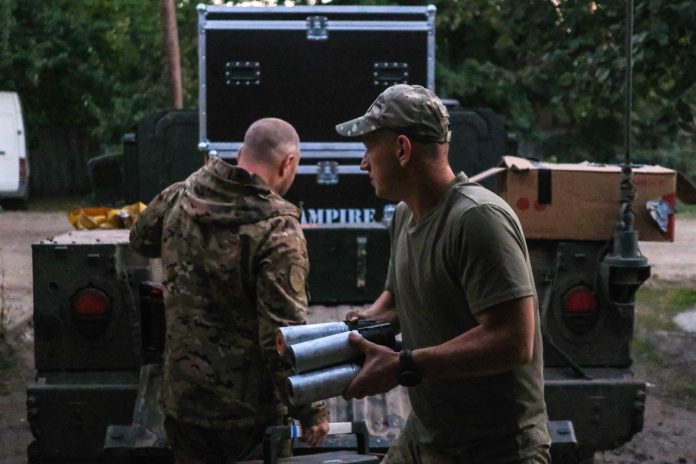
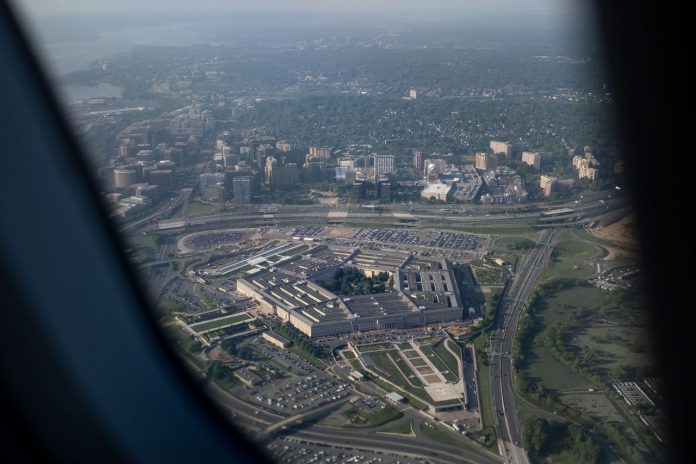
According to the memo reportedly written by Pentagon policy chief Elbridge Colby – described by the network as “a noted skeptic of arming Ukraine” – the department has the power to retake arms designated for Kiev under a program known as the Ukraine Security Assistance Initiative (USAI).

While CNN sources reported that no weapons have apparently been diverted under the guidance, the policy could “rob Ukraine of billions of dollars worth of US-made materiel expected to be delivered over the coming months and years.”

The memo makes “an already murky picture of the status of US arms shipments to Ukraine” even more uncertain, the network warned, particularly given the expected meeting between Russian President Vladimir Putin and his US counterpart Donald Trump.

Under the reported memo, weapons in short supply, such as interceptor missiles for Patriot air defense systems, require direct approval from Defense Secretary Pete Hegseth before being sent abroad.

The pull-back provision is reportedly part of the same document Hegseth used last month to suspend the flow of weapons, including Patriot missiles, to Ukraine. At the time, Pentagon officials sounded the alarm over dwindling supplies at home, although Trump later ordered that shipments be resumed.

The US president has since said that American weapons could be sent to Ukraine under an arrangement in which the EU would pay Washington “100% of the cost of all military equipment.”

Putin proposed halting war in exchange for Ukraine’s eastern regions: WSJ

Russia Ukraine War

Despite U.S. President Donald Trump’s claim that the talks between Witkoff and Putin did not serve as a breakthrough in peace negotiations, the U.S. president announced on Aug. 8 that he will meet Putin for his first in-person encounter on Aug. 15 in Alaska.

According to European officials briefed on a call by Witkoff, Putin told Wikoff that Russia would agree to a full ceasefire if Kyiv withdrew its forces from Donetsk Oblast, giving Moscow full control of Donetsk and Luhansk oblasts, as well as Crimea, WSJ reported.

European officials briefed on the proposal reportedly expressed serious reservations about the plan, worried about the prospects that Putin is pulling along negotiations as a means to avoid punishing secondary sanctions proposed by U.S. President Donald Trump.

Additional reservations posed by European officials include a lack on clarity as to territory partially occupied by Russian forces in Zaporizhzhia and Kherson oblasts — with conflicting impressions as to whether the front line would be frozen in its current place or whether there would be a withdrawal of Russian forces in the region.

According to the WSJ, Putin’s proposal contains two phases. The first phase would entail Ukrainian forces withdrawing from Donetsk, thus freezing the front line. The second phase would entail Trump and Putin agreeing to a final peace plan that would later be negotiated with President Volodymyr Zelensky.

Ukraine currently controls the northern part of Zaporizhzhia and Kherson oblasts, as well as part of Donetsk Oblast.

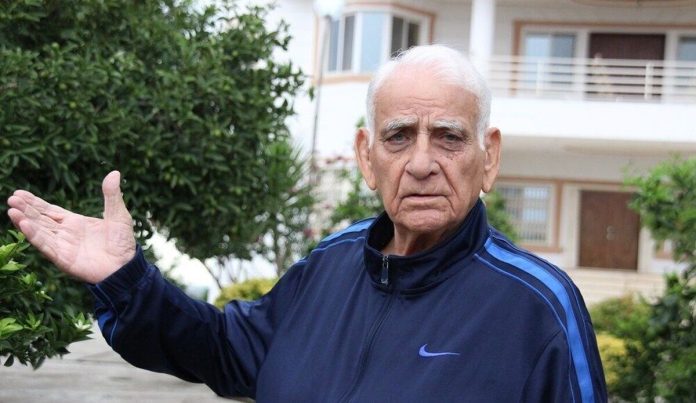
Iranian master painter Mahmoud Farshchian dies at 96

The master painter slipped into a coma and was hospitalized in the US on Thursday.

Born on January 24, 1930, in Isfahan, Farshchian began his formal training at the Isfahan School of Fine Arts before continuing his studies in Europe.

He became known for blending the classical Persian miniature tradition with modern artistic approaches, producing distinctive and highly acclaimed works that resonated both in Iran and internationally.

His paintings are housed in major museums and private collections worldwide, with some of his best-known religious works displayed at sacred sites such as the Imam Reza Shrine.
Among his most famous pieces are Ashura Afternoon, The Deer’s Grantor, The Fifth Day of Creation, and Kawthar.

Over more than seven decades, Farshchian revitalized Persian miniature techniques while giving them a contemporary vision, earning numerous national and international honors.

His legacy is regarded as a cornerstone in the history of global art, and his influence continues to inspire new generations of artists.

Read More:

Trump says to meet Putin within days in Alaska

Putin and Trump

“The highly anticipated meeting between myself, as President of the United States of America, and President Vladimir Putin, of Russia, will take place next Friday, August 15, 2025, in the Great State of Alaska,” Trump wrote on his Truth Social platform.

Trump has not seen Putin in person since his return to the White House in January.

The Kremlin on Saturday confirmed that Putin and Trump would meet in Alaska for talks next Friday, calling the choice of location “quite logical”.

“Russia and the United States are close neighbours, bordering each other,” Kremlin aide Yuri Ushakov said, adding, “It seems quite logical that our delegation should simply fly across the Bering Strait and that such an important and eagerly awaited summit between the leaders of the two countries should be held in Alaska.”

Trump also stated Friday that the deal to end the conflict between Russia and Ukraine will involve some exchange of territories, though he did not offer further details.

“There’ll be some swapping of territories to the betterment of both,” Trump told reporters at the White House during a peace summit event with the leaders of Armenia and Azerbaijan.

Iran: Israel’s plan for Gaza City occupation shows Zionist regime’s ‘specific intent’ for genocide

Esmail Baghaei

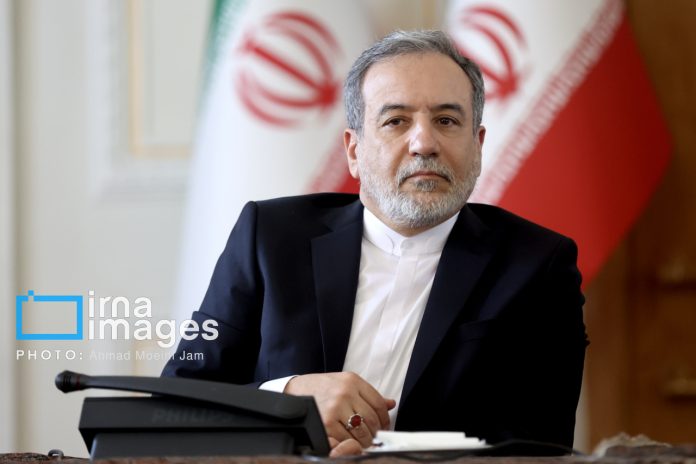
In a statement on Friday, Iranian Foreign Ministry spokesman Esmaeil Baghaei strongly condemned the Israeli plan to occupy Gaza City in a major escalation of the regime’s 22-month war in the besieged Palestinian territory.

He said the plan will lead to the forced displacement of people in Gaza and aims to “complete the Palestinian people’s genocide.”

He urged the International Criminal Court and the International Court of Justice to heed the threat of the complete occupation of Gaza by the Israeli criminals who are ruling over the historic land of Palestine.

Israel’s war cabinet on Friday approved a military blueprint to capture Gaza City and tighten its grip on the besieged enclave—an area it has relentlessly bombarded for months.

Baghaei added that all governments and the United Nations bear the legal and moral responsibility to stop Israel’s genocide and heinous crimes in the occupied Palestine.

He said it was “shameful” that the United States and other Western countries continue to be complicit in Israel’s crimes.

“It is a necessary step to force the Israeli regime to stop the genocide [in Gaza] and to urgently send humanitarian aid to the hungry and thirsty people of Gaza in order to end a catastrophe that has shaken the legal, normative and ethical foundations of human civilization,” the Iranian spokesperson emphasized.

He added Iran is formally calling on the Organization of Islamic Cooperation’s secretariat, Saudi Arabia as the host country, and Turkey as the current chair of the OIC Council of Ministers to convene an emergency meeting on the issue.

Iran also calls for Muslim countries’ collective measures to help the oppressed Palestinian people, Baghaei pointed out.

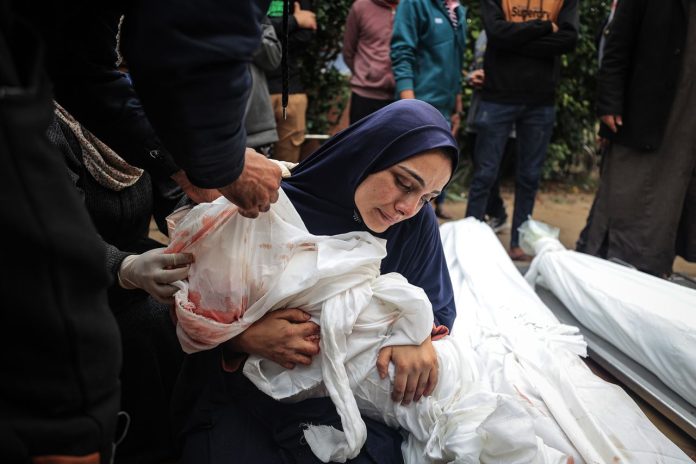
As of October 7, 2023, Israeli attacks on Gaza have killed at least 61,330 Palestinians and injured another 152,045, with most of the victims being women and children.

Gaza health authorities said 200 people, including dozens of children, have died of malnutrition during the war in Gaza as Israel continues to impose severe restrictions on supplies of humanitarian aid amid escalation of famine crisis in the Strip.

Iraqi influencer launches campaign supporting Iran’s missile capabilities

Iran Missile

The initiative, framed as a social media challenge, has drawn significant attention among Iraqi users, sparking widespread engagement and discussion online.

Armenia and Azerbaijan ink Trump-brokered peace declaration

During the Friday event, Armenian Prime Minister Nikol Pashinyan, Azerbaijani President Ilham Aliyev, and Trump signed a joint declaration focused on opening a key transport route in the region – the so-called Zangezur corridor.

The route connects Azerbaijan to its exclave of Nakhichevan through a narrow strip of land located in southern Armenia, which runs along the country’s border with Iran.

The route is set to be developed and operated by American companies and will be known as the ‘Trump Route for International Peace and Prosperity’. The US president said that having the route named after him was “a great honor” and claimed he “did not ask for this.”

Both Armenian and Azerbaijani leaders showered the US president with praise over the declaration. Pashinyan said the deal was a great success “for our countries and for our region and a success for the world,” which cemented Trump’s “legacy as a statesman and the peacemaker.” Aliyev said Trump was bringing “peace” to the whole Caucasus region, noting “and we are grateful for that.”

Armenia and neighboring Azerbaijan are both former Soviet republics that have been locked in a territorial dispute over the region of Nagorno-Karabakh since the late 1980s. The predominantly ethnic-Armenian-populated region broke away from Baku in the early 1990s following a full-blown war. The territory had been the source of constant tension between Armenia and Azerbaijan for more than two decades, seeing multiple flareups and large-scale conflicts, before Baku managed to regain control of the region by force in 2023.

Israeli plan to occupy Gaza City ‘war crime, ethnic cleansing’: Hamas

In a statement, the group announced that Israel’s incursion would “not be a picnic” and warned it would “pay a heavy price” for its military adventure in Gaza.

Hamas accused Israeli Prime Minister Benjamin Netanyahu and his “Nazi government of showing no concern for the fate of Israeli hostages in Gaza,” saying the expansion of the war amounts to a “calculated decision to sacrifice” them.

The group also dismissed Israel’s attempt to replace the term “occupation” with “control,” describing it as a “blatant evasion aimed at avoiding legal responsibility for its crimes” against nearly 1 million Palestinians in the city.

Israel’s Security Cabinet has deliberately avoided using the term “occupation” in reference to the Gaza Strip in its latest official decisions opting instead for “control,” a move legal analysts say is aimed at evading international legal responsibilities toward Palestinian civilians.

Israel has been facing mounting outrage over its destructive war on Gaza, where it has killed more than 61,000 people since the October 2023. The military campaign has devastated the enclave and brought it to the verge of famine.

Germany to halt arms exports to Israel for use in Gaza

Gaza War

Berlin’s move, in response reaction to an Israeli plan to take control of Gaza City, marks a drastic change of course for Germany, long one of Israel’s staunchest international allies.

Merz expressed “deep concern” at the suffering of Gaza’s civilians.

It was “increasingly unclear”, he said, how the latest Israeli military plan would help achieve the aims of disarming Hamas and freeing the remaining Israeli hostages.

“Under these circumstances, the German government will not authorise any exports of military equipment that could be used in the Gaza Strip until further notice,” he said in a statement.

Netanyahu spoke to Merz later Friday to express his “disappointment”, announced a statement from the prime minister’s office.

“Instead of supporting Israel’s just war against Hamas, which carried out the most horrific attack against the Jewish people since the Holocaust, Germany is rewarding Hamas terrorism by embargoing arms to Israel,” it stressed.

Israel has until recently enjoyed broad support across the political spectrum in Germany.

Between the Hamas attack of October 7, 2023 that started the Gaza war and May this year, Germany approved defence exports worth 485 million euros ($565 million) to Israel.

The deliveries included firearms, ammunition, weapons parts, electronic equipment and armoured vehicles, the government announced in June.

Merz reiterated that “Israel has the right to defend itself against Hamas’ terror” and that “the release of the hostages and negotiations on a ceasefire are our top priorities”.

“The disarmament of Hamas is imperative. Hamas must not play a role in Gaza in future,” he added.

But “the new military push agreed by the Israeli security cabinet makes it increasingly unclear how these goals are to be achieved”, he continued.

Merz’s decision is a dramatic step for Germany, where the chancellor’s tone towards Israel had been sharpening in recent months as the dire humanitarian situation in Gaza deteriorated.

A poll published this week by public broadcaster ARD found that 66 percent of Germans expected the government to exert greater influence over Israel to change its actions in Gaza.

However, while often voicing concern, Germany had so far avoided major concrete steps.

It refrained from following France, Britain and Canada, which have announced plans to recognise a Palestinian state in September, arguing recognition must come at the end of Israeli-Palestinian negotiations.

Berlin has also opposed the suspension of the EU-Israel Association Agreement, which had been under review by the bloc.

The German-Israeli Society, which promotes closer ties between the two sides, condemned Merz’s move and pointed to a $3.5-billion deal under which Germany had agreed to buy Israel’s Arrow-3 anti-ballistic missile shield.

Israeli plan to take control of Gaza City a ‘dangerous escalation’: UN

Gaza War

Israel’s security cabinet has approved a plan to take control of Gaza City to further expand Israel’s military offensive in the Palestinian enclave devastated by nearly a two-year Israeli onslaught. The plan drew strong criticism at home and abroad on Friday.

When asked by Fox News’ Bill Hemmer on Thursday if Israel would take over the entire coastal territory, Israeli Prime Minister Benjamin Netanyahu stated “we intend to.”

“This decision marks a dangerous escalation and risks deepening the already catastrophic consequences for millions of Palestinians, and could further endanger more lives, including of the remaining hostages,” the U.N. chief’s spokesperson said in a statement.

That decision “will result in additional forced displacement, killings and massive destruction, compounding the unimaginable suffering of the Palestinian population in Gaza,” the statement added. Forced displacement is illegal under international law.

Gaza’s health ministry says Israel’s military assault has killed more than 61,000 Palestinians. It has also caused a hunger crisis, internally displaced Gaza’s entire population and prompted accusations of genocide at the International Court of Justice and of war crimes at the International Criminal Court.

Israel’s offensive followed an October 2023 attack in which Palestinian Hamas fighters killed 1,200 people and took about 250 hostages, Israeli tallies show. That attack sparked the latest bloodshed in the decades-old Israeli-Palestinian conflict.