Sunday, December 28, 2025
Home Blog Page 2071

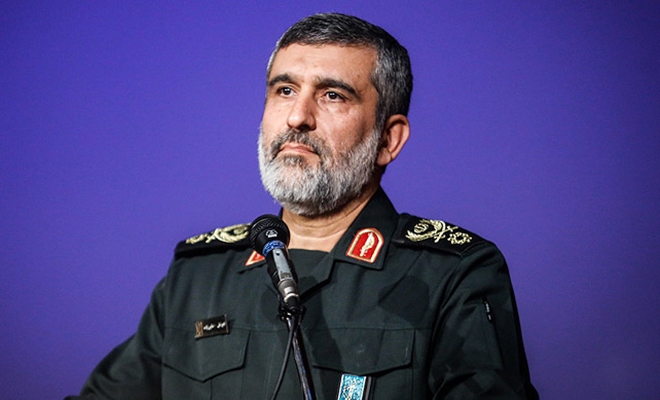
Iran commander: New strategic missile to be unveiled soon

Iran Develops Its Space Program While Keeping Low Profile: IRGC

Brigadier General Amir Ali Hajizadeh, was speaking during a Monday ceremony in which commanders of the armed forces reaffirmed their allegiance to the cause of the late founder of the Islamic Republic of Iran, Imam Khomeini.

He added that the missile was made a long time ago and was given to the IRGC’s combat organization. Iran has been steadily beefing up its military deterrence over the past years amid repeated threats of war by adversaries, most notably the US and the Zionist regime.

A key component of Iran’s military might is its missile program. The country has built many types of projectiles with some having a range of 2,000 kilometers, which put all parts of occupied Palestine within the reach of the Islamic Republic’s armed forces in the event of a war.

Iran has also boosted its air defense systems. The country’s anti-aircraft weapons such its missile shields have made the country’s airspace nearly impenetrable.

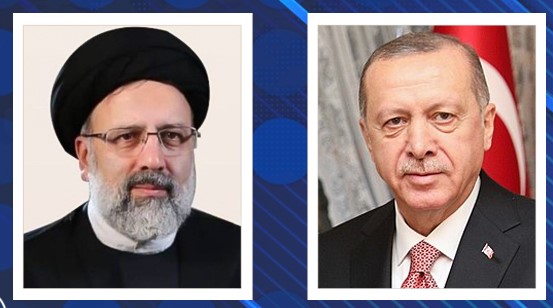
Raisi: Tehran-Ankara ties should be strengthened

During the phone call, the Iranian president highlighted the importance of developing relations between the two neighboring countries in different fields, especially in the economic sphere.

He stressed the need to strengthen the level of cooperation and coordination between Tehran and Ankara.

Erdogan, for his part, stressed Turkey’s readiness to further strengthen relations with the Islamic Republic.

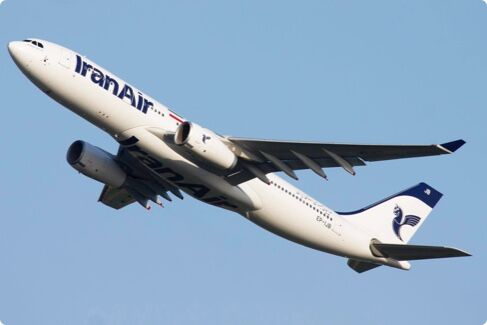
Bushehr-Dubai flights resume after three years

“The United Arab Emirates, especially Dubai, is one of the busiest destinations in the Middle East, and due to the commercial status of the city, there is a great demand for travel,” Deputy Coordinator of Economic Affairs of Bushehr Governorate Ali Bastin said on Monday.

He added that many businessmen, economic agents, tourists and academics of the Bushehr Province need constant contacts with Dubai for their work.

Bastin said over the past three years, Duba-bound travelers from the province had to spend several hours on roads to neighboring provinces or to fly to Tehran at a high cost, which has now been resolved with the resumption of direct flights between Bushehr and Dubai.

Raisi: Iran ready for deal in Vienna if sanctions lifted

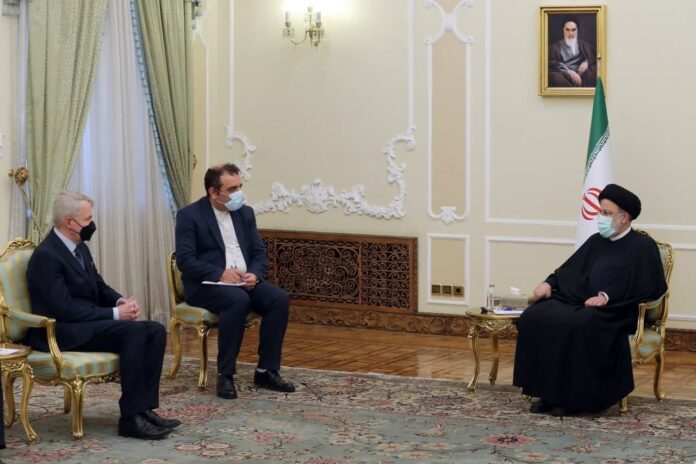
Raisi, in a meeting with visiting Finnish Foreign Minister Pekka Haavisto, noted that Iran has proved its compliance with its commitments but it will not keep its economy waiting for the revival of the deal, JCPOA.

Raisi added that the US that violated the JCPOA and the European parties to the deal failed to take action against Washington’s violations while Iran’s peaceful moves have always been verified by the International Atomic Energy Agency, IAEA.

He also referred to the US admission that its so-called maximum pressure against Iran failed in a humiliating way.

Raisi expressed hope that European countries will opt for independence from the US domination as Washington is not trustworthy.

Raisi also noted Iran and Finland can cooperate in the fields of human rights as well as fight against terrorism and organized crime.

He also touched on the situation in Afghanistan. The president said the United States and NATO have been in Afghanistan for more than two decades, but they failed to restore security there and instead caused destruction, war, poverty and misery for the Afghan people.

Raisi also outlined Iran’s efforts to alleviate the ordeal of Afghans such as its hosting of millions of Afghan refugees over the past decades.

The Finnish foreign minister for his part referred to 90 years of diplomatic relations between his country and Iran , saying there is a lot of potential for increasing cooperation between the two countries.

He added that his country is working to promote bilateral interaction and cooperation between the two countries on regional security and world peace.

Haavisto added that Helsinki shares common concerns with Tehran and agrees that an inclusive government should be formed in Afghanistan.

The Finnish foreign minister also expressed displeasure with the US behavior regarding the JCPOA, saying it’s unfortunate that Washington reneged on its obligations under the deal.

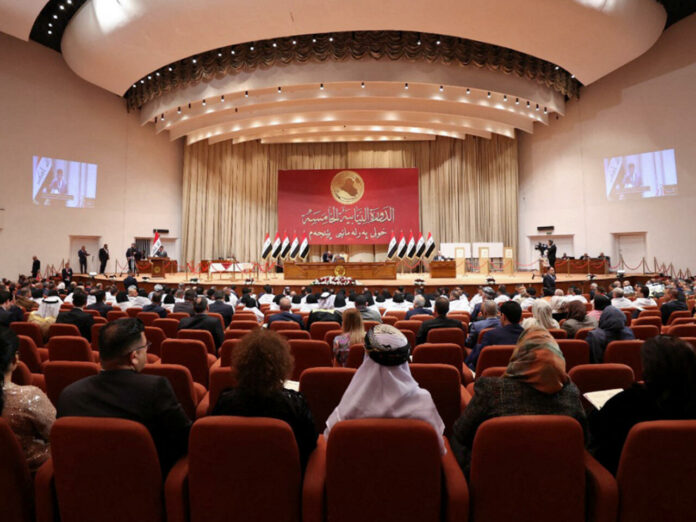
Iraq parliament delays selection of new president

Iraq parliament delays selection of new president

The sweeping no-show deepens a political crisis in the war-scarred country which, almost four months after a general election, still hasn’t chosen a new prime minister.

The assembly vote had been set for noon for the head of state — a post with a four-year mandate held by convention by a member of Iraq’s Kurdish minority, and currently occupied by Barham Saleh.

But a series of boycott calls had made it highly unlikely the 329-seat parliament in Baghdad’s high-security Green Zone would be able to clinch the necessary two-thirds quorum.

Then, on Monday afternoon, with only a few dozen MPs in the chamber, an official speaking on condition of anonymity confirmed to AFP that “there will be no vote to elect the president”.

The turmoil comes after October polls were marred by record-low turnout, post-election threats and violence, and a delay of several months until final results were confirmed.

Intense negotiations among political groups since then have failed to form a majority parliamentary coalition to name a new prime minister to succeed Mustafa al-Kadhemi.

The largest parliamentary bloc to emerge from the vote, led by powerful Shiite Muslim cleric Moqtada Sadr and holding 73 seats, was first to announce a boycott, on Saturday.

It was followed on Sunday by the 51-member Sovereignty Coalition led by a Sadr ally, parliamentary Speaker Mohammed al-Halbussi.

The 31-seat Kurdistan Democratic Party (KDP) then announced it would also stay away, in order to “continue consultations and dialogue between political blocs”.

Another key bloc, the Cooperation Framework grouping several Shiite parties, also said the session should not take place, citing the recent political turmoil.

The process toward a presidential vote had been further thrown into disarray when Iraq’s Supreme Court on Sunday suspended the candidacy of Saleh’s key challenger, Hoshyar Zebari, 68.

The court cited corruption charges against Zebari, a former foreign minister from the KDP — allegations he denies.

“I have not been convicted in any court,” Zebari had stated in a television interview on Friday as the charges resurfaced alongside forecasts he would unseat Saleh.

Incumbent Saleh, the other frontrunner out of some 25 candidates, represents the KDP’s main rival in Iraqi Kurdistan, the Patriotic Union of Kurdistan (PUK).

The Supreme Court announced it was suspending Zebari after receiving a complaint from lawmakers that his candidacy was “unconstitutional” because of the graft claims.

The complainants cited his 2016 dismissal from the post of finance minister by parliament “over charges linked to financial and administrative corruption”.

The complaint also cited at least two other judicial cases linked to him, including when he was Iraq’s long-time foreign minister after the fall of dictator Saddam Hussein in the 2003 US-led invasion.

Monday’s postponement exacerbates Iraq’s political troubles because it is the task of the president, within 15 days of being elected, to formally name a prime minister from the largest bloc in parliament.

The prime minister, a Shiite Muslim according to political tradition, then has a month to form his government.

Sadr’s bloc claims it controls enough seats for a “national majority government”.

However, the Coordination Framework has appealed to the Supreme Court to have their grouping recognised as the biggest.

The country’s apex court has rejected this demand, saying it could not decide now, as the size of parliamentary blocs could shift.

In Iraqi politics, noted analyst Hamzeh Hadad, “everyone knows how to share the pie” but “no one knows how to be in the opposition”.

Iran extends Covid-related curbs for two weeks

Iran extends Covid-related curbs for two weeks

Abbas Shiravjen said the restrictions include the requirement that administrative sessions in roofed places must be held with the maximum number of 30 people in attendance.

He added that the meetings must last at maximum 90 minutes.

According to the spokesman, ritual, religious and cultural gatherings that are held in roofed places must occupy 20% of the space capacity for a maximum of 90 minutes.
Shiravjen also said all people indoors must wear masks.

Meanwhile, passenger flights must also have up to 60% capacity.
These approvals should continue for the next two weeks.

He added radio and television and the Ministry of Health should carry out persuasive activities to convince people to complete vaccination and get their third dose.

Shiravjen also called on pilgrims in the holy Iranian city of Mashhad to observe health protocols to prevent further expansion of Covid.

The spokesman for Iran’s National Taskforce for Fighting Coronavirus said regarding the February 12 march to mark the victory of the 1979 Islamic Revolution that the Interior and Health Ministries have been instructed to design and propose a new way of holding the rally that would be different from previous years.

Report: Israeli police hack phones of Netanyahu’s son, govt. officials


The revelation on Monday is the latest from the business daily Calcalist, which had previously reported that police used Pegasus without court authorisation against leaders of an anti-Netanyahu protest movement.

Police Commissioner Kobi Shabtai said “following the recent publications” he had asked Public Security Minister Omer Barlev to establish “an external and independent commission of inquiry, headed by a judge”, to probe the allegations.

“To the extent that the commission finds irregularities and failures, they will be dealt with in accordance with the law,” Shabtai announced in a statement on Monday, adding that the incidents cited by Calcalist predated his appointment in 2021.

Pegasus is a malware product made by the Israeli firm NSO that can switch on a phone’s camera or microphone and harvest its data.

It has been at the centre of a months-long international scandal following revelations that it was used by governments worldwide to spy on activists, politicians, journalists and even heads of state.

Israel had come under fire for allowing the export of the invasive technology to states with poor human rights records, but the Calcalist revelations have triggered a domestic scandal and multiple state investigations.

Prior to Monday’s report, the attorney general, state comptroller and the justice ministry’s privacy watchdog all announced probes into the potential use of Pegasus on Israelis.

In its latest report, Calcalist said dozens of people were targeted who were not suspected of any criminal conduct, and without police receiving the necessary court approval.

They include senior leaders of the finance, justice and communication ministries, mayors, and Ethiopian Israelis who led protests against alleged police misconduct.

In another revelation set to rock Netanyahu’s ongoing corruption trial, Calcalist also reported that key witness Ilan Yeshua, former chief executive of the Walla news site, was also a target.

Netanyahu is accused of seeking to trade regulatory favours with media moguls in exchange for favourable coverage, including on Walla. He denies the charges.

His lawyers on Monday demanded the trial be halted until the latest revelations were probed.

Police have been conducting internal investigations, and answering questions before parliamentary oversight panels, since Calcalist last month reported that its investigators had used Pegasus against Israeli citizens – sometimes without warrants.

That report created a domestic furore over the Pegasus spyware, prompting the government of Naftali Bennett to order export reviews.

On Monday, Bennett promised government action following the new reports.

“We won’t leave this without a response. Things allegedly happened here that are very serious,” Bennett stated in a statement that also defended Pegasus, which can turn a phone into a pocket spying device, as an “important tool in the fight against terrorism”.

Interior Minister Ayelet Shaked, a member of his right-wing party, called for an external commission of inquiry to be set up.

This was echoed by centrist Immigration Minister Pnina Tamano-Shata and liberal Environment Minister Tamar Zandberg, the latter of whom urged on Twitter: “Commission of inquiry, no excuses or semantics.”

NSO has consistently denied wrongdoing throughout the multistranded Pegasus scandal, stressing that all its sales are government-authorised.

It has also insisted that it does not operate the system once sold to clients and has no access to any of the data collected.

FM: Iran to continue efforts to reach good and prompt agreement in Vienna

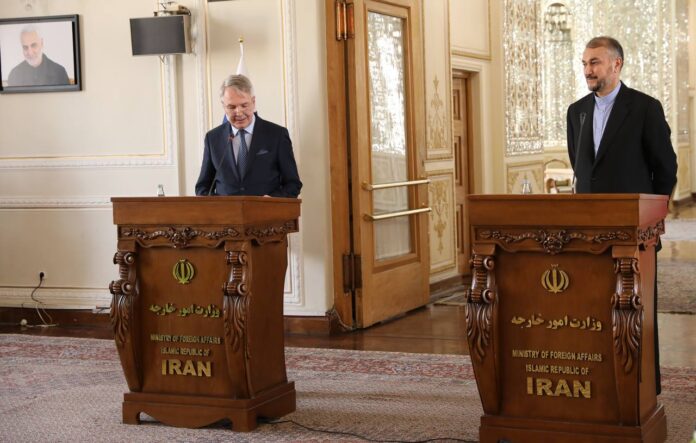
Amir Abdollahian, who was speaking during a press conference after meeting with Finland’s Foreign  Minister Pekka Haavisto in Tehran, touched on the talks, scheduled to resume between Iran and the P4+1 group Tuesday in the Austrian capital.

“We hope in this phase, we get close to a final agreement. Our ability to ensure that the negotiations in the coming days lead to a good agreement, hinges on the initiatives and the behavior of the three European countries and the United States,” he said.

“In the latest texts drawn out in the Vienna negotiations, parts of our demands in the area of removal of sanctions are yet to be addressed. In the coming days in Vienna, the negotiating team will focus on a document that is scheduled to be agreed, and different parties will show their commitment to their obligations under the Joint Comprehensive Plan of Action,” he said.

The foreign minister also stressed that Iran does not consider Europe solely Britain, France and Germany and is pursuing a balanced policy in which relations with the entire Europe are in its focus.

Referring to the talks with his Finnish counterpart, Amir Abdollahian added the two sides called for an end to the war on Yemen, the removal of the siege on the Yemenis, the holding of a ceasefire and talks between Yemeni groups. 

He added the two top diplomats also supported the formation of an all-inclusive government in Afghanistan.

Finland’s Foreign Minsiter Pekka Haavisto also expressed his country’s support for the revival of the Joint Comprehensive Plan of Action, saying “we know Iran has good cooperation with the IAEA and will increase our cooperation with Iran after the JCPOA.”

15th Iran Plast exhibit opens in Tehran

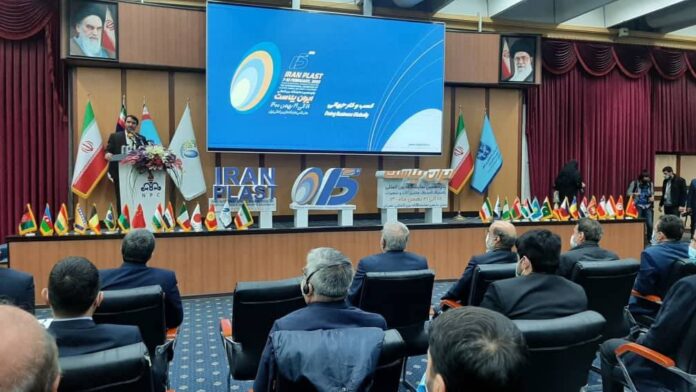
“The production of petrochemical products early after the Islamic revolution was 1.5 million tons that mostly covered chemical fertilizers, urea and ammonia. But today, this figure has reached 99 million tons of a variety of products including polymer, aromatic, chemical products and the supply chain,” Owji said at the opening ceremony.

He added that Iran holds more than 153 billion barrels of extractable oil and 33 billion cubic meters of extractable natural gas adding that the national petrochemical production will hit 140 million tons by March 2022.

The exhibition is attended by 430 Iranian and foreign companies and aims to help develop the downstream petrochemical industries and increase production of petrochemical products.

Iran Plast has attracted participants from 15 countries, despite the coronavirus pandemic and the United States’ sanctions on Iran’s energy sector. 

These are companies and trade as well as political delegations from such countries as China, Brazil, Hungary, the Azerbaijan Republic, Taiwan and Iraq.

Iran produces eight million tons of polymer products every year and this makes it a key hub for petrochemicals.

This also makes Iran Plast an opportunity for commercial interactions, exchange of the latest technical achievements and the development of downstream petrochemical industries.

Covid kills 104 more people in Iran, 15% up

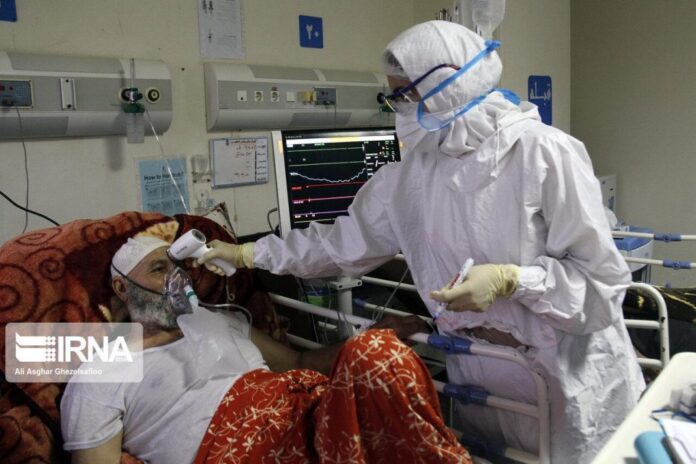
Yesterday’s daily death toll was 85. The latest fatalities push to 132,934 the total death toll since the Covid pandemic started two years ago. 

Over the past 24 hours, 39,819 new Coronavirus cases were also logged in Iran. They include 2,706 hospitalizations. 

The jump in Covid deaths and infections is blamed on the new variant of the disease known as Omicron. The strain is highly contagious than other variants. 

The hike in the number of Covid deaths and infections comes as Iran is vaccinating citizens at a high speed. 

The number of third shots of vaccine administered so far is nearly 20 million in the country with vaccination centers working relentlessly to inoculate citizens. 

The total number doses injected stands at 135,705,646. 

Iran’s Health Minister Bahram Einollahi said Sunday in a tweet that the upward trend in Covid fatalities and cases shows Iran is in the middle of the sixth wave of the outbreak. 

Einollahi urged all citizens to observe health protocols including wearing masks. 

He also called on people to get their booster jabs. Most cities across Iran are now marked red or orange, which respectively denote the highest level of danger from Covid.