Sunday, January 11, 2026
Home Blog Page 207

Iran reformist front urges state TV to provide equal airtime

IRIB TB

In an open letter to IRIB chief Peyman Jebelli, Reformist Front leader Azar Mansouri condemned the state-run network for what she said was a deliberate effort to marginalize or discredit lawful political movements.

“The national broadcaster, funded by public resources, has a duty to provide equal, transparent, and fair access to all legal political groups and voices,” Mansouri wrote, stressing that the IRIB’s current approach undermines public trust and national unity.

She argued that while the Reformist Front has consistently advocated for responsibility and cohesion, particularly during and after the recent 12-day war with Israel, their perspectives have been ignored or misrepresented on state platforms.

Mansouri urged the network to host reformist representatives in a live, impartial broadcast to respond to “unfair attacks,” warning that the broadcaster’s continued partisanship risks further eroding its credibility among the Iranian public.

Iranian MP warns of possible NPT exit if “snapback” mechanism is triggered

Iran Nuclear Program

Esmaeil Kowsari, a member of the Parliament’s National Security and Foreign Policy Committee, said Saturday that the snapback tool, part of the 2015 nuclear deal (JCPOA), has long been “invalid and ineffective.”

“The mechanism lost its credibility during Trump’s presidency when the US unilaterally withdrew from the JCPOA. The Europeans, despite their commitments, failed to honor any of their obligations,” Kowsari said.

He accused the US and its allies of acting above international law, using global platforms such as the United Nations for their own interests. “Claims of activating the snapback mechanism are nothing but psychological warfare against Iran,” he added.

Kowsari stressed that Iran has fully complied with its nuclear commitments while Washington not only abandoned its pledges but also imposed new sanctions.

He warned, “If they proceed with this illegitimate step, exiting the NPT will be one of our definitive and proportionate options.”

Iran ranks third worldwide in land subsidence amid severe groundwater loss

Ali Beitollahi, head of the Seismology and Risk Department at the Road, Housing, and Urban Development Research Center, said that excessive groundwater extraction is the main driver of the phenomenon.

“In areas around Tehran, groundwater levels that used to be just 20 to 30 meters deep now require drilling as far as 120 meters, and even then, there’s often no water left,” he said.

Beitollahi explained that the loss of groundwater compresses underground layers, causing the land surface to sink.

Subsidence has been reported in numerous populated regions, including northwestern Mashhad, southwestern Tehran, northern Isfahan, and southeastern Shiraz. Golestan Province currently has the largest subsidence zone, with unexpected cases also observed in Mazandaran.

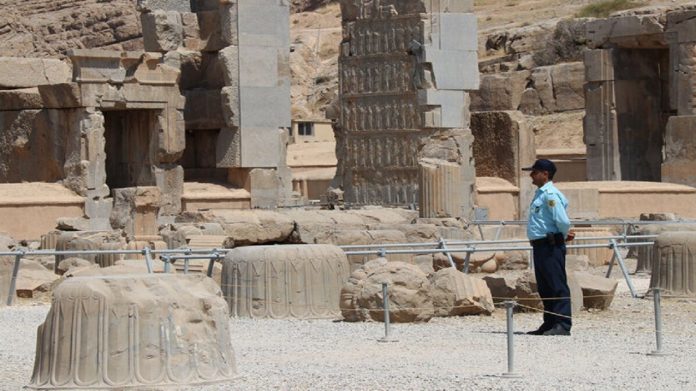
The crisis is not only damaging farmland, turning once-fertile plains into barren lands, but also threatening infrastructure and cultural heritage sites.

“About 27 out of 67 key heritage sites, including Naqsh-e Jahan Square in Isfahan and Persepolis, have suffered cracks,” he added, warning that urgent water management reforms are critical to prevent worsening damage.

Foreign tourist arrivals in Iran up 48% this year, minister says

Takht-e-Jamshid

Speaking at an administrative council meeting in Lahijan, northern Iran, Salehi Amiri reported that over 7.39 million foreign visitors entered the country last year, generating $7.4 billion in revenue.

“We expect to reach 10 million tourists and around $10 billion in revenue by the end of this year,” he said.

Highlighting Gilan Province’s vast cultural, historical, and natural potential, the minister described the region as a “powerful engine for national development.”

He noted that tourism is more than just hotels and accommodations, calling it a key driver of economic transformation.

Salehi Amiri also underscored Iran’s global cultural significance, pointing out that over 50 historical sites are awaiting UNESCO World Heritage registration.

“Iran is not just unique; it is unparalleled,” he said, calling Lahijan “an open-air historical museum” with thousands of years of history, from medieval fortresses to Safavid-era polo fields.

He urged greater investment in tourism infrastructure to better showcase Iran’s cultural richness to international audiences.

Hopes dim for peace summit between Russia, Ukraine leaders

Trump had raised expectations on Monday by saying that Russian President Vladimir Putin and Ukraine’s Volodymyr Zelensky had agreed to meet face-to-face — but on Friday he compared the two men to “oil and vinegar.”

Russian Foreign Minister Sergei Lavrov stated “no meeting” was planned as Trump’s mediation efforts appeared to stall, while Zelensky said Russia was trying to prolong the war.

Trump told reporters on Friday he would make an “important” decision in two weeks on Ukraine peace efforts, specifying that Moscow could face massive sanctions — or he might “do nothing.”

“It takes two to tango,” the US president, wearing a red baseball cap saying “Trump was right about everything,” said in the Oval Office.

“In two weeks, we will know which way I’m going. Because I will go one way or the other, and I’ll learn which way I’m going,” he added.

“That’s whether or not it’s massive sanctions or massive tariffs or both. Or do we do nothing and say it’s your fight.”

Trump did however hold up a photo that he said Putin had sent him after their landmark summit in Alaska a week ago. He also said that he may invite the Russian leader to the 2026 FIFA World Cup finals being held in the United States if there is progress on Ukraine.

Lavrov dampened hopes for direct Putin-Zelensky talks to resolve the conflict, now in its fourth year, by questioning the Ukrainian president’s legitimacy and repeating the Kremlin’s maximalist claims.

“There is no meeting planned,” Lavrov said in an interview with NBC’s “Meet the Press with Kristen Welker.”

The veteran Russian diplomat noted Putin was “ready to meet Zelensky” as soon as an agenda was prepared. He added that such an agenda was “not ready at all.”

In Kyiv, speaking alongside visiting NATO chief Mark Rutte, Zelensky said Ukraine had “no agreements with the Russians.”

On Thursday, Zelensky had accused Russia of “trying to wriggle out of holding a meeting,” adding that Moscow wanted to continue the offensive.

The question of eventual security guarantees for Ukraine has been front and center during the latest US-led diplomatic push to broker a peace deal to end the conflict.

Trump — who hosted Zelensky, Rutte and top European leaders at the White House on Monday before making a call to Putin — said Russia had agreed to some Western security guarantees for Kyiv.

But Moscow later cast doubt on any such arrangement, Lavrov saying on Wednesday that discussing them without Russia was “a road to nowhere.”

“When Russia raises the issue of security guarantees, I honestly do not yet know who is threatening them,” stated Zelensky, who wants foreign troops in Ukraine to deter Russian attacks in the future.

The Kremlin has long said it would never accept that, citing Ukraine’s NATO ambition as one of the pretexts for its invasion.

On a visit to Kyiv, during which an air raid alert sounded across the city, Rutte said security guarantees were needed to ensure “Russia will uphold any deal and will never ever again attempt to take one square kilometer of Ukraine.”

Moscow signed the Budapest Memorandum in 1994, which was aimed at ensuring security for Ukraine, Belarus and Kazakhstan in exchange for them giving up numerous nuclear weapons left from the Soviet era.

Russia violated that first by taking Crimea in 2014, and then by starting a full-scale offensive in 2022, which has killed tens of thousands of people and forced millions to flee their homes.

Israeli data reveals 83 percent of Gaza war dead are civilians

Gaza War

Figures reviewed by the outlets indicate that, as of May 2025 – 19 months into Israel’s war on Gaza – Israeli military intelligence had listed 8,900 fighters from Hamas and Palestinian Islamic Jihad (PIJ) as confirmed or “probably” dead.

Over the same period, Gaza’s health authorities recorded at least 53,000 deaths from Israeli attacks, meaning that named fighters accounted for just 17 percent of those killed, with civilians at about about 83 percent of the total death toll.

Conflict researchers say that ratio is almost unparalleled in modern warfare. Only the Rwandan genocide, the 1995 Srebrenica massacre, and Russia’s 2022 siege of Mariupol recorded a higher civilian death rate, the authors noted.

Rights groups and genocide scholars argue the findings further support claims that Israel is committing genocide in Gaza, pointing to mass civilian deaths alongside deliberate starvation.

When asked to comment by The Guardian, +972 Magazine, and Local Call, the Israeli military did not deny the existence of the intelligence database or the listed figures for Hamas and PIJ casualties.

Israeli politicians and military leaders have long inflated fighter death tolls, at times claiming as many as 20,000 fighters killed or insisting on a civilian-to-combatant ratio of 1:1 – figures that the report notes they do not believe in private.

By March, Gaza’s death toll had reached 50,000; it has since risen to beyond 62,000, according to the enclave’s health ministry. The total number of wounded has now exceeded 157,000.

The International Criminal Court has issued arrest warrants for Israeli Prime Minister Benjamin Netanyahu and his former Defence Minister Yoav Gallant, accusing them of war crimes and crimes against humanity committed between October 2023 and May 2024.

Iran criticizes Afghanistan over failure to meet Hirmand water treaty obligations

Iran Water Crisis

Mohammad Javanbakht, Iran’s Deputy Minister of Energy for Water and Wastewater Affairs, said on Saturday that Afghanistan had released only “a little over 100 million cubic meters” of water into Iran’s Chahnimeh reservoirs during the current water year, far below the agreed amount.

“We are in the final month of a water year that has been unprecedentedly dry, with extremely low rainfall,” Javanbakht said, adding that the shortfall has created a “significant gap” between the agreed share and the actual water received.

He emphasized that Iran has been in continuous contact with Afghan officials regarding the issue and will intensify diplomatic efforts in the new water year.

“The pursuit of Iran’s rightful share of Hirmand water is an ongoing process and not limited to a specific period,” he stated.

The Hirmand River treaty, signed in 1973, has been a source of recurring disputes between the two neighbors, particularly during years of drought and water scarcity.

Iran’s defense minister reveals new missile capabilities after 12-day Israeli conflict

Iran Israel War

Speaking in a televised interview, General Nasirzadeh said that before the war in June, Iran unveiled the “Qassem Basir” precision-guided missile but did not deploy it during the fighting.

“It is almost our most accurate pinpoint missile,” he said, adding that new technology applied to the missile makes it resistant to enemy electronic warfare.

He noted that Iran has tested a new generation of hypersonic and maneuverable missiles capable of bypassing advanced enemy air defense systems.

“If the conflict had continued beyond 12 days, our missile strikes would have been virtually impossible to intercept,” he said.

The minister emphasized that while missile development remains a priority, other defense areas, including air and electronic warfare, are gaining increased attention.

He also highlighted Iran’s self-sufficiency in producing over 90% of its defense equipment domestically and ongoing efforts to integrate artificial intelligence into modern weapons systems to meet future battlefield demands.

Declassified docs show Clinton was ready to consider Russian NATO membership

The statements were made during a meeting between the two leaders in the Kremlin on June 4, 2000, according to White House minutes published on Thursday by the National Security Archive, an independent research institute at George Washington University.

“From the outset of the NATO enlargement process, I knew that it could be a problem for Russia. I was sensitive to this, and I want it understood that NATO enlargement does not threaten Russia in any way,” Clinton is quoted as saying.

“I am serious about being ready to discuss NATO membership with Russia.”

He added that he understood that “domestic considerations inside Russia” prevent this, but over time the country “should be a part of every organization that holds the civilized world together.”

According to the documents, Putin said he “supported” the idea.

Last year, in an interview with American journalist Tucker Carlson, Putin said he had brought up the subject with Clinton. While Clinton agreed at first, he later dismissed the idea after talking to his team, the Russian leader said.

Had Clinton agreed, it would have led to a new period of “rapprochement” between Moscow and the military bloc, Putin added.

NATO has expanded six times since the two leaders’ conversation in 2000, adding 12 more countries during this time.

After “wave after wave of expansion… we were constantly told: ‘You shouldn’t fear this, it poses no threat to you’,” Putin said in June, adding that “they simply dismissed our concerns, refusing to acknowledge or even consider our position.”

“We know better than anyone what threatens us and what does not,” he said.

Moscow has cited Kiev’s ambition to join NATO as one of the core causes of the current conflict, which it views as a proxy war being orchestrated by the military bloc against Russia.

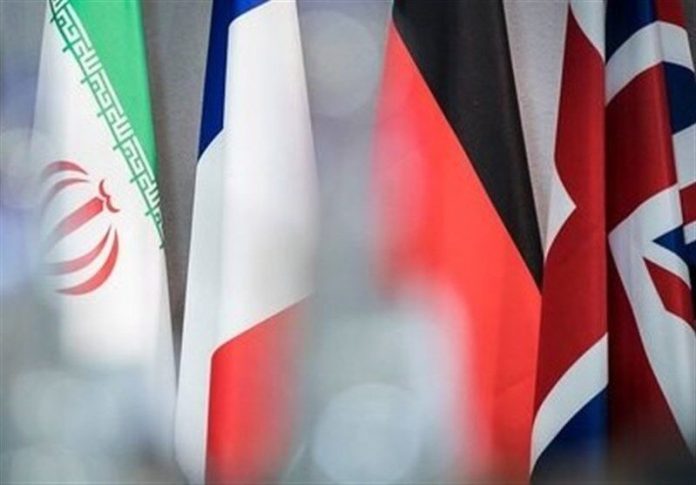
Iranian, Russian FM: E3 lacks authority to invoke JCPOA snapback

The Foreign Minister of the Islamic Republic of Iran, Seyed Abbas Araghchi, and his Russian counterpart, Sergey Lavrov, held a phone conversation on Friday to exchange views on developments related to Iran’s nuclear issue.

They particularly discussed the moves by three European countries ahead of the legal expiration of UN Security Council Resolution 2231, as well as Iran’s cooperation with the International Atomic Energy Agency (IAEA).

During the conversation, they emphasized that the three European countries have committed a serious violation of Resolution 2231 due to their failure to fulfill their commitments under the Joint Comprehensive Plan of Action (JCPOA) and their alignment with the US in attacking Iran’s peaceful nuclear facilities.

The Iranian and Russian foreign ministers assessed the path forward for nuclear negotiations and underlined the importance of ending Resolution 2231 on schedule.

Iran’s foreign minister outlined the country’s principled stance regarding the European trio’s proposal to extend Resolution 2231, stating that in Iran’s view, any decision on its extension lies with the UN Security Council and its members.

Both sides emphasized the need to continue engagement and consultations at various levels to better advance their shared positions.