Saturday, April 25, 2026
Home Blog Page 206

Pakistani PM thanks Iran for mediation in India-Pakistan ceasefire

Pezeshkian Sharif

He then praised the recent visit of Iran’s foreign minister to Islamabad, calling Tehran’s proposal for a truce a “constructive” and “effective” step toward de-escalation. The Pakistani prime minister spoke about the recent developments between his country and India. He stressed that while the two countries have fought three wars over past decades, none have resolved the core issues.

Sharif underscored that challenges such as the Kashmir dispute, terrorism, and other longstanding disagreements can only be resolved through dialogue and political solutions.

He further expressed hope to visit Tehran in the near future for direct talks on bilateral and regional matters. Pezeshkian for his part welcomed the Indian-Pakistan ceasefire and reiterated Iran’s consistent stance on such issues.

He said Iran believes that war and violence only deepen suffering and fail to address the root causes of disputes.

The Iranian president reaffirmed Tehran’s readiness to support peaceful dialogue and regional cooperation, underlining the Islamic Republic’s commitment to peace, stability, and constructive diplomacy. Pezeshkian also described terrorism as a major regional threat, calling for greater synergy, coordination, and solidarity among neighboring countries to effectively counter the phenomenon.

He welcomed the Pakistan prime minister’s decision to visit Tehran in the near future and voiced hope that the trip will would further strengthen bilateral ties and expand mutual cooperation.

Moscow to host first Russia-Arab summit in October

Vldimir Putin

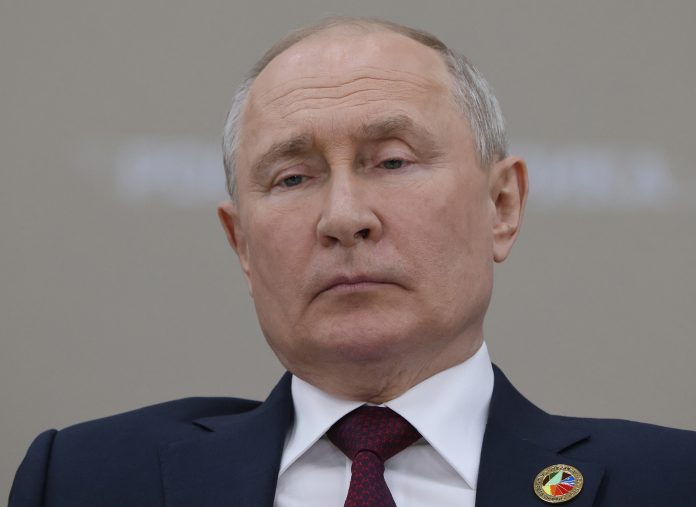
“I am confident that this meeting will contribute to the further strengthening of mutually beneficial, multifaceted cooperation between our countries and will help in finding ways to ensure peace, security, and stability in the Middle East and North Africa,” Interfax agency cited Putin as saying in the statement.

The Arab League, a regional organisation of Arab states in the Middle East and parts of Africa, has 22 member states who have pledged, among others, to cooperate on political, economic and military affairs in the region.

The reports came following a four-day trip by U.S. President Donald Trump through the Persian Gulf region this week, during which Washington announced it had secured several deals, including a $600 billion commitment by Saudi Arabia to invest in the U.S., $142 billion in arms sales to the kingdom, and an AI partnership with the United Arab Emirates.

Iran national team defeat China to claim third place and qualify for Women’s Futsal World Cup

With this victory, Iran not only clinched the bronze medal but also earned a coveted spot in the FIFA Women’s Futsal World Cup.

They now join Japan and Thailand, the two finalists of the tournament, as well as host nation the Philippines as Asia’s representatives at the global stage.

The achievement marks a significant milestone for women’s futsal in Iran. It also highlights the Iranian national team’s growing presence and competitiveness in Asian and international futsal.

US to reduce its military contingent in Syria to 900: Report

US Forces in Syria

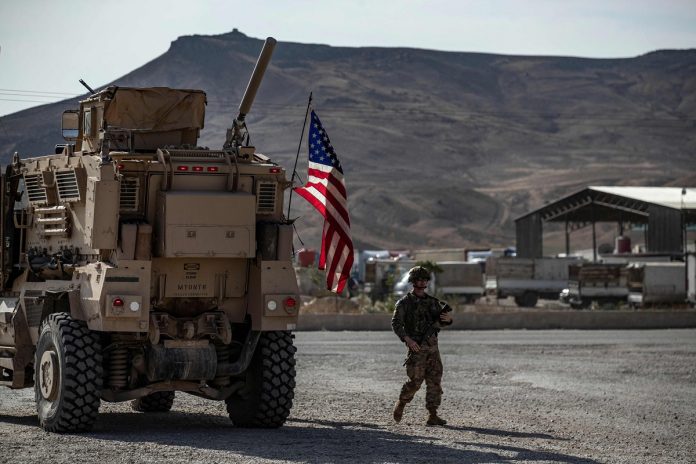
According to the Al Jazeera source, US President Donald Trump has not yet made a final decision on the US future military presence in Syria.

The New York Times daily reported on April 18, citing sources, that three out of eight US bases in northeastern Syria would be closed in the near future and their military personnel would be slashed down from around 2,000 to 1,400. The newspaper’s sources said that a final decision on troops withdrawal would be made in some two months and the US contingent may be reduced to 500 troops.

Syria’s Al Watan paper said on April 23 that the US had begun to pull out troops and vehicles from the al-Shaddadi military base in the al-Hassakah governorate. On April 16, special units were withdrawn from a military base near the Conoco gas field in the Deir ez-Zor governorate to neighboring Iraq.

Since 2015, the US command has been supporting the Syrian Democratic Forces (SDF), a Kurdish-led coalition, which controlled 25% of Syria’s territory, including oil- and gas-bearing areas in the al-Hassakah, Deir ez-Zor, and Raqqa governorates in the country’s eastern and northeastern parts.

On March 10, Syrian interim president, Ahmed al-Sharaa and SDF commander Mazloum Abdi signed an agreement, under which the Kurdish alliance was to be incorporated into the security forces subordinate to the new Syrian authorities. The sides agreed that all civilian and military facilities located in northeastern Syria would be integrated into the public administration system headed by the new authorities in Damascus.

Iran’s nuclear chief: 25% of IAEA inspections in 2024 targeted Iran, despite just 3% of global capacity

Mohammad Eslami

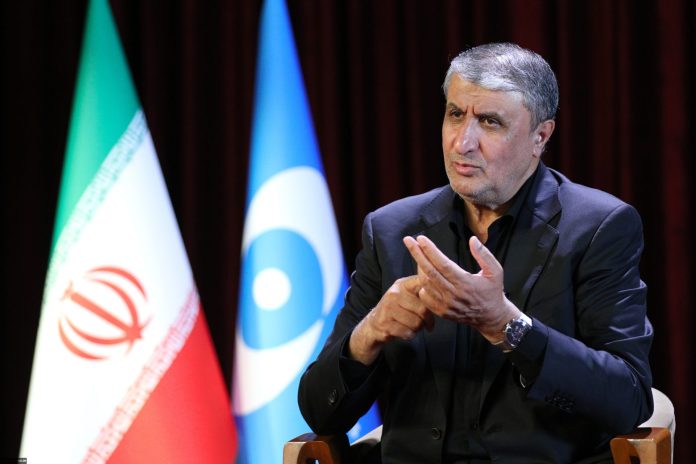
Speaking after a meeting with members of the international Pugwash Conference on Science and World Affairs on Saturday, Eslami criticized “politicized narratives” surrounding Iran’s nuclear program.

“There is an unprofessional and politically motivated portrayal that suggests Iran is moving toward military nuclear capabilities,” he said, stressing that Iran’s defense doctrine categorically rejects nuclear weapons.

Eslami reaffirmed Iran’s commitment to peaceful nuclear development, asserting that the country’s nuclear activities remain fully transparent and are conducted under constant IAEA monitoring.

“No other country is subject to such intensive oversight,” he added.

He also praised Iran’s Foreign Ministry for organizing the meeting, calling it a valuable platform to clarify Iran’s nuclear policy and counter hostile perceptions.

The Pugwash organization, established to reduce global threats from nuclear and other weapons of mass destruction, facilitates dialogue between scientists, policymakers, and experts to promote science-based solutions to global security challenges.

Iran signs Treaty on Genetic Resources and Traditional Knowledge

Ali Bahraini

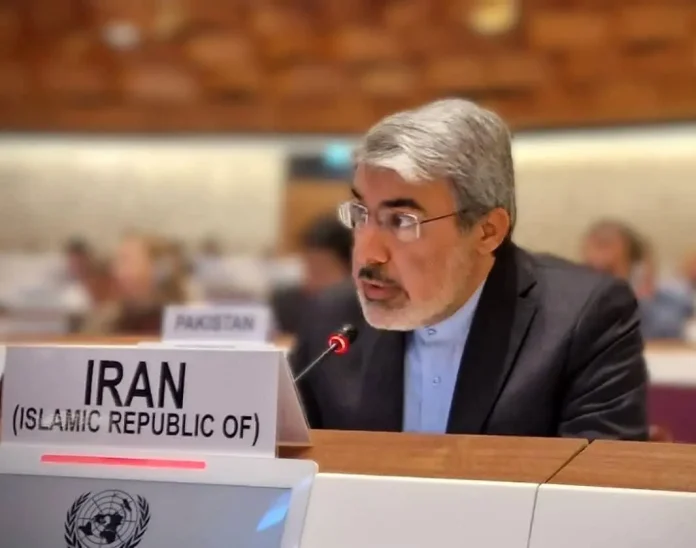
Ali Bahreini, Iran’s Ambassador and Permanent Representative to the United Nations Office in Geneva, signed the treaty on Friday at the headquarters of the World Intellectual Property Organization (WIPO).

The treaty was adopted on May 24, 2024, following two decades of intense negotiations and will enter into force once ratified or acceded to by 15 countries.

Iran, recognized for its rich biodiversity and deep heritage in traditional knowledge, played an active role in shaping the treaty and its final adoption.

The treaty is the first international agreement to address the link between intellectual property and genetic resources. It aims to improve the efficiency, transparency, and quality of patent systems concerning genetic resources and associated traditional knowledge.

A key feature is the requirement for patent applicants to disclose the origin of genetic materials used, preventing erroneous patent grants for inventions lacking novelty due to undisclosed traditional inputs.

The landmark agreement responds to long-standing concerns of developing countries and Indigenous communities over unauthorized and exploitative use of their genetic resources.

Iran already has domestic legal provisions aligned with the treaty, including disclosure obligations under its 2024 Industrial Property Law.

Official: Tehran Dialogue Forum aims to elevate Persian Gulf region’s role in global order

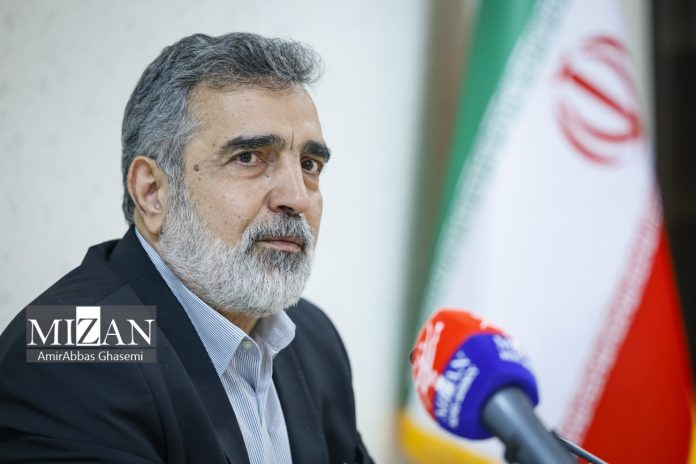
Behrouz Kamalvandi

Speaking ahead of the upcoming forum, Kamalvandi said the goal is to ensure that the Persian Gulf region secures a rightful role in global political, security, economic, and cultural arrangements.

The forum, established in 2018, has become a platform for dialogue among influential figures from across the region and beyond.

Kamalvandi noted that the recent meeting between Iranian officials and members of the international Pugwash Conferences – known for promoting nuclear disarmament and non-proliferation – served as a prelude to the forum. This year’s event will feature 40 panels covering diverse strategic topics.

He stressed the need for regional unity and cooperation to enhance global standing, highlighting the peaceful use of nuclear science and technology as a key issue.

“Under Article 4 of the NPT, member states have the right to fully benefit from nuclear science, technology, and industry,” he added.

The forum is organized by Iran’s Ministry of Foreign Affairs in cooperation with its Institute for Political and International Studies and will host numerous high-level global and regional figures.

Iran’s club Tractor fans set Guinness World Record for longest applause

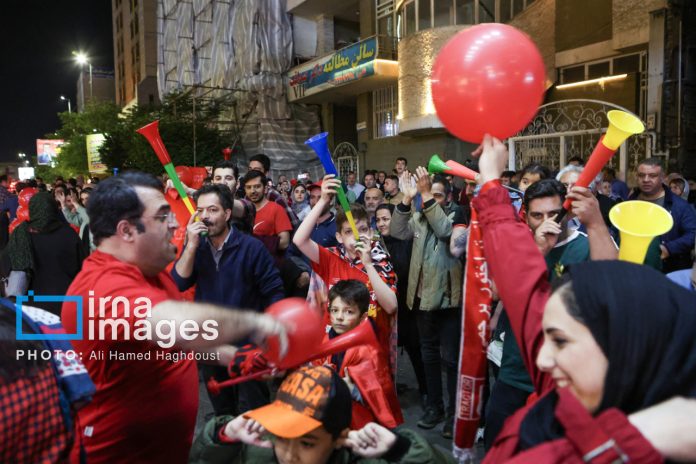
During a championship celebration held at Yadegar-e-Emam Stadium in Tabriz on Friday afternoon, tens of thousands of passionate supporters cheered non-stop for 15 minutes.

A Guinness World Records representative was present at the event and confirmed the achievement, officially registering the record in the name of Tractor fans.

The stadium was decked out for the occasion, including the display of a massive Iranian flag stretching several hundred meters.

The celebration followed Tractor’s recent championship win and drew a record turnout of fans, creating an electrifying atmosphere.

However, the event was cut short after some spectators entered the pitch, leading to the early termination of the ceremony. Despite the disruption, the achievement marked a historic moment for the club and its supporters.

Tractor’s management shared a celebratory video on the club’s official platforms, highlighting key moments of the event and the fans’ passionate support.

UN warns global hunger hits new high amid conflict, extreme weather

Gaza War

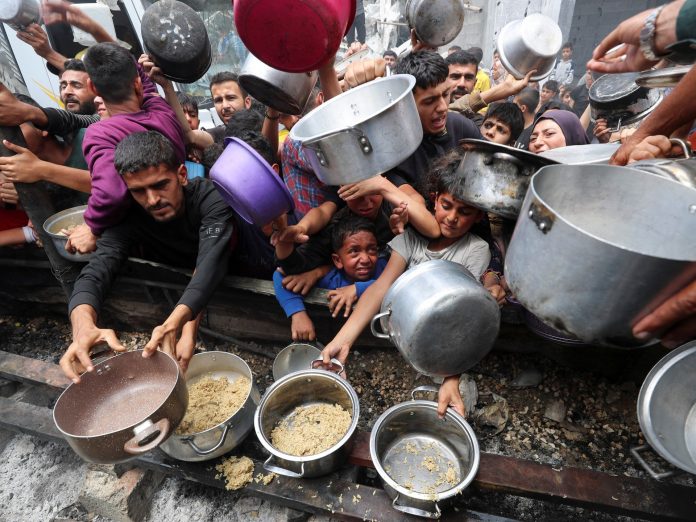
Acute food insecurity and child malnutrition rose for a sixth consecutive year in 2024, affecting more than 295 million people across 53 countries and territories, the 2025 Global Report on Food Crises (GFRC), released on Friday, warned.

Conflict, weather extremes and economic shocks were identified as the main drivers.

The report, which provides its analysis through a collaborative effort with United Nations agencies, states that the rise in hunger levels of 5 percent over 2023 was the sixth in a row.

Overall, 22.6 percent of populations in the worst-hit regions experienced crisis-level hunger or worse.

Conflict was the leading cause of hunger, affecting nearly 140 million people across 20 countries in 2024, including areas facing “catastrophic” levels of food insecurity in Gaza, South Sudan, Haiti and Mali. Sudan has confirmed famine conditions.

Economic shocks, such as inflation and currency devaluation, helped push 59.4 million people into food crises in 15 countries, including Syria and Yemen.

Extreme weather, particularly El Nino-induced droughts and floods, shunted 18 countries into crisis, affecting more than 96 million people, especially in Southern Africa, Southern Asia, and the Horn of Africa.

UN Secretary-General Antonio Guterres called the report an “unflinching indictment of a world dangerously off course”.

“From Gaza and Sudan, to Yemen and Mali, catastrophic hunger driven by conflict and other factors is hitting record highs, pushing households to the edge of starvation,” Guterres stated.

“This is more than a failure of systems – it is a failure of humanity. Hunger in the 21st century is indefensible. We cannot respond to empty stomachs with empty hands and turned backs,” he added.

Afghanistan, Sudan, Syria and Yemen were among the countries with both the highest numbers of people and the highest share of their populations facing acute food insecurity.

The report found that “the number of people facing high levels of acute food insecurity almost tripled” in 2024.

Moreover, 26 countries with high acute food crises were also detected as having a nutrition crisis.

Sudan, Yemen, Mali and Palestine faced the “most severe nutrition crises” last year.

In July 2024, famine was confirmed in the ZamZam camp in Sudan’s North Darfur. It was later identified in four more areas of the country from October to November and “another five [areas] from December 2024 to May 2025”.

In Palestine, while famine was projected in March 2024, it was averted due to a scale-up of humanitarian aid. However, as the war in Gaza continues and the Israeli blockade on aid remains, the report found that “acute food insecurity, malnutrition, and mortality” are likely to pass famine thresholds by September.

Food insecurity eased in 15 countries, including Ukraine, Kenya and Guatemala, last year due to scaled-up humanitarian aid, improved harvests, easing inflation and a decline in conflict.

However, the report warned that the outlook is bleak as major donor countries have substantially reduced humanitarian funding.

Iran judiciary confirms death sentence for singer Tataloo, says requests for pardon and retrial ‘under review’

Tatallo

Jahangir explained that Tataloo was initially sentenced to 10 years in prison on charges of encouraging corruption and prostitution, for which he is currently serving time.

In a separate case involving charges of insulting Islamic sanctities, Tataloo was sentenced to five years by Tehran’s Criminal Court. However, the Supreme Court overturned the ruling and referred the case to the court, which then issued a death sentence. The Supreme Court later upheld that verdict, making it final and executable.

Jahangir noted that Tataloo’s lawyer has submitted two legal requests; one for a pardon based on Article 114 of the Islamic Penal Code, citing repentance, and another for a retrial under Article 477 of the Criminal Procedure Code, which applies if a final ruling is deemed to be in clear contradiction with Islamic law.

“Both requests are currently under judicial review, and their outcomes will be announced once determined,” he clarified.