Friday, December 26, 2025
Home Blog Page 1915

Sandstorm in Iraq sends over 1,000 to hospital

Iraq sandstorm

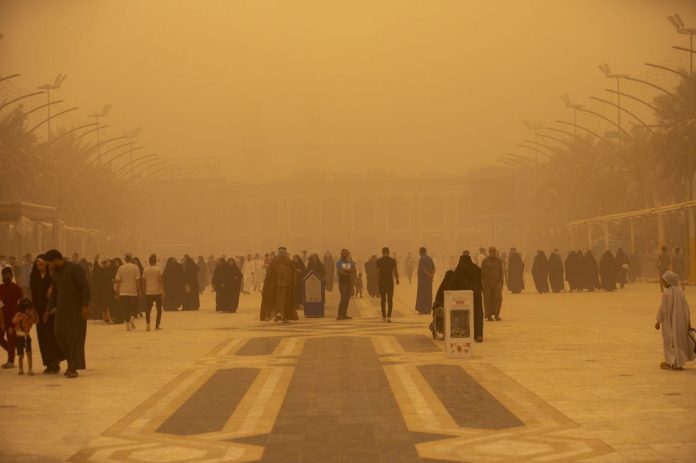
Residents of six of Iraq’s 18 provinces, including Baghdad and the vast western region of Al-Anbar, awoke once again to a thick cloud of dust blanketing the sky.

Authorities in Al-Anbar and Kirkuk provinces, north of the capital, urged people to stay indoors, according to INA news agency.

Hospitals in Al-Anbar province had received more than 700 patients with breathing difficulties, said Anas Qais, a health official cited by INA.

The central province of Salaheddin reported more than 300 cases, while the central province of Diwaniya and the province of Najaf, south of Baghdad, each recorded about 100 cases, the news agency added.

Iraq is particularly vulnerable to climate change, having already witnessed record low rainfall and high temperatures in the past few years. Experts have stated these factors threaten to bring social and economic disaster in the war-scarred country.

In November, the World Bank warned Iraq could suffer a 20-percent drop in water resources by 2050 due to climate change. In early April, a government official warned Iraq could face “272 days of dust” a year in coming decades.

The environment ministry announced the weather phenomenon could be addressed by “increasing vegetation cover and creating forests that act as windbreaks”.

Israeli settlers, army troops storm al-Aqsa Mosque

Al Aqsa Mosque

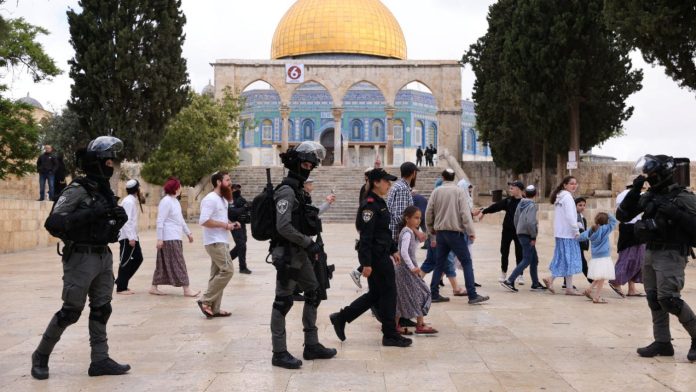
The settlers entered through the Moroccan Gate on the western side of the site, which the Israeli authorities have controlled since the beginning of the occupation of East Jerusalem and the West Bank in 1967.

Once inside, the settlers performed prayers and raised the Israeli flag at the Qattanin Gate, as they marked Israel’s Memorial Day, the Palestinian news agency Wafa reported.

The news agency added large numbers of Muslim worshippers were prevented from entering al-Aqsa Mosque at dawn and that some of them had been beaten by Israeli security forces.

Hamas and Islamic Jihad accused police of disconnecting the muezzin’s speakers at the mosque on Tuesday night so as not to interfere with Israel’s Memorial Day opening ceremony at the adjacent Western Wall plaza. Israeli police denied the claim, describing it as “fake news”.

Israel’s Haaretz newspaper reported Mukhtar Jumaa, Egypt’s endowments minister, as saying: “The waving of Israeli flags and the singing of the Israeli anthem in the al-Aqsa Mosque are a blatant aggression on the mosque and a dangerous provocation in the feelings of Muslims all over the world.

“It serves the extremists and harms international peace and the discourse between religions and cultures,” he added.

Palestinians have been outraged by repeated intrusions by Israeli settlers to pray at the site. By long-standing convention, non-Muslim tourists are allowed to visit under certain conditions and the approval of the Waqf, an Islamic trust that manages the mosque’s affairs, but only Muslims are allowed to pray there.

Several Palestinian and Arab organisations had warned against allowing settlers to enter al-Aqsa Mosque on Thursday, after a 12-day period in which the government had barred them from entering the compound during the final days of Ramadan.

However, on Wednesday, Israeli police confirmed that Al-Aqsa Mosque would be opened to settlers on Thursday from 7am to 11am and from 1.30pm to 2.30pm.

Jordanian Minister of Awqaf Islamic Affairs and Holy Places Mohammad Khalaileh stated on Thursday that allowing settlers to enter the site was “a provocation against Muslim worshippers” that will only “escalate the tensions and drag the area into clashes and wars”.

Israeli security forces raided al-Aqsa Mosque several times during Ramadan, injuring and arresting hundreds of Palestinians there.

Iran’s Karate team ends runner-up in 2021 Deaflympics in Brazil

2021 Deaflympics in Brazil

The Iranian karate athletes earned the title in two main sections of karate, kata and kumite, in the 24th Summer Deaflympics.

In total, the team bagged two gold medals by Milad Sadeghzadeh in the minus-60kg category and the committee of women’s kumite, respectively.

It also won two silver medals and five bronze ones. Ukraine won the championship title by eight gold, three silver, and three bronze medals.

Iran was followed by Venezuela, which took home two gold, one silver and eight bronze medals.

The international tournament was scheduled to be held last year, but it was postponed due to the Coronavirus pandemic.

The games started on May 1, with the participation of over 4,000 athletes from 80 world countries, and will come to an end on May 15.

Iran attended the Deaflympics with 75 athletes in eight sports categories.

Iran health minister advises public to get 4th dose of Covid vaccine

Covid vaccine

Bahram Einollahi on Thursday praised the Iranian health sector, government and people for their successful fight over the past two years against the Coronavirus pandemic, saying the success was achieved thanks to the widespread vaccination campaign across the country.

“It cannot, however, be concluded that the virus has been inactivated across the world. It is still active and claims lives in different parts of the world,” he said.

He said inoculation was proven, in the course of efforts to contain the virus, to be highly effective.

“We recommend at least another dose of vaccine against coronavirus for everyone, since such a shot can be reassuring and can guarantee better immunity,” the minister added.

For the first time in two years, the number of daily deaths from Covid-19 became single-digit on Wednesday. The Health Ministry also recorded only 252 new infections with the virus, also the lowest during the same period.

The number of vaccine shots administered so far is inching toward the 150 million mark, with over 27 million people having received third booster shots.

Recently health officials said people aged 70 years and above and people with underlying diseases or immunodeficiency need to receive a fourth dose of vaccine.

US Senate passes motion barring Biden from removing IRGC off ‘terror list’

IRGC

While the motion, introduced by Republican Sen. James Lankford, is purely symbolic, it is an undoubtedly ominous sign for the US administration as it attempts to break a nearly two-month long stalemate in talks aimed at returning to the 2015 Iran nuclear deal.

The motion passed by a vote count of 62-33, with a surprisingly high count of 16 Democrats voting in favor.

Three of the four Democrats to vote against the 2015 agreement — Majority Leader Chuck Schumer and Sens. Ben Cardin and Joe Manchin — were joined by Sens. Richard Blumenthal, Cory Booker, Chris Coons, Catherine Cortez Masto, Kirsten Gillibrand, Maggie Hassan, Mark Kelly, Angus King, Gary Peters, Jacky Rosen, Kyrsten Sinema, Jon Tester and Ron Wyden. Sen. Robert Menendez, who voted against the nuclear deal and has been vocally critical of the administration’s ongoing diplomatic efforts, did not vote.

Coons, a close Biden ally, said he supported the motion “in order to encourage the Biden administration’s negotiations to push for the strongest possible deal” addressing both Iran’s nuclear program and other “malign activities”, adding he continues to support Biden’s diplomatic efforts in Vienna.

Lankford’s resolution also called for any potential return to the JCPOA to address the “full range of Iran’s destabilizing activities, including development of the means of delivery for such weapons (and ballistic missiles), support for terrorism and evasion of sanctions by individuals, entities and vessels in the trade of petroleum products with the People’s Republic of China.”

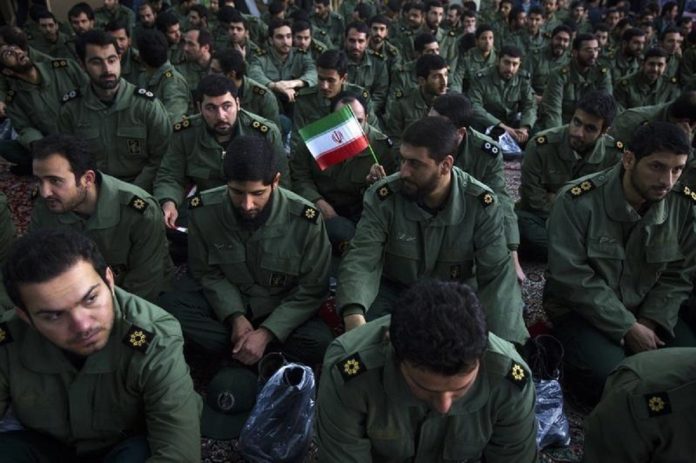
The resolution further prohibits the lifting of existing sanctions on the IRGC. The IRGC’s removal from the US list of designated terrorist organizations has been the primary sticking point in the Vienna negotiations’ final stages, with the US insisting that it will not take such action unilaterally.

Secretary of State Antony Blinken told the Senate Foreign Relations Committee last month that “the only way I could see [the designation] being lifted is if Iran takes steps necessary to justify the lifting of that designation. So it knows what it would have to do in order to see that happen,” adding that “it would require Iran to take certain actions and to sustain them.”

He also noted that the designation does not practically do much for the US since there are a myriad of other sanctions on the IRGC.

Biden and Prime Minister Naftali Bennett recently discussed Iran’s demand that the US delist the IRGC, which Israel has strenuously opposed.

“Israel has clarified its position on the issue,” Bennett said following their conversation, “the Revolutionary Guards are the largest terrorist organization in the world.”

“I am sure that President Biden, a true friend of Israel who cares about its security, will not allow the Revolutionary Guards to be removed,” Bennett added.

An agreement to restore the 2015 nuclear deal is nearly complete, but Iran’s demand that Biden reverse former President Donald Trump’s decision to designate the IRGC as a Foreign Terrorist Organization is one of the last remaining sticking points.

Iranian officials have stressed the IRGC is a national army and no one can blacklist a national army as a terrorist entity.

Official: Goods smuggling surged 20-fold this year

Goods smuggling in Iran

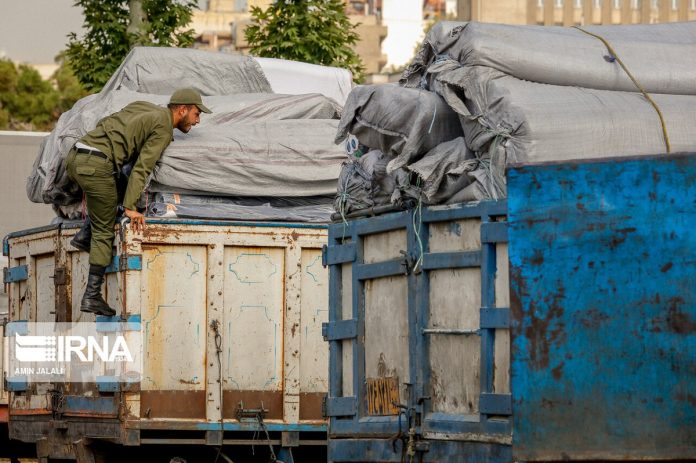
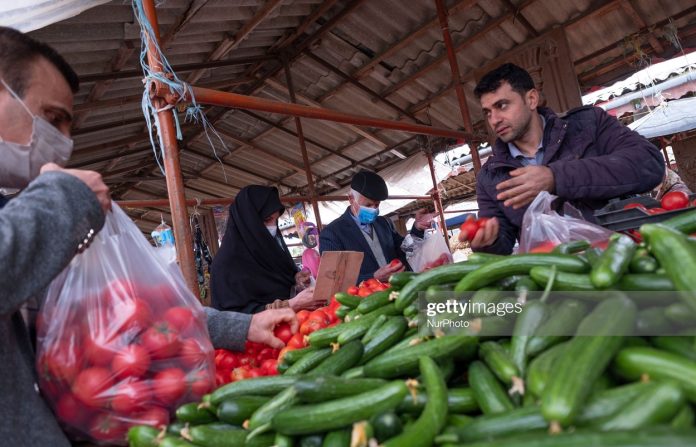
Deputy minister for promotion of trade Abbas Askarzadeh told the IRIB that Iran has turned into a provider of food security for neighboring countries with the increased smuggling, especially illegal exports of wheat flour and cooking oil.

“Subsidizing such goods as cooking oil and wheat flour has led to abuse by some companies so that smuggling and distribution of low-priced cooking oil in one of the neighboring countries has triggered objections by the private sector producers of cooking oil,” Askarzadeh said.

His comments come amid objections to the government’s move to eliminate subsidies of basic goods such as wheat flour and sugar that has multiplied prices, amid punishing inflation rates.

“Consumption of wheat in the country is around 14.5 million tons [a year], and if there is no drought, 8 million tons are provided from domestic production and the rest is imported from Russia, Ukraine, Argentina, Brazil and Germany,” he said.

“Subsidizing wheat and its conversion into flour has given other countries access to such items without any effort and at a much lower price, which leads to foreign currencies exit from the country.”

US says preparing for a world with and without Iran nuclear deal

White House

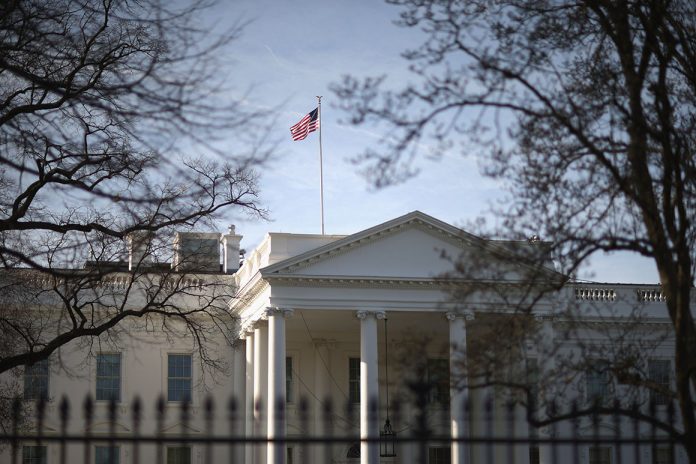
“Because a mutual return to compliance with the JCPOA is very much an uncertain proposition, we are now preparing equally for either scenario,” Ned Price stated in a briefing on Wednesday.

Former President Donald Trump pulled out of the agreement reached under his predecessor Barack Obama and instead imposed sweeping sanctions, including trying to stop other nations from buying Iranian oil.

President Joe Biden’s administration has been engaged in more than a year of indirect talks in Vienna on reviving the agreement. Both US and Iranian officials say that most points have been settled.

US Secretary of State Antony Blinken has said Washington still believes a return to a nuclear deal is the best path with Tehran. Facing criticism of the deal during an appearance before Congress, Blinken called the 2015 agreement imperfect but better than the alternatives.

Iranian Foreign Minister Hossein Amir has stated that there is no doubt about the determination of the government of the Islamic Republic of Iran to reach a good, strong and lasting agreement.

He added that the White House must put aside excessive demands and hesitation and take a step towards realism and solutions.

Referring to the long efforts of all parties in Vienna, the Iranian foreign minister said that three European countries, Russia and China, are now ready to finalize the agreement.

He added the current US administration must have the courage to correct the White House’s past wrong policies.

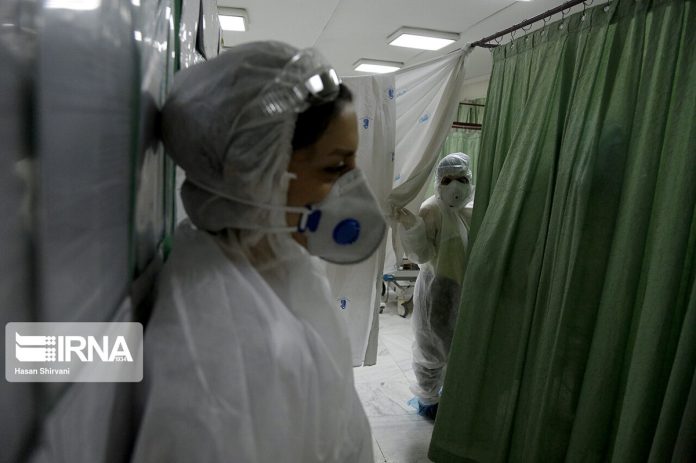
Iran Health Ministry warns of summer outbreak of Covid

COVID in Iran

“Vaccines lose part of their effectiveness after a few months and seeing the emergence of sub-variants of the coronavirus and also forecasts by the World Health Organization that the world may suffer a new wave of the virus in the summer, we hope that people put vaccination on their agenda and those who have not received their last dose should make sure they get their jabs,” deputy Health Minister Kamal Heidari said.

The official added that the number of daily deaths from Covid-19 in Iran is now single-digit, which the health ministry believes is due to the inoculation campaign.

“But this does not mean people can consider the situation normal. We expect people to be patient and pay attention to the messages and requests by the Health Ministry and the National Taskforce Against the Coronavirus,” he said.

Heidari also said 80 to 85 percent of the people who have died of the virus or were hospitalized were among the unvaccinated, adding that the country has already provided for the doses of vaccines needed at least up to March 2023.

Iranian Health Ministry figures on Wednesday showed 7 people had died of the virus in the past 24 hours. The Health Ministry also logged 252 new Covid infections, which is the lowest number of new cases of the Coronavirus in over two years.

Iran calls on UN to raise awareness of negative impacts of sanctions on civilians

United Nations

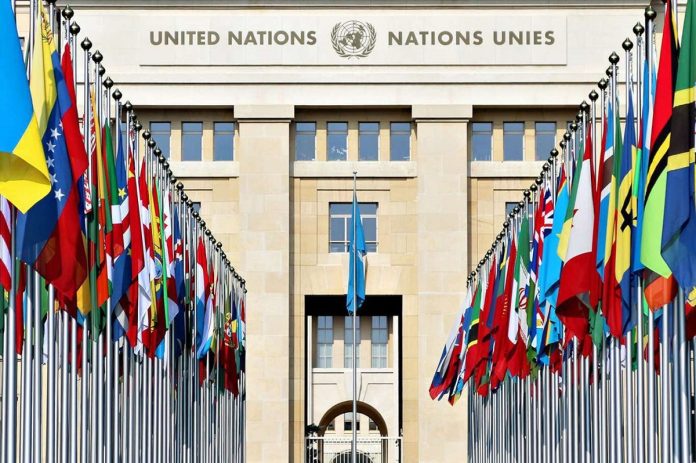
Through a statement before the 43rd session of Committee on Information in New York on Wednesday, Majid Takht Ravanchi said tight restrictions on foreign exchange resources are “in grave violation of international law, international humanitarian law and UN Charter.”

“In this regard, we urge the Department to continue its efforts towards raising awareness and disseminating information on the negative impact of [Unilateral Coercive Measures] UCMs on the affected countries and their civilian population.”

The ambassador added that those measures “seriously jeopardize the targeted countries’ economic growth” and put obstacle to easy access to “basic medical items and requirements.”

Below in the full text of the ambassador’s remarks:

At the outset, I would like to extend my gratitude to you and the other members of the Bureau for your able leadership of the Committee. The Islamic Republic of Iran associates itself with the statement made by the distinguished representative of Pakistan on behalf of the G77 and China.

We recognize the importance of the Committee on Information as the main intergovernmental policy-making body to provide guidance on UN policies in the field of communication and public information. We also attach great importance to the work and the function of the Department of Global Communication (DGC) which aims at enabling the UN to establish better communication and connections with the international community and the people around the globe by addressing issues of high importance for the international community in an impartial and timely manner. In today’s monopolized world of media, the DGC’s role is more crucial than ever in advancing the Organization’s wider objectives. It must be able to convey accurate information to the attention of people all over the world in order to contain and counter disinformation of all forms in the global connectivity matrix.

Mr. Chairman,

Disparity in the use of information and communications technology has immeasurably widened the existing gaps between the developed and developing countries in the field of public information and communication technology.

Regrettably, certain countries continue to take advantage of their monopoly of modern communication technologies to distort and fabricate the events and realities in other countries, especially in the developing world, thus tarnishing the image and damaging the interests of the latter. Such a detrimental and undesirable situation demands immediate attention by the international community. Bridging the digital divide between the developed and developing world and placing information and communications technologies at the service of development in a fair and just manner is a must, and the DGC is expected to play a more effective and greater role in this domain by, inter alia, raising public awareness.

We underscore the importance of ensuring that the use of such technologies should be fully compatible with the purposes and principles of the Charter of the United Nations and international law, in particular the principles of sovereignty, the non-interference in internal matters, and the internationally recognized rules of civil coexistence and friendly relations among States. In this regard, we reiterate our strong rejection and condemnation over the misuse of such technologies, in particular, through the proliferation of misinformation and disinformation by certain countries against developing countries, including my Country.

Distinguished Colleagues,

Under current circumstances arising from COVID-19, the impact of Unilateral Coercive Measures (UCMs), in particular illegal sanctions, imposes additional economic, commercial and financial burdens on targeted countries. These measures, seriously jeopardize the targeted countries’ economic growth while also hampering easy access to basic medical items and requirements through tight restrictions on foreign exchange resources in grave violation of international law, international humanitarian law and UN Charter. In this regard, we urge the Department to continue its efforts towards raising awareness and disseminating information on the negative impact of UCMs on the affected countries and their civilian population.

The current climate of intolerance and hate toward Islam and Muslims in various parts of the world provoked by anti-Muslim media outlets and the inflammatory as well as bigoted rhetoric of certain political figures in the West are a matter of grave concern. It is high time for the international community to condemn this phenomenon and take the necessary measures to combat islamophobia and violation of basic human rights of Muslims. In that regard, we urge the DGC to continue its efforts in addressing this phenomenon, in particular through commemorating March 15 as the International Day to Combat Islamophobia designated by the GA landmark resolution A/RES/76/254.

The Islamic Republic of Iran continues to emphasize the important responsibility of the United Nations vis-à-vis the Question of Palestine. Iran fully supports raising international awareness regarding the negative consequences of the occupation and embargo on Palestinian people. We commend the DGC for its special information program on the question of Palestine, including the training program for Palestinian journalists. In conclusion, we underline the growing demand for content in languages in addition to the official languages of the United Nations. We encourage the Secretariat to continue exploring alternatives to ensure the issuance of various media products in all official languages and non-official languages, including the Persian language which is spoken by more than one hundred and twenty million people around the globe and widely regarded as the root of great culture and civilization and source of understanding and solidarity among several nations.

Thank you, Mr. Chairman.

‘UN rapporteur’s Iran visit to help shed light on impact of sanctions on people’

Iranian people

Kazem Gharibabadi, secretary of Iran’s High Council for Human Rights and the Judiciary chief’s deputy for international affairs, offered explanations on Thursday about the visit by Alena Douhan, who is tasked with compiling a report on “the negative impact of the unilateral coercive measures on the enjoyment of human rights” in Iran.

According to the UN, during her sojourn, which will last from May 7 to 18, Douhan is set to “examine, in the spirit of co-operation and dialogue, whether and to what extent the adoption, maintenance or implementation of unilateral sanctions impedes the full realization of the rights set forth in the Universal Declaration of Human Rights and other international human rights instruments.”

Gharibabadi said the UN rapporteur was scheduled to hold a series of meetings with representatives of state institutions, private sector and non-governmental organizations.

Douhan will also pay visits to some institutions, Gharibabadi said, without naming them.

The Iranian nation has long been the prime target of tough US sanctions, which work, among other things, to hamper the country’s banking transactions and, consequently, purchases of medicine, medical equipment, and other humanitarian supplies.