Saturday, December 27, 2025
Home Blog Page 191

Flights resume over western Iran after temporary airspace closure

According to a Notice to Airmen (NOTAM), Iran restricted its western airspace, covering areas from the border through Zanjan, Hamedan, Arak, Yasuj, and the TULAX route over the western Persian Gulf, from 00:21 a.m. to 6:00 a.m. local time on Friday.

The closure, which applied to all overflying aircraft, was due to a military exercise conducted by the Iranian Armed Forces.

As of Friday morning, live radar data shows multiple flights traveling through the region, including aircraft en route to Batumi in Georgia, Najaf and Baghdad in Iraq, as well as domestic flights heading to Abadan and Ahvaz in southern Iran.

Authorities said the airspace has now fully reopened, and operations have returned to normal.

No delays or incidents were reported during the temporary restriction period.

Iran’s army chief vows strong response to any aggression

In a message addressed to Defense Minister Brigadier General Aziz Nasirzadeh, Major General Amir Hatami praised the rapid advancement of Iran’s defense capabilities, which “stems from the guidance of the Leader Ayatollah Seyed Ali Khamenei and the resilience of the Iranian people under international sanctions.”

“The proud sons of the Islamic Republic of Iran’s Army are prepared, as always, to deliver a crushing and regretful response to any malicious aggressor,” General Hatami said.

The statement comes two months after Iran was dragged into a conflict with the US-Israeli alliance which lasted for 12 days and claimed the lives of over a thousand of civilians, vast majority of them civilians.

General Hatami also honored the memory of fallen defense officials, nuclear scientists, and military personnel in the Israeli aggression in June, emphasizing their sacrifices in building Iran’s defensive strength.

Iranian officials have consistently stressed that the country’s defense policy is based on deterrence, while warning that any attack on its territory or facilities would be met with a forceful reaction.

Iran’s FM to hold joint call with European counterparts on nuclear talks

Abbas Araghchi

Foreign Ministry spokesperson Esmail Baqaei said the call aims to address key issues in the Iran-Europe dialogue over the 2015 nuclear deal, known as the Joint Comprehensive Plan of Action (JCPOA).

“The discussions will focus on Iran’s demands, particularly the lifting of unjust sanctions, and on the responsibility of the European parties regarding recent criminal attacks on Iran’s nuclear facilities,” Baqaei told the state-run IRNA news agency.

The announcement comes amid heightened tensions over the future of the nuclear agreement, amid European threats to trigger mechanism, which would restore draconian sanctions on Iran.

Armenia seeks LPG imports from Iran to address domestic shortages

Gevorg Papoyan said the request was made during a meeting with Iran’s Minister of Industry, Mine, and Trade Mohammad Atabak, as Yerevan seeks to diversify its energy suppliers and stabilize rising fuel costs.

“Securing additional LPG supplies from Iran is crucial for us,” Papoyan said. “Diversifying suppliers will enhance competition and help reduce prices in the domestic market.”

According to Russia’s RIA Novosti news agency, LPG prices at Armenian gas stations have risen by 50 percent since June, putting pressure on consumers and businesses.

Earlier this summer, Papoyan urged Armenia’s Competition Protection Commission to investigate the price surge, which officials partly attributed to logistical challenges with fuel imports from Russia through Georgia.

Armenia, a landlocked South Caucasus nation, currently relies heavily on fuel imports from Russia but has been exploring new trade options to boost energy security amid market volatility and regional supply issues.

Officials have not yet disclosed details regarding potential volumes or pricing of possible LPG imports from Iran.

Iran UN envoy Voices concern over transfer of ferrorists from Syria to Afghanistan

Addressing the UN Security Council meeting on “The Situation in the Middle East: (Syria)” on Thursday evening, Amir Saeid Iravani stressed that ISIS, al-Qaeda, and foreign terrorists continue to destabilize Syria and the wider region, seriously undermining regional and international peace and security.

He emphasized that all countries must fully comply with international law in combating terrorism in all its forms and manifestations.

According to Iravani, the only sustainable path for Syria’s future is a Syrian-led and Syrian-owned political process, facilitated by the United Nations in line with the core principles of Security Council Resolution 2254.

He added that such a process must uphold the rights and legitimate aspirations of all Syrians while preserving Syria’s sovereignty, independence, unity, and national institutions.

He further underlined that accountability, including for crimes committed against Alawite communities in Latakia and Tartus, must be swift, credible, transparent, and impartial.

He called on authorities to ensure that all perpetrators are brought to justice.

Iravani also noted Iran’s continuing concern over clashes between the Syrian Democratic Forces and interim authorities in the northeast.

He stressed that Israel’s repeated acts of aggression have caused civilian casualties, destroyed vital infrastructure, and heightened regional tensions.

He affirmed that Iran categorically rejects any attempts to undermine Syria’s sovereignty, alter its demographic composition, or partition its territory.

Israel ignoring truce attempts by launching new Gaza aggression: Hamas

Gaza War

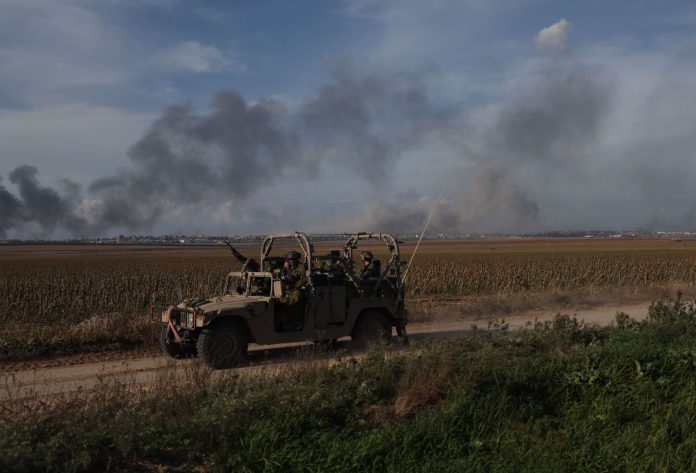
In a statement, the Palestinian movement described the latest ground attack – dubbed “Gideon’s Chariots II” by Israel – as a “new act of genocide” against Palestinian civilians and a “deliberate disregard for the efforts of the mediators”.

Hamas said it had agreed to the latest ceasefire proposal put forward earlier this week by mediators Qatar and Egypt.

The agreement calls for a 60-day truce, during which negotiations for a permanent end to the war would begin. It also includes the release of nearly half of the remaining captives held in Gaza in exchange for Palestinian prisoners.

Israel has not officially responded to the proposal.

“We had agreed to the latest proposal put forward by the mediators, but the occupation government continues its aggression in a failed attempt to break our people’s will,” Hamas added.

“We affirm that this operation will fail, just as previous ones have, and we hold the occupation and the US administration fully responsible for its consequences.”

The statement came shortly after the Israeli army spokesman Effie Defrin said that they had begun “preliminary operations in Gaza City” ahead of a major new offensive aimed at occuping the city.

Defrin stated the Israeli army was “not waiting” and is “already taking control of the outskirts of Gaza City”.

In recent days, Israel has intensified air strikes and artillery shelling south, east and north of Gaza City.

According to the Palestinian health ministry, Israeli forces killed at least 70 Palestinians on Wednesday.

Overall, Israeli forces have killed more than 62,000 Palestinians since the genocide in Gaza began nearly two years ago.

Zelensky urges ‘strong response’ from Trump if Putin rejects talks with Ukraine

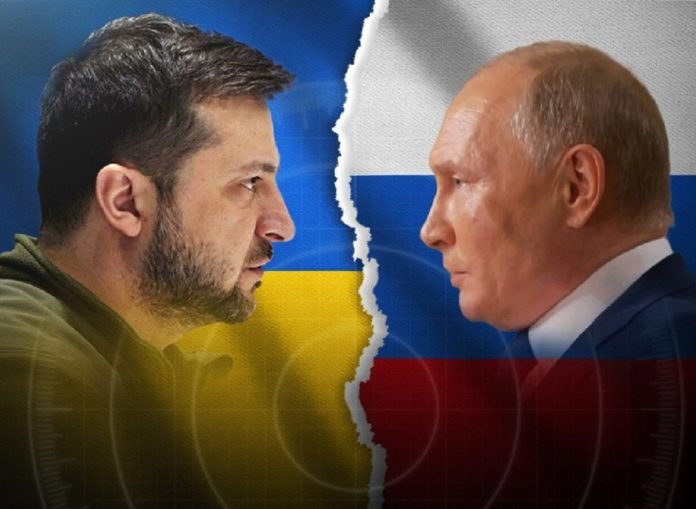
“We are ready for the bilateral meeting. If the Russians are not, then we would like to see a strong response from the United States,” Zelensky said, adding that he asked Trump to impose additional sanctions on Moscow if it rejects talks with Ukraine.

The meeting would mark the first encounter between Zelensky and Putin since the start of Russia’s full-scale invasion in February 2022. The two leaders last met in Paris in December 2019 as part of Normandy Format talks mediated by France and Germany.

Zelensky said that within the next 7 to 10 days, Ukraine expects to gain clarity on the “architecture” of NATO’s “Article 5-like” security guarantees that the West can provide as part of the ongoing peace effort, including how each country’s commitment.

After this, he added, U.S. President Donald Trump expects that a bilateral meeting between Zelensky and Putin should take place within “one to two weeks.” If that meeting yields results, a trilateral summit involving Trump could follow.

“We need this meeting. We’ve taken a step forward, and now they (Russia) must do something to show they truly want to end the war, as they have claimed,” Zelensky continued.

Bloomberg reported on Aug. 19 that a package of security guarantees for Ukraine might be finalized this week. European officials have reportedly discussed sending British and French troops to Ukraine, along with contingents from roughly 10 other countries.

The Kremlin has dismissed these security proposals, with Russian Foreign Minister Sergey Lavrov saying on Aug. 20 that Russia must be involved in providing Ukraine with security guarantees.

Following a bilateral meeting with Trump in Alaska, which didn’t yield any peace or ceasefire agreement, Putin returned without facing the sanctions Trump had long threatened but hadn’t enforced.

Talk preparations are being led by U.S. Secretary of State Marco Rubio, special envoy Steve Witkoff, and U.S. Vice President J.D. Vance.

Zelensky named Switzerland, Austria, and Turkey as potential hosts for the talks. As for Hungary, he said it would be “not easy,” given Budapest’s opposition to supporting Ukraine during the war.

Separately, Zelensky stated that Trump will work with Hungarian Prime Minister Viktor Orban to persuade Budapest to stop blocking Ukraine’s path to European Union membership.

Zelensky has repeatedly voiced readiness for direct negotiations. On Aug. 18, he said he was prepared to discuss territorial issues with Putin personally. The Russian president has so far avoided meeting Zelensky despite claiming openness to talks.

Iran says to deliver crushing response to any act of adventurism

Iran Army

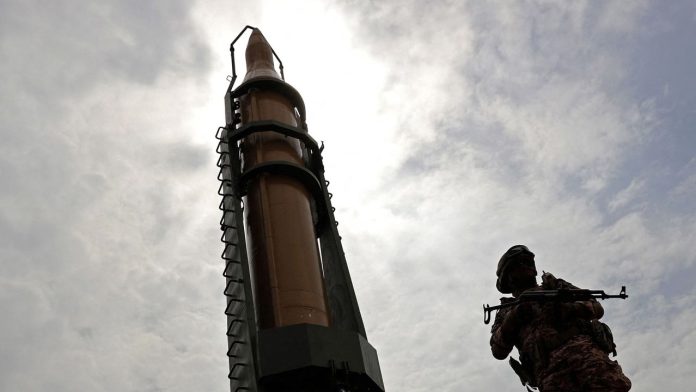
On the occasion of Mordad 31 (August 22), which marks Defense Industry Day, the Ministry of Defense issued a statement emphasizing that Iran’s enemies have realized that in response to any adventurism and miscalculation in the region, they will receive a very strong slap from the Iranian armed forces.

The Defense Ministry said the country’s defense industry achievements have turned Iran into a hub of defensive power and deterrence in the region.

The ministry said the country’s defense industry achievements have “succeeded in elevating the nation from the height of dependence on foreigners to the peak of self-sufficiency and power, turning Iran into a hub of defensive power and deterrence in the region.

The ministry noted that the victory of the Islamic Revolution and the collapse of the “deposed Pahlavi regime” and the end of American military advisers’ dominance opened “a new chapter of self-sufficiency, dynamism, and progress in defense achievements.”

It emphasized that despite four decades of “comprehensive and unjust sanctions,” Iran’s defense industry has become a symbol of growth and vitality through the efforts of faithful and committed experts.

The Iranian people witnessed the results of this power during the recent 12-day war imposed by Israel against Iran, during which international media highlighted the country’s missile capabilities, it added.

The statement also warned that enemies of Iran learned they would face “a very firm slap” in response to any act of adventurism or miscalculation.

Europe must shoulder ‘lion’s share’ of Ukraine’s security: US VP

Russia Ukraine War

In an interview with Fox News on Wednesday, Vance said the US should not have to “carry the burden” of underpinning Kyiv’s post-war security.

“I think that we should be helpful if it’s necessary to stop the war and to stop the killing. But I think that we should expect, and the president certainly expects, Europe to play the leading role here,” Vance stated.

“What he said very clearly is: Look, the United States is open to have the conversation, but we’re not going to make commitments until we figure out what is going to be necessary to stop the war in the first place.”

Vance’s comments came a day after US President Donald Trump ruled out the possibility of US troops in Ukraine, while suggesting that Washington could provide support “by air”.

The issue of post-war security guarantees for Ukraine has been a major question mark over Trump’s push to end the three-and-a-half-year-long conflict.

After hosting Ukrainian President Volodymyr Zelenskyy and top European leaders at the White House for talks on the war on Monday, Trump said that European countries would be the “first line of defence”, but that Washington would provide “a lot of help”.

While Trump has ruled out NATO membership for Ukraine, his special envoy, Steve Witkoff, and NATO Secretary-General Mark Rutte have raised the possibility of offering Kyiv a security guarantee resembling the 32-member alliance’s collective defence mandate.

Under Article 5 of the North Atlantic Treaty, an armed attack against one NATO member nation is considered an attack on all members of the alliance.

While Trump has said that Russian President Vladimir Putin is open to European peacekeepers being stationed in Ukraine, Moscow has repeatedly dismissed the possibility of troops from NATO countries along its border.

On Wednesday, Russian Foreign Minister Sergey Lavrov noted that his country would need to be included in negotiations on security guarantees, warning that excluding Moscow would be a “road to nowhere”.

“We cannot agree with the fact that now it is proposed to resolve questions of security, collective security, without the Russian Federation. This will not work,” Lavrov added.

Despite the sticking points between the sides, Vance stated on Wednesday that the Trump administration had made “great progress” in its efforts to end the war.

“You can never say with certainty what the outcome in this situation is going to be,” Vance added.

“But we now have the Russians talking to the Ukrainians; they’re talking details about what would be necessary on each side to stop the fighting, to stop the killing.”

Ayatollah Khamenei offers condolences on passing of master of Persian miniature Farshchian

Ayatollah Khamenei

In his message, the Leader hailed the artist as a “shining star” of Iranian art, saying his commitment and spirituality served to elevate his art.

“The prominent and renowned artist, Mahmoud Farshchian, was a shining star in the sky of Iranian art. His commitment and religiosity put his valuable essence at the service of religious concepts and affections, and he left behind eternal works.”

Farshchian passed away on August 9 in the US state of New Jersey at the age of 95.

He was widely regarded as a master of Persian miniature painting, credited with founding a new style that blended the traditional art form with modern techniques.

His works, known for their spiritual depth and vibrant energy, often drew themes from classical poetry, the Quran, and religious narratives.

One of his most famous pieces, “The Evening of Ashura,” is a masterpiece depicting the grief of Imam Hussein’s family.