Sunday, December 28, 2025
Home Blog Page 190

Declassified docs show Clinton was ready to consider Russian NATO membership

The statements were made during a meeting between the two leaders in the Kremlin on June 4, 2000, according to White House minutes published on Thursday by the National Security Archive, an independent research institute at George Washington University.

“From the outset of the NATO enlargement process, I knew that it could be a problem for Russia. I was sensitive to this, and I want it understood that NATO enlargement does not threaten Russia in any way,” Clinton is quoted as saying.

“I am serious about being ready to discuss NATO membership with Russia.”

He added that he understood that “domestic considerations inside Russia” prevent this, but over time the country “should be a part of every organization that holds the civilized world together.”

According to the documents, Putin said he “supported” the idea.

Last year, in an interview with American journalist Tucker Carlson, Putin said he had brought up the subject with Clinton. While Clinton agreed at first, he later dismissed the idea after talking to his team, the Russian leader said.

Had Clinton agreed, it would have led to a new period of “rapprochement” between Moscow and the military bloc, Putin added.

NATO has expanded six times since the two leaders’ conversation in 2000, adding 12 more countries during this time.

After “wave after wave of expansion… we were constantly told: ‘You shouldn’t fear this, it poses no threat to you’,” Putin said in June, adding that “they simply dismissed our concerns, refusing to acknowledge or even consider our position.”

“We know better than anyone what threatens us and what does not,” he said.

Moscow has cited Kiev’s ambition to join NATO as one of the core causes of the current conflict, which it views as a proxy war being orchestrated by the military bloc against Russia.

Iranian, Russian FM: E3 lacks authority to invoke JCPOA snapback

The Foreign Minister of the Islamic Republic of Iran, Seyed Abbas Araghchi, and his Russian counterpart, Sergey Lavrov, held a phone conversation on Friday to exchange views on developments related to Iran’s nuclear issue.

They particularly discussed the moves by three European countries ahead of the legal expiration of UN Security Council Resolution 2231, as well as Iran’s cooperation with the International Atomic Energy Agency (IAEA).

During the conversation, they emphasized that the three European countries have committed a serious violation of Resolution 2231 due to their failure to fulfill their commitments under the Joint Comprehensive Plan of Action (JCPOA) and their alignment with the US in attacking Iran’s peaceful nuclear facilities.

The Iranian and Russian foreign ministers assessed the path forward for nuclear negotiations and underlined the importance of ending Resolution 2231 on schedule.

Iran’s foreign minister outlined the country’s principled stance regarding the European trio’s proposal to extend Resolution 2231, stating that in Iran’s view, any decision on its extension lies with the UN Security Council and its members.

Both sides emphasized the need to continue engagement and consultations at various levels to better advance their shared positions.

Famine officially declared in Gaza Strip by UN-backed global hunger monitor

The IPC released a report on Friday in which it said that famine was taking place in Gaza City and surrounding towns. It applied the classification to an area home to 514,000 displaced Palestinians – nearly quarter of Gaza’s population.

While the body has previously warned that famine was imminent across Gaza, it had stopped short of making a formal declaration.

The IPC is the globally recognised system for classifying the severity of food insecurity.

It is an initiative involving 21 aid organisations, as well as several United Nations agencies. It receives funding from the European Union, the United States, Germany, Britain, Canada and others.

Since its creation in 2004, it has declared five famines. The most recent one was in Sudan last year.

It declares famine if three criteria are met: at least 20 percent of households face an extreme lack of food, at least 30 percent of children are suffering acute malnutrition, and two out of every 10,000 are dying each day due to “outright starvation”.

“After 22 months of relentless conflict, over half a million people in the Gaza Strip are facing catastrophic conditions, characterised by starvation, destitution and death,” the IPC said.

“Another 1.07 million people (54 percent) are in Emergency (IPC Phase 4), and 396,000 people (20 percent) are in Crisis (IPC Phase 3).”

It added that famine would expand to the areas of Deir al-Balah, in central Gaza, and Khan Younis to the south by the end of September based on current projections.

That would bring the number of people experiencing famine in Gaza to 641,000 people.

In that same timeframe, it projects that the number of people in the “emergency” phase four category would rise from 1.07m to 1.14m.

“The famine declared today in Gaza Governorate by the Integrated Food Security Phase Classification is the direct result of actions taken by the Israeli government,” Volker Turk, the UN human rights chief stated.

“It is a war crime to use starvation as a method of warfare, and the resulting deaths may also amount to the war crime of wilful killing.”

Israel imposed a near total blockade on the entry of food and humanitarian aid into Gaza on 2 March.

It only began allowing food and aid into the enclave in late May, but almost exclusively through the US- and Israel-backed Gaza Humanitarian Foundation (GHF).

However, aid workers, governments and Palestinians on the ground say the amount of humanitarian relief delivered is nowhere near enough needed to feel Gaza’s population of two million.

Meanwhile, Gaza health officials say that since the GHF took over aid delivery, more than 2,000 Palestinians have been killed by Israeli forces while seeking aid supplies.

The UN and other major international aid groups have refused US and Israeli calls to cooperate with GHF, stating that the organisation violates international humanitarian principles of neutrality.

In recent days, more aid trucks have been allowed by Israeli authorities to enter into Gaza, though far less than what is required to meet the urgent needs of starving Palestinians.

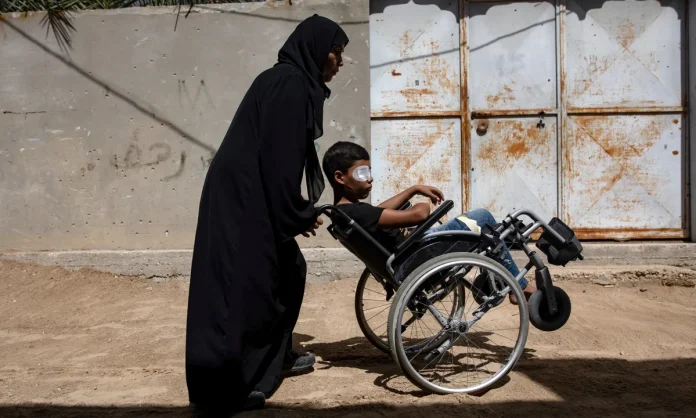
According to the UN, the entire population under five in the Gaza Strip – more than 320,000 children – are at risk of acute malnutrition, due to a lack of safe water, breastmilk substitutes and therapeutic feeding.

Over 270 people have died from malnutrition in Gaza since Israel’s war began in October 2023. That includes at least 112 children.

The IPC said that through to June 2026, at least 132,000 children under five were expected to suffer from acute malnutrition – double the estimate from May this year. That includes 41,000 severe cases of children at heightened risk of death.

“Nearly 55,500 malnourished pregnant and breastfeeding women will also require urgent nutrition response,” it added.

The IPC said on Friday that its analysis only covered Gaza City, Deir al-Balah and Khan Younis, adding that it was unable to classify the governorate in northern Gaza due to restrictions of access and a lack of data.

“As this famine is entirely man-made, it can be halted and reversed,” the report noted.

“The time for debate and hesitation has passed, starvation is present and is rapidly spreading. There should be no doubt in anyone’s mind that an immediate, at-scale response is needed.”

It added that if an immediate and sustained ceasefire is not implemented, with access to humanitarian aid and food supplies for everyone in the Gaza Strip, “avoidable deaths will increase exponentially”.

It marks the first time the IPC has classified famine to be taking place outside of Africa.

The previous classifications were Somalia in 2011, South Sudan in 2017 and 2020, and Sudan in 2024.

Several countries join EU, UN in opposing Israel’s illegal settlement plan

“We condemn this decision and call for its immediate reversal in the strongest terms,” the 21 countries said in a joint statement, describing Israel’s construction plans as a “violation of international law”.

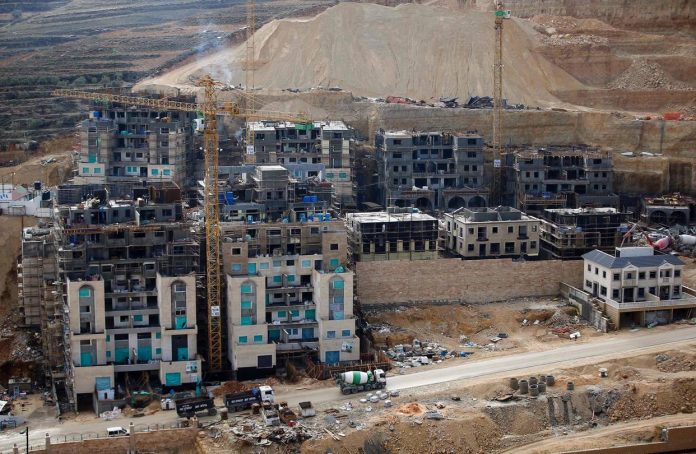
The statement follows news this week that Israel will formally move forward with a settlement on a 12-square-kilometre (4.6-square-mile) tract of land east of Jerusalem known as “East 1” or “E1”.

The development, which will include 3,400 new homes for Israeli settlers, will cut off much of the occupied West Bank from occupied East Jerusalem while also linking up thousands of illegal Israeli settlements in the area.

East Jerusalem carries particular significance to Palestinians as the top choice for the capital of a future Palestinian state.

The group of 21 nations added any plans for a two-state solution will become impossible “by dividing any Palestinian state and restricting Palestinian access to Jerusalem”.

The group includes Belgium, Canada, Denmark, Estonia, Finland, France, Iceland, Ireland, Italy, Latvia, Lithuania, Luxembourg, the Netherlands, Norway, Portugal, Slovenia, Spain and Sweden.

The illegal settlement also “risks undermining security and fuels further violence and instability, taking us further away from peace”, the group stressed, while bringing “no benefits to the Israeli people”.

The Palestinian Authority, the European Commission and United Nations chief Antonio Guterres have all voiced opposition to plans for the E1 settlement since Israel first announced the news last week.

Israeli air force dismisses several officers over petition demanding end to Gaza war

Israeli Fighter Jet

The Yedioth Ahronoth daily newspaper said officers signed the petition four months ago, which called for “the end of the war in exchange for the return of all hostages” held in the Gaza Strip.

The dismissed officers petitioned the Supreme Court to overturn the army’s decision and reinstate them, saying the decisions were made unlawfully, without any due process, and in severe violation of the constitutional rights of the petitioners.

“The position expressed by the reservists in favor of returning the hostages, even at the cost of ending a war that no longer serves its declared purposes, reflects a moral and ethical stance,” the discharged soldiers said in a petition to the court.

As many as 17 other reservists, who were temporarily suspended from duty over signing the anti-war petition, also appealed. Some were reinstated after agreeing to remove their signatures.

There was no immediate comment from the Israeli army on the media report.

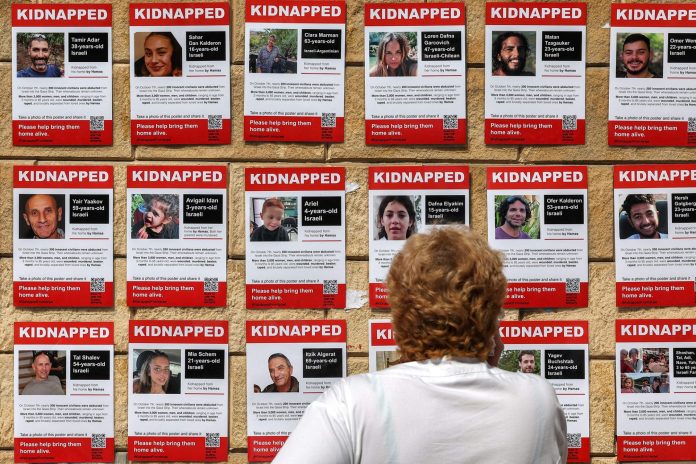
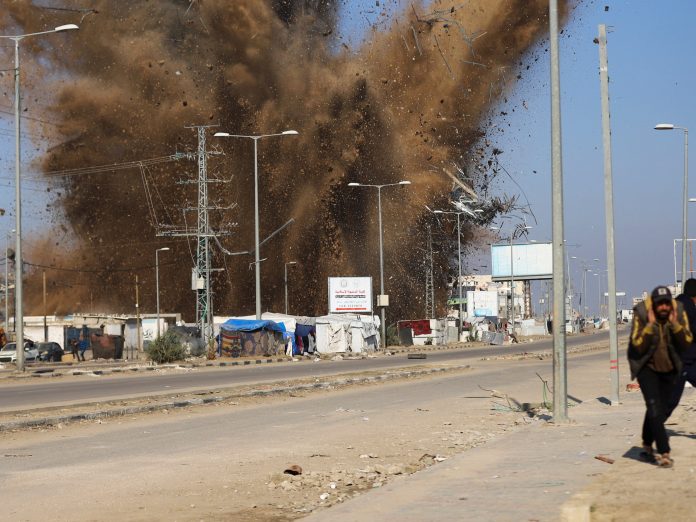
Israel has killed more than 62,000 Palestinians in Gaza since October 2023, when Hamas attacked and also took over 200 Israelis as captives. The military campaign has devastated the enclave and led to food shortages and starvation deaths.

According to Israeli estimates, around 50 captives remain in Gaza, including 20 believed to be alive.

Israel, meanwhile, is holding more than 10,800 Palestinians in its prisons under dire conditions, with rights groups reporting deaths due to torture, hunger, and medical neglect.

Two Iranian climbers missing in Kyrgyzstan’s Issyk-Kul region

The Kyrgyz government has deployed reconnaissance drones as part of an ongoing search operation. However, progress has been slow due to the extremely rugged and insurmountable terrain. Kyrgyz officials say given the lack of any new information and the harsh conditions in the area, there is a possibility that the climbers may have lost their lives. Nonetheless, search efforts are continuing.

Iranian Astronomy Olympiad Team crowned world’s best for second consecutive year

They won the outstanding title in a competition in which 64 countries participated. The achievement brought the Iranian competitors prestigious medals and reaffirmed their position at the top of the global rankings.

The distinguished members of Iran’s national team in this edition of the Olympiad are: Ali Naderi, Hossein Masoumi, Hirbod Foodazi, Arshia Mirshamsi Kakhaki and Hossein Soltani.

This remarkable achievement has been described as the outcome of the students’ dedication, the unwavering support of their families, the tireless efforts of their coaches, and the unity of Iran’s scientific community.

Five police officers killed in terrorist attack in southeastern Iran

The attack took place on Friday when armed terrorists ambushed two police patrol vehicles in the Damen district of Iranshahr.

A source told Fars News that several other police officers were also injured in the incident.

According to the Sistan and Baluchestan Police Information Center, the two patrol units from the Damen police station—tasked with securing the Khāsh–Iranshahr road and protecting local residents—were specifically targeted in the attack.

Authorities confirmed that operations to identify and track down the perpetrators are still underway.

Iran warns future nuclear talks will be ‘armed negotiations’ amid rising tensions

In an interview with Germany’s Frankfurter Allgemeine Zeitung, Saeed Khatibzadeh, Deputy Foreign Minister and head of Iran’s Political and International Studies Center, said the activation of the “snapback” mechanism by European states would be a “miscalculated move” and would strip Europe of its remaining influence as a mediator.

“Pressuring Iran is a mistake that will only push us toward tougher decisions,” Khatibzadeh said, emphasizing that negotiations can only resume if they are “results-oriented” and hostilities are halted during talks.

He revealed that, until just hours before the attack in June, Tehran had exchanged messages with US envoy Steve Witkoff, suggesting that military operations were planned in parallel with diplomatic engagement.

Khatibzadeh reiterated Iran’s right to enrich uranium under the Nuclear Non-Proliferation Treaty (NPT), warning that any US insistence on “zero enrichment” would meet “strong resistance.”

“Any future talks will be armed negotiations,” he said, highlighting deep mistrust toward Washington after years of failed agreements and escalating tensions.

Rare manuscript on Prophet Muhammad displayed by Iran’s National Library

According to the National Library and Archives of Iran (NLAI), the manuscript, considered one of the significant works detailing the life of the Prophet, was meticulously handwritten in elegant Nasta’liq script by Khwaja Muhammad Sangeen Vali Muhammad between the years 1048 and 1049 AH (1638–1640 CE).

Rare manuscript on Prophet Muhammad displayed by Iran’s National Library

The historical work offers an extensive biography of the Prophet, structured in a preface, four main sections, and a conclusion.

Each section contains multiple chapters, organized chronologically, and provides a rich and documented narrative of key events in the Prophet’s life.

Rare manuscript on Prophet Muhammad displayed by Iran’s National Library

The manuscript is preserved as part of the library’s rare collection of Islamic heritage.

Officials emphasized that the manuscript reflects not only the literary and historical significance of the era but also the artistic mastery of Persian calligraphy and bookmaking traditions of the Safavid period in the 16th and 17th centuries.

Rare manuscript on Prophet Muhammad displayed by Iran’s National Library