Friday, December 26, 2025
Home Blog Page 1908

Atomic chief: Iran aims to attract $50bn in nuclear sector in 15 years

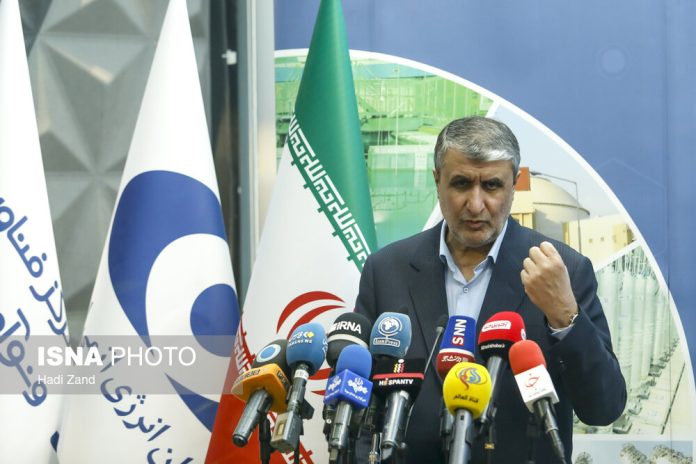
Mohammad Eslami

Mohammad Eslami said the development of nuclear technology can cover all areas of people’s daily lives, including health, food, medicine, agriculture, industry and energy.

He said the latest development plan to be released in the coming days is the Integrated Development Research Document in all areas of the nuclear industry, which serves as a clear roadmap for the future in a realistic and, of course, ambitious way that expands the role of the Atomic Energy Organization in society.

He noted that the Atomic Energy Organization’s Comprehensive Strategic Development Document for the 20-year horizon in the 13th administration was unveiled and put on the agenda by the President on April 9, this year, coinciding with National Nuclear Technology Day.

Eslami added that investment for 10,000 megawatts of nuclear power and 12 radiation therapy centers in the country is one of the priority programs of the Atomic Energy Organization.

In the field of developing the application of nuclear technology in the health sector, Iran’s atomic chief said his organization currently produces and distributes about 50 radiopharmaceuticals, which are used by more than 200 medical centers.

IRGC dismantles terror cell in northwest Iran

IRGC

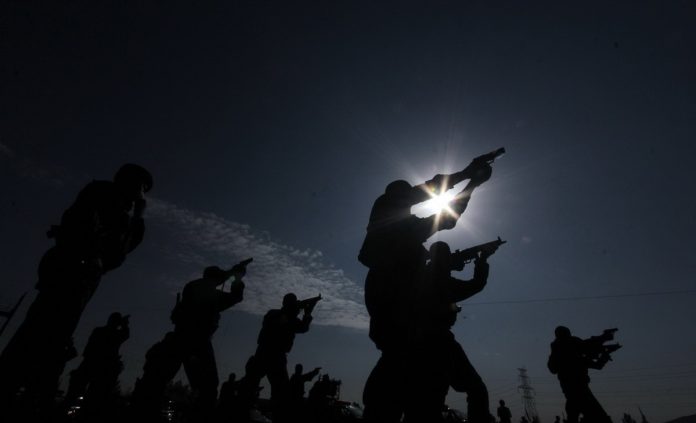
Hamzeh Seyyedoshohada Headquarters of the IRGC said the terrorist cell was destroyed following a reconnaissance and intelligence operation.

It added that the cell plotted to carry out acts of sabotage but they were identified in the northwestern city of Baneh and five terrorists were arrested.

The IRGC also said some weapons and munitions were seized from the terror cell.

The IRGC and Iran’s Intelligence Ministry have foiled many terror plots in the past years.

Iran blames attempts to infiltrate the country for sabotage and terror attacks on groups supported and funded by the Islamic Republic’s regional adversaries and also the Israeli regime. Several terror attacks by these groups have killed a number of people, mostly civilians.

Expert: EU’s JCPOA coordinator seeking “middle-ground solution”

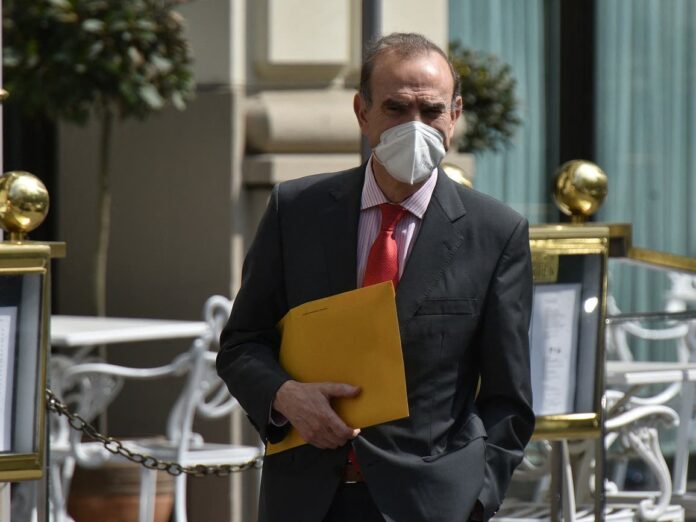
Enrique Mora

In an exclusive interview with ILNA, Ahmadi said Mora’s visit comes at the order of EU Foreign Policy Chief Josef Borrell to break the deadlock over the US’s refusal to remove the Islamic Revolution’s Guard Corps (IRGC) from its so-called terror list.

Ahmadi referred to Borrell talking to the Financial Times saying that he was seeking a “middle way” to end the impasse, which threatens to scupper more than a year of diplomatic efforts to sign a deal that would lead to the US rejoining the 2015 accord and lifting sanctions on Iran.

He then referred to Borrell’s description of Mora’s visit as “the last bullet”, rejecting the notion that the trip by the JCPOA talks’ coordinator will serve as an ultimatum to the Islamic Republic.

The international affairs expert however said the possible failure of the two sides to reach a compromise will complicate the situation.

Ahmadi also spoke about regional countries’ efforts to mediate between Tehran and Washington, saying these countries are rivals of Iran and allowing them to mediate between the US and Iran will give them an unnecessary credit.

IAEA chief says still hopeful Vienna talks can end in agreement

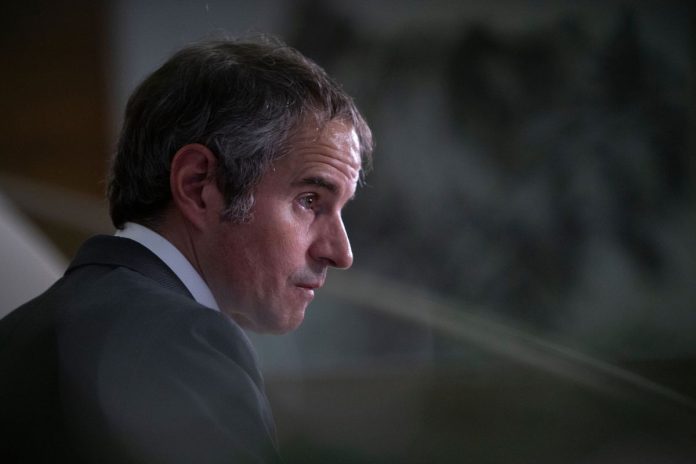
Rafael Grossi

“We are, of course, still hopeful that some agreement is going to be reached within a reasonable time frame, although we have to recognize the fact that the window of opportunity could be closed any time,” Rafael Grossi told the European Parliament via web stream on Tuesday.

The IAEA chief made the remarks as Enrique Mora, the European Union deputy foreign policy chief and Vienna talks coordinator was expected to arrive in Iran to try to find a way to break the deadlock in nearly a year of talks between Iran and the P4+1 group to revive the Joint Comprehensive Plan of Action.

Later in his remarks, Grossi said “In the last few months we were able to identify traces of enriched uranium in places that had never been declared by Iran as places where any activity was taking place.”

Iran and the P4+1 namely Russia, China, Britain, France and Germany have held many rounds of negotiations over the past year to find a way to remove sanctions against Iran and allow the United States to rejoin the JCPOA.

Talks stopped for a break on April 9 to allow the negotiators to go back to their capitals for consultations, but differences between Washington and Tehran seem to have grown ever since.

Diplomats say considerable progress has been made over the past year and that only a few gaps remain that need to be bridged by Iran and Washington.

Tehran says the United States needs to make brave political decisions to allow the process to move forward.

Gharibabadi denounces Sweden’s ‘hostile approach’

Iranians rally outside the Swedish embassy in Tehran

“The Swedish government, certainly with the support of some other European countries, especially the British government, was seeking to put the Islamic Republic of Iran on trial because Sweden’s approach has been a hostile approach for several years regarding national security issues against the Islamic Republic of Iran,” Kazem Gharibabadi said on a national TV program about the trial of retired employee of the Iranian judiciary Hamid Nouri in Sweden.

He went on to say that Hamid Nouri’s case is not just a simple trial of an Iranian citizen, because the basis for the formation of this case in Sweden is not judicial, technical or legal, but has a purely political nature.

“Sweden has always formed a political front against Iran…in terms of hardware, it has also acted against our national security by hosting terrorist groups,” Gharibabadi added.

He explained that “We are currently facing three cases related to Sweden in matters related to the national security of the Islamic Republic of Iran.”

The first issue is that Sweden is hosting Al-Ahwaziya anti-Iran terrorist group which has been using Sweden as its main base.

The terrorist group is responsible for a bloody terrorist attack in Ahvaz in 2018.

The second issue regarding relations with Sweden is Mojahedine Khalgh terrorist group which has been using Sweden as one of its good bases in Europe.

Isn’t Sweden claiming to be a defender of human rights, fighting terrorism, and establishing a world full of peace, security and stability? So why does it host terrorist groups? Secretary of Iran’s High Council for Human Rights asked.

He said the third issue in relations with Sweden is the case of Iranian national Ahmad Reza Jalali who was arrested for espionage a few years ago.

Gharibabadi said the intelligence he had provided to Israel’s spy agency Mossad led to the assassination of two Iranian nuclear scientists.

“We have the documents of the case of Ahmad Reza Jalali in Sweden, who met with Mossad agents at bases provided to Mossad by the Swedish secret service,” he explained.

“Sweden has been Mossad’s intelligence partner in recruiting agents and taking action against our national security. What does this behavior mean in international relations?” Gharibabadi said.

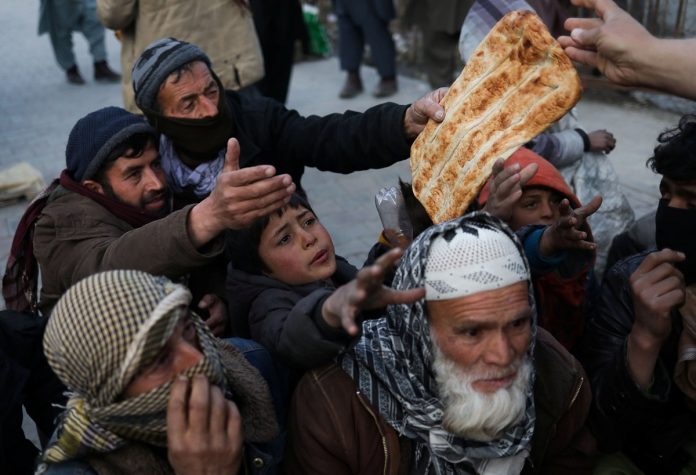
UN warns food insecurity in Afghanistan reaches ‘catastrophic’ level

Poverty in Afghanistan

The analysis, conducted primarily by the UN Food and Agriculture Organization (FAO) and the World Food Programme, found that 19.7 million Afghans are “facing high levels of acute food insecurity.”

The almost 20 million people facing acute malnutrition represent 47 percent of the country’s overall population and are concentrated mostly in northeast Afghanistan.

According to the five-level Integrated Food Security Phase Classification, 20,000 Afghans have reached the catastrophe phase, or the most dangerous level of food insecurity.

The remainder of the 19.7 million are classified in the crisis or emergency phase.

Apart from those experiencing these three levels of acute food insecurity, an additional 14.6 million are described as stressed in their relationship to food.

The analysis found that the main reasons for massive food insecurity in Afghanistan are economic decline, drought, high food prices and the global impact of Russia’s war on Ukraine, which has caused food prices to rise across the world.

“Humanitarian assistance remains desperately important, as do the needs to rebuild shattered agricultural livelihoods and re-connect farmers and rural communities to struggling rural and urban markets across the country,” said Afghanistan’s FAO representative, Richard Trenchard, in response to the analysis.

“Unless these happen, there will be no way out of this crisis,” he added.

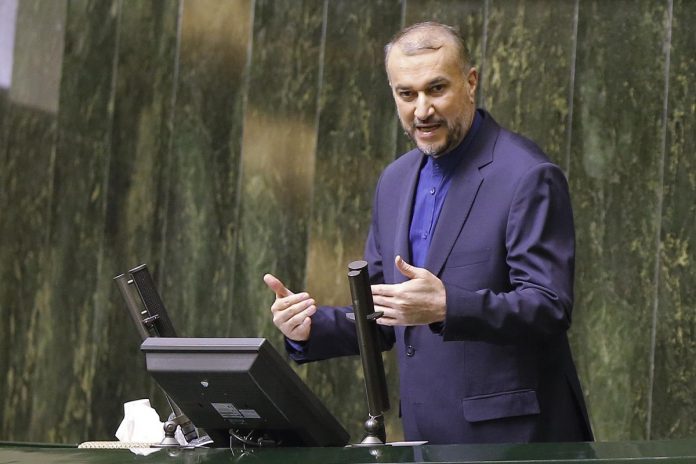
Iran FM: Turkey’s dam construction activities unacceptable

Iranian Foreign Minister Hossein Amir Abdollahian

Amir Abdollahian made the comments in response to a question by lawmakers on the issue of Turkey’s “excessive” construction of dams.

“I raised this issue in three face-to-face meetings with the [Turkish] foreign minister in New York and Tehran and asked for serious attention to dam constructions on Aras River,” he said, while attending the open session of the parliament on Tuesday.

The top diplomat added that Iran and Turkey have never signed a bilateral agreement on construction of dams.

Amir Abdollahian added that Turkish officials say they are building the structures for hydro power and water is kept behind the dams only during the winter.

“An important step over the past 4 months was that, for the first time ever, we could agree with Turkey on the formation of a joint border committee in the field of water,” he said.

The foreign minister further stressed that a Turkish delegation will soon visit Iran to follow up on the legal and political agreements on the issue.

“We should not allow such countries as Turkey use the current lack of an international mechanism to change the environmental conditions either in Iran or Iraq,” he said.

“We are in constant contact with the Iraqi government because both Iran and Iraq are hurt by the dam construction projects of Turkey.”

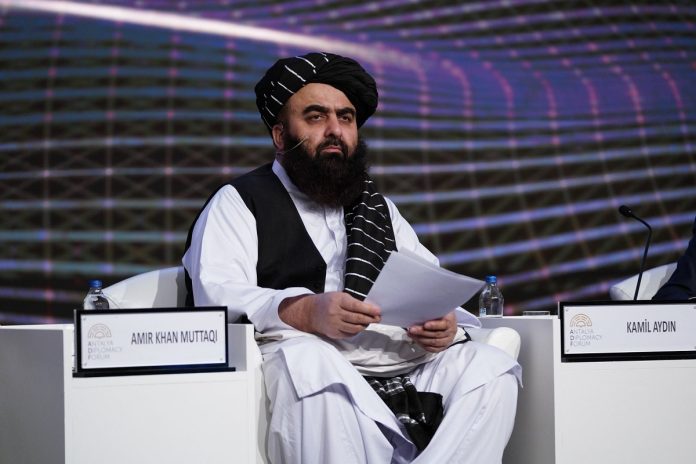
Interim Afghan government calls itself inclusive

Afghanistan’s Acting Foreign Minister Amir Khan Muttaqi

In a meeting with religious scholars and Shia and Sunni elders in Kabul, the acting foreign minister said all ethnic groups and religions are represented in the Taliban government.

The interim Afghan government has been demanding that the world recognize it as the legitimate government of Afghanistan.

But the international community insists that the Taliban must first meet a number of preconditions including meeting the basic rights of women, preventing terrorist groups from using Afghan soil, and formation of an inclusive government.

Muttaqi also said by attacking crowded places in Afghanistan, certain forces are trying to divide Afghan ethnic groups, but they have failed to do so, adding that Afghanistan’s territory will not be used for attacks against any country.

The Taliban seem to have failed to ensure security around the country so far. Several terrorist bomb attacks have targeted mosques in Afghanistan in recent weeks leaving scores of people dead and wounded.

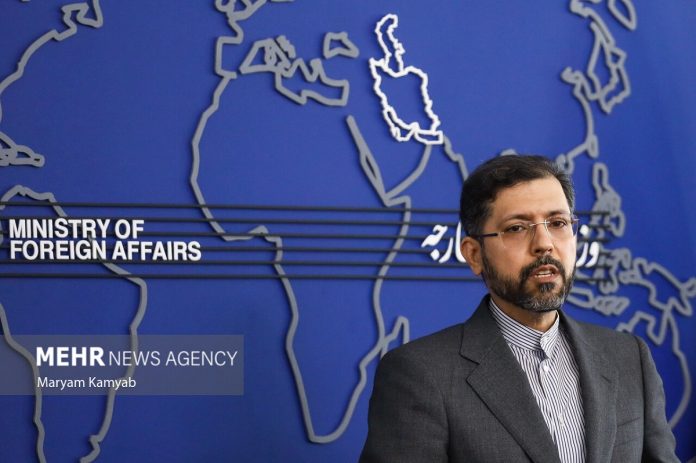
Iran condemns terror attack on Egyptian forces

Saeed Khatibzadeh Iran FM Spokesperson

He stated that foreign-backed terrorism has unfortunately spread in Muslim countries, stressing that regional nations should have close cooperation on fighting terrorism.

The Saturday attack took place in the town of Qantara. It targeted members of the Egyptian military, leaving at least eleven soldiers dead and five others wounded.

The Daesh terror group claimed responsibility for the attack.

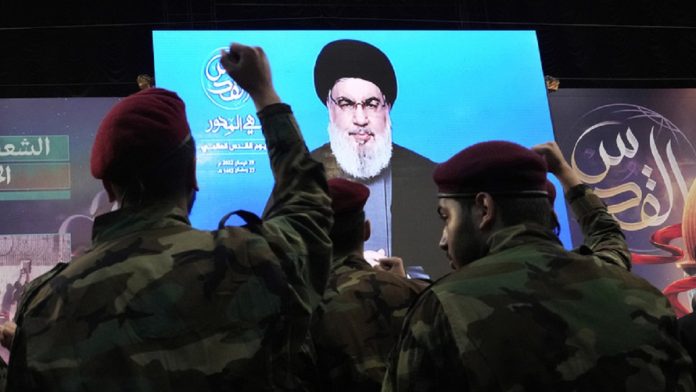
Nasrallah denounces calls for disarmament of Hezbollah

Hezbollah Leader Sayyed Hassan Nasrallah

“I want the entire Lebanese nation to know that those who are calling for the disarmament of the resistance are unaware of what the southerners went through since 1948,” Nasrallah said in a televised speech broadcast live from the Lebanese capital city of Beirut on Monday evening.

“Some political forces have unfortunately turned Hezbollah’s disarmament into the main topic of their electoral campaigns,” Nasrallah added, stressing that the parties that are “pushing for the handover of Hezbollah’s weapons want to sell Lebanon to US and make it susceptible in face of Israel.”

“Those who are calling for Hezbollah’s disarmament disregard its achievements as to liberation of the occupied Lebanese territories and freedom of prisoners” from Israeli detention centers, Nasrallah continued.

“Does Israel dare bomb any area in Lebanon today?” Nasrallah asked, attributing the deterrence to the presence of Hezbollah forces.

“We respect the army. It has a national creed as well as competent officers and soldiers. The Lebanese army, however, cannot shoulder the responsibility on its own at the moment, and cannot confront the Israeli enemy alone,” the Hezbollah leader said.

Nasrallah went on to emphasize that his movement is ready to discuss a national defense strategy, because it has “reason and evidence.”

He added that those making demands for Hezbollah’s disarmament have not yet offered “an alternative” in the face of Israeli acts of aggression.

“Who will protect southern Lebanon if the resistance abandons its duties? Hezbollah is the strong force protecting Lebanon today,” Nasrallah noted.

He went on to lament that some Lebanese politicians “do not view Israel as an enemy” and do not believe that “the regime has ambitious plans for Lebanon’s territorial waters and gas reserves.”

Nasrallah highlighted that the May 15 parliamentary elections will be a “political war” and that Hezbollah “will practice political resistance in the polls.”

“Those who want to defend Lebanon, extract its oil resources and protect its waters must vote for the resistance and its allies,” he pointed out.

“Some people are saying that they won’t vote for the resistance due to the economic crisis. We tell that the resistance will guarantee extraction of natural gas and crude oil from Lebanon’s territorial waters in order to resolve the crisis,” Nasrallah added.

“Hundreds of billions of dollars are present in our waters,” Nasrallah said of Lebanon’s potential oil and gas reserves.

The Ansarullah chief went on to call on the Lebanese government to start investment in the country’s offshore oil reserves.

Nasrallah stated the United States wants Lebanon to recognize Israel, and naturalize the Palestinian and Syrian refugees.

He finally made a reference to the Israeli military’s drills near the border with Lebanon, emphasizing that Hezbollah resistance fighters will not hesitate to respond to any aggression against their homeland.

“We are not afraid of your drills and your deployment. We are the ones who coined the expression ‘Israel is weaker than a spider web’ more than 20 years ago,” Nasrallah concluded.