Friday, January 2, 2026
Home Blog Page 188

Iranian security forces discover explosives workshop linked to terrorist cell in Iranshahr

Iran Police

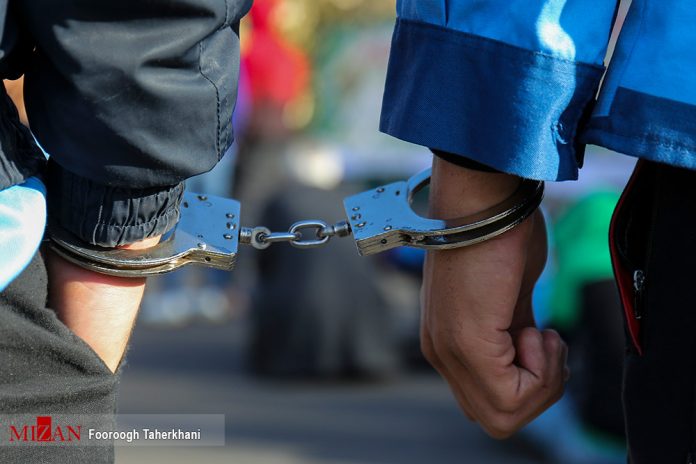
Brigadier General Mohammadreza Eshaqi, the provincial police commander, said the discovery was made during a follow-up operation after a major raid on Wednesday that targeted a militant cell.

During the operation, authorities seized 64 homemade electric detonators, 24 remote-control receivers, five hand grenades, two 40-millimeter grenades, five kilograms of homemade explosives, 11 wireless remote devices, 140 meters of explosive fuse, two reflective vests, one ready-to-detonate bomb, and various firearms and ammunition.

Eshaqi said the cell had planned to attack economic infrastructure, carry out explosions in crowded public areas, and destabilize the province by inciting fear and unrest.

The operation followed coordinated actions by the Quds Headquarters of Iran’s Islamic Revolution Guards Corps (IRGC) in Iranshahr, Khash, and Saravan, where 13 militants were killed in clashes with security forces.

The region has been the scene of fierce fighting between Iranian security forces and militants, mostly based on Pakistan. The terrorist attacks has claimed many civilian lives in recent months.

EU public skeptical of sending forces to Ukraine: WSJ

Russia Ukraine War

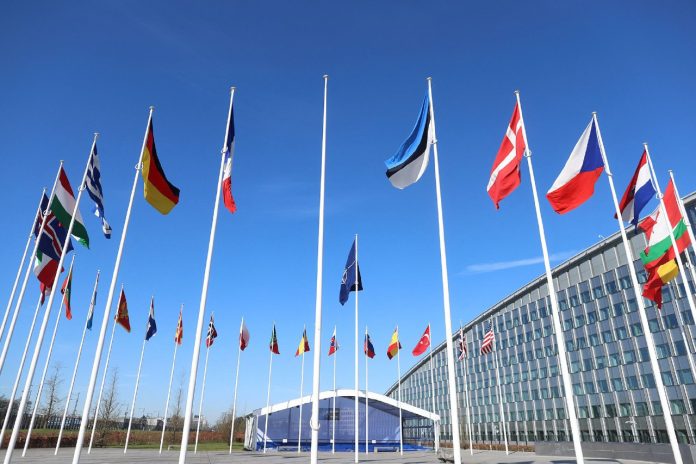
While some Western European leaders are contemplating the idea of dispatching thousands of soldiers to the country if the hostilities were to end, they have to “contend… with the inconvenient fact that many voters are opposed to any deployment that places troops in harm’s way,” the report says.

Unnamed European officials also told the WSJ that “it is difficult to secure public support without a clear US commitment to backstop any deployment.” US President Donald Trump has ruled out sending ground troops to Ukraine, but said Washington could provide other kinds of support.

Eastern European countries are generally cautious about shifting forces from their own borders, the WSJ noted, adding that opposition to troop deployment is particularly strong in Germany and Italy, where the historical memory of World War II still shapes public opinion.

In Germany, domestic opposition runs deep, spanning both right and left-wing parties; a recent Insa poll suggested that 56% there are opposed to sending troops to Ukraine.

France, one of the more vocal supporters of a potential European military force, has seen public opinion hinge on conditions. A March survey by Elabe found 67% supported sending troops if a peace accord is reached, but 68% opposed a deployment without one.

Meanwhile, the British public generally supports possible deployment, but several polls have indicated that it “wouldn’t want to provoke a direct confrontation with Russia,” the report says. Prime Minister Keir Starmer has also stressed the need for a US security backstop if UK forces were deployed – something Washington has not committed to.

Russia has consistently opposed the idea of NATO countries sending in troops. Kremlin spokesman Dmitry Peskov has stated the prospect of the bloc shifting its military infrastructure into Ukraine was “one of the root causes” of the conflict and has reiterated that Moscow views current discussions about deployments negatively.

Statue of legendary Persian archer ‘Arash Kamangir’ unveiled in Kerman

The unveiling ceremony, held on Jomhouri Eslami Boulevard, was attended by Minister of Culture Seyed Abbas Salehi, alongside the governor of Kerman, provincial officials, and city managers.

The event coincided with the Government Week celebrations, which honor public service and national development projects across the country.

Arash Kamangir, a heroic archer in Iranian mythology, is celebrated for his act of self-sacrifice in defining the borders of ancient Iran by shooting an arrow from the Alborz Mountains, a story deeply rooted in Persian literature and cultural heritage.

More in pictures:

62% of Americans support US sanctions on Russia’s trading partners: Poll

The latest Reuters/Ipsos survey, released Wednesday, found that 62 percent of U.S. adult respondents were in favor of the Donald Trump administration slapping sanctions on Moscow’s trading partners, including India and China.

Sens. Richard Blumenthal (D-Conn.) and Lindsey Graham (R-S.C.) spearheaded a massive sanctions bill in the upper chamber that, if adopted, would impose 500 percent secondary tariffs on Russia’s trading partners.

“We propose in our bill 500 percent. If it’s 250 percent, I could live with it. Even if it’s 100 percent, possibly,” Blumenthal said earlier this month, adding, “But you ought to impose bone-crushing sanctions that will stop them from fueling Russia’s war machine.”

On Wednesday, President Trump’s steep tariffs against India, now totaling 50 percent, went into effect. The administration stated it would impose additional import taxes on India’s purchases of Russian oil, arguing that New Delhi is helping to fuel the Kremlin’s continued military operations in Ukraine.

Trump met separately with Russian President Vladimir Putin and Ukrainian President Volodymyr Zelensky earlier this month to nudge the leaders closer to a ceasefire deal. The administration is also working to get the leaders to meet face-to-face.

In the poll, the large majority of MAGA-aligned Republicans, 76 percent, said they support imposing sanctions against Russian trading partners to help stop the more than three year war in eastern Europe. The majority of Democratic Party voters, 58 percent, were also for slapping sanctions on Moscow’s trading partners, according to the survey.

The Reuters/Ipsos poll was conducted Aug. 22-24 among 1,022 U.S. adults. The margin of error for the full sample is 3 percentage points.

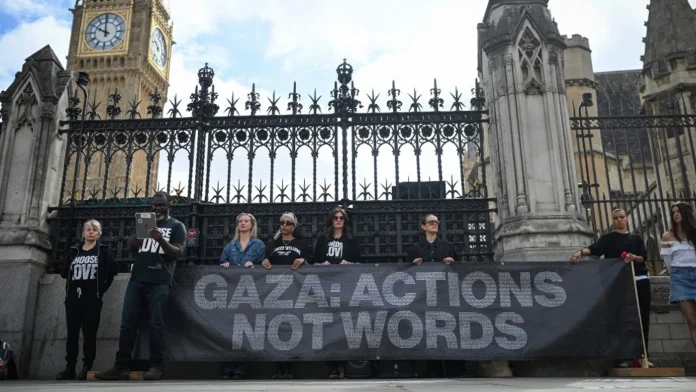
Hamas accuses US diplomat of justifying Israeli genocide by blaming Palestinian group for failed ceasefire negotiations

Gaza War

Izzat al-Rishq, a member of Hamas’s Political Bureau, criticized Witkoff’s claims that Hamas disrupts Gaza ceasefire negotiations in a statement on Telegram.

Al-Rishq said these claims ignore Israel’s systematic obstruction of talks.

He characterized Witkoff’s statements as echoing Israeli Prime Minister Benjamin Netanyahu and his government while repeating the Israeli narrative.

Al-Rishq noted that the group accepted a ceasefire proposal mediated by Egypt and Qatar on Aug. 18 while Israel ignored it and began preparations to occupy Gaza City.

He added Witkoff’s statements showed bias toward Israel and provided Netanyahu with justification to continue Israel’s genocide in Gaza.

Israel’s Security Cabinet approved a plan to occupy Gaza City. The plan involves displacing approximately one million Palestinians southward, surrounding the city and occupying it after intense attacks.

Israel has killed nearly 63,000 Palestinians in Gaza since October 2023. The military campaign has devastated the enclave, which is facing famine.

Last November, the International Criminal Court issued arrest warrants for Netanyahu and his former Defense Minister Yoav Gallant for war crimes and crimes against humanity in Gaza.

Israel also faces a genocide case at the International Court of Justice for its war on the enclave.

Iran warns Europe IAEA interaction will stop if ‘snapback’ activated

Kazem Gharibabadi

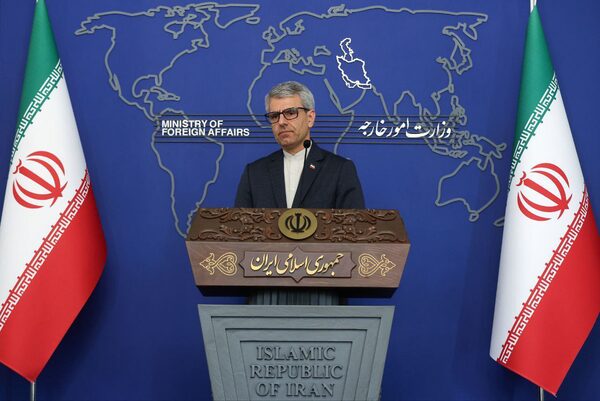
Deputy Foreign Minister Kazem Gharibabadi made the remarks on Wednesday after coming back from talks with the countries’ representatives in Geneva.

According to the official, the Iranian diplomatic mission to the talks ”made it clear” to the European sides that if they managed to force restoration of the bans, “then naturally Iran will show the necessary reaction.”

The troika has been trying to enable the bans’ reinstatement, alleging, without any evidence, that Iran had violated a 2015 nuclear deal by “diverting” its peaceful nuclear energy program towards military purposes.

In order to realize return of the bans, they have been pushing for activation of the so-called “snapback” mechanism that has been included in the deal.

The International Atomic Energy Agency (IAEA) has, however, never found any proof of the trio’s claims.

Gharibabadi said the troika were warned about the consequences of their “choosing to disregard the goodwill and constructive approach of the Islamic Republic, which has consistently stressed diplomatic settlement of the issue.”

In case of the European parties’ refusal, “continuing this interactive process would be meaningless,” he added.

The Islamic Republic, the official stated, would additionally retaliate by stopping its talks with the Europeans.

“We also underlined that if this scenario unfolds, Europe will in practice sideline itself from the diplomatic track and from dialogue with Iran.”

From that point onward, talks would be pursued only within the framework of the Security Council and with its members, and no further dialogue with Europe would take place in this field, the official continued.

The ball is, therefore, in Europe’s court to either take the path of confrontation or that of engagement and cooperation, according to the official.

“Iran is prepared for both scenarios. We hope they will act wisely.”

He, meanwhile, reminded that the European trio had lost all legal and moral rights to resort to “snapback” because they had already failed to implement the nuclear deal, officially known as the Joint Comprehensive Plan of Action (JCPOA).

He was pointing to the countries’ having illegally and unilaterally returned their own sanctions against Iran that they had lifted in line with the JCPOA.

Gharibabadi additionally underlined that Russia and China had proposed prevention of activation of the “snapback” by submitting a draft resolution aimed at extending Security Council Resolution 2231 that has endorsed the JCPOA.

Iran sets new solar power generation record as renewable capacity grows

SATBA chief Mohsen Tarztalab, who also serves as Deputy Energy Minister, announced that 150 megawatts of new solar plants were inaugurated across 24 sites in Tehran, Yazd, Alborz, Semnan, Markazi, Qazvin, Sistan-Baluchestan, and Isfahan provinces.

He noted the projects were financed through both private investment and national development funds.

He added that construction of a 200-megawatt solar power plant in Bushehr, backed by Tourism Bank, also began this week.

Iran’s total installed renewable energy capacity has now reached 2,100 megawatts, with plans to expand to 7,000 megawatts by the end of the year, raising renewables’ share of the national energy mix to about 7 percent.

Tarztalab emphasized that the expansion of solar capacity not only reduces reliance on fossil fuels but also creates opportunities for investors. He called for the savings from reduced fuel consumption to be allocated to further support renewable energy developers.

Israel launches new military operations in Syria after attack kills soldiers

Video verified by Al Jazeera’s Sanad fact-checking agency showed Israeli aircraft attacking sites in the village on Wednesday.

A Syrian military source told Al Jazeera that the Israeli military carried out a landing operation in the barracks with the use of four helicopters.

According to the source, the Israeli army brought in dozens of soldiers and an unspecified amount of search equipment as it spent more than two hours at the site.

No clashes took place between the Israeli troops involved in the landing and the Syrian army forces.

The operation came a day after an Israeli drone strike killed six soldiers near Kiswa, and as Syrian officials in the government of interim President Ahmed al-Sharaa have increasingly accused Israel of seeking to expand its control in the region.

In a statement on Wednesday, Syria’s Ministry of Foreign Affairs called the raid “a gross violation of international law and the United Nations Charter”.

It added that the attack represented “a clear breach of the sovereignty and territorial integrity of the Syrian Arab Republic”.

Israel has launched hundreds of strikes targeting military sites and assets across Syria since the fall of former leader Bashar al-Assad in December. It has also expanded its occupation of the Syrian Golan Heights by seizing the demilitarised buffer zone, a move that violated a 1974 disengagement agreement with Syria.

On Monday, Syria’s Foreign Ministry announced that Israel had sent 60 soldiers to take control of an area inside the Syrian border around Mount Hermon, near a strategic hilltop close to the border with Lebanon.

Syrian Minister of Foreign Affairs Asaad al-Shaibani decried the “military incursion” as part of an effort by Israel to advance its “expansionist and partition plans”.

The latest Israel operations follow deadly clashes in the Druze-majority Syrian province of Suwayda, where 1,400 people were killed in a week of sectarian violence in July.

Israel has since attacked Syrian troops and bombed the heart of the capital, Damascus, under the pretext of protecting the Druze people.


Iranian para-cyclists miss world championships after Belgium denies visas

The championship, which began on Wednesday, August 27, with mandatory medical classification sessions, features two events; the individual time trial and the road race.

According to local reports, Ahmad Hamzehlou and Behrouz Farzad, along with their coach Maziar Farzad, were scheduled to travel to Belgium for classification and competition. However, the visa applications of the Iranian delegation were not approved in time, preventing them from attending the event.

This is not the first setback for Hamzehlou, who also missed the previous Asian Para-Cycling Championships in Thailand due to incomplete medical classification. Both Iranian athletes were expected to undergo international classification on Wednesday before receiving authorization to compete at the world level.

Iranian sports officials have not yet commented on the reasons behind the visa refusal, while Belgian authorities have not issued a statement on the matter.

Iran considers revisiting ban on social media amid ongoing debates

Iran Internet Mobile

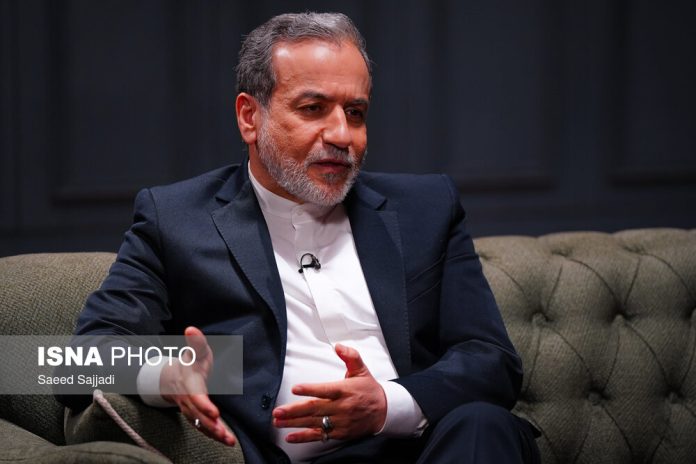
“The president’s approach is to resolve the issue through dialogue and coordination,” Elyas Hazrati, said, emphasizing that the Supreme Council of Cyberspace is the main decision-making body on filtering policies.

“Some members are completely opposed to unblocking platforms,” he pointed out.

Hazrati noted that partial unblocking has already occurred for some services, including access to YouTube for schools, researchers, and universities, as well as parts of Google.

Regarding WhatsApp, he argued that filtering the platform has not been effective.

“If WhatsApp is truly a tool for espionage, blocking it only doubles or triples the problem,” he said. “People simply use VPNs and even pay for them, which increases the damage.”

He also revealed that the Ministry of Communications has held talks with international platforms to open offices in Iran.

Hazrati stressed the need to strengthen domestic platforms so that users choose them voluntarily rather than through restrictions on foreign services.