Monday, January 5, 2026
Home Blog Page 1866

Iran could have worked better in Doha talks: Iranian MP

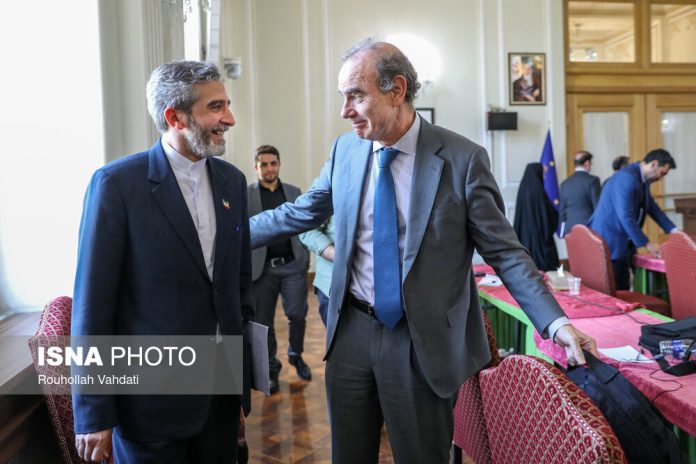
Iran's Bagheri and EU's Mora

“We could have worked better in Doha,” said Mahmoud Abbaszadeh Meshkini, the spokesman for the National Security and Foreign Policy Commission of Parliament told Entekhab news outlet.

“We did not enter into the Doha talks with a calculated plan and a road map,” he explained.

“The reason is that our foreign diplomacy apparatus does not have a well-prepared road map in this regard,” said the MP.

He made the comments as US Special Envoy for Iran Robert Malley described the talks as a “waste of time” while Iranian Foreign Minister Hossein Amirabdollahian praised them as positive.

“I believe that our foreign policy apparatus needs a major overhaul, and as long as this overhaul has not taken place, the Islamic Republic [of Iran]’s strategy on foreign policy will be difficult and probably costly to materialize,” said the lawmaker.

“Given the concessions and the upper hand that we had along with the developments which have unfolded in the region, we need a strategic plan in order for Iran to be able to utilize these developments in the best way,” he noted.

He added Iran should also have a plan to gain concessions at any point and in any stage.

Analyst: No prospect of close Iran-Egypt ties despite claims of détente

Iran Egypt Flags

In an interview with ILNA, Ahmad Barvayeh, an expert in North Africa affairs, reacted to recent reports by Qatari media that claimed Iran and Egypt had held a high-level meeting and agreed to improve their relations.

“If the level of ties sees a rise, we cannot be optimistic that the two [Iran and Egypt] will turn into aligned countries or establish broad relations,” he said.

Egypt, he said, maintains close ties with Israel and is dependent on the US and Saudi Arabia, which pressure the North African state to join an Arab alliance in the region that could provoke tensions with Iran.

The analyst said, “Egypt seeks to balance its choices and create a balance between joining regional coalitions, [on the one side,] and Iran, [on the other].”

The Al Araby Al Jadeed recently cited sources as saying that the “meeting” between Iranian and Egyptian officials “was of a security nature in general, and touched upon the situation in the Gaza Strip and Syria.”

The daily reported the existence of what it described as a powerful movement within the Egyptian security entities and army which strongly oppose Egypt’s participation in any military coalition against Iran.

Barvayeh said he did not believe that any future cooperation between Iran and Egypt would go beyond such regional issues.

Iranian MP: US must abandon pertinacity in nuclear talks

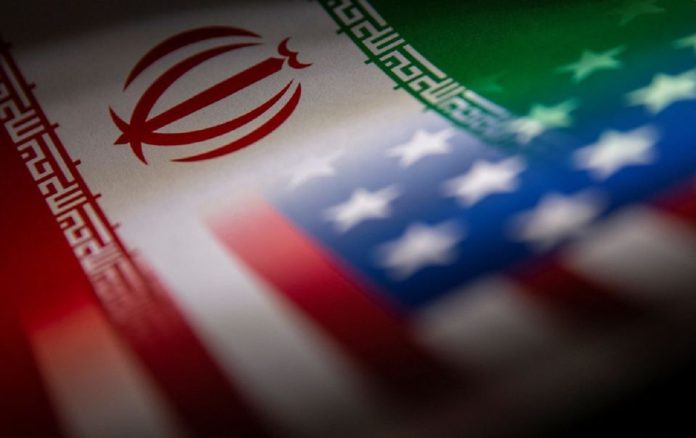
Iran US Flags

In an interview with ISNA, Mohammad Hassan Asafari touched on the current stalemate in negotiations between Iran and the Western parties to revive the nuclear deal, also known as the Joint Comprehensive Plan of Action (JCPOA), saying the talks would end in an agreement only when the US lifts sanctions on Iran.

Iran and the P 4+1 group of countries, Russia, China, Britain, France and Germany have held several rounds of talks in Austria and most recently in Qatar in bid to revive the 2015 deal, paving the way for a possible US return to the agreement after Washington unilaterally withdrew from the deal in 2018.

The Iranian MP called on the US to “get off its high horse and realize its past mistakes”, warning insisting on the current path would be a waste of time for all sides.

Asafari denounced the Americans for raising “unfounded allegations” against Iran at the International Atomic Energy Agency (IAEA)’s Board of Governors.

He stressed that Iran is after a lasting agreement to break the current standoff, but expects its goodwill gestures – by voluntarily rolling back parts of its nuclear activities – be reciprocated, otherwise the Islamic Republic would continue its nuclear activities at full capacity.

Biden to rescind designation of Afghanistan as non-NATO ally

President Joe Biden

Biden is “providing notice of the intent to rescind the designation of Afghanistan as a Major Non-NATO Ally,” the statement read.

In 2012, the United States named Afghanistan a major non-NATO ally, which cleared the way for the two countries to maintain a defense and economic relationship.

Unlike NATO allies of the United States, who are bound together by a joint defense pact, there is no mutual defense guarantee as a non-NATO ally. These allies are eligible to receive material and supply loans, as well as serve as a location for US-owned war reserve stockpiles. Additionally, private companies from the designated country can bid on contracts to maintain, repair or overhaul US military equipment overseas.

The ally status had made Afghanistan eligible to receive military training and assistance, including expediting the sale and leasing of military equipment even after NATO troops left the country.

With Afghanistan’s status rescinded, the US will have 18 major non-NATO allies, according to the State Department. They are: Argentina, Australia, Bahrain, Brazil, Colombia, Egypt, Israel, Japan, Jordan, Kuwait, Morocco, New Zealand, Pakistan, the Philippines, Qatar, South Korea, Thailand and Tunisia. The US designated Colombia and Qatar as non-NATO allies earlier this year.

After the US administration had announced the end of Washington’s 20-year-long military operation in Afghanistan and the launch of its troop pullout, the Taliban embarked on an offensive against Afghan government forces. On August 15, 2021, Taliban fighters swept into Kabul without encountering any resistance, and gained full control over the Afghan capital within a few hours. Afghanistan’s President Ashraf Ghani said he had stepped down to prevent any bloodshed and fled the country. On September 6, the Taliban declared a complete victory in Afghanistan and on September 7 formed an interim government, which hasn’t yet been officially recognized by any country.

‘Iran Army’s Ground Force equipped with precision-guided, smart weapons’

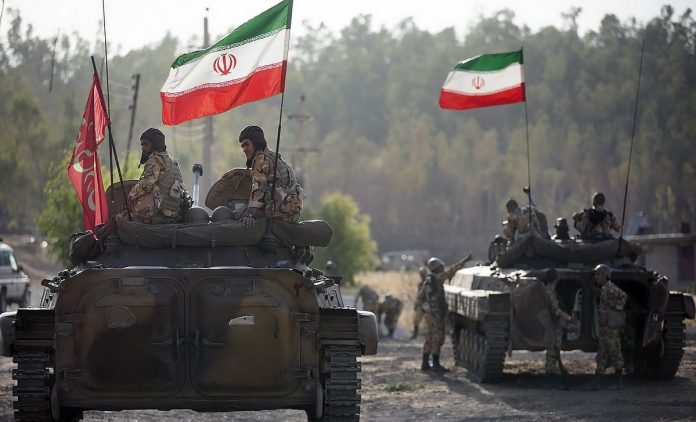
Iran Army

Major General Kioumars Ahmadi made the remarks while inspecting a unit of the Army’s Ground Force on Thursday.

He praised the preparedness and morale of his forces and said they had been making efforts “day and night” to safeguard the country.

Iran’s brave soldiers “have mobilized all in their power to ensure the nation’s stability and peace and will spare no effort on this path,” the senior Army commander said.

Iran’s youth Greco-Roman wrestlers win Asia championship

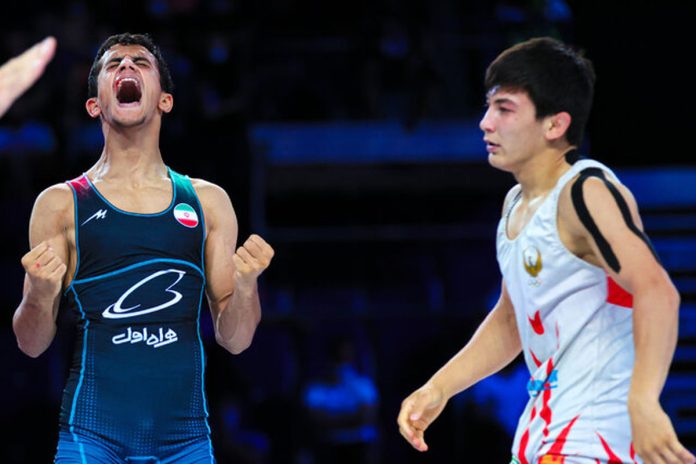
Iran's youth Greco-Roman wrestlers

The Asian Greco-Roman wrestling championships finished in Manama, Bahrain, on Wednesday and the young Iranian wrestlers became champions.

Iran’s national youth wrestling team won seven gold, one silver and two bronze medals to finish in the first place.

Seyed Arash Negahdari in 55 kg, Ahmad Reza Mohsennejad in 60 kg, Iman Mohammadi in 63 kg, Seyed Daniel Sohrabi at 67 kg, Amir Abdi weighed at 72 kg, Alireza Mohmedi at 82 kg, Fardin Hedayati at 130 kg won the gold medal medals for Iran while Masoud Kavoosi in 77 kg grabbed the only silver medal, and Ali Abedi Darzi won the bronze medal at 87 kg and Amir Reza Akbari at 97 kg.

Iran won the championship with 225 points, whicle Kazakhstan with 175 points and Kyrgyzstan with 155 points, came in second and third places, respectively.

IRNA: UK’s top diplomat in Iran caught on camera spying

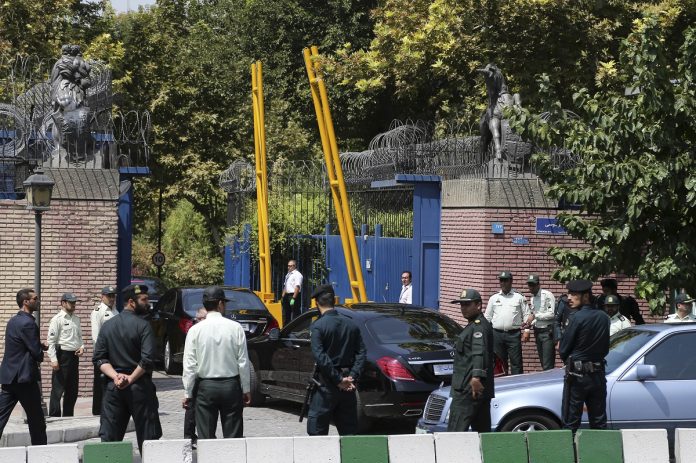
UK Embassy in Iran

The official news agency reported, Giles Whitaker was caught on camera taking earth samples in an off-limits region in Shahdad Desert in south-central Iran while Iran’s Islamic Revolution Guards Corps (IRGC) was conducting military exercises in the area.

Whitaker was visiting the area with his family as tourists, but he was in fact carrying out acts of espionage, IRNA said, adding he will be expelled from the country later on after apologizing.

According to the report, a Polish university professor was also seen taking earth, water, rock and mud samples in the same desert.

“Another individual identified while conducting acts of espionage was the husband of Austria’s cultural attaché in Iran. He was caught on camera while taking photos and images in the city of Damghan.”

Iran’s security chief in Armenia on Caucasian tour

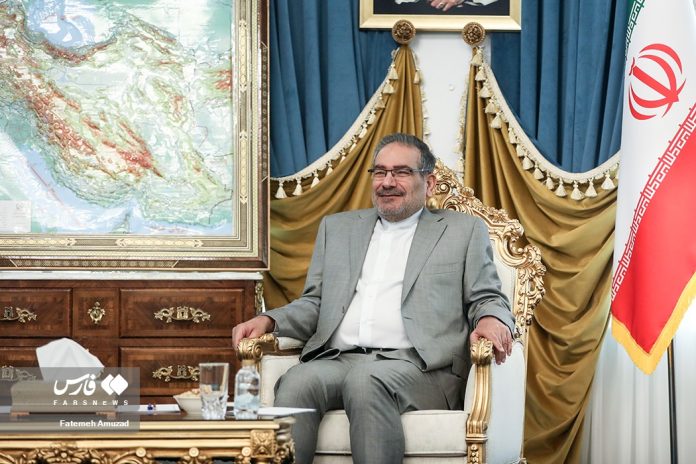
Secretary of Iran’s Supreme National Security Council Ali Shamkhani

Shamkhani is scheduled to hold talks with his Armenian counterpart as well as Prime Minister Nikol Pashinyan.

Bolstering and expansion of bilateral relations in various fields and cooperation to boost regional stability and security are top on the agenda of Shamkhani’s trip.

Upon his arrival in the Armenian capital Yerevan, Shamkhani stressed that Iran is against any action that would lead to a geopolitical change in the region.

He stated that his trip is in line with the administration of Iranian President Ebrahim Raisi’s main foreign policy goal to expand and deepen relations with neighboring countries.

Shamkhani emphasized that Iran supports intra-regional cooperation to establish peace and stability in the region and tackle regional issues.

He expressed hope that the dispute between Armenia and the Republic of Azerbaijan would be resolved and reconciliation efforts would lead to a lasting peace within the framework of preserving the territorial integrity of both countries.

The disputed region of Nagorno-Karabakh has been a bone of contention between Yerevan and Baku.

They last fought a six-week war in 2020 that claimed more than 6,500 lives on both sides and ended with a Russian-brokered ceasefire deal that left Azerbaijan largely in control of the territory.

Iran’s chief negotiator in Oman

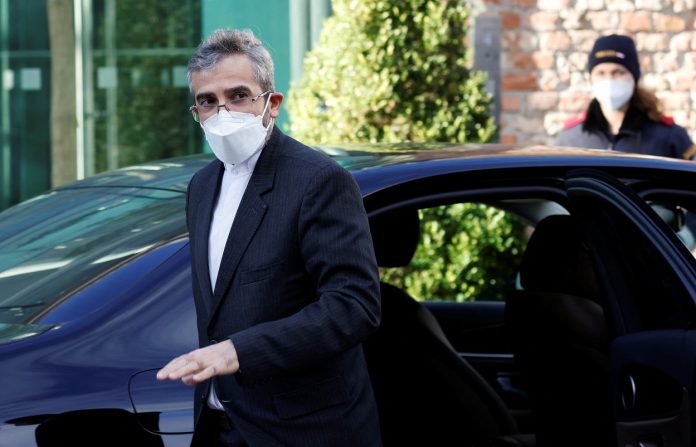
Iran’s Deputy Foreign Minister and top nuclear negotiator Ali Bagheri Kani

The trip comes as efforts to revive Iran’s nuclear deal with the West and bring the United States back on board have hit a snag.

Iran, as well as China and Russia – two other remaining parties to the 2015 deal known as the Joint Comprehensive Plan of Action (JCPOA) – blame the United States for its “excessive demands” and “inflexible stance.”

Oman has traditionally played a mediator role in regional and international issues.

Bagheri’s visit to Oman comes days after Iran and the remaining parties to the JCPOA held two days of talks in the Qatari capital, Doha, in an effort to revive the deal and lift the anti-Tehran sanctions.

Iran, Russia and China to conduct war drills in Latin America

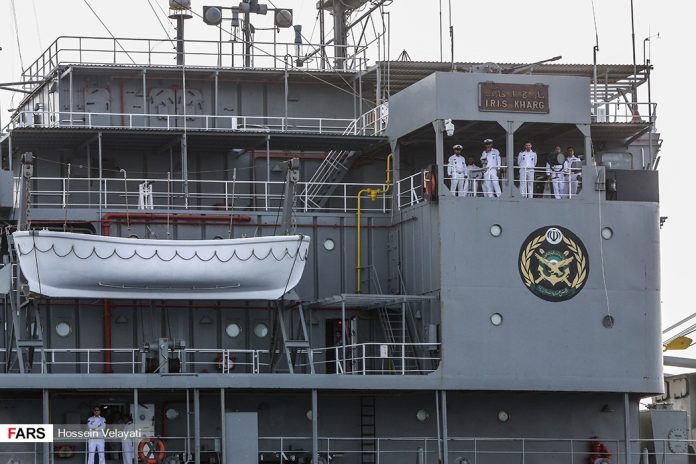
Iran Navy Forces

Venezuela, under the leadership of anti-US socialist president Nicolás Maduro, is scheduled to host the war games in mid-August, according to a report by the Center for a Secure Free Society.

Along with 10 other nations, Russia, China, and Iran will move their militaries into the Western Hemisphere for war drills that will “preposition forward-deployed military assets in Latin America and the Caribbean.”

The war games, known as the Sniper Frontier competition, show that these countries from across the globe are uniting and “getting ready to make a loud statement that the region is ready to embrace the multipolar force,” according to the think-tank report.

A key portion of Russia’s “military is prepping to bring, for the first time, some of these military games to the Western Hemisphere”—even as Moscow is bogged down with war in Ukraine.

The war drills are one of the starkest signs to date that Latin America’s coalition of anti-US governments is working to boost relations with Russia, China, and Iran.

Maduro recently wrapped up a diplomatic tour of the Middle East in which he inked a 20-year strategic deal with Iran that laid the groundwork for an Iranian oil tanker to dock in Venezuela and offload Tehran’s illicit crude.

“The strategic deal between Iran and Venezuela is meant to mirror similar strategic agreements that the Islamic Republic signed with China and Russia in recent years,” according to the think-tank report.

Latin American countries also are inking military pacts with Russia.

As Iran and Venezuela increase their military and economic ties, Nicaraguan President Daniel Ortega—an ally of Venezuela’s Maduro—renewed a military pact with Russia “authorizing Russian troops, planes, and ships to patrol the Central American country’s borders and conduct joint military training exercises,” according to the report.

The military agreement was signed amid Russia’s war with Ukraine, indicating that a presence in Latin America remains a priority for Moscow even as it faces pressure on its own borders.

China also has been active in the region, though these efforts have received little media attention.