Friday, April 24, 2026
Home Blog Page 185

Informed Sources: Documents reveal IAEA-Israel collaboration against Iran

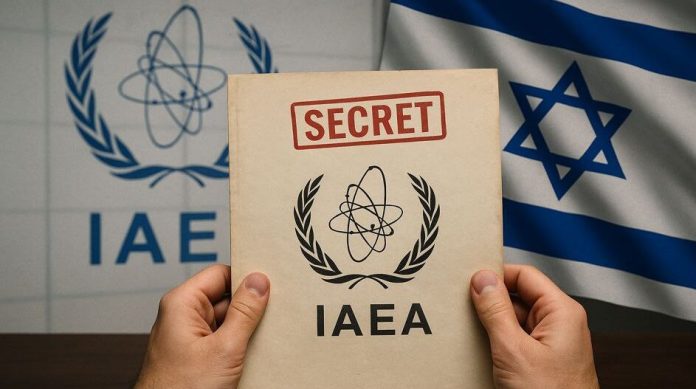
Examination of the obtained documents reveals that Iran’s official and confidential letters to the IAEA—containing sensitive information—were channeled to the espionage agencies of the Zionist regime through covert conduits.

An informed source told a Fars News Agency reporter:
“These documents clearly show that instead of playing a neutral role, the IAEA has become an instrument serving the objectives of the Zionist regime.”

Previously, reports had also emerged about the disclosure of Iranian nuclear scientists’ names through the IAEA, which led to the assassination of several of them.

Well-informed sources in the region revealed on Saturday that the Islamic Republic of Iran’s intelligence apparatus had delivered one of the most significant intelligence blows in history to the Zionist regime, adding that extensive data, including nuclear-related information, had been extracted from the occupied territories.

According to a Fars News Agency correspondent, the informed sources revealed that Iran’s intelligence apparatus had successfully extracted a vast trove of strategic and sensitive information, including nuclear blueprints and facility details, from the occupied territories.

Iran threatens retaliation against IAEA, Europe if resolution is passed

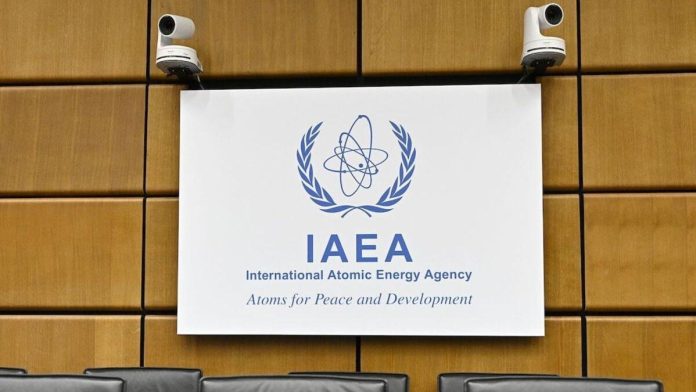
IAEA

In a televised interview, Kamalvandi stated that the Islamic Republic of Iran has cooperated with the IAEA beyond its obligations, adding that if this cooperation is not appreciated, Iran will naturally restore its cooperation to a normal level.

When asked about Iran’s reaction to an anti-Iranian resolution pushed by the three European countries – the UK, Germany, and France -, Kamalvandi said: “As in previous experiences, Iran will certainly adopt a commensurate reaction.”

He further noted: “Iran’s reaction depends on the stance of the opposing side. But this time, in addition to taking positions against the three European countries, Iran will also adopt positions against the IAEA.”

Kamalvandi stressed that Iran has cooperated with the IAEA to the fullest extent, adding: “If we had intended to reduce our cooperation, the Agency would certainly have been unable to fulfill its duties.”

Iran: Next round of negotiations with US will be held on Sunday in Oman

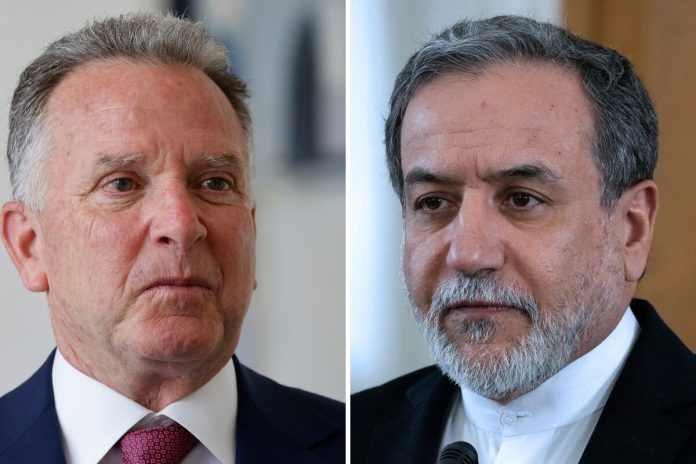
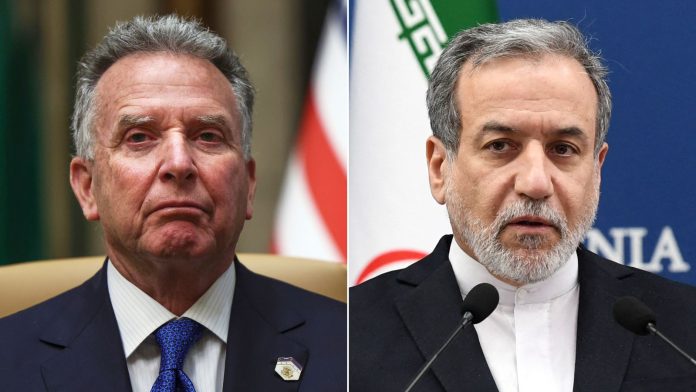
Araghchi Witkoff

Foreign Ministry spokesman Esmaeil Baghaei stated on Monday that following consultations, preparations are underway for the next round of indirect talks on Sunday.

Since April, Tehran and Washington have held five rounds of indirect negotiations over Iran’s nuclear program.

Three rounds of the two countries’ negotiations were held in Muscat, while the remaining two rounds were held in the Italian capital, Rome.

The negotiations were marked by repeated shifts in US stances, which prompted Iranian officials to criticize the “contradictory” statements made by their American counterparts.

Iran says it will not forgo its right to uranium enrichment, which is guaranteed under the Non-Proliferation Treaty, the NPT.

Deputy FM: Iran’s response to US proposal logical

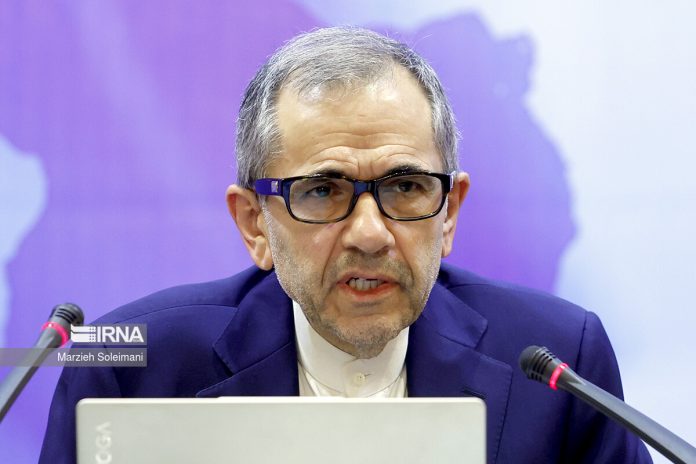
Majid Takht Ravanchi

Takht-Ravanchi, said the response will be a “reasonable and coherent” document that could help sustain ongoing diplomatic efforts toward a final agreement.
Takht-Ravanchi added that Iran believes the answer is logical and that the final version is expected to be delivered to Oman’s foreign minister within a few days for transmission to US officials.

He underlined  that the Iranian proposal is not simplistic or dismissive. “Our proposal is certainly not a one-liner or a short paragraph that can be easily rejected. It is a structured plan that reflects our seriousness and is grounded in clear principles”, the deputy foreign minister maintained.

He clarified that the Iranian submission is not meant to be a comprehensive or lengthy agreement, instead, it serves as a framework for initial understanding.

“This is not a full-fledged treaty. It’s a structured framework. If the core of this framework is accepted, more detailed negotiations can follow.”
Takht- Ravanchi also reiterated that the mere submission of the text marks the beginning—not the end—of the negotiation process.

He said Tehran’s proposed text holds potential to keep the door to diplomacy open.

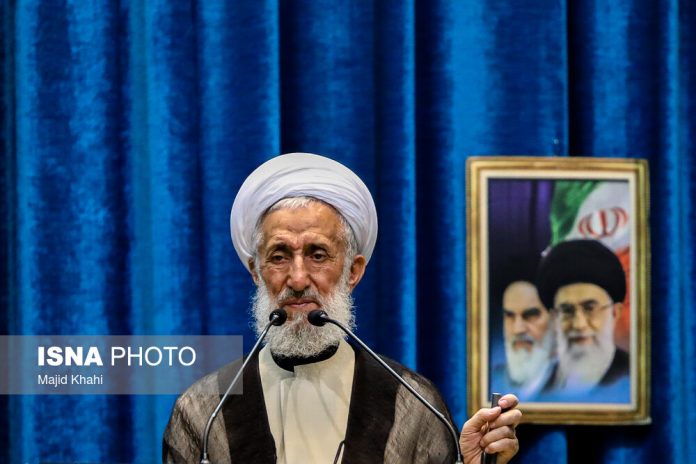
Senior Iranian cleric Kazem Seddighi confirms son’s arrest under judicial order

In an interview with Tasnim News Agency, Seddighi underlined his full respect for the rule of law, saying everyone must respect the law. The temporary Friday prayers leader of Tehran noted, “If the judiciary reaches a decision about my son, I will abide by it, as I have always considered myself a guardian of the law”.

He added that should the alleged charges are proven to be true, appropriate legal action must be taken.

Seddighi further said he has not intervened in the matter, nor has he attempted to follow up on his son’s situation.
“I have made no inquiries and have not sought him out,” he said.

The judiciary has not yet released details regarding the charges.

US travel ban barring citizens from 12 countries, including Iran, goes into effect

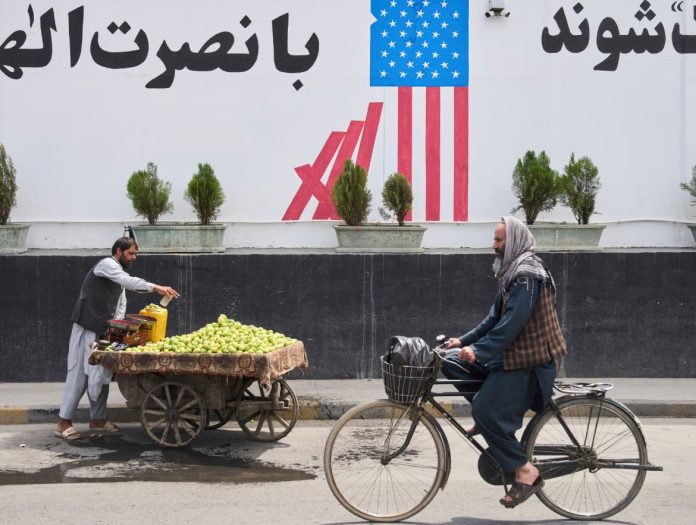
The new proclamation, which Trump signed last week, “fully” restricts the nationals of Afghanistan, Myanmar, Chad, Republic of the Congo, Equatorial Guinea, Eritrea, Haiti, Iran, Libya, Somalia, Sudan and Yemen from entering the US. The entry of nationals of Burundi, Cuba, Laos, Sierra Leone, Togo, Turkmenistan and Venezuela will be partially restricted.

Unlike Trump’s first travel ban in 2017, which initially targeted citizens of seven Muslim-majority countries and was criticized as an unconstitutional “Muslim ban”, the new ban is broader, and legal experts said they expect it to withstand legal challenges.

The announcement of the new travel ban was greeted with less outrage and protest than his initial 2017 ban. On Monday, the new ban appeared to be overshadowed by Trump’s other immigration battles, including furious protests in Los Angeles over Trump’s deportation raids, which were followed by Trump deploying the national guard to the city despite the opposition of California’s governor.

The newly instituted ban notably includes citizens of Haiti, a majority Christian country. Haitians in the US were demonized by Trump during his presidential campaign, with the president spreading the baseless conspiracy theory that Haitian immigrants in Ohio were eating people’s pets.

It also imposes heightened travel restrictions on citizens of Venezuela, who have been targeted repeatedly by the White House in recent months, as the Trump administration’s sudden deportation of Venezuelans in the US to a notorious prison in El Salvador sparked a massive legal battle.

The ban is also expected to have a disproportionate effect on African countries, with some citizens of targeted countries worrying about being cut off from opportunities for education, professional development, and networking.

While five of the countries on the new ban list are not majority-Muslim, including Republic of the Congo, Myanmar, Eritrea and Equatorial Guinea, as well as Haiti, the list does target citizens of non-white countries in the developing world, fueling criticisms that the ban is fundamentally racist and shaped by “bigotry”.

Trump’s first travel ban, in 2017, was widely criticized as a fulfillment of Trump’s campaign pledge to institute “a total and complete shutdown of Muslims entering the United States”. The Trump administration later added citizens of other non-Muslim countries to the banned list.

The new ban does not revoke visas previously issued to people from countries on the list, according to guidance issued Friday to all US diplomatic missions. However, unless an applicant meets narrow criteria for an exemption to the ban, his or her application will be rejected starting Monday. Travelers with previously issued visas should still be able to enter the US even after the ban takes effect.

In a video posted Wednesday on social media, Trump said nationals of countries included in the ban pose “terrorism-related” and “public-safety” risks, as well as risks of overstaying their visas. He also added some of these countries had “deficient” screening and vetting or have historically refused to take back their citizens.

Trump also tied the new ban to a recent attack in Boulder, Colorado that wounded a dozen people, saying it underscored the dangers posed by some visitors who overstay visas. US officials say the alleged perpetrator overstayed a tourist visa. The man charged in the attack is from Egypt, a country that is not on Trump’s restricted list.

New Russia sanctions bill ‘on hold’ over White House’s stance: Bloomberg

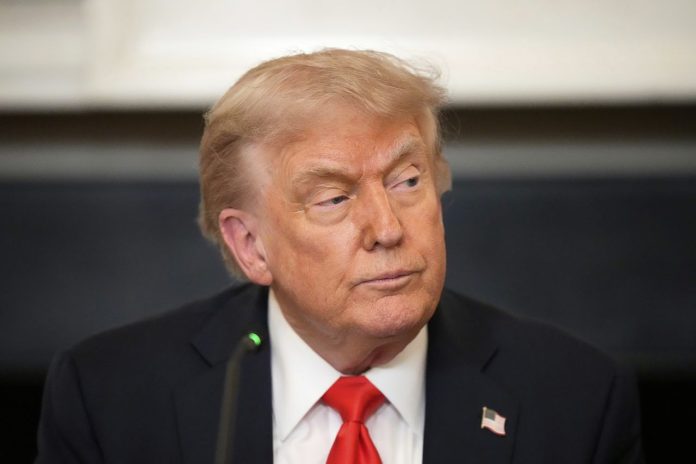
Donald Trump

The “bone crushing” legislation that would impose a 500% tariff on countries that buy Russian energy, uranium, and other raw materials has more than 80 co-sponsors in the Senate, which Bloomberg described as “veto-proof backing.” But lawmakers are still hesitant to challenge the president, the outlet claimed.

Earlier this week, Trump said he had not even looked at the bill and would only consider sanctions “at the right time.” His position “put the brakes” on a push to advance the measure as soon as this month, according to Bloomberg. Graham has previously said he planned to do so before the G7 summit scheduled for June 15-17 in Canada, but the effort is now “on hold,” Bloomberg reported.

On Thursday, the Republican senator wrote on X that he had “coordinated closely with the White House in this endeavor from day one,” adding that the bill was only aimed at giving Trump “more tools when it comes to Russia.”

The bill’s Democrat co-sponsor Richard Blumenthal told Bloomberg that he and Garaham were still working on making the bill “more acceptable” to the White House.

On Thursday, Trump told journalists he had a “deadline” in his “brain” and would decide when to act if it became clear that a peace deal between Moscow and Kiev could not be reached. He also stated that he was willing to impose sanctions against both Russia and Ukraine.

The president said that the Senate’s sanctions bill would be “guided by me,” but suggested it might be better to let Russia and Ukraine continue fighting “for a while” before “pulling them apart.” Trump also expressed his concern about recent Ukrainian drone attacks on long-range nuclear-capable Russian bombers, saying it had increased the risk of escalation by giving Moscow a reason to retaliate.

Tasnim: Iran to respond to US nuclear proposal soon

Araghchi Witkoff

As reported by Tasnim News Agency, Iran’s reply will be sent in written form through diplomatic channels.

The response is said to include Iran’s own proposal aimed at advancing the negotiation process, while reaffirming the country’s key demands, chief among them the continuation of uranium enrichment on Iranian soil.

In the proposed response, Iran is expected to outline certain measures to address US concerns, provided that there is a clear and effective path to sanctions relief. The initiative appears to reflect Tehran’s willingness to explore a compromise, without crossing its established red lines.

Additionally, Iran is reportedly open to participating in a new round of indirect talks with the US, provided that its core positions are respected.

On Ministry, Iranian Foreign Ministry Spokesperson, Esmail Baqaei, said: “Iran’s response is a reasonable, logical, and balanced plan. We recommend the American side seize this opportunity, as it is certainly in their interest to seriously consider the proposal.”

He noted that Iran’s proposed plan will be submitted to the other side through Oman after it is finalized.

Iran spox: Europe’s involvement in Israel military nuclear program certain

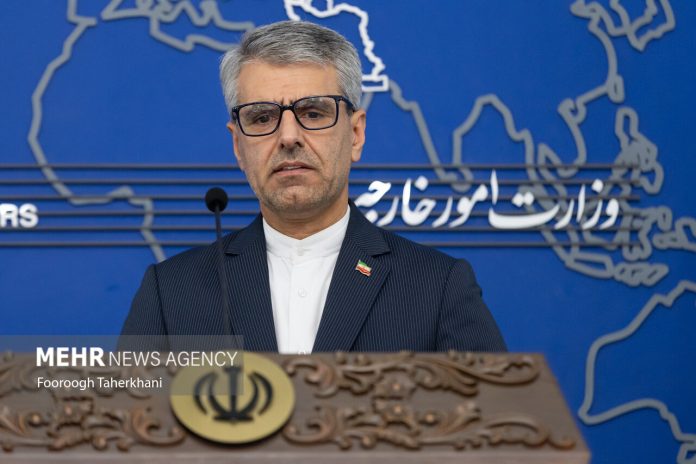
Esmael baghaei

Speaking at his weekly press conference on Monday, Baqaei pointed to Iran’s acquisition of a vast amount of security-related information, including material related to the Israeli regime’s nuclear activities.

He stated, “What was already clear to us—and will now be clearer to others through these documents—is the active participation of these European countries in Israel’s military nuclear program.”

Baqaei added, “It is significant that the very parties who speak of nuclear non-proliferation are themselves actively involved in equipping and strengthening the nuclear military program of this regime.”

He also commented on the efforts by the UK, France, and Germany—backed by the United States—to pass an anti-Iran resolution at the Board of Governors of the International Atomic Energy Agency (IAEA).

Baqaei said, “Undoubtedly, the confrontational approach of these three European countries cannot serve as an incentive for cooperation.”

He continued, “The actions of the three European countries show that they are still beating the drum of confrontation and non-cooperation, and they should certainly expect proportionate and reciprocal steps from Iran.”

Bawaei also spoke on Iran’s response to the US proposal concerning the nuclear issue, saying: “Iran’s response is a reasonable, logical, and balanced plan. We recommend the American side seize this opportunity, as it is certainly in their interest to seriously consider the proposal.”

He noted that Iran’s proposed plan will be submitted to the other side through Oman after it is finalized.

Regarding the seizure of the Madeline ship and the attack on it and the arrest of its crew by the Israeli regime, he stated: “This act, having occurred in international waters, is considered a form of piracy under international law. This issue shows that the United Nations, the Human Rights Council, and the UN Security Council must take immediate action to break the siege of Gaza and prevent the continued massacre of innocent people.”

Iran warns it will take retaliatory measures if IAEA adopts resolution

Behrouz Kamalvandi

“Certainly, the IAEA should not expect the Islamic Republic of Iran to continue its broad and friendly cooperation,” the spokesman for the Atomic Energy Organization of Iran (AEOI), Behrouz Kamalvandi, said on state TV when asked how Tehran would respond if the resolution is passed by the IAEA’s board of governors meeting on Monday.

Kamalvandi said Iran has warned in previous resolutions, but they did not pay attention, and the result was that we increased the production of 60 percent enrichment by 7 times, launched 20 chains, and installed advanced 13th-generation machines.

He said Tehran has prepared a list of measures if such a resolution is passed in the Monday session.

Kamalvandi said part of the measures will be technical, and part of it will concern the nature of Iran’s cooperation with the agency.

“We have repeatedly emphasized that we do not have enrichment above 60 percent and that the momentary increase in enrichment occurred due to technical conditions (such as a decrease in feed in centrifuge machines). This issue was resolved after consideration, but the media and resolutions quietly passed it by,” he stated.

The spokesman stressed that the Europeans are seeking to adopt an anti-Iran resolution in an effort to trigger the snapback mechanism in the coming months.

The Europeans reportedly plan to submit a draft resolution to the IAEA Board of Governors at the meeting. This creates a window to trigger the snapback of all UN sanctions on Tehran under a previous 2015 nuclear deal before the mechanism expires in October.

An IAEA resolution could further complicate nuclear talks between Iran and the United States. Tehran has already pledged to take decisive countermeasures should the snapback mechanism be activated.

In a Friday post on his X account, Iranian Foreign Minister Abbas Araghchi warned Britain, France, and Germany over their “malign action” of drafting a resolution, calling it a “strategic mistake.”

“After years of good cooperation with the IAEA — resulting in a resolution which shut down malign claims of a ‘possible military dimension’ (PMD) to Iran’s peaceful nuclear program — my country is once again accused of ‘non-compliance’,” Araghchi wrote.

An IAEA report on Saturday accused Tehran of further increasing its stockpile of enriched uranium. Tehran called the report fully biased and politically motivated.

The IAEA report claimed that Iran has sharply increased its stockpile of uranium enriched to up to 60 percent, close to the roughly 90 percent level needed for atomic weapons.

In its quarterly report, the agency said that as of May 17, Iran possesses an estimated 408.6 kilograms of uranium enriched up to 60 percent, marking an increase of 133.8 kilograms since the previous report in February.

Iran has denounced as “political” and unbalanced the report by the United Nations nuclear watchdog, which it said has been drafted under European pressure.