Friday, April 24, 2026
Home Blog Page 186

Iran atomic chief defends nuclear fuel production amid international scrutiny

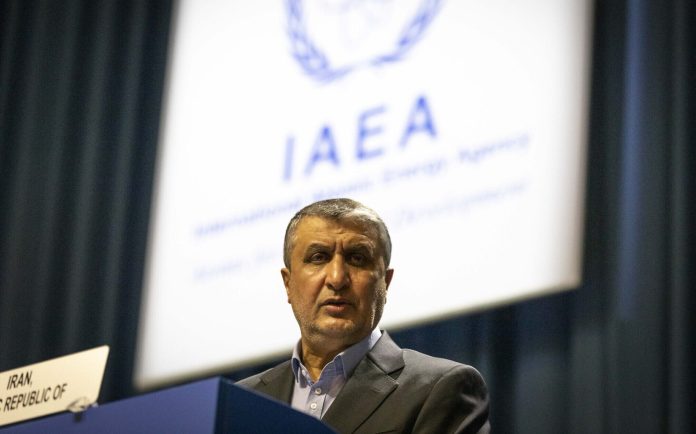
Mohammad Eslami

In an interview with Al-Araby TV, Eslami criticized the International Atomic Energy Agency (IAEA), accusing it of losing credibility by acting under US influence.

“No country can pursue nuclear energy without fuel,” he stated. “We need enriched uranium for our reactors. This is a sovereign right and part of our legal commitments under the NPT and IAEA safeguards.”

Eslami denounced “double standards,” pointing to the US expanding its own nuclear capacity while pressuring Iran to halt enrichment.

He emphasized that Iran’s nuclear program is transparent, with nearly 130 IAEA inspectors monitoring its facilities. “We have no secret program. We operate under the law.”

Highlighting Iran’s domestic capabilities, he added that radioisotope production benefits over a million patients annually. “Why should public health suffer due to political pressure?” he asked.

Eslami concluded that Iran’s nuclear path is “irreversible,” guided by self-reliance, national expertise, and legal obligations.

Iranian translator, historian Bijan Ashtari dies at 64

According to Mohammad-Ali Jafariyeh, director of Sales Publishing, Ashtari had been battling cancer in recent years, but the cause of death was reported as cardiac arrest.

Ashtari was widely recognized for his extensive body of translations focused on contemporary history, politics, and totalitarian regimes.

He began his career in the early 1980s translating for arts and film magazines and later contributed as a film critic, notably for Donya-ye Tasvir.

Over four decades, Ashtari translated numerous influential works including The Young Stalin, Che Guevara: A Revolutionary Life, The Harem of Qaddafi, Mao, and Aquariums of Pyongyang.

His signature books became a staple for Persian-speaking readers seeking critical perspectives on history and authoritarianism.

His final published work, Silence as a Weapon, chronicled the life and death of Soviet writer Isaac Babel and was released in March 2025.

Ashtari is remembered as a pivotal figure in Iranian intellectual circles, credited with enriching public understanding of 20th-century political history.

Iran’s Olfati wins historic gold at Asian Gymnastics Championships

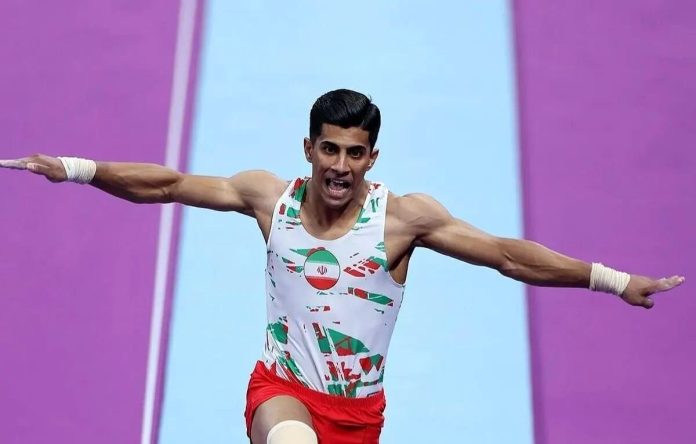
This marks the first-ever gold medal for Iran in the history of the Asian Gymnastics Championships, signaling a major breakthrough for the country’s presence in the sport at the continental level.

Olfati, already known for his silver medal at the 2023 Asian Games in Hangzhou and for securing an Olympic berth through the qualification rounds, has now further cemented his status as one of Iran’s most decorated and groundbreaking athletes in gymnastics.

Intelligence Minister: Documents on Israel nuclear facilities in Iran’s possession

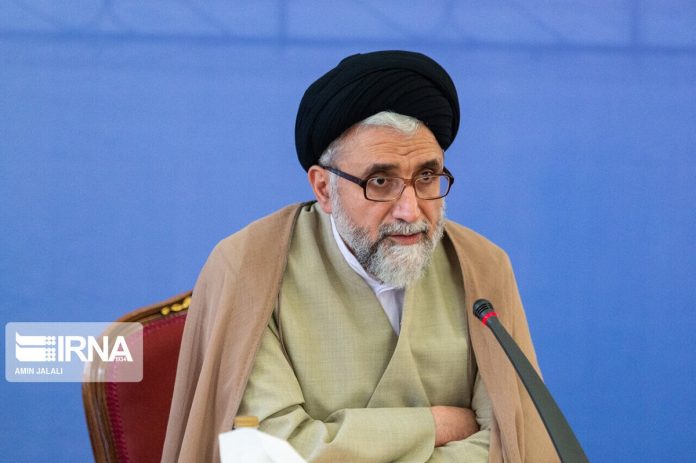
Iran Minister of Intelligence Esmaeil Khatib

Seyed Esmaeil Khatib, Iran’s Intelligence Minister, stated in a televised interview regarding the details of the Islamic Republic’s intelligence strike against the Zionist regime that these documents pertain to information on the regime’s nuclear facilities and other strategic records.

According to Khatib, the possession of these strategic documents enhances Iran’s offensive strength.

Well-informed sources in the region revealed on Saturday that the Islamic Republic of Iran’s intelligence apparatus had delivered one of the most significant intelligence blows in history to the Zionist regime, adding that extensive data, including nuclear-related information, had been extracted from the occupied territories.

According to a Fars News Agency correspondent, the informed sources revealed that Iran’s intelligence apparatus had successfully extracted a vast trove of strategic and sensitive information, including nuclear blueprints and facility details, from the occupied territories.

It came as recently the Zionist regime’s internal security agency (Shin Bet) and Israeli police disclosed in a statement that they had arrested Roy Mizrahi and Almog Atias, both 24 years old and residents of Nesher in Northern Israel, on suspicion of security-related offenses linked to Iran.

US pushing to ensure ‘maximum impunity’ for Israel through attack on four ICC judges: Iran

ICC

Commenting on X, former Twitter, on Saturday, Iranian Foreign Ministry Spokesman Esmaeil Baghaei said the move marked a “new low,” even for a country such as the US, which was “badly” addicted to using sanctions and intimidation towards realizing its foreign policy goals.

The US, he said, has issued the coercive measures in line with its way of abusing its power and obstructing international justice.

The administration of President Donald Trump imposed the measures on Friday in response to the court’s serving Israeli Prime Minister Benjamin Netanyahu with the warrant last year, amid the regime’s genocidal war against the Gaza Strip that began in October 2023.

The war has so far claimed the lives of around 55,000 Palestinians, mostly women and children.

The American sanctions were also meant to punish the court’s judges for investigating the war crimes that had been committed by American troops in Afghanistan during the US’s invasion of the Asian country.

Washington dismissed the probes as “illegitimate and baseless.”

Baghaei, however, said the American bans were aimed at “ensuring maximum impunity for Israel’s atrocity crimes and ethnic cleansing in occupied Palestine.”

The spokesman cited an earlier case in point across the US’s policies as the American diplomatic representatives at the United Nations Security Council’s vetoing a draft resolution mandating “permanent” ceasefire in the Israeli war.

Such moves, the official regretted, had made the United States “the most enduring & persistent accomplice in Israeli regime’s horrifying crimes of genocide, war crimes, crimes against humanity, and aggression.”

Baghaei urged the international community to act in response to the deadly American-Israeli partnership, warning that the US’s actions were undermining international law and threatening the foundational principles of humanity.

Iran says new US sanctions show ‘depth of Washington’s hostility’

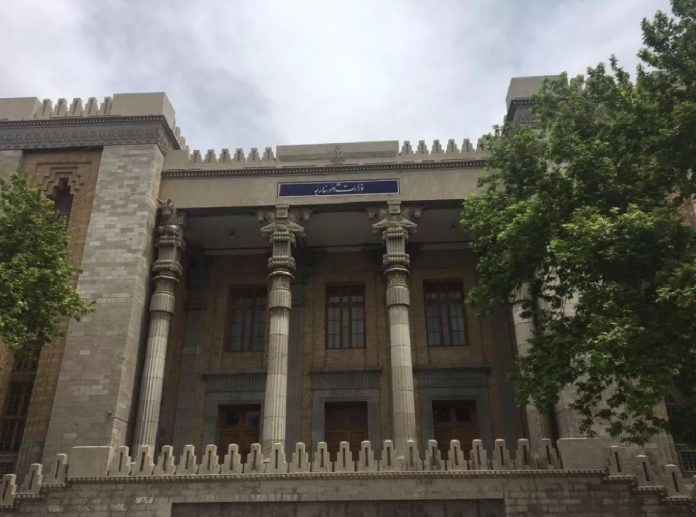
The Iranian Foreign Ministry

Iranian Foreign Ministry Spokesman Esmail Baqaei strongly condemned the US Treasury’s new sanctions against several Iranian and non-Iranian individuals and entities under the pretext of cooperation with Iran in commercial and banking sectors.

The Foreign Ministry spokesman said the new US sanctions against Iran, imposed as part of the inhumane and failed policy of maximum pressure against the Iranian people, are not only illegal and in violation of international legal principles and norms, but also serve as yet another testament to the deep and continued enmity of the ruling regime in the US toward the Iranian nation.

Baqaei stressed that, undoubtedly, the US sanctions against the Islamic Republic of Iran, which are designed and implemented with the aim of stepping up pressure on every Iranian citizen and depriving them of their fundamental human rights, will further strengthen the Iranian people’s resolve to defend their legitimate rights and interests in the face of Washington’s excesses.

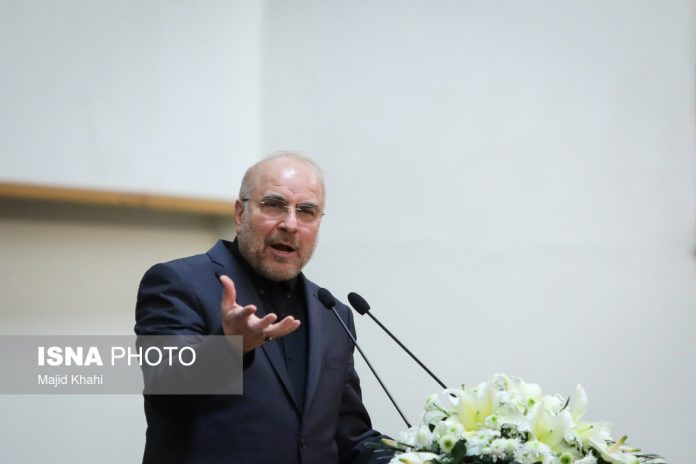
Iran ready for nuclear transparency in exchange for sanctions relief, says parliament speaker

Mohammad Bagher Ghalibaf

Speaking during a parliamentary session on Sunday, Ghalibaf criticized the US for presenting a proposal that makes no mention of lifting sanctions, calling Washington’s behavior in indirect nuclear talks “contradictory and dishonest.”

The parliament speaker emphasized that any sustainable agreement must include tangible economic benefits for Iran.

He added that the US President is “delusional” if he expects Iran to accept a deal shaped by Israeli influence and failed policies associated with the Israeli Prime Minister Benjamin Netanyahu.

Ghalibaf highlighted Iran’s role in defeating Daesh terrorist group and securing regional stability.

He also reflected on his recent trip to Latin America, where he attended the BRICS parliamentary summit and held bilateral meetings in Venezuela, Cuba, and Brazil to enhance economic and political ties.

He praised BRICS as a counterweight to unilateralism, arguing it can play a key role in establishing a multipolar world order.

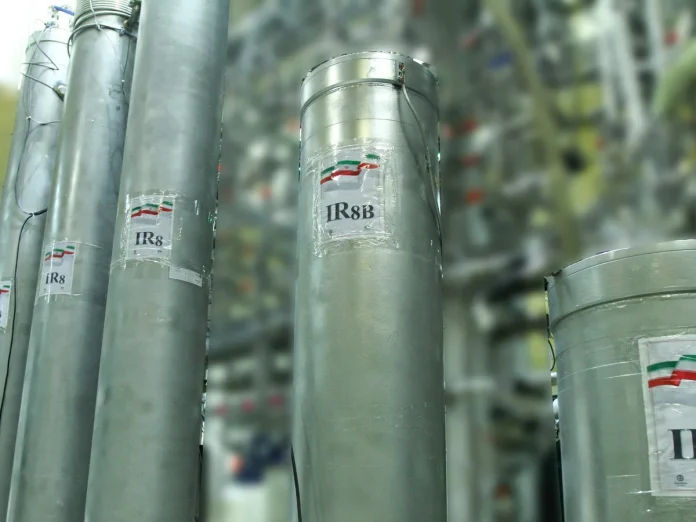
Senior MP: Iran not to lower uranium enrichment below 20%,

Uranium enrichment

Speaking at a press briefing, Nabavian added that Iran’s nuclear program will continue “as needed”.

“I fully understand what I am saying…our enrichment level will not go below 20 percent,” Nabavian underscored.

He also made it clear that Iran’s enriched uranium reserves will not be sent abroad under any circumstances.
“This is a framework that our negotiating team will always adhere to,” the MP said. Nabavian also stressed that, as reiterated by Iran’s leader Ayatollah Seyyed Ali Khamenei, the removal of sanctions must be the first step in any negotiation process. “Sanctions on the Central Bank must be lifted, regardless of whether the negotiations are about nuclear issues or other matters,” he added.

His remarks come as US President Donald Trump has said Iran should not enrich uranium at all.

Iran and the US have held five rounds of nuclear talks mediated by Oman.

Trump quietly pressuring US Senate to weaken Russia sanctions: WSJ

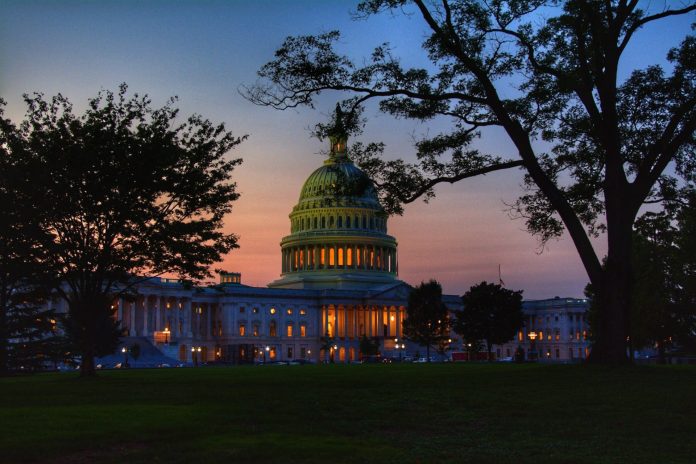
U.S. HOUSE AND SENATE

The bipartisan sanctions bill, introduced on April 1 by Graham and Senate Democrat Richard Blumenthal, seeks to impose a 500% tariff on imports from countries that continue purchasing Russian oil and raw materials.

In recent weeks, Trump administration officials have contacted Graham’s office with requests to water down the legislation, congressional aides told the WSJ.

The White House reportedly asked Graham to insert waivers into the bill allowing Trump to choose which entities get sanctioned and changing the word “shall” to “may.” Removing the mandatory language from the text would essentially defang the bill, staffers said.

Blumenthal confirmed that negotiations with Trump officials were taking place behind the scene but did not comment on the substance of the talks.

“We’re moving ahead and the White House is included in our conversations,” he told the WSJ.

Earlier, Republican Senator Roger Wicker on June 4 said that Trump had asked the Senate to postpone voting on the bill, which had been scheduled to come to the floor this week.

In a joint press conference alongside German Chancellor Friedrich Merz on June 5, Trump said lawmakers were waiting for his approval before advancing the sanctions bill.

“They’ll be guided by me. That’s how it’s supposed to be,” Trump stated, adding, “They’re waiting for me to decide on what to do.”

In the same briefing, Trump said that he had a deadline in mind for when he would enforce new sanctions on Russia but did not give specifics, saying only that sanctions would be imposed when it became clear that peace talks were not moving forward. He also said that sanctions could apply to both Russia and Ukraine.

“It takes two to tango,” he added.

During the June 5 press conference, Trump compared Ukraine and Russia — which launched an unprovoked full-scale invasion against Ukraine in February 2022 and partially occupies four Ukrainian regions in addition to the illegally annexed Crimean peninsula — to children fighting on a playground.

“Sometimes you’re better off letting them fight for a while and then pulling them apart,” he said.

Trump has repeatedly threatened to impose sanctions on Russia if he does not see progress in peace negotiations between Kyiv and Moscow.

He has never followed through on any of these threats.

Britain, France abandon plans to recognise Palestinian state at NY conference

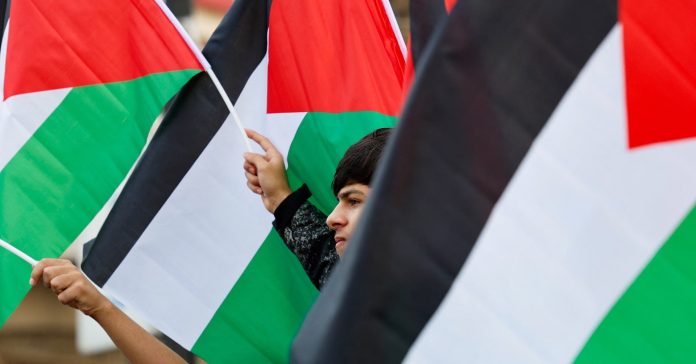
Palestine

France had been lobbying the UK and other European allies to recognise a Palestinian state at the conference in New York, due to be held between 17 and 20 June.

President Emmanuel Macron had described the move as “a moral duty and political requirement”, suggesting it could come in return for Saudi Arabia recognising Israel at the conference.

However, The Guardian has reported that French officials briefed their Israeli counterparts this week that the conference would not be the moment for recognition.

Instead, it will now focus on outlining steps towards recognition, contingent on a series of measures and concessions from the Palestinians.

These will include a permanent ceasefire in Gaza, the release of Israeli captives, reform of the Palestinian Authority, economic reconstruction and the end of Hamas rule in Gaza.

French Foreign Minister Jean-Noel Barrot said on Friday that recognising a Palestinian state at the conference would have been a “symbolic” decision and said they had a “particular responsibility” as a permanent member of the UN Security Council not to do so without the support of allies.

Although 147 countries recognise the state of Palestine, much of Europe has been reluctant and long stated that such a move could only come with Israel’s approval and reciprocal moves from Arab states.

Ireland, Spain and Norway recognised a Palestinian state last year, and there has been an increasing consensus that recognition should come unilaterally as a means of pressuring Israel to change tack.

Both the UK and France have faced pressure from the US over the plans, while Israel has said it would expand its settlements in the occupied West Bank in response.