Zelensky and Stoltenberg discuss NATO support for Ukraine
Ukrainian President Volodymyr Zelensky and NATO Secretary General Jens Stoltenberg held a phone call on Tuesday to discuss the alliance’s military support to Kyiv.
“Good call with President Zelensky on priorities for military support,” Stoltenberg tweeted on Tuesday, adding, “It’s vital that NATO & Allies provide even more assistance to Ukraine even faster.”
Zelensky’s office echoed Stoltenberg’s remarks, calling on Ukraine’s allies to send military support at a faster rate.
“The President of Ukraine separately informed Jens Stoltenberg about the situation on the battlefield and the need for Ukraine to quickly receive more heavy weapons from NATO member states in order to successfully repulse Russian attacks and proceed to a further counteroffensive,” the Ukrainian president said in a statement on Tuesday.
“In addition, Volodymyr Zelenskyy emphasized the importance of receiving non-lethal military aid from the Alliance as soon as possible in the framework of the comprehensive package approved at the Madrid NATO Summit,” according to the statement.
The two sides also highlighted the resumption of grain shipments from Ukraine’s Black Sea ports.
Russia’s Supreme Court designates Azov battalion a ‘terrorist’ group
Russia’s Supreme Court has designated the Azov regiment — a former volunteer battalion that was incorporated into Ukraine’s army — a “terrorist” group, allowing for lengthy jail terms for its members, Russian news agencies reported.
The court ruled to “recognise the Ukrainian paramilitary unit Azov as a terrorist organisation and to ban its activities on the territory of the Russian Federation,” the judge announced, as reported by the TASS state news agency, adding that the decision takes immediate effect.
The regiment, which has far-right and ultranationalist roots, has been one of the most prominent Ukrainian military formations fighting against Russia in eastern Ukraine. Russia has regularly cited Azov in support of its assertion that Ukraine is controlled by “fascists”.
Border crossings from Ukraine since war began passes 10m: UN
More than 10 million people have fled Ukraine towards neighbouring countries since Russia invaded the country in late February, the UN Refugee Agency reports.
A total of 10,170,875 border crossings have been recorded, the agency’s tally showed.
Ukrainian grain vessel to anchor at Istanbul on Tuesday night
Turkey’s representative at the Joint Coordination Centre (JCC) in Istanbul has stated that the first ship carrying Ukrainian grain to world markets since Russia’s blockade was expected to anchor at Istanbul on Tuesday night.
At a briefing held at the JCC, Rear Admiral Ozcan Altunbulak noted the course of the ship was going as planned.
Five foreign fighters to go on trial in so-called DPR
Five foreigners who sided with Ukraine in the defense of the southern city of Mariupol are to stand trial in the so-called Donetsk People’s Republic (DPR), accused of being foreign mercenaries.
Among the five are one Swede, one Croat and three Britons.
“The Court of Appeal of the Supreme Court of the DPR has received a criminal case against foreign citizens Mathias Gustavsson, Vjekoslav Prebeg, John Harding, Dylan Healy, Andrew Hill, who are accused of mercenarism,” the court announced in a statement on Tuesday.
A date and time for the hearing has not yet been set, Russian state news agency reported on Tuesday.
CNN has reached out to the UK Foreign Commonwealth and Development office for comment but has yet to hear back.
Two other Britons and a Moroccan national were convicted and sentenced to death by a court in the so-called DPR on June 9. The trio was captured in the Donbas and also accused of being mercenaries fighting for Ukraine.
Both the UK and Ukraine condemned the sentences, saying they were in violation of international law.
Donetsk evacuation begins
The mandatory evacuation of the eastern Donetsk region has started, Ukraine’s deputy prime minister has said.
Iryna Vereshchuk stated that the first train has already arrived in Kropyvnytskyi, the capital of Kirovohrad province. The move comes a few days after she said that 200,000 civilians must be evacuated from Donetsk.
Vereshchuk has previously warned that those who refuse to leave will be forced to sign a document to take responsability for any possible risks.
Germany’s RheinEnergie to double gas prices from October
German utility RheinEnergie, the energy supplier to the city of Cologne, says prices to some customers would more than double from October 1, due to a 450 percent jump in gas procurement costs.
RheinEnergie said it was raising natural gas prices to 18.30 euro cents per kilowatt hour (Kwh) from 7.87 cents currently.
“In a Cologne apartment with 10,000 Kwh of annual consumption, the annual cost increases to around 2,002 euros ($2,057) (previously: around 960 euros),” RheinEnergie announced in a statement.
The price increases will apply to customers who do not have fixed-price contracts, the company told Reuters.
Turkey expects daily departures of grain ships, if safe passage deal holds
One vessel each day is expected to leave from Ukrainian ports to export grain as long as an agreement that ensures safe passage holds, a senior Turkish official told Reuters news agency.
“The plan is for a ship to leave … every day,” the senior Turkish official said, asking to remain anonymous.
“If nothing goes wrong, exports will be made via one ship a day for a while,” the official added.
The remarks came a day after the Razoni, the first ship being allowed to export tonnes of maize since a deal was signed in July between Ukraine and Russia, departed from the Black Sea port of Odesa towards Tripoli, Lebanon.
The official added that the Razoni’s departure was delayed by a couple of days by “technical problems” that are now fixed, and NATO member Turkey expected the safe-passage corridor to function well.
Before reaching its final destination, the boat is expected to stop in the early hours of Wednesday off Turkey’s coast for an inspection by Russian, Turkish, Ukrainian and United Nations officials.
Ukraine says Russia maintaining offensive in Donetsk with shelling across eastern front line
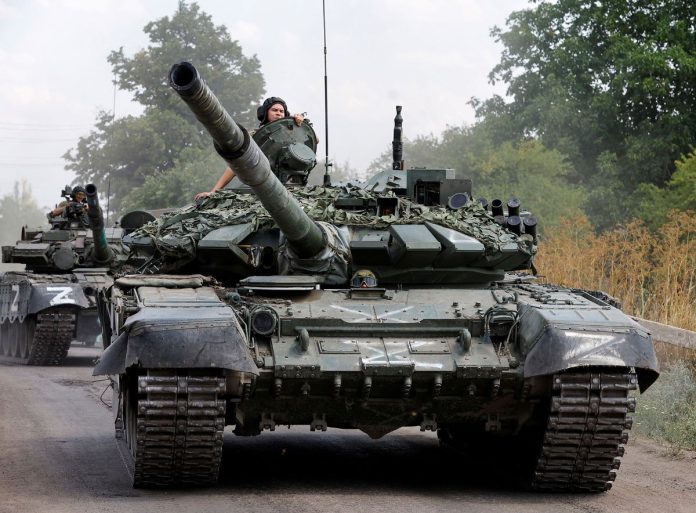
Russian forces have been continuing their offensive toward the cities of Bakhmut and Avdiivka in Ukraine’s eastern Donetsk region, according to the Ukrainian military.
“Fighting continues in the areas of Bakhmut and Zaitseve settlements,” the military’s General Staff said in its morning update on Tuesday.
“Ukrainian soldiers repelled assaults in the areas of Yakovlivka, Vershyna, Kodema, and Travneve,” it added.
Russia “led assaults in the Avdiivka area, was unsuccessful, withdrew,” the General Staff added, saying, “Fighting continues near Pisky.”
The Ukrainian military also reported intense shelling across the entire eastern front line, accusing Russia of targeting both military and civilian infrastructure.
Elsewhere, both in the northern and southern flanks, Ukrainian forces say Russian troops have focused mainly on maintaining their positions, using artillery to prevent Kyiv’s advance and carrying out some reconnaissance missions.
Zelensky welcomes first grain shipment but says Russia cannot be trusted
Ukrainian President Volodymyr Zelensky has welcomed the first shipment of grain from the port of Odesa since the Russian invasion began in February.
“The port started working, the export traffic started, and this can be called the first positive signal that there is a chance to stop the development of the food crisis in the world,” Zelensky said in his daily video address.
At the same time, he warned, “We cannot be under any illusion that Russia will simply refrain from trying to disrupt Ukrainian exports. Russia consistently provoked famine in the countries of Africa and Asia, which traditionally imported significant amounts of Ukrainian food. And now – in conditions of extreme heat, as this year in Europe, the threat of a price crisis and a certain food shortage is also present for some European countries.”
Zelensky stated that 16 ships are waiting their turn for shipment, and “we are ready to make a proper contribution to the stabilization of the world food market.”
He also added that more than a million jobs in Ukraine rely on traffic resuming.
Zelensky noted he’d spoken with French President Emmanuel Macron about agricultural exports and defense issues and also about financial support for Ukraine.
He said he’d asked Macron “to help us to unblock macro-finance, which has stalled in Europe. I want to remind all the leaders that it is 9 billion euros. These are not trifles for us, but important social things — these are our pensions, these are our salaries, support for immigrants.”
US to send $550mn worth of weapons to Ukraine: Official
The United States has announced a new tranche of weapons for Ukraine’s forces, including ammunition for increasingly important rocket launchers and artillery guns.
The new $550m package will “include more ammunition for the high mobility advanced rocket systems otherwise known as HIMARS, as well as ammunition” for artillery, National Security Council Spokesperson John Kirby told reporters.
The assistance includes 75,000 rounds of 155mm artillery ammunition, the Pentagon said in a statement.
“To meet its evolving battlefield requirements, the United States will continue to work with its allies and partners to provide Ukraine with key capabilities,” the statement added.
Austria’s gas dependence on Russia down to below 50 percent: Government
Austria has made progress in weaning itself off Russian natural gas and boosting gas storage, the government announced on Monday.
“We have now already stored more than 50 terawatt hours out of the 76 terawatt hours needed,” Chancellor Karl Nehammer said after a crisis summit on energy supply.
“This is a clear success, especially when you consider that in March we began at over 15 terawatt hours of gas stored,” Nehammer added.
Environment Minister Leonore Gewessler stated dependence on Russian gas had fallen to less than 50 percent from up to 80 percent previously, which had made Austria one of the countries in Europe most exposed to Russian gas flows.
EU starts disbursing 1 billion euro loan in financial support to Ukraine
The European Union has started to disburse another billion-euro loan to Ukraine, with the first 500 million euros ($513m) issued on Monday.
The funds are to “help Ukraine meet its emergency financial needs caused by Russia’s brutal war,” EU Commission Vice President Valdis Dombrovskis noted in a statement.
A further 500 million euros is to be sent on Tuesday as part of a more extensive package to provide Ukraine with up to 9 billion euros ($9.2bn) in loans until the end of the year.
Putin says nuclear war ‘should never be unleashed’
Russia’s president has warned there can be “no winners” in a nuclear war and said such a conflict should never be started.
“As a state party to the Non-Proliferation Treaty and one of its depositaries, Russia is consistently complying with the letter and the spirit of the Treaty,” Vladimir Putin said in a letter to participants of a conference on the treaty in New York City.
“We proceed from the fact that there can be no winners in a nuclear war and it should never be unleashed, and we stand for equal and indivisible security for all members of the world community,” he added.
International concern about the risk of a nuclear confrontation has heightened since Russia invaded Ukraine on February 24. In a speech at the time, Putin pointedly referred to Russia’s nuclear arsenal and warned outside powers against any attempt to interfere with its self-described “special military operation”.
UN chief warns world is one step from ‘nuclear annihilation’
United Nations Secretary-General Antonio Guterres has warned the world is “one miscalculation away from nuclear annihilation”.
“We have been extraordinarily lucky so far. But luck is not a strategy. Nor is it a shield from geopolitical tensions boiling over into nuclear conflict,” Guterres said at the start of a conference of countries belonging to the nuclear Non-Proliferation Treaty (NPT).
“Today, humanity is just one misunderstanding, one miscalculation away from nuclear annihilation,” he added, before calling on nations to “put humanity on a new path towards a world free of nuclear weapons.”
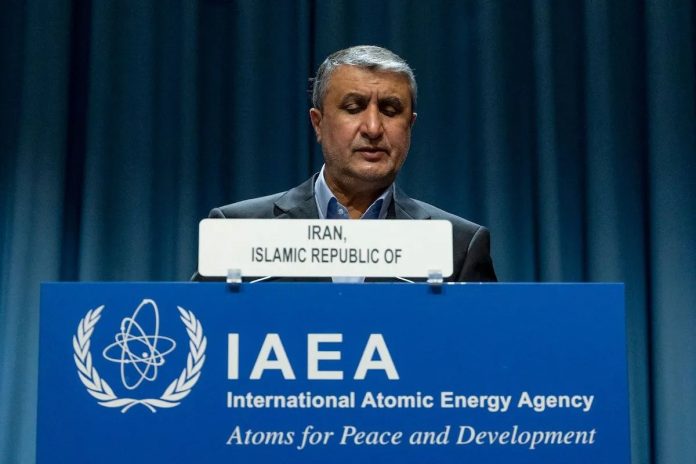
Guterres’s comments came at the start of the 10th review conference of the NPT, an international treaty that came into force in 1970 to prevent the spread of nuclear weapons.
The meeting, held at the UN’s headquarters in New York City, has been postponed several times since 2020 due to the COVID-19 pandemic. It will run until August 26.
Russia bars entry to dozens of British figures
Moscow has announced sanctions against 39 officials, business people and journalists from the United Kingdom, barring them from entering Russia for supporting the “demonisation” of the country and its international isolation.
The list published by Russia’s foreign ministry includes opposition Labour Party leader Keir Starmer and former prime minister David Cameron. Their names are added to those of more than 200 other Britons whom Russia has already banned, including most of the UK’s leading politicians.
“Given London’s destructive drive to spin the sanctions flywheel on far-fetched and absurd pretexts, work on expanding the Russian stop-list will continue,” the ministry announced in a statement.
The UK and its Western allies have imposed sweeping sanctions on Russia in response to its invasion of Ukraine.
Biden urges Russia to engage in nuclear talks
The United States is ready to outline a new nuclear arms deal with Russia, President Joe Biden has said.
Speaking ahead of global nonproliferation discussions at the United Nations on Monday, Biden also called on Moscow to demonstrate its ability to negotiate with Washington over the issue in good faith.
Arms control has historically been an area where progress has been possible despite wider disagreements. Moscow and Washington in February extended their New START treaty, which caps the number of strategic nuclear warheads they can deploy and limits the land- and submarine-based missiles and bombers to deliver them, for five years.
“Today, my Administration is ready to expeditiously negotiate a new arms control framework to replace New START when it expires in 2026,” Biden stated in a statement.
“But negotiation requires a willing partner operating in good faith. And Russia’s brutal and unprovoked aggression in Ukraine has shattered peace in Europe and constitutes an attack on fundamental tenets of international order,” he added.
“Russia should demonstrate that it is ready to resume work on nuclear arms control with the United States,” he continued.
Blinken calls on Russia to live up to its arm control commitments
US Secretary of State Antony Blinken on Monday called on Russia to live up to its nuclear arms control commitments, accusing Moscow of “reckless, dangerous nuclear saber rattling” as part of its war in Ukraine and warning of the negative impact the war will have on this month’s conference to recommit to the importance of nuclear non-proliferation.
In remarks at the start of the Nuclear Non-Proliferation Treaty (NPT) Review Conference at the United Nations, the top US diplomat noted that Russia had joined with the other NPT nuclear states — the United States, United Kingdom, France, and China — in a joint statement in January emphasizing the importance of avoiding nuclear war and arms races.
“The very next month, Russia launched a full scale invasion of Ukraine, and it’s engaging in reckless, dangerous nuclear saber rattling, with its president warning that those supporting Ukraine self-defense, ‘risk consequences such as you have never seen in your entire history,’” Blinken said.
Blinken added Russia’s war is in violation of the UN Charter, the rules-based international order, and the Budapest Memorandum, the 1994 agreement under which Russia pledged to respect Ukraine’s sovereignty and Kyiv agreed to forfeit its nuclear weapon arsenal.
“What message does this send to any country around the world that may think that it needs to have nuclear weapons to protect, to defend, to deter aggression against its sovereignty and independence? The worst possible message. And so it’s directly relevant to what’s going on here this month at the United Nations,” he stated.
“Most recently, we saw Russia’s aggression with its seizure of Ukraine’s Zaporizhzhia nuclear power plant, the largest such plant in all of Europe,” Blinken continued, adding, “Russia is now using the plant as a military base to fire at Ukrainians, knowing that they can’t and won’t shoot back because they might accidentally strike a reactor or highly radioactive waste in storage.”
“That brings the notion of having a human shield to an entirely different and horrific level,” he said.
Blinken contrasted the actions by Moscow to those of the US, which he said has sought to avoid escalation “by forgoing previously scheduled ICBM tests and not raising the alert status of our nuclear forces in response to Russian saber rattling.”
“There is no place in our world, no place in our world for nuclear deterrence based on coercion, intimidation, or blackmail,” he noted.