Monday, January 19, 2026
Home Blog Page 1758

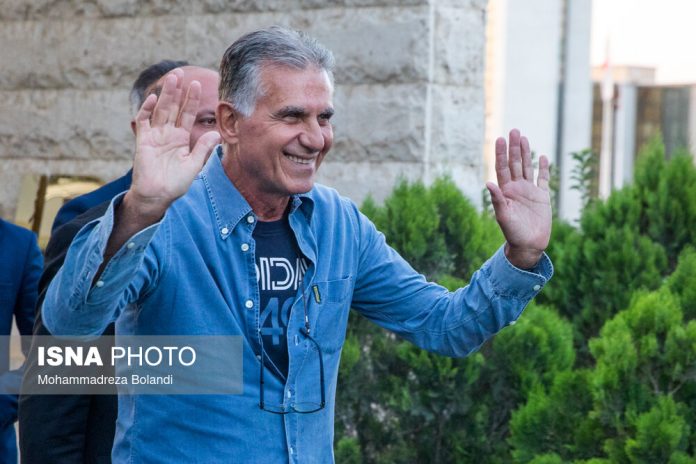
Queiroz back in Iran as head coach of natl. football team ahead of World Cup

Carlos Queiroz

The Portuguese arrived in Tehran in the early hours of Wednesday to take charge of Team Melli, around two months before the start of the World Cup spectacle in Qatar.

He replaced Dragan Skocic, who led the Iranian squad to victory in the Asia preliminaries but was fired from his position last month amid criticism and doubts over his performance.

It is the third time that Queiroz will be at helm of Iran’s national football team at the World Cup, after being in charge in the 2014 and 2018 editions.

“When the family call you home, all you do is simply just show up,” Queiroz wrote on Instagram.

“Fully committed to your duties and ready for the mission. Let’s do it together lads! To the future! Thank you so much Team Melli.”

Iran will kick off their World Cup campaign against England in Group B on Nov. 21 before taking on Wales and the United States.

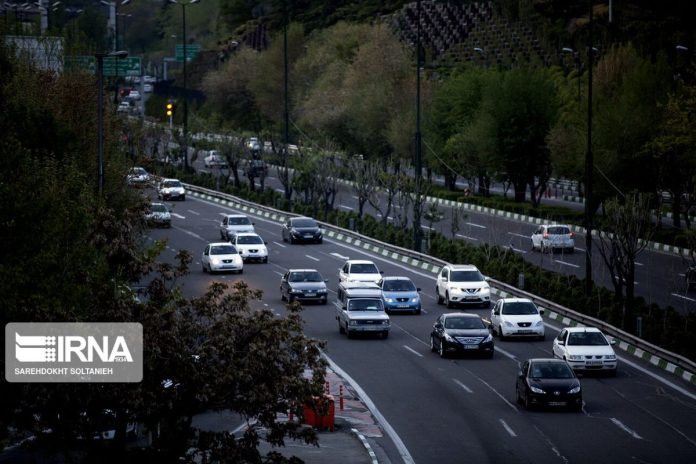
Police: Road accidents in Tehran leave 600 deaths annually

Iran's Road

Colonel Mohammad Razzaqi, deputy head of operations at Tehran Province’s Traffic Police, said the notoriously heavy traffic on overburdened streets in Tehran lead to both accidents and air pollution.

More than half of all road traffic deaths are among vulnerable groups including, pedestrians, cyclists, and motorcyclists.

Col. Razzaqi revealed that the number of vehicles moving in Tehran is almost eight times more than the capacity the streets are designed for.

He also regretted the time squandered to beat traffic in Tehran is way beyond the global average.

According to figures released by Tehran Traffic Control Company, over nine million residents in Tehran waste an average of 31 minutes per day in traffic, amounting to over 1.5 billion hours annually.

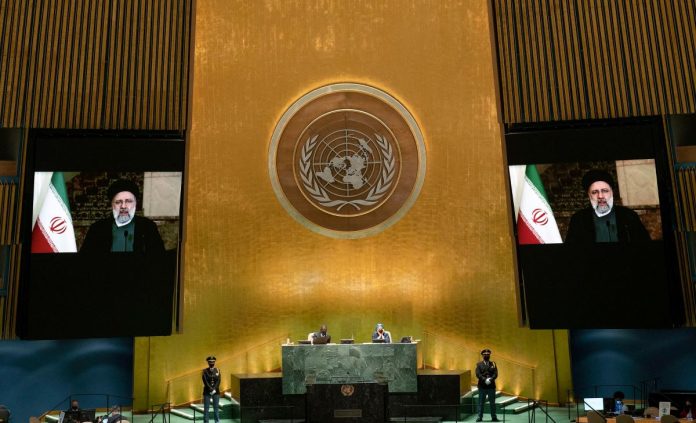
Official: President Raisi to visit New York for UN meeting

President Ebrahim Raisi

“President Raisi’s message from Samarkand to New York is: Shaping A Just International Order through Economic Multilateralism,” tweeted Mohammad Jamshidi, President Raisi’s deputy chief of staff for political affairs on Wednesday morning.

The Iranian president is slated to leave for the Uzbek city of Samarkand later on Wednesday for a session of the Shanghai Cooperation Organization (SCO) on September 15-16 and other meetings on the sidelines with senior officials of the Eurasian body.

Last month, Ali Bahadori-Jahromi, the Iranian administration’s spokesman, said “the preliminary planning has been done for the president’s attendance” at the General Debate of the UNGA, which will open at the world body’s HQ in New York on 13 September 2022.

This year’s Debate will be fully in person for the first time since the coronavirus pandemic began plaguing the world in late 2019.

The Iranian president is under US sanctions, but the State Department said in late August that it would not deny a visa for the Iranians planning to attend the 77th session of the UN General Assembly.

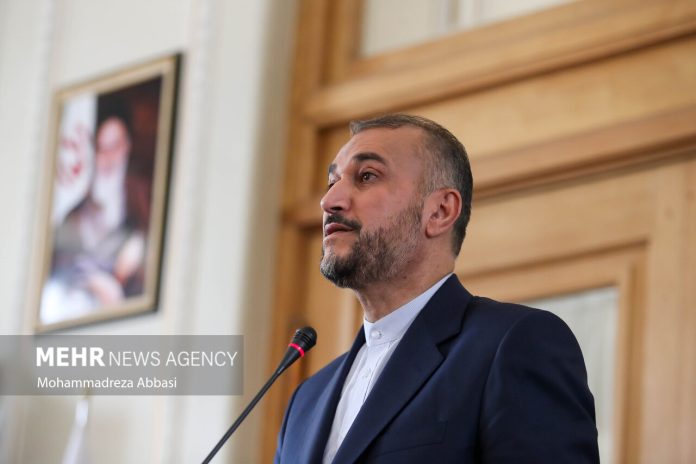
Iran FM calls for cessation of hostilities between Armenia, Azerbaijan Republic

Iran and Qatar FMs Hossein Amirabdollahian and Mohammad bin Abdul Rahman Al Thani

Hossein Amirabdollahian made the remarks in a meeting with outgoing Russian Ambassador to Iran Levan Dzhagaryan on Tuesday.

The Iranian foreign minister emphasized the need for a peaceful and political resolution of the differences between the two neighboring countries in the Caucasus.

He described any geopolitical changes in the region as unacceptable, stressing the necessity of making efforts to restore calm to the region.

The top Iranian diplomat also stressed the need for the finalization of the document on long-term cooperation between the two countries.

For his part, Dzhagaryan described his ambassadorial term in Iran as a significant period in his political life.

The senior Russian diplomat also stressed the Russian Federation’s determination for expansion of cooperation with the Islamic Republic of Iran.

Live Update: Russia’s “Special Operation” in Ukraine; Day 203

Russia Ukraine War

Ukrainian military says it sees signs of Russian movement into Crimea

The Ukrainian military announced it is seeing signs of a movement among Russian forces from parts of the south into Crimea.

“It’s not exactly our area of responsibility, but it’s close, so we’re watching it too. We see and understand the attempts of the occupiers to flee to Crimea and regroup there. It will be easier for us: gatherings of military equipment are a big target,” Natalia Humeniuk, spokesperson for Operational Command South, said at a briefing Wednesday.

Humeniuk’s remarks follow comments from the mayor of Melitopol, Ivan Fedorov, on Tuesday, when he claimed that “columns of military equipment have already been recorded at the checkpoint in Chongar [from Kherson into Crimea.] This was expected — the rapid Ukrainian offensive leaves them no chance.”

Fedorov also claimed that in order to take stolen goods from the Zaporizhzhia region to Crimea, Russian soldiers were breaking into garages and stealing civilian cars.


EU Commission still exploring Russian gas price cap: Energy commissioner

The European Commission still wants a European Union price cap on Russian gas, but more work is needed to assess the impact of the measure, the bloc’s energy commissioner has said.

“We continue to believe that a gas price cap on Russian pipeline imports is warranted, but more work is needed to assess adverse impacts on some member states,” Kadri Simson stated, adding that Brussels was analysing how a broader price cap on all EU gas imports could work.

The Commission mooted a Russian gas price cap earlier this month, but EU countries rejected the idea, with some worried Moscow would retaliate by cutting off the remaining gas it still sends to Europe.


Ukrainian president visits recaptured Izyum

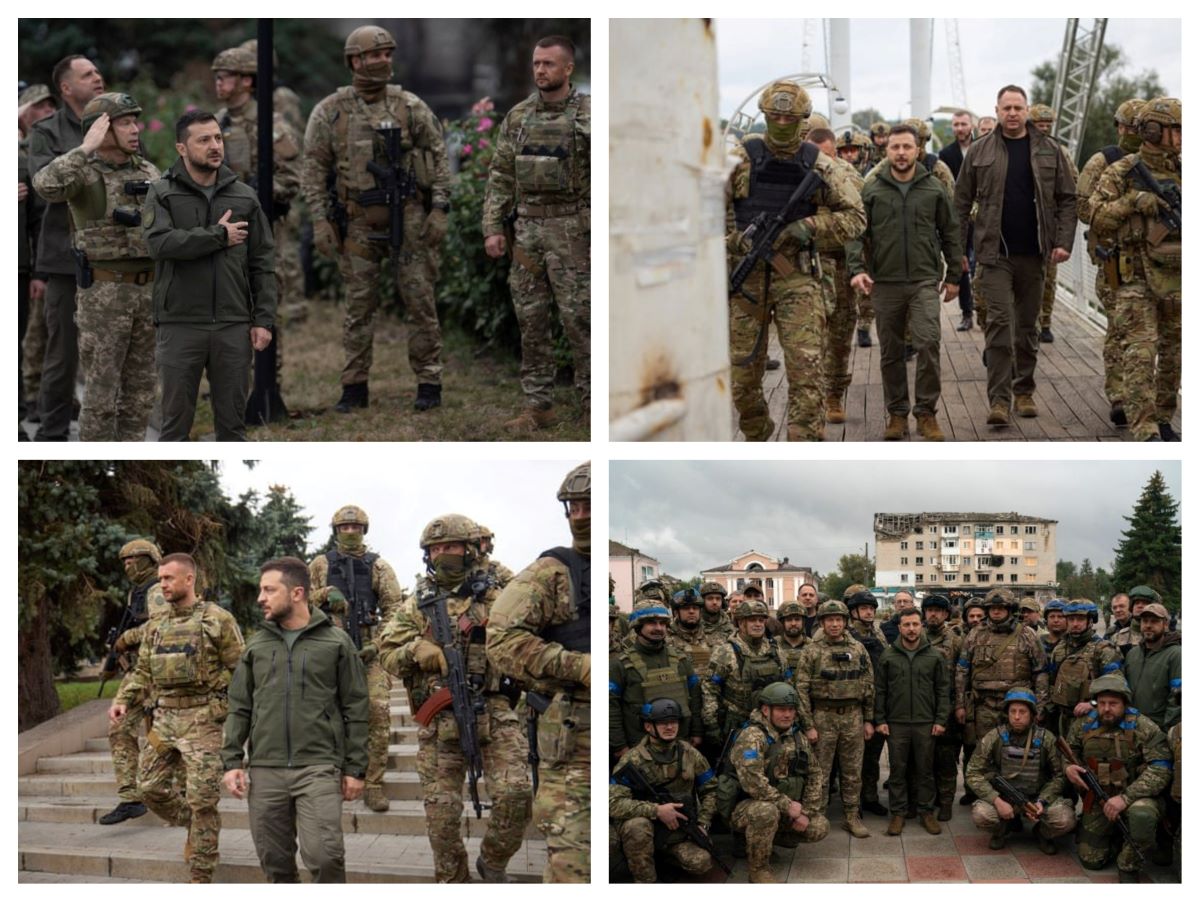
Ukrainian President Volodymyr Zelensky visited newly liberated Izium in the northeastern region of Kharkiv on Wednesday, days after the country’s forces recaptured the city.

“Earlier, when we looked up, we always looked for the blue sky. Today, when we look up, we are looking for only one thing — the flag of Ukraine,” Zelensky said in a post on the presidential Telegram channel.

“Our blue-yellow flag is already flying in the de-occupied Izium. And it will be so in every Ukrainian city and village. We are moving in only one direction — forward and towards victory,” he added.

“I want to thank you for saving our people, our hearts, children and future,” Zelensky continued.

“It has been extremely difficult for you in recent months. Therefore, I ask you to take care of yourselves, because you are the most valuable asset we have,” he said, adding, “It may be possible to temporarily occupy the territories of our state. But it is definitely impossible to occupy our people, the Ukrainian people.”
Russia Ukraine War

Ukrainian forces took back control of Izium on Saturday, marking a huge strategic blow to Russia’s military assault in the east.

Izium, which sits near the border between the Kharkiv and Donetsk regions, was under Russian occupation for over five months and became an important hub for the invading military.

Moscow was using Izium as a launching pad for attacks southward into the Donetsk region and Kupyansk, some 30 miles to the north of Izium, as a rail hub to resupply its forces.


Zelensky: Ukrainian troops recaptured some 8,000 square kilometres

Ukrainian forces have recaptured about 8,000 square kilometres (3,090 square miles) of territory from Russian forces so far this month, the country’s president has noted.

In a Tuesday evening address, Volodymyr Zelensky stated “stabilisation measures” had been completed in about half of that area.

The vast majority of the territory reportedly retaken by Kyiv’s troops during their multi-pronged counteroffensive lies in Ukraine’s northeastern Kharkiv region.


Putin ‘rejected deal that could have avoided invasion’

Reuters reports on a curious story about Russian officials supposedly striking a deal that would have avoided the invasion of Ukraine – one that Vladimir Putin rejected.

Putin’s chief envoy on Ukraine told the Russian leader as the war began that he had struck a provisional deal with Kyiv that would satisfy Russia’s demand that Ukraine stay out of NATO, but Putin rejected it and pressed ahead with his military campaign, according to three people close to the Russian leadership.

The Ukrainian-born envoy, Dmitry Kozak, told Putin that he believed the deal he had hammered out removed the need for Russia to pursue a large-scale occupation of Ukraine, according to these sources. Kozak’s recommendation to Putin to adopt the deal is being reported by Reuters for the first time.

But, despite earlier backing the negotiations, Putin made it clear when presented with Kozak’s deal that the concessions negotiated by his aide did not go far enough and that he had expanded his objectives to include annexing swathes of Ukrainian territory, the sources said. The upshot: the deal was dropped.

When asked about Reuters’ report, the Kremlin spokesman Dmitry Peskov noted, “That has absolutely no relation to reality. No such thing ever happened. It is absolutely incorrect information.”


EU to unveil proposals to tackle energy crisis

The European Union will today propose a raft of measures to tackle the energy crisis, the head of the bloc’s executive arm has said.

European Commission President Ursula von der Leyen outlined the proposals – which include propositions on profit-sharing and electricity demand cuts, among other things – in a speech to the European Parliament in Strasbourg before they are expected to be published in full later on Wednesday.

The 27-member state EU is desperate to pull down surging gas and power prices triggered by Russian supply cuts that are stoking record-high inflation, hampering industrial activity and inflicting sky-high bills upon citizens ahead of winter.

“I stand here with the conviction that with courage and solidarity, Putin will fail and Europe will prevail,” von der Leyen stated.

“Europe’s solidarity with Ukraine will remain unshakeable,” she added.


Pope decries “senseless and tragic war” in Ukraine

Pope Francis has arrived in Kazakhstan for a three-day visit to the country.

The Pope addressed political leaders in the capital Nur-Sultan on Tuesday evening telling them that he had come at a time of “the senseless and tragic war that broke out with the invasion of Ukraine.”

“I have come to echo the plea of all those who cry out for peace, which is the essential path to development for our globalized world,” he said.

On Wednesday the Pope attends the VII Congress of Leaders of World and Traditional Religions, a gathering of international religious leaders.

One religious leader who is noticeably absent is Russian Orthodox Patriarch, Kirill, who was due to meet Francis in Kazakhstan but announced at the end of August that he would not be attending.

Chinese President Xi Jinping is also due in Kazakhstan on Wednesday for separate political meetings.

The Vatican has announced that there is no planned meeting between the Pope and the Chinese President.

Pope Francis told journalists on the papal plane from Rome that “he was always ready to visit China.”


EU support for Ukraine ‘unshakeable’

European Commission President Ursula von der Leyen has vowed that the EU’s solidarity with Ukraine is “unshakeable.”

With Ukrainian first lady Olena Zelenska the guest of honour as she delivered her annual state of the union speech, von der Leyen was set to unveil proposals to curb the energy price spike that has hit Europe in the wake of Russia’s invasion of Ukraine.

“Never before has this Parliament debated the State of our Union with war raging on European soil,” von der Leyen told the European Parliament in Strasbourg.

“And I stand here with the conviction that with courage and solidarity, Putin will fail and Europe will prevail,” von der Leyen said, adding, “Europe’s solidarity with Ukraine will remain unshakeable.”

“This is the time for us to show resolve, not appeasement,” she continued, noting, “We are in it for the long haul.”


Russia has probably used Iranian-made drones for first time: UK

Russia has probably used Iranian-made uncrewed aerial vehicles in Ukraine for the first time, Britain’s defence intelligence claimed on Wednesday, after Kyiv reported downing one of the UAVs – a Shahed-136 – on Tuesday.

The device is a “one-way attack” weapon, the MoD announced, and has been used in the Middle East.

It added, “Russia is almost certainly increasingly sourcing weaponry from other heavily sanctioned states like Iran and North Korea as its own stocks dwindle.”

Iranian Foreign Minister Hossein Amirabdollahian did not confirm Washington claim that Tehran is providing Russia with military equipment, including unmanned aerial vehicles.

He assured that Tehran avoids any steps that may result in an escalation in Ukraine conflict.


Biden: Ukraine has made progress, hard to tell if war at turning point

Ukraine has made significant progress as it pushes back Russian forces but it is not possible to tell if the war is at a turning point, US President Joe Biden stated.

Asked whether Ukraine has reached a turning point in the war, he said: “The question is unanswerable. It’s hard to tell.”

“It’s clear the Ukrainians have made significant progress. But I think it’s going to be a long haul,” the president added.

Ukraine inflation could rise to 30 percent next year: Finance minister

Annual inflation in Ukraine could rise to 30 percent next year, an eight-year high, the Interfax-Ukraine news agency cited Finance Minister Denys Shmyhal as saying, as he presented a draft budget dominated by the war with Russia.

Shmyhal stated 1.14 trillion Ukrainian hryvnias ($30.9bn), or almost half the 2023 budget, would be directed to the security and defence sectors.

The budget, which Shmyhal called “a conservative average pessimistic calculation”, sees real gross domestic product growth (GDP) of 4.6 percent with annual inflation of up to 30 percent. This would be the highest since the average 48.7 percent recorded in 2015.

Another 35% of the budget would be spent on social programs such as pensions, assistance to low-income families, payments to internally displaced people, as well as spending on medicine and education, Shmyhal added.

To help make up for an expected shortfall, Kyiv would reduce the number of officials, cutting salaries and bonuses.


Zelensky adviser: Ukrainian counteroffensive continues but has “slowed down slightly”

As Ukraine continues to liberate swathes of territory from Russian occupation in the east, presidential military adviser Oleksiy Arestovych said the country’s counteroffensive has “slowed down slightly.”

“The counteroffensive continues but has slowed down slightly because most of the Ukrainian forces are fighting to capture the city of Lyman, to open our way into the Luhansk region. We will intensify our strikes and liberate new territories in a different way,” he told CNN’s Becky Anderson in an interview.

Lyman, an important rail hub, is roughly 37 miles (60 kilometers) west of the strategically important Ukrainian city of Severodonetsk.

President Volodymyr Zelensky noted Ukrainian forces have taken 6,000 square kilometers of land since the beginning of the month. His adviser also said they conducted a storm operation that liberated “more than 300 settlements in four days.”

“We prepared carefully for this. It has taken months of planning. We used reconnaissance and accuracy, we used our allies, especially the United States army, for information on this, and we used Western weapons,” Zelensky added.

During the recent offensive, Ukrainian forces managed to capture Russian weaponry that would support around three brigades in their fighting, Arestovych told CNN.

He also said Russia suffered “huge casualties” and lost some soldiers who Ukraine had captured as prisoners of war. Asked by CNN whether they will be afforded the rights they are entitled to under the Geneva convention, he said “absolutely.”

“We are a European army and a European country, we follow international law. We do not break the Geneva Convention or other international conventions about the rules of war… We give them rights and the possibility to call home, their mothers, and fathers…and to speak with journalists if they want,” Arestovych continued.

Arestovych added Ukrainian forces used disinformation to trick Russian soldiers on the battlefield by making them think they were going to strike at Kherson.

“They thought we were going to start the main strike on the city of Kherson. We did start our strike on Kherson, but it was an assisted strike, not the main strike. The main strike we provided in the east of our country, and the Russians were completely surprised about this, because two months before, we were only speaking about the Kherson region. That’s why we liberated territory in four days that Russians tried to keep for about four months.” he continued.


Pentagon has seen “a number of Russian forces” cross back into Russia from Kharkiv region

The Pentagon announced some Russian forces have crossed from the Kharkiv region back into Russia.

“We’ve seen a number of Russian forces, especially in the northeast, in the Kharkiv region, cross over the border back into Russia as they’ve retreated from the Ukrainian counter-offensive,” Pentagon press secretary Brig. Gen. Pat Ryder told reporters during a briefing Tuesday.

But Russian forces still “do exist en masse in Ukraine,” Ryder noted.

The US was not surprised that Ukraine forces “pushed as quickly as they have” in the counteroffensive, Ryder said, but based on reports that the Pentagon has seen “on the Russian military response, it was probably the Russians” who were surprised by the push.


Ukrainian official warns about abandoned ammo and Russian soldiers still at-large in Kharkiv region

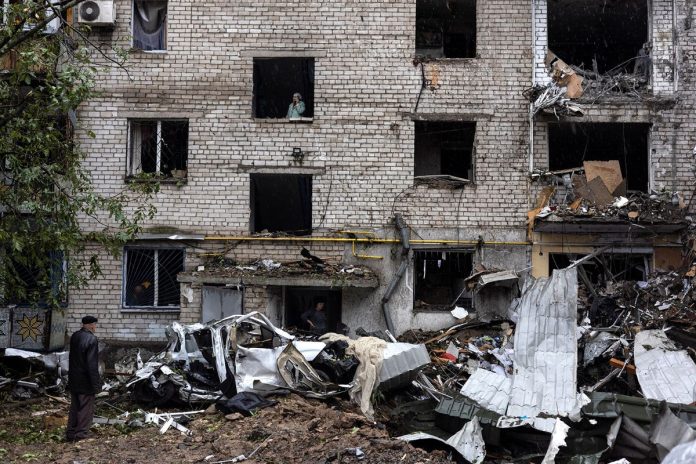
A Ukrainian official said that despite the retreat of Russian forces from much of the Kharkiv region, the area remains dangerous — with some Russian soldiers “wandering in the forests” and huge amounts of abandoned ammunition yet to be secured.

Stepan Maselskyi, head of the Izium district military-civilian administration, told CNN that there is no power, electricity and water in most settlements.

There are also “major problems with gas in most of the communities, very serious damage to gas pipelines. There is no provision of medical services. Medical services were not provided during the occupation,” he said.

Maselskyi told CNN by phone that there is a “very big danger [with munitions left behind]. A lot of ‘booby traps,’ a lot of explosive items left, scattered.”

He added that near Balakliya, which was re-taken last week, one person was killed by a mine on Tuesday.

“Many sappers work in the area, but the [liberated] territory is very large. It takes time to de-mine everything and defuse all explosive objects,” he continued.

There are “a lot of places where ammunition was left, abandoned,” he added.

According to Maselskyi, “Some [Russian soldiers] are still wandering in the forests of the Izium region. … All measures are now being taken to detain them.”

He referred further comment to the military.

“The occupiers looted everything they could,” Maselskyi told CNN, adding, “From households of people who had evacuated, everything was taken away. We try to prevent looting by locals. We immediately take the liberated settlements under the protection of the National Police.”

Maselskyi said it would be a while before residents could return home.

“It is dangerous now, until the territory is de-mined and the shells are dismantled. Until we are completely sure that the territory is clear of mines, tripwires and that the occasional occupiers are not hiding anywhere — only then will special bodies allow entry,” he said.

Maselskyi noted restoring electricity and water is a top priority.

“We have a week of hard 24/7 work ahead. And only after that we will make a decision: when to give permission to return,” he added.


Ukraine’s envoy to US: Counteroffensive is major turning point in war

Ukraine’s Ambassador to the US Oksana Markarova said the counteroffensive against the Russians shows that Ukrainian forces have gained momentum.

“It’s the 202nd day of the war, and this counteroffensive, which already allowed us to free more than 2,500 square miles of Ukrainian territory, and more importantly, almost 300 villages and different settlements, and our people there, is one of the major turning points,” Markova told CNN’s Wolf Blitzer.

She added that Ukrainian forces are still facing difficulties in the war.

“The fight that Russians are putting up, of course when they’re not running, is pretty big. And especially they’re doing very cowardice attacks on our infrastructure, and just still shooting at the civilian buildings, places, everywhere. But it’s a big momentum when we are showing that we can win,” she continued.


Ukraine says it has restored main power lines to Kharkiv, local region

Ukrainian repair crews have restored the two main power lines supplying the eastern city of Kharkiv and the surrounding region, power firm Ukrenergo said after Russian shelling caused blackouts.

In a statement, Ukrenergo added repair work on other lines would continue, but gave no details.


Ukraine expects Russian attacks on energy system to grow

Ukraine has announced it feared Russia would step up attacks on its energy system to turn the screws on Kyiv this winter after a series of attacks that caused blackouts, and that it was pleading with Western powers for air defence technology to avert this.

“We expect the quantity of such attacks to grow, and are ready for various scenarios,” senior presidential adviser Mykhailo Podolyak told the Reuters news agency.

Podolyak added that Ukrainians should be prepared for problems with power and heat this coming winter.

“Ukraine is expecting its difficult moment from the moment it regained its independence [in 1991],” Podolyak stated.

Podolyak said Ukraine had been asking its foreign allies for air defence systems to protect vital infrastructure since the beginning of Moscow’s invasion, but expressed frustration at the lack of supply.


US may announce new military aid package within days: White House

The Joe Biden administration is likely to announce a new military aid package for Ukraine in the “coming days”, the White House has said.

“I do think you’ll see another one here in coming days,” White House national security spokesperson John Kirby told reporters.


Scholz tells Putin to ‘fully implement’ Ukraine grain deal

German Chancellor Olaf Scholz called on Russian President Vladimir Putin to stick to a deal on grain exports from Ukraine which Moscow has repeatedly criticised.

In a phone call, Scholz urged Putin “not to discredit and continue to fully implement” the grain deal in light of the stretched global food supply, the chancellor’s spokesman Steffen Hebestreit said.

Scholz has called on Putin to withdraw his troops from Ukraine.

Scholz “urged” Putin in a 90-minute telephone call to “come to a diplomatic solution as quickly as possible, based on a ceasefire, a complete withdrawal of Russian forces and respect for the territorial integrity and sovereignty of the Ukraine”, Hebestreit added.


Denmark says it will host training of Ukrainian soldiers

Denmark has agreed to train Ukrainian soldiers on Danish soil, the Ritzau news agency quoted Minister of Defence Morten Bodskov as saying after a meeting with his Ukrainian counterpart in Kyiv.

Bodskov could not provide details about the number of Ukrainian soldiers, or timing or location of the training, Ritzau reported.

“I cannot get into the details, but there will be training of the Ukrainian defence in Denmark,” the minister told Ritzau.

The defence ministry did not immediately reply to a request for comment.


Estonia supplies Ukraine with modern mobile hospital

Estonian defence minister supplies Ukraine with a modern mobile hospital during a visit to Kyiv.

The Estonian President Alar Karis tweeted about the moment and noted, “Estonia will continue to support Ukrainian efforts to win this war. and this is another great example of Estonia and Germany working together to make things happen.”


EU sanctions hurting Moscows potential: EU foreign policy chief

Moscow’s potential to sustain its weapons and military equipment in the war is being severely affected by sanctions, the EU’s top diplomat said, arguing almost half of Russia’s technology depended on European imports.

“If you look at the inside, the guts of a Russian tank destroyed on a Ukrainian street, you will see the tremendous amount of electronic components manufactured by European countries in those tanks,” EU foreign policy chief Josep Borrell told lawmakers in Strasbourg.

“Forty-five percent of Russia’s technology depends on European imports and this has been cut off,” he added.

Since the war began on February 24, the EU has placed several massive sanction packages on Moscow’s financial sector, as well as energy and transport.


Ukraine has re-captured 3,800 kilometres: Deputy DM

Since September 6, Ukraine’s counter-offensive has recaptured 3,800 square kilometres (1,467 square miles) of territory in its northeastern Kharkiv region, Deputy Minister of Defence Hanna Malyar said.

Speaking from the recaptured town of Balakliia, Malyar stated that the territory recaptured from Russian forces consisted of more than 300 settlements and approximately 150,000 current residents.

“The operation is ongoing. Its aim is the full liberation of Kharkiv region … We believe that this will happen in the nearest future,” Malyar added.

President Volodymyr Zelensky said overnight that Ukraine had “liberated more than 6,000sq km (2,400sq miles) of the territory of Ukraine in the south and in the east” since September 1.

The figure includes the kilometres mentioned by Malyar for the past week.


Ukraine to experience a tough winter: IOM director general

Any damage inflicted on Ukraine’s power and heating systems will seriously exacerbate living conditions this winter, especially for an estimated 6.9 million internally displaced people, the United Nations migration agency said.

In response to a Ukrainian counteroffensive in the east and south of the country recently, Russia has stepped up shelling of power stations and other infrastructure, causing blackouts in the city of Kharkiv and elsewhere.

“Any attempt to damage those facilities will have a terrible impact on the capacity to heat those cities,” Antonio Vitorino, director general of the International Organization of Migration (IOM) told a group of reporters in Kyiv.

“We are making all efforts to assist the population in preparing for the winter but we need electricity, and that depends on state services to [restore] a working electricity system,” added Vitorino, who met President Zelensky on Monday.

As many as eight million people, mostly women and children, have fled Ukraine in the past six months. Some of those people have since returned to Ukraine, which had a pre-war population of about 44 million.

Iranian filmmaker Yousefinejad dies of stroke at 53

Asghar Yousefinejad

Yousefinejad slipped into a coma after the stroke but soon passed away.

He worked as a film critique for many years. Then Yousefinejad became a cinematographer and director.

His career as a filmmaker resulted in movies “Ev” (Turkish word for The Home) and “The Doll”.

The Home won the Crystal Simorgh for the best movie in the art and experience section of the Fajr Film Festival.

But The Doll was disqualified from contesting the festival.

His debut was however “You can’t hear the rain of dreams” (2003) in which Iranian actress Yekta Nasser starred.

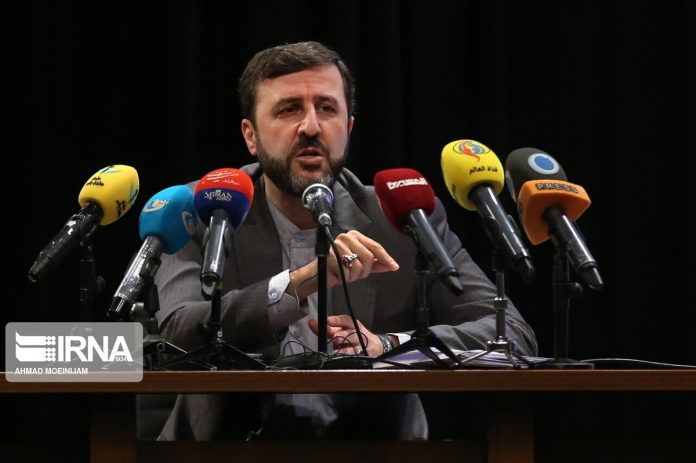
Iranian rights chief slams US’s coercive measures as crime against humanity 

Kazem Gharib Abadi

Kazem Gharibabadi was speaking at the UN Human Rights Council meeting in Geneva.

Gharibabadi said Iran is self-sufficient in producing most of the medicines it needs but it has to import some rare materials.

He noted that foreign companies decline to sell such medicines to Iran and this has endangered the health of patients in the country.

The Iranian Judiciary’s deputy chief for international affairs described the sanctions as a big obstacle to international cooperation, especially concerning refugees and the fight against narcotics.

Gharibabadi also spoke about the impact of unilateral sanctions on other issues such as inflation, employment and infrastructure.

He said unilateral coercive measures (UCMs) are an example of crime against humanity as they cause many people to lose their lives.

Gharibabadi noted those that impose such bans on nations must be held accountable for their actions.

Elsewhere in his remarks, the Iranian rights chief thanked the UN special rapporteur for her report on the impact of the unilateral sanctions on Iran.

In the report, Ms. Alena Douhan criticized the sanctions on Iran and demanded the removal of all unilateral coercive measures against the country.

She urged the UN to come up with required mechanisms to give reparations to victims of such acts.

President Raisi: Caucasus security significant to Iran

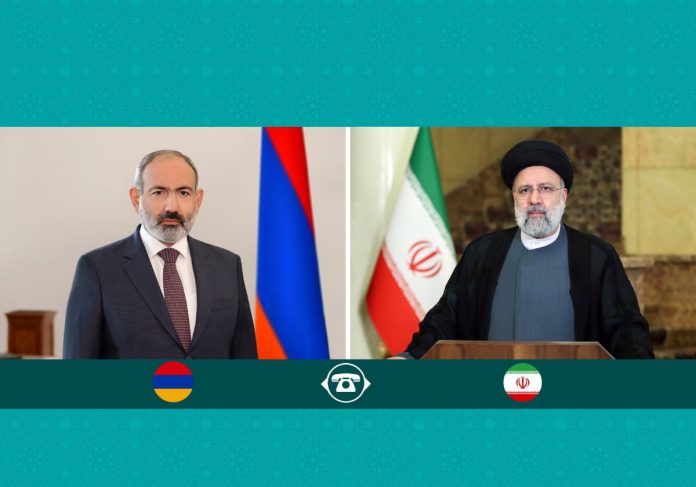
Raisi and Pashinyan

Speaking in a phone conversation with Armenian Prime Minister Nikol Pashinyan, the Iranian president reiterated that Tehran is resolved to cooperate with Yerevan in all areas to help the interests and security of the whole region.

Expressing deep concern about the continuation of tension across the region, President Raisi regretted that peace and tranquility have not been yet restored in the Caucuses.

He referred to the infiltration of the Zionist regime in the region and said that this presence is a threat to regional security and to its hosts as well.

Noting that the region cannot tolerate a new war, the president added that the signatories to a trilateral ceasefire agreement have to remain committed to its text and refrain from taking any measure that could initiate another tension in the region.

The Armenian prime minister, for his part, briefed the Iranian president on the recent developments in the Caucuses region and said that Iran has always played a constructive role in resolving regional crises and tensions.

Pashinyan reiterated that his country is seeking further expansion of relations with Iran.

Official: Iran-ECO trade up 40 percent

Iran Trade

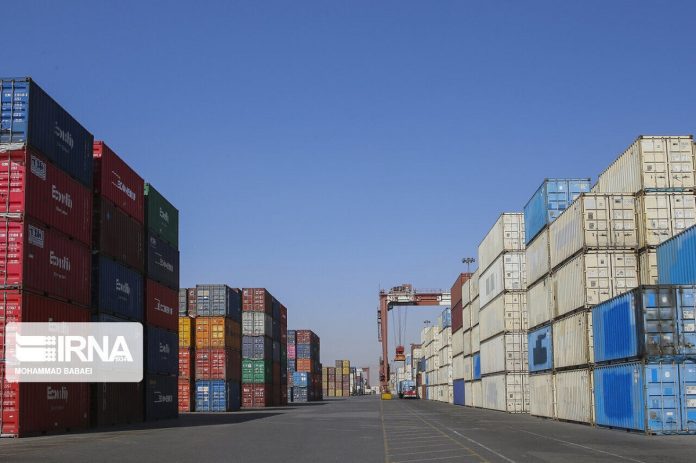
Ruhollah Latifi said Tuesday that 7.3 million tons of goods worth 4.1 billion had been sold to ECO partners in the first five months of the current Persian calendar year, which began on March 20, 2022, up by 40 percent compared to the similar time span a year earlier.

Iran’s top ECO customer was Turkey, followed by Afghanistan and Pakistan, the official said.

Imports from the ECO nations also witnessed a 38-percent increase in value, although the volume of trade decreased by two percent, he added.

Most of the purchases were from Turkey, Pakistan and Kazakhstan, respectively.

The entire non-oil exchanges between Iran and ECO states included 9.1 million tons of commodities worth $6.8 billion in value, which marked a 39 percent rise in comparison with the same period last year.

Latifi attributed Iran’s growing economic exchanges to the administration’s neighbors-first policy, the country’s membership in regional treaties, and promotion of bilateral and multilateral ties with other states in the fields of politics and economy.

The Islamic Republic of Iran, Afghanistan, Azerbaijan Republic, Kazakhstan, Kyrgyz, Tajikistan, Turkmenistan, Uzbekistan, Turkey and Pakistan are ECO member states.

Iranian expert dismisses claims that 9/11 was an inside job

11 September

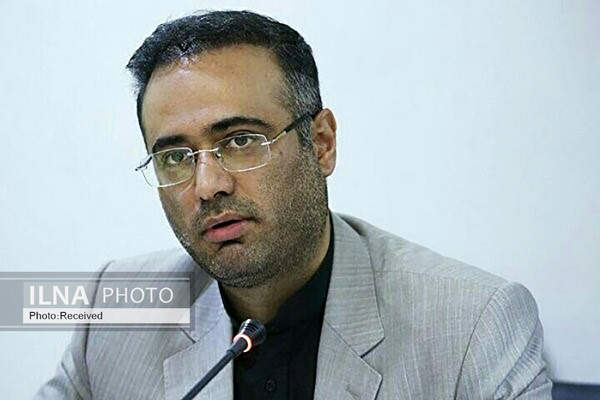
In an exclusive interview the Iranian Labor News Agency, ILNA, Amir Dabirimehr also noted that the US suffered losses from the attacks, rejecting claims that Washington benefited from the deadly events.

Dabirimehr added it’s suspicious that the US has so far declined to shed light on the role of Saudi Arabia in the 9/11 attacks.

He said following the attacks, the US published a 600-page report including 28 pages dedicated to the role of Saudi Arabia in the terrorist act.

Dabirimehr said that portion of the report has been left out and the public cannot read those pages.

He noted that this shows strong bonds between the Saudis and the US government.

Dabirimehr said the US believes that its relationship with Saudi Arabia is highly important and that’s why it refused to reveal the Saudis’ role in the 9/11 attacks.

Amir Dabirimehr

He noted that 9/11 was beyond a mere historic event because it had very deep ramifications for the whole world.

Dabirimehr further said following the incident, the US managed to divide into two camps: good and evil.

According to this Iranian expert, the US portrayed those who sided with the country as good and those who stood up against Washington as evil.

Dabirimehr said the other international players failed to oppose the US’s portrayals of other countries in one way or another after 9/11 and this allowed Washington to press ahead with its destructive agenda in Afghanistan and Iraq.

He said Iran cleverly condemned the 9/11 attacks after they happened and had it not done so, the country would probably have faced dire consequences.