Sunday, December 28, 2025
Home Blog Page 173

Spy agency claims about 2,000 North Korean soldiers killed in Russia deployment

North Korean Soldiers

Seoul’s National Intelligence Service said in April “the number of war dead was at least 600. But based on updated assessments, it now estimates the figure at around 2,000,” lawmaker Lee Seong-kweun told reporters after a briefing from the spy agency.

South Korean and Western intelligence agencies have said the North sent more than 10,000 soldiers to Russia in 2024 — primarily to the Kursk region — along with artillery shells, missiles and long-range rocket systems.

Lawmaker Lee said that the NIS believed that Pyongyang planned to deploy another 6,000 soldiers and engineers to Russia and that 1,000 had already arrived.

“It is assessed that out of the recent third deployment plan of 6,000 troops, around 1,000 combat engineers have arrived in Russia,” Lee added.

Earlier this year, Moscow’s Foreign Minister Sergei Lavrov stated that the North would send builders and deminers to the Kursk region.

North Korea only confirmed it had deployed troops to support Russia’s war in Ukraine in April and admitted that its soldiers had been killed in combat.

Since then, North Korean leader Kim Jong Un has met with the families of soldiers killed fighting for Russia against Ukraine and offered condolences for their “unbearable pain”.

State media has run images of an emotional Kim embracing a returned soldier who appeared overwhelmed, burying his face in the leader’s chest.

The leader was also seen kneeling before a portrait of a fallen soldier to pay his respects and placing medals and flowers beside images of the dead.

Russia and North Korea signed a military deal last year, including a mutual defence clause, during a rare visit by Russian President Vladimir Putin to North Korea.

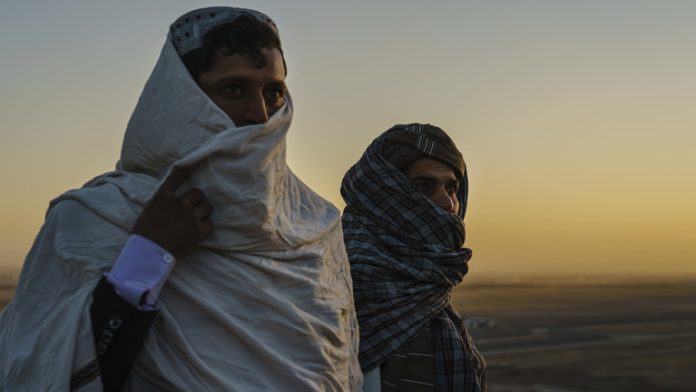
Taliban appeals for global aid as rescue teams search for survivors

Rescuers searched into the night for survivors on Monday after the 6.0 magnitude quake struck on Sunday, destroying entire villages across the country’s eastern Kunar province which borders Pakistan.

Many remained trapped under the debris of mud and stone homes built into steep valleys but rescuers struggled to reach remote areas due to rough mountainous terrain and inclement weather. It was a shallow earthquake, taking place just six miles beneath the earth’s surface, which is known to have a particularly destructive impact.

The quake killed 812 people across the provinces of Kunar and Nangarhar, administration spokesperson Zabihullah Mujahid said. Authorities said they expected casualties to rise further once rescue teams reached more isolated locations, many of which remained inaccessible more than 24 hours after the earthquake struck.

Sharafat Zaman, spokesperson for the health ministry in Kabul, called for international aid to tackle the devastation wrought by the quake that struck at around midnight local time.

“We need it because here lots of people lost their lives and houses,” he said.

The earthquake hit at a time when Afghanistan is already suffering from a severe economic crisis and a crippling withdrawal of international aid, following the takeover of the country by the Taliban in 2021. Hardline Taliban policies, such as a ban on female education and employment, have spurred on a sharp drop in international aid funding and humanitarian assistance to the country.

The disaster will further stretch the resources of the war-torn nation’s Taliban administration, which is also grappling with the return of hundreds of thousands of Afghans deported by Iran and Pakistan in recent weeks.

Pezeshkian, Putin stress impact of implementing bilateral treaty, EAEU agreement

Speaking at the meeting on the sidelines of the 25th Shanghai Cooperation Organization (SCO) summit in Tianjin, China, on Monday, President Pezeshkian highlighted that the ongoing interactions with Russia are highly valuable for Iran. He stated that the execution of the long-term treaty would pave the way for increased collaboration, and emphasized that cooperation within the framework of the Eurasian Economic Union (EAEU) would further accelerate and facilitate substantial interactions between the two nations.

Pezeshkian noted his personal commitment to expediting the implementation of all agreements with Russia and addressing any potential obstacles. He highlighted the importance of exchanging experiences and fostering scientific and academic collaborations, which will synergize the capacities of both countries and create a solid foundation for comprehensive engagement.

Addressing the geopolitical landscape, Pezeshkian criticized the efforts of the United States and its allies to reinforce unilateralism. He pointed to discussions at the SCO summit, emphasizing that such international bodies provide a suitable platform for promoting multilateralism.

In response, President Putin conveyed his best wishes to the Supreme Leader of the Islamic Revolution, Ayatollah Seyyed Ali Khamenei, and emphasized that the relationship between the two countries is increasingly friendly and expanding, especially with the signing and implementation of the comprehensive long-term treaty.

He noted a significant increase in trade volume between Iran and Russia in recent months, asserting that the continuation of the free trade agreement between Iran and the EAEU will play a crucial role in further enhancing cooperation.

Putin also highlighted the importance of strengthening ties between the peoples of Iran and Russia, mentioning a notable rise in the number of Iranian students choosing to study in Russia. He highlighted the various cultural festivals and programs that both nations are jointly undertaking, as well as the growth in tourism exchanges.

The Russian president pointed out the regular and ongoing communications between the two countries regarding various regional and international issues, including their collaborations on Iran’s peaceful nuclear activities.

Iran says ready to cooperate with Turkey to overcome banking, customs barriers

In a meeting with Turkish President Recep Tayyip Erdogan on the sidelines of the 25th Shanghai Cooperation Organization (SCO) summit in Tianjin, China, on Monday, President Pezeshkian underlined the need for increased trade volume and commercial interactions between Iran and Turkey, stressing that facilitating banking and customs cooperation is crucial for achieving this goal.

Pezeshkian highlighted the importance of maintaining unity within the Islamic world and strengthening regional cooperation, expressing his commitment to fostering relationships with neighboring countries.

The Iranian president welcomed Turkey’s stance against the crimes of the Israeli regime and its decision to sever economic ties with the regime. He also expressed support for the agreements between Armenia and Azerbaijan aimed at stabilizing peace in the region, while opposing any foreign military presence in the Caucasus.

Regarding Iran’s nuclear program, Pezeshkian mentioned that Iran has initiated negotiations and cooperation with the International Atomic Energy Agency (IAEA) under new frameworks.

He stated that Iran is prepared to engage in indirect dialogue with the United States based on the recognition of the Islamic Republic’s nuclear rights, aiming for a win-win solution. He cautioned that European parties to the 2015 nuclear agreement lack the legitimacy to invoke the snapback mechanism due to their failure to fulfill obligations, warning that such actions would disrupt ongoing discussions.

Pezeshkian further noted that Iran and Turkey share similar positions on preserving Syria’s territorial integrity and ensuring political stability in Iraq. He also congratulated Erdogan on the occasion of Turkey’s Victory Day, also known as Turkish Armed Forces Day, expressing hope for constructive cooperation between the armed forces of both nations.

In response, President Erdogan affirmed Turkey’s support for Iran’s right to peaceful nuclear activities, stating that the activation of the snapback mechanism would be unconstructive. He acknowledged Iran’s concerns while advocating for continued dialogue with the IAEA, suggesting that maintaining communication with the US would thwart Israel’s plots.

Erdogan underscored the urgency of convening the High-Level Cooperation Council between Iran and Turkey and announced his intention to visit Iran for this purpose.

He reiterated the importance of political stability in Iraq and called for an end to massacre and crimes in Gaza, highlighting ongoing consultations with leaders from Azerbaijan and Armenia to stabilize peace in the Caucasus.

The Turkish president concluded by asking his Iranian counterpart to convey his warm regards to the Supreme Leader of the Islamic Revolution, Ayatollah Seyyed Ali Khamenei.

Over 250 media outlets protest Israel murdering Gaza journalists

“At the rate journalists are being killed in Gaza by the Israeli army, there will soon be no-one left to keep you informed,” the group’s general director, Thibaut Bruttin, announced in a statement on Monday.

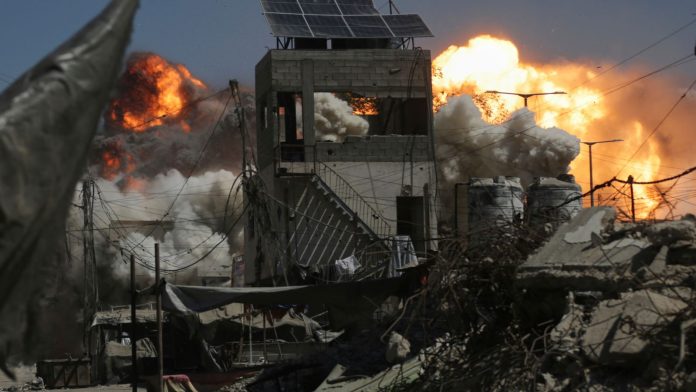
About 220 journalists have been killed during Israel’s war in Gaza since it began on October 7, 2023, according to RSF data. Independent analysis by Al Jazeera reveals that at least 278 journalists and media workers have been killed by Israel over the past 22 months, including 10 from the network

Monday’s protest was staged a week after five journalists – Al Jazeera’s Mohammad Salama, Reuters cameraman Hussam al-Masri, freelance journalist Mariam Abu Daqqa working for The Associated Press, Ahmed Abu Aziz and Moaz Abu Taha – were killed in two Israeli strikes on Nasser Hospital in Khan Younis in southern Gaza.

Earlier in August, six journalists, including Al Jazeera’s Anas al-Sharif, were killed in an Israeli air strike on a tent sheltering media workers outside the main gate of Gaza City’s al-Shifa Hospital.

In total, seven people were killed in the attack, including three other Al Jazeera staff – correspondent Mohammed Qreiqeh, 33, and cameramen Ibrahim Zaher, 25, and Mohammed Noufal, 29.

Those participating in the protest “demand an end to impunity for Israeli crimes against Gaza’s reporters, the emergency evacuation of reporters seeking to leave the Strip and that foreign press be granted independent access”, the RSF statement read.

The media group added it has filed four complaints at the International Criminal Court for war crimes it said the Israeli army has committed against journalists in Gaza.

International media have been denied free access to the Gaza Strip since the war broke out.

A few selected outlets have embedded reporters with Israeli army units operating in Gaza under the condition of strict military censorship.

Israel has killed at least 63,450 Palestinians in Gaza, most of them women and children, according to Gaza’s Ministry of Health.

US says ‘despicable’ Russian bombing campaign against Ukraine puts all sanctions options on table

Russia Ukraine War

“I think everything’s on the table,” Bessent said speaking to Fox News’ Senior National Correspondent Rich Edson in Washington, D.C.

“President Putin, since the historic meeting in Anchorage, since the phone call, when the European leaders and President Volodymyr Zelensky were at the White House the following Monday, has done the opposite of following through on what he indicated he wanted to do. As a matter of fact, he has, in a despicable, despicable manner, increased the bombing campaign.”

“So I think with President Trump, all options are on the table, and I think we’ll be examining those very closely this week,” he added.

The remarks come mere weeks after Trump met Putin in Anchorage, Alaska, in an effort to advance a peace deal. Since then, Russia has continued its assault on Ukraine, launching fresh barrages of missiles and drones.

U.S. lawmakers have already signaled they are ready to impose tough sanctions if peace efforts collapse. Experts told Fox News Digital last week that Putin may be using negotiations to buy time while pressing ahead with his military campaign and attempting to avoid secondary sanctions threatened by Washington.

President Pezeshkian to UN Chief: Iran ready for diplomacy on nuclear issue

Pezeshkian underlined that Iran’s Supreme National Security Council will continue to determine the framework of cooperation with the IAEA, but underscored that Iran’s approach remains diplomatic.

President Pezeshkian added that Iran has always sought peace and stability, and said international organizations, particularly the UN, must take stronger and more practical measures against Israel’s crimes and aggression in the region.

He criticized the International Atomic Energy Agency for failing to condemn Israeli attacks on Iran’s peaceful nuclear facilities, despite Iran being under the agency’s strictest inspection regime.

Pezeshkian further slammed the Zionist regime for carrying out extrajudicial killings under the pretext of self-defense.

Guterres, for his part, said he’s personally convinced that Iran is not pursuing nuclear weapons and recognized Tehran’s right to a peaceful nuclear program.

The UN chief voiced concern over the possible activation of the “snapback” mechanism, saying he has urged European sides to cooperate with Iran to prevent escalation.

Iranian President urges SCO involvement in resolving Palestine crisis

Speaking at the Shanghai Plus meeting on Monday, Massoud Pezeshkian said what is happening today in Gaza is undoubtedly a stain on human history and a tough test for all nations and governments witnessing these brutal crimes.

Referring to the US and Israeli aggression against Iran in June, Pezeshkian noted that this occurred while the United States was hypocritically sitting at the negotiating table with Iran.

He added that Iran is now being threatened by European countries with the reimposition of international sanctions, even though they have failed to uphold their own obligations, while the Islamic Republic of Iran has been subjected to the most extensive international monitoring of its nuclear activities.

He reiterated Iran’s readiness to seek a diplomatic solution for the peaceful resolution of its nuclear program.The Iranian president further emphasized that Iran’s position as a central link between East and West provides a significant geographic advantage for connecting transit corridors within the framework of the Belt and Road Initiative.

Pezeshkian stressed that the world today needs a new understanding and framework for global governance—one that must move away from power-based logic and instead embrace principles of equality and justice.

According to him, the annual SCO summit has, since its inception, been a rare opportunity for dialogue and exchange of views among countries whose common concern has been peace, cooperation, and collective efforts toward building a fairer and more secure world.

He added that the SCO over the past three decades has promoted a new model of regional and international cooperation—one not built on enmity and identity-based confrontation, but on cooperation, mutual trust, and respect for diversity.

The Iranian president said that the SCO’s experience has shown that cooperation, especially among developing countries and emerging economies, can provide practical responses to global challenges, including economic inequality, sanctions pressure, climate change, and transnational security crises.

Iran’s first vice president: West using snapback to disrupt nation, but people have overcome sanctions

Mohammad Reza Aref

Speaking at a meeting with senior officials of the state IRIB broadcaster, Aref said the Iranian administration has faced a “state of war” since its first day in office last year.

“Our strategy has been that people should live in peace and continue their work, while we prepare for the worst scenarios,” he noted.

Aref revealed that the government drafted a “war economy” plan early in its term to respond effectively to any crisis.

He noted that despite external pressure, the recent 12-day standoff with the US and Israel in the region turned out to be “one of the calmest periods” domestically.

Addressing European threats of reimposing sanctions, Aref said: “They can play their last card, but we haven’t even revealed our first.”

He added that the Iranian nation, drawing on the experiences of the eight-year war with Iraq in the 1980s and years of sanctions, will stand resilient against Western pressure.

Iran urges Europe to reconsider snapback sanctions amid SCO consultations

kazem-gharibabadi

Kazem Gharibabadi, Deputy for Legal and International Affairs at Iran’s Foreign Ministry, said on Monday that Iran has engaged with Shanghai Cooperation Organization (SCO) members, including China, Russia, and Pakistan, who oppose the snapback mechanism and the re-imposition of previously lifted UN sanctions.

“All three countries naturally reject the snapback and the return of lifted Security Council resolutions,” he stated.

Gharibabadi highlighted that Iran has proposed using the 20 to 30-day process outlined by Europe as an opportunity to correct the “legal and procedural error.”

“This opportunity is not only for Iran but also for them to rectify their own mistake,” he added.

The SCO summit’s final declaration included references condemning the Israeli and US military actions against Iran, including strikes on nuclear facilities, and emphasized that UN Security Council Resolution 2231 should be implemented fully and not selectively.

The Iranian deputy foreign minister stressed that Europe’s unilateral action lacks legal basis, and Tehran is prepared to respond appropriately if sanctions are reinstated.