Tuesday, December 30, 2025
Home Blog Page 159

NATO says to launch ‘Eastern Sentry’ in response to Russian drone attack on Poland

NATO

“Eastern Sentry will add flexibility and strength to our posture and make clear that, as a defensive alliance, we are always ready to defend,” Rutte said at a press conference at NATO headquarters in Brussels.

“I am confident in the strength and ability of this alliance,” he added.

Russian drones on Sept. 10 crossed into Poland’s airspace during a large-scale attack on Ukraine. Polish and NATO aircraft shot down several unmanned aircraft in what was the first time NATO had engaged with Russian drones since the beginning of Russia’s full-scale invasion of Ukraine in 2022.

Speaking alongside NATO Supreme Allied Commander Europe General Alexus G. Grynkewich, both men praised the alliance’s response to the incident, describing it as “quick” and “decisive.”

The Russian attack has not only exposed glaring holes in NATO’s air defenses, but also raised questions over whether or not it can effectively do enough to deter future attacks from Russia.

At least 19 drones entered the Polish airspace, and three or four were shot down by Polish and NATO aircraft. Reports suggest Sidewinder missiles costing around $400,000 a piece were used to down cheap plywood and foam Russian drones costing only $10,000 each.

Ukraine — which has faced Russian drone and missile barrages for nearly three years now — learnt early on that using big ticket air defense items to counter Russian attack drones was simply unfeasible, a lesson NATO appears yet to learn.

Kyiv has instead focused on cheaper options, most recently quadcopter interceptor drones. European and NATO nations have in recent days been scrambling to acquire them themselves.

And then there is the political will required to effectively deter Russia from attacking a NATO member once again.

Rutte said an assessment of the incident was still ongoing, but during his prepared statement, failed to say that Russia’s attack was deliberate.

“Whether or not Russia’s actions were deliberate, Russia has violated NATO airspace,” he added.

While Rutte has tried to present a united NATO front in response to the attack, comments from the president of the alliance’s biggest and most powerful member have done anything but.

President Donald Trump has clashed with Poland after the U.S. president suggested the attack “could have been a mistake.”

“We would also wish that the drone attack on Poland was a mistake. But it wasn’t. And we know it,” Polish Prime Minister Donald Tusk said in response.

Few precise details of what “Eastern Sentry” will involve have been released, with a NATO press release describing it as a “multi-domain activity, which will commence in the coming days and continue for an undisclosed amount of time.”

“Allies have already begun to announce the deployment of forces and capabilities for Eastern Sentry. Denmark will contribute two F-16s and an anti-air warfare frigate, France will contribute three Rafales, and Germany will contribute four Eurofighters,” it said.

“The United Kingdom has also expressed its willingness to support. These forces and more will reinforce existing Allied forces and enhance NATO’s deterrence and defensive posture where and when needed,” it added.


Russia says Peace talks with Ukraine on hold

Russia Ukraine War

Three rounds of negotiations took place this year in Istanbul, Türkiye, the last of which was conducted in July.

Asked about a potential new in-person meeting or possible online communication, Peskov said, “Our negotiators have the opportunity to use those channels. But at this point one could describe the contacts as being paused.”

Speaking at a press briefing, Peskov urged people not to “wear rose-tinted glasses,” saying that the peace process is a complicated matter that cannot produce “lightning results.”

“The Russian side maintains its commitment for pursuing peaceful dialogue and peaceful resolution,” he added.

Peskov also agreed with remarks by Belarusian President Alexander Lukashenko, who earlier this week accused EU leaders and Ukraine’s President Volodymyr Zelensky of stalling the peace process. Lukashenko made the comments during a meeting with US President Donald Trump’s envoy John Coale in Minsk, as he praised Washington’s mediation efforts. According to Peskov, “the Europeans do stand in the way, and that is no secret.”

Russian officials have said Zelensky is refusing to make the necessary compromises because he seeks to remain in power despite Ukrainian forces suffering setbacks on the battlefield. European NATO members, according to Moscow, are condoning Zelensky’s behavior and are actively lobbying the US to support Ukraine because otherwise they would be forced to acknowledge that their approach to the conflict is misguided.


Patience with Putin ‘running out fast’ over Ukraine war: Trump

Trump and Putin

Asked if his patience with Putin had run out, Trump said: “Yeah. It’s sort of running out and running out fast.”

In an interview with Fox News, Trump stated that he had long had a good relationship with Putin, but expressed frustration at his failure to end the war.

“We’re going to have to come down very, very strong,” he continued, adding sanctions on banks and oil were an option, along with tariffs, but European countries also needed to participate.

“But I’ve already done it. I’ve done a lot,” Trump stated, noting that India – one of the biggest buyers of Russian oil – was facing a 50% tariff on its exports to the US.

“That’s not an easy thing to do. That’s a big deal and it causes a rift with India,” he told the “Fox & Friends” program.

“And remember this, this is a Europe problem, much more than our problem.”

The United States told the United Nations Security Council on Friday it would “defend every inch of NATO territory” after a suspected Russian drone incursion into Poland.

“The United States stands by our NATO allies in the face of these alarming airspace violations,” acting US Ambassador to the UN Dorothy Shea told the 15-member body.

The remarks appear aimed at assuaging Washington’s NATO allies after Trump on Thursday said Russia’s drone incursion into Poland could have been a mistake.

Shea also noted Russia has intensified its bombing campaign against Ukraine since Trump met with Russian President Vladimir Putin in Alaska as part of his bid to broker an end to Moscow’s more than three-year war in Ukraine.

“These actions, now with the addition of violating the airspace of a US ally – intentionally or otherwise – show immense disrespect for good-faith US efforts to bring an end to this conflict,” Shea added.

Poland shot down drones in its airspace on Wednesday with the backing of aircraft from its NATO allies, the first time a member of the Western military alliance is known to have fired shots during Russia’s war in Ukraine.

“We know, and I repeat, we know that it was not a mistake,” Poland’s Secretary of State Marcin Bosacki told the council.

He showed photos of a downed drone, pointing out Russian lettering on parts of it. “Poland will not be intimidated.”


US pledges to defend ‘every inch’ of NATO territory after Russian drone incursion into Poland

“The United States stands by our NATO allies in the face of these alarming airspace violations,” said acting U.S. Ambassador to the U.N. Dorothy Shea, addressing the 15-member Security Council.

Her remarks appeared aimed at reassuring allies after U.S. President Donald Trump drew criticism for suggesting the incursion “could’ve been a mistake.”

Shea added that Russia had escalated its bombing campaign in Ukraine since Trump met with Russian President Vladimir Putin in Alaska on Aug. 15.

“These actions, now with the addition of violating the airspace of a U.S. ally – intentionally or otherwise – show immense disrespect for good-faith U.S. efforts to bring an end to this conflict,” she stated.

Poland earlier confirmed that it had shot down Russian drones over its territory with support from NATO aircraft. Warsaw described the incident as a deliberate violation of its sovereignty.

“We know, and I repeat, we know that it was not a mistake,” said Polish Secretary of State Marcin Bosacki during the session, displaying photos of the wreckage and pointing to Russian markings on the drone.

“Poland will not be intimidated.”

Russian Ambassador to the U.N. Vassily Nebenzia rejected the accusations, insisting that Russian forces had been targeting Ukraine at the time and had no intention of striking Polish territory.

“There were no targets marked on Polish territory,” he said, stating, “The maximum range of the drones used in this strike did not exceed 700 kilometers, which makes it physically impossible for them to have reached Polish territory.”

Nebenzia added that Moscow was open to dialogue if Warsaw was “indeed interested in reducing tensions rather than fomenting tensions.”

Ahead of the Security Council meeting, Bosacki read a joint statement signed by 43 countries, including the U.S., which condemned the drone incursion and accused Russia of violating international law and the U.N. Charter. The statement called on Moscow to halt “its war of aggression against Ukraine” and refrain from further provocations.

Iran and Iraq Sign MoU on Fighting Narcotics 

The MoU includes measures such as tighter border controls, capacity building for law enforcement through joint training workshops, scientific collaboration on demand reduction, and expanded programs for prevention, treatment, and rehabilitation.

It also emphasizes stricter monitoring of psychotropic substances and chemical precursors under international oversight to prevent their illicit use.

The agreement was signed during the second meeting of the Iran-Iraq Joint Committee on Counter-Narcotics.

Veteran Iranian daf player Alaeddin Yassini dies at 58

Yassini, a prominent figure in the musical tradition of Kurdistan, died of a heart attack at a hospital in Bijar, said Mansour Moradi, a fellow daf player.

His body will be transferred to Sanandaj and laid to rest in the city’s artists’ cemetery.

Born in 1967, Yassini was the son of the renowned musician Sediq Yassini and a distinguished student of master Khalifeh Karim Safvati.

Over the decades, he became widely respected for his command of Sufi and devotional rhythms, as well as for his dedication to teaching the daf voluntarily to younger generations.

His efforts helped train hundreds of new players and expanded the presence of Kurdish percussion in Iran’s musical landscape.

Yassini performed in numerous concerts inside and outside Iran, served as a juror in the Daf Navaye Rahmat festival, and most recently judged the daf category at the 18th National Youth Music Festival.

The Iranian Music Association expressed condolences, calling his death “a painful loss” for the nation’s music community.

Iran’s President to Attend Emergency Doha Summit Following Israel Qatar Raid

The meeting — organized by the Organization of Islamic Cooperation (OIC) and the Arab League — aims to support Qatar’s government and condemn the crimes of the Israeli regime.
It will be held in the Qatari capital on Sunday and Monday, with the Iranian delegation among the high-level participants.

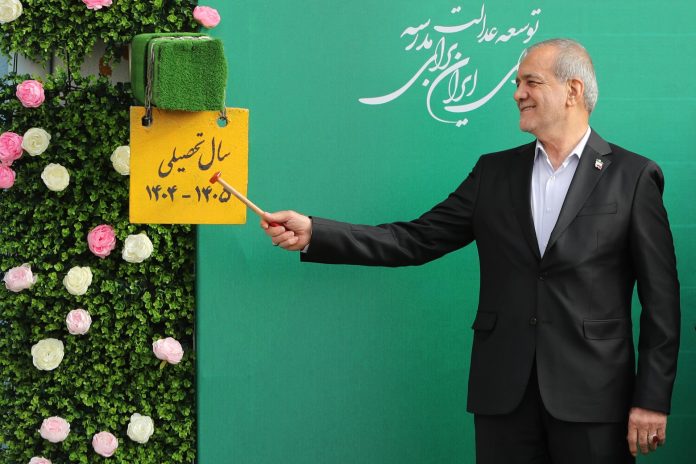
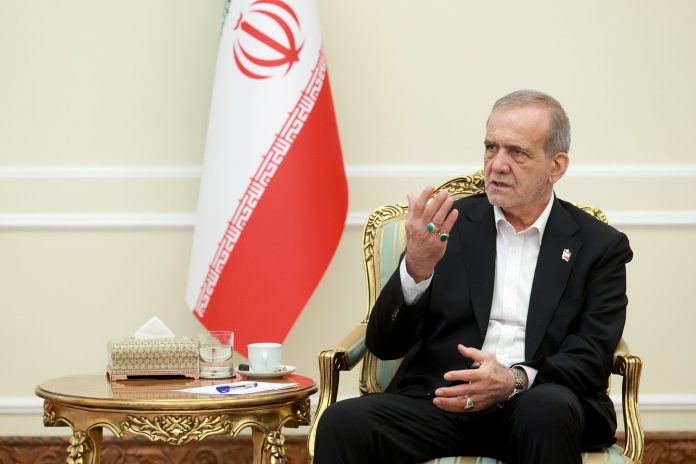
President Pezeshkian is scheduled to deliver a speech at the summit.
Tuesday’s Israeli strikes on Doha left several people dead and injured. The attacks reportedly targeted leaders of Hamas but failed to achieve that goal.

Many countries, including Iran, strongly condemned the strikes as a blatant violation of the UN Charter and Qatar’s territorial integrity.

UN Chief Welcomes Iran–IAEA Understanding

Berlin, Germany - November 04: Antonio Guterres, High Commissioner for Refugees of UNHCR, attends a press conference in german foreign office on November 04, 2015 in Berlin, Germany. (Photo by Michael Gottschalk/Photothek via Getty Images)

In a phone call on Thursday evening with Iranian Foreign Minister Seyed Abbas Araghchi, Guterres affirmed the UN’s backing for continued dialogue and diplomacy regarding Iran’s nuclear program.

Araghchi, for his part, reiterated Iran’s commitment to protecting the rights and interests of its people under the Nuclear Non-Proliferation Treaty (NPT). He stressed the need for the United Nations and all countries to firmly and clearly condemn the illegal attacks on Iran’s peaceful nuclear facilities by Israel and the US.

He criticized the stance of the three European countries (Britain, Germany, and France) for ignoring U.S. and Israeli military attacks on Iran while threatening to revive annulled UN Security Council resolutions—calling this approach baseless and irresponsible, and warning that it would only complicate the situation.

Araghchi also highlighted Iran’s constructive cooperation with the IAEA to clarify how it will meet its safeguards commitments under the new conditions created by these unlawful attacks. He urged European states and UN Security Council members to recognize the importance of this development.

Additionally, Araghchi said the genocide in Occupied Palestine and the Zionist regime’s warmongering are the most urgent global challenges. He condemned Israel’s recent terrorist attack on Qatar and called on the international community, the UN, and the Secretary-General personally to help end the genocide and curb Israel’s expansionism and aggression.

Iran warns snapback activation would void agreement with IAEA

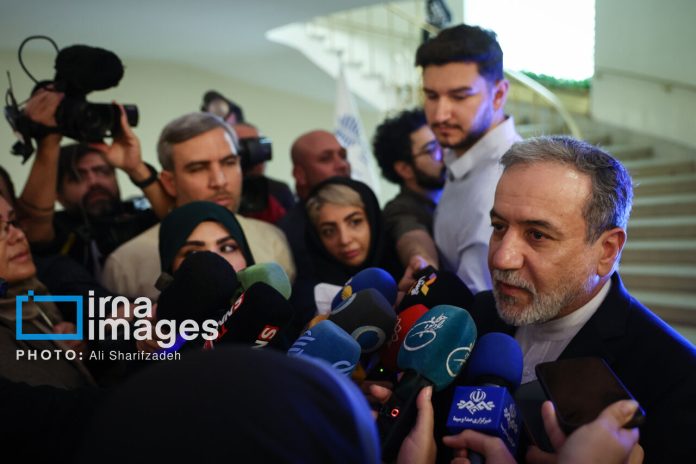
Speaking on state television on Thursday night, Araghchi said the arrangement reached with the agency on Tuesday remains valid only as long as no “hostile action” against Iran, including the reimposition of UN sanctions under snapback, takes place.

He emphasized that Iran and the IAEA have reached a new understanding that takes into account recent attacks on Iranian nuclear facilities, which Tehran denounced as “unlawful and in violation of international law.”

According to Araghchi, the new framework requires that requests for inspections be reviewed by Iran’s Supreme National Security Council in line with parliamentary legislation.

He stressed that no inspections have been granted so far and future access will depend on national security considerations.

The foreign minister reiterated that Tehran rejects conditions set by the three European signatories to the 2015 nuclear deal, saying they are pursuing unrealistic demands.

He also warned that if snapback were triggered, Iran’s response would be “definite” and determined by the Supreme National Security Council.

UN Security Council members condemn Israel over deadly attack on Qatar

Council members issued the statement ahead of the emergency meeting on Thursday, which was convened to discuss Israel’s attacks targeting Hamas leaders in the Qatari capital, as it ramped up its offensive in Gaza City, forcing more than 200,000 to flee.

Five Hamas members were killed, but the Palestinian group announced its leadership survived the assassination bid. A Qatari security force member was also killed in the unprecedented attack, which has sent tensions in the region skyrocketing.

Hamas leaders were meeting to discuss a new deal proposed by US President Donald Trump when the attack happened.

“Council members underscored the importance of de-escalation and expressed their solidarity with Qatar,” said the statement, drafted by France and the United Kingdom, which nonetheless stopped short of explicitly mentioning Israel.

It also emphasised that “releasing the hostages, including those killed by Hamas, and ending the war and suffering in Gaza” were “top priority”. More than 40 captives are still held in Gaza, but only 20 of them are believed to be alive.

The US, which traditionally shields its ally Israel at the United Nations, appeared to deliver a strong rebuke to Israel, reflecting Trump’s purported unhappiness with the attack.

Acting US Ambassador Dorothy Shea stated: “Unilateral bombing inside Qatar, a sovereign nation working very hard and bravely taking risks alongside the United States to broker peace, does not advance Israel’s or America’s goals.”

“That said, it is inappropriate for any member to use this to question Israel’s commitment to bringing their hostages home,” she continued.

After Tuesday’s attack, the White House had announced President Trump was not notified in advance. Upon learning of the attack, the president had allegedly asked his envoy, Steve Witkoff, to warn Qatar immediately, but the attack had already started.

The Security Council statement highlighted “support for the sovereignty and territorial integrity of Qatar”, stressing the country’s crucial role as “a key mediator” in peace talks between Israel and Hamas.

Qatari Prime Minister Sheikh Mohammed bin Abdulrahman bin Jassim Al Thani flew in from Doha for the marathon three-hour session, telling the UNSC that Doha would continue its humanitarian and diplomatic efforts, but would not tolerate further breaches of its security and sovereignty.

Blasting Israel’s leaders as “arrogant”, he said that the timing of the attacks during mediation efforts showed that the country intended to derail them.

“Israel is undermining the stability of the region impetuously,” he added.

UN Under-Secretary-General for Political Affairs Rosemary DiCarlo described Qatar as a “valued partner in advancing peacemaking” and expressed concern over Israel’s recklessness, saying that the strikes represented an “alarming escalation”.

She pointed out that Israel’s war on Gaza had killed tens of thousands of people and almost completely destroyed Gaza, noting that the situation in the occupied West Bank, including occupied East Jerusalem, had “continued to spiral downward”.

She also noted Israel’s other “dangerous escalations” across the region, involving Iran, Lebanon, Syria and Yemen.

“The Israeli attack on Doha potentially opens a new and perilous chapter in this devastating conflict, seriously threatening regional peace and stability,” she continued.