Tuesday, December 30, 2025
Home Blog Page 158

Recognizing Palestine within the Two-State Framework as a Prelude to Reclaiming Palestinian Land

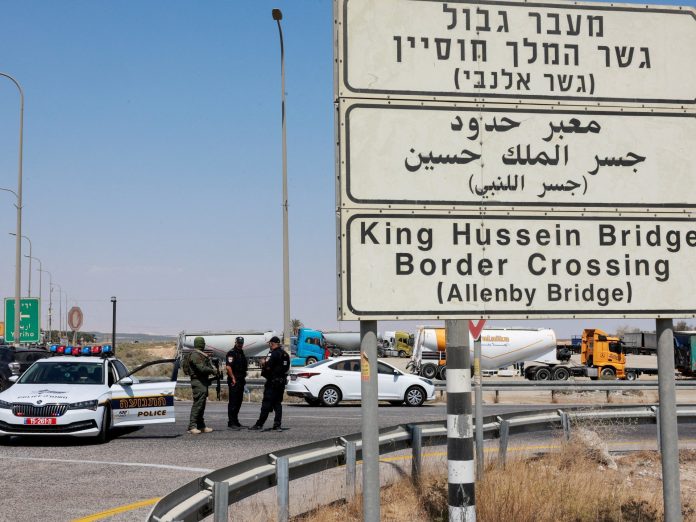
West Bank
  1. Legal and Historical Foundations of Palestinian Rights

The right of the Palestinian people to an independent homeland is firmly rooted in international law. The UN Charter enshrines the principle of self-determination, while numerous UN resolutions—including Resolution 194 (1948) and Resolution 242 (1967)—call for an end to occupation and the right of return for refugees. Historically, Palestine has always been an Arab and Islamic land, where Muslims, Christians, and Jews coexisted without one group holding exclusive sovereignty. Thus, the legitimacy of Zionist claims rests not on history or law but on force and colonial support.

  1. The Two-State Solution: From a Western Concept to a Legal Tool

The two-state solution was initially proposed by Western powers as a way to end wars in the region while safeguarding Israel’s existence. It envisions two independent states, Israel and Palestine, living side by side within the 1967 borders. In practice, however, Israel has undermined this vision through continued settlement expansion and military occupation. Still, the significance of the idea lies in its recognition of Palestine as a political and legal entity. This recognition, albeit limited, provides a legitimate basis for expanding Palestinian rights and reclaiming occupied lands.


  1. Global Implications of Recognizing Palestine

Granting Palestine recognition as an independent state within international organizations and by individual governments carries several important consequences:

  • Undermining Israel’s occupation narrative: Israel has consistently denied Palestinian nationhood. Recognition exposes this denial and places Israel on the defensive.
  • Legal empowerment of Palestine: Statehood enables Palestinians to pursue cases against Israel in international courts and invoke global treaties to hold Israel accountable.
  • Strengthening Palestine’s diplomatic leverage: As a recognized state, Palestine gains greater bargaining power in negotiations and increased influence in global forums.
  • Widening cracks among Israel’s supporters: Recognition of Palestine by European and even some Western states adds political pressure on the U.S. and Israel’s close allies.
  1. The Limitations of the Two-State Solution

While recognition of Palestine is a step forward, the two-state framework does not represent full justice. It restricts Palestine to only part of its historical homeland—namely, the West Bank, Gaza, and East Jerusalem—while leaving 1948 lands and the refugee question unresolved. Thus, this framework should not be seen as an endpoint but as a platform from which Palestinians can continue to assert broader claims.

  1. A Phased Approach to the Palestinian Struggle

Recognition of Palestine under the two-state framework should be understood as an initial step, not the final goal. Such a phased approach allows Palestinians to benefit from international legitimacy while continuing resistance and demanding the recovery of their full historic rights. In other words, recognition provides a starting point for the movement forward—not a stopping point.

Today, more than 140 countries officially recognize Palestine. This growing global shift reflects changing public opinion and a rethinking of international responsibility. Recognizing Palestine within the two-state framework, despite its inherent limits, can strengthen the legitimacy of the Palestinian struggle and lay the groundwork for reclaiming all occupied lands. Ultimately, the only path to lasting peace and historical justice lies in the full restoration of Palestine to its rightful people. Every step toward recognition and support of Palestine thus represents a prelude to that return.

Seyed Parsa Alavi (Journalist)


Poll: 75% of Israelis approve of attacks targeting Hamas in Qatar

New polling released by Israeli daily newspaper Maariv conducted by Lazar Studies said that only 11 percent were opposed to the operation that targeted the Hamas political leadership.

Thirty-eight percent said they believed the action harmed the chances of securing a deal for the release of captives in Gaza, compared to 37 percent who thought it would be helpful.

Some 65 percent of those who support Prime Minister Benjamin Netanyahu’s government said they thought it would help reach an agreement, while 60 percent of opposition supporters said it would not.

Qatari Prime Minister Mohammed bin Abdulrahman bin Jassim al-Thani said Israel’s strikes on Qatari soil on Monday constituted “state terror” and that Netanyahu should be “brought to justice”.

In an interview with CNN on Wednesday, Thani stated that he had “no words to express how enraged we are”.

The prime minister added that he had met with the family of one of the Israeli captives the morning Israel launched the air raids and recalled how they told him they were “counting” on the mediation that Qatar was brokering.

“They have no other hope for that [release of captives]. I think what Netanyahu has done yesterday, he just killed any hope for those hostages”.

Netanyahu has expressed no regret for Israel’s attack and pledged to target Qatar and any country that harbours “terrorists”. He stated that if they didn’t bring them to justice or expel them, Israel would.

Israel’s strikes on Doha on Tuesday targeted a meeting of leaders from Hamas’s political bureau who were meeting to discuss a ceasefire proposal for Gaza, where nearly 65,000 people have been killed since the war broke out.

Israel’s war on the enclave has been deemed a genocide by scholars and human rights bodies.

None of the Hamas leadership targeted in the strike was killed or wounded, but Hamas leader Khalil al-Hayya’s son, an office assistant and a Qatari security officer were among the six killed in the strikes.

Regional and global allies have rallied to support Qatar after the attacks.

The UN Security Council issued a statement ahead of Thursday’s emergency meeting, agreed to by all 15 members, including the US.

“The members of the Security Council expressed their condemnation of the recent strikes in Doha, the territory of a key mediator, on 9 September. They expressed deep regret at the loss of civilian life,” said the statement drafted by France and the United Kingdom.

“Ccouncil members underscored the importance of de-escalation and expressed their solidarity with Qatar. They underlined their support for the sovereignty and territorial integrity of Qatar, in line with the principles of the UN Charter,” it added.

Baghlegh Wooden Cemetery in northeastern Iran                     

Instead of tombstones, simple wooden posts inscribed with the names and details of the deceased are placed on the graves, creating a landscape that resembles a garden filled with cut tree trunks.

More in this report:

Iranian pop singer Omid Jahan dies at 44 after onstage heart attack

He collapsed on stage on the opening night of the city’s Date Festival and was rushed to hospital, but doctors were unable to save him.

Jahan, whose full name was Omid Pouladi Jahan, was born in February 1982 in Abadan.

The son of renowned southern Iranian singer Mahmoud Jahan, he grew up surrounded by music and began singing and playing instruments from a young age. His family later relocated to Bushehr and then Tehran.

He launched his professional career in 2004 and rose to prominence with his debut unofficial album Pesare Jonoobi (Southern Boy), followed by Papati (Barefoot) in 2006, which established him as a popular figure in Iranian pop.

Known for his energetic performances and southern-style rhythms, Jahan built a wide fan base across the country.

The head of Bam’s Culture and Islamic Guidance Office had earlier said the singer had been scheduled for multiple performances at the festival, which would run until September 18.

His sudden death has shocked fans and the Iranian music community, many of whom have expressed their condolences on social media.

UN General Assembly supports two-state push for Israel and Palestine

The “New York Declaration”, which outlines “tangible, timebound, and irreversible steps” towards a two-state solution, was adopted on Friday by 142 votes in favour, 10 against – including Israel and key ally the United States – and 12 abstentions.

Presented by France and Saudi Arabia, the seven-page document calls for “collective action to end the war in Gaza, to achieve a just, peaceful and lasting settlement of the Israeli-Palestinian conflict based on the effective implementation of the Two-State solution”.

It also orders Palestinian group Hamas, which runs the government in Gaza, to “free all hostages”, stipulating that it must “end its rule in Gaza and hand over its weapons to the Palestinian Authority … in line with the objective of a sovereign and independent Palestinian State”.

Palestine’s Ministry of Foreign Affairs welcomed Saudi-French efforts to create an “actionable plan” towards a two-state solution.

The ministry also called for “activating all mechanisms to end the Israeli colonial occupation” and “achieve the legitimate rights of the Palestinian people”.

The UN’s ringing endorsement of the two-state solution came amid Israel’s continued bombardment of Gaza, one day after Netanyahu signed off on a settlement expansion plan in the occupied West Bank that would make any future Palestinian state virtually impossible.

The vote precedes an upcoming UN summit co-chaired by Riyadh and Paris on September 22 in New York, in which French President Emmanuel Macron and several other leaders have promised to formally recognise the Palestinian state.

While 146 members of the UN already back a Palestinian state, another 10 or so, including France, Norway, Spain, Ireland and the United Kingdom are expected to join their ranks later this month.

Israel rejected the declaration after the landmark vote, slamming it as “disgraceful”.

The vote took place in a week in which Israel has been on particularly bellicose form, dialling up regional tensions with a number of deadly strikes across the Middle East, targeting Lebanon, Yemen, Syria, Tunisia and Qatar in parallel with its attacks on Gaza and the occupied West Bank.


Iran’s security chief urges Islamic states to form “joint operations HQ” against Israeli aggression

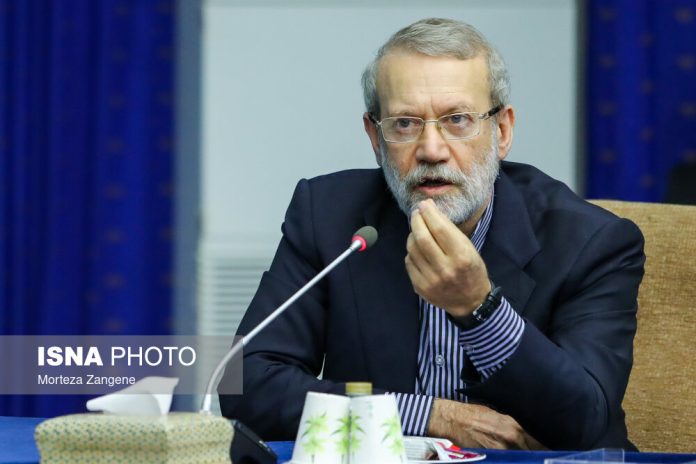
Ali Larijani

In a post on X, Ali Larijani criticized the recent Organisation of Islamic Cooperation summit as “full of speeches and without practical results,” likening it to an ineffective UN Security Council meeting.

He warned that inaction “is equal to ordering a new aggression against the Zionist regime,” and urged Muslim governments to take concrete collective steps rather than issuing statements.

Larijani added that even a limited, decisive move would alarm the regime’s backers and could force them to reconsider orders to Israel “in pursuit of world peace and a Nobel prize,” using ironic language to highlight “international hypocrisy.”

He also appealed to leaders to act on behalf of hungry and oppressed Palestinians, urging at minimum “a brief decision” to prevent their further destruction and to avert greater regional fallout.

Iranian leader aide says Qatar attack shows Israel ‘knows no bounds’ in crimes

Ali Akbar Velayati

Ali Akbar Velayati, who advises the Leader on international affairs, made the remarks in a Persian-language post on X after Israel’s September 9 terrorist attack on the Qatari capital of Doha claimed the lives of several Hamas officials, as well as Qatari civilians.

“Violating international laws and encroaching on the sovereignty of countries has become common practice for Zionists, and the world must break this silence,” Velayati said.

“Once again, everyone saw that the savage Zionist regime knows no bounds in its crimes,” he added.

“The attack on Qatar’s soil and the Palestinian brothers at the meeting is reprehensible.”

In an unprovoked aggression on Qatari soil, the Israeli regime targeted Hamas’s Political Bureau in missile attacks that were aimed at senior leaders of the Palestinian resistance movement, including negotiators who have been engaged in talks on securing a ceasefire in the besieged Gaza Strip.

As one of the lead mediators between Hamas and Israel, Doha had been trying to broker a ceasefire in Gaza, where the occupying regime has killed more than 64,600 people since October 2023, when it launched a genocidal war on the Palestinian enclave.

Qatar condemned the onslaught as a violation of international law and of its sovereignty, with multiple countries and blocs also lashing out at Tel Aviv.

Hamas confirmed that its senior negotiators survived the attack, but five members of the group were killed, including Jihad Labad, director of the office of senior Hamas official Khalil al-Hayya, Hammam al-Hayya, son of Khalil al-Hayya, Abdullah Abdul Wahid, Moumen Hassouna, and Ahmed al-Mamlouk — all described as companions of the delegation.

Qatari security officer Badr Saad Muhammad Al-Humaidi was also among those killed in the Israeli attacks.


Syrian president says negotiations underway with Israel on security deal

Ahmad Al Sharaa

In a televised interview with Syrian channel Alikhbariya, he emphasized that Syria “is holding negotiations on a security agreement with Israel to return to the 1974 (Disengagement) agreement or a similar arrangement”.

Turning to Israel’s policies, the Syrian president said that Tel Aviv “had a plan to divide Syria and drag us into a battleground with Iranians,” adding that Israel was “surprised by the (former President Bashar al-Assad) regime’s ouster.”​​​​​​​

Sharaa said, “Israel has often sought to cover up intelligence shortcomings and security failures by flexing its military muscle and exaggerating security fears.”

“Israel considered the fall of the former regime as Syria’s withdrawal from the 1974 disengagement agreement, even though Damascus expressed its commitment from the very first moment,” he continued.

He added that Syria had reaffirmed adherence to the deal, communicated with the UN, and requested the return of the United Nations Disengagement Observer Force to its previous positions.

Israel has repeatedly violated Syrian sovereignty since the fall of the Bashar Assad government through air attacks and territorial expansion, despite Damascus showing no hostile intent toward Israel.

Since 1967, Israel has occupied most of the Golan Heights, and after Assad’s ouster, it seized the Syrian buffer zone and declared the 1974 disengagement agreement collapsed.

Al-Sharaa stressed that “Syria does not want to live in a state of anxiety or tension with any country in the world. The ball is in the court of those states seeking to stir strife and unrest inside Syria.”


US to press G7 on confiscating frozen Russian assets: Bloomberg

Russian Central Bank

Western nations froze an estimated $300 billion in Russian assets following the escalation of the Ukraine conflict in 2022, some €200 billion of which are held by Brussels-based clearinghouse Euroclear. The funds have generated billions in interest, and the West has been exploring ways to use the revenue to finance Ukraine. While refraining from outright seizure, the G7 last year backed a plan to provide Kiev with $50 billion in loans to be repaid using the profits. The EU pledged $21 billion.

According to a proposal seen by the outlet, Washington will urge the G7 to back measures enabling the outright confiscation of the frozen reserves for transfer to Kiev. Separately, people familiar with the matter told Bloomberg that senior US officials have discussed the idea with their European counterparts.

Some EU leaders and experts have cautioned against outright seizure, warning it could violate international law, undermine investor confidence, and destabilize financial markets. Moscow has condemned the asset freeze and warned that seizure would amount to “robbery” and violate international law, while also backfiring on the West.

The US plan extends beyond asset seizures, proposing 50% to 100% tariffs on China and India aimed at restricting Russian energy sales and blocking dual-use technology transfers, Bloomberg wrote. It also seeks sanctions on the so-called Russian ‘shadow fleet’ of oil tankers, energy giant Rosneft, and maritime insurance, along with measures against regional banks, firms linked to the defense sector, and curbs on AI and fintech services in Russian Special Economic Zones.

US President Donald Trump, who has been pushing for a direct meeting between Russian President Vladimir Putin and Ukraine’s President Volodymyr Zelensky, has threatened new sanctions on Moscow.

“It’ll be hitting very hard with sanctions to banks and having to do with oil and tariffs also,” he told Fox News on Friday.

The Kremlin announced that direct negotiations between Moscow and Kiev remain possible but are currently on hold.

Israeli army orders mass displacement in Gaza City as bombing campaign intensifies

Avichay Adraee, the Israeli army’s spokesman, announced in a statement that “more than a quarter of a million people” had already fled the city and pressed others to follow.

He claimed Israel was expanding its operations to “defeat Hamas” and that those who relocated would receive “better humanitarian response.”

Palestinian officials say the campaign is designed to empty Gaza City. The government media office said more than 1.2 million people remain despite bombardment and displacement, accusing Israel of trying to force 1.7 million Palestinians into the coastal strip of al-Mawasi and Rafah, which lack hospitals, infrastructure or basic services.

The bombardment comes as part of Israel’s latest ground offensive, dubbed “Gideon’s Chariots 2,” launched in early September to fully occupy Gaza City. The plan has faced criticism inside Israel over fears it could jeopardize the lives of soldiers and captives held in the enclave.

Israel’s latest evacuation order comes amid relentless bombardment of Gaza, where more than 64,700 Palestinians have been killed since October 2023. The offensive destroyed most of the enclave’s infrastructure, and triggered famine that has claimed at least 413 lives, including 143 children.