Sunday, April 19, 2026
Home Blog Page 157

Iran announces seizure of massive Israeli weapons intelligence archive

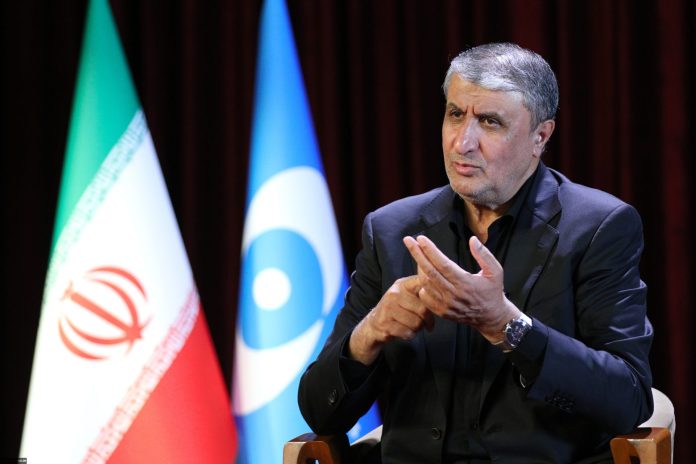
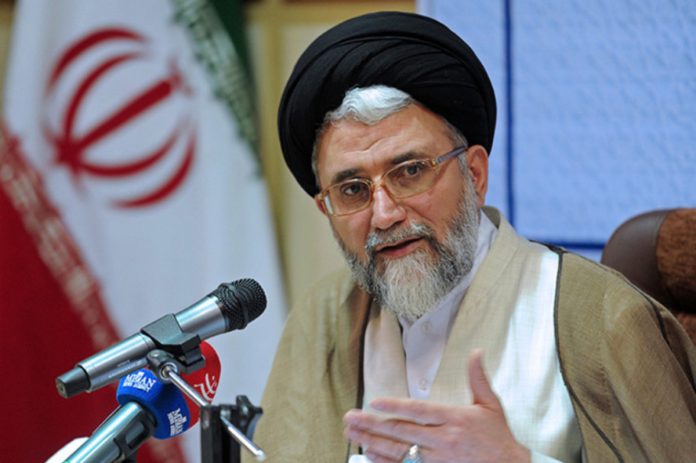
Iranian Intelligence Minister Esmail Khatib

Khatib described the cache as “millions of pages of diverse and valuable information” concerning the Israeli regime.

According to the intelligence minister, these documents encompass ongoing and past weapons programs, including nuclear refurbishment projects, as well as joint initiatives with the United States and certain European nations.

Khatib underlined that 189 nuclear and military specialists in Tel Aviv have been identified through this intelligence, and detailed records of researchers, senior project managers, affiliated companies, and international collaborators are included.

He further said that the operation also involved the identification, prosecution, and execution of internal traitors, underscoring Iran’s vigilance against espionage within its borders.

The intelligence minister described the successful transfer of these pre-planned documents as only a part of a broader combination of intelligence and operational measures executed by Iran.

The next critical phase, he noted, involves the country’s intelligence personnel processing the data and mapping connections among human and organizational networks linked to Israel’s nuclear projects, both domestically and abroad.

According to the Iranian intelligence minister, this analytical stage is as important as the initial infiltration and transfer of intelligence.

The accumulated data facilitates the identification of key figures and the relationships between them, providing strategic insight into the Zionist regime’s weapons programs, Khatib said.

He then reaffirmed that Iran remains actively pursuing other espionage cases and warned that internal weaknesses will not be tolerated.
Syria, Israel close to ‘de-escalation’ agreement: US envoy

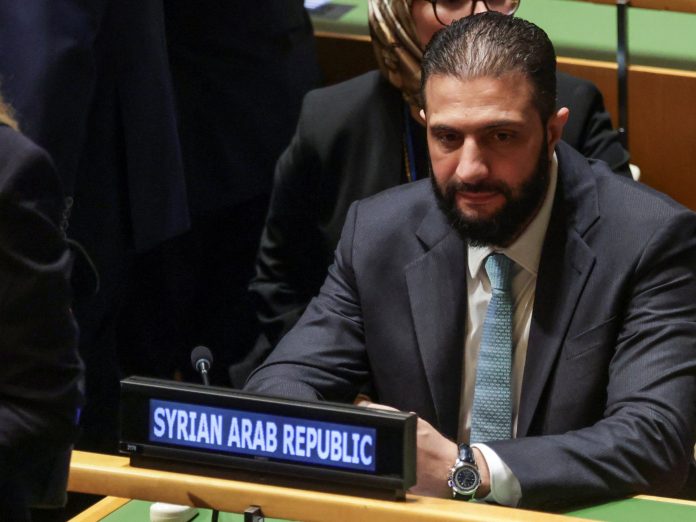
The prospective agreement would stipulate that Israel will halt its attacks in exchange for Syria’s commitment not to move heavy equipment and machinery near the Israeli border, Barrack told reporters on the sidelines of the UN General Assembly, according to Syria’s state-run Al-Ikhbariya TV.

The US envoy pointed out “good faith” in both parties throughout the process, as the anticipated pact would serve as the first step toward a security agreement.

Barrack added that the deal was intended to be finalized and announced by US President Donald Trump this week; however, insufficient progress and the Jewish holiday of Rosh Hashanah have hindered its completion.

US President Donald Trump hoped to finalize and announce the agreement this week, but it has been delayed due to insufficient progress, Barrack continued.

Israel and Syria have been in talks, which reportedly focused on an Israeli-drafted security deal. Prime Minister Benjamin Netanyahu earlier claimed progress in talks with Damascus.

Since Bashar Assad’s ouster, Israel has repeatedly carried out air raids in Syria and expanded its control, even as Damascus refrained from hostile action.

Israel has occupied most of the Syrian Golan Heights since 1967 and, after Assad’s fall, seized the buffer zone and declared the 1974 disengagement agreement void.


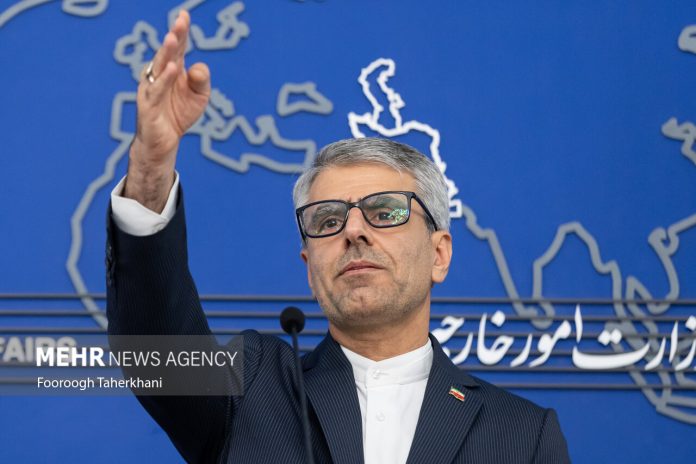
Spox condemns US restrictions on Iranian diplomats in NY

Esmael baghaei

Esmaeil Baghaei made the statement in a post on X on Wednesday after US President Donald Trump’s administration put a stringent curb on Iranian diplomats’ movements in New York and denied visas to a number of President Masoud Pezeshkian’s media team to attend the 80th annual session of the United Nations General Assembly.

Baghaei said the limitations, which include restrictions on daily activities such as grocery shopping, were mainly aimed at “disrupting Iran’s diplomatic performance” during the UN General Assembly.

The spokesman also censured the curbs as “a blatant violation” of US obligations under the 1947 UN Headquarters Agreement.

“The real objective behind the increasing restrictions imposed by the US administration on Iranian diplomats and their dependants in New York is to disrupt Iran’s diplomatic performance within the United Nations. The US systematic harrasment of Iranian diplomats has obstructed the Iranian delegates from attending several multilateral events that were held outside the so-called ‘permitted parameters’ during this week only,” Baghaei stated.

“Applying such cheap restrictions on our diplomats’ movements and even on their daily grocery shopping is not only a blatant violation of the US obligations under the Headquarters Agreement but also a new low in terms of showcasing the extent of animosity of US administration toward Iranians,” he added.

The illegal move by the Trump administration comes as President Pezeshkian is scheduled to address the 80th UNGA later on Wednesday amid heightened tensions over Iran’s nuclear program and the looming reimposition of UN sanctions in the wake of a 12-day war of aggression in June.


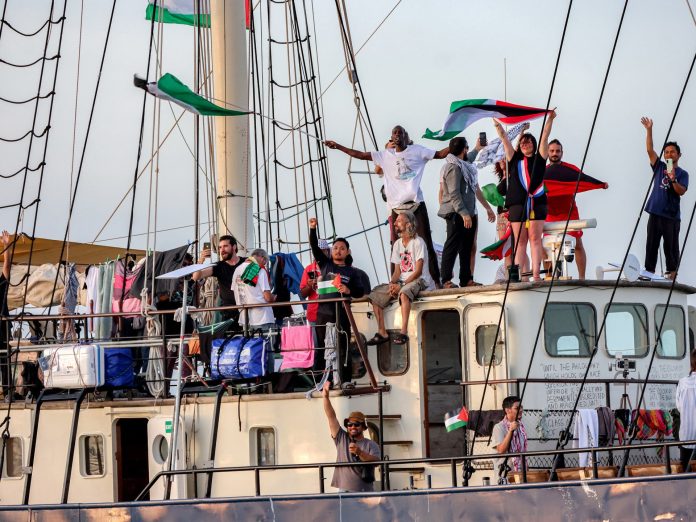
Activists say Gaza aid flotilla hit by drone attacks and explosions

“Multiple drones, unidentified objects dropped, communications jammed and explosions heard from a number of boats,” the Global Sumud Flotilla said in a statement, without adding whether there were any casualties.

“We are witnessing these psychological operations firsthand, right now, but we will not be intimidated.”

Suited in a life jacket, Brazilian organiser Tiago Avila updated on his Instagram at midnight on Wednesday that a total of 10 attacks targeted multiple boats with sound bombs and explosive flares. They were also sprayed with suspected chemicals.

US activist Greg Stoker stated that his boat off the coast of Crete was also a target.

“Our boat was assailed by a quadcopter that dropped a little popper on deck. A couple of other boats experienced that as well. Our VHF [very high frequency] radio was hijacked by adversarial comms, and they started playing Abba,” he wrote on Instagram.

Israeli authorities have not publicly commented on the reports of drones, explosions or communications interference being used against the flotilla.

Earlier on Tuesday, the Israeli Ministry of Foreign Affairs claimed in a post on X that the sailing boats were “pursuing a violent course of action”, which “highlights the insincerity of the flotilla members and their mission to serve Hamas, rather than the people in Gaza”.

The ministry asked that the flotilla hand the aid on board the boats over to Israel so it can be transferred to Gaza “in a coordinated and peaceful manner” via the nearby Ashkelon Marina, which the flotilla organisers rejected.

“If the flotilla continues to reject Israel’s peaceful proposal, Israel will take the necessary measures to prevent its entry into the combat zone and to stop any violation of a lawful naval blockade, while making every possible effort to ensure the safety of its passengers,” the Israeli statement added.

Avila called this “manipulation from the Zionist regime”.

“We can never believe an occupying force who is committing genocide that they will deliver aid – it’s not in their interests,” he stressed on his Instagram.

The flotilla, numbering 51 boats, set sail from the western part of the Mediterranean Sea earlier this month with the aim of breaking Israel’s blockade of Gaza and delivering aid to the territory. It had already been targeted in two suspected drone attacks in Tunisia, where its boat had been anchored, before resuming its voyage towards Gaza.

Environmental activist Greta Thunberg is among the high-profile participants.

International activists, including aid workers and campaigners, say they organised the flotilla as a peaceful action to draw global attention to Gaza’s humanitarian crisis.

Israel blocked two earlier attempts by activists to reach Gaza by sea in June and July.


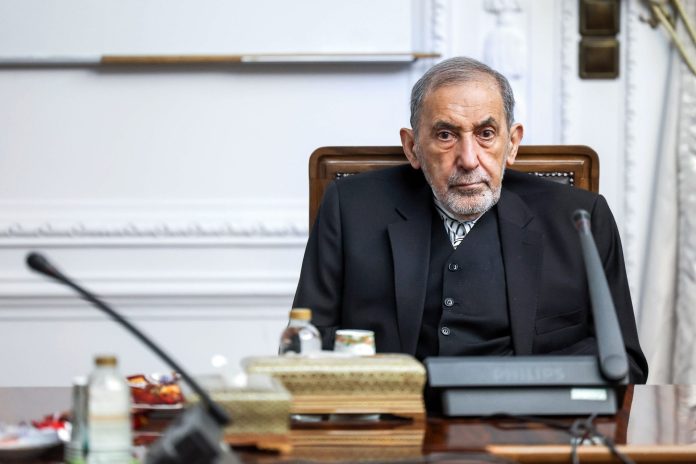
Advisor to Iran’s leader: Trump following in Hitler’s footsteps

Ali Akbar Velayati

In an interview with al-Mayadeen television channel, Velayati argued that the move by Britain, France, and Germany to reimpose sanctions reveals the continuation of colonial and hegemonic policies against the Iranian nation.

He emphasized that the action not only violates UN Security Council Resolution 2231 but also represents a desperate attempt to block Iran’s scientific and defensive progress.
He stressed that while the Islamic Republic favors peaceful diplomacy, it will respond with strength and national dignity to conspiracies.

Velayati predicted that such measures will only deepen Europe’s isolation and will have no practical effect on Iran, describing the trigger mechanism as a “hollow political tool”.

On US policy, Velayati likened President Donald Trump’s behavior to that of Adolf Hitler at the onset of World War II, warning that such a path will end badly for Washington and its allies.

He also condemned the Zionist regime’s recent aggression against Qatar, as well as the ongoing war in Gaza, labeling these actions as war crimes against innocent Palestinians.

He reaffirmed Iran’s readiness to assist Muslim countries in defending their sovereignty and interests.

Regarding resistance movements in Lebanon and Iraq, Velayati noted that the groups have grown stronger and more experienced, making foreign plots destined to fail.

He further urged immediate international action beyond verbal condemnation, including humanitarian corridors for Gaza, international tribunals, and comprehensive sanctions against Israel.

Kremlin brushes off Trump’s ‘paper tiger’ comment on Russia

Kremlin

Kremlin spokesman Dmitry Peskov said that Russia was a bear, not a tiger, and “there is no such thing as a paper bear”.

Trump said on Tuesday that he believed Ukraine could retake all of the territory captured by Russia and that Kyiv should act now, with Moscow facing “big” economic problems. His comments marked a sudden and striking rhetorical shift in Ukraine’s favour.

Peskov, responding in a radio interview to Trump’s comments, said the Russian army was advancing in Ukraine and the dynamics on the front line were obvious.

He added that the stability of the Russian economy was ensured.


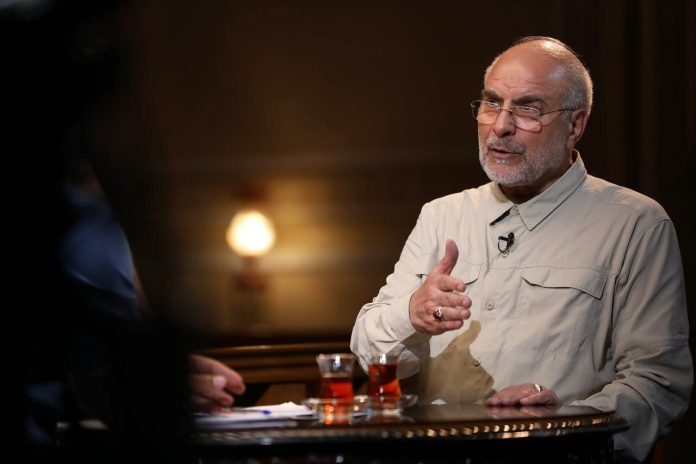
Iranian parliament speaker says Tehran supports resistance groups to protect national security

Speaking on the television program The Story of War, Ghalibaf stated, “Iran helps Hamas, Islamic Jihad, Hezbollah, and all groups defending their land, Islam, and the Muslim community.”

He said this support is part of Iran’s strategy to safeguard its borders and broader national interests.

Ghalibaf argued that confronting Israel far from Iran’s borders prevents future conflicts closer to home.

“If we do not stand and fight against the Zionist regime in the Golan Heights, it will certainly come to fight us in Jalawla, in Iraq’s Kurdistan region, just 30 kilometers from our border,” he said.

He also criticized domestic slogans such as “Neither Gaza nor Lebanon, my life for Iran,” saying recent regional developments, including the triple True Promise operation, show why Tehran acts beyond its borders.

According to Ghalibaf, Iran views its backing of allied groups as essential not only for national security but also for defending the Muslim world and promoting human rights in the region.

Iran nuclear chief rules out direct talks with US, vows to rebuild damaged facilities

Mohammad Eslami

Mohammad Eslami, the head of the Atomic Energy Organization of Iran (AEOI), told Sky News that Tehran remains committed to restoring infrastructure targeted in illegal attacks by the US and Israel earlier this year.

“It is natural for facilities to be damaged in military strikes,” he said, adding, “What matters is that science, knowledge, technology and industry have deep roots in Iran’s history.”

Eslami defended Iran’s right to develop nuclear capabilities for peaceful purposes.

Responding to concerns about Iran’s high-level uranium enrichment, he said it does not necessarily mean a weapons program.

“We need higher enrichment levels for precise measurement tools and for safety systems in our reactors,” he said, adding that international sanctions force Iran to produce equipment that it cannot import.

Echoing remarks made by the Iranian leader on Tuesday, the AEOI chief said direct talks with Washington are “pointless,” saying the US is engaged in decades of hostility toward Iran, including recent military actions.

He also criticized American negotiators for abandoning previous indirect talks and failing to honor agreements.

Meeting with Muslim nations on Gaza was ‘very successful’: US

Gaza War

“We had a very good meeting concerning Gaza,” Trump told reporters as he left the event.

“It was a very successful meeting with all of the big players, except for Israel, but that’s going to be next, and I think we can work something out on Gaza, but it was a very good meeting with great leaders,” he added.

No further information on the outcome of the closed-door meeting was provided by officials.

The White House previously said that Türkiye, Qatar, Saudi Arabia, Indonesia, Pakistan, Egypt, the United Arab Emirates, and Jordan would be represented at the leader-level meeting, but did not offer additional details.

Israel-US aggression against Iran nuclear sites ‘dark, dangerous chapter’ in non-proliferation history: FM

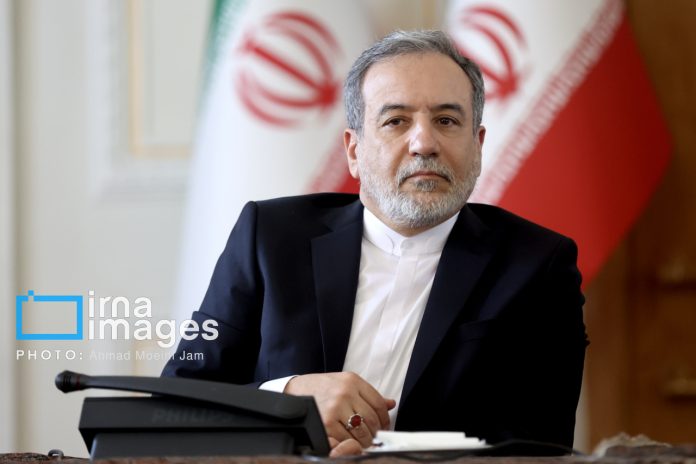
Abbas Araghchi

The top diplomat made the remarks during a meeting with his counterparts from the UK, France, and Germany as well as the European Union’s foreign policy chief Kaja Kallas in New York. Araghchi has travelled to the city to attend the 80th annual session of the United Nations General Assembly.

He was referring to, what he denounced as, the “criminal” strikes that took place as part of Tel Aviv’s and Washington’s imposed war on the Islamic Republic from June 13 to 25. Aside from targeting the facilities, the war claimed the lives of many Iranian nuclear scientists as well as senior military commanders and ordinary civilians, including small children.

The meeting took place as part of talks between Iran and representatives of the European states – collectively known as the E3 – aimed at addressing Western states’ and their allies’ allegations against the Islamic Republic’s peaceful nuclear energy program.

Araghchi pointed to the framework agreement recently clinched between Iran and the International Atomic Energy Agency (IAEA) as part of Iran’s goodwill efforts at addressing the so-called “concerns,” which have never been verified by the agency, despite its most intrusive inspections throughout history.

He identified the deal as an instance of Iran’s “practical steps” taken to eliminate any doubts or pretexts regarding its nuclear program.

The foreign minister noted how the deal was hammered out to enable fulfillment of Iran’s safeguards obligations under the new circumstances created by the Israeli-American attacks, which had rendered it impossible for the IAEA to continue its inspections as before.

He, meanwhile, emphasized the necessity of reciprocal and responsible measures by the European parties in return for Iran’s positive cooperation.

The meeting reviewed the developments of the past month’s talks between the two sides.

It featured addressing a number of ideas and proposals for continuing diplomatic efforts, despite the E3’s having triggered the so-called “snapback” mechanism.

The trio triggered the “snapback” in August, citing their alleged “concerns” and seeking an end to continued removal of the sanctions.

The Islamic Republic has categorically rejected the allegations, citing the consistent history of the IAEA’s failing to find any evidence against the country’s nuclear program.

It has also warned that potential reinstatement of the sanctions would undo the agreement with the IAEA.

The meeting ended with the engaged parties agreeing on continuation of consultations.