Tuesday, January 20, 2026
Home Blog Page 1521

Iran, Saudi Arabia officially resume ties after FMs’ meeting

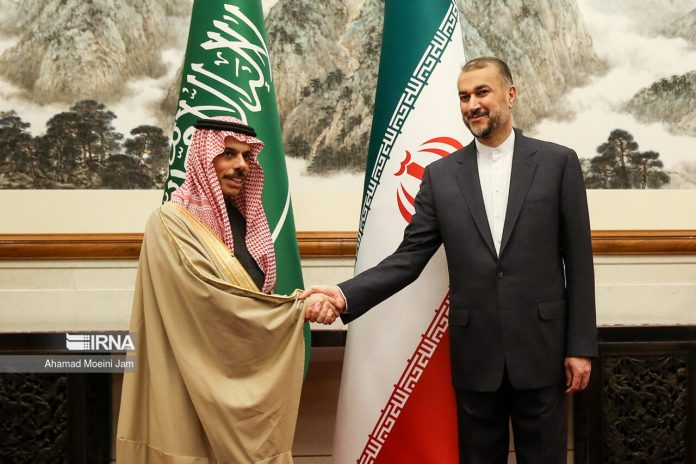
Hossein Amirabdollahian and Prince Faisal bin Farhan Al Saud

Speaking to reporters on Thursday, Nasser Kanaani, who accompanies Iranian Foreign Minister Hossein Amirabdollahian in the trip to China, said the talks held between the chief diplomats were “positive.”

Commenting on the content of Amirabdollahian’s meeting with Saudi Foreign Minister Prince Faisal bin Farhan Al Saud, Kanaani said the two ministers stressed the significance of ensuing regional stability.

The two sides also agreed to activate previously reached trade and security agreements between them, he added.

Riyadh and Tehran are set to exchange delegations from the public and private sectors with the aim of paving the way for the expansion of economic relations, among other things.

The resumption of the ties was part of a reconciliation deal brokered between the two sides by China, following around seven years of troubled ties.

Tehran writes letter to UN chief, raps Israel killing of Iranian military advisors in Syria

Iranian Military Advisors in Syria

The Iranian ambassador wrote his letter to the UN secretary-general and the head of the Security Council, the full text of which is as follows:

Excellency,

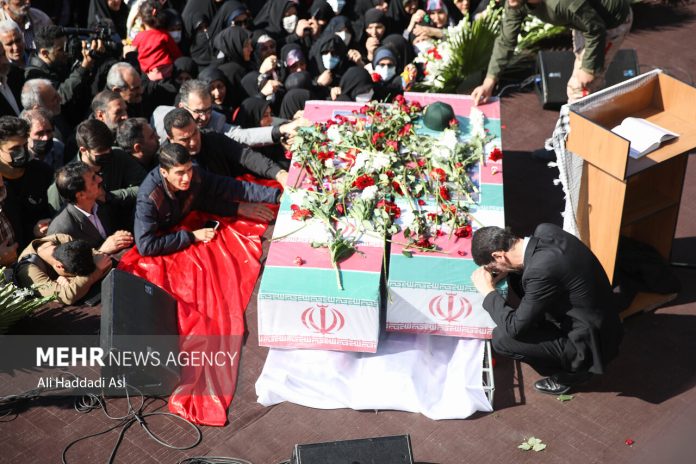
On instructions from my Government, I would like to inform you that two Iranian military advisors, Major Milad Heidari and Captain Meqdad Mahqani Jafarabad, who served as advisors to Syrian forces fighting terrorism, were martyred in the recent Israeli regime terrorist attacks launched on Damascus and its suburbs on 31 March 2023. These terrorist attacks also resulted in the tragic loss of innocent civilian lives and severe damage to Syria’s infrastructure. This heinous crime is yet another illustration of the Israeli regime’s ongoing aggression and flagrant violation of international law on Syrian territory.

Furthermore, Israel’s acts of aggression against Syria continue unabated, without facing any consequences from the international community, particularly the United Nations Security Council, and being able to act with impunity. The Israeli regime has flagrantly violated the basic rules of international humanitarian law in recent months, and its military strikes have systematically and deliberately targeted Syria’s critical infrastructure, including the international civilian airports of Damascus and Aleppo, which are critical lifelines for humanitarian supply and relief efforts in the aftermath of Syria’s recent tragic earthquake. Israel’s aggression caused significant material damage to Syria’s critical infrastructure.

Given the serious repercussions of such unlawful and criminal acts for regional and international peace and security, as well as the grave challenges to the rule of law, the United Nations Security Council must take decisive action to end these violations and hold the Israeli regime accountable for all its internationally wrongful acts. The Security Council must not be complicit in double standards and must carry out its mandate by explicitly condemning the Israeli regime’s ongoing violations of fundamental principles of international law and the United Nations Charter. Syria’s sovereignty and territorial integrity must be respected, and actions that undermine them must not be tolerated.

The Islamic Republic of Iran has made it clear time and again that it will not hesitate to take the necessary measures, in accordance with international law and the United Nations Charter, to respond decisively to any threat or attack posed by the Israeli regime and to defend its security and national interests, as well as to protect its people.

I would be grateful if you would circulate the present letter as a document of the Security Council.

“CIA head visited Saudi Arabia following Tehran-Riyadh rapprochement”

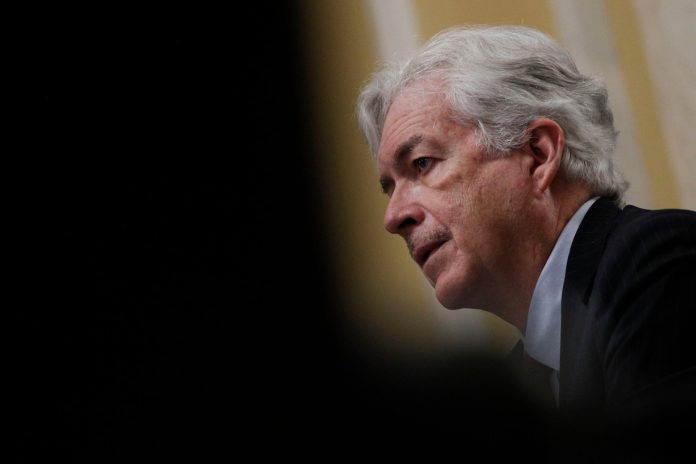
CIA Chief William Burns

“Director Burns traveled to Saudi Arabia, where he met with intelligence counterparts and country leaders on shared interests,” the official said.

The official added that Burns reinforced “our commitment to intelligence cooperation, especially in areas such as counterterrorism.”

Asked to confirm the trip, a CIA spokesperson stated that the agency does not comment on the director’s travel.

Ties between the US and Saudi Arabia have been turbulent over the last two years, particularly following President Joe Biden’s campaign pledge to make the Persian Gulf country “a pariah.”

The CIA director’s quiet trip comes on the heels of a surprising agreement signed between Riyadh and Tehran, brokered by China, to restore diplomatic ties, reopen embassies and exchange ambassadors in the next month.

But US-Saudi cooperation on the military and intelligence levels has remained robust. The US and Saudi Arabia recently concluded their first joint counter-drone exercise at a new military testing center in Riyadh.

And Saudi Arabia recently signed what the US called “landmark deals” with Boeing for more than 120 aircraft worth $37 billion. The White House said the agreement could potentially support over one million American jobs across 44 states.

Iran’s Leader: US, Europe in no position to talk about human rights

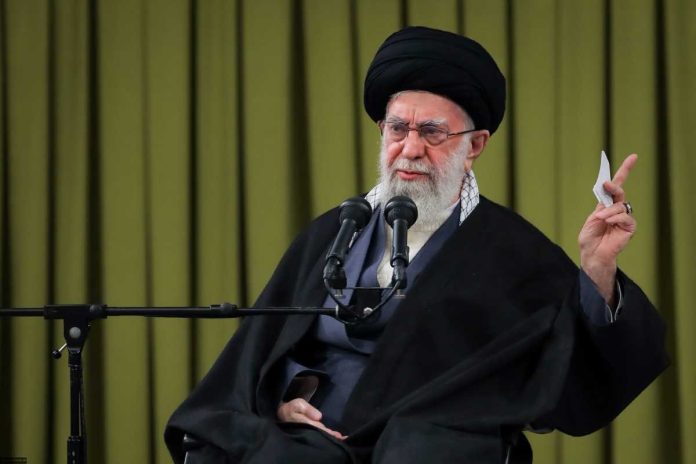
Ayatollah Seyed Ali Khamenei

Ayatollah Khamenei made the comment in a meeting with a group of Iranian poets and Persian literature academics in Tehran on Wednesday.

The Leader described the pharmaceutical sanctions and the prevention of delivery of vaccines under various pretexts as other examples of the West’s attacks against Iran.

“If they could do something to deprive Islamic Iran and its people of food, they would not hesitate to do so,” he added.

Ayatollah Khamenei considered the media onslaught as another part of the diverse attack of ill-wishers against Iran, outlining the fact that they use thousands of forms of media to promote lies, rumors and unconventionalities.

“The enemy’s goal from this attack is to deprive intellectual and educational strengths and to weaken the spirit of independence, national perseverance, Islamic unity and practice,” the Leader argued.

He regarded the weakening of faith and religiosity of women as another one of the targets aimed against Iran and pointed out the effective role that women played in the victory of the Islamic Revolution and the stages after it.

“Westerners have no pity for Iranian women nor do they have any respect for their rights. Rather, they have a grudge against Iranian women and falsely present themselves as supporters of freedom and women’s rights,” the Leader said.

“The West isn’t worthy of being the ones to talk about human rights at all. They are the enemies of humankind!” Ayatollah Khamenei underlined.

“We saw their human rights in Daesh (ISIL or ISIS), when they burned people alive or sunk them in water and drowned them before everyone’s eyes. We saw (their human rights) in their support of the MEK terrorists and in their support of Saddam Hussein and their crimes against Gaza and the Palestinians,” he underscored.

He argued that the West’s support for the assassination and killing of religious youth in the streets of Tehran is another example of the falsity of their claim of supporting human rights.

“Our most virtuous youths, such as Arman Aliverdi and Ruhollah Ajamian were killed by torture and via Western media incitement and training,” he added.

The Leader emphasized the need to recognize the enemy as well as their goals, strategies and targets.

“Understanding the dimensions of the enemy’s soft war is a requirement for everyone, but it is most essential for those who are active in the cultural and artistic fields so that they can prevent themselves from getting influenced by it, and to make others aware of the enemy’s onslaught,” he stated.

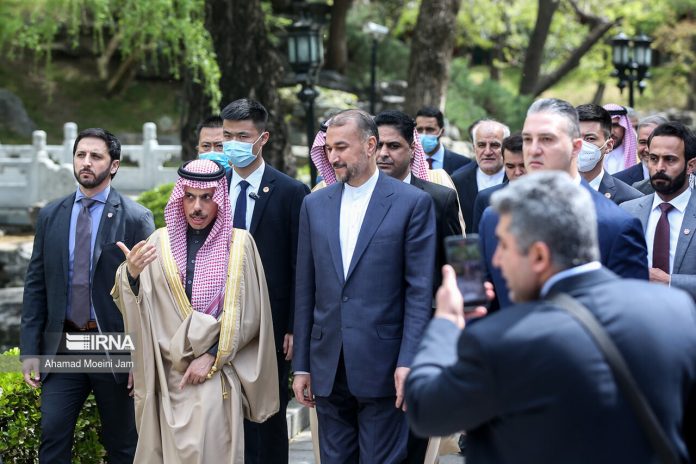
Iran, Saudi FMs hold meeting, agree to work for regional peace,

Hossein Amirabdollahian and Prince Faisal bin Farhan Al Saud

The meeting was held after around seven years of severed diplomatic relations between the two Middle Eastern powers.

Iranian Foreign Minister Hossein Amirabdollahian sat down for talks with his Saudi opposite number, Prince Faisal bin Farhan Al Saud in Beijing, which helped mediate a reconciliation agreement between the two neighbors last month.

The two ministers issued a joint statement at the end of their meeting.

During the meeting, the statement said, the two top diplomats discussed steps towards the re-opening of their embassies in Tehran and Riyadh as well as their consulates in Mashhad and Jeddah.

The ministers emphasized the need to act on the articles of the China-brokered deal aimed at resumption of diplomatic relations between Iran and Saudi Arabia.

They also agreed to speed up the necessary arrangements for setting up technical teams tasked with exploring ways for the expansion of cooperation between the two sides, including resuming flights and facilitating issuance of visas.

The two sides also stressed the necessity to remove obstacles in the way of bolstering bilateral cooperation with the goal of serving the interests of the two nations, highlighting the countries’ economic capabilities and rich natural resources.

Tehran and Riyadh also agreed to broaden cooperation toward ensuring regional peace.

Over the past weeks, Amirabdollahian and bin Farhan had held three rounds of telephone conversations.

Meanwhile, Iranian President Ebrahim Raisi has accepted an invitation by Saudi King Salman bin Abdulaziz Al Saud to visit the kingdom.

The Islamic Republic has also announced a plan to send a similar invitation for the monarch to visit Iran.

The two sides had held five rounds of negotiations in the Iraqi capital of Baghdad since April 2021.

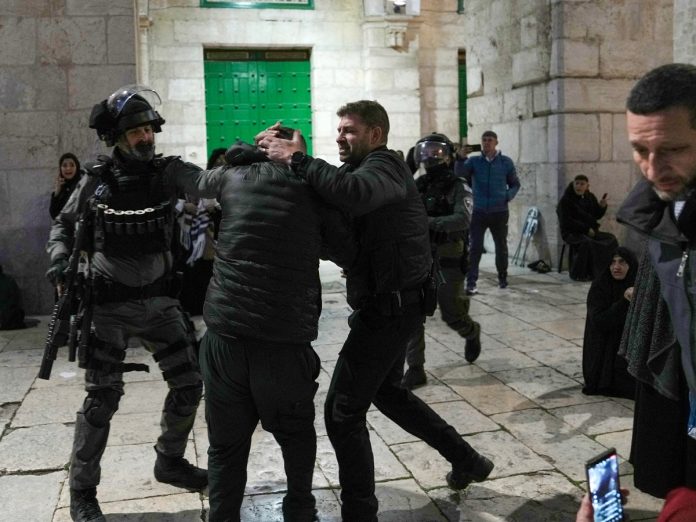
Israeli forces raid Al-Aqsa for second night

Al-Aqsa Mosque

The second attack took place against the site — Islam’s third-holiest, which is located in the Old City of the holy occupied city of al-Quds — on Wednesday.

Nabil Abu Rudeineh, a spokesman for Palestinian President Mahmoud Abbas, has said, “Israel’s raid into Al-Aqsa mosque, its assault on worshippers, is a slap to recent US efforts which tried to create calm and stability during the month of Ramadan.”

Abu Rudeineh is referring to the summits held in the Egyptian and Jordanian towns of Sharm el-Sheikh and Aqaba respectively, where officials from the US, Israel, the Palestinian Authority, Egypt and Jordan agreed on a series of steps to de-escalate violence in the occupied territories.

Mustafa Barghouti, the general secretary of the Palestinian National Initiative, has called the latest violence at the Al-Aqsa Mosque a “very serious provocation that will definitely lead to an escalation”.

“And maybe that’s what the Israeli government wants,” he told Al Jazeera, adding, “They want to distract attention from their internal divisions, from the demonstrations that are taking place inside Israel against this government, and they want to drag this whole region into an explosion.”

Barghouti blamed the violence, in part, on the appointment of Itamar Ben-Gvir as Israel’s minister of national security, stressing, “This Israeli government is using religion for nationalist causes.”

“This is unprecedented that the mosque would be attacked twice in the same day, people would be injured, elderly people would be attacked, children, women in the morning. And now preventing medical teams from reaching them,” he continued.

Riyad Mansour, the Palestinian ambassador to the United Nations, also condemned Israeli action at the Al-Aqsa Mosque in a press conference on Wednesday, saying it is the “exclusive right of the Palestinian Muslims” to practise their religious traditions there.

“It is the right of the Palestinian Muslim worshippers to exercise their religious duties and prayers in this holy month of Ramadan and in any other time in this holy Aqsa Mosque,” Mansour stated, adding, “The Israeli occupying authority has no right whatsoever to tell people when to pray and when not to pray.”

The UN chief has condemned Israeli forces’ violence against the Palestinian worshippers at the al-Aqsa Mosque’s compound.

The spokesman for UN Secretary-General Antonio Guterres said he was “shocked and appalled” by images of Israeli forces beating people at the al-Aqsa Mosque.

The UN chief stressed that places of worship should only be used for peaceful religious observances.

Guterres “is shocked and appalled by the images he saw this morning of the violence and beating by Israeli security forces inside the Al-Qibli Mosque in Jerusalem at a time of the calendar which is holy to Jews, Christians and Muslims,” Stephane Dujarric stated at a news conference.

“This should be a time for peace and non-violence,” he added.

Dujarric echoed a statement from UN Special Coordinator for the Middle East Peace Process Tor Wennesland who called on political, religious and community leaders on all sides to reject incitement, inflammatory rhetoric and provocative actions.

Diplomats have confirmed that the UN Security Council will hold an emergency session on Thursday to discuss the violence at the Al-Aqsa Mosque compound.

The closed-door meeting was called at the request of the United Arab Emirates and China, diplomats told the Reuters news agency.

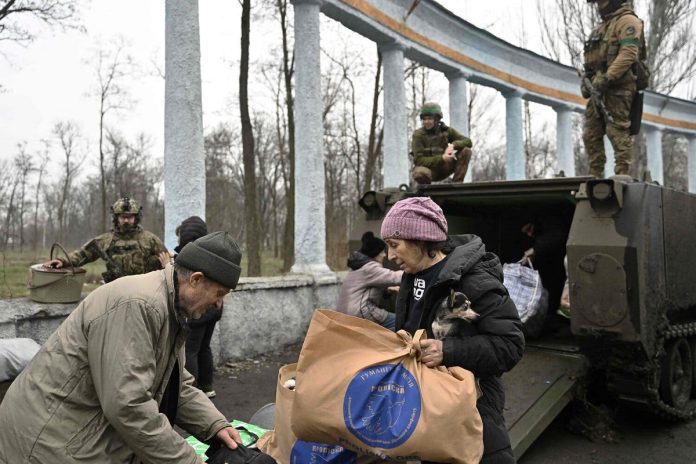
Live Update: Russia’s “Special Operation” in Ukraine; Day 407

Russia Ukraine War

Ukraine sends conflicting signals on Crimea talks idea

A top Ukrainian official has ruled out talks with Moscow about territory until it withdraws all troops, pushing back at a colleague who had touted the idea of negotiations to resolve the Russian occupation of the Crimean Peninsula.

Andriy Sybiha, deputy head of President Volodymyr Zelensky’s office, told the Financial Times that Kyiv would be willing to discuss the future of Crimea with Moscow if Ukraine’s counteroffensive were to reach the peninsula.

On Thursday, Mykhailo Podolyak, a presidential adviser, appeared to directly contradict Sybiha’s remarks on Twitter.

“The basis for real negotiations with [Russia] is the complete withdrawal of Russian armed groups beyond the internationally recognised borders of Ukraine in 1991. Including #Crimea,” he said.

“There is no question of any territorial concessions or bargaining of our sovereign rights,” he added.


F-16 jets ‘four or five times’ more effective than MiG-29s: Ukraine

A Ukrainian air commander says Kyiv is in dire need of F-16 fighter jets, which he described as “four or five times” more effective than the Soviet-era planes the country is currently using.

Serhiy Holubtsov, one of the most senior commanders in the air force, said that while donations of Soviet-era MiG-29 fighter jets by Ukraine’s allies were an “important step”, the planes did not fully meet Ukraine’s battlefield requirements.

“The F-16 is a fighter that has become a multirole aircraft, which can fulfil the entire spectrum of airborne tasks,” he said on national television, adding, “The MiG-29, unfortunately, is [an aircraft] from the last century.”

Poland and Slovakia recently began to hand over MiG-29 fighter jets to Ukraine.

Any coalition of F-16 donors would likely rely on backing from the US, which is by far the largest operator and builder of the planes. However, Washington has ruled out sending F-16 jets to Ukraine for now.


EU foreign policy chief to visit China next week

European Union foreign policy chief Josep Borrell plans to visit China next week, continuing a flurry of trips to Beijing by senior European officials.

Borrell will visit from April 13 to 15, EU foreign affairs spokesman Peter Stano said.

French President Emmanuel Macron and European Commission President Ursula von der Leyen are currently in China, urging Beijing to use its influence with Russia to help end the war in Ukraine.

Spanish Prime Minister Pedro Sanchez visited Beijing last week.

Borrell, the head of the EU’s diplomatic service, said last month that he would visit China “soon” and that Beijing’s partnership with Moscow has limits despite the two countries’ “no limits” partnership.


EU warns China not to send arms to Russia

China is willing to enhance strategic mutual trust with the EU, President Xi Jinping said on Thursday.

China and the EU should establish correct mutual understanding and avoid misunderstanding and misjudgment, Xi stated while meeting the European Commission president, Ursula von der Leyen, in Beijing, Reuters reported, citing CCTV.

For her part, Von der Leyen said she warned China that any arms shipments to Russia would “significantly harm” relations.


China is ready to push peace talks: French official

China is ready to work with France to “push hard” to obtain a negotiation to end the war in Ukraine, a French diplomatic source said after President Emmanuel Macron held talks with his Chinese counterpart Xi Jinping.

The source stated that Xi had also indicated he was ready to call President Vladimir Zelensky in his own time and that Macron urged China not to deliver anything that Russia could use “in its war in Ukraine”.

Xi also said China’s policy on Ukraine could be summed up in one sentence – “promote peace and dialogue”, state media quoted Xi as saying, adding that the top priority is to encourage a ceasefire and to end the war.


Moscow court to consider appeal from jailed WSJ reporter

A Moscow court will consider an appeal by lawyers of jailed Wall Street Journal reporter Evan Gershkovich to lift his pre-trial detention on April 18, the Interfax news agency reported.

Gershkovich was arrested last week in the Urals city of Yekaterinburg on espionage charges.

Shortly after his arrest, a court in Moscow ordered Gershkovich be held in pre-trial detention at the capital’s Lefortovo prison until at least May. 29.

At that hearing, Gershkovich was not allowed to meet his lawyer, and prosecutors did not share any case materials.

The hearing on April 18 will also be held behind closed doors since Russia considers information related to the charges as classified, Interfax reported.

Gershkovich’s arrest triggered an outcry from Western leaders, including US President Joe Biden, who urged Russia to “let him go” and has further strained US-Russia relations.


More help needed from the Russian military: Wagner chief

The head of Russia’s private Wagner militia says he needs more support from the regular military before advancing further.

On Telegram, Yevgeny Prigozhin said that Ukrainian troops were “not going anywhere” and had organised staunch defences inside the city, that, if they fell back, they would take up new positions in the outskirts and in Chasiv Yar to the west.

“That’s why, in my opinion, there’s no talk for now of any offensive,” he added.

Prigozhin made clear that he was not yet satisfied with the support he received from Russia’s mainstream forces, including those attacking adjacent front areas.

He raised three complaints – flank protection, command structure, and ammunition supplies.

Prigozhin also stated it was long since he had seen General Sergey Surovikin, who commanded Russia’s Ukraine campaign, before the chief of the general staff, Army General Valery Gerasimov, was given the position.

“I don’t know what he’s up to,” he added.


Ukrainian forces not leaving Bakhmut: Wagner boss

The head of Russia’s Wagner Group said that Ukrainian forces were not leaving the city of Bakhmut, and fighting was continuing in the western part of the city.

“It must be said clearly that the enemy is not going anywhere,” Yevgeny Prigozhin said on his Telegram channel.

On Wednesday, Ukrainian President Volodymyr Zelensky raised the prospect of a possible withdrawal from the city, saying Kyiv would take the “corresponding” decisions if its forces in the city risked being encircled by Russian troops.

But Pavlo Narozhniy, a Ukrainian military analyst, told NV Radio that Ukrainian forces were exhausting Russian troops to prepare for a counterattack.

“Bakhmut is performing the key task of inflicting as many losses on Russia as possible and, most importantly, to prepare for a counterattack to take place in late April-May,” Narozhniy added.


China has mediator potential but situation is ‘difficult’: Kremlin

The Kremlin says while China has mediator potential, the situation in Ukraine is “still complicated”, the TASS news agency reported.

Dmitry Peskov stated, “China has a very effective and impressive capacity to provide mediation services, and China’s recent diplomatic success has eloquently demonstrated this.”

“But the situation with Ukraine is still complicated and does not show any prospects for a peaceful settlement,” he added.

Chinese President Xi Jinping is meeting with French President Emmanuel Macron in Beijing to discuss the war in Ukraine and possible pathways to peace.


Russia’s FM begins two-day visit to Turkey

Russian Foreign Minister Sergey Lavrov starts a two-day visit to Turkey.

Turkish Foreign Minister Mevlut Cavusoglu and Lavrov are expected to discuss the war in Ukraine, the Black Sea grain deal, and energy cooperation.

Turkey has repeatedly urged Kyiv and Moscow to end the more than a year-old war in Ukraine through negotiations.


‘Difficult’ to determine who blew up Nord Stream pipelines: Sweden

Sweden’s prosecution authority says it will likely be challenging to determine who blew up the Nord Stream pipelines connecting Russia and Germany in the Baltic Sea last year.

“Our hope is to be able to confirm who has committed this crime, but it should be noted that it likely will be difficult given the circumstances,” prosecutor Mats Ljungqvist said.

“We are working unconditionally and turning over every stone and leaving nothing to chance. There is a variety of information and reports about the sabotage against the gas pipes. The incident has obviously become an open arena for different influence attempts,” Ljungqvist added.

“These speculations do not have an impact on the ongoing investigation, which is grounded in facts and the information which has emerged from analyses, crime scene investigations, and collaboration with authorities in Sweden and other countries,” he continued.


Leaders of France and China meet in Beijing

President Emmanuel Macron met his Chinese counterpart Xi Jinping in Beijing as the French leader seeks to dissuade China from supporting Russia’s invasion of Ukraine.

Macron told Xi he knows he can count on China to reason with Russia and bring everyone back to the negotiating table.

“The Russian aggression in Ukraine has dealt a blow to [international] stability,” Macron told Xi.

“I know I can count on you to bring back Russia to reason and everyone back to the negotiating table,” he continued.

Xi also hailed ties between the two countries with CCTV reporting China’s leader said relations were “positive and steady”, adding: “The world today is undergoing profound historical changes.”


Ukraine says situation at the front is completely under control

Ukrainian Deputy Defence Minister Hanna Malyar stated that the situation at the front was “completely under control” despite repeated Russian attempts to take Bakhmut and other cities in eastern Ukraine.

Malyar wrote on Telegram that Ukrainian soldiers were repelling dozens of attacks a day around Bakhmut, Lyman, Avdiivka and Marinka.


Poland says Russia committed war crimes in Ukraine

Polish President Andrzej Duda says Russia has committed war crimes in Ukraine which must be punished.

“[Ukraine] could not be intimidated even though the targets of attacks are civilian facilities, hospitals, kindergartens … these are war crimes that must be brought to justice and the criminals must be punished,” Andrzej Duda stated.

The Polish leader made the claim during a visit to Warsaw by his Ukrainian counterpart Volodymyr Zelensky.


Russia needs to “continue to support” its US relations: FM

Russian Foreign Minister Sergey Lavrov responded to a reporter’s question Wednesday regarding Russia’s relationship with the United States while it continues to supply aid to Ukraine.

“We really are in a hot phase of the war, because Ukrainian Nazis are using American weapons, first and foremost. And the American administration keeps threatening to deliver longer-range and more deadly weapons systems,” Lavrov said.

“But nevertheless, I think we should continue to support our relations and we hope that the Americans will wake up at once and return to the negotiating table. We’ll see, we won’t have to wait much longer,” he added.


White House: US doesn’t “enable or encourage” Ukrainians to strike outside of Ukraine

White House National Security Council Coordinator for Strategic Communications John Kirby responded to Russian President Vladimir Putin’s recent allegation that “Western intelligence services” are involved in “terrorist attacks” carried out within Russia, saying Wednesday that the United States does not “enable or encourage Ukrainians to strike outside of Ukraine.”

During a meeting of Russia’s Security Council on Wednesday, Putin alleged without evidence that “terrorist attacks are regularly carried out against government officials and law enforcement agencies, journalists, public figures, school and university teachers. … Moreover, neo-Nazis and their accomplices operate not only on the territory of the new subjects of the Federation, but also commit crimes in other regions” – references to the Ukrainian regions Russia claims to have annexed, and the rest of the Russian regions.

“There is reason to believe that the potential of third countries of Western intelligence services is involved in the preparation of such sabotage and terrorist attacks,” Putin added.

Vladlen Tatarsky, a pro-Kremlin Russian military blogger, was killed by an explosion at a St. Petersburg café on Sunday. Russia’s National Anti-Terrorism Committee (NAC) announced Monday that the explosion that killed him involved agents of the Ukrainian special services and associates of the jailed opposition leader Alexei Navalny.

Speaking to reporters Wednesday, Kirby underscored that American intelligence involvement has been aimed at helping Ukrainians defend their territory.

“(F)rom the early days of this war, we have been providing intelligence and information support to the Ukrainian armed forces to enable them to better defend themselves, to conduct operations and to continue to try to claw back territory that the Russians illegally took from them when they invaded – actually, even since 2014. And I won’t get into the details of what that intelligence is or how it’s delivered, but it is very much intended to help … them defend their territory,” Kirby stated.

“We do not enable nor do we encourage the Ukrainians to strike outside of Ukraine. And I really just – I’m going to leave it at that,” he added

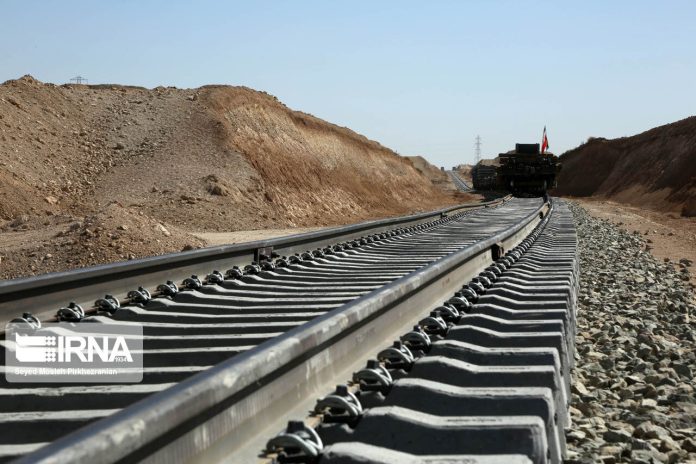
Iran and Iraq agree to start construction of Shalamcheh-Basra railroad

Railroad

Mehrdad Bazrpash said Tehran and Baghdad made their decision on Wednesday.

He noted that the area where the railroad lies was mined in Iran’s Shalamcheh during the Iraqi imposed war. Bazrpash added that he reassured his Iraqi counterpart that Iran would demine the region in as short a time as possible after the holy month of Ramadan.

The Iranian minister of roads and urban development said the two sides also agreed that the railroad and the construction of a movable bridge over the bordering river of Arvandrud will be completed within a year and a half.

According to Bazrpash, if it takes longer to finish the work, an agreement will be made between Iran and Iraq. Tehran and Baghdad have been expanding their economic and political ties in recent years despite pressure on the Arab country by the US to avoid doing so.

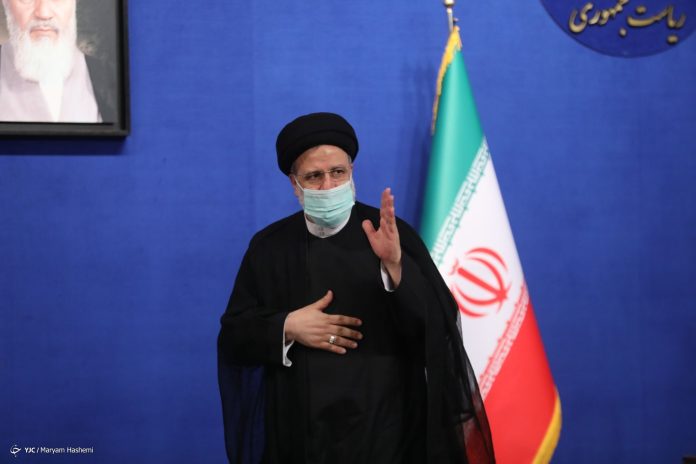
Iranian MP: Presidents of Iran and UAE to meet in near future

Ebrahim Raisi

That’s according to a member of the Iranian parliament’s national security and foreign policy commission.

Mr. Rezazadeh said following the recent meeting between Secretary of Iran’s Supreme National Security Council Ali Shamkhani and the UAE president, the two decided that direct talks would be held between the latter and President Raisi.

The MP added that it’s likely that Oman’s sultan will visit Iran in the coming days to pave the way for the meeting between the Iranian and the Emirati presidents.

The Raisi administration has said its foreign policy focuses mainly on improving and expanding relations with neighboring and Muslim countries.

In line with that policy, Iran recently normalized ties with Saudi Arabia some seven years after Riyadh unilaterally cut diplomatic ties with the Islamic Republic.

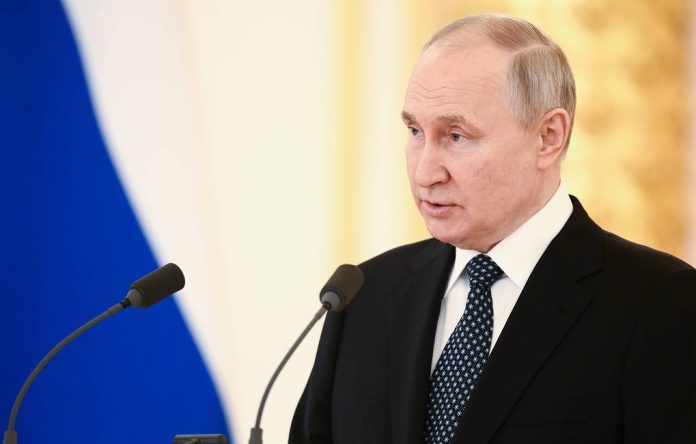
Putin says US responsible for failing relations

Vladimir Putin

Putin has pledged Moscow’s commitment to building relations with Washington based on the principles of equality and respect.

“We have always advocated building Russian-American relations based solely on the principles of equality, respect for each other’s sovereignty and interests and non-interference in internal affairs,” the head of state said during the ceremony of foreign envoys presenting their diplomatic credentials, including US Ambassador Lynne Tracy.

“We will be guided by this in the future as well,” he promised.

He noted that current relations between Washington and Moscow were in deep crisis.

“The relations between Russia and the United States of America, on which global security and stability directly depend on, are experiencing a deep crisis, unfortunately,” the president continued, noting that this crisis is based on “fundamentally different approaches to shaping the modern world order.”

The head of state accused the US and its policy of supporting color revolutions and of provoking the crisis in Ukraine.

“Dear madam ambassador, I do not want to disrupt the pleasant atmosphere of presenting credentials, and I know that you would, probably, disagree with my opinion, but I cannot but note that the United States’ of America’s use of such foreign policy instruments as support of so-called color revolutions, the support of the coup d’etat in Kiev in 2014, eventually led to the current Ukrainian crisis, and additionally negatively contributed to the degradation of Russian-American relations,” Putin told Tracy.

Tracy was appointed as the Ambassador to Russia in December 2022 and became the first woman to lead the US diplomatic mission in the history of Russia. Tracy arrived in Moscow on January 26 and started performing her duties on January 30.

The relations between Russia and the European Union (EU) have seriously deteriorated recently, though Moscow expects their gradual recovery, Putin told the ceremony.

“The head of the European Union’s mission who is present here, probably shares the view that the Union’s relations with Russia have deteriorated seriously in recent years, much to our regret,” he said.

Moscow believes this is due to the fact that the EU has abandoned its “main initial function of economic cooperation expansion, integration on the European continent,” “initiating a geopolitical standoff with Russia” instead, Putin noted.

Russia expects a gradual recovery of relations with the EU, he continued, adding, “I would like to express hope that all actions inflicting damage to our relations will nevertheless remain in the past, and we will do everything to build them in a proper way for Russia and for economies of member states of this organization. We hope nevertheless that the logic of mutual cooperation will prevail over time.”

Apart from diplomatic missions of separate European countries, there are missions of the whole European Union as an integration as well. In Moscow, it was opened in 1991 (working as a mission of the European Commission, the EU’s supreme executive body, until December 1, 2009).

During the Wednesday ceremony, credentials were delivered by EU Ambassador to Russia Roland Galharague, who became head of the EU’s mission in Moscow last September.