Tuesday, January 20, 2026
Home Blog Page 1519

At least one killed, many wounded in Tel Aviv attack

Tel Aviv attack

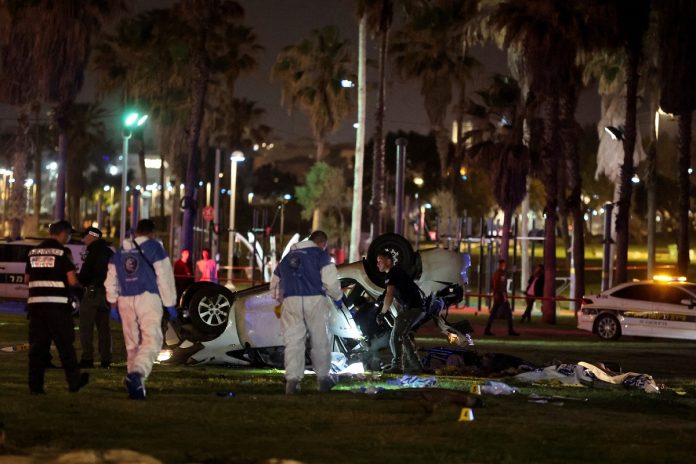
Israeli police said a white car swerved off the road towards a pedestrian and bike path before flipping over, and they shot the driver after he reached for a weapon.

The exact nature of the attack was not immediately clear but Israel’s foreign ministry referred to the incident as a “terror attack”, a term Israeli officials use for assaults by Palestinians.

An Israeli security source identified the suspect as an Israeli Arab from Kafr Qassem, near the border with the West Bank. He had no previous criminal record.

Israel’s rescue service announced a 30-year-old man was killed. He was later identified as an Italian tourist. At least five other Italian and British citizens, including a 17-year-old teenager, were injured in the car attack, according to Israeli authorities.

Israel immediately mobilised police and army reserves following the attack, Prime Minister Benjamin Netanyahu’s office said, amid expectations the incident was likely to amplify calls for the right-wing Netanyahu to pursue an even tougher approach towards Palestinians.

“I think this does increase the pressure on the prime minister many folds,” she stated, citing “hardliners” within the Netanyahu government “who have been preaching all along for much tougher stance when it comes with dealing with Palestinians”.

“The mayor of Tel Aviv has spoken with Israeli media and he actually said that all this is happening at this particular time because, in his words, the enemy is taking advantage of the weakness they see among Israeli society at the moment,” Abdel-Hamid added.

Netanyahu’s hard-right government is under pressure over its plans to curtail the authority of the Supreme Court and give politicians greater powers over the selection of judges, which triggered mass protests on the streets of Israel.

Earlier on Friday, two women were killed and a third seriously wounded in a shooting attack in the occupied West Bank.

There was no immediate claim of responsibility for either attack.

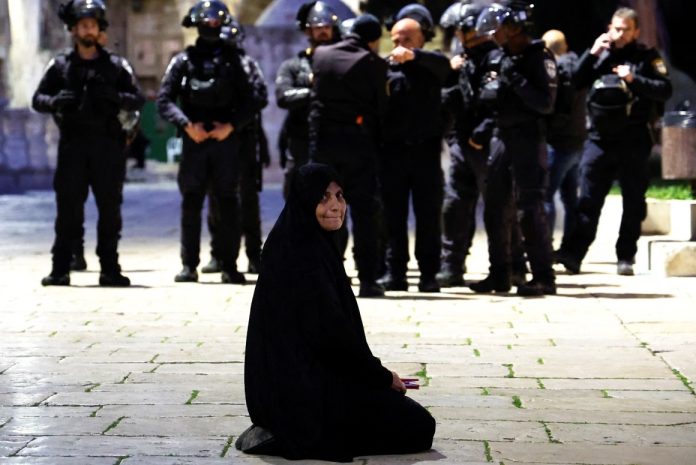
The escalation in tensions comes after Israeli forces stormed the Al-Aqsa Mosque in occupied East Jerusalem on successive days this week, firing stun grenades and tear gas and attacking Palestinians as they gathered for Ramadan prayers.

Late on Thursday night, Israel launched air strikes on Palestinian targets in Lebanon and Gaza after rockets were fired from the two locations.

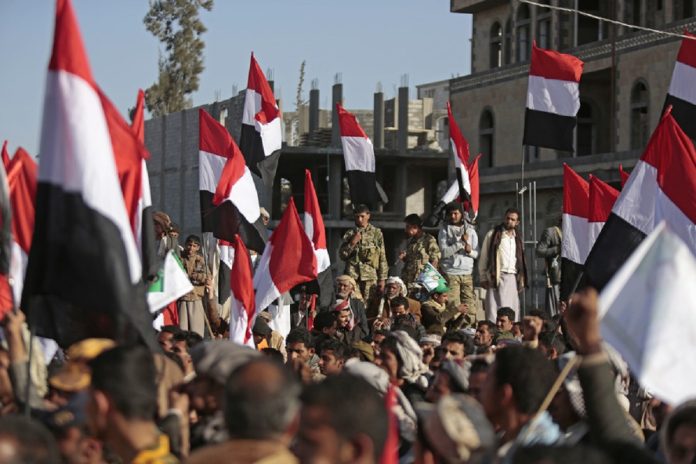
Report: Saudi Arabia intends to end Yemen war, Houthis optimistic about peace

Yemeni Forces

Citing informed sources, Al Mayadeen TV network reported on Friday that Saudi officials had recently held a closed-door meeting with the chairman and members of the council, which was established last April after the resignation of ex-president Abd Rabbuh Mansur Hadi, to inform them about the peace plan.

Saudi Arabia’s Defense Minister Prince Khalid bin Salman briefed the council on Riyadh’s solution to end the crisis in Yemen, sources said, adding that the Saudis’ vision is to renew the existing UN-brokered truce for a year in an understanding with the Sana’a government.

Riyadh will pledge to pay the salaries of public servants, open Hodeidah port, and help settle the currency problems of Yemen in exchange for Sana’a’s acceptance of the truce, according to the report.

The renewal of the truce will be bound to an official announcement by Riyadh about the end of the war and the end of Saudi interference in Yemen’s affairs, sources added.

According to the report, Yemeni talks with the supervision of the United Nations and the support of Riyadh will start following the end of the war and will aim to clinch an agreement on a two-year-long transitional period.

The sources stressed that although Riyadh is still studying and discussing the plan, its decision is “almost final.”

On the other side of the ledger, and reacting to the reports, the spokesman for Yemen’s Ansarullah resistance movement stated they will continue efforts to end the aggression and establish peace.

“We pursue our efforts through negotiations to end the aggression and lift the siege, and we hope that the efforts will be crowned with a peace agreement,” Al Mayadeen quoted Mohammed Abdul Salam, who is also head of the Sana’a negotiating delegation, as saying.

Meanwhile, Asharq Al-Awsat newspaper reported that the new peace plan is set to take effect in three phases. Citing a Yemeni source, the Saudi-owned media outlet reported that the first phase of the peace deal would include a nationwide ceasefire, the reopening of all land, air, and sea routes, the merger of the central banks, and comprehensive prisoner exchanges.

The parties would then hold direct negotiations to establish how the Yemenis envision a state, followed by a transitional period.

The source expected a ceasefire to be declared in the coming days, for the truce to be consolidated and for fighting to stop at battlefronts. Other arrangements will need weeks to be implemented.

Saudi Arabia is widely blamed for the current humanitarian catastrophe in Yemen, where about 80 percent of its 30 million population are in need of some form of aid for survival.

Hadi resigned from the presidency in late 2014 and later fled to Riyadh amid a political conflict with the popular Houthi Ansarullah movement.

To reinstall Hadi, Saudi Arabia launched the bloody war against Yemen in March 2015 in collaboration with a number of its allies and with arms and logistics support from the US and several Western states.

The objective was also to crush the Ansarullah movement, which has since been running state affairs in the absence of an effective government in Yemen.

The war has stopped well shy of all of its goals, despite killing tens of thousands of Yemenis and turning the entire country into the scene of the world’s worst humanitarian crisis.

The war also displaced millions of people, rendering them homeless, while destroying the country’s infrastructure and spawning the contemporary age’s worst humanitarian catastrophe.

The warring sides agreed on a UN-mediated ceasefire last April but it broke down after six months. Nevertheless, tensions have eased and casualties have decreased as important elements of the truce still remain in place.

Meantime, reports suggest that a Saudi-Omani delegation is set to visit Yemen’s capital Sana’a next week to discuss a permanent ceasefire deal with Houthi officials.

If an agreement is reached, Yemen’s warring parties could announce an agreement before Islam’s Eid holiday starting April 20, two sources involved in the talks said, according to Reuters.

The discussions are focused on a full reopening of Yemen’s ports and airports, payment of wages for public servants, a rebuilding process and a political transition, they added.

The latest developments come as observers believe the recent rapprochement between Iran and Saudi Arabia could help enhance stability in the region and, in part, facilitate efforts to reach sustainable peace in Yemen.

Tehran and Riyadh agreed to restore diplomatic ties on March 10 after intensive talks hosted by China. Top diplomats of the two countries also held a landmark meeting on Thursday in Beijing, stressing on efforts to enhance mutual trust and help boost regional security.

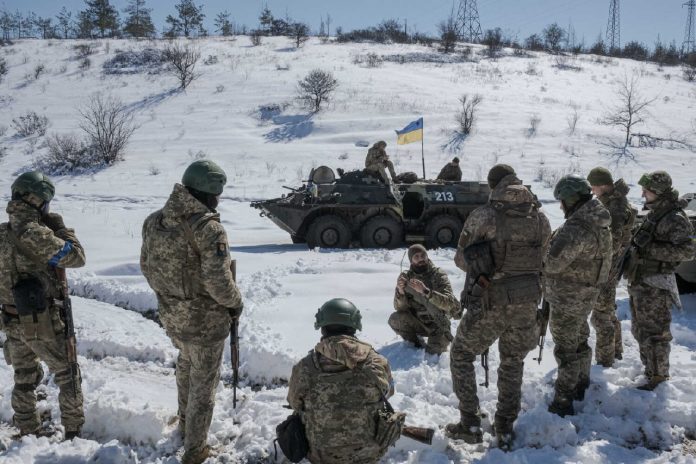
Live Update: Russia’s “Special Operation” in Ukraine; Day 409

Russia Ukraine War

Ukraine marks anniversary of Kramatorsk station attack

Ukrainians have been marking the one-year anniversary of a missile strike on a Kramatorsk railway station in eastern Ukraine, which killed at least 58 people, including several children.

The attack took place on 8 April 2022, when the station was packed with women, children and elderly waiting to be evacuated. The authorities had urged residents to leave the region before an expected Russian military assault.

More than 100 people were wounded in the strike, Human Rights Watch announced. Many lost limbs.

President Volodymyr Zelensky stated at the time that it was a deliberate attack on civilians using a Tochka U short-range ballistic missile. The US also blamed Russia, saying it believes it used a short range ballistic missile. Russia has denied responsibility.


Ukrainian missile downed over Crimea: Authorities

Russian air defenses have shot down a Ukrainian missile over Crimea, local authorities said on Saturday, adding that the strike did not result in any casualties or damage to infrastructure.

In a Telegram post, Sergey Aksenov, the head of the Republic of Crimea, stated “a missile launched from Ukraine’s side” had been destroyed over the coastal town of Feodosia in the southeastern part of the peninsula.

Later, Oleg Kryuchkov, a senior adviser to Aksenov, issued an update on the incident, claiming that “the debris of a Ukrainian missile downed by air defenses fell in one of the Crimean settlements. There are no casualties or destruction.”


Russian bid to degrade Ukraine’s energy system ‘likely failed’: UK’s MoD

Russia’s campaign to break down Ukraine’s unified energy system within the past winter period has “highly likely failed”, the UK’s Ministry of Defence says in its latest intelligence update.

Large-scale long-range attacks on Ukrainian energy infrastructure have become rare since early March 2023, it added.

The report goes on to say that Ukraine’s energy situation “will likely improve” with the arrival of warmer weather.


Zelensky hosts iftar, slams Russian ‘repression’ of Crimea Muslims

Ukrainian President Volodymyr Zelensky has criticised Russia’s treatment of the Muslim-minority Tatar community in Kremlin-controlled Crimea and pledged to recapture the peninsula from Russia during a first official state iftar.

“Russia’s attempt to enslave Ukraine … began exactly with the occupation of Crimea, exactly with repressions against Crimean, Ukrainian and Crimean Tatar freedom and of Crimean Muslims,” he told Ukrainian Muslim leaders and ambassadors from Muslim countries.

The Tatar community, which accounted for 12-15 percent of the 2 million Crimea residents, largely boycotted the 2014 vote.

“There is no alternative for Ukraine, or for the world, other than the de-occupation of Crimea. We will return to Crimea,” Zelensky stated, before handing out awards to several Muslim-Ukrainian servicemen.

Zelenskyy, speaking at a mosque outside the centre of the capital, announced that Ukraine was beginning a new tradition of hosting an official iftar, the meal breaking the daily fast during the holy month of Ramadan.


US making a global push to crack down on Russia’s efforts to evade sanctions: Treasury officials

The United States and its allies are working constantly to keep Russia from getting around Western sanctions and obtaining the technology and financing it needs to fund its war machine in Ukraine, according to senior US Treasury officials.

Since the start of Russia’s full-scale invasion, the US has imposed thousands of sanctions. They have, among other things:

  • Targeted Russian politicians, oligarchs and companies;
  • sought to isolate the Russian central bank from the global economy;
  • targeted a key Russian mercenary group, Wagner;
  • undermined Moscow’s defense-industrial base, and;
  • imposed a price cap on Russian oil and petroleum products.

Despite the sanctions’ impact, some observers note concerns over Russia’s ability to re-orient trade routes and acquire what it needs through neighboring countries or more permissive jurisdictions, such as the United Arab Emirates and Turkey.

The Treasury says Russia has even tasked its intelligence services with finding sanction workarounds — a sign, in the US view, that they are keeping the pressure on.

The US has made major efforts to share information with allied countries and businesses on how the Kremlin is trying to evade the sanctions regime, according to senior US officials.

In recent months, the US has seen some encouraging results from its public and private efforts. The Turkish government told the US last month it has taken further action to block shipments of sanctioned goods directly to Russia, according to a source familiar with the discussion.

Leaders of the global financial system will attend the Spring Meetings of the International Monetary Fund and World Bank in Washington, D.C. next week, providing the Treasury another opportunity to ramp up pressure on countries key to Russia’s attempts to evade sanctions.

Over the next month, senior officials will also fan out across the world to strategize with other governments. Two of the Treasury’s top sanctions officials – Brian Nelson and Liz Rosenberg – will play a part in this effort.

Nelson will meet with Switzerland, Italy, Austria and Germany to compare notes with counterparts. Rosenberg will travel to Kazakhstan in Central Asia, a region with a long history of ties to Russia, where officials worry Russia has been sourcing materials


Russia rejects Muslim POW exchange for Ramadan: Report

Ukraine announced that Russia has refused an “all-for-all Muslim prisoner of war (POW) exchange for Ramadan”, The Kyiv Independent has reported.

“Russian authorities rebuffed Ukraine’s offer to exchange all Muslim POWs from both sides at the beginning of the Ramadan month, according to the President’s Office,” it said.


US Treasury: Despite closer ties, China has not provided major assistance to Russia’s war effort

While China and Russia have strengthened ties since the Kremlin’s brutal invasion of Ukraine, the US has not yet seen evidence of Beijing providing systemic, material support for Moscow’s war effort, according to senior US Treasury officials.

The US assessment comes as Russian President Vladimir Putin and his government look for avenues to evade Western sanctions and backfill its military.

One senior Treasury official said China is, as of now, unwilling to provide material support to Russia at a significant scale, pointing instead to Russian efforts to source material from North Korea and Iran.

Senior US officials credit the efforts of their sanctions coalition — including public US comments and direct messages delivered by European allies — for prompting China to hold off from providing more substantive support to Russia.

The Joe Biden administration has worked to plug the gaps of the sanctions regime, broadening intelligence sharing with allies and targeting areas where Russia hopes to sidestep sanctions and export controls.

The US and its allies have also taken more direct action, sanctioning a Chinese satellite company providing intelligence to Russian forces in January and putting some Chinese companies on the US export control list


Russia hits illegally annexed Ukraine areas from ground, air

Russian forces have used ground- and air-fired missiles, rocket launchers and weaponised drones to bombard the provinces of Ukraine that Moscow has illegally annexed but does not fully control, causing casualties, building damage and power outages.

The Ukrainian military said Russian forces launched 18 air raids, five missile attacks and 53 attacks from multiple rocket launchers between Thursday and Friday mornings.

According to the military’s statement, Russia was concentrating the bulk of its offensive operations in Ukraine’s industrial east, focusing on the cities and towns of Lyman, Bakhmut, Avdiivka and Marinka in the Donetsk province.

Most of Friday’s battlefield reports concerned the four Ukrainian provinces Russia annexed in September: Donetsk, Luhansk, Zaporizhia and Kherson.


US official: Coalition found effective way to communicate with China on Russia sanctions

A senior US Treasury Department official said the coalition of partners that has imposed sanctions on Russia over the invasion of Ukraine have found an effective way to communicate with China about not providing material support to Russia.

The official, speaking on condition of anonymity, stated that the communication has meant that though China and Russia have signaled an open partnership of sorts, the US has not seen Beijing to be willing to provide Russia with the type of material support at a scale that would matter in this regard.

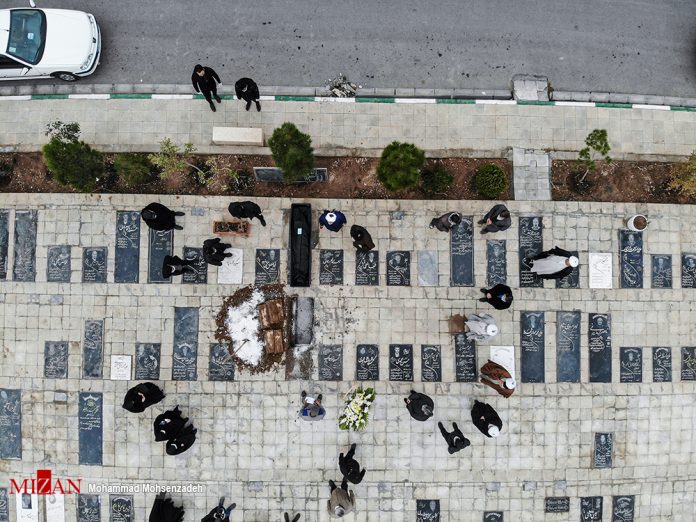
Iran reports 36 new Coronavirus deaths, highest in weeks

COVID in Iran

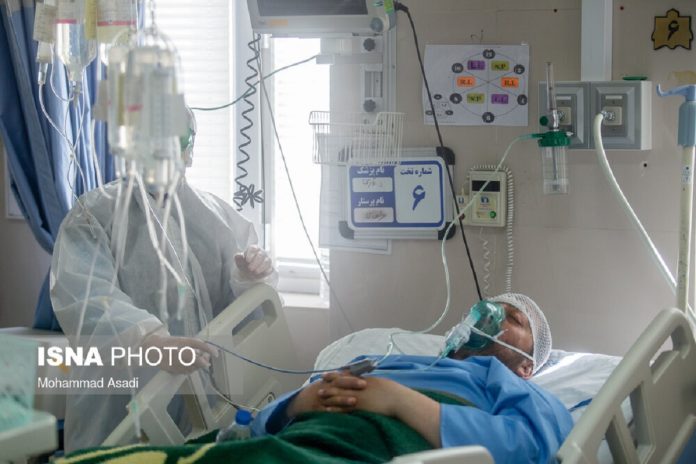
“A sum of 1,064 new patients infected with COVID-19 have been identified in the country based on confirmed diagnosis criteria during the past 24 hours,” the Iranian Health Ministry’s Public Relations Center said on Friday, and added, “565 patients have been hospitalized during the same time span.”

It further announced that the total number of COVID-19 patients has increased to 7,597,098.

“Unfortunately, 36 patients have lost their lives in the past 24 hours, increasing the number of the dead to 145,534,” the ministry noted.

It expressed satisfaction that 7,348,420 coronavirus patients have recovered or been discharged from hospitals so far.

The center went on to say that 828 cases infected with COVID-19 are in critical conditions.

It added that 56,009,524 coronavirus diagnosis tests have so far been carried out across the country.

The health ministry public relations warned that 19 cities are red, 45 cities are orange, 233 cities are yellow, and 151 cities are blue.

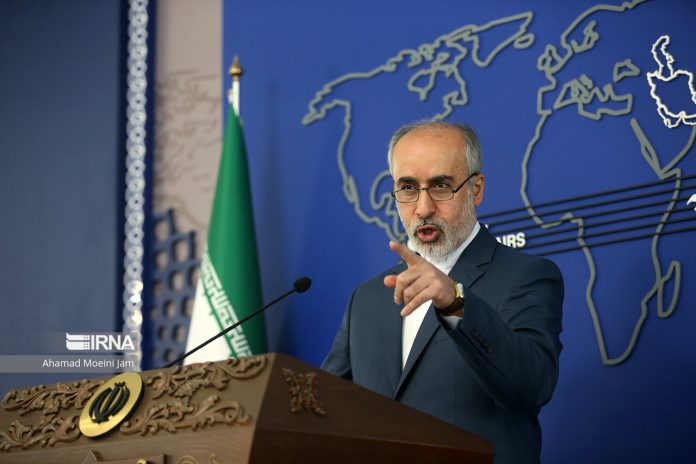
Iran condemns Israel’s attacks on Lebanon and Gaza

Nasser Kanaani

Kanaani said the attacks, which are a continuation of the desecration al-Aqsa Mosque and brutal raid by Zionist forces against Palestinian worshippers, constitute a violation of Lebanon’s sovereignty and territorial integrity and also a gross breach of the principles of international law and human rights of the Palestinian people.

He called on the global community and responsible international bodies to give an effective and deterrent response to the Zionist regime’s acts of aggression.

The Iranian Foreign Ministry spokesman referred to the telephone conversations of the Iranian president and foreign minister with their counterparts from Muslim countries as well as with the secretary general of the Organization of Islamic Cooperation and their emphasis on the need for the OIC to convene an emergency session immediately over the issue.

Kanaani renewed Iran’s call for the Muslim countries to adopt a strong and united stance in support of the oppressed Palestinian people, to prevent the repetition of the desecration of al-Aqsa Mosque and to put an end to the Zionist regime’s acts of aggression.

Israeli forces have violently invaded the al-Aqsa Mosque, the third holy site in Islam, attacking Palestinian worshippers during month of Ramadan.

Iran Covid: 36 deaths, fatalities and cases blamed on ignoring health protocols

COVID in Iran

Minou Mohraz added that the number of deaths and hospitalizations are also on the rise.
She added that the new sub-variant of the Omicron strain of Covid attacks lungs more than others.

Mohraz blamed most recent cases of the virus as well as the hospitalizations and deaths on people’s indifference to social distancing and their failure to wear masks.

Iranian Health Ministry’s Friday figures show 36 people died of the Coronavirus with 1064 new cases registered over the past 24 hours.

Covid has killed more than 145 thousand people in Iran since the global pandemic began in 2019.

Two Israeli settlers killed, one critically injured in WB shooting

West Bank Shooting

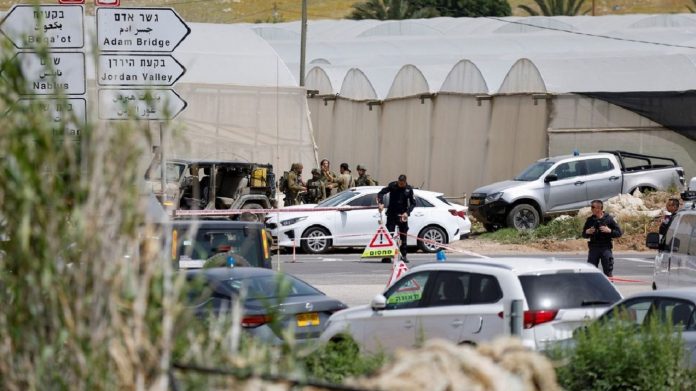
The attack targeted a car on Friday near the illegal Israeli settlement of Hamra in the West Bank’s northern Jericho governate.

The attack came hours after Israeli missile attacks on Lebanon and Gaza.

“A shooting attack was carried out on a vehicle at the Hamra Junction. IDF [Israeli army] soldiers are searching the area,” Israel’s military announced.

The Israeli army set up checkpoints to inspect cars on the main roads at an intersection near the illegal Israeli settlement of Hamra in the northern Jordan valley where the incident took place.

“Soldiers are blocking routes adjacent to the scene of the shooting attack. A pursuit after the terrorists has begun,” the Israeli military said.

The Magen David Adom ambulance service said two women in their 20s were killed and a third in her 40s was seriously wounded.

The medics stated that they pulled the three unconscious women out of their car, which had apparently crashed after gunmen opened fire at it from a nearby vehicle.

The Israeli police commissioner, Yaakov Shabtai, has called on all Israeli citizens to carry their firearms in the wake of the shooting.

“This is a murderous attack that reminds us how relevant the threat of terrorism is in its various forms,” Shabtai stated.

“Therefore, alongside our operations and that of the security forces in all sectors, I call on every citizen who has a licensed firearm and is skilled in operating it legally – to carry it these days,” he added.

The Israeli army’s chief of staff, Herzl Halevi, has also ordered the mobilisation of Israeli reserve forces, with an emphasis on air defenses and the Air Force reserves.

Halevi’s decision came after he convened a situation assessment meeting following the escalation of tensions on Israel’s borders and the deadly shooting attack in the occupied West Bank, reported Israeli media.

Halevi ordered the strengthening of defense efforts in the army’s central command and the continuity of a search operation for the perpetrators behind the deadly shooting, an Israeli army spokesperson said.

The shooting follows months of heightened violence in the occupied West Bank.

Attacks have surged to record heights there in recent months, with Palestinian health officials reporting the start of 2023 to be the most deadly for Palestinians in at least 20 years.

Nearly 90 Palestinians have been killed by Israeli fire in the occupied West Bank since the start of the year. During that time, 16 people have been killed in Palestinian attacks on Israelis.

The escalation in tensions comes after Israeli troops stormed the Al-Aqsa Mosque in occupied East Jerusalem on successive days this week, firing stun grenades and attacking Palestinians as they gathered for Ramadan prayers.

Iran FM calls for OIC emergency meeting following Israel raid on al-Aqsa Mosque

Al-Aqsa Mosque

Amirabdollahian in a phone talk on Thursday night with the Secretary General of the Organization of Islamic Cooperation (OIC) Hussain Ibrahim Taha exchanged views with him on the Israeli regime’s illegal intruding into Al Aqsa Mosque, and asked for the convening of an OIC emergency meeting to tackle the matter.

The top Iranian diplomat said that the emergency meeting had better be at the foreign ministers’ level, announcing that the Islamic Republic of Iran is ready for any kind of needed cooperation in successful convening of that emergency meeting.

Amirabdollahian, meanwhile, referred to President Ebrahim Raisi’s recent phone talk with his Indonesian counterpart on the same matter, informed the OIC secretary general about the Islamic Republic of Iran’s other planned programs in that respect.

The OIC Secretary General, for his part, condemned the recent Zionist invasion into one of the holiest Islamic sites, the Al Aqsa Mosque, and informed Amirabdollahian that the OIC Executive Affairs Committee will convene this coming Sunday to review Israel’s recent insulting move in that holy mosque.

On Wednesday, Israeli forces raided the holy site for the second time in a row and tried to evacuate Palestinian worshipers by firing stun grenades and rubber bullets. Worshipers threw objects at the Israeli troops in response.

The UN, Iran and several other countries and bodies have expressed shock and concern about Israeli forces’ incursions into the mosque.

Israel pounds Gaza and Lebanon amid rising tensions over al-Aqsa

Israel Attacks Gaza

The Israeli military has announced striking certain targets inside Lebanon, from which dozens of rockets were fired earlier at the occupied territories in retaliation for the Zionist regime’s crackdown on Palestinian worshipers at the al-Aqsa Mosque’s compound.

The Israeli military made the announcement on Friday, sufficing to say in a short statement that it “is currently striking in Lebanon,” without providing further details.

Some reports specified the target of the attacks as the Rashidieh Palestinian refugee camp in Lebanon, which is located south of the city of Tyre.

A Lebanese TV station reported explosions in the southern port city.

The Israeli Defense Forces (IDF) has announced it would not allow Hamas to attack from Lebanon.

“The IDF will not allow the Hamas terrorist organisation to operate from within Lebanon,” the IDF said in a statement.

It added that it holds the state of Lebanon responsible any attacks emanating from its territory.

An Israeli military spokesman has said the Israeli operation was over for the moment.

“Nobody wants an escalation right now,” he told reporters, adding, “Quiet will be answered with quiet, at this stage I think, at least in the coming hours.”

Meantime, Lebanon’s caretaker Prime Minister Najib Mikati condemned the firing of rockets from Lebanon.

The prime minister said the army and United Nations peacekeepers were investigating who was behind the launches and trying to find the perpetrators.

The government “categorically rejects any military escalation”, Mikati added, as well as the use of Lebanon to stage acts that threaten stability.

The United Nations Interim Force in Lebanon (UNIFIL) cited Israeli officials as saying “they do not want war” with Lebanon.

Lebanon’s resistance movement of Hezbollah fought off two Israeli wars against Lebanon in 2000 and 2006, forcing a humiliating retreat upon the Tel Aviv regime’s military in both cases.

The movement has vowed to resolutely defend Lebanon in case of any other Israeli-imposed warfare.

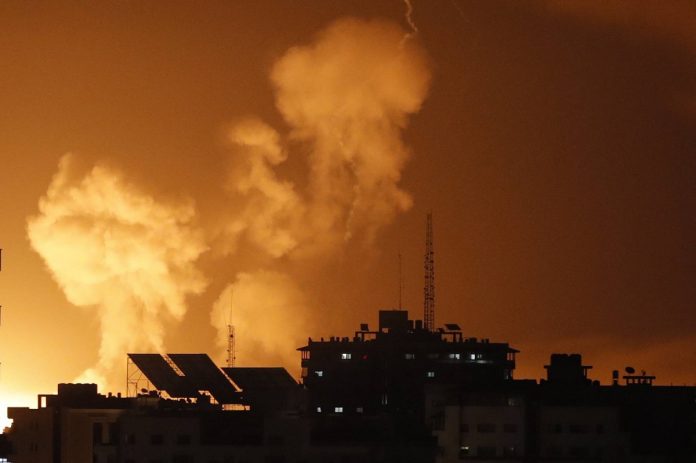
The Israeli warplanes has also attack targets inside the Gaza Strip following the firing of retaliatory rockets from the direction of the coastal strip, according to reports.

The aircraft targeted the Hay al-Zeitoun area in the south of Gaza City with three missiles, besides attacking various other areas across the Tel Aviv-occupied enclave on Thursday.

Israeli media outlets reported the fighter jets were engaged in attacking the resistance movements’ positions in Gaza.

An explosion rang out in the city of Rafah, which is likewise located in the southern Gaza Strip.

Palestinian sources identified the other sites that have been targeted by the raids as a site belonging to the resistance south of Gaza City, an observatory post east of city, an agricultural land in the town of Beit Hanoun in northeastern Gaza, and a location east of Khan Yunis in the southern Gaza Strip.

Sources inside Gaza told al-Mayadeen television network that all the sites that have been targeted in the Israeli aerial aggression have been evacuated.

It took the resistance outfits a mere several seconds to respond to the airstrikes with rocket barrages.

The resistance’s retaliation set off sirens in the city of Sderot as well as the illegal settlements of Nirim and Nir Am near Gaza’s border in the occupied territories.

Palestinian sources stated that the Iron Dome failed to intercept most of the retaliatory rockets, and has caused a state of fear among illegal Israeli settlers.

The announcement of the strikes came hours after around three dozen rockets were fired towards the occupied territories in retaliation for the Israeli regime’s attacks on Palestinian worshipers at the al-Aqsa Mosque compound in the occupied city of al-Quds.

On Tuesday and Wednesday, Israeli forces raided the holy site and tried to evacuate Palestinian worshipers by firing tear gas, stun grenades and rubber bullets.

Hamas has vowed that Palestinians will not remain indifferent and inactive in the face of the Israeli regime’s ongoing acts of aggression targeting the al-Aqsa Mosque’s compound in the holy occupied city of al-Quds.

“Our Palestinian people and the Palestinian resistance groups will not sit idly by” in the face of the occupying regime’s “savage aggression” against al-Aqsa, said Ismail Haniyeh, who runs the Gaza Strip-based Palestinian resistance movement’s Politburo.

In his statement, Haniyeh called on “all Palestinian organizations to unify their ranks and intensify their resistance against the Zionist occupation.”

The secretary general of Lebanon’s Hezbollah resistance movement has also met with a delegation of senior Hamas officials in Beirut.

Sayyed Hassan Nasrallah met with notable decision-makers from the Gaza-based resistance movement, including Haniyeh, Sheikh Saleh al-Arouri, deputy head of the Hamas’ political bureau, and top officials Khalil al-Hayya and Osama Hamdan, according to Palestinian media outlets.

During their meeting, Nasrallah and the Hamas officials reviewed the latest political and field developments in Palestine, Lebanon and the Middle East, especially the recent confrontations in the Gaza Strip, the West Bank and al-Quds.

The meeting also focused on the possible outcome of the situation in the region, in light of recent developments.

Nasrallah has issued a warning to Israel over the regime’s escalation at the al-Aqsa Mosque compound in the occupied Old City of al-Quds.

“The resistance front has a high number of long-range missiles in its arsenal; but it is not using them at the moment,” he said, adding, “One of the options that resistance fighters would take in case Zionists commit a folly would be the launch of a significant number of ballistic missiles at sensitive Israeli centers.”

Al-Quds Brigades, the military wing of the Palestinian Islamic Jihad resistance movement, has also condemned the latest Israeli forces’ raid against worshipers at the al-Aqsa Mosque during the Muslim holy month of Ramadan, and said that the attack was a “red line” for all Palestinians.

Abu Hamza, a spokesman for the group, stated that the resistance front has in reality honored its pledge to defend al-Quds, will continue to confront the Zionist regime’s atrocities, and stresses that it will not hesitance to carry out retaliatory operations by any means.

CIA chief voices frustration over Saudi relations with Iran, Syria: Report

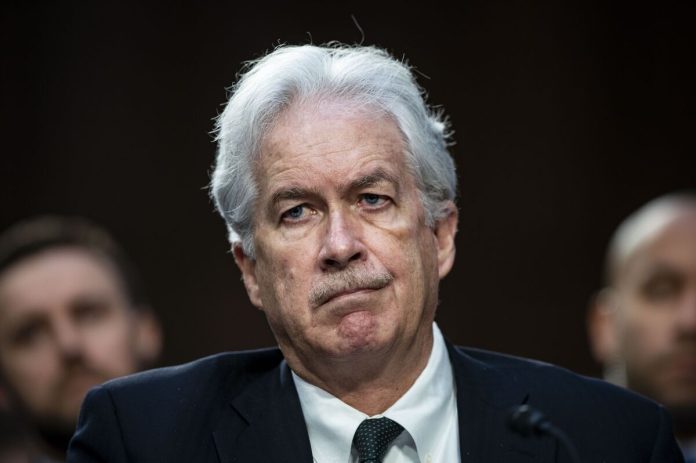
William Burns

According to the Wall Street Journal, the US spy chief traveled to Riyadh at an undisclosed time this week to discuss intelligence cooperation.

During a meeting with Saudi Arabia’s Crown Prince Mohammed Bin Salman, Burns complained that Washington feels “blindsided” by Riyadh’s moves to restore ties with Iran and Syria.

He expressed the US frustration at being left out of regional developments.

This comes as Iran and Saudi Arabia agreed to restore diplomatic relations on March 10 after intensive talks mediated by China in Beijing.

Top diplomats of the two countries held a landmark meeting on Thursday to mark the official restoration of ties.

In a joint statement the sides stressed the need to implement the Chinese-brokered agreement and pave the way for enhanced cooperation and contribute to regional security. They also pledged to take the required measures to reopen embassies and diplomatic missions.

The top Iranian and Saudi diplomats have also expressed gratitude to Beijing for hosting their meeting as observers have pointed to the increasing influence of China in the region amid the waning US role.

Washington reacted to the Iran-Saudi rapprochement with skepticism, saying that it would wait to see the results.

Tehran and Riyadh have shown to be serious about the resumption of ties as Iranian President Ebrahim Raisi has accepted an invitation from Saudi Arabia’s King Salman bin Abdulaziz Al Saud to visit Riyadh.

Meanwhile, Burns’s comments are in contrast with Washington’s official line that Riyadh kept informed of its talks with Iran to restore diplomatic relations.

“The Saudis did keep us informed about these talks that they were having, just as we keep them informed on our engagements,” White House spokesman John Kirby stated last month.

In another foreign policy shift, Riyadh has also taken steps to reestablish ties with Damascus amid Washington’s opposition. The Kingdom is set to invite Syrian President Bashar al-Assad to an Arab League summit in May.

According to reports, Saudi Foreign Minister Prince Faisal bin Farhan is expected to travel to Syria in the coming weeks to personally deliver a formal invitation to Assad.

The latest Burns’s visit to Saudi Arabia comes as he has gained a reputation as the White House’s “back-channel” emissary for sensitive foreign policy missions.