Monday, January 19, 2026
Home Blog Page 1518

Iranian official urges caution against new substrain of Omicron as Covid cases rise

COVID in Iran

Dr. Seyyed Ahmad Tabatabaei said it is necessary that people and officials in Iran be vigilant. Dr. Tabatabaei added that unfortunately, the number of Covid cases in Iran increased in the past few weeks and this is noticeable in the color of cities in terms of risk from Covid.

He urged citizens to observe health protocols such as social distancing, avoiding shaking hands with others, and wearing masks.

The official noted that the symptoms of the new variant are similar to those of a cold.

On Saturday, Health Ministry figures showed that Covid had killed 37 people in the previous 24 hours. The number of new cases stood at 884.

Meanwhile, there are 18 red cities in Iran in terms of the Covid risk. Red denotes the highest level of risk. The number of orange, yellow and blue cities respectively stands at, 76, 227 and 127.

Covid has killed more than 145 thousand people in Iran since the global pandemic began in 2019.

OIC: Israel’s crimes stoking violence and tension in region

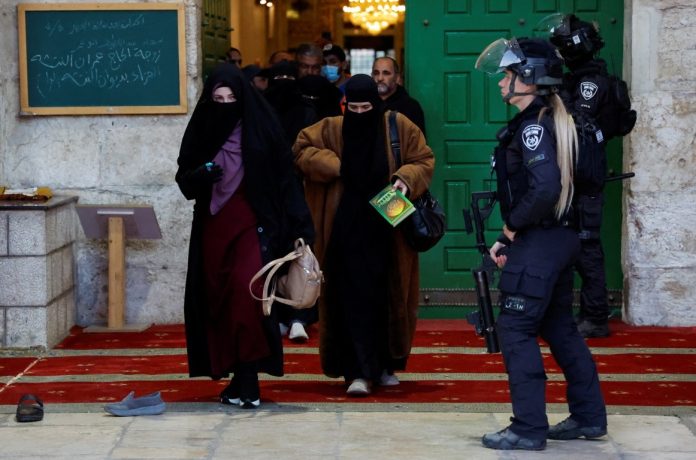
Al-Aqsa Mosque

“Al-Quds (Jerusalem) is an integral part of the occupied Palestinian territory,” Secretary-General Hissein Brahim Taha said in a speech to an extraordinary meeting of the OIC Executive Committee called to discuss the Israeli escalation in the occupied territories.

Jerusalem’s Al-Aqsa Mosque “is an exclusive place of worship for Muslims,” he stressed.

Tension escalated across the Palestinian territories in recent days after Israeli troops stormed the Al-Aqsa Mosque complex in East Jerusalem and forcibly removed worshippers for two nights in a row on Tuesday and Wednesday.

The Israeli raids on the mosque triggered rocket fire from the Gaza Strip and Lebanon, with Israeli retaliating with airstrikes.

The OIC chief held Israel fully responsible for “the implications of these dangerous crimes and violations which are capable of stoking violence, tension, instability, and insecurity in the region.”

“All Israeli decisions and policies aimed at altering the geographical, demographical standing of the city and undermining the historical and legal status of its holy sites are of no legal effect, null and void under international law and relevant United Nations resolutions,” he added.

Palestinians accuse Israel of systematically working to Judaize East Jerusalem, where Al-Aqsa is located, and obliterate its Arab and Islamic identity.

For Muslims, Al-Aqsa represents the world’s third-holiest site. Jews, for their part, call the area the Temple Mount, saying it was the site of two Jewish temples in ancient times.

Israel occupied East Jerusalem during the 1967 Arab-Israeli War. It annexed the entire city in 1980, in a move never recognized by the international community.

Israel hit Hamas positions to avoid wider conflict with Hezbollah: Report

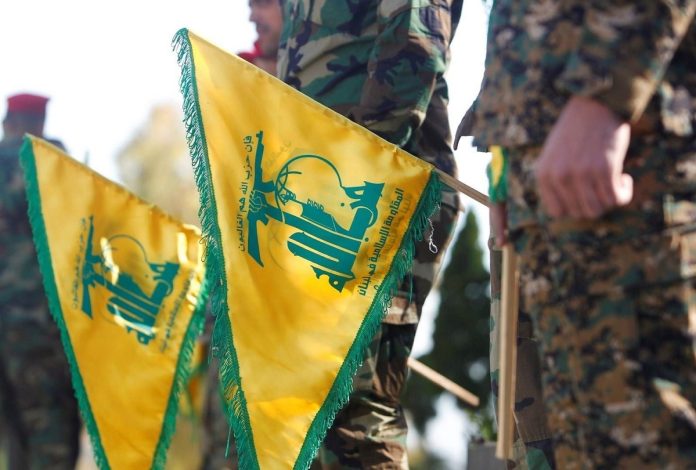
Hezbollah

In discussing their response to a barrage of rockets launched from Lebanon on Thursday, Israeli authorities concluded that the regime didn’t have any interest in getting dragged into a war in Lebanon that would risk turning into a regional conflict, the Israeli officials said, according to a report published by US news website Axios on Friday.

One of the officials stated in the consultation held by Israeli Prime Minister Benjamin Netanyahu and minister of military affairs Yoav Gallant ahead of a security cabinet meeting late on Thursday, the Israeli military and the spy agency Mossad presented different assessments on what Hezbollah’s response would be to Israeli airstrikes in Lebanon.

Mossad chief David Barnea argued Hezbollah would likely respond to any Israeli airstrike and therefore Israel should strike the positions of the movement in addition to Hamas and Lebanese targets, the official added.

But the Israeli army’s chief of staff, Lieutenant General Herzi Halevi, said it was in the regime’s interest not to engage Hezbollah, and that Israel’s response should stay focused on Hamas, the official said.

The official added that Halevi’s position ultimately prevailed as the recommendation to take at the security cabinet meeting.

During the Israeli security cabinet meeting, one of the main issues discussed was what the scope of the Israeli response should be in Lebanon, the Israeli officials noted.

Israeli military chiefs told the Israeli minters that a wider response against Hezbollah would likely result in the Lebanese resistance movement launching precision missiles toward Israeli-occupied territories, which could escalate into a war.

All the ministers voted in favor of the Israeli military’s recommendation to focus the response against Hamas, the two Israeli military officials said.

Political observers say that Israel is most likely not looking to escalate the situation along its border with Lebanon.

“Israel wants to respond but doesn’t want a wide-scale war and doesn’t want to involve Hezbollah in a war,” Wassail Awada, a political analyst based in Lebanon, stated, adding, “There are many reasons [to this] among them its domestic troubles – and Israel doesn’t want to disrupt its production of gas.”

Lebanese commentator Ibrahim al-Amin, who is close to Hezbollah’s leadership, also wrote in the Arabic-language al-Akhbar newspaper that if Israel assassinates Hamas leaders in Lebanon or threatens the security of the people in southern Lebanon, Hezbollah would react.

But he stressed that “local attacks” by Israel in Lebanon are meaningless, and will not necessarily prompt a large-scale Hezbollah response.

Iraq calls on Turkey to apologize over attack on Sulaymaniyah airport

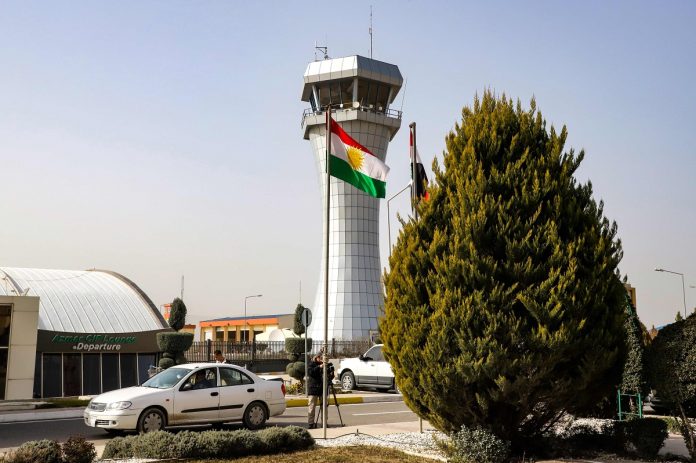
Sulaymaniyah airport

Rashid made the remarks in a statement on Saturday saying there was “no legal justification” for such an act.

“Turkish military operations against the Kurdistan region continue to take place, the last being the Friday bombardment against Sulaimaniyah civilian airport,” Rashid said, adding that such measures only serve to terrorize civilians.

Turkey “continues its approach of intimidating civilians under the pretext that hostile forces are present on Iraqi soil,” referring to the Kurdistan Workers’ Party (PKK) which has a presence in Iraq’s Kurdistan region and is blacklisted as a terrorist organization by Turkey.

Lawk Ghafuri, head of foreign media affairs for the Kurdish Regional Government (KRG), wrote in a Twitter post late on Friday that a drone attack had targeted the vicinity of Sulaymaniyah airport, but caused no damage or delays or suspension of flights.

The attack came a few days after Turkey halted flights to and from Sulaimaniyah until at least July 3, blaming increased PKK activity in and around the airport.

The Turkish Foreign Ministry announced at the time that PKK activities were posing a “threat” to the country’s air security.

In September, at least four Turkish soldiers were killed after they engaged in fierce exchanges of gunfire with members of the PKK militant group in the northern Iraqi region of Kurdistan.

Militants of the PKK — designated as a terrorist group by Turkey, the United States, and the European Union — regularly clash with Turkish forces in the Kurdish-dominated southeast of Turkey attached to northern Iraq.

In response, the Turkish military has occupied areas in northern Iraq, where it regularly conducts attacks against purported PKK positions without the Arab country’s consent. Baghdad has repeatedly condemned Ankara’s ongoing military operations there.

Iraqi resistance groups have also time and again warned Turkey of the consequences of its incursions into their country.

Last July, Turkey carried out a strike against the Iraqi hill village of Parakh in the Zakho district of Dohuk province, killing at least nine tourists, including children and women, and wounding more than 20 others.

Authorities in Iraq stated that the attack was carried out by Turkish forces and that they were responsible for the deaths and injuries of Iraqi civilians, while Ankara said the country’s forces did not attack civilians.

Former Iranian president urges referendum on key issues

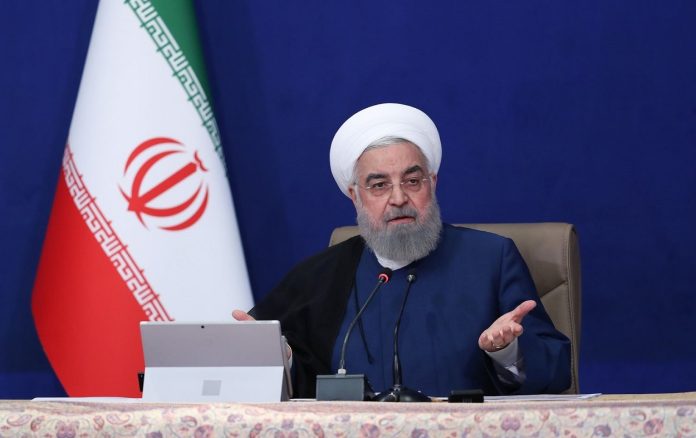
Hassan Rouhani

Rouhani said people could have dozens of demands, but during a referendum, they can be asked three questions on foreign policy, domestic policy and economy.

The former president added that any change demanded by the citizens must be tangible.

He noted that the Islamic Republic is built on people’s and God’s satisfaction and that if people are not satisfied, problems must be resolved through a fundamental change.

Rouhani said if officials are after a change, they need to enforce Article 59 of the Constitution, which stipulates that a referendum can be held on highly important economic, political, social and cultural issues.

Houthis call on UAE to withdraw its troops from Yemen

Houthi Fighter Yemen

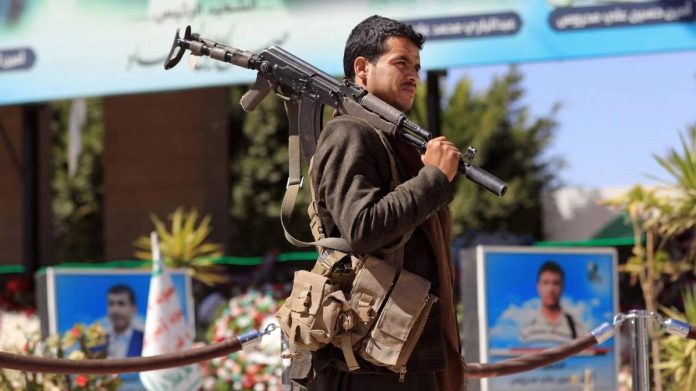
Mohammed al-Bukhaiti made the remarks late on Friday, according to al-Mayadeen television news network.

“We do not accept the presence of Emirati forces even on one inch of Yemeni soil. The UAE made a colossal mistake by joining Saudi Arabia in the Yemen invasion. It should, therefore, learn a lesson and pull out [as soon as possible],” al-Bukhaiti said.

He added, “there is an understanding between Saudi Arabia and Yemen,” without going into details.

Bukhaiti stated that the understandings as well as initiatives for peaceful settlement of Yemen crisis will be announced in two phases: One before Eid al-Fitr, which marks the end of the holy fasting month of Ramadan, and the other at another time.

“We support any proposals and efforts by Saudi Arabia or other parties to pacify the Yemeni crisis and reach a comprehensive political resolution of the conflict,” the senior official pointed out.

“All Yemeni parties and factions are duty-bound to contribute their share in achievement of a home-grown solution. This message is directed at the Yemenis, who participated in the [Saudi-led] aggression, urging them not to squander the available opportunity,” Bukhaiti continued.

The remarks come amid reports that a Saudi-Omani delegation is planning to travel to Yemen’s capital Sana’a next week to hash out a permanent ceasefire deal with officials from the National Salvation Government and end the country’s eight-year-old conflict.

Two sources involved in the talks, requesting anonymity, said Yemen’s warring parties could announce an agreement before Eid al-Fitr holiday – starting April 20 – if an agreement is reached.

The visit by Saudi officials to Sana’a is an indication of progress in Oman-mediated talks between the kingdom and the Houthis, which run in parallel to UN peace efforts.

It is also a sign that regional rifts are easing after Saudi Arabia and Iran agreed to restore diplomatic relations last month after years of estrangement.

Moreover, Mohammed Abdulsalam, the spokesman for the Houthi movement, said his group will spare no effort to put an end to the Saudi military campaign in Yemen and lift the brutal blockade against the war-wracked country.

“We will continue our efforts through negotiations to end the aggression and lift the siege. God willing, these ideals will be achieved and the ensuing damage will be repaired. Such efforts will eventually result in a peace agreement that would serve the interests of our dear Yemeni compatriots from Sa’adah to al-Mahrah,” he wrote in a tweet.

On Friday, Al-Mayadeen television news network, citing informed sources, reported that Saudi officials had recently held a closed-door meeting with the chairman and members of the so-called Yemeni presidential leadership council, which was established last April after the resignation of ex-president Abd Rabbuh Mansur Hadi, to inform them about a peace plan for Yemen.

Saudi Arabia’s Defense Minister Prince Khalid bin Salman briefed the council on Riyadh’s solution to end the crisis in Yemen, sources said, adding that the Saudis’ vision is to renew the existing UN-brokered truce for a year in an understanding with the Sana’a government.

Riyadh will pledge to pay the salaries of public servants, open Hudaydah port, and help settle the currency problems of Yemen in exchange for Sana’a’s acceptance of the truce, according to the report.

Saudi Arabia launched the bloody war against Yemen in March 2015 in collaboration with a number of its allies and with arms and logistics support from the US and several Western states to reinstall Hadi, who resigned from the presidency in late 2014 and later fled to Riyadh amid a political conflict with the Houthi movement.

The war objective was also to crush the Houthi movement, which has been running state affairs in the absence of an effective government in Yemen.

However, it has stopped well shy of all of its goals, despite killing tens of thousands of Yemenis and turning the entire country into the scene of the world’s worst humanitarian crisis.

Iran’s Raisi urges convergence in Muslim world to count Israeli atrocities against Palestinians

Iran and Turkey Presidents Raisi and Erdogan

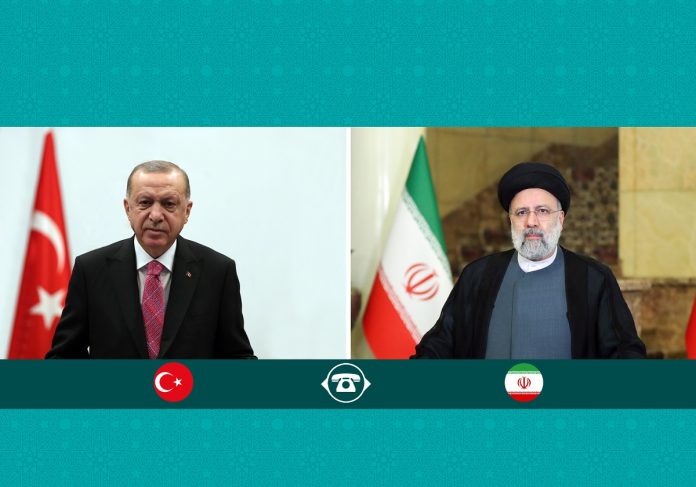
President Raisi made the remarks in his Friday evening phone talk with President Erdogan during which he congratulated the beginning of the holy month of Ramadan.

The Iranian president condemned the recent Zionist regime’s aggressive moves in Al Aqsa Mosque, and its extension into Syria and Lebanon, and asked for greater proximity among Islamic countries to counter that regime’s aggressions.

He referred to the criminal acts of the Israeli regime against the Palestinians, and especially the Muslims who were praying in Al Aqsa Mosque.

The president asked for an emergency meeting of the Organization of Islamic Cooperation (OIC) to study ways to counter the notorious acts of the Zionist regime.

President Raisi emphasized the need to respect the territorial integrity of the regional countries, and said that the best way to counter terrorist and separatist moves is supporting the national sovereignty of regional countries.

President Erdogan, for his part, felicitated the coming of Ramadan month, appreciated the Islamic Republic of Iran’s humanitarian aids to Turkey’s quake victims, and condemned the recent Zionist regime aggressive moves in Al Aqsa Mosque and against the oppressed Palestinian people.

Erdogan stated that he agreed with President Raisi on need for greater proximity among Islamic countries in the framework of the OIC for the purpose.

Moscow charges arrested WSJ correspondent with espionage

Evan Gershkovich

Gershkovich was formally charged with espionage on Friday, multiple Russian media outlets have reported. The Wall Street Journal correspondent was detained on March 30 in Yekaterinburg, after allegedly attempting to obtain military secrets.

Gershkovich appeared before a judge in the Lefortovo district of Moscow and pleaded not guilty, according to TASS. His attorney, Daniil Berman, declined to comment on the case.

Russian authorities allege that Gershkovich, “acting on instructions of the American side, collected information amounting to a state secret about the activities of one of the enterprises of the Russian military-industrial complex,” the news agency Interfax reported.

He was arrested in Yekaterinburg, in central Russia, and placed under pre-trial arrest through May 29. He appealed the arrest, and the appeals hearing was scheduled for April 18.

Gershkovich was reportedly charged with violating Article 276 of the Russian criminal code by engaging in espionage. If convicted, he would face up to 20 years behind bars.

Kremlin spokesman Dmitry Peskov described Gershkovich as having been caught “red handed.” Russian Foreign Ministry spokeswoman Maria Zakharova has said that whatever Gershkovich was doing, “it had nothing to do with journalism,” adding that Western governments have previously used reporters as spies.

The Wall Street Journal denied that Gershkovich had been spying, demanded his release, and said it was “deeply concerned” for his safety. The outlet also suggested that Russia unjustly detained the journalist in order to trade him for someone.

Russian State Duma Deputy Sergey Obukhov told reporters on Thursday that if such a swap were to occur, he would urge the release of WikiLeaks publisher Julian Assange, though other lawmakers were more inclined to grant political asylum to former US president Donald Trump instead.

France and China support restoration of talks to salvage JCPOA

Macron and Xi
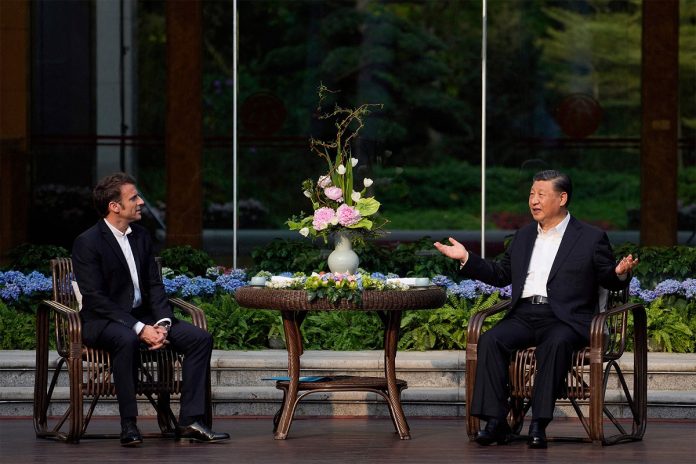
Chinese President Xi Jinping (R) and French President Emmanuel Macron attend a tea ceremony at the Guandong province governor's residence in Guangzhou on April 7, 2023.

The statement announced that the nuclear agreement between Iran and the permanent members of the UN Security Council plus Germany was an important achievement in the field of multilateral diplomacy.

This statement also added that France and China were determined to find a diplomatic and political solution to solve Iran’s nuclear issue.

According to the joint statement, Beijing and Paris adhere to the non-proliferation regime without undermining the UN Security Council resolutions.

Iran has cautioned the United States that the window of opportunity for an agreement on reviving the nuclear deal will not remain open forever, urging Washington to adopt a constructive approach to salvage the accord.

Iran showed to the world the peaceful nature of its nuclear program by signing the JCPOA with six world states — namely the US, Germany, France, Britain, Russia and China. But, Washington’s unilateral withdrawal in May 2018 and its subsequent re-imposition of sanctions against Tehran left the future of the deal in limbo.

Negotiations between the parties to the landmark agreement kicked off in Vienna in April 2021, with the intention of bringing the US back into the deal and putting an end to its “maximum pressure” campaign against Iran.

The discussions, however, have been at a standstill since August 2022 due to Washington’s insistence on not lifting all of the anti-Iran sanctions and offering the necessary guarantees that it will not exit the agreement again.

Iran FM: Tehran and Paris agree to resume talks to end challenges

Iran and French FMs Hossein Amirabdollahian and Catherine Colonna

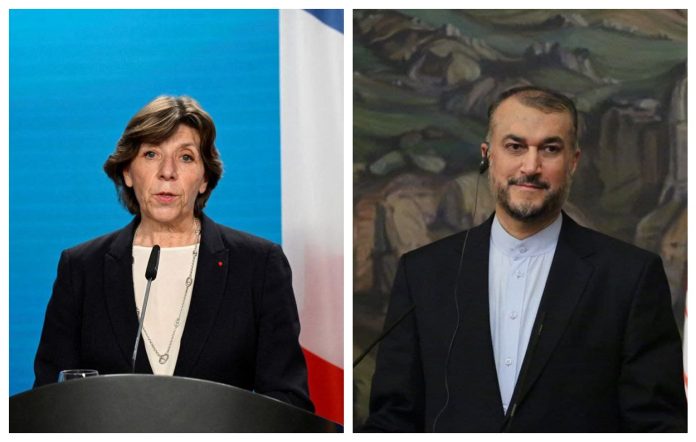
Amirabdollahian wrote in his twitter page that his meeting with his French counterpart Catherine Colonna was on bilateral ties, recent Tehran-Riyadh agreement, Ukraine war, regional issues, and termination of sanctions.

“In my frank and fruitful talk with Ms. Colonna, the French minister of foreign affairs, in in Beijing which took two hours we talked on bilateral talks, the recent Tehran-Riyadh agreement, Ukraine, regional issues including Palestine and Lebanon, termination of sanctions and our country’s peaceful nuclear program,” he said.

He added that while criticizing the French government’s behavior about remaining committed to Joint Comprehensive Plan of Action (JCPOA) commitments, he has also emphasized that the rights of the French protesters need to be respect.

The Iranian diplomat further stressed that Iran favors continuing the nuclear negotiations based on mutual respect, aimed at ending the existing challenges.