Monday, January 19, 2026
Home Blog Page 1508

Diplomats underline ‘Arab leadership role’ in resolving Syria crisis at Saudi meeting

Persian Gulf Cooperation Council

The agreement was reached early on Saturday by the foreign ministers from the six GCC countries of Bahrain, Kuwait, Oman, Qatar, Saudi Arabia and the United Arab Emirates, plus Egypt, Iraq and Jordan, who met in Jeddah at the kingdom’s request to discuss Syria’s return to the fold after years of hostility with the government in Damascus.

“The ministers exchanged views on the efforts made to reach a political solution to the crisis in Syria that ends all its repercussions and preserves its unity, security and stability and its Arab identity, and restore it to its Arab surroundings in a way that achieves the good of its brotherly people,” the Saudi foreign ministry said in a statement.

“The ministers stressed that the political solution is the only solution to the crisis in Syria, and the need for an Arab leadership role in efforts to end this crisis, setting up the necessary mechanisms for that, and intensifying consultations among Arab countries to ensure the success of these efforts,” the statement added.

The top diplomats underscored the importance of combating terrorism in all its forms, and the importance of state institutions preserving Syria’s sovereignty over its lands to end the presence of foreign-backed armed militants as well as foreign interference in Syria’s internal affairs.

According to the statement by the Saudi foreign ministry, the ministers also agreed on the importance of resolving the humanitarian crisis in Syria and providing the appropriate environment for aid to reach the country’s entire regions, creating the necessary conditions for the return of Syrian refugees and displaced persons to their areas, ending their suffering and enabling them to return safely to their homeland, and taking further measures that would contribute to stabilizing the situation across Syria.

The nine-nation talks came after Syria’s Foreign Minister Faisal Mekdad visited Jeddah on an unannounced trip on Wednesday, the first since the outbreak of the war, during which Mekdad and his Saudi counterpart discussed “the necessary steps” to return Damascus to the Arab League.

Syria’s membership in the Arab League was suspended following the eruption of a foreign-backed militancy in the country in 2011.

In 2015, Syrian activists said that Saudi Arabia, Qatar, Jordan, and Turkey supported both al-Nusra Front, which is affiliated with al-Qaeda and the Daesh terrorist group in Syria by giving them money or allowing Wahhabi mosques to collect money for them.

Around the same time, former US Senate candidate, Mark Dankof said the United States, Israel, and Saudi Arabia had been involved in creating the Daesh terrorist group to overthrow the legitimate Syrian government.

Saudi Arabia closed its embassy in Damascus and withdrew all diplomats in March 2012. Today, the two governments are “preparing to reopen embassies after Eid al-Fitr”, which marks the end of the holy fasting month of Ramadan, according to media reports.

The UAE also cut its relations with Syria in 2012, a year after Damascus found itself in the grips of foreign-backed violence, but it reopened its embassy in Damascus in 2018.

Saudi Arabia to launch four new special economic zones

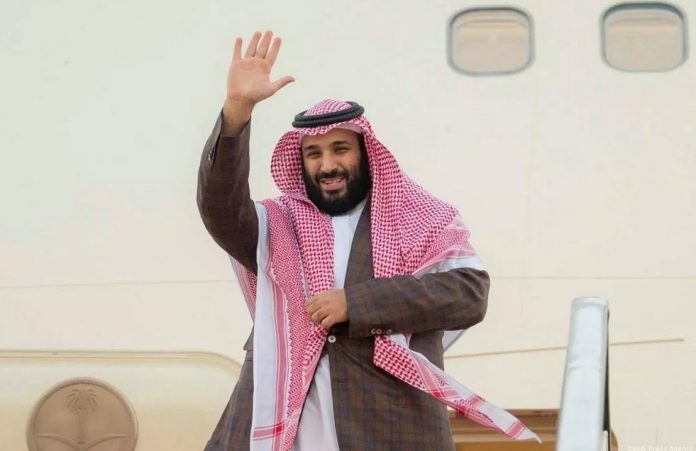
Mohammad bin Salman

The zones, located in Riyadh, Jazan, Ras al-Khair and King Abdullah Economic City, are part of the kingdom’s commitment to strengthening its position as a global investment destination, the Saudi Press Agency reported.

The crown prince said the new zones would have a substantial impact on how business is done in the kingdom, create tens of thousands of jobs, and contribute billions of riyals to the kingdom’s GDP.

“Saudi Arabia welcomes investors from all around the world to see first-hand the historic opportunities we have to offer,” he added.

Benefits for companies operating in the new zones include competitive corporate tax rates, exemption from customs duties on imports, 100-percent foreign ownership of companies, and favorable policies to attract and hire talents worldwide, among others.

The launch of the new economic zones came on the heels of several other similar projects in the kingdom, including the launch of the integrated logistics special zone at King Salman International Airport in Riyadh in November 2022.

Together, they represent the first phase of the kingdom’s long-term program to encourage foreign direct investment, attract the most talented professionals worldwide, and promote entrepreneurship and economic development.

Office chief: Rouhani has no plans to join Iran’s upcoming parliamentary elections

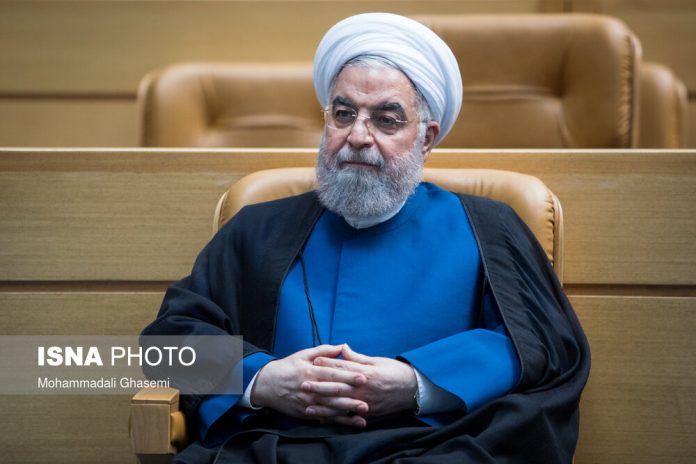
Hassan Rouhani

Earlier this week, Tasnim News Agency, close to the Principlists, claimed that Rouhani, known to be close to the Reformist camp, has started political activities as political groups begin for election competitions for securing seats on the country’s legislative chamber.

The Parliament is currently dominated by the Principlists.

Tasnim referred to Rouhani’s publishing of the memoirs of his presidency as a “first step” in his new political bid. It also pointed to the former president’s activities on Club House and weekly meetings with his former officials.

In an interview with Rouydad24 news outlet, Mahmoud Vaezi, the head of Rouhani’s office, however, rejected the report as an attempt to create media hype, saying there was no mention of a plan to join elections in the latest meeting with the ex-president, which took place during Nowruz holidays.

“I don’t think he is seeking to participate in the parliamentary elections, and I have not heard anything about it so far,” he added.

Vaezi said publishing “fake news” about Rouhani is nothing new and was frequent during his eight years in office.

Saudi team in Iran’s Mashhad to pursue re-opening of Consulate

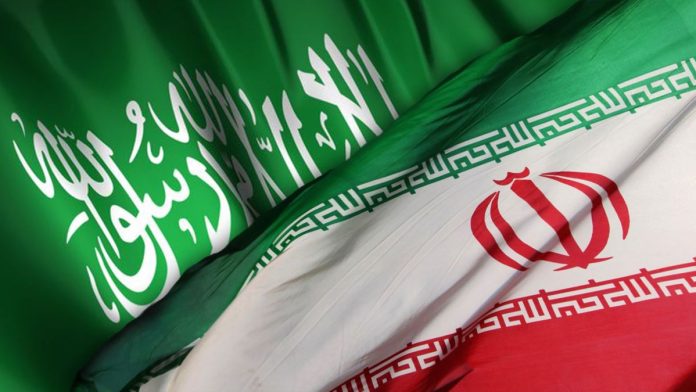
Iran Saudi Flags

The delegation was welcomed at Mashhad’s Shahid Hasheminejad International Airport, by Mohammad Beheshti Monfared, head of the representative office of the Iranian Ministry for Foreign Affairs in Khorasan Razavi Province.

While welcoming the Saudi delegation, Beheshti Monfared expressed hope that with the activation of the political missions of the two countries, relations between the two important and Muslim countries in the region will be expanded and the nationals of Iran and Saudi Arabia will be able to travel to the two countries as in the past.

For his part, Nasser bin Awad al-Ghannoum head of the Saudi delegation, thanked the officials of the Iranian Foreign Ministry for the warm welcome and the facilitation of the Saudi delegation’s trip to Iran.

He expressed hope that the revival of relations between the two countries will bring blessings and increase cooperation between the countries of the region.

Last week, the Saudi Arabian delegation visited the kingdom’s Embassy and diplomatic missions in Iran.

In turn, the technical delegation of the Islamic Republic of Iran traveled to Saudi Arabia to pave the way for the re-opening of the country’s Embassy in Riyadh as well as its Consulate and representative office to the Organisation of Islamic Cooperation (OIC) in Jeddah.

Lawmakers call on Biden admin. to ensure US funds not used in Israeli settlements

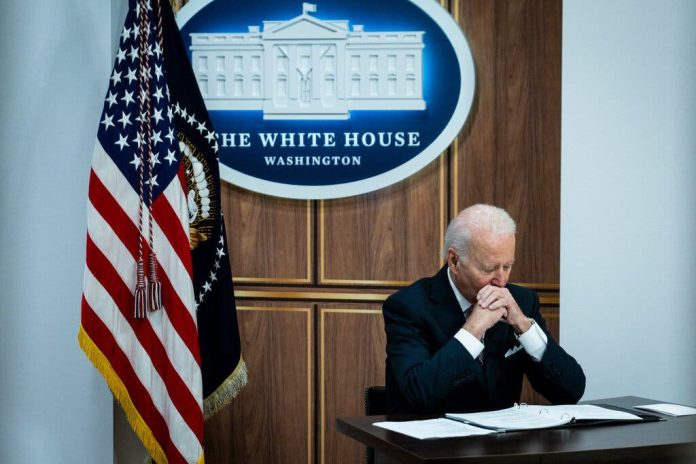
President Joe Biden

In a letter to Biden and Secretary of State Antony Blinken, 14 progressive Democratic lawmakers expressed “deep concern” about the escalation in violence in the occupied West Bank and the conduct of the new Israeli cabinet.

The lawmakers, headed by Representative Jamaal Bowman and Senator Bernie Sanders, urged the White House “to undertake a shift in US policy in recognition of the worsening violence, further annexation of land, and denial of Palestinian rights.”

The signatories called on Biden and Blinken to “ensure US taxpayer funds do not support projects in illegal settlement” and “determine whether US-origin defense articles have been used in violation of existing US laws.”

They called on the Biden administration “to ensure that all future foreign assistance to Israel, including weapons and equipment, is not used to support gross violations of human rights, including by strengthening end-use monitoring and financial tracking.”

The letter added hardline officials in Israeli Prime Minister Benjamin Netanyahu’s cabinet were involved in “pushing repressive, anti-democratic policies and escalating violence towards the Palestinian population.”

The Democratic lawmakers said the Israeli regime has continued to authorize settlement-building despite US objections.

“We are deeply concerned by Israeli…moves that demonstrate that illegal de facto and de jure annexation of the occupied West Bank is well underway,” they stated.

The letter marked a rare call from Congress for curbing the $3.8 billion Israel receives in US military assistance every year.

Tel Aviv has stepped up settlement expansion since late December, when Netanyahu staged a comeback as prime minister at the head of a cabinet of hard-right and ultra-Orthodox parties.

More than 600,000 Israelis live in over 230 settlements built since the 1967 Israeli occupation of the West Bank and East al-Quds.

The international community views the settlements – hundreds of which have been built across the West Bank since Tel Aviv’s occupation of the territory in 1967 – as illegal under international law and the Geneva Conventions due to their construction on the occupied territories.

The UN Security Council has condemned Israel’s settlement activities in the occupied territories in several resolutions. The Palestinians have historically demanded that the West Bank serve as part of their future state with East al-Quds, which is located inside the territory, as its capital.

Al-Quds has been especially tense in recent weeks due to repeated assaults by Israeli forces on the al-Aqsa Mosque compound, the third holiest site for Muslims. Since the start of the holy month of Ramadan, the Israeli regime has imposed strict restrictions on the entry and exit of Palestinians to and from the gates of al-Aqsa Mosque.

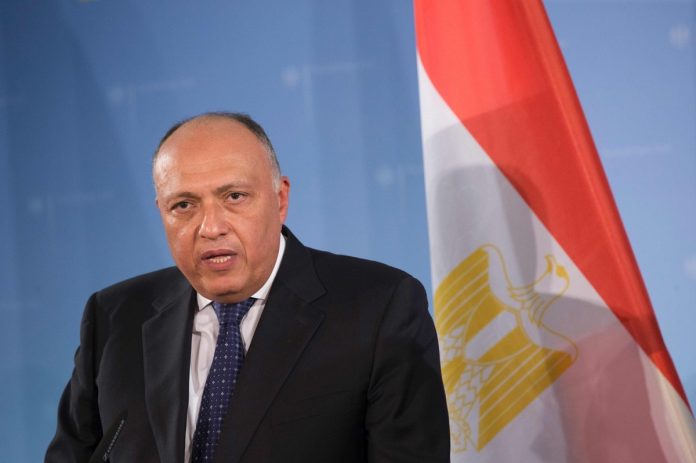
Egypt says to evaluate developments before normalizing ties with Iran

Sameh Shoukry

“The developments that took place between Saudi Arabia and Iran are important,” Sameh Shoukry said.

He stressed that “Egypt will take steps based on the evaluation of these developments.”

Iran and Saudi Arabia, the two great oil-producing rivals of the Middle East, have agreed to restore ties and reopen embassies seven years after relations were severed.

Iran and Egypt cut diplomatic ties in 1980 after Cairo admitted the former Shah of Iran and recognized Israel.

Live Update: Russia’s “Special Operation” in Ukraine; Day 416

Russia Ukraine War
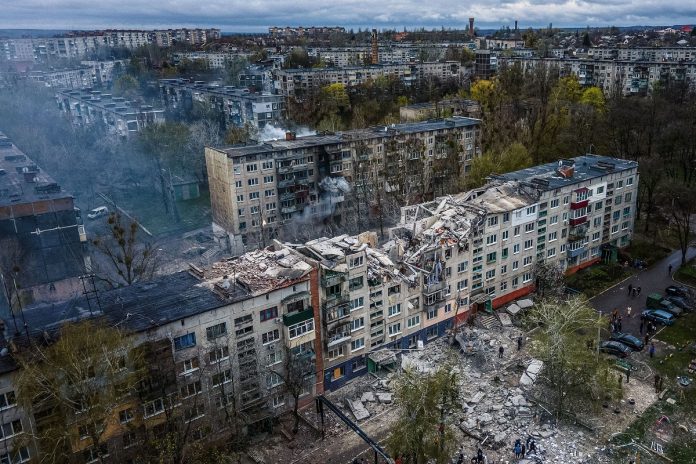
A residential building is partially destroyed after a shelling in Sloviansk on April 14.

EU teases 11th round of Russia sanctions

The EU is putting together the 11th package of anti-Russian sanctions in response to the Ukraine conflict, EU commissioner for financial stability, financial services and capital markets Mairead McGuinness has confirmed.

“We will have another package,” McGuinness told CNBC while attending an International Monetary Fund meeting in Washington, DC.

She insisted that the previous ten rounds of sanctions were having an impact on Moscow’s “war machine” but that more was needed.

“Our information is that the sanctions are working, and we will be doing more but we need to look at full implementation,” McGuinness explained, adding, “What Russia is being deprived of is both the finance and the technologies to reinvent their war machine, and they are having problems on the battlefield.”

The EU also intends to look at ways to prevent Russia from circumventing the embargo “with its pals globally,” said McGuinness. Rather than finger-pointing at entire countries, as the US has done, the bloc wants to pressure “individuals and entities” instead. To that end the EU has been working with the US, Canada and Japan to gather intelligence on Russian “evasion” efforts, she continued.


Report: Ukraine’s EU backers skeptical of counteroffensive

Some EU nations supporting Ukraine have started to doubt whether Kiev will be able to recapture large swathes of territory this year, Bloomberg has reported. Even a modest advance would likely result in heavy casualties among Ukrainian personnel and require considerable amounts of ammunition and hardware, the outlet claimed, citing anonymous EU officials.

In an article, Bloomberg alleged that the high hopes prevalent among Ukraine’s backers late last year, after Kiev’s troops managed to regain a large area, have now mostly dissipated. Fewer people in Western capitals are counting on a decisive push in 2023, with the fighting expected to continue well into next year.

The news agency quoted unnamed European officials “involved in efforts to support Ukraine’s military” as predicting that a realistic goal for Kiev would be a 30 km (20 mile) advance. This, if successful, should set the stage for a deeper counteroffensive in 2024, the sources predicted.

To support such a push, Ukraine’s Western backers would need to step up their military production capacity, Bloomberg reported. According to the outlet, further large-scale deliveries could, however, run into political opposition in some countries.

An unnamed European official cited in the report also warned that any such operation would be a costly endeavor, both in terms of manpower and weapons, as Russian forces have had time to dig in, with minefields, ditches, and concrete anti-tank pyramids in place.

Nevertheless, several European defense officials have told reporters that the counteroffensive, which the Ukrainian leadership has been hyping up for several months now, is likely to get underway by mid-May. Strikes may be expected from multiple directions, potentially including diversionary ones, the sources alleged.

Speaking to The Hill on Tuesday, Ukrainian Prime Minister Denis Shmigal suggested that the counteroffensive may actually begin in the summer. He insisted that Western backers were not putting any pressure on Kiev to force it into action without due preparation.

The official also called on the West to provide Ukraine with more artillery, ammunition, middle- and long-range missiles, tanks, and fighter jets.

On the same day, the Washington Post, citing a trove of recently leaked classified documents, reported that US intelligence did not hold out much hope back in February as to Ukraine’s ability to make significant territorial gains during the anticipated counteroffensive.

Among the problems supposedly faced by Kiev at the time were “force generation and sustainment shortfalls.”


8 killed in Russian missile strikes in Sloviansk: Ukrainian official

Ukrainian authorities have updated the death toll for Russian missile strikes in the eastern city of Sloviansk, with the head of the Donetsk region military administration saying eight people were killed and 21 injured.

At least seven locations were hit by S-300 surface-to-air missiles, which Russia has often used to hit ground targets, Pavlo Kyrylenko told Ukrainian national television.

“It is confirmed that seven S-300 missiles were launched on the multi-apartment buildings,” he said.

“A little boy was pulled out of rubble in front of my eyes, while he was still alive,” Kyrylenko continued, adding, “Unfortunately, he died in the ambulance.”

“Today’s attack on Sloviansk was one of the most massive since the beginning of this year,” the head of the Sloviansk city military administration, Vadym Liakh, said, adding, “There were several strikes on different districts of the city.”

The missiles hit residential areas and “ordinary civilian buildings,” according to Ukrainian President Volodymyr Zelensky.

“People are under the rubble. Everything is done to save them, everything is done to save the wounded,” Zelensky said in his nightly address.

The president said on his official Telegram that the attack is just another example of Russia’s brutality during its invasion.

“The evil state once again demonstrates its essence. Just killing people in broad daylight. Ruining, destroying all life,” Zelensky wrote, adding, “There will be fair accountability for every manifestation of terrorism. We will not leave a single trace of Russia on our land. And we will not leave any enemy unpunished either.”

Kyrylenko said these incidents were not uncommon, calling on civilians to evacuate to parts of the country further away from the front line.

“The evacuation is provided; the place for temporary location is provided,” he added.

According to Kyrylenko, Kramatorsk was also hit by an S-300 missile, and Kostianynivka was struck by multiple launch rocket system artillery.


UN chief raises concerns with Russia about Ukraine grain deal

UN Secretary-General Antonio Guterres has written to Russia, Ukraine and Turkey to raise concerns about the implementation of a deal that allows the safe wartime export of grain from several Ukrainian Black Sea ports, a UN spokesman has said.

The move comes after the United Nations said no ships were inspected on Tuesday under the deal “as the parties needed more time to reach an agreement on operational priorities”. Inspections resumed on Wednesday.

“The secretary-general has written letters to the parties and we are diligently working in close collaboration with Turkey to maintain the continuation of the vital agreement,” UN spokesman Stephane Dujarric told reporters.


Ukraine secures $5bn in more funds: PM

Ukraine has secured promises of $5bn in additional funding to support its continuing fight against Russia amid “fruitful meetings” in Washington this week, Ukrainian Prime Minister Denys Shmyhal has told reporters.

Shmyhal met with representatives of the International Monetary Fund, the World Bank and the European Investment Bank as well as top US officials, on the sidelines of the spring meetings of the IMF and the World Bank.

He said Ukraine received new pledges of additional support from Switzerland, Denmark and a number of other countries during the meetings, as well as an agreement from US aircraft maker Boeing Co to relieve Ukrainian companies of $200m in previous commitments. Kyiv expected to receive more support during an upcoming conference in London, he added.

“The international partners have reassured us of their long-term support,” Shmyhal added, describing his meetings in Washington, and referring to total financing of $115bn over the next four years that was leveraged by the IMF’s approval of a $15.6bn loan.


China promises not to sell arms to any party in Ukraine war

China will not sell weapons to either side in the war in Ukraine, the country’s foreign minister has said, responding to Western concerns that Beijing could provide military assistance to Russia.

China has maintained that it is neutral in the conflict, while backing Russia politically, rhetorically and economically at a time when Western nations have imposed punishing sanctions and sought to isolate Moscow for its invasion of its neighbour.

Qin Gang is the highest-level Chinese official to make such an explicit statement about arms sales to Russia. He added that China would also regulate the export of items with dual civilian and military use.

“Regarding the export of military items, China adopts a prudent and responsible attitude,” Qin stated at a news conference alongside visiting German counterpart Annalena Baerbock.

“China will not provide weapons to relevant parties of the conflict, and manage and control the exports of dual-use items in accordance with laws and regulations,” he continued.

The minister also reiterated China’s willingness to help find a peaceful resolution to the conflict.


Ukrainian PM: Kyiv and Washington remain united despite leaks controversy

Ukrainian Prime Minister Denys Shmyhal on Friday declined to say if he had discussed the mass leak of classified documents in meetings with US officials in Washington this week –but emphasized that the two countries are united.

“We discussed many very important questions and challenges and issues with all officials with whom we have meetings during this three days,” he said at a press conference at the Ukrainian Embassy in Washington.

In his meeting with US Defense Secretary Lloyd Austin, Shmyhal stated that they discussed “many very important strategic issues.”

“We are crucially united and absolutely united with Americans and other international partners in preparation of our counteroffensive and we are sure that we will win this war. We will liberate our territories,” he continued.

He elaborated that Ukraine and the US are united on issues such as training soldiers, ammunition and weapons supplies, including long-range missiles.

Shmyhal suggested without evidence that the leak of the documents was tied to Russia, but said, “I’m sure that the investigation will demonstrate all the conclusions.”

Some of the leaked documents divulged key weaknesses in Ukrainian weaponry, air defense, and battalion sizes and readiness at a critical point in the war just as the US and Ukraine have begun to develop a more mutually trusting relationship over intelligence-sharing.

One document reveals that the US has been spying on Ukrainian President Volodymyr Zelensky. That is unsurprising, stated a source close to Zelensky, but Ukrainian officials are deeply frustrated about the leak.

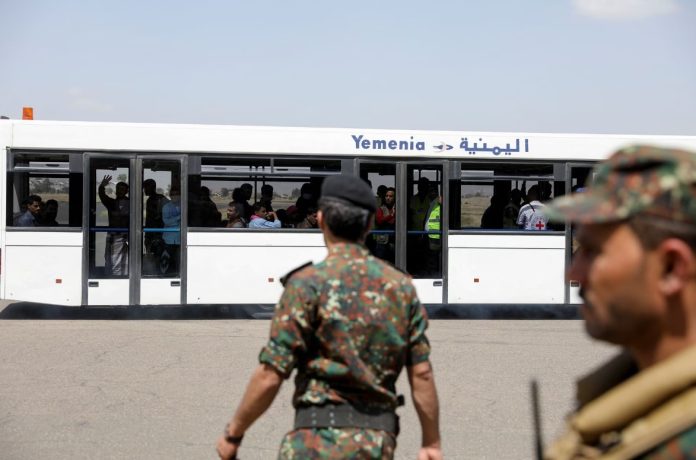
Yemen’s Houthis, Saudi Arabia begin major prisoner swap

Prison Swap Yemen and Saudi Arabia

The two sides concluded talks in the Yemeni capital Sanaa on Friday, with the International Committee of the Red Cross announcing that the warring parties have begun an exchange of nearly 900 detainees.

Saudi Arabia says it is seeking a permanent ceasefire deal to end its military involvement in a war that has killed tens of thousands of people and left millions hungry.

The kingdom leads a coalition that has been attacking the impoverished country since 2015. But Saudi Arabia wants to extricate itself from “a swamp that is very costly on all levels”, according to Arab diplomats.

The visit by the Saudi delegation, which departed Sanaa on Thursday, signaled willingness to build on an expired UN-brokered truce.

The top negotiator of Yemen’s Houthis says peace talks with Saudi Arabia have made progress and further discussions will be held to iron out remaining differences.

Chief negotiator Mohammed Abdulsalam stated on Friday the negotiations with envoys from Saudi Arabia and Oman, which is facilitating the talks, have been “serious and positive”.

“There was advancement on some issues with the hope of continuing studying outstanding issues at another time,” he said in a Twitter post, without elaborating.

The talks are reportedly focused on a ceasefire, full reopening of southern ports and Sanaa airport, payment of public sector wages, rebuilding efforts, and withdrawal of foreign forces from Yemen.

Sources familiar with the negotiations say the main sticking points include payment of civil servant, using oil revenue and a timeline for foreign forces to exit the country.

Local media reports said the Houthi movement has agreed to release 181 detainees, including Saudis and Sudanese soldiers who were part of the Saudi-led war on Yemen which received logistical and intelligence support from the US and other Western countries.

In exchange, 706 prisoners held by the Saudi-backed former Yemeni regime will be released in the UN and ICRC-brokered prisoner swap deal reached last March in Switzerland.

The Red Cross announced that on Friday, there would be two rounds of simultaneous flights between Aden and Sana’a to transfer the prisoners. The three-day operation is the most significant prisoner exchange in Yemen since both sides freed more than 1,000 detainees in October 2020.

On Thursday, a Saudi delegation left war-torn Yemen with an “initial agreement” on a truce and a commitment to hold a second round of talks with the Houthi group, one week after Riyadh had informed Sanaa its decision to put an end to the war.

The war in Yemen has created one of the world’s worst humanitarian crises. Hundreds of thousands of people have been killed through direct and indirect causes, with 4.5 million people internally displaced and more than two-thirds of the population living below the poverty line, according to UN estimates.

Observers believe the recent rapprochement between Iran and Saudi Arabia could help enhance stability in the region and, in part, facilitate efforts to reach sustainable peace in Yemen.

Tehran and Riyadh agreed to restore diplomatic ties on March 10 after intensive talks hosted by China. Top diplomats of the two countries also held a landmark meeting on Thursday in Beijing, stressing on efforts to enhance mutual trust and help boost regional security.

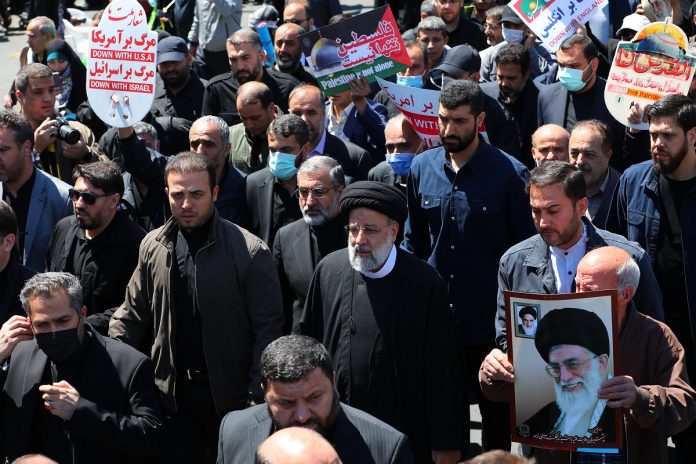
Iranian president: Israel’s collapse nearing

Ebrahim Raisi

Raisi further said the signs of the Israeli regime’s collapse are evident as “these huge crowds show.” He then noted that normalization of ties with regional countries won’t bring the Zionist regime security.

The Iranian president described the Quds Day marches as a symbol of solidarity and unity among the Muslim ummah, saying the liberation of al-Quds is very near.

Tens of millions of Iranians took to the streets to participate in the Quds Day rallies. Marches marking the occasion happened in other countries as well.

The last Friday of the Muslim holy month of Ramadan has been disignated as the International Quds Day by Imam Khomeini, the late founder of the Islamic Republic.

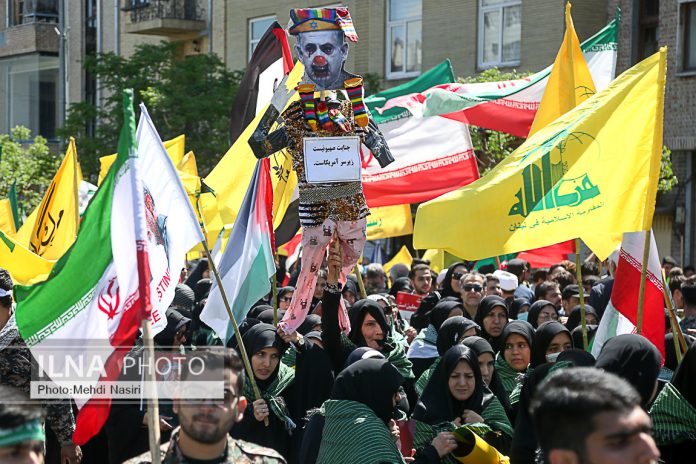
Intl. Quds Day in Iran: Demonstrators warn Israel against any foolish act at al-Aqsa Mosque

Intl. Quds Day in Iran

In a communiqué issued at the end of International Quds Day rallies on Friday, the demonstrators said the land of Palestine is the “central point of the Muslim world as well as an axis for convergence in the Islamic Ummah and synergy among Muslims.”

They said the “evil policies” of the US and regional and extra-regional powers aimed at building security for the Zionist regime have all faced defeat and the “usurping and temporary Zionist regime, faced with the new developments in the resistance front and the expansion of the flames of the Holy Intifada to the West Bank and all over the occupied territories, is grappling with a security challenge and internal collapse and is rapidly going down the path of definite decline.”

The participants condemned the Israeli regime’s desecrations of the al-Aqsa Mosque, which have led to the martyrdom and arrest of Palestinian pilgrims there, saying Israel resorts to such acts of violence as a way out of the political turmoil gripping the regime.

“We warn that any stupidity in relation to the al-Aqsa Mosque will have a heavy price and if a war breaks out, it will accelerate the collapse and destruction of the racist and usurping regime,” the statement said.

They also criticized the inaction of the world community and international rights groups in the face of Israel’s crimes against the Palestinians.

On Friday, millions of Iranian joined mass rallies countrywide to mark the International Quds Day, a legacy of Imam Khomenei, the late founder of the Islamic Republic, which is marked annually on the last Friday of the Muslim fasting month of Ramadan.

The influential leader designated the last Friday of the holy month of Ramadan as Quds Day on August 7, 1979, urging Muslims all over the world to use the occasion and voice solidarity with the Palestinians.