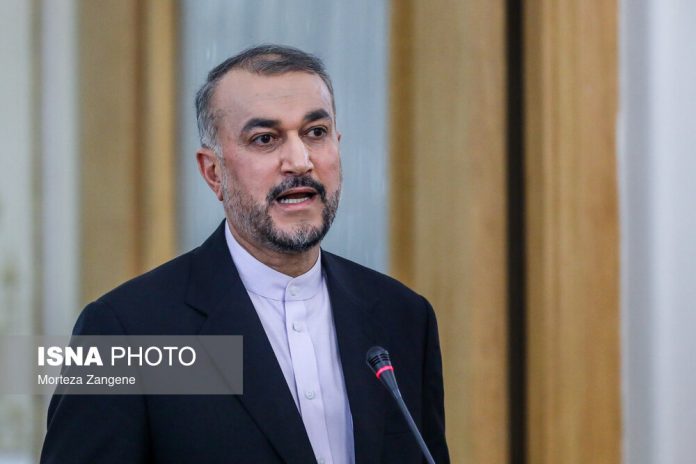
Amirabdollahian said on Thursday, we have time and again conveyed our dissatisfaction to the Taliban in Afghanistan.
He said the Taliban constitute just part of the realities in Afghanistan, and not all.
The top Iranian diplomat referred to the killing of eight Iranian diplomats and a journalist by the Taliban in Mazar-i-Sharif in northern Afghanistan in 1998, saying, “we do not want to see the repetition of that bitter incident, there is no way out but that of interaction between the two countries.”
Amirabdollahian said Iran wants to contribute to the peace process in Afghanistan and added we expect the Taliban rulers of Afghanistan to follow suit.
The Iranian foreign minister once again reaffirmed Iran’s water rights from the Helmand River under a 1973 treaty between Iran and Afghanistan.
Also regarding the efforts to revive the Iran nuclear deal, JCPOA, and the removing of anti-Iran sanctions, he said good progress has been made to that end.
“The JCPOA is an internationally-recognized document, we seek the lifting of sanctions”, said the Iranian foreign minister.
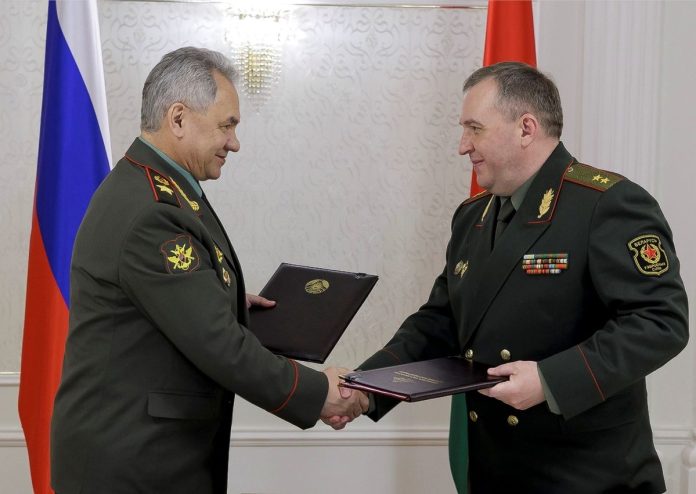
At a bilateral meeting in the Belarusian capital, the defense ministers of Russia and Belarus, Sergei Shoigu and Viktor Khrenin, signed documents defining the procedure for storing Russian non-strategic nuclear weapons in a specialized facility in Belarus, Ukraine’s northern neighbor.
Shoigu said that the Belarusian side received the Iskander-M operational-tactical missile system, capable of using missiles not only in conventional but also in nuclear equipment.
“Part of the Belarusian aircraft has been converted for the possible use of nuclear weapons. The servicemen have undergone appropriate training,” Shoigu added.
“The Republic of Belarus is interested in the further development of strategic allied relations with the Russian Federation in the military sphere,” Khrenin told Shoigu, as cited by the Belarusian press service.
Belarus has been one of Russia’s most loyal allies since Moscow launched its invasion of Ukraine last year.
While President Alexander Lukashenko has claimed there is “no way” his country would send troops into Ukraine unless it is attacked, Belarus has been willing to provide other means of support.
Lukashenko raised the possibility of Russia placing strategic nuclear weapons in Belarus during a national address in March, while baselessly accusing Western countries of “preparing to invade” Belarus and “destroy” it.
Belarus opposition leader Sviatlana Tsikhanouskaya told CNN at the time of the initial talks that Russia’s decision to station tactical nuclear weapons in its neighbor “aims to subjugate Belarus.”
Two officials said that a meeting has been agreed in principle between President Abdel Fattah El Sisi of Egypt and his Iranian counterpart, Ebrahim Raisi.
They added the meeting is likely to take place by the end of the year.
The news comes days after Oman’s ruler, Sultan Haitham bin Tarik, paid a two-day visit to Egypt where he and El Sisi discussed Cairo’s relations with Tehran, according to the officials.
Heading a high-ranking official delegation, Oman’s Sultan will visit Tehran on Sunday.
The Iranian Foreign Ministry has announced that Tehran welcomes any positive development or progress that would strengthen the relations between Iran and Egypt.
Iran and Egypt cut diplomatic ties in 1980 after Cairo admitted the former Shah of Iran and recognized Israel.
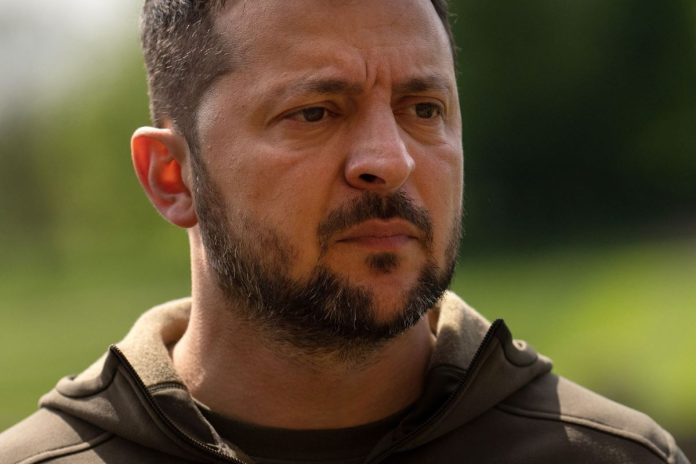
“The simple question is this: what is your interest in being an accomplice to Russian terror?” Zelensky said in his nightly video address.
“What is the benefit to Iran of such cynical killing? By Russian hands, but with your weapons, your weapons… Your Shaheds, which terrorise Ukraine every night, mean only the people of Iran are being driven deeper and deeper into the dark side of history,” he added.
US officials had alleged Iran has provided Russia with drones for use in the Ukraine war. Both Tehran and Moscow have repeatedly rejected claims over Russia’s use of Iranian-made drones in the Ukraine war.
Iranian officials have reiterates Tehran’s opposition to the continuation of the war in Ukraine, repeating the Islamic Republic’s readiness to help resolve the conflict.
Leader of the Islamic Revolution Ayatollah Seyyed Ali Khamenei has stated that the United States is chiefly to blame for the ongoing war in Ukraine, arguing that the war has created divisions between Washington and its European allies.
He called the Ukraine war a testament to the fact that the US is becoming weaker.
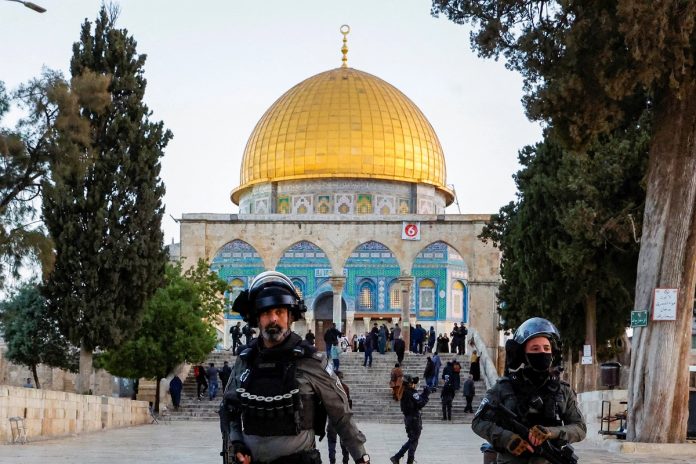
In a final communiqué issued on Wednesday after an extraordinary meeting in the Saudi city of Jeddah, the 57-member intergovernmental organization reiterated that the Israeli regime has no sovereignty over al-Quds and its Islamic and Christian holy sites.
The meeting followed a provocative incursion by Israel’s far-right security minister Itamar Ben-Gvir into the al-Aqsa Mosque complex and continued attacks by the occupation forces on the Palestinians in al-Quds.
“The Israeli minister’s storming of the blessed al-Aqsa Mosque and violating its sanctity is a provocative step that is condemned in the strongest terms and represents a flagrant and unacceptable violation of international law and the existing historical and legal status in al-Quds and its holy sites,” the OIC said.
“It is a dangerous escalation that requires the international community, including the Security Council, to work immediately to stop it through effective steps that would compel Israel, the occupying power, to stop its attacks on the Palestinian people and its violations of international law and international humanitarian law,” it added.
It further emphasized that the al-Aqsa Mosque is a place of worship for Muslims, and that the Jordanian Islamic Waqf is the legal authority in charge of its affairs.
The al-Aqsa Mosque compound is managed by the Waqf as part of a long-standing agreement under which only Muslims are allowed to pray at the site. Non-Muslim visitors are allowed visits at certain times and only to certain areas.
Also in its communiqué, the OIC said it “affirms the right of the State of Palestine to sovereignty over the occupied city of East Jerusalem (al-Quds), and that Israel, the occupying power, has no right nor sovereignty over the occupied city of al-Quds and its Islamic and Christian holy sites.”
In another provocative move on Sunday, Israeli prime minister Benjamin Netanyahu held a weekly cabinet meeting in a tunnel underneath the al-Aqsa Mosque.
The OIC denounced the move, saying “such provocative and illegal actions are null and void and have no legal effect.”
It also highlighted the importance of concerted efforts by OIC member states to protect the al-Aqsa Mosque and support the steadfastness of the Palestinian citizens of al-Quds in the face of aggressive Israeli policies aimed at controlling the city, changing its original Arab identity as well as its existing historical and legal status.
Meanwhile, the organization urged the international community “to put pressure on Israel … to stop [its] violations, including settlement expansion and all measures aimed at changing the legal and historical status quo in the blessed al-Aqsa Mosque, which would push the situation in the region to further deterioration.”
Efforts, it added, should be activated towards lasting peace and the so-called two-state solution that guarantees the establishment of an independent Palestinian state on the 1967 lines with East al-Quds as its capital.
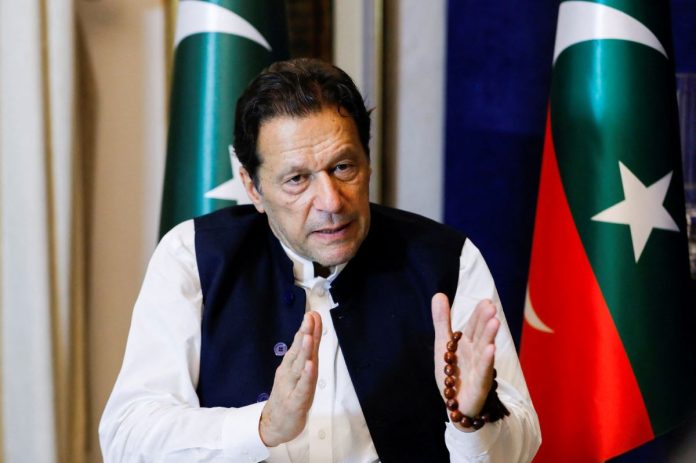
The former cricket star is embroiled in the latest, critical phase of a decades-old rivalry between civilian politicians and the powerful military, which has ruled directly or overseen governments throughout Pakistan’s history.
The face-off has brought widespread protests by Khan’s supporters, raising new fears about the stability of the nuclear-armed country as it struggles with its worst economic crisis in decades.
Asif on Wednesday told reporters that Khan’s Pakistan Tehreek-e-Insaf (PTI) party had attacked the “very basis of state”, which could not be tolerated.
“It is under consideration to ban PTI,” he said, adding the parliament would have to give final approval for a government decision to ban the party.
The minister referred to Khan’s protesting supporters who this month attacked military installations, including army headquarters, and government buildings.
PTI party lawyer Ali Zafar said any such move would be challenged in court. He stated an entire party cannot be blamed for acts committed by individuals.
Khan became prime minister in 2018 with the tacit support of the military, though both sides denied it at the time.
But Khan later fell out with the generals after being seen as having tried to interfere in key promotions in the security sphere, and he was removed as prime minister after losing a confidence vote in 2022.
Khan, 70, has since been campaigning for a snap general election, rallying supporters across the country, but the prime minister who replaced him, Shehbaz Sharif, has rejected the call for an election before the one due by October this year.
Khan is also facing corruption charges that he has dismissed as untrue and politically motivated in a bid to banish him from politics in an election year.
Khan was arrested on May 9 in connection with the charges, sparking the protests by his supporters and their attacks on the military facilities. He was later freed on bail.
Anti-corruption agency investigators questioned him for about three hours on Tuesday.
In addition to the fascinating nature of the Global Geopark of Qeshm Island and its historical sites, food and crafts make the trip to the island in the Persian Gulf more joyful.
Qeshm’s souvenir and handicraft world is full of colourful, vibrant food and hand-made structures that add to the wonder of traveling to the Island.
Qeshm’s Famous Dishes
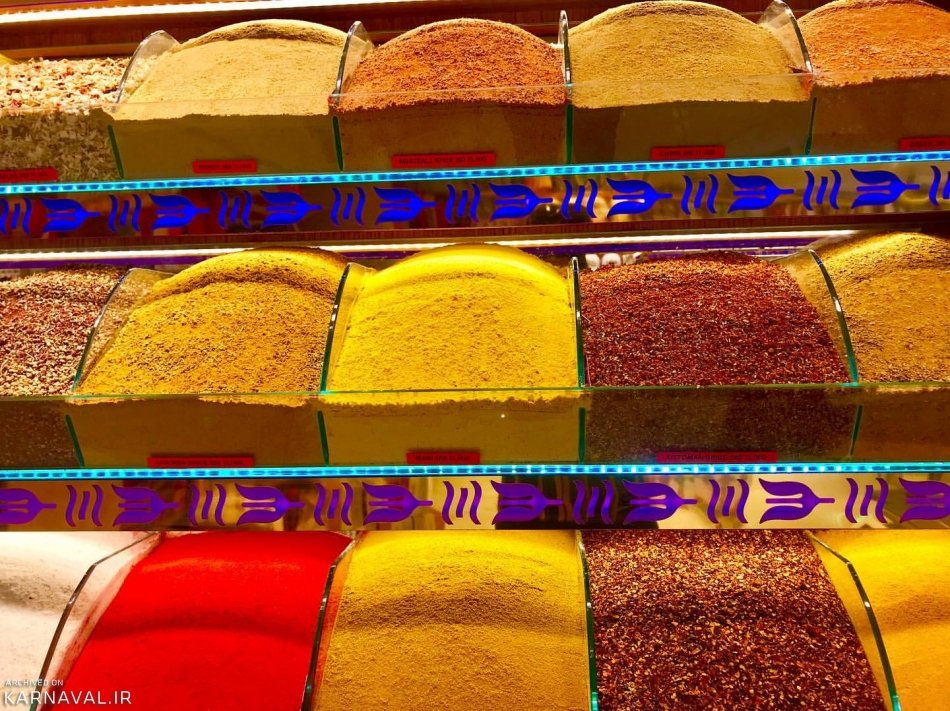
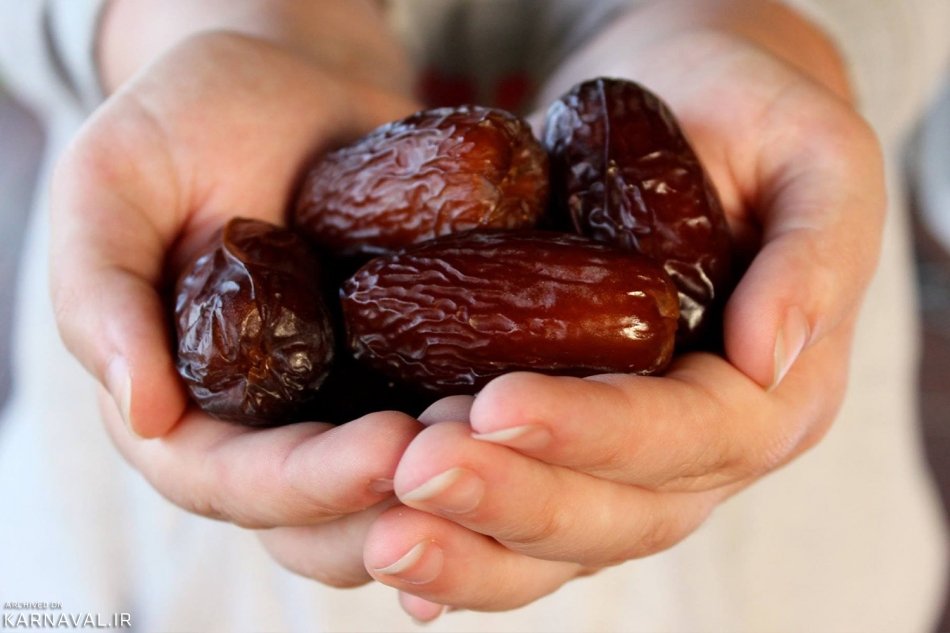
Variety of local breads, dates, and delicious spices from the red soil of Hormuz Island have delicious flavours. Cakes and southern Masghati are some of the popular dishes of Qeshm Island.
Colourful Spices in Iran’s Qeshm Island
Local Breads of Qeshm
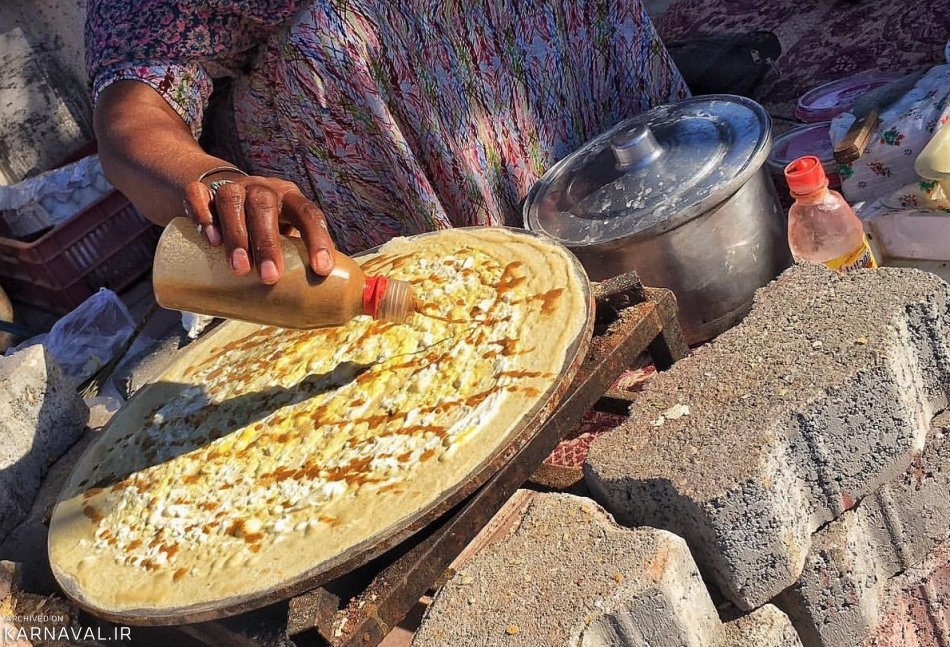
Everywhere in Qeshm, you can see women preparing bread. These breads are of different types and various spices and sauces are used to cook them. Tomshi is one of them; a type of thin bread that is prepared with eggs, cheese, Mahyaveh or Souragh. Mahyaveh is a sauce made from sardines and Souragh is a sauce in which the red soil of Hormuz Island is used as a spice. Cheese bread is another bread most commonly found in shops. This bread is eaten in Qeshm at breakfast and has a pleasant taste.
Local Bread of Qeshm Island
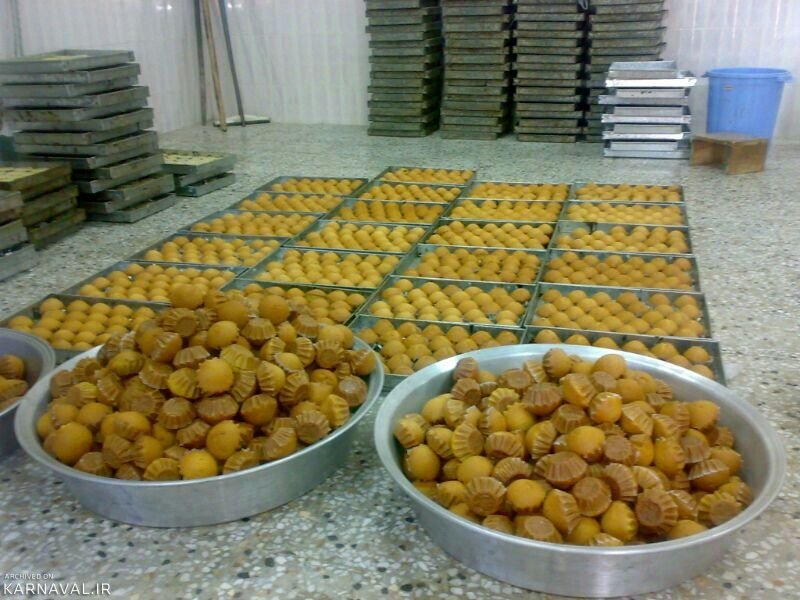
Heller Cake
Heller is the name of a sponge cake made using flour, eggs, sugar and vanilla. This souvenir is found in Qeshm’s pastry shops. However, its different flavours have led people and tourists to believe that it won’t be found anywhere else.
1 of 2
Dates of Southern Iran
Heller Cake of Qeshm Island
Southern Masghati
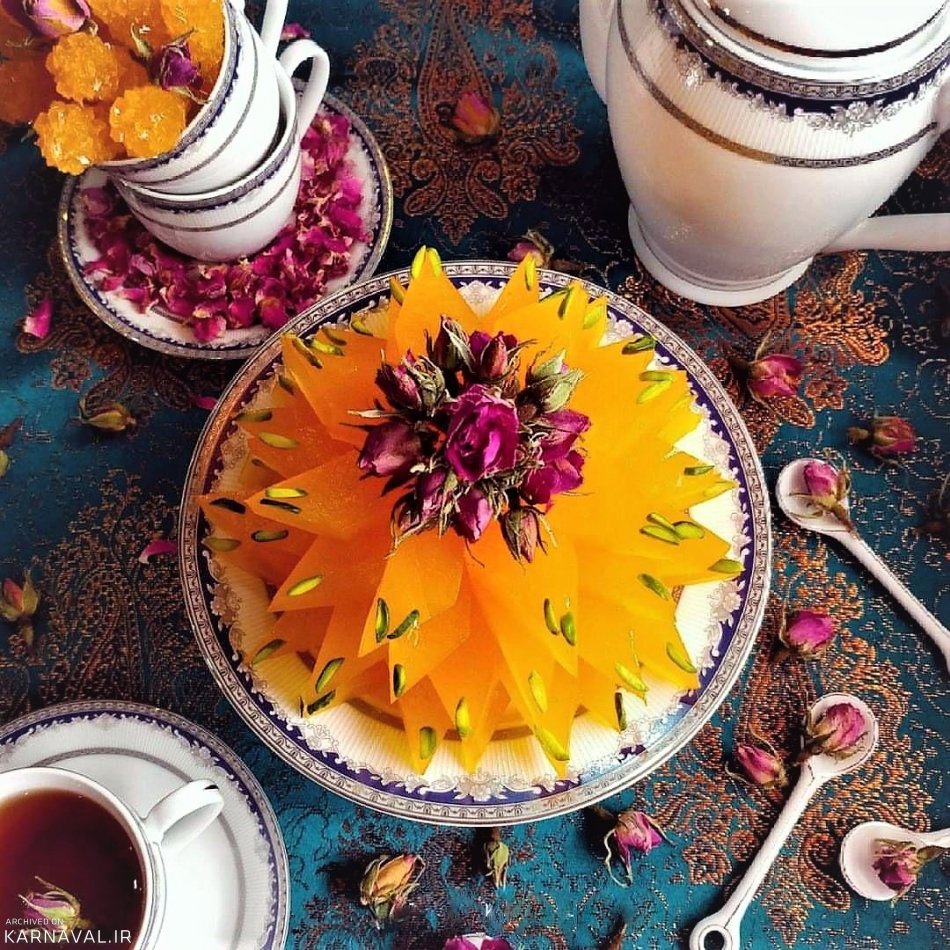
The combination of starch, rose water, saffron, nuts, butter, etc. makes a delicious pastry called Masghati. In Iran, of course, there is another type of Masghati which is the souvenir of Shiraz.
Masghati is a famous dessert in southern Iran
Qeshm Handicrafts, Souvenirs
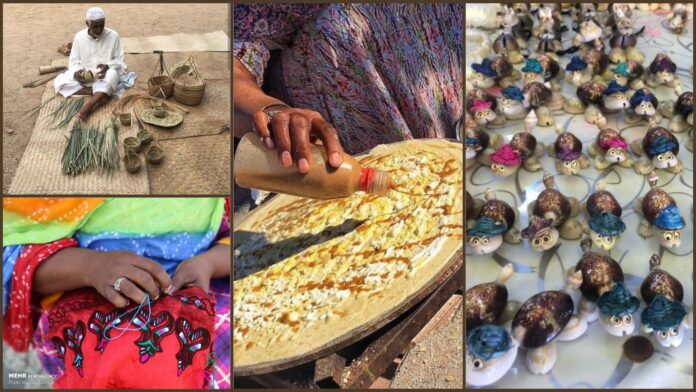
Handicrafts on Qeshm Island are categorised into different types. Shell handicrafts, traditional sewing for decorating textiles, mat textures with native plants, and native musical instruments are among the industries in the area. The most famous industry of the region is Launch-building which UNESCO has registered as the intangible cultural heritage of Qeshm. Each of these crafts is unique in its own way and belongs to this region of the Persian Gulf.
1 of 2
Handicrafts in Qeshm Island
Handicrafts in Qeshm Island
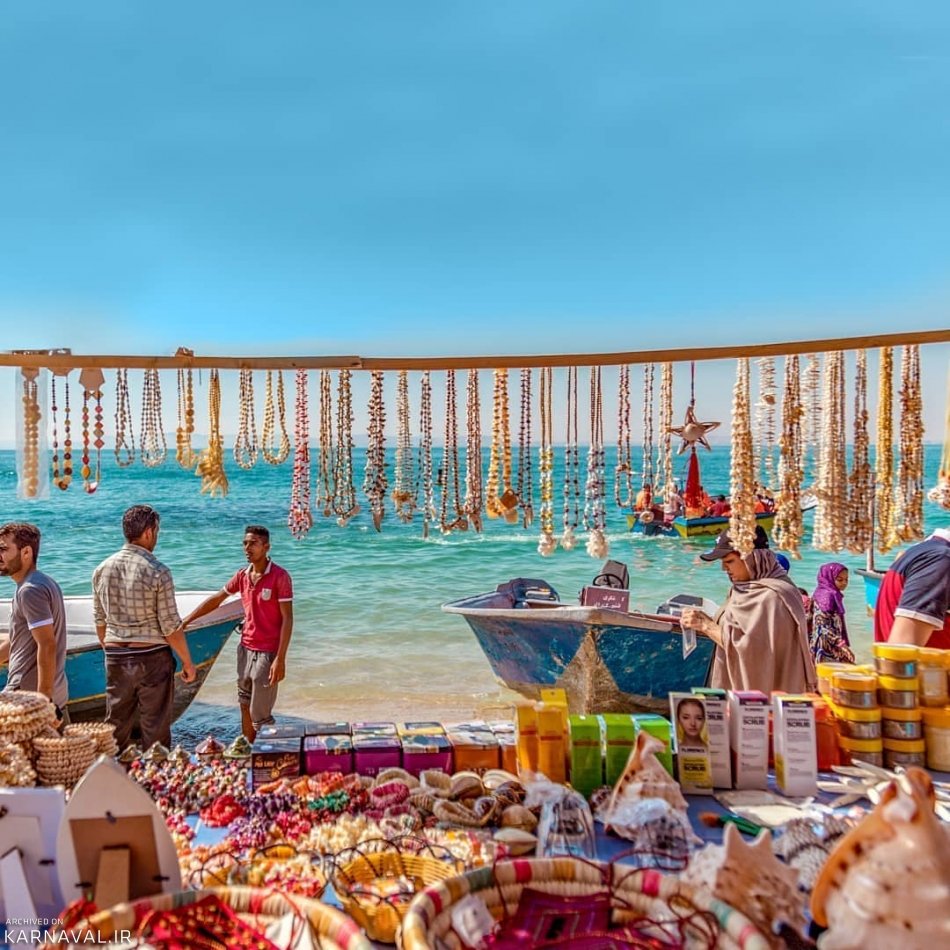
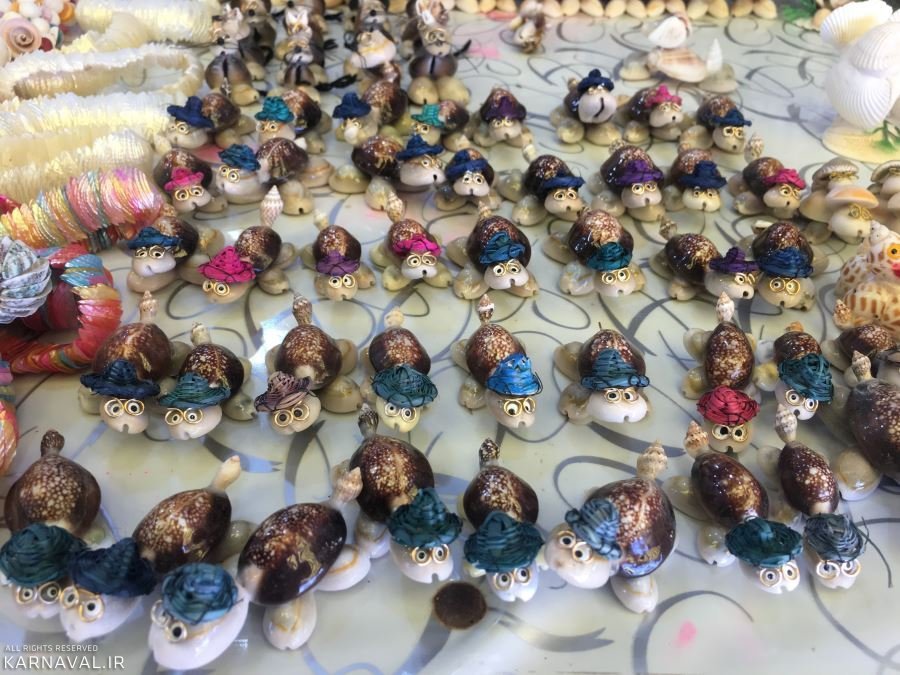
Shell Handicrafts
This group of Qeshm handicrafts includes mussel jewelry such as necklaces, bracelets, earrings, sculptures or decorations for mirrors, bags, and more.
1 of 2
Shell Handicrafts of Qeshm Island
Shell Handicrafts of Qeshm Island
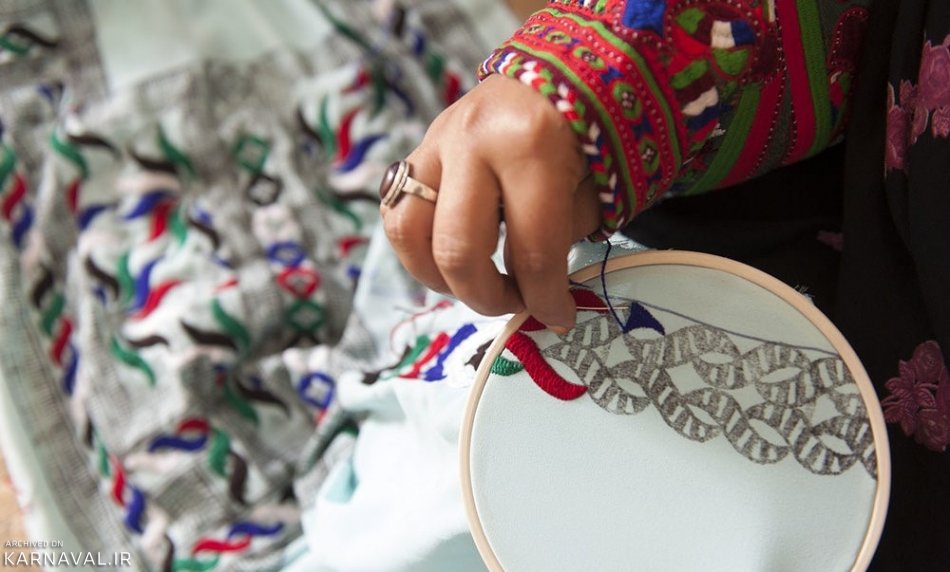
Traditional Sewing Types
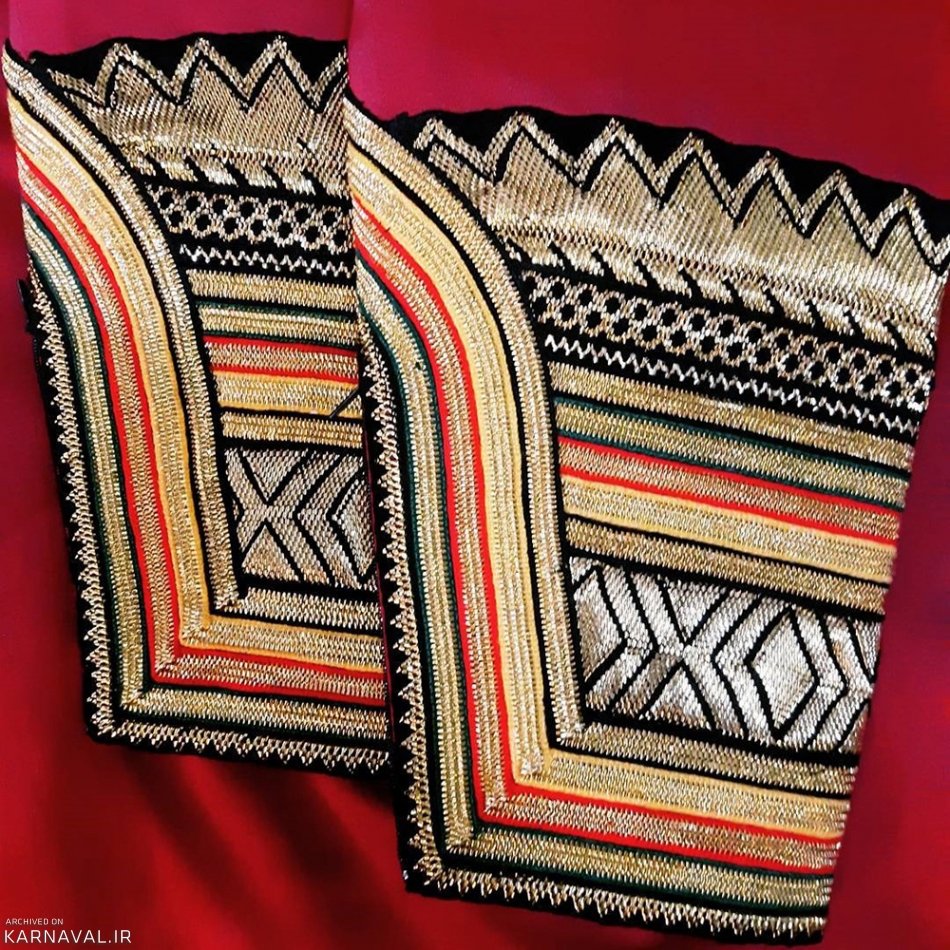
The other group of Qeshm handicrafts are traditional sewing and textile decorations on clothes, bags and shoes, jewelry, etc. Like Golabetoun Doozi, Shak-weaving, Zaribafi, Khoos-Doozi, etc.
1 of 2
Traditional Sewing in Qeshm Island
Traditional Sewing in Qeshm Island
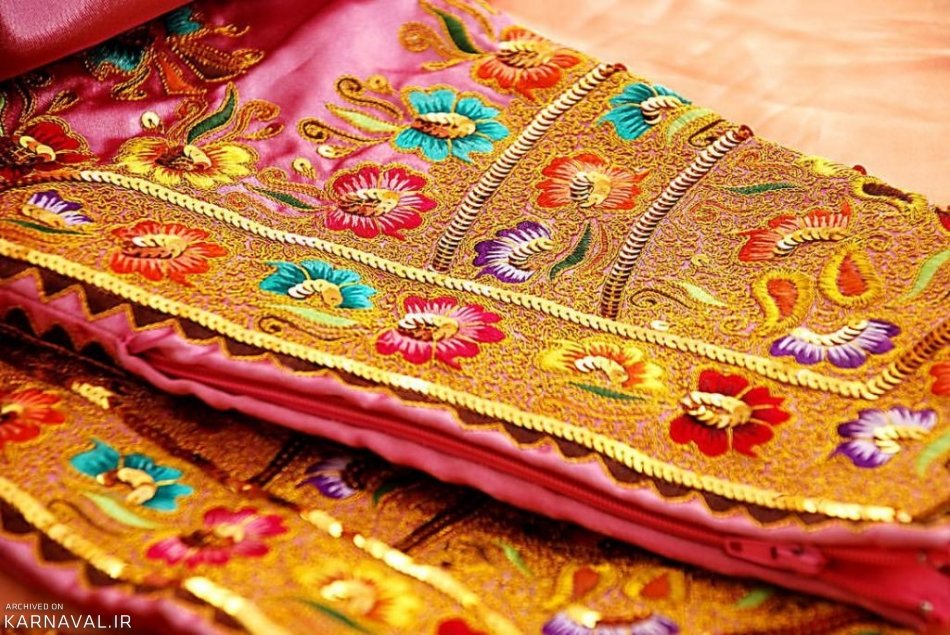
Golabetoun-Doozi
In the art of Golabetoun-Doozi, ancient Iranian motifs such sit on fabric with gold and silver threads and they decorate pants, scarves and women’s clothing with it.
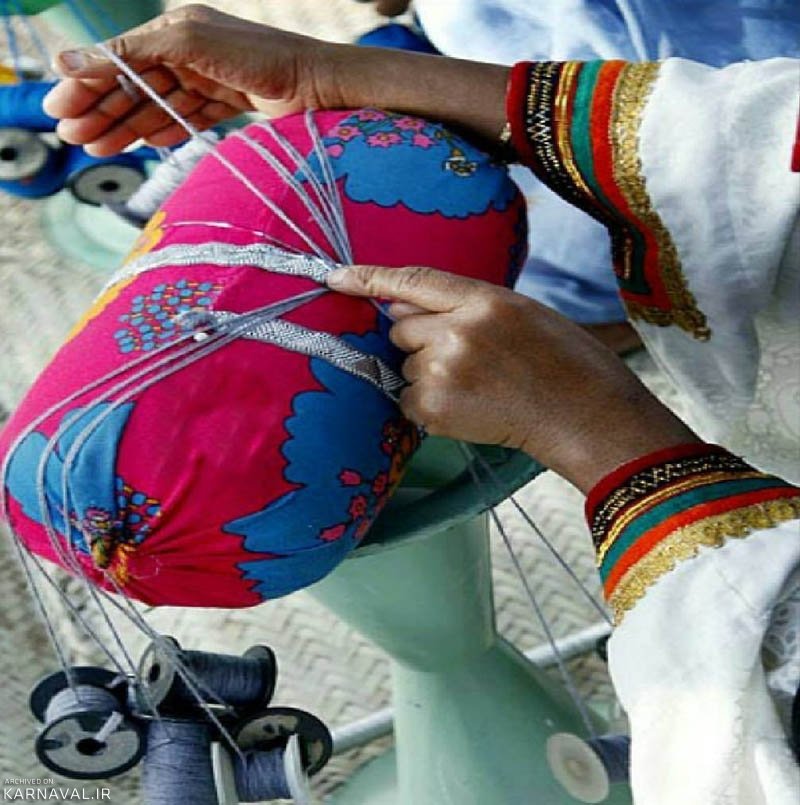
Shakbafi
Women and girls weave strips of 5 to 50 mm in diameter using a small cushion and several spools. These strips are of great value and are sewn on pants, sleeves and collars and skirts. One of the reasons for the high cost of southern clothes and their value is these strips. If golden thread is added to this type of weaving, it is called Zarifbafi instead of Shakbafi.
Shakbafi in Iran’s Qeshm Island
Traditional Clothing and Fabrics of Qeshm Island
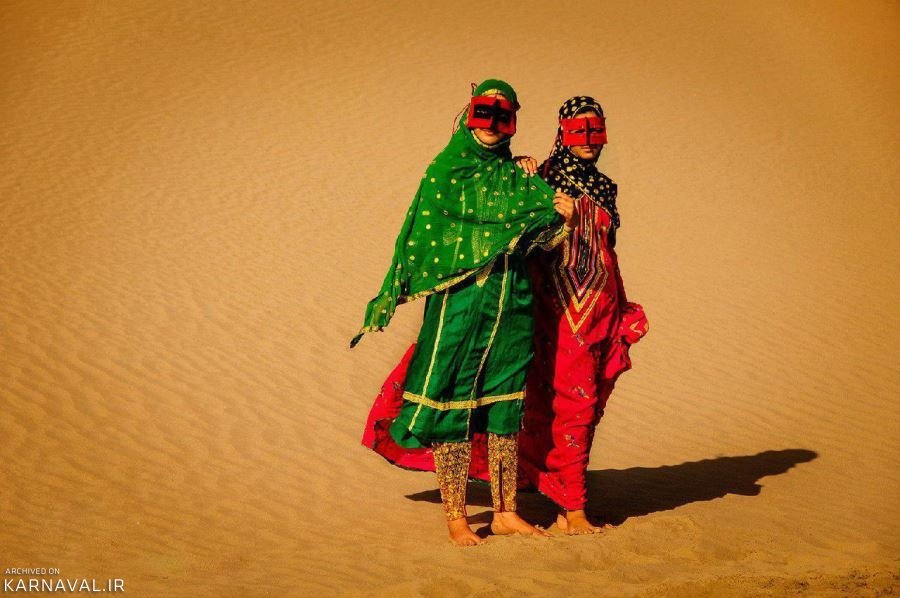
One of the women’s traditional clothes in Qeshm Island is their special Burqas or scarves that come in many different types. Burqas are available in a variety of colours, from red and green to black and typically cover the top of the eyebrows to the nose. Jelopol is also a cover for Qeshm women that is very thin and they wear Chador over it.
1 of 3
Traditional Fabrics of Qeshm Island 4
Traditional Fabrics of Qeshm Island 4
Women Clothing in Qeshm Islan
Mat-weaving with Native Plants of Persian Gulf
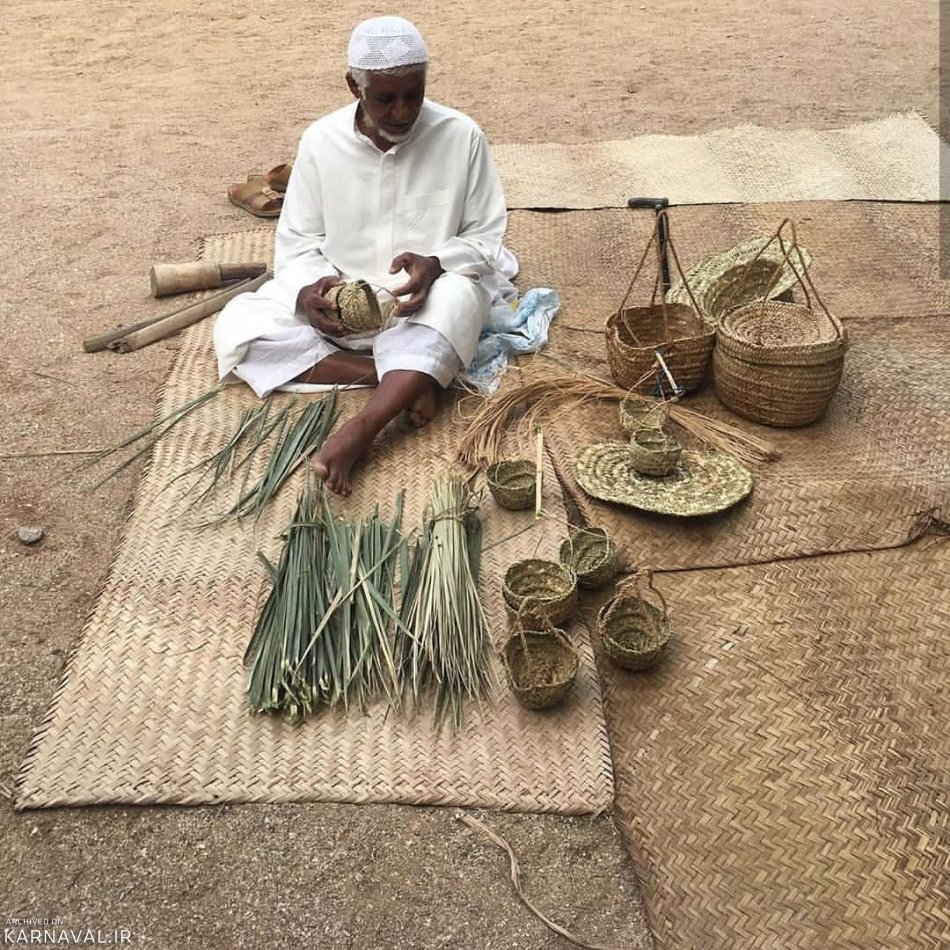
In addition to products such as mat and baskets, which are available to tourists using various plant fibers on the island, there is some kind of flooring or roofing in the area Sondbafi. Qeshm men and women bring palm tree shrubbery and use them in a variety of ways, including flooring, roofing, or wooden bedding. This is called Sondbafi.
1 of 2
Sondbafi
Net Knitting
Kapkaap-Making
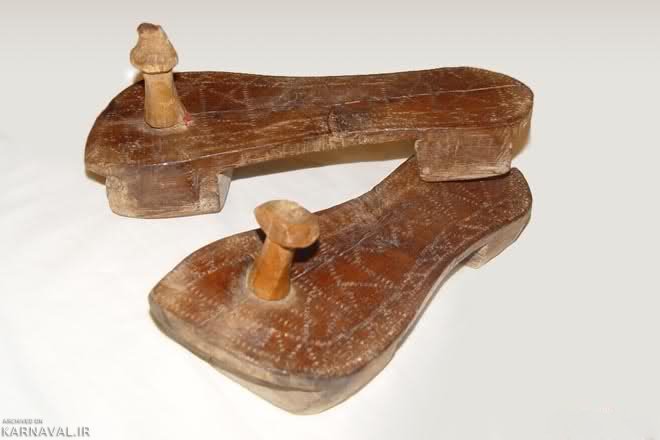
The hot weather in Qeshm Island cannot be tolerated in the warm seasons. Fishermen and Launch-makers work in the heat and put their feet on the ground. To solve this problem, Kapkaap was formed. It is a sandalwood-like shoe, which is sometimes made with extra wood in Launch-making workshops. These days, it is one of the most important industries and souvenirs of Qeshm.
Kapkaap-Making in Qeshm Island
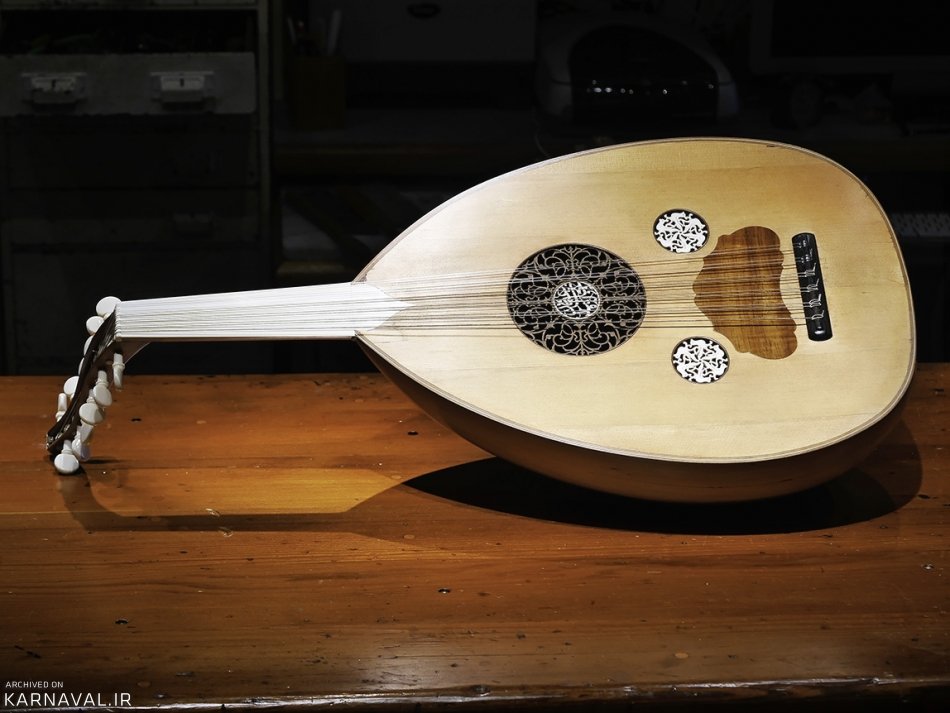
Oud-Making
The oud is a short-neck lute-type, pear-shaped stringed musical instrument. The oud, known in Farsi as Barbat, is a historical instrument that has a sombre and eerie sound. This instrument is a bit like Tar and Setar, but with different dimensions and is very much used in traditional Iranian music. The art of Oud-making has been prevalent on the island of Qeshm for years and is one of the most original indigenous arts in the region.
Oud making in Qeshm Island
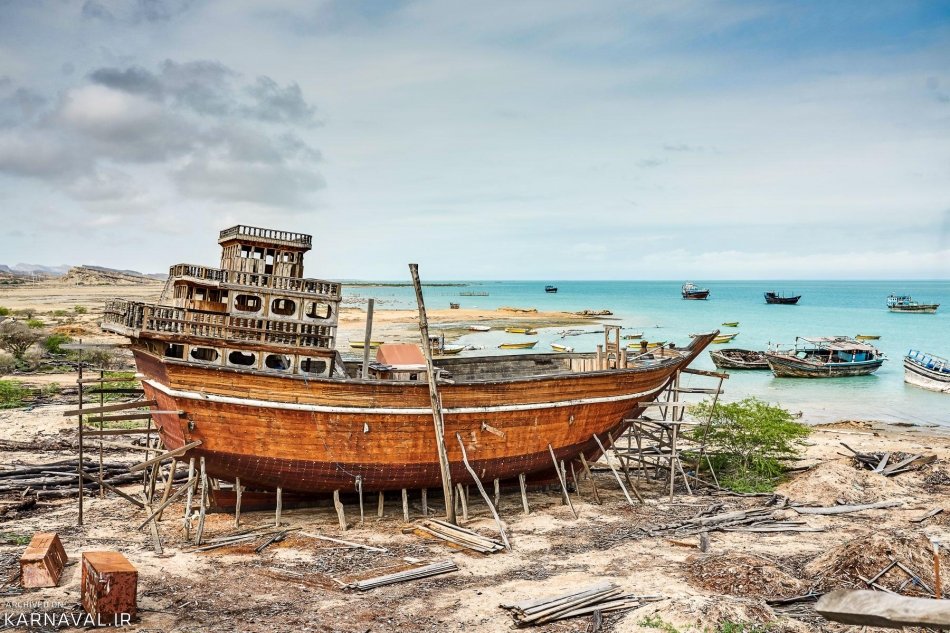
Launch-Making and Net-Knitting
Launch is a small ship or large boat that is most commonly found in the Persian Gulf, the Oman Sea and the Indian Ocean. The Iranians skill of launch-making is registered as a UNESCO intangible heritage and a world heritage. Knitting the fishing net or producing Gregor is another industry that Qeshm is are involved in.
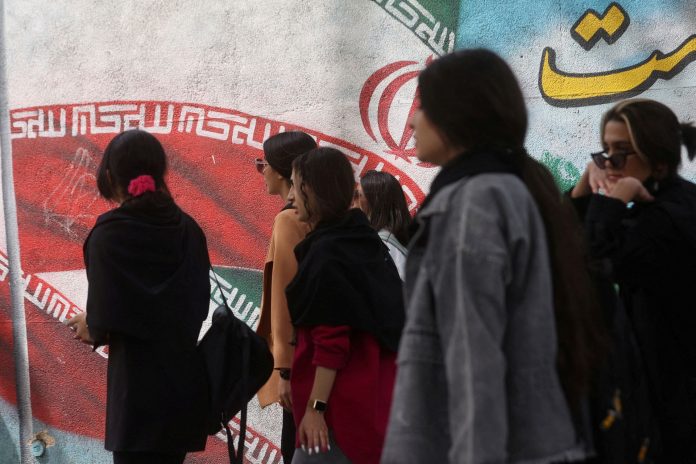
In adopted, the bill, which was initially proposed to the administration by the Iranian Judiciary, will task Iranian law enforcement forces to notify those who remove hijab in public of their offense via text messages and other similar means, in the first stage.
If the recipient refuses to pay heed and fails to wear hijab for a second time, she will be ordered to pay one-sixth of 8 million tomans, which is the maximum amount of eighth-grade fine, and one-third of the same amount, in case of a repetition for a third time.
If the offender refuses to pay the fine within one month, the fine will double and the Central Bank will be ordered to collect the amount from her bank account. If it is not possible to collect the fine, the individual will be denied all banking services until the fine is settled.
A report published by Tactical Report, a Beirut-based intelligence service, has claimed that Saudi Arabian Military Industries (SAMI) is currently in talks with China North Industries Group Corporation (Norinco) to buy fighter jets, reconnaissance drones, and air defense systems.
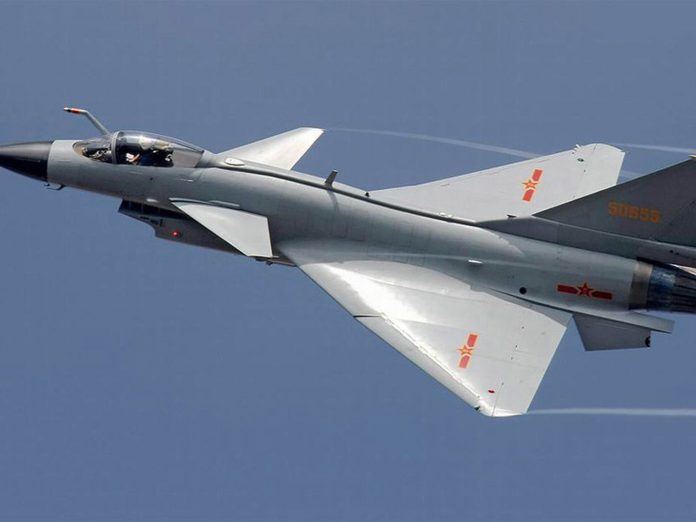
The agency also added negotiations have continued between the Egyptian Air Force and Chengdu Aircraft Industry Group, with the two sides meeting on the sidelines of the Langkawi International Maritime and Aerospace Exhibition in Malaysia on Tuesday. Cairo seeks a dozen of Chengdu’s J-10C fighter jets, which have only been sold abroad to Pakistan thus far.
First unveiled in 2006 after it had already entered PLAAF service, the J-10 was the first indigenously-designed Chinese fighter jet to approach the capabilities of those built by Russia and the West.
It has an advanced radar, a fly-by-wire control system, a top speed of Mach 1.8, and can perform ground strike missions in addition to interceptor duties, which are its primary purpose.
Riyadh is reportedly seeking to acquire the Sky Saker FX80, a truck-launched unmanned aerial vehicle (UAV); the CR500 vertical take-off and landing (VTOL) UAV; Cruise Dragon 5 and 10 loitering munitions; and the HQ-17AE short-range air defense system, which was derived from Russia’s Tor-M1 SHORAD system.
Both Egypt and Saudi Arabia are among the world’s top weapons importers, and both have been increasingly looking to Russia and China as partners in multiple fields in order to reduce their dependence on the United States.
Beijing has expanded its cooperation with Riyadh in recent years on multiple fronts, including economic, military, and diplomatic, recently helping to negotiate a revival of relations with Iran. The Saudi appetite for weapons has also been fueled by its eight-year-long war in Yemen against the Houthi movement, with whom peace talks are presently underway.
Egypt has historically enjoyed a closer relationship with Russia than Saudi Arabia has, and its military equipment is a testament to that: where the Saudis fly US-made F-15s, the Egyptians field Russian-made MiG-29s. Both nations also use US-made F-16s.
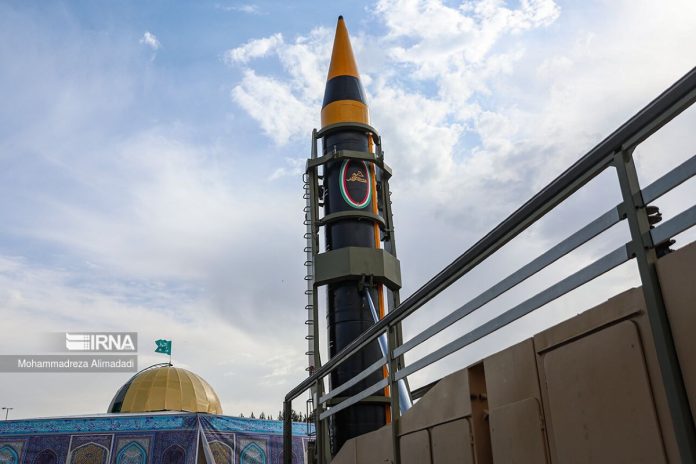
Khaibar, which is the fourth generation of the country’s Khorramshahr ballistic missile, was unveiled during a ceremony on Thursday with Iranian Defense Minister Mohammad Reza Ashtiani in attendance.
Khaibar, or Khorramshahr-4, which is a product of the Defense Ministry’s Aerospace Industries Organization (AIO), uses liquid fuel and enjoys strategic and tactical features.
The missile is equipped with a guidance and control system in the middle phase. The use of this system plus guidance engines in the warhead, which has a high explosive power, helps control the situation and change the path of the warhead outside the atmosphere. This feature rids the missile of the need for a guidance and control system in the atmosphere, making it completely immune to electronic warfare attacks.
Khairbar can also be prepared for a launch in a short period of 12 minutes.
Speaking at the ceremony, the Iranian defense minister said the missile is capable of evading radars and penetrating the enemy’s missile shields.
Khorramshahar-4 can be equipped with a variety of warheads in harmony with its missions, Ashtiani said.
He also had a message for the enemies.
“We are determined to safeguard the country and the achievements of the Islamic Revolution. And we have proved to the enemy that it cannot at all stop the country’s youths from moving forward on the path of progress,” he added.
On the other hand, he added, Iran’s defense progress serves the goal of promoting peace and stability in the region and supporting the country’s friends and the states that tread the path of fighting the global hegemonic system.