Tuesday, December 23, 2025
Home Blog Page 1416

Live Update: Russia’s “Special Operation” in Ukraine; Day 458

Russia Ukraine War

EU freezes $26bln in private assets of sanctioned Russians since February 2022: Report

The total value of Russian private assets frozen in the European Union under sanctions over the Russian special operation in Ukraine has reached 24.1 billion Euros ($25.9 billion), German newspaper Welt am Sonntag reported on Saturday, citing European Commission data.

The value of frozen Russian private assets under sanctions increased from 18.9 billion euros in December to 24.1 billion euros in late May, the newspaper said.

As many as 1,473 individuals and 205 firms from Russia have been sanctioned by the EU, Welt am Sonntag added.

After the start of Russia’s military operation in Ukraine on February 24, 2022, Western countries have imposed comprehensive sanctions against Russia, including the freezing of nearly half of the country’s foreign Currency reserves – amounting to about $300 billion. The European Union alone has frozen assets of Russian entities and individuals worth dozens of billions of Dollars under 10 packages of sanctions.


Russian forces ease attacks on Bakhmut to regroup: Kyiv

Russian forces have temporarily eased their attacks on the besieged eastern Ukrainian city of Bakhmut to regroup and strengthen their capabilities, a senior Kyiv official has stated.

Russia’s Wagner private army began handing over its positions to regular Russian troops this week after declaring full control of Bakhmut following the longest and bloodiest battle of the war.

In a statement on Telegram, Deputy Defense Minister Hanna Maliar said Russian forces have continued attacking but that “overall offensive activity has decreased”.


Construction worker killed in shelling in Russian village: Governor

A construction worker was killed near the Russian village of Plekhovo, a few kilometres from the border with Ukraine after shelling from the Ukrainian side, Roman Starovoit, governor of the Kursk region said on Telegram.

Works were being carried out not far from Plekhovo on fortifying defensive lines for the state border, the governor added.


Ukrainian military starts training in Germany to operate US Abrams Tanks

About 400 Ukrainian troops in Germany have started a training to operate the US-made M1 Abrams tanks, The New York Times reported on Saturday, citing a Pentagon spokesman.

About 200 Ukrainian troops started combined arms instruction at training ranges in Grafenwoehr and Hohenfels on Friday, while another 200 started being trained in tank refueling and maintenance, spokesman Garron Garn was cited as saying.

Western countries have been supplying military aid to Kiev since Russia started it military operation in Ukraine in February 2022.

The aid evolved from artillery munitions and training to heavier weapons, including tanks. For months, Ukraine has pushed donors to supply fighter jets.

It was not until last week that the White House gave its consent to European allies to sent Ukraine their US-made F16 jets Kiev’s fighter aircraft of choice. Germany said it would not send fighter jets but would continue supporting Ukraine in other ways. The Kremlin has repeatedly warned against Western arms deliveries to Kiev.


Russia accuses Japan of ‘cynical speculation’

Russia has accused Japan of “cynical, unscrupulous speculation” over Tokyo’s comments about the nuclear threat Moscow poses.

Chief Cabinet Secretary Hirokazu Matsuno condemned Russia’s plan to deploy tactical nuclear weapons in Belarus, saying it would further inflame the situation.

“The desire to attribute the non-evident intention to use nuclear weapons in relation to events in Ukraine to Russia is nothing more than cynical, unscrupulous speculation,” the foreign ministry said.

The ministry also took issue with Matsuno’s casting of Russia as engaging in “nuclear blackmail”.


China to make efforts for political solution: Envoy

China will make concrete efforts for a political solution to the Ukraine crisis, the Chinese foreign ministry quoted special envoy Li Hui as saying.

China has always adhered to an objective and fair position on Ukraine, argued for peace and promoted talks, Li was quoted as telling Russian Foreign Minister Sergey Lavrov.

Li, China’s special representative for Eurasian affairs and former ambassador to Russia, held meetings and talks with Lavrov, and Deputy Foreign Ministers Andrey Rudenko and Mikhail Galuzin.


Zelensky imposes sanctions against 220 Russian, Belarusian companies

Ukrainian President Vladimir Zelensky imposed sanctions against 51 people and 220 legal entities, connected to Russian and Belarusian transportation, communication and industrial areas Saturday; the decree was published on the presidential website.

Companies included in the new sanctions list include MTS mobile carrier, Russian Railways subsidiaries, the State Research Institute of Chemical Products and the Minsk Automobile Plant.


Lavrov says US, UK start questioning Kiev’s sanity after controversial remarks on Putin

The United States and the United Kingdom are certainly starting to question the Ukrainian government’s sanity after one of its official’s statement calling Russian President Vladimir Putin a target, Russian Foreign Minister Sergey Lavrov said on Saturday.

Earlier in the week, deputy chief of Ukrainian military intelligence Vadym Skibitsky told German daily Welt that Putin was at the top of Kiev’s list of targets.

“I have no doubts that the puppeteers in Washington and London are starting to question whether these people are sane. I hope that sanctions will be imposed against these so-called leaders,” Lavrov said in a video comment posted on Russian journalist Pavel Zarubin’s Telegram channel.


Top Ukraine military official hints counteroffensive could be imminent

In a short but surely carefully crafted post on the messaging app Telegram, the commander in chief of Ukraine’s armed forces has ratcheted up speculation that a massive counteroffensive against Russia’s occupying forces could be imminent.

“The time has come to take back what is ours,” General Valerii Zaluzhyhi wrote Saturday morning.

The text appears underneath a video just over a minute in length showing Ukrainian forces apparently training at sunrise.

The video shows an array of western provided equipment, including German-made Leopard 2 tanks, seen as one of the key battlefield acquisitions by Ukraine in recent months, as well as US-made MRAP (Mine-Resistant Ambush Protected) armored vehicles, M777 artillery pieces and HIMARS rocket launchers.

The video ends with soldiers and their commander chanting a defiant message: “Ukraine, my native motherland, Lord, our heavenly father, bless our decisive offensive, our sacred revenge, our holy victory.”

Officially the counteroffensive is yet to begin. As we have previously reported, the different signals from Ukraine may be an attempt to keep Moscow off-balance.


Biden reacts to Russia moving tactical nuclear weapons to Belarus

US President Joe Biden has told the journalists that he feels “extremely negative” about Russian tactical nuclear weapons being stationed in Belarus.

Biden’s comment, which was reported by Reuters, came hours after Belarusian President Alexander Lukashenko announced that “the deployment of nuclear munitions has already begun.”

Russia shouldn’t worry about the safety of its weapons as the Belarusians, being “practical and thrifty people,” will be able to keep them safe, Lukashenko added.

The Russian embassy in Washington responded to the reaction from the White House by pointing out that “it is the sovereign right of Russia and Belarus to ensure their security by means we deem necessary amidst a large-scale hybrid war unleashed by Washington against us.”

Moscow’s actions are “fully consistent with our international legal obligations,” the embassy said on Telegram on Saturday. Tactical nuclear weapons aren’t being transferred to Belarus, “the control over them and decision on their use remain with the Russian side,” it added.

“Before blaming others, Washington could use some introspection. The US has been for decades maintaining a large arsenal of its nuclear weapons in Europe,” Russian diplomats suggested.

At the moment, American tactical nuclear weapons are present on the territory of five European NATO countries – Belgium, Germany, Italy, the Netherlands, and Türkiye.

Russian leader Vladimir Putin announced that tactical nuclear weapons would be stationed in Belarus in late March. He said the move had been prompted by the UK’s decision to provide Ukraine with depleted uranium munitions amid the conflict between Moscow and Kiev.

Belarus had been asking its closest ally Russia to deploy nuclear weapons on its territory, citing aggressive Western policies towards the country and the perceived threat posed by US nuclear weapons deployed in neighboring European countries.

Moscow and Minsk sealed an agreement that allows Russian tactical nuclear weapons to be stationed in Belarus on Thursday. According to Russian Defense Minister Sergey Shoigu, Russia has provided the Belarusian military with nuclear-capable Iskander-M missiles and has helped the country to modify some of its fighter jets so they can carry nuclear weapons.


Explosion damages Russian oil pipeline building near border with Belarus

An explosion in Russia’s Pskov region damaged an administrative building of an oil pipeline near its border with Belarus, local governor Mikhail Vedernikov said on Saturday.

Vedernikov claimed the building in the Nevelsky District was attacked by two drones.

There were no casualties and emergency services are at the scene, Vedernikov added.

Few other details are available on the incident at this stage but we will bring you more as we get them.


One person killed in Russian shelling of Kherson

One person was killed after Russian shelling of Ukrainian-held parts of Kherson, Oleksandr Prokudin, the head of the Kherson regional military administration, said on Saturday.

Prokudin claimed Russia had launched “45 attacks, firing 193 shells from mortars, artillery, Grad, tanks, UAVs and aircraft” on the region over the past day.

He said the shelling occurred in residential areas of the region’s settlements, including a grain elevator in the Beryslav district.


Ukrainian military hit occupied Mariupol with missiles

Ukrainian armed forces hit Mariupol on Friday with two long-range missiles, according to the occupied city’s Russian-installed mayor, Oleg Morgun.

In a Telegram post, Morgun said emergency services were at the scene but there were no deaths, injuries or damage to the city’s infrastructure, according to preliminary reports.

Officials with the self-declared Donetsk People’s Republic had earlier said explosions in the city Friday were due to a Ukrainian rocket attack.

Petro Andriushchenko, an adviser to the city’s Ukrainian mayor, chimed in about Friday’s blast in a series of Telegram posts.

He stated that Russian forces have set up checkpoints blocking a bridge near the Azovstal plant, and described a scene of confusion, with Russian emergency workers at the scene of the strike.

The Ukrainian official announced that Russian forces set up an ammunition depot near the plant.

“The hit was on the territory of Azovstal,” Andriushchenko said, adding, “Remember we said that they were setting up a base there to avoid strikes? Well, they set it up along with the ammo depot.”

Andriushchenko went on to mock the Russian-backed officials’ handling of the strikes.

“Buses with workers are being sent to Azovstal to clear the rubble,” he continued, noting, “The official version is that they are looking for ‘workers.’ Why on earth would you need workers in the middle of the night is clear to everyone … we can conclude that everything is bad at Azovstal.”

Ukraine has not claimed responsibility for the strike.


Dnipro hospital attack proves Russia deliberately targets civilians: Ukrainian presidential adviser

Russia’s attack on a hospital in Dnipro city was a “deliberate strike on a civilian object,” Ukrainian presidential adviser Mykhailo Podolyak said, adding that it proves Russia is targeting civilians.

“This is absolutely clear evidence that Russia has in principle changed the tactics of its rocket attacks. Now it is mainly strikes on civilians — deliberately on facilities such as the hospital in Dnipro, with the intention to inflict a psychological (blow) and obviously kill as many people as possible,” Podolyak stated in an interview with CNN’s senior international correspondent, Fred Pleitgen.

The hospital attack Friday morning killed two people and wounded at least 30, including young children, local officials say.

Podolyak said similar strikes have hit residential areas and places like hospitals and schools in the last few months. Specifically in the southern Kherson and eastern Kharkiv regions, Podolyak said Russia destroys “residential areas every day with artillery, in the same way.”

“It seems to me that it’s time to stop expecting Russia to behave conventionally, as a country that follows some rules imposed by international law or some conventions. No, it wages war against the civilian population as demonstratively as possible,” Podolyak added.

The presidential adviser said attacks on Ukraine’s civilian population constitute war crimes.

Ukrainian President Volodymyr Zelensky said of the Dnipro attack in his daily address Friday: “It is a pure atrocity: a Russian missile, ballistics – against a hospital and a veterinary clinic. Absolutely sick creatures.”


Attack on Dnipro medical center wounded 31 people, including 8 doctors: Authorities

The number of people injured in Friday’s attack on the city of Dnipro has risen to 31 people, including eight doctors and two children, according to the head of Dnipro’s regional council, Mykola Lukashuk.

Among the injured, 16 people were taken to hospitals and the others are receiving outpatient treatment, Lukashuk said in a Telegram post.

“Two of the injured are in serious condition, 12 people are in moderate condition, and the rest have minor injuries,” Lukashuk added.

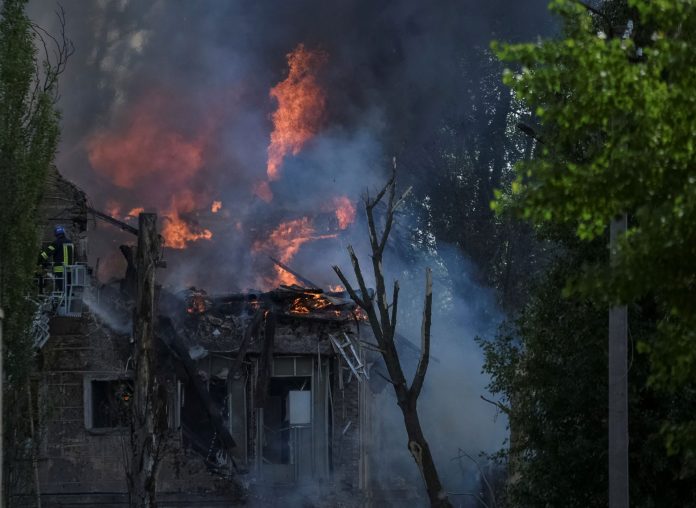
It was a ballistic missile that hit Dnipropetrovsk City Hospital No. 14, which was partially destroyed, Lukashuk stated. The blast set the second floor on fire.

A one-story business nearby also caught fire, but firefighters extinguished the blaze, the official said. A sports complex, school, surrounding homes and cars were also damaged.


More than 900 attacks on health care in Ukraine since Russian invasion began: WHO

There have been more than 900 attacks on health care in Ukraine since the Russian invasion began, according to the latest figures from the World Health Organization.

Of the 967 total attacks, 868 of them impacted medical facilities, WHO data shows. In total, strikes on health care in Ukraine have resulted in at least 97 deaths and 126 injuries since February 25, 2022.

Russia’s attack on a medical facility in Dnipro city on Friday is not yet included in the WHO data or death toll, given that the organization’s process for verifying attacks takes some time. The most recent attack on health care in Ukraine that is recorded by WHO occurred on May 7, 2023, and impacted a mobile clinic.

“WHO condemns all acts of violence against healthcare. These attacks not only kill and maim but also deprive people of urgently needed care, endanger healthcare providers, and undermine health systems,” WHO spokesperson Dr. Margaret Harris said in a statement to CNN.

“Attacks on health care workers, patients, transport, supplies, and health facilities are a flagrant violation of International Humanitarian Law and Human Rights Law and must stop now,” Harris continued, adding, “We call for an immediate cessation of all activities that endanger the lives of health care workers and patients or impede delivery of essential health services.”


EU warns against Russia’s “extremely dangerous” move to deploy nuclear weapons in Belarus

The European Union is condemning the agreement between Moscow and Minsk to deploy Russian nuclear weapons in Belarus, calling it “a step which will lead to further extremely dangerous escalation,” the bloc said Friday.

“The Belarusian regime is an accomplice in Russia’s illegal and unprovoked war of aggression against Ukraine,” the European External Action Service said in a statement, calling on Belarus to “reverse decisions that can only contribute to heightening tensions in the region, and undermine Belarus’ sovereignty,”it added.

“Any attempt to further escalate the situation will be met by a strong and coordinated reaction,” the European Union warned in the statement.

Belarus President Alexander Lukashenko said Thursday that the transfer of some tactical nuclear weapons from Russia to Belarus has begun, according to state news agency Belta.


Brazilian president rejects invite to Russia, but backs Ukraine peace talks

Brazilian President Luiz Inácio Lula da Silva has rejected an invitation from his counterpart Vladimir Putin to visit Russia, he said Friday. Lula said Putin invited him over the phone to visit the International Economic Forum in St. Petersburg.

“I replied I cannot go to Russia right now, but I repeated Brazil’s availability to, along with India, Indonesia and China, to talk with both sides of the conflict in search for peace,” Lula tweeted.

In turn, Putin said Russia is open “to dialogue on the political and diplomatic track, which is still blocked by Kiev and its Western sponsors,” the Kremlin said in a statement Friday, adding the phone call was initiated by the Brazilian side.

The two heads of state also talked about the recent Group of Seven meeting, and about Russian-Brazilian cooperation.

The Kremlin did not mention an invitation to St. Petersburg.

On Thursday, Lula also tweeted he talked on the phone with Chinese President Xi Jinping about the “need for peace in Ukraine.”

Lula has been trying to position himself as a possible mediating force in the conflict for months now.

The Brazilian president has proposed creating “a G20 for peace” — a group of countries strong enough to be respected at the negotiating table, but that are still considered by some as neutral in the conflict between Russia and Ukraine. Indonesia, India, and China would play a crucial role in his vision, but Latin American countries are also invited to join the apparent initiative. He also revealed that during his talks with Xi in April, they discussed forming a group of like-minded leaders on Ukraine.

Lula has struggled to make his proposals widely persuasive. One controversial idea that he floated would see Ukraine cede Crimea, which Russia annexed in 2014, in exchange for peace — a concession Kyiv has ruled out and which the White House described as “simply misguided.”
Iran confirms freedom of diplomat from Belguime jail

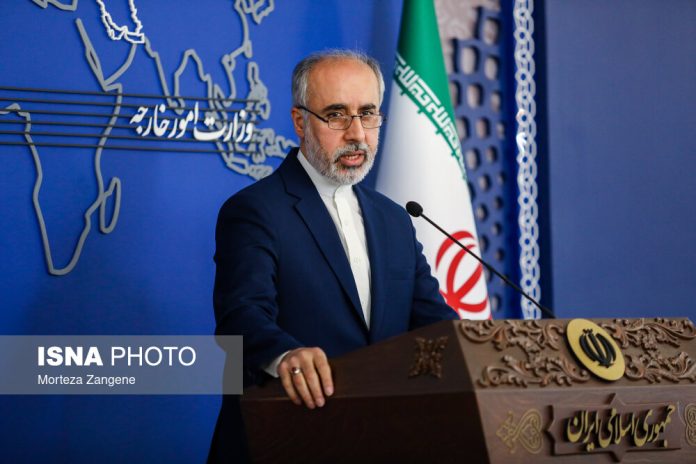
Nasser Kanaani

Assadi was arrested in Germany on June 30, 2018. Iran says his arrest has been part of a plot by Israel, “with some European security services operating as agents.”

Kanaani described Assadi’s arrest as “The Zionist-American scenario of the Big Lie” aimed at creating a crisis in the relations between Iran and Europe, adding “this conspiracy was hatched right after the unilateral withdrawal of the United States from the Iran nuclear deal, the Joint Comprehensive Plan of Action (JCPOA).”

In this regard, some European governments were influenced by the Zionist regime and the hypocritical MKO terrorist group, and after the “arbitrary arrest” of the Iranian diplomat in violation of international regulations, they sentenced him to 20 years in jail in a theatrical, completely political and doctored court trial, he said.

Ultimately, following consecutive joint security meetings and consultations between the foreign ministers of Iran and Belgium, the freedom of this hostage diplomat was secured through a bilateral agreement with the Belgian government, Kanaani added.

Earlier Omani sources said Assadi’s release was made possible under an Oman-mediated prisonor swap between Iran and Belguim.

Pakistan slaps travel ban on Imran Khan, his wife and hundreds of party leaders

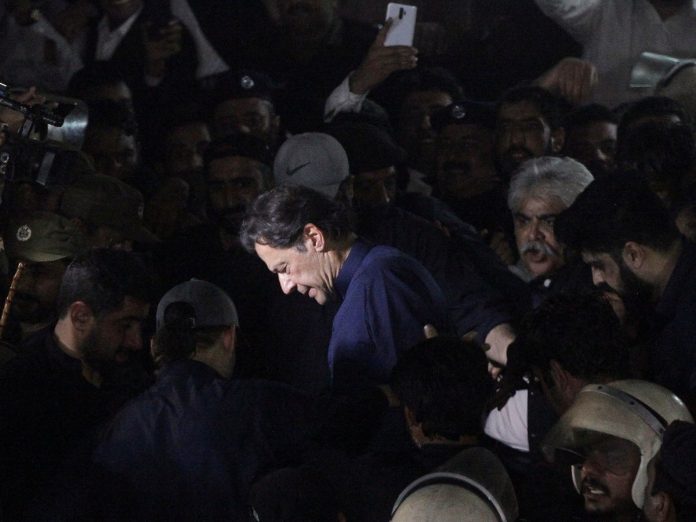
Imran Khan

The Federal Investigation Agency (FIA), responsible for immigration and border control, put Khan’s name on the no-fly list, at least two officials confirmed to dpa news agency on Friday.

Khan’s wife, Bushra Bibi, and more than 500 leaders and members of his Pakistan Tehreek-e-Insaf (PTI) party have also been added to the list, officials said.

“It is a standard practice in every case. All those who face court cases are barred from leaving the country,” one of the officials told dpa.

Khan on Friday “thanked” the government for putting him on the no-fly list.

“I have no plans to travel abroad, because I neither have any properties or businesses abroad nor even a bank account outside the country,” he tweeted in an apparent dig at politicians belonging to Pakistan’s ruling alliance who allegedly own homes abroad.

Khan’s government, between 2018 and 2022, also barred several opposition leaders from flying abroad.

The move against Khan comes as legal challenges mount for the 70-year-old former cricket star, weeks after his supporters stormed key military installations including the army headquarters in protests against his arrest on May 9.

Dozens of former PTI legislators have distanced themselves from Khan since and more than 4,000 of his supporters – including PTI leaders and journalists – have been arrested in a nationwide crackdown.

Khan’s government, between 2018 and 2022, also barred several opposition leaders from flying abroad.

The move against Khan comes as legal challenges mount for the 70-year-old former cricket star, weeks after his supporters stormed key military installations including the army headquarters in protests against his arrest on May 9.

Dozens of former PTI legislators have distanced themselves from Khan since and more than 4,000 of his supporters – including PTI leaders and journalists – have been arrested in a nationwide crackdown.

Oman announces prisoner swap between Iran, Belgium

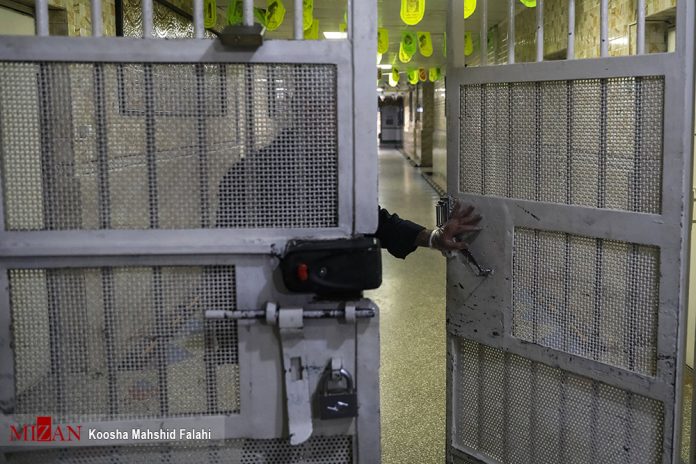
Iran Prison

“The individuals who were released have been transported from Tehran and Brussels to Muscat today… in preparation for their return to their respective countries,” a statement read, without giving further details.

In February 2021, a Belgian court sentenced Assadollah Assadi to 20 years in prison after accusing him of planning an alleged attack against the Mujahedin-e-Khalq Organization (MKO).

Iran’s Foreign Ministry strongly condemned the jail term as completely unlawful at the time, stressing it is in violation of Assadi’s diplomatic immunity, and a result of Belgium’s falling under the influence of the MKO.

Back in March, Belgium’s Constitutional Court turned down a request for the annulment of a treaty with Iran, which authorizes the exchange of prisoners between the countries.

In line with the deal, Iranians convicted in Belgium would be allowed to serve their sentences at home and vice versa. The treaty paved the way for the release of Assadi.

The so-called “National Council of Resistance of Iran (NCRI),” an umbrella group of anti-Iran outfits such as the MKO, has been trying to pose some legal challenges to it, alleging that Assadi should remain in prison.

Belgium’s parliament ratified the treaty back last July.

MP: Iran’s SE province to face problems if water doesn’t reach there in 3 months

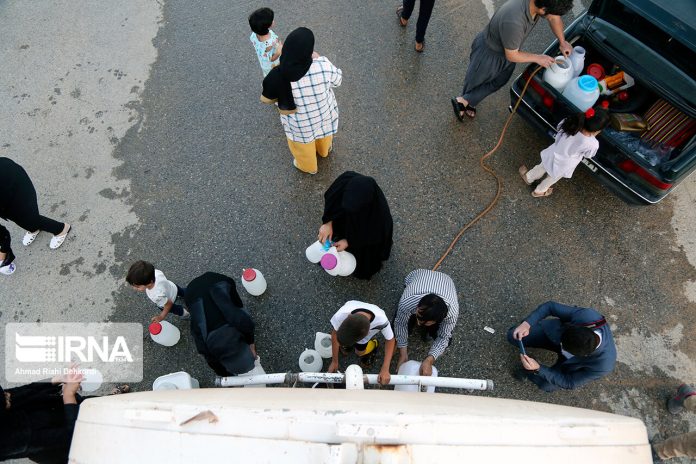
Water Crisis in Iran

Fada-Hossein Maleki, who sits on the Iranian Parliament’s National Security and Foreign Policy Committee, told Entekhab news outlet that the interim Taliban rulers do not seem to be willing to honor their obligations under a 1973 treaty to allow Iran access to its share of water from Helmand River.

“Afghan authorities claim that there is no water in the Hirmand River, while satellite images show that there is water at the Kajaki Dam,” he said.

“The government, especially the Ministry of Energy and the Ministry of Foreign Affairs, has examined the situation in the Sistan and Baluchestan region, and if water does not reach this region in three months, many problems will arise.”

Under the 1973 treaty, Afghanistan is bound to release 820 million cubic meters of water from the river annually, but Iranian authorities have repeatedly said that Kabul has been withholding the Iranian water share.

Iranian President Ebrahim Raisi has recently warned the Taliban against the repercussions of refusing to allow Iran access to its water share.

In a statement last week, Iranian Foreign Ministry warned that Tehran will not hesitate to use pressure to make the Taliban respect the water rights of Iran.

Iran plans two new satellites launches in months to come: Defense chief

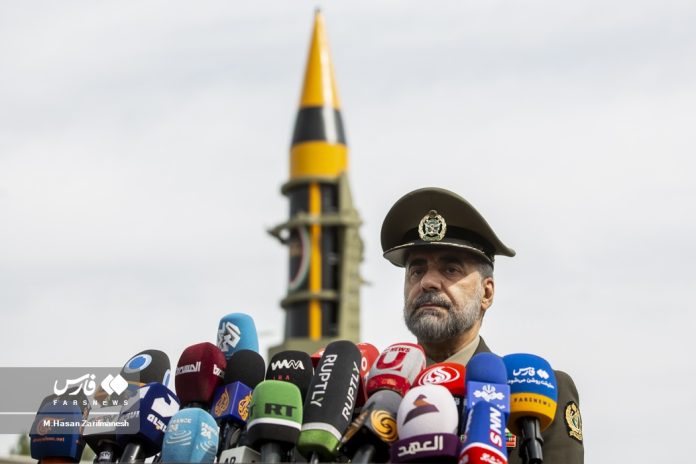
Defense Minister Mohammad Reza Gharaei Ashtiani

Defense Minister Mohammad Reza Gharaei Ashtiani said on Thursday that the Islamic Republic’s missile and space programs must move forward “nonstop.”

He said Iran stands among the top few countries in the world in the space industry, especially in terms of satellite launchers.

Ashtiani said Iran has planned two satellite launches before the end of the current Persian calendar year (March 20, 2024), expressing hope that the country “can create wonders and make great achievements that will make our dear people happy.”

Iran has so far launched many satellites for various purposes into space.

The country ranks nine in the world in terms of independently succeeding in launching satellites into space after the former Soviet Union, the United States, France, Japan, China, the United Kingdom, India and the Zionist regime.

Top Israeli officials to discuss Iran and Saudi Arabia with Biden’s aide

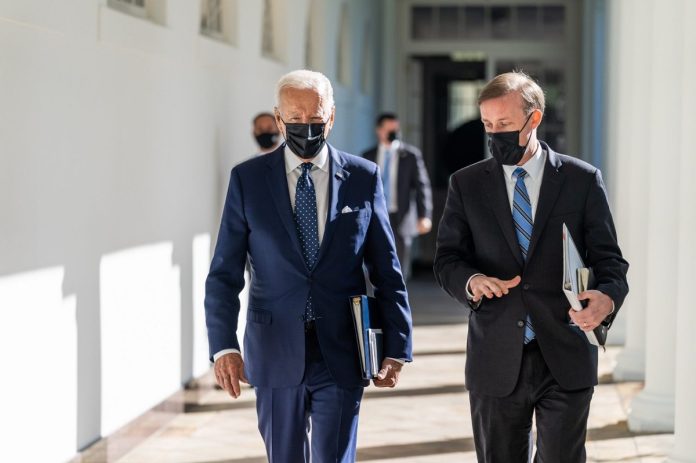
Sullivan Biden

Ron Dermer, the Israeli minister for strategic affairs, and national security advisor Tzachi Hanegbi are expected to meet with White House national security adviser Jake Sullivan and other senior officials, Axios reported on Thursday, citing four Israeli and US officials.

The high-level visit comes as Israel’s ties with Washington face some strain. Prime Minister Benjamin Netanyahu’s dependence on far-right lawmakers in his government has put Washington in an awkward position.

US President Joe Biden made a rare public foray into Israel’s domestic politics in March when he called for a compromise to Netanyahu’s contentious plans to overhaul Israel’s judiciary. The proposed judicial law sparked massive protests in Israel and elicited rebukes from American Jews, including lawmakers in Biden’s party.

Despite the tensions, Israel remains the US’s closest Middle East ally. The country receives around $3.8bn a year in military aid from Washington. Earlier this month, Axios reported that the US had asked Israel to engage in “unprecedented” joint military planning against Iran.

Tensions with Iran have simmered amid collapsed efforts to revive the 2015 agreement.

Israel lobbied against the accord at the time, but in a sign of its continued concern about Washington’s efforts, Israeli officials reportedly questioned whether closer military cooperation with the US could tie their hands from unilaterally striking Iran.

On Tuesday, the chief of staff for the Israeli military, General Herzi Halevi, said Iran’s uranium enrichment was more advanced than ever before and warned that Israel was preparing “for a situation where a confrontation will be inevitable”.

Tehran has repeatedly stated that it has no intention of developing nuclear weapons, with Iranian supreme leader Ayatollah Ali Khamenei even issuing religious edicts against the atom bomb and other weapons of mass destruction.

Against the backdrop of rising tensions, Israel is likely to welcome reports that the Biden administration plans to renew efforts to coax Saudi Arabia into normalising relations.

President Biden made closer ties between the two US partners a key feature of his visit to Saudi Arabia in July when he unveiled a plan to transfer two Red Sea islands from Egypt to Saudi Arabia. The agreement required Israel’s approval due to Cold War-era security agreements and led to Riyadh agreeing to open its airspace to Israeli flights.

Those efforts, however, have been eclipsed by Saudi Arabia’s recent move to restore ties with Iran, Israel’s arch-rival. The deal, which was brokered by China, left Washington out in the cold and raised concerns in Israel about being isolated in the region.

On Thursday, Newsweek quoted a senior Israeli military commander saying that “Iran is everywhere”, and that the possibility of war was “getting bigger and bigger”.

“There’s more chance of a large-scale war than ever before, that is, in the last 20 or 30 years,” Amir Avivi, a brigadier general in the Israeli army stated.

The Iranian permanent ambassador to the UN Amir Saeid Iravani has reiterated Iran’s right to respond to any act of aggression by the Israeli regime against Tehran’s nuclear program, warning that Iran will hold the US accountable for explicitly supporting such terrorist moves.

But it’s unclear whether Saudi Arabia will agree to establish relations with Israel. The move would hand Biden a major foreign policy victory ahead of the 2024 US elections. Ties between the US and Saudi Arabia have sunk to historic lows under Biden’s presidency over differences on energy policy, the war in Yemen, and human rights.

In January, Saudi Arabia’s foreign minister said the kingdom would not normalise relations with Israel until Palestinians are granted statehood.

In March, the Wall Street Journal reported that Riyadh told Washington it would normalise ties with Israel in exchange for new security guarantees and help with its civilian nuclear programme, steps that are likely to face resistance in congress.

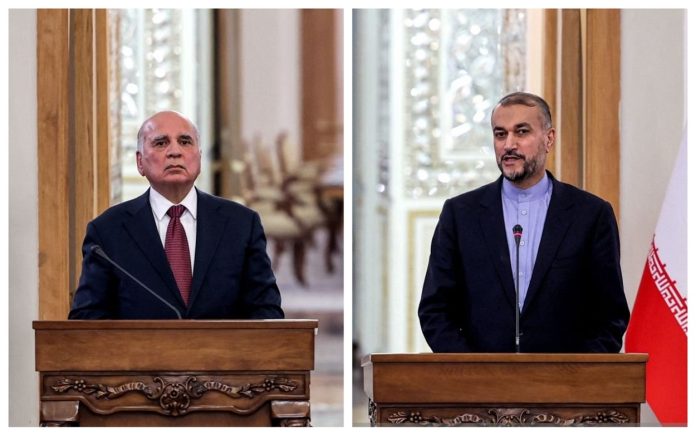
Iran, Iraq FMs discuss implementing security deals

Iran and Iraq FMs Hossein Amirabdolahian & Fuad Hussein

The agreements mainly deal with countering anti-Iran terror groups based in the Iraqi Kurdistan region.

Iranian Minister of Foreign Affairs Hossein Amirabdollahian, during the phone conversation with his Iraqi counterpart Fuad Hussein, also talked about the latest situation of bilateral relations.

The two sides stressed the need to follow up on the implementation of the security agreement inked between the two countries.

The ministers also held talks on the need to promote the gas pipeline running from Iran to Iraq as well as regional cooperation, among other things.

For his part, Amirabdollahian thanked Iraq for facilitating the banking and monetary transactions related to Hajj pilgrims through Iran’s financial credits, calling for closer banking cooperation between the two countries.

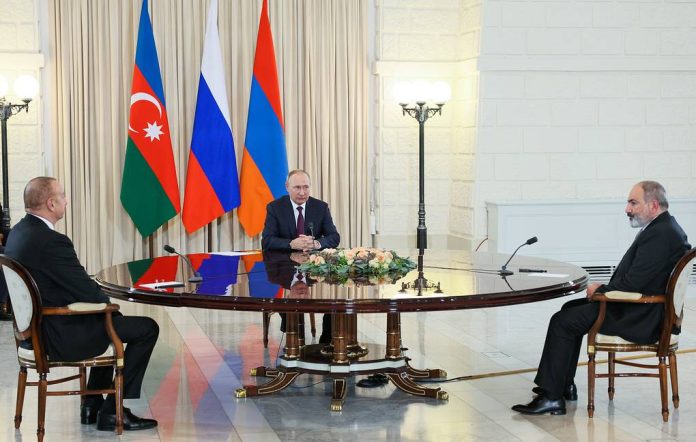
Armenia and Azerbaijan announce end to their territorial dispute

Armenia Azerbaijan

During the meeting of the Eurasian Economic Council, hosted by Russian President Vladimir Putin, the two leaders confirmed that they are prepared to normalize relations on the basis of “mutual recognition of territorial integrity,” in the words of both Aliyev and Pashinyan.

Putin said he was “very pleased” that the two former Soviet republics seem to have come to an agreement, “including on transport communications.” This appeared to be a reference to Azerbaijan’s access to the territory of Nakhichevan, located between Armenia and Turkey.

Pashinyan agreed that the two countries were “making good progress in settling our relations” on the basis of mutual recognition, but objected to Aliyev’s use of the phrase “Zangerzur corridor,” saying that this could be regarded as a claim on Armenian territory.

The November 2020 Nagorno-Karabakh truce “speaks of only one corridor, Lachin, which needs to be under the control of Russian peacekeepers but has sadly been illegally blockaded by Azerbaijan,” Pashinyan stated, adding, “However, I wish to confirm Armenia’s readiness to unblock all transport and economic connections and roads passing through Armenian territory.”

“The word ‘corridor’ is not an encroachment on someone’s territory,” Aliyev replied, insisting that one would have to “try very hard or have a very rich imagination” to interpret his phrasing as territorial aspirations, which Azerbaijan does not have. The fact that Armenia has “officially recognized Karabakh as part of Azerbaijan” is a major opportunity to reach a peace agreement, he added.

Nagorno-Karabakh was an autonomous region within Soviet Azerbaijan, but with an ethnic Armenian majority population. It broke away from Azerbaijan even before Baku declared independence from the USSR, triggering an ethnic conflict that claimed thousands of lives before it was frozen by a 1994 truce.

The most recent flare-up, in 2020, resulted in Azerbaijani troops advancing to cut the main road between Karabakh and Armenia proper. Russia stepped in to mediate a ceasefire, which has mostly held ever since.

Pashinyan signaled that Armenia was willing to cede Karabakh ahead of the Moscow meeting, but said he would seek international guarantees for the remaining ethnic Armenians there. He also said Yerevean might consider leaving the Collective Security Treaty Organization (CSTO), suggesting that the Russian-led military bloc had failed to protect Armenia. Pashinyan has taken this line since the September 2022 visit to Yerevan by Nancy Pelosi, who was speaker of the US House of Representatives at the time.

Live Update: Russia’s “Special Operation” in Ukraine; Day 457

Russia Ukraine War

Number of injured in Dnipro attack rises to 30 people

The number of people injured in Friday’s attack on the city of Dnipro has risen to 30 people, including two children, according to the head of the Dnipropetrovsk region military administration.

The search for three people who could have been at the facility at the time of the attack is still ongoing, regional military administration head Serhii Lysak said in a Telegram post on Friday.

Earlier on Friday, the Dnipropetrovsk regional military administration confirmed that two people died in the rocket strike.

Meanwhile, Dnipro Mayor Boris Filatov told journalists that a change of shifts for doctors was ongoing when the attack occurred at the Dnipropetrovsk City Hospital No. 14 — meaning fewer people were working at the facility at the time.

“Hopefully, there will be no more victims,” Filatov told journalists at the hospital site, adding, “It is a miracle that the rocket struck at the very moment of the doctors’ change of shifts.”


Kremlin demands unfreezing Russian foreign assets “without any conditions”

The Kremlin demanded that the United Kingdom and other countries unfreeze Russian foreign assets without any conditions, as Western allies of Ukraine load economic pressure onto Moscow over the conflict.

“Britain and other countries that encroached on Russian assets are obliged to unfreeze them immediately without any conditions,” Moscow spokesperson Dmitry Peskov told reporters on Friday.

“Otherwise, they violate all the norms and rules of both their domestic legislation and international law,” he added.

The United States and its allies have blocked or seized $58 billion worth of assets owned or controlled by sanctioned Russians in the past year, in an effort to crunch Russia’s economy amid the war.

The Russian Elites, Proxies and Oligarchs (REPO) Task Force said in March that they will “redouble” their efforts to punish Russian President Vladimir Putin and his associates.

REPO is a joint effort between the US, Australia, Canada, Germany, Italy, France, Japan, the UK and the European Commission. It was established last year in order to monitor sanctions evasion.


2 killed and 23 injured in Dnipro attack on medical facility

At least two people have died and 23 people left injured following an attack on a medical facility in the central Ukrainian city of Dnipro on Friday.

A 69-year-old man “was just passing by when the rocket struck the city” and the body of another man “was pulled out of the rubble,” said Serhii Lysak, head of the regional military administration.

He stated that 23 people were wounded in the bombardment, with 21 of them hospitalized and three in a critical condition.

At least four people are missing following the attack in Dnipro, according to the Ukrainian Prosecutor General’s Office.

The fire covered 1,000 square meters of the medical facility, where a three-story building was partially destroyed, Lysak continued.

He added that rescue workers are searching for people under the rubble.


Russian Foreign Ministry summons US diplomats over Sullivan’s comments on Crimea strikes

The Russian Foreign Ministry called on senior US diplomats on Friday to express “strong protest” over US National Security Adviser Jake Sullivan’s remarks about Ukrainian strikes on Crimea, after he said the US has not placed limitations on Kyiv to hit its territory.

The ministry called Sullivan’s remarks in an interview with CNN on Sunday “unacceptable.”
Sullivan also said that Washington will not enable Ukraine with Western systems to attack Russian territory, which includes Crimea.

A statement by the ministry said: “It was emphasized that the assurances of American officials that the United States does not encourage such attacks on Russia are hypocritical and false, given the direct material evidence of the use of weapons and equipment supplied for the needs of the AFU [Armed Forces of Ukraine] by the Pentagon to prepare and carry out terrorist acts by Ukrainian militants.”

“The hostile actions of the United States, which has long been a party to the conflict, plunged Russian-American relations into a deep and dangerous crisis, fraught with unpredictable consequences,” the ministry added.

“It is time for Washington to learn that any form of aggression against Russia will continue to meet the strongest resistance,” it noted.

Diplomatic relations between Western allies of Kyiv and the Kremlin further deteriorated after Moscow launched its full-scale invasion of Ukraine in February 2022


2 attack drones hit buildings in Krasnodar: Russian governor

Two unmanned aerial vehicles (UAVs) damaged buildings in Krasnodar on Friday, after local media reported that an explosion was heard in the southern Russian city.

The governor of Krasnodar Veniamin Kondratiev said no major infrastructure was impacted, and said there were no casualties following the incident.

State news agency TASS reported that the city’s emergency call center was alerted to an explosion on Morskaya Street early Friday.

“Emergency services were sent to the scene. No casualties have been reported. There was damage to the building’s roof and windows, but no fire,” according to TASS.


China hopes Black Sea grain export deal can be implemented in balanced manner

China hopes the Black Sea grain export deal can be implemented in a balanced and comprehensive manner, foreign ministry spokesperson Mao Ning says.

On Thursday, Russia hinted that if its ability to export grain and fertilizer has not improved, it will not extend the agreement beyond July 17. The deal allows Ukraine to export its agricultural goods from its Black Sea ports.

China’s Ukraine envoy is expected to meet Russian Foreign Minister Sergey Lavrov on Friday in Moscow.


At least one person killed in Dnipro missile strike: Zelensky

At least one person has been killed and 15 wounded in a Russian missile strike on a medical clinic in the city of Dnipro, Ukrainian President Volodymyr Zelensky says.

“Russian terrorists once again confirm their status of fighters against everything humane and honest,” he wrote on the Telegram messaging app.

“A rocket attack on a clinic in the city of Dnipro. As of now, one person was killed and 15 were wounded. The shelling aftermath is being eliminated, and the victims are being rescued,” he added.

Earlier in the day, Ukrainian officials said air defence systems had shot down 10 missiles and more than 20 drones in overnight attacks on the capital, Kyiv, as well as Dnipro and eastern regions.


Russia says West is underestimating risk of nuclear war

A former Russian president and prime minister warns that the West is underestimating the risk of nuclear war and says peace negotiations are “impossible” as long as President Volodymyr Zelensky remains in power.

“There are irreversible laws of war. If it comes to nuclear weapons, there will have to be a pre-emptive strike,” Dmitry Medvedev, who is now the deputy chairman of Russia’s Security Council, was quoted as saying by Russian news agencies.

“The Anglo-Saxons do not fully realize this and believe that it will not come to this,” the senior ally of President Vladimir Putin stated, adding, “It will under certain conditions.”

Medvedev also said it is “inevitable” that the war will end due to negotiations but “as long as these people are in power, the situation for Russia will not change”, referring to the Zelenskyy administration.


Ukraine says it shoots down 10 missiles and more than 20 drones overnight

Ukraine says it has shot down 10 missiles and more than 20 drones in an overnight attack on Kyiv, the city of Dnipro and eastern regions.

Volodymyr Zelensky’s office said in a statement that a fire broke out on the outskirts of Kharkiv after an oil depot was hit twice.

The Ukrainian air force said the missiles it shot down were fired from the Caspian Sea.

It said 17 missiles and 31 drones had been launched during the attacks, which started about 10pm (19:00 GMT) on Thursday and continued until 5am (02:00 GMT) on Friday.

This month, Russia has intensified its missile and drone attacks on Ukraine, mainly targeting logistics and infrastructure facilities.


Russia will not achieve military victory in Ukraine: Top US commander

Russia will not achieve a military victory in Ukraine, Chairman of the Joint Chiefs of Staff Mark Milley stated while also cautioning that Kyiv is unlikely to force out all of Moscow’s troops anytime soon.

“This war, militarily, is not going to be won by Russia. It’s just not,” Milley told journalists at the Pentagon.


US does not support attacks on Russian soil and has “made it very clear” to Ukraine: White House official

US President Joe Biden’s administration has reiterated in conversations with Ukraine that it does not support attacks on Russian soil, White House National Security Council spokesperson John Kirby told CNN Thursday.

“We have again made it very clear to the Ukrainians what our expectations are about attacking Russia — we don’t want to encourage or enable that, we certainly don’t want any US-made equipment used to attack Russian soil,” Kirby told CNN’s Wolf Blitzer.

“And we have gotten assurances from the Ukrainians that they will respect those wishes … we have been very clear that we want Ukraine to be able to defend its own soil, its own territory. They have been attacked. They have been invaded. They have a right to defend themselves,” he continued.

“But, we’ve also been clear, well, that we don’t want to see this war escalate beyond this, the devastation and the violence that is already visited on the Ukrainian people,” he added.

The conversations with Ukraine didn’t involve “outlining consequences” but were “simply a reaffirmation,” Kirby told CNN. He stated that these discussions have happened “as recently as over just the last day or so.”

Kirby’s comments come on the heels of a CNN report that anti-Putin Russian fighters, fighting alongside Ukrainian armed forces, conducted a raid inside Russian territory.

In an interview with CNN’s Sam Kiley, one of the Russian nationals stated the raid was conducted using American-manufactured equipment purchased on the open market. Kirby added Thursday that he could not confirm that.

He instead said the US is providing equipment “to be used to defend Ukrainian soil.”


Security assistance for Ukraine has evolved: US officials

“As Russia’s invasion has evolved, so has our security assistance,” US Defence Secretary Lloyd Austin tells reporters during a press conference in Washington, DC, in response to questions about providing Ukraine with F-16 fighter planes.

President Joe Biden has long been reluctant to supply the warplanes to Kyiv, but at the weekend, he agreed to allow other countries to send the US-made aircraft to Ukraine

“It’s not a question of will we agree later or agree now or under pressure; that’s not at all what is going on here,” Chairman of the Joint Chiefs of Staff Mark Milley said.

“This is hardcore military analysis that looks at cost, benefit and risk and what is the need on the battlefield now and in the near future,” he added.

The US has long asked Ukraine not to use US-provided military equipment to carry out attacks inside Russian territory, the top US general stated following accusations that pro-Ukrainian militia used US armoured vehicles in a cross-border attack this week.

Milley stressed his office was looking into imagery showing the vehicles allegedly used in an attack on the Russian border region of Belgorod. But he noted Kyiv was clear about the US position that such US equipment should not be used inside Russia.


Kremlin responds to Ukrainian threat to kill Putin

Ukraine’s leadership has again demonstrated its “terrorist” nature by threatening to assassinate President Vladimir Putin, Kremlin Press Secretary Dmitry Peskov has said, while giving assurances that the Russian leader is well protected.

“A terrorist regime talks about its terrorist aspirations,” Peskov told the Rossiya 24 broadcaster on Thursday.

The spokesman was commenting on an acknowledgement by Vadim Skibitsky, deputy head of Ukraine’s Main Directorate of Intelligence (GUR), who told the German outlet Die Welt on Wednesday that Putin was on his agency’s kill list.

Peskov stated such statements show that the military operation, launched by Russia in Ukraine in February 2022, was “more than justified, more than necessary and that it must be completed.”

When asked if the Russian president’s security detail had been boosted after the threat from Kiev, Peskov replied: “Trust me, our security services know their job and know what they’re doing.”

In his interview, Skibitsky claimed that Putin “notices that we’re getting ever closer to him,” suggesting that Ukrainian operatives have so far been unable to get to him because the Russian leader “stays holed up.” The intelligence official also said the GUR was “trying to kill” the head of the Wagner private military company, Evgeny Prighozhin, Russian Defense Minister Sergey Shoigu, and Chief of the General Staff Valery Gerasimov.

In early May, two small drones were disabled by air defenses, while trying to strike Putin’s Kremlin residence in Moscow. The Russian leader was not there at the time of the failed attack, and no one was hurt.

Despite the Ukrainian authorities denying any involvement, Moscow called the incident a “a pre-planned terrorist act” and an attempt on Putin’s life perpetrated by Kiev.

The Kremlin vowed that Russia would retaliate to the raid “anywhere and anytime it deems necessary,” while senior lawmaker Vyacheslav Volodin called for the use of “weapons capable of stopping and destroying the Kiev terrorist regime.”

Russia has accused Ukrainian President Volodymyr Zelensky’s government of engaging in “terrorist tactics” since last fall, when it said Ukraine was targeting Russian infrastructure, including nuclear facilities and the strategic Crimean Bridge. The accusations were followed by the launch of a large-scale missile campaign across Ukraine, which delivered serious damage to the country’s energy system and depleted the capabilities of Ukrainian air defenses.


US imposes sanctions on head of Wagner Group in Mali

The United States has imposed sanctions on the head of the Wagner Group in Mali, accusing the Russian private army of trying to obscure its efforts to acquire military equipment for use in Ukraine, and of working through Mali and other countries.

The US Department of the Treasury in a statement also accused Ivan Aleksandrovich Maslov, who it described as the head of Wagner paramilitary units and its principal administrator based in Mali, of working in close coordination with Malian government officials to execute the group’s deployment in Mali.

“Treasury’s sanctions against the most senior Wagner Group representative in Mali identify and disrupt a key operative supporting the group’s global activities,” the Treasury’s Under Secretary for Terrorism and Financial Intelligence, Brian Nelson, said in a statement.

The move comes after Department of State spokesperson Matthew Miller on Monday said that there were indications that Wagner has been attempting to buy military systems from foreign suppliers and route those weapons through Mali.


Pentagon reveals value of military aid pumped into Ukraine

The so-called Ukraine Defense Contact Group has committed almost $65 billion in military aid to prop up Kiev in the ongoing conflict with Moscow, US Defense Secretary Lloyd Austin has revealed.

The Pentagon boss made the estimate during the 12th meeting of the group, which brings together all 31 NATO nations, as well as a handful of ‘non-aligned’ countries. Washington is “committed to standing with Ukraine for the long haul,” Austin announced.

“In total, the Contact Group has committed nearly $65 billion in security assistance,” he said, claiming that Ukraine’s backers remain “as united as ever.”

“And, last week, President Biden announced that the United States will support a joint effort with our allies and partners to train Ukrainian pilots on fourth-generation aircraft, including F-16s. We hope this training will begin in the coming weeks,” Austin declared.

Apart from supplying modern combat aircraft to Kiev, the US is now focusing on providing Ukraine with “additional air-defense systems and munitions,” he said. The air defenses are “crucial” for “protecting Ukraine’s skies and civilian infrastructure from Russia’s assault,” he added.

Moscow has consistently said it has been exclusively targeting military or dual-purpose targets in the country. It has also accused Kiev of subjecting the country’s cities near the frontlines to indiscriminate artillery and rocket attacks, which have resulted in multiple civilian casualties over the course of the ongoing conflict.

Russia has repeatedly warned Ukraine’s Western backers against pouring assorted weaponry into the country, as doing so would only prolong the conflict and inflict more suffering on Ukrainian civilians.


Over 2,500 foreign mercenaries fighting for Ukraine: Russian DM

Western countries are forcing Kiev to present tactical successes on the battlefield regardless of the cost to human lives and “pumping” the country full of weapons and fighters, Russian Defense Minister Sergey Shoigu has claimed.

Speaking at a meeting of the council of defense ministers of the Collective Security Treaty Organization (CSTO) in Minsk on Thursday, the Russian minister said the value of the West’s military-technical assistance to Kiev has already exceeded $65 billion and that more than 2,500 foreign mercenaries are currently taking part in military operations in the country.

He also claimed that Kiev’s tactics have evolved to include terrorist methods of confrontation, including sabotage and high-profile killings.

“The most tense situation today has developed in the Eastern European region. The West is forcing the Kiev regime, regardless of losses, to show tactical successes and willingness to fight ‘to the last Ukrainian’ and pumping it with weapons,” Shoigu added.

He claimed that this would only lead to further escalation and prolong the conflict. Shoigu suggested that this was being done intentionally and that NATO had been using the Ukraine crisis as an excuse to build up its military capabilities and modernize its infrastructure in Central and Eastern Europe.

Shoigu claimed the US and its allies are intentionally creating hotbeds of tension and provoking crises near the borders of CSTO members, leading to an “extremely unstable” military-political situation in these areas. The minister accused the West of providing support for terrorist and extremist structures, and also using sanctions, threats and blackmail to achieve their goals of destabilizing the region.


US has been preparing Ukrainian counteroffensive ‘for months’: Top diplomat

The US Under Secretary of State for Political Affairs Victoria Nuland told an audience in Kiev on Thursday that Washington has been helping plan the Ukrainian ‘counteroffensive’ against Russia for almost half a year.

“Even as you plan for the counteroffensive, which we have been working on with you for some 4-5 months, we are already beginning our discussions with [the] Ukrainian government and with friends in Kiev – both on the civilian side and on the military side – about Ukraine’s long-term future,” Nuland told the Kiev Security Forum via video-link from the State Department.

She added that the attack will be “likely starting and moving concurrently” with events such as the NATO summit in Lithuania, scheduled for July 11.

According to Nuland, the US is also planning for Ukraine’s future military to deter Russia, so “wherever and however this ends – one year, six years, 16 years – we are not doing this again.”

She also painted a rosy picture of a future in which Ukraine would be the “engine of Europe’s revitalization” and “setting the democratic example… for the whole world.”


Russian reconnaissance ship seemingly hit by unmanned surface vessel

The Russian reconnaissance ship Ivan Khurs was seemingly hit by an unmanned surface vessel in the Black Sea, new video shows, disputing a claim by Moscow, which said on Wednesday it had been able to thwart a Ukrainian attack on the craft.

Footage shared by the Ukrainian Ministry of Defense on social media Thursday appeared to show the moments just before the impact.

The video is filmed from a camera placed on the surface vessel. It shows the vessel as it approaches a larger ship at high speed.

CNN analysis determined the ship is likely to be the Ivan Khurs. It also shows the tip of the unmanned surface vessel, similar to the unmanned surface vessels seen in video posted by the Russian Ministry of Defense on Thursday.

The feed cuts as the vessel comes within a few yards of  the ship.

“When the Russian reconnaissance ship ‘Ivan Khurs’ met a Ukrainian drone,” the Ukrainian Ministry of Defense said in a tweet, adding, “Indeed, a perfect match!”

On Wednesday, the Russian defense ministry acknowledged the attack on the Ivan Khurs but said all the surface vessels had failed to hit the ship.

“Today at 5:30 a.m., the armed forces of Ukraine made an unsuccessful attempt to attack the Ivan Khurs ship of the Black Sea Fleet with three unmanned speedboats,” said the spokesperson for the Russian Ministry of Defense, Maj. Gen. Igor Konashenkov.

“All enemy boats were destroyed by fire from the standard armament of a Russian ship 140 kilometers northeast of the Bosphorus,” he added.

The Russian Ministry of Defense also shared footage that appears to show one of the surface vessels exploding as it is hit by gunfire.

“The ship ‘Ivan Khurs’ of the Black Sea Fleet continues to fulfill its tasks,” Konashenkov added.

It is unclear what happened after the surface vessel seemingly hit the Ivan Khurs and how damaged the reconnaissance ship may have been during the attack.


Ukraine government must cease to exist: ex-Russian president

There is no doubt that Ukraine has no future in its current form, former Russian president Dmitry Medvedev said on Thursday, outlining three possible scenarios for the collapse of its statehood and assessing the risks of renewed conflict in Europe and a global war.

“This conflict will last for long. For decades, probably. This is a new reality,” the former Russian leader, now the vice-chair of the national security council, told journalists upon wrapping his visit to Vietnam earlier this week.

“It is necessary to destroy the very nature of the Nazi government in Kiev,” Medvedev added, claiming that otherwise the conflict could drag on perpetually, with “three years of truce, two years of conflict, rinse and repeat.”

In a Telegram post on Thursday evening, Medvedev elaborated that the collapse of Ukraine’s statehood is inevitable, and could either happen quickly, or through a “relatively slow erosion, with the gradual loss of remaining elements of sovereignty.” He went even further to outline exactly how he believes the “Kiev regime” would cease to exist.

In the first scenario, parts of Western Ukraine will come under control and eventually be annexed by the neighboring European Union states, Medvedev claimed. The remaining “no man’s land” wedged between Russia and the EU protectorate will become the “new Ukraine,” still striving to join NATO and posing a threat to Russia. In that case, he believes, the armed conflict will shortly reignite, likely becoming permanent with a risk of quickly escalating into a full-blown world war.

In the second scenario, Ukraine would get a government-in-exile but de-facto cease to exist, with control over its entire territory split between the EU and Russia. In that case, according to Medvedev, the risk of world war is “moderate,” but the “terrorist activity by Ukrainian neo-Nazis” on the territories annexed by the EU neighbors would drag on.

Medvedev stated he would prefer the third scenario, in which Ukraine’s Western territories voluntarily join their EU neighbors, while the Eastern and some central regions exercise their “right for self-determination sealed in Article 1 of the UN Charter.”


Villages at risk of flooding after Russia destroys dam in eastern Ukraine: Regional leader

An official in Ukraine’s eastern Donetsk region has accused Russian forces of destroying a dam and endangering nearby residents.

The attacks on the Karlivka Reservoir’s dam put the nearby villages of Halytsynivka, Zhelanne-1 and Zhelanne-2 at risk of flooding, said Pavlo Kyrylenko, the Donetsk regional military administration leader.

“Since the beginning of the large-scale invasion, the Russian occupation army has been constantly shelling Karlivka, targeting the dam, ignoring the fact that civilians would suffer from these actions,” Kyrylenko wrote on Telegram Thursday.

Ukraine’s emergency services believe the dam could break and have already started responding to the situation, the regional leader said.

“Communities in the area of possible flooding have been warned. If necessary, the evacuation of civilians will begin,” he added.


Moscow says Ukraine carried out missile strike in Russian-occupied Berdiansk

Russian officials in occupied Berdiansk said Ukrainian forces have struck the city with a missile.

Ukraine’s military “launched a massive strike” on the city, Vladimir Rogov, a member of Russia’s local administration in Zaporizhzhia, posted on Telegram on Thursday.

Rogov said he still did not have information on casualties, adding that response teams were on site.

“It’s not yet known whether British Storm Shadow missiles or something else was used,” Rogov added.

If Ukraine was behind the alleged strike, the use of Storm Shadow missiles are a likely option, given Berdiansk is deep in Russian-controlled territory, around 100 kilometers (about 62 miles) from the front line.

The Storm Shadow is a long-range cruise missile with stealth capabilities, jointly developed by the UK and France, which is typically launched from the air. With a firing range in excess of 250 kilometers, or 155 miles, it is just short of the 185-mile range capability of the US-made surface-to-surface Army Tactical Missile Systems, or ATACMS, that Ukraine has long asked for. The United Kingdom said it delivered multiple of the Storm Shadow missiles to Ukraine earlier in May.


Ukraine’s clashes with Wagner in Bakhmut are decreasing while it still remains in the southwest

Ukraine’s number of clashes with Wagner fighters in and around Bakhmut has been decreasing over the past few days, according to the spokesperson for the eastern grouping of the Ukrainian Armed Forces.

“What we can state today is that over the past three days, the number of engagements primarily with Wagner’s units in the Bakhmut direction has decreased,” Serhii Cherevatyi told CNN on Thursday.

“We explain this by the significant exhaustion of Wagner’s units over the previous months of fighting and the fact that they need to regroup and recover,” he added.

Wagner leader Yevgeny Prigozhin had announced his fighters would begin withdrawing from the city on Thursday and would be replaced by Russian soldiers. Cherevatyi said the switchover had been slowly taking place for the past few weeks, attributing the change to “huge losses.”

Cherevatyi acknowledged Wagner fighters conducted more offensives and were more difficult to face than regular Russian soldiers because of the brutality of the organization.

While Wagner controls the majority of the town, Cherevatyi stated Ukraine controlled a part of the southwestern district of the city.

“Our units are located there and are engaged in defense,” he added.

Cherevatyi concluded by saying that the ultimate outcome of the battle for Bakhmut would be the complete destruction of the Wagner paramilitary company.

“The more the enemy is bloodied and knocked out, the easier it will be for our soldiers to liberate Ukrainian land with fewer losses,” he concluded.


EU extends suspension of tariffs and quotas on Ukrainian imports for another year

European trade ministers agreed to extend the temporary measures that suspend customs duties and quotas on Ukrainian imports to the European Union for another year, until June 2024.

The temporary easing of trade regulations between Ukraine and the EU went into force in June 2022.

“By renewing these measures the EU is continuing to demonstrate its unwavering political and economic support for Ukraine,” the European Council, which met in Brussels Thursday, said in a press release.

The European Commission, which proposed the extension in February, said the continued lifting of restrictions will help “alleviate the difficult situation faced by Ukrainian producers and exporters” amid Russia’s invasion.