Monday, December 22, 2025
Home Blog Page 1391

Persian Gulf Council calls for global action to stop Israel’s settlement construction plans

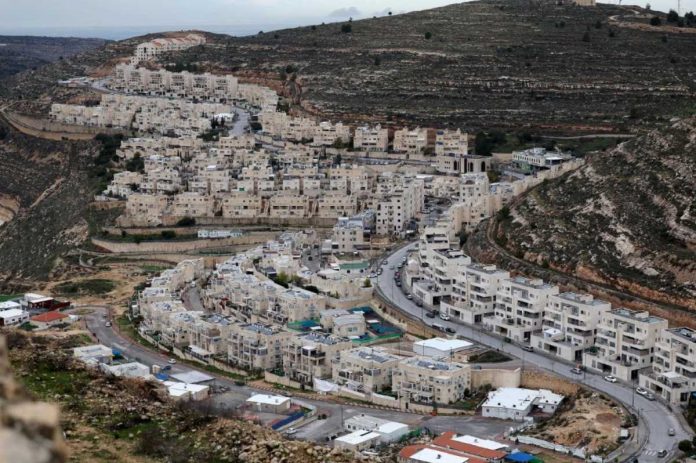
Israeli settlements

The foreign ministers voiced the condemnation during the body’s 156th ministerial meeting in the Saudi Arabia’s capital city of Riyadh on Sunday.

The ministers rejected the regime’s efforts to annex the settlements or impose its sovereignty over them, saying such efforts are against the resolutions adopted by international organizations, most notably the United Nations Security Council Resolution 2334.

The resolution, which was adopted in December 2016, describes Israeli settlements in the occupied West Bank and al-Quds as “a flagrant violation under international law.”

The GCC foreign ministers also urged the international community to mount pressure on the occupying regime to reverse its settlement policies.

They reaffirmed their support for the sovereignty of the Palestinian people over the occupied territories, calling for the establishment of an independent Palestinian state with East al-Quds as its capital.

In late February, the UN secretary-general called for an end to Israel’s settlement activities, stressing the illegality of all structures built in the occupied Palestinian territories.

“All settlement activity is illegal under international law. It must stop,” Antonio Guterres said while addressing the UN Committee on the Exercise of the Inalienable Rights of the Palestinian People.

In late May, a European Union representative condemned the Israeli regime’s plans for the construction of nearly 600 new illegal settler units in the occupied West Bank, calling on Tel Aviv to reconsider the decision.

Sven Kuhn von Burgsdorff, the EU’s ambassador to Palestine, made the remarks during a visit by a delegation of 20 European ambassadors and consuls to the historical town of Sebastia, north of Nablus.

He also denounced the occupying regime’s support for Israeli settlers to return to evacuated settlements in the northern West Bank.

Israel has built over 230 settlements since its 1967 occupation of the Palestinian territory of the West Bank, including East al-Quds. The settlements house more than 600,000 Israeli settlers.

Palestinians want the West Bank to serve as part of their future state, with East al-Quds as its capital.

In another part of their statement, the ministers condemned incursions into the al-Aqsa Mosque Compound by Israeli settlers and officials as an extension of the regime’s plans to Judaize the occupied city of al-Quds.

The compound, which is located in the Old City of al-Quds, is Islam’s third holiest site.

According to an agreement signed between Israel and the Jordanian government following the former’s occupation of East al-Quds, non-Muslim worship at the compound is prohibited.

Illegal Israeli settlers, however, regularly storm the compound amid strict protection provided for them by Israeli forces.

China’s envoy to Iran says Beijing-Tehran deal beneficial for both countries

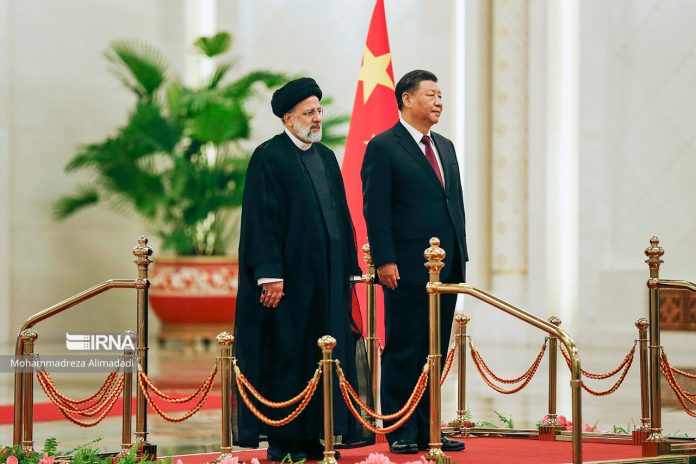
Raisi Xi

In an interview with Fars news agency published on Sunday, the ambassador described as “very proper” the current state of Beijing-Tehran relations.

“Two years ago, we signed the 25-year agreement with Iran, which includes political, economic, cultural, tourism, and health ties, among others. Since then, the pact has developed well through bilateral cooperation and deals,” he said.

The envoy also referred to February’s visit by Iranian President Ebrahim Raisi to Beijing, where he met with his Chinese counterpart Xi Jinping. It marked the first state visit to China by an Iranian president in the past two decades.

During the trip, the two heads of state “held very important talks and reached a consensus to still develop the 25-year agreement. This issue will be beneficial to the livelihood of the people of both states,” he added.

China is Iran’s largest trade partner. Both countries are subject to different levels of illegal sanctions imposed by the US.

They have enjoyed close ties in recent years, particularly after the United States reinstated sanctions on the Iranian economy in 2018 after unilaterally withdrawing from the 2015 nuclear deal.

The two countries signed the landmark 25-year partnership agreement in March 2021 in an attempt to strengthen their long-standing economic and political alliance.

The deal was announced during President Xi’s visit to Tehran back in 2016. It sets the outlines of China-Iran cooperation in political, cultural, security, defense, regional, and international domains for the next 25 years.

Arab Parliament expresses support for Syria’s sovereignty

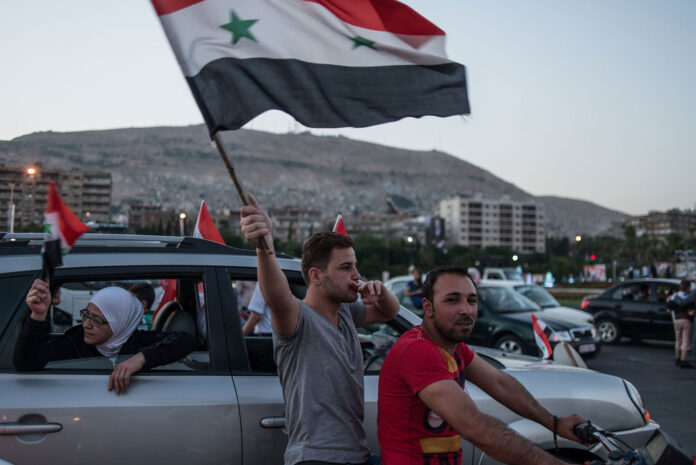
Syria

The legislative body of the 22-member intergovernmental organization of Arab states made the statement at the headquarters of the General Secretariat of the Arab League in Cairo on Saturday, Syria’s official news agency SANA reported.

The members of the Arab Parliament commended the return of the Syrian parliamentarians to their seats in the legislature and wished them success in the tasks entrusted to them.

“The Parliament called on the Arab countries, the international community and donors to support Syria in order to improve its developmental, economic and social conditions, and to adopt initiatives, projects and investments on its soil that contribute positively to the promotion of development, reconstruction and sustainable growth,” SANA said.

The Arab Parliament also encouraged more Arab involvement with the aim of reaching a purely Syrian-Arab solution to the crisis in Syria, away from any external interference.

The Arab Parliament reaffirmed its strong position regarding the issue of Palestine as the “central” issue of the Arab nations, calling for the liberation of Palestine and restoration of the inalienable rights of the Palestinian people.

The Arab Parliament also adopted the “For Palestine” campaign launched by the Palestine Liberation Organization (PLO), urging the international and regional organizations to support the Palestinian cause so that 2023 will be the year of peace.

Arab government representatives in Cairo voted on May 7 to return Syria to the Arab League after a 12-year suspension. All 13 of the 22 member states that attended the session endorsed the decision.

The Arab League suspended Syria’s membership in November 2011, citing an alleged crackdown by Damascus on opposition protests. Syria said the move was “illegal and a violation of the organization’s charter.”

Syria was one of the six founding members of the Arab League in 1945.

Taliban reject UN report calling Afghan government ‘exclusionary’ and ‘repressive’

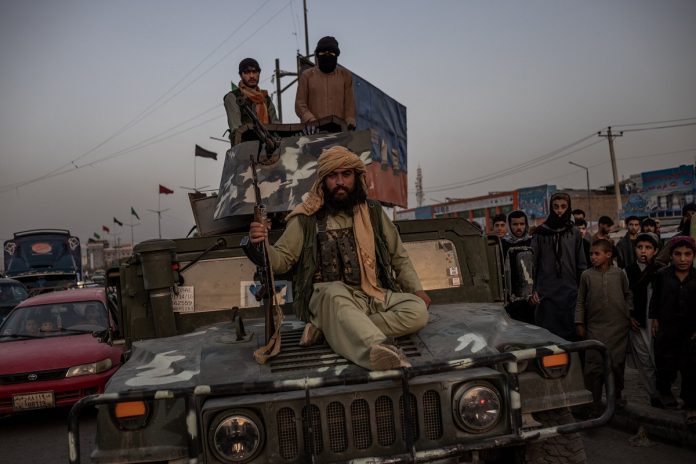
Taliban

The report, released earlier in June by the UNSC’s Analytical Support and Sanctions Monitoring Team, said the Taliban governance structures remain “highly exclusionary, Pashtun-centred and repressive” towards all forms of opposition.

It also said Kandahar’s return as the seat of power – like it was during the Taliban’s rule of Afghanistan in the 1990s – circumvents senior Taliban ministers in Kabul, the centre of the current government, because of the way decisions are made.

The report also added the group was battling internal conflict over key policies, the centralisation of power and the control of financial and natural resources in Afghanistan.

Ongoing power struggles are further destabilising the situation, to the point where an outbreak of armed conflict between rival factions is a manifest risk, the report added.

In recent months at least two spokespersons based in Kabul were asked to shift to the southern city of Kandahar, raising speculations about the shift of power from the capital to the southern city of Kandahar, where the supreme leader Haibatullah Akhunzada is based.

In April, Taliban’s main spokesman Zabiullah Mujahid was asked to work from both places while Innamullah Samangani, another deputy spokesman of the interim government, was transferred to Kandahar. Taliban’s information ministry did not give any reasons for the transfer.

Mujahid rejected the report’s “accusations” of strife, saying they were baseless and demonstrated “obvious hostility” to Afghans.

Rumours of disagreement between the group’s leaders are a continuation of the propaganda of the past 20 years, he said, referring to the 20 years of US war and occupation.

“The publication of such biased and baseless reports by the Security Council does not help Afghanistan and international peace and security, rather, it increases worry among the people [Afghans].”

Since taking over the country in August 2021, the group has expanded its curbs on media freedom and women’s rights, with high schools for girls remaining shut. The Taliban officials had initially promised to open the schools after an infrastructure upgrade to ensure gender segregation, but the group has doubled down on women’s rights banning women from universities and employment.

Analysts say decrees such as those excluding women and girls from education and work were issued from Kandahar – the base of the Taliban chief. Several Taliban leaders have backed women’s empowerment, saying Islam guarantees women’s right to education and work.

Taliban officials have denied there was a rift among its leadership.

The report described the Taliban leader, Akhunzada, as “reclusive and elusive” and said he had elaborate measures to ensure his safety while holding meetings.

It also cited an unnamed UNSC member state as saying Akhunzada had survived two bouts of COVID-19, leaving his respiratory system weakened, in addition to his existing kidney problems, leading to suggestions that senior Taliban figures are waiting for his health to lead to natural succession.

“Hibatullah has been proudly resistant to external pressure to moderate his policies,” the June 1 report said.

“There is no indication that other Kabul-based Taliban leaders can influence policy substantially. There is little prospect of change in the near to medium term.”

In recent days, the Taliban has sought to exclude all foreign organisations from the education sector, a move the UN secretary-general’s chief spokesman, Stephane Dujarric, said on Thursday would be another “horrendous step backward” for Afghan people.

The Taliban has not commented on the education NGO move.

Aid agencies have been providing food, education and healthcare support to Afghans in the wake of the Taliban takeover in August 2021 and the economic collapse that followed it.

Iranian President Raisi leaves for Venezuela on Latin American tour

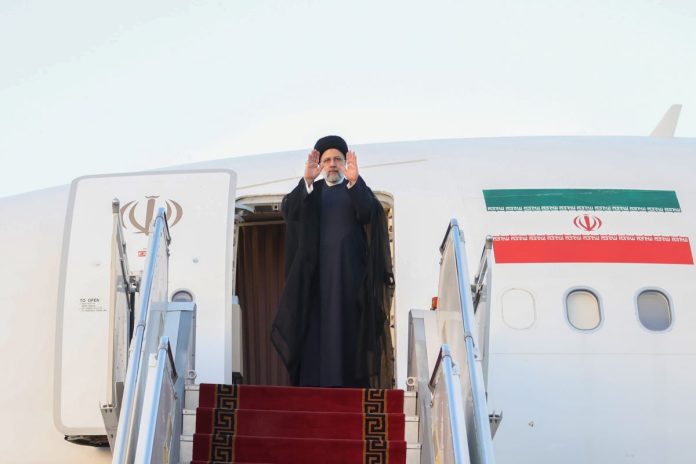
Ebrahim Raisi

The visit to Venezuela is part of a three-legged tour of Latin America that will also take Raisi to Nicaragua and Cuba.

Speaking in Tehran’s Mehrabad Airport before his departure, President Raisi said that Latin American countries, which are close to Iran, including Venezuela, Nicaragua and Cuba, want to be independent and are resisting against the hegemonic system.

He described the ties between Iran and the independent Latin American countries as strategic, underlining that Iran and the three countries he will be visiting, are against unilateralism.

The president also touched on the “good relations” with the three countries in the fields of energy, industry, agriculture, science and technology, among others.

Raisi said both Iran and the Latin American countries enjoy a diversity of capabilities that could be used to enhance cooperation and strengthen relations between the two sides.

He said discussions and agreements, earmarked to be signed during his visits, will be a “turning point” and an “effective step” toward improving ties with the three Latin American countries.

Live Update: Russia’s “Special Operation” in Ukraine; Day 474

Russia Ukraine War

Fourth village recaptured from Russian troops: Ukraine

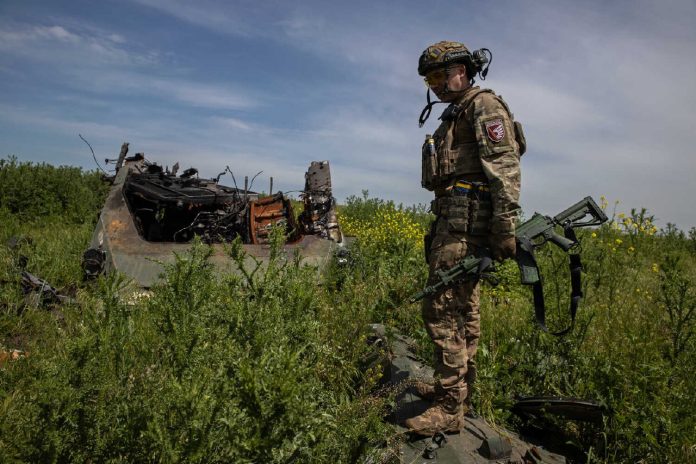
Ukraine says its troops have recaptured a fourth village, Storozheve, in a cluster of settlements in the southeast, a day after reporting the first small gain of its counteroffensive.

On Sunday, it announced its forces liberated three villages – Blahodatne, Neskuchne and Makarivka – which lie on the edge of the Donetsk region next to the Zaporizhia region.

Kyiv has enforced strict operational silence to avoid compromising an operation it hopes will retake large areas of Russian-occupied land in the east and south.

Some Russian military bloggers said fighting for Makarivka was still raging but confirmed Ukrainian forces had taken Blahodatne and Neskuchne.


Water levels recede in Kherson as thousands evacuate on both sides of the Dnipro

Floodwaters are receding in areas around the Dnipro River following last week’s collapse of the Nova Kakhovka dam, according to Ukrainian officials.

Water on the river’s Ukrainian-controlled west bank has fallen by 64 centimeters (25 inches), said Oleksandr Prokudin, head of the Kherson region military administration.

But nearly 50 settlements remained inundated, he said — 32 on the Ukrainian side, and 14 on the Russian-occupied east bank.

Prokudin said more than 3,700 houses are flooded on the Ukrainian side, and evacuations continue despite Russian artillery fire.

More than 2,700 people, including 228 children, have been recued from the west bank of the river, Prokudin stated.

He added that Ukrainian forces also rescued more than 100 people stranded on the Russian-held east bank, without giving further details.

Prokudin claimed that Russian forces continued attacking throughout the rescue and evacuation operations, killing three and wounding 12.

Ukraine’s main hydropower company, Ukrhydroenergo, gave similar estimates for how much the water had fallen in Kherson — but said it’s currently not possible to measure water levels upstream.

“The evacuation of people from the flooded areas continues and the issue of supplying the population with drinking and industrial water is being resolved,” the company announced.

It added that design work had begun on an emergency dam to replace the one destroyed last week once the area is “de-occupied.”

On the Russian-occupied east bank, Vladimir Saldo, the head of the Moscow-appointed Kherson region administration, said 7,100 people had been evacuated from flooded areas.

He added water levels had receded between 1.5 and 5 meters (about 5 to 16 feet) in settlements along the river, and Russian forces were involved in the clean-up operation.


Ukrainian forces have taken another frontline village and advanced on several fronts: Defense official

Ukraine’s military has recaptured Makarivka, another frontline village in the eastern Donetsk region, and has advanced on several fronts, the country’s deputy defense minister stated Sunday.

“The settlements of Blahodatne and Makarivka were liberated,” the official, Hanna Maliar, said in an update on Telegram, referring to a second southeastern village that army officials had earlier claimed was back in Ukrainian hands.

A third, Neskuchne, has also been claimed Sunday by a Ukrainian army brigade, though Kyiv defense leaders have not yet commented on that territory. Russian military bloggers have also made unofficial reports that Neskuchne has been recaptured by Ukraine’s troops.

Maliar noted “troops continue offensive actions” around the eastern city of Bakhmut, which has long served as a flashpoint in the conflict.

Kyiv’s forces were making progress around the Berkhivka reservoir northwest of the city, and on two fronts south of the city, in one case advancing as much as 1,500 meters (around a mile), according to the deputy defense minister.

Earlier Sunday, other Ukrainian officials reported similar progress to the northwest and southwest of the city.

“Not a single position was lost on the fronts where Ukrainian troops are on the defensive,” Maliar claimed.


International Criminal Court is investigating devastating dam collapse in southern Ukraine: Zelensky

The International Criminal Court has begun an investigation into the Nova Kakhovka dam collapse, Ukrainian President Volodymyr Zelensky said in his nightly address Sunday.

The collapse in southern Ukraine is one of the biggest industrial and ecological disasters in Europe for decades. The catastrophe has destroyed entire villages, flooded farmland, deprived tens of thousands of people of power and clean water, and caused massive environmental damage.

“In recent days, representatives of the ICC visited Kherson region,” Zelensky stated, adding, “On the very first day after the disaster, the prosecutor general sent a request to the Office of the Prosecutor of the ICC to investigate the disaster, and the work has already begun.”

“It is very important that the representatives of international justice have seen the consequences of this Russian act of terrorism with their own eyes and heard for themselves that Russian terror continues,” Zelensky continued, adding, “And it continues with the most cynical and brutal shelling of the flooded territory, the evacuation area.”

Kyiv and Moscow each blame the other for causing the dam breach, although it is unclear whether the dam was deliberately attacked at all, or if the collapse was the result of structural failure.

Russia and Ukraine have also accused one another of shelling during the effort to evacuate civilians from areas they control — sometimes with deadly consequences.

The Ukrainian president said his government is facilitating the ICC investigation by providing “full access to the affected areas, to witnesses, to all information and evidence.”

Zelensky also added his government has helped evacuate 4,000 people from flooded areas in southern Ukraine, “with the worst situation still in the temporarily occupied part of Kherson region.”

Russian state news agency TASS, meanwhile, reported that Russian Emergency Services have evacuated about 7,000 people from areas it controls.

At least 14 people have died in the flooding, Ukrainian officials said earlier Sunday.


Russia and Ukraine swapped nearly 200 prisoners of war

Russia and Ukraine exchanged almost 200 prisoners of war Sunday, according to statements from officials in Moscow and Kyiv.

Ninety-four Russian service members were returned to their homeland in the swap, the Russian Ministry of Defense said, adding the fighters would be taken to medical facilities before being allowed to go back to their families.

Ukraine’s 95 returnees included POWs captured at infamous sites from the war — Snake Island and the Azovstal steel plant in Mariupol — among a number of different locations, according to Andrii Yermak, from the Ukrainian president’s office.

Some of the Ukrainian POWs had been held by the Wagner mercenary group, according to an official from Ukraine’s Coordination Headquarters on the Treatment of Prisoners of War.


Death toll rises to at least 14 in Nova Kakhovka dam collapse: Ukrainian officials

At least 14 people have died and more than 2,700 have been evacuated from flooded areas in southern Ukraine after the collapse of the Nova Kakhovka dam, Ukrainian officials reported on Sunday.

One hundred ninety children are among the evacuees, said Ihor Klymenko, Ukraine’s minister of internal affairs.

In Ukrainian-controlled flooded areas in the Kherson region, Klymenko said five people have died and 35 people are missing, including seven children. He also said one person has died in the Mykolaiv region.

In the eastern Dnipropetrovsk region, which lies upstream of the shattered dam, almost 162,000 people were without water, he added.

In Russian-occupied flooded territory, at least eight people have died in the town of Oleshky, Oleksandr Prokudin, head of the Kherson region military administration, told Ukrainian media Sunday.

Prokudin accused Russian-installed authorities of obstructing the evacuation from the east bank of the river, “by setting up checkpoints and not letting people out.” He said only people who had switched to Russian passports were being allowed through.

According to the Kherson regional military administration, shelling by Russian forces also continues despite the evacuation efforts.

“The enemy carried out 41 attacks over the past day, launching 247 shells from mortars, artillery, Grad MLRS, UAVs, and aircraft,” the administration said in a Telegram post Sunday.

Ukraine controls the west bank of the Dnipro River and the city of Kherson after its counteroffensive last year, while Russian troops remain on the east bank in the greater Kherson region.

Both Russia and Ukraine have accused one another of shelling during the effort to evacuate civilians from areas they control.

Kyiv and Moscow have also blamed one another for causing the breach in the first place, although it is unclear whether the dam was deliberately attacked, or whether the collapse was the result of structural failure.


Brigade says Ukraine has recaptured a second village in southeast

A Ukrainian brigade posted a video of soldiers celebrating in southeastern Ukraine Sunday, saying they were hailing the recapture of the village of Neskuchne from Russian forces.

The video shows ten men from Ukraine’s 129th Brigade standing around their battalion flag outside a small medical facility in the village.

“Glory to Ukraine, glory to the heroes,” they shout.

The video, which was posted to the battalion’s Facebook page, is accompanied by a statement saying the village was recaptured Saturday.

Ukraine has yet to officially claim the successful recapture of Neskuchne, which lies immediately south of the town of Velyka Novosilka on the front lines between Zaporizhzhia and Donetsk.

But Ukrainian army officials have stated that they took back the neighboring village of Blahodatne, and Russian military bloggers have been reporting since Saturday night that both villages fell to Ukrainian forces.

The reported capture of these two small territories comes a day after President Volodymyr Zelensky gave his clearest indication yet that Ukraine’s counteroffensive is underway.

Zelensky and his commanders have provided few details on the extent of the assault launched thus far.


Ukraine’s army says it has regained control of a frontline village between Zaporizhzhia and Donetsk

The Ukrainian army claims its soldiers have regained control of the village of Blahodatne, located along the front line between Zaporizhzhia and Donetsk in southeastern Ukraine.

A video released by the official Telegram channel of the Ukrainian Ground Forces showed soldiers of the 68th Brigade hoisting the Ukrainian flag from a building in the village, which lies a few kilometers south of the town of Velyka Novosilka.

The brigade launched an initial assault on the village club building and local school, an army spokesperson told Ukrainian television.

Russian forces did not surrender when offered to do so, the spokesperson said, leading to what he called a “clean up” of the club building. Six Russians were captured as Ukraine took control of the village.

The army’s claim seems to align with unofficial snippets published by Russian journalists and propagandists this weekend, which have suggested Kyiv’s forces are making some gains in southeastern Ukraine.

The Rybar Telegram channel — one in a network of Russian pro-war military blogs that publish updates on Moscow’s invasion — reported Ukrainian forces had regained control of two villages south of Velyka Novosilka “almost without a fight.”

Rybar named Blahodatne, the town claimed by Ukraine’s army, as one of those two villages. The other was nearby Neskuchne.

Official: Smelly bombs available in market used in serial ‘poisoning’ of Iranian students

Iran schoolgirls

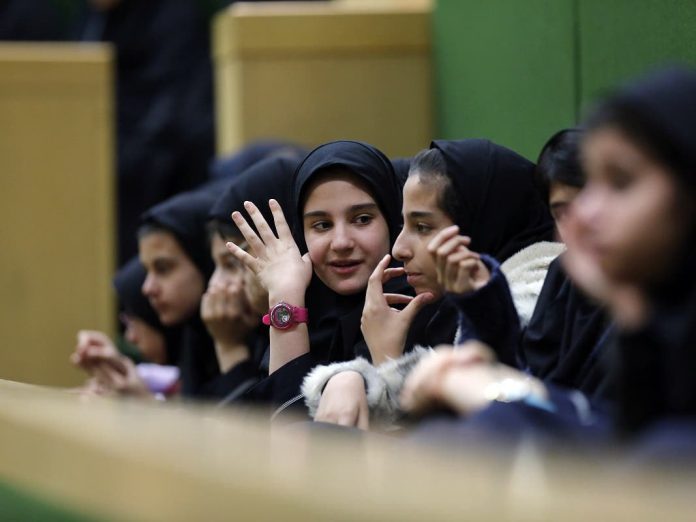
“After holding several meetings and collecting the oral and written reports of the executive bodies, the report of the fact-finding committee was finalized and sent to the Parliament speaker for it to be read to the legislative chamber,” said Seyyed Hamid-Reza Kazemi.

Investigations made it clear that those behind the incidents in Iranian grils’ schools had “malicious intentions” and used “smelly bombs available in the market” to advance their goals, he said.

Other individuals involved in the incidents were also attempting to force the schools to shut down, according to Kazemi.

Kazemi added that arrests have been made in connection with the case.

The serial poisoning was first reported on November 30, 2022 in the city of Qom, south of Tehran. Hundreds of students were later hospitalized in several cities with mild poisoning.
The intoxication was said to have been caused with N2 gas.

Officials said back then that enemy hands were at work in the case.

AEOI head: Iran’s nuclear achievements obtained under threats, sanctions

Mohammad Eslami

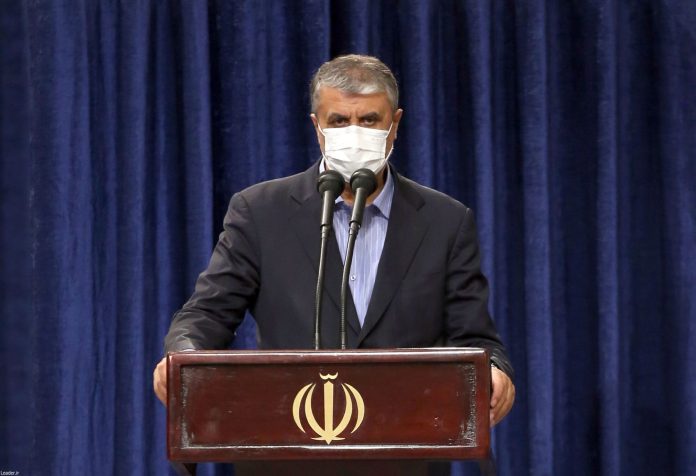
Eslami made the statement before the launch of an exhibition showcasing Iran’s latest achievements in the nuclear industry at Tehran’s Imam Khomeini Hosseinieh on Sunday.

“These achievements were made under heavy threats and sanctions from the enemies,” Eslami said, adding, “Achieving complex nuclear technologies in such difficult conditions has not been easy whatsoever, but our country’s young scientists achieved them without using foreign capacities.”

Pointing to the AEOI’s goal of manifesting the effects of nuclear energy in society and people’s lives, Eslami said, “The fields of health, medicine, food security and agriculture, industry, water and soil and environment have been discussed in the exhibition, and the achievements of these sectors are introduced.”

Iran’s nuclear chief underscored the use of nuclear energy in people’s daily lives and said the central part of the issue are power plants and the production of atomic electricity, which is being used by world countries as a source of clean energy.

Pointing to radiation as one of the most important parts in the field of nuclear energy, which can be used in medicine, Eslami said, “Radiopharmaceuticals are widely used in the medical field; every year, about one million patients benefit from radiopharmaceuticals that are produced by atomic energy in the field of diagnosis and treatment, especially for cancer.”

The head of the AEOI also said that replacing radiation to combat agricultural and food pests is one of the most important achievements of atomic energy for public use.

“The use of radiation in agriculture has two features; it gives health as a gift to the society because pesticides will not be used in agriculture, and of course, it prevents agricultural runoff and waste,” Eslami added.

The nuclear chief also underlined that the economic conditions caused by the use of radiation in agricultural products would increase the export of such products and said, “We will no longer see pests in the agricultural sector.”

Iran showed to the world the peaceful nature of its nuclear program by signing the 2015 nuclear agreement, formally known as the Joint Comprehensive Plan of Action (JCPOA), with six world states — namely the US, Germany, France, Britain, Russia and China. But, Washington’s unilateral withdrawal in May 2018 and its subsequent re-imposition of sanctions against Tehran left the future of the deal in limbo.

Negotiations between the parties to the deal kicked off in Vienna in April 2021, with the intention of bringing the US back into the deal and putting an end to its “maximum pressure” campaign against Iran.

The discussions, however, have been at a standstill since August 2022 due to Washington’s insistence on not lifting all of the anti-Iran sanctions and offering the necessary guarantees that it will not exit the agreement again.

Tel Aviv withholding bodies of several Palestinian fighters who died in Israeli prisons: Report

Israel Prison

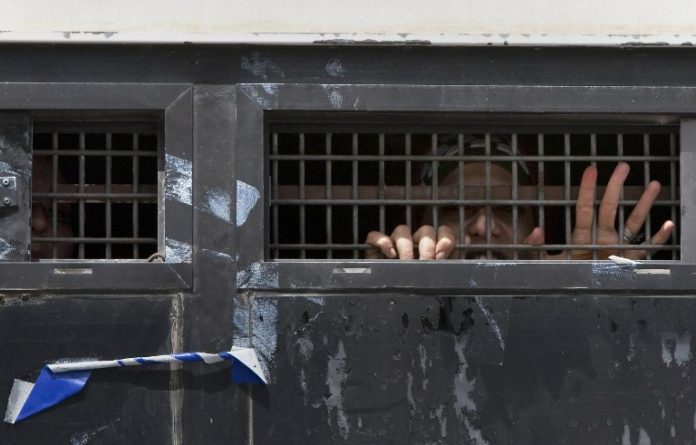
The Palestinian Prisoners’ Society (PPS) announced in a statement that the longest withheld body belongs to a Palestinian prisoner identified as Anis Douleh, who died in 1980.

He is among the 251 Palestinians who have been buried in Israel’s so-called “Cemeteries of Numbers” – the military cemeteries in which anonymous numbers on grave-side stakes are used to identify Palestinians interred after being killed during alleged assaults on Jewish extremist settlers or while in detention.

The PPS added that Israel Prison Service (IPS) authorities still refuse to reveal the fate and whereabouts of 68 missing Palestinians.

The remaining Palestinians whose bodies are held include Aziz Oweisat, who died in 2018, Faris Baroud, Nassar Taqatqa, and Bassam Sayeh, who passed away in 2019, Sadi Gharabli and Kamal Abu Waer, who died in 2020, and Sami al-Amour, who lost his life in 2021.

The last three Palestinians – Daoud al-Zubeidi, Mohammad Maher Turkman and Nasser Abu Hamid – all died in 2022.

The withholding of dead Palestinian bodies has been practiced by Israel for decades.

Human rights groups, however, affirm that there has been a significant rise in the withholding of Palestinian bodies by Israeli forces since 2015.

In addition to the 251 Palestinian bodies buried since 1967 in Israeli special graveyards, known by Palestinians as “Cemeteries of Numbers”, Israel withholds 105 Palestinian bodies in morgue fridges – all killed after 2015.

The handing over of bodies is always done through the Palestinian civil liaison office, the Palestinian body in charge of coordinating civil affairs with the occupying Israeli regime.

Between 2007 and 2015, Israel stopped the practice of withholding Palestinian bodies.

Then came the Palestinian October 2015 Intifada (uprising), during which the number of Palestinian retaliatory operations against Israeli forces and settlers increased, often ending with the killing of the suspected attackers. Israeli forces then began once again to withhold the bodies of those killed.

Iran Leader: Nothing wrong with a deal if Iran’s nuclear infrastructure remains untouched

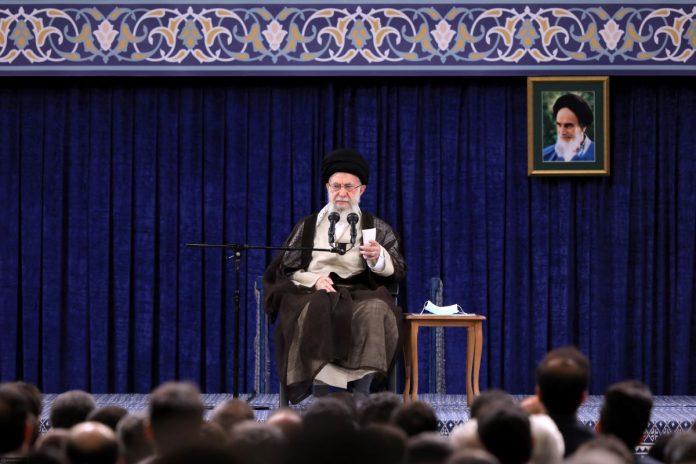
Leader of the Islamic Revolution Ayatollah Seyyed Ali Khamenei

He told a group of nuclear officials and scientists in Tehran on Sunday that there is nothing wrong with reaching a deal if Iran’s nuclear infrastructure remains untouched, urging vigilance when dealing with the West, as “it has reneged on its promises many times and its untrustworthiness is now proven.”

Ayatollah Khamenei said that Iranian nuclear managers, authorities and activists have over the past years set up important infrastructure for the country’s nuclear industry.

“You may want to reach agreements in some fields. Nothing is wrong with [reaching] agreements, but the infrastructure must remain intact. They must not be harmed. They are the fruit of others’ endeavors,” Ayatollah Khamenei added.

“We were dealt blows because of these misplaced trusts. It is very important that a nation and the officials of a country know and understand where they should trust and where not. We have understood it over the past twenty years. We understood who is trustworthy and who is not,” the Leader said.

He also said the enemies use the claim that Iran is developing nuclear weapons as an excuse to target Iran, but the claim is no more than a lie and they are well aware of it.

“The enemies have created a nuclear challenge for us for twenty years because they know that the movement in the nuclear industry is the key to the country’s scientific progress,” the Leader said. “The excuse of nuclear weapons is a lie and they (the enemies) know it too.”

“Based on our Islamic basis, we do not want to go towards [nuclear] weapons. Otherwise, they (the enemies) would not have been able to stop it, as until now they could not stop our nuclear developments,” Ayatollah Khamenei stressed.

The Leader described the nuclear industry as one of the most important components of the country’s power, credibility and strength, saying that the industry is key to progress in many fields.

He further said that the industry improves people’s lives in technical, economic and health sectors and adds weight to the country’s global and international political standing.

Ayatollah Khamenei said that the 20-year nuclear challenge demonstrated the extraordinary ability and talent of Iranian youth despite sanctions as well as threats against scientists and the assassination of some of them.

The challenge also laid bare the inhuman, unfair and bullying logic of opponents, who have expectations from us beyond existing safeguards agreements, the Leader asserted.

The challenge, he added, further exposed the unreliability of the promises made by the International Atomic Energy Agency (IAEA) and the opposite in the talks aimed at reviving the 2025 nuclear deal.