Monday, December 22, 2025
Home Blog Page 1392

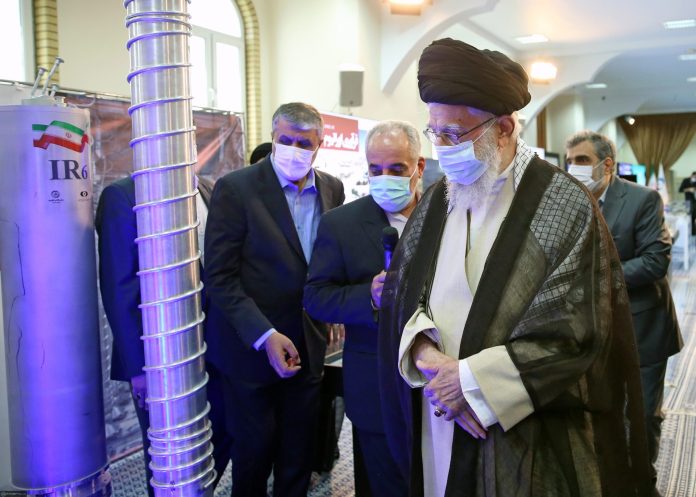
Leader tours exhibition of Iran’s nuclear achievements

Leader of the Islamic Revolution Ayatollah Seyyed Ali Khamenei

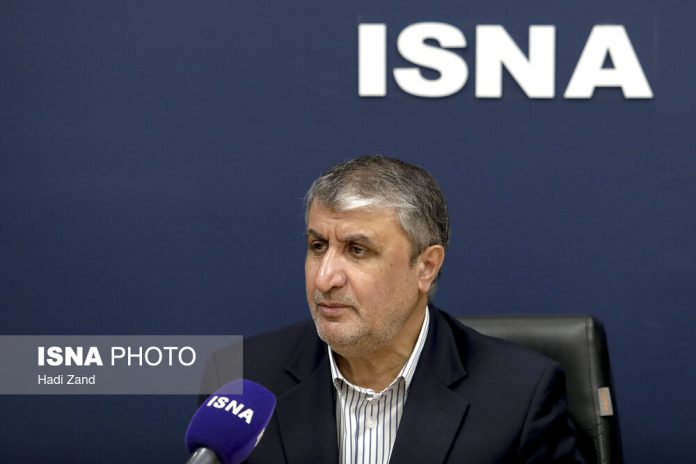
During the visit on Sunday, which lasted for one hour and a half, the Leader was accompanied by Head of the Atomic Energy Organization of Iran (AEOI) Mohammad Eslami and a number of directors and personnel of the organization.

The Leader received a report, during the visit, on the latest nuclear gains. He also held talks with a number of scientists on the sidelines.

At the event, Ayatollah Khamenei had two recommendations for the nuclear experts.

Firstly, he said Iran is now using about 1,000 megawatts of nuclear power, but the goal is 20,000 megawatts. Out of a total of 80,000-90,000 megawatts of power that the country needs, for example, in the mid-term future, 20,000 megawatts must come from nuclear energy.

“It is both financially efficient, biologically efficient, and environmentally efficient; Follow this seriously and with programming,” he told the scientists.

Secondly, the Leader urged scientists to work on developing low-capacity power plants, which would help meet the needs of various sectors.

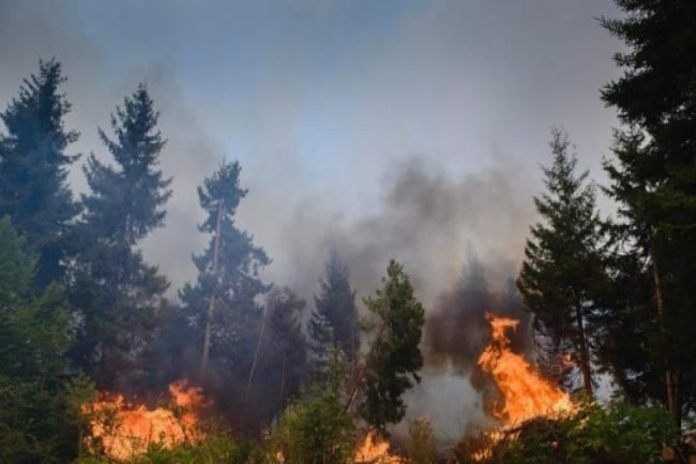
Over a dozen killed in Kazakhstan forest fires

Kazakhstan forest fires

The emergency situations ministry said on Saturday that 316 people had been evacuated but the situation was under control and homes safe, despite the high temperature and the changing direction of the wind hindering the response.

“In total, 14 bodies have been found,” the ministry announced in a statement, having previously announced it was searching for trapped forest rangers as fires consumed 60,000 hectares (148,000 acres) of land.

Kazakh President Kassym-Jomart Tokayev sacked Emergency Situations Minister Yury Ilyin earlier on Saturday.

More than 1,000 people, mostly from the defence and emergency situations ministries, are taking part in the effort to put out the fires.

The vast fires were started by lightning on Thursday, according to the local authorities in the vast ex-Soviet nation.

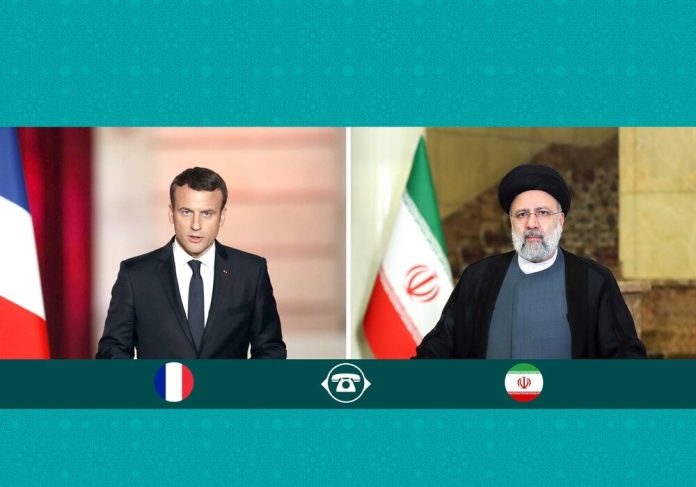
Iran president cautions Europe against politicized, unconstructive behavior in nuclear talks

Raisi and Macron

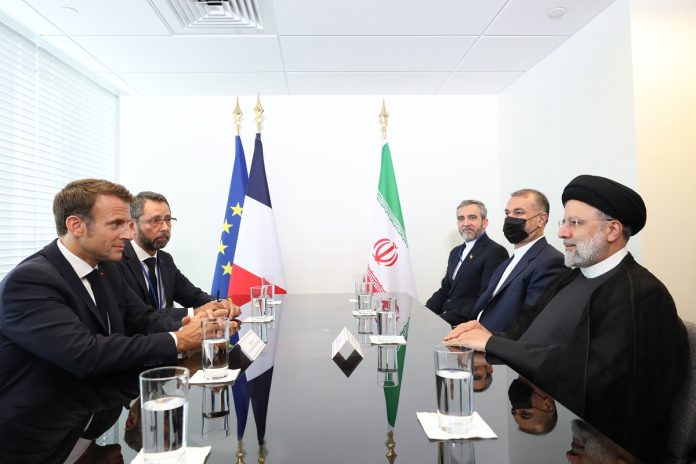
The Iranian president made the remarks in a 90-minute phone conversation with his French counterpart on Saturday where the two discussed a range of issues.

During the phone call, President Raisi urged the Western countries to refrain from interfering in Iran’s domestic affairs while urging them to respect the country’s national sovereignty.

He stressed that European miscalculations about Iran has been rooted in misinformation supplied by terrorist, separatist and hostile groups that are against Iran.

Referring to multinational talks seeking a removal of sanctions on Tehran and the ongoing cooperation between Iran and the UN nuclear agency, the Iranian president called on Western parties not to take counterproductive measures that could hamper the course of the talks.

The war in Ukraine was another issue discussed by Raisi and Macron.

Reiterating Iran’s policy to oppose the war, Raisi said that diplomacy is the best way out of current conflict.

The French president, for his part, stated that his country is after further interaction with the Islamic Republic of Iran.

Macron called for continued talks between officials of Iran and France to further enhance bilateral interactions.

Stressing the significance of the multinational efforts aimed at removing sanctions from Iran, the French president also urged Tehran to play a more active role in finding a settlement to the conflict in Ukraine.

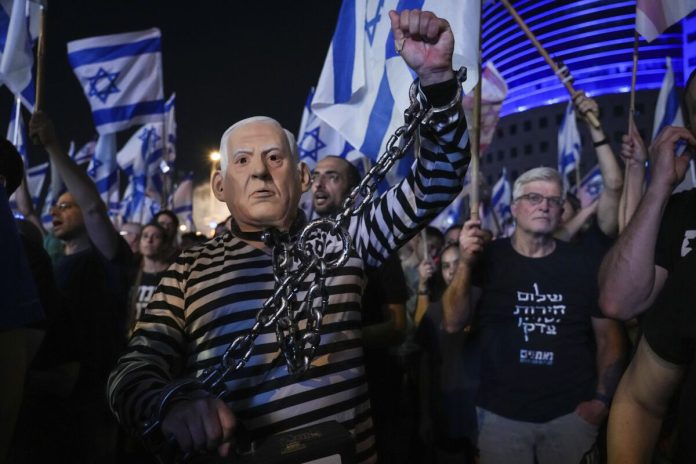
Israelis rally against PM’s ‘overhaul plan’, Palestinian crime deaths

Israel Protest

The mass demonstrations, which drew some 100,000 people on Saturday, began in January shortly after Netanyahu’s far-right government was sworn in.

Gaining momentum and seeing large turnouts of more than 200,000 demonstrators at times, protest organisers have said they will not give up until the government cancels the proposed legal changes rather than delaying them.

In central Tel Aviv, protester Michal Gat said: “Our country is being captured by extreme people… we’re being held hostage”.

“It’s super important for the Israeli people to keep Israel a democracy,” the 47-year-old tech worker told the AFP news agency.

Some people at the protest also held signs criticising government inaction over a soaring crime wave that has affected Palestinian citizens of Israel.

Since the start of the year, some 102 Palestinian-Israelis have been killed in crime-related violence, according to Israeli media.

On Thursday, five Palestinian-Israelis were shot dead at a car wash in Yafia, a town near the city of Nazareth, police confirmed.

Palestinian citizens of Israel have long complained of discrimination and police inaction against violence and crime that disproportionately affects their communities.

“We will not let [Itamar] Ben-Gvir get away with murders in the Arab society,” read one protest sign, referring to Israel’s far-right security minister.

Another sign read “dead-class citizen”, a play on the phrase second-class citizen.

Organisers stated that demonstrations were also held in the cities of Haifa and Rehovot.

In Haifa, former Prime Minister Ehud Barak called for a non-violent civil uprising against Netanyahu’s government, saying “this is not the time for a time-out”.

“We must not fall into illusions… The protest must intensify and move into a civil uprising. Non-violent civil disobedience,” he added.

Netanyahu, who is on trial on corruption charges, had announced a “pause” on the judicial overhaul plans in March to allow for talks on the divisive changes.

But months of talks have not produced a breakthrough.

And the judicial overhaul bill – which would weaken the courts and limit oversight on laws and government decisions – could be brought back for a final vote in the parliament at a moment’s notice, according to Israeli media.

Netanyahu’s government, a coalition between his Likud party and extreme-right and ultra-Orthodox Jewish allies, argues the changes are needed to rebalance powers between legislators and the judiciary.

Last month, when the parliament approved Israel’s state budget, Netanyahu pledged to “continue our efforts to reach understandings as broad as possible on the legal reform”.

Critics say the bill poses a direct threat to civil rights and warn it will grant the government unrestrained power as well as upend the country’s system of checks and balances.

Veteran Iranian actress Fakhri Khourvash dies at 94

Fakhri Khourvash

Born in 1929 in Kermanshah, western Iran, Khourvash started her carrier with performance in theatre in 1948, over three decades prior to the Islamic Revolution in Iran.

She shined in over 40 films before and after the Islamic Revolution. Her last film, A Little Kiss, was released in 2005.

In 2010, Khourvash began to live in the United States to be closer to her children.

She was honored for her lifetime achievements at the Iranian Film Festival in San Francisco that year.

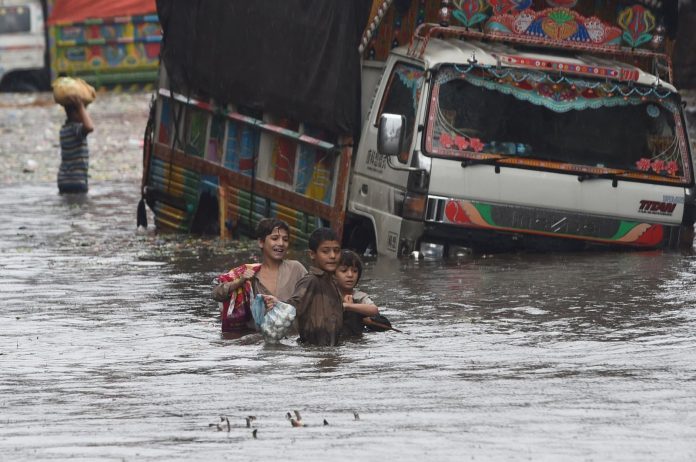
Heavy rains in Pakistan leave dozens dead, injured

Pakistan Flood

Rains and hail hit the Bannu, Lakki Marwat, and Karak districts of Khyber Pakhtunkhwa province on Saturday, senior rescue officer Khateer Ahmed said.

Another 145 people were injured as uprooted trees knocked down electrical transmission towers.

Officials were working to provide emergency relief to the wounded, Ahmed said. Last month, about a dozen people, including women and children, were killed by an avalanche during unusual snowfall in the summer.

Pakistani Prime Minister Shahbaz Sharif expressed grief on Saturday about the loss of life loss from the storm and directed authorities to pick up the pace of relief operations.

Meanwhile, Sharif ordered officials to put emergency measures in place, as Cyclone Biparjoy approached from the Arabia Sea.

The “severe and intense” cyclone with wind speeds of 150km per hour (93 miles per hour) was on a course towards the country’s south, Pakistan’s disaster management agency announced.

Last year, Pakistan witnessed the worst floods in its history due to heavy rains. They killed at least 1,739 people, including 647 children, and affected 33 million people.

At their peak, the floods – caused by a “monsoon on steroids”, as described by UN chief Antonio Guterres – submerged more than one-third of the country.

The disaster then caused damage to most of the water systems in affected areas and forced more than 5.4 million people, including 2.5 million children to “solely rely on contaminated water from ponds and wells”.

To mitigate the effects of natural disasters, the government in its national budget draft presented Friday allocated $1.3bn for climate resilience.

Live Update: Russia’s “Special Operation” in Ukraine; Day 473

Russia Ukraine War

Kakhovka dam collapse has made Black Sea a “garbage dump and animal cemetery”: Ukraine

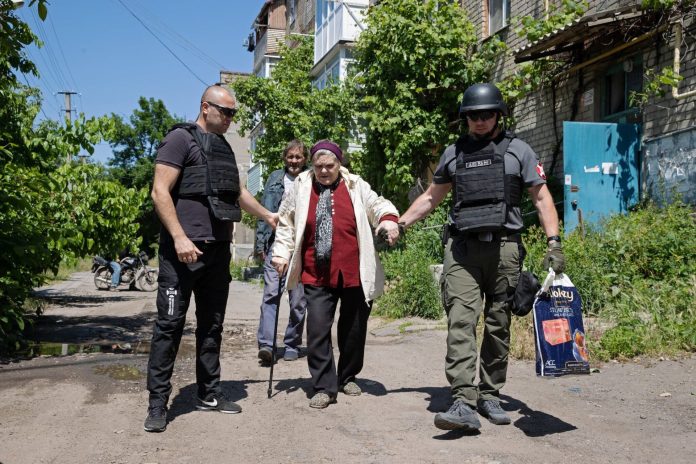
Floodwaters are receding following the collapse of the Kakhovka dam, but debris washed along the Dnipro river is turning Odesa’s Black Sea coastline into “a garbage dump and animal cemetery,” according to Ukrainian authorities.

“A lot of mines, ammunition and other explosive objects are being carried into the sea and thrown onto the shoreline,” Ukraine’s Ministry of Internal Affairs said on its website, adding that border guards had observed a “plague of fish” in the area.

“The Dnipro river flows into the Black Sea, bearing many signs of the devastation caused by Russians,” the ministry said.

“The consequences of ecocide are terrible,” it added.

The collapse of the dam in southern Ukraine on June 6 is one of the biggest industrial and ecological disasters in Europe for decades.

The catastrophe has destroyed entire villages, flooded farmland, deprived tens of thousands of people of power and clean water, and caused massive environmental damage.

But it’s still impossible to say whether it collapsed because it was deliberately targeted as part of Russia’s war in Ukraine or whether the breach could have been caused by structural failure.

Several Western officials have blamed the collapse of the Russian-occupied dam on Moscow.


Russia seeing no foundation for peace talks with Ukraine

There are not conditions in place for Russia-Ukraine peace talks, with Moscow not seeing even “flimsy” grounds to build dialogue upon, Kremlin spokesman Dmitry Peskov said on Sunday.

“As a matter of fact, now there are no premises for agreements. Moreover, now there is no foundation, even a flimsy one, in order to build at least some kind of a dialogue,” Peskov told a weekly show on Russian channel.

Moscow believes that the lack of openness to negotiations on Kiev’s part is a combination of three factors including its unwillingness, unpreparedness and not being allowed to by its Western sponsors, he added.

Trump: US left without ammunition due to military assistance to Ukraine

Former US President Donald Trump said on Saturday that military assistance to Ukraine had led to the depletion of US ammunition stocks.

“Right now, we don’t have any ammunition. Ukraine has the ammunition, all of it just about,” Trump said, speaking to Republicans in the state of Georgia.

Trump noted that the United States during his presidency “had so much ammunition” and now “we have very little ammunition to protect ourselves.”

The former president also promised to achieve peace in the conflict between Russia and Ukraine within 24 hours if he is reelected to the presidency next year.

Trump added that he is “the only candidate who can make this promise,” claiming he would prevent World War III.

Zelensky gives strongest indication yet that Ukraine’s counteroffensive is underway

Ukrainian President Volodymyr Zelensky has given his clearest indication yet that his military’s long-awaited push to liberate territory held by Russia’s occupying forces is underway, saying “relevant counteroffensive defensive actions are taking place in Ukraine.”

Speaking in Kyiv Saturday, the Ukrainian leader was asked to respond to comments by his Russian counterpart Vladimir Putin, who claimed Friday that the Ukrainian counteroffensive has certainly begun — and was not finding success.

Zelensky shrugged off Putin’s suggestions that Ukraine’s armed forces were struggling and sought to apply some psychological pressure of his own.

“It is interesting that Putin was talking about our counteroffensive,” Zelensky stated in response, adding, “It is important that Russia feels (the counteroffensive), feels that they do not have much time left.”

Zelensky said “relevant counteroffensive defensive actions are taking place in Ukraine,” but said he “will not give any details about the stage it is at.”

After spending most of the winter embroiled in fighting around the eastern city of Bakhmut, as well as training its soldiers and waiting for the arrival of Western military aid, like tanks and longer-range strike weapons, the last few weeks have seen Ukraine clearly step up military activities.

These have included shaping operations – strikes on targets far behind front lines, like fuel depots and soldiers’ barracks. And more recently, Ukraine’s military has conducted probing operations, designed to test the enemy’s weak spots as well as its combat readiness.

However, it is still far from clear that Ukraine has begun moving large numbers of ground forces forward in an attempt to recapture the swathes of territory held by Russian occupying forces.


Canada says it will give seized Russian aircraft to Ukraine

Canadian Prime Minister Justin Trudeau on Saturday promised to hand over a seized An-124 Russian cargo jet to Ukraine.

“Today, through the legislation we passed, we are confiscating this aircraft that was owned by Russia and we are beginning the process of transferring this asset to Ukraine so that it will never again be used by Russia in support of war,” Trudeau said during his visit to Kyiv.

According to Russian state news agency TASS, the transport aircraft belonging to a Russian airline, arrived in Toronto on February 27 of last year carrying a shipment of Covid tests from China. The aircraft, which was chartered by the Canadian government, arrived two hours before authorities of the North American country closed the sky to Russian flights because of the situation in Ukraine.

The plane has remained in Canada, and will now go to the country where Moscow has been waging a war for over a year since.

Oleg Stepanov, the Russian ambassador to Canada, called the country’s decision to hand the seized plane over to Ukraine “illegal” and “common theft” in an interview with TASS Saturday.

During his visit, Trudeau also announced new sanctions against several individuals and companies that are contributing to Russia’s invasion of Ukraine.

“So far, Canada has imposed sanctions on more than 2,500 organizations and individuals,” the prime minister stated, adding, “And today we are announcing new sanctions against 24 individuals and 17 organizations as part of special economic measures for Ukraine.”


Trudeau announces Canada will join efforts to train Ukrainian fighter pilots

Canadian Prime Minister Justin Trudeau announced during a visit to Kyiv Saturday that Canada will be part of multinational efforts to train Ukraine’s fighter pilots.

During a joint news conference with Ukraine’s President Volodymyr Zelensky, Trudeau said the country will help “maintain and support Ukraine’s fighter jet program, leveraging Canadian expertise in these areas.”

Trudeau also announced that Canada will contribute to an initiative for the maintenance of Leopard battle tanks that Ukraine’s allies have provided to Kyiv.

“We will provide an additional 287 AIM-7 missiles, which will support Ukraine in its efforts to defend Ukrainian skies,” he added, referring to a type of medium-range air-to-air missile.

“And from existing funds, we will provide 10,000 rounds of 105-millimeter ammunition to the Ukraine security forces,” he continued.

Trudeau said an additional $500 million is being allocated as military funding.

The Canadian prime minister also commented on the disastrous flooding following a break in southern Ukraine’s Nova Kakhovka dam.

“There is absolutely no doubt in our mind, that the destruction of the dam was the direct consequence of Russia’s decision to invade a peaceful neighbor,” he said.

“Russia’s war in Ukraine has devastated infrastructure, has destroyed families and taken lives, and is causing economic, food, energy shortages around the world. Russia is responsible and will be held to account,” Trudeau added.

He also announced the provision of $10 million Canadian (around $7.46 million USD) to help flooding victims.

During their meeting in Kyiv on Saturday, the two leaders also adopted a declaration in which Canada supports Ukraine’s accession to NATO as soon as circumstances allow.

“Canada supports Ukraine to become a NATO member as soon as conditions allow for it. Ukraine and Canada look forward to addressing these issues at the NATO Summit in Vilnius in July 2023,” according to the text of the declaration.

Zelensky has previously stated he understands his country cannot become a member of NATO while it is still at war.

Iran nuclear chief says high-level uranium enrichment aimed at sanctions removal

Head of the Atomic Energy Organization of Iran (AEOI) Mohammad Eslami

Speaking in an interview with Tehran-based Ettelaat newspaper published on Saturday, Eslami stated that a December 2020 parliamentary law — dubbed the Strategic Action Plan to Counter Sanctions — was also passed with the same purpose.

He added the AEOI is enriching uranium to the purity level of 60% in accordance with the parliamentary law for different purposes, including the production of radiopharmaceuticals and detectors.

“We used 60% enriched uranium in the production of fuel plates and especially raw materials for the production of radiopharmaceuticals such as molybdenum,” the Iranian nuclear chief emphasized.

Back in December, the AEOI spokesman Behrouz Kamalvandi said Iran’s enrichment of uranium had officially reached the purity level of 60 percent in accordance with the parliamentary law seeking to accelerate the development of the Iranian nuclear program.

Under the parliament’s law, the Iranian administration is required to restrict the International Atomic Energy Agency’s (IAEA) inspections and accelerate the development of the country’s nuclear program beyond the limits set under the 2015 nuclear agreement, such as ending the voluntary implementation of the Additional Protocol to the nuclear Non-Proliferation Treaty (NPT).

Eslami further pointed to claims that Iran’s nuclear program pursues military purposes and said the AEOI’s main goal is to implement the parliamentary law which is aimed at convincing or obliging the opposite sides to “reduce the cruel economic sanctions against Iran.”

The Iranian nuclear chief added that the AEOI is carrying out its activities based on national objectives and the IAEA rules, emphasizing that the country’s nuclear work is under the UN nuclear agency’s surveillance.

He criticized the JCPOA parties for failing to remain committed to the agreement, saying, “They did not even allow others to work with the Islamic Republic.”

Asked whether the recent agreements between Iran and the IAEA contradict the nation’s parliamentary law, Eslami noted the agency insists that its cooperation with Tehran hinge on the implementation of the nuclear Non-Proliferation Treaty (NPT) and the IAEA Safeguards Agreements.

“We are fully coordinated and committed to these two axes emphasized by the agency and have had no inconsistencies according to the [IAEA] inspections,” he emphasized.

The official added that the UN Security Council has also authorized the IAEA to carry out special supervision and set limitations on Iran’s nuclear activities under the Resolution 2231, which endorses the JCPOA.

According to the law of strategic action, when none of the JCPOA signatories fulfill their obligations, “it is natural that we do not fulfill them either”, Eslami continued.

Iraq releases $2.7bn of Iran’s blocked assets: Trade official

Iran Gas

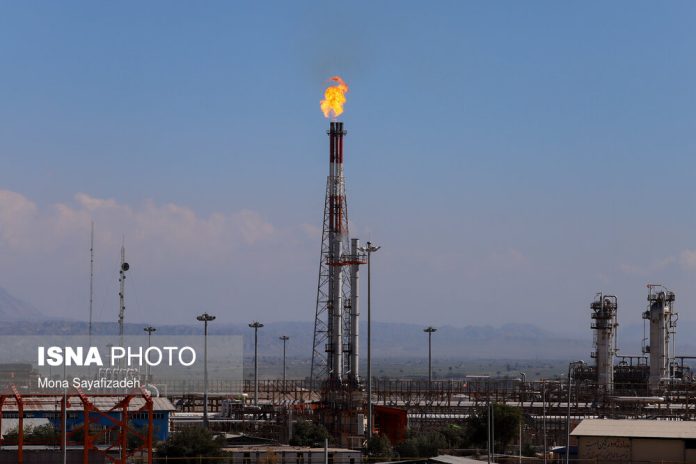
Al-e Es’haq said that Iraq has released $2.7 billion worth of Iranian funds in gas export money owed by the Baghdad government.

He stated that a part of Iran’s frozen assets in Iraq has been earmarked for the provision of funds needed by Iranian Hajj pilgrims.

Another portion has been used to pay for the provision of basic commodities, the senior Iranian trade official continued.

He added the release of Iran’s money in Iraq will have a positive impact on markets as it will meet the demands of the Central Bank of Iran (CBI) and ensure the purchase of staples needed in the country.

As a matter of fact, Al-e Es’haq noted, this development can significantly help stabilize the foreign exchange market and the provision of basic goods in the country.

Earlier this year, the chairman of the Iran-Iraq Joint Chamber of Commerce said the debt Iraq owes to Iran for import of energy will be paid within the next few months.

“We have found several solutions to receive our debt from the Central Bank of Iraq, so, Iraq’s outstanding payments to Iran will be cleared gradually within the next three to five months,” Al-e Es’haq stated.

US sanctions imposed by former President Donald Trump under the so-called maximum pressure campaign have prevented Iran from accessing a huge amount of its assets in foreign banks.

Iran’s frozen assets in Iraq amount to approximately $7 billion, according to Iranian officials.

President Raisi holds phone call with Franec’s Macron over JCPOA, bilateral ties

Raisi and Macron

Jamshidi announced in a post on his Twitter account that Macron called Raisi on Saturday and had a conversation for 90 minutes.

The French president has made it clear that he seeks interaction with the Islamic Republic of Iran, Jamshidi said.

He also added that the two presidents talked about the promotion of relations between Iran and France, the negotiations on the removal of anti-Iran sanctions, regional developments, and ways to continue interaction.

Raisi has already highlighted his administration’s push for the termination of the sanctions on Iran, stressing that Tehran would never bow out of the negotiations on the sanctions removal talks and the revival of the Joint Comprehensive Plan of Action (JCPOA).