Tuesday, December 30, 2025
Home Blog Page 139

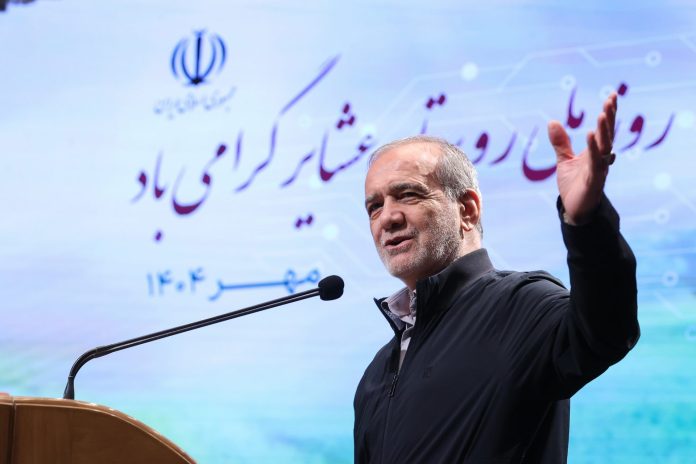
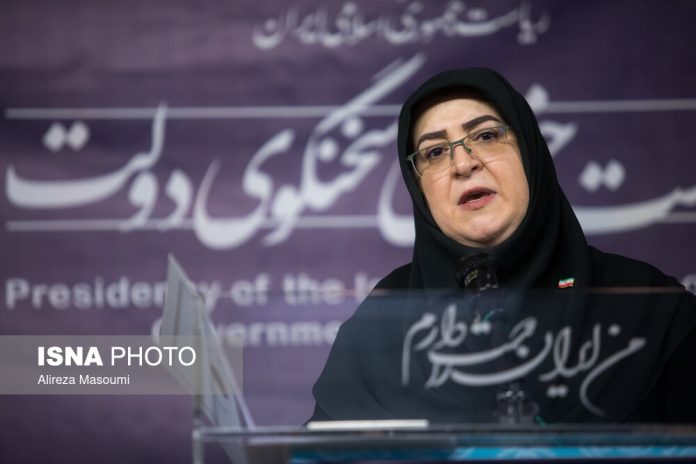
Pezeshkian: No talks if only Iran abides by commitments

Masoud Pezeshkian

“While we were negotiating, the Zionist regime attacked our country,” Pezeshkian said.

“When the JCPOA was signed, the Islamic Republic of Iran fully complied with it. Who tore it apart? What kind of negotiation is this, where we must adhere to our commitments but they do not honor theirs?”

The President stressed that aggressive powers commit any form of aggression and crime, yet label every act of resistance against such aggression as terrorism.

He reiterated: “Iran seeks peace and stability, but it will never submit to coercion. The reimposition of sanctions is undesirable, but it is not the end of the road, and we will not surrender in the face of it.”

Pezeshkian underlined that as long as the language of coercion prevails, no meaningful dialogue can take place.

“Iran has never sought, and does not seek, nuclear weapons,” he said.

“We do not reject dialogue, but dialogue only has meaning when it is pursued without coercion and on an equal footing.”

Referring to Washington’s record of hostility toward the Islamic Republic since the 1979 Revolution, Pezeshkian remarked: “The United States has consistently tried to create problems for Iran and fuel insecurity and war in the region. The Islamic Republic does not seek war or conflict, but any act of aggression will be met with powerful and decisive retaliation that leaves the aggressor to regret its actions.”

Ukraine: International institutions are too weak to stop Russia

Zelensky addressed the United Nations General Assembly warning that the podium is only good for words and not meaningful action.

“Nations can speak about their pain from stages like this, but even during bloodshed, there isn’t a signal international institution that can truly stop it,” he said.

“That’s how weak these institutions have become.”

“And because international institutions are too weak, this madness continues,” he added.

The Ukrainian leader further warned that a new arms race is determining how countries interact, underscoring the lack of influence of international forums to enforce peace and security.

He added, “Weapons decide who survives.”

Zelensky is pushing for more pressure from the international community against Russian President Vladimir Putin to halt the war in Ukraine. Russia, a veto-holding member of the United Nations Security Council, has successfully blocked any effort at binding resolutions that could impose sanctions or deploy military action.

Although the Ukrainian president secured a political win following a meeting with President Donald Trump on Tuesday.

Trump posted on Truth Social that he supports Ukraine retaking all its territory Russia currently occupies — a departure from his earlier position warning that Kyiv would have to cede territory for a peace deal.

The president raised in his own speech to the U.N. General Assembly that he could impose more economic pressure on Russia but called for Europe to commit to joining any U.S. action, a move that is difficult given European bureaucratic and political challenges.


Tehran has no plans to pursue nuclear weapons: Iran’s president

In a meeting with Swiss President Karin Keller-Sutter on the sidelines of the 80th session of the UN General Assembly in New York on Wednesday, the Iranian president emphasized Iran’s readiness to undergo verification of this stance within the framework of international laws and its rights.

Pezeshkian expressed Iran’s openness to diplomatic discussions aimed at resolving issues, but cautioned that if the snapback mechanism is activated, further dialogue would lose its significance.

During the meeting, he highlighted the humanitarian crisis in Gaza, stating that innocent women and children are suffering from a lack of medicine and food, urging Switzerland to take effective measures to prevent the continuation of atrocities by the Israeli regime.

The Iranian president also announced Iran’s willingness to expand cooperation and enhance relations with Switzerland.

In response, President Keller-Sutter appreciated President Pezeshkian’s constructive positions, noting that both Iran and Switzerland share a common goal of establishing peace globally.

She expressed Switzerland’s support for any constructive engagement between Iran and the International Atomic Energy Agency (IAEA), firmly believing that diplomatic dialogue is the best way to resolve problems and strengthen relations.

Keller-Sutter also condemned the Israeli attacks on Gaza, Iran, and Qatar, reaffirming her country’s commitment to achieving a swift ceasefire in the besieged strip.

Iran’s relations with Europe have not progressed as planned: Pezeshkian

In a meeting with Finnish President Alexander Stubb on the sidelines of the 80th session of the UN General Assembly in New York on Wednesday, Pezeshkian acknowledged the existing distrust towards the West, stemming from past violations of commitments by the United States and European countries, as well as military actions against Iran during negotiations.

Pezeshkian emphasized that diplomacy is the only path to overcoming this mistrust, reaffirming that Iran has no intention of developing nuclear weapons, asserting that there are no issues regarding transparency in this matter.

During the meeting, the Iranian president also advocated for promoting multilateralism and avoiding unilateralism as effective strategies for enhancing international interactions.

He called on international organizations, particularly the United Nations, to take more responsible actions in establishing and maintaining peace, emphasizing the need for practical measures to halt the crimes of the Israeli regime.

President Stubb stressed that dialogue and understanding through diplomacy are essential for overcoming challenges in the international arena.

He highlighted the need for genuine multilateralism and warned against allowing a multipolar world to replace true multilateral cooperation.


Syria’s president urges end to all sanctions in his first UN speech

“Syria is reclaiming its rightful place among the nations of the world,” al-Sharaa told world leaders on Wednesday, saying his country’s story was “filled with emotions, and it mixes pain with hope”.

“The Syrian story is a story of struggle between good and evil,” he added.

“For long years, we’ve suffered injustice and deprivation and oppression. Then we rose in claiming our dignity.”

Syrians across the country came together to watch al-Sharaa’s speech.

Al-Sharaa took power in January after leading opposition fighters in toppling President Bashar al-Assad, ending his family’s five-decade rule. In his speech, al-Sharaa outlined steps taken in the months since: establishing new institutions, planning to hold elections and encouraging foreign investment.

“We call now for the complete lifting of sanctions, so that they no longer shackle the Syrian people,” he said.

The United States removed the Syrian armed group Hayat Tahrir al-Sham (HTS), which al-Sharaa headed, from its list of “foreign terrorist organisations” in July, reflecting a shift in policy towards post-Assad Syria.

Al-Sharaa has since embarked on what observers described as a diplomatic charm offensive.

He travelled to Paris to meet French President Emmanuel Macron in May and had an audience with President Donald Trump in Riyadh a week later. During his state visit to Saudi Arabia, Trump pledged to lift sanctions on Syria. Weeks later, Trump signed an executive order to lift the decades-old sanctions.

But the Caesar Syria Civilian Protection Act, legislation that imposed US sanctions on Damascus, remains in effect, and members of Congress are now debating whether to repeal it.

While in New York, al-Sharaa met US Secretary of State Marco Rubio and other officials. He also addressed the Concordia Annual Summit, a global forum held alongside the annual UN assembly.

The Syrian leader condemned numerous Israeli raids on his country since he took over in January. In his address, al-Sharaa stated that despite the reforms his government has sought to oversee, “Israeli strikes and attacks against my country continue.”

“Israeli policies contradict the international supporting position for Syria,” he continued, adding it “threatens new crises and struggles in our region”.

But said his government remains committed to dialogue.

“In the face of this aggression, Syria is committed to dialogue, and we are committed to the Disengagement of Forces Agreement of 1974, and we call on the international community to stand beside us in the face of these attacks,” he added.

Syria and Israel have been adversaries for decades with tensions rooted in Israel’s occupation of the Golan Heights since 1967. Israel has launched more than 1,000 strikes on Syrian territory since al-Assad’s fall.

US special envoy for Syria Tom Barrack said on Tuesday that Israel and Syria were close to agreeing on a “de-escalation” arrangement.

The deal would see Israel halt its cross-border attacks in exchange for Syria agreeing not to move heavy equipment near the Israeli frontier.

Israel’s war on Gaza has been at the top of the agenda during the General Assembly, and al-Sharaa voiced support for Palestinians, saying Syria stood “firmly with the people of Gaza, its children and women and all peoples facing violations and aggression”.

“We call for an immediate end to the war,” he told the assembly.

Al-Sharaa closed his address by reflecting on Syria’s own years of violence.

“Let me affirm: The suffering Syria endured we wish upon no one. We are among the people most deeply aware of the horrors of war and destruction.”

Shooting down Russian fighter jets ‘on the table’: EU chief

“My opinion is we have to defend every square centimeter [of] territory, and that means if there’s an intrusion in the airspace, after warning, after being very clear, of course, the option of shooting down a fighter jet that is intruding our airspace is on the table,” von der Leyen said during an appearance on CNN.

President Donald Trump stated on Tuesday during his meeting with Ukrainian President Volodymyr Zelensky at the United Nations General Assembly that NATO countries should shoot down Russian jets that enter their airspace.

“Yes,” the president said when asked by reporters.

The remarks from von der Leyen and Trump come as NATO countries have experienced Russian drones and planes flying in their airspace in recent weeks.

Poland’s military, with the help of NATO allies, shot down multiple Russian drones that violated the country’s airspace.

Russian fighter planes flew into Estonian airspace, prompting the country to invoke Article 4.

“The United States stands by our NATO allies in the face of these airspace violations. And I want to take this first opportunity to repeat, and to emphasize, the United States and our allies will defend every inch of NATO territory,” U.S. Ambassador to the U.N. Mike Waltz said on Tuesday.

Von der Leyen, the head of the European Union’s executive arm, told CNN anchor Christiane Amanpour that Russia is “testing” Europe on “all fields.”

“I mean, that’s a hybrid war that we experienced since many, many years that Russia is leading against the democracies of the European Union and others. And therefore we fight back on all the different fields. And as I said, it’s a decision of NATO, but I would be very clear, you don’t touch our territory,” the EU chief added.


Iran’s President Pezeshkian, France’s Macron discuss prospects for agreement

In a post on X, Pezeshkian wrote that the two leaders exchanged views in New York on the sidelines of the 80th United Nations General Assembly.

“The solution that addresses Europe’s concerns and guarantees Iran’s benefits was clearly articulated,” he noted, adding that mutual commitment to “justice and fairness” could make a final resolution achievable.

He also said the two sides agreed on addressing the issue of prisoners held in both countries.

Following the meeting, Macron stressed that Iran must allow full access to International Atomic Energy Agency (IAEA) inspectors.

He underlined that “only a few hours remain” for Tehran to respond to European conditions before a so-called snapback mechanism that restores UN Security Council sanctions on Iran is activated, while insisting that “an agreement is still possible.”

The French president reiterated his country’s position that Iran must never obtain nuclear weapons, which Iranian officials have insisted are against the country’s doctrine.

Macron also demanded the immediate release of detained French citizens, including Cécile Kohler, Jacques Paris, and Lennart Monterlos, who are imprisoned in Iran for espionage charges.

One million Syrian refugees returned home since al-Assad’s overthrow: UN

“In just nine months, one million Syrians have returned to their country following the fall of the Bashar al-Assad government on 8 December 2024,” the UN refugee agency (UNHCR) said in a statement.

The agency added that 1.8 million people displaced within Syria during its nearly 14 years of war had also returned to their areas of origin.

Nearly half of Syria’s pre-war population of 13 million was displaced by the conflict that began after the Assad government’s crackdown on peaceful antigovernment protests as part of the Arab Spring protests in 2011.

While describing the mass returns as “a sign of the great hope and high expectations Syrians have following the political transition in the country,” UNHCR said many of those heading back are struggling to rebuild their lives.

“Destroyed homes and infrastructure, weak and damaged basic services, a lack of job opportunities, and volatile security are challenging people’s determination to return and recover,” the agency added.

According to UNHCR, more than seven million Syrians remain displaced inside the country and more than 4.5 million are still abroad. It urged greater investment in stabilisation efforts and increased support for vulnerable families.

“The international community, private sector, and Syrians in the diaspora must come together and intensify their efforts to support recovery and ensure that the voluntary return of those displaced by conflict is sustainable and dignified and they are not forced to flee again,” stated Filippo Grandi, the UN High Commissioner for Refugees.

A recent UNHCR survey found that 80 percent of Syrian refugees in Jordan, Lebanon, Egypt and Iraq want to return home one day, with 18 percent saying they hope to do so within the next year.

“They have endured a lot of suffering in the past 14 years and the most vulnerable among them still need protection and assistance,” Grandi said, adding, “Sustained support to hosting countries like Jordan, Lebanon and Türkiye is equally critical to ensure returns are voluntary, safe and dignified.”

UNHCR warned that funds for humanitarian operations are dwindling. Inside Syria, only 24 percent of the required funding is available, while for the wider regional Syria response, just 30 percent of the requested funds have been provided.

“This is not the time to cut back support for the Syrian people and their push for a better Syria for them and the region,” the agency noted.


President Pezeshkian warns dialogue will be meaningless if snapback is activated

In a meeting with Norwegian Prime Minister Jonas Gahr Store on the sidelines of the 80th session of the UN General Assembly in New York on Wednesday, President Pezeshkian stated that Western countries should demonstrate their commitment to their obligations for any meaningful understanding to emerge, adding that the current situation has arisen due to the West’s failure to uphold its commitments under the 2015 nuclear deal, also known as the Joint Comprehensive Plan of Action (JCPOA).

The president reiterated that the Islamic Republic of Iran has never sought nuclear weapons, aligning this stance with the country’s fundamental beliefs and clear political approach.

He also attributed the West’s skepticism regarding Iran’s peaceful nuclear program to misunderstandings and partly to misleading propaganda from the Israeli regime.

Prime Minister Store responded by affirming the Western countries’ commitment to resolving issues, stating that efforts should focus on finding solutions to concerns, which could help prevent the triggering of the snapback mechanism.


Yemen’s Houthis conduct drone attack on Israel’s Eilat, wounding 22

Yemen Houthi

A military statement said the drone “fell in the area of Eilat” on the Red Sea coast on Wednesday after air defences failed to intercept it.

“The public is requested to continue to follow the Home Front Command’s defensive guidelines and further guidelines issued,” it wrote on Telegram.

Yemen’s Houthi group has claimed responsibility for the attack.

“The operation was carried out with a number of drones and successfully achieved its objectives,” Yahya Saree, a Houthi spokesperson, told Al Jazeera Arabic.

“We attacked several Israeli enemy targets in the Umm al-Rashrash and Bir al-Saba’ [now named Beersheba] areas.”

The Magen David Adom emergency medical service announced that two people were seriously injured with shrapnel wounds while others sustained moderate to minor injuries.

Police said bomb disposal experts were examining the nature of the object and warned the public to avoid approaching the crash site or touching any remnants that may contain explosives.

In a statement, Israeli Prime Minister Benjamin Netanyahu stated that any attack on “Israeli cities” will be met “with a painful blow to the Houthi regime”.

Netanyahu added he has asked the army to consider ways to respond to the air threats.

Israeli Defence Minister Israel Katz also threatened the Houthis, saying they will “learn the hard way”.

“The Houthi terrorists refuse to learn from Iran, Lebanon, and Gaza,” Katz wrote on X, listing countries bombed by Israel in recent months.

“Whoever harms Israel will be harmed sevenfold,” he added.

Since Israel launched its war on Gaza in October 2023, the Houthis have carried out drone and missile attacks against it. They have also targeted vessels linked to Israel in the Red Sea, disrupting maritime trade passing through the water channel.

Houthis said they will stop their attacks when a ceasefire is agreed in Gaza, where more than 65,000 Palestinians have been killed in an Israeli offensive called genocide by a UN inquiry panel. Netanyahu faces an arrest warrant for war crimes issued by the International Criminal Court, but his Western allies have shielded him so far.

Most of the dozens of Houthi missiles and drones launched have been intercepted or fallen short of the occupied territory.

Israel has carried out numerous attacks across Yemen, including on the capital, Sanaa. Earlier this week, Israel was accused of killing 31 journalists in Yemen.

Late last month, Israel assassinated Houthi Prime Minister Ahmed Ghaleb al-Rahawi in an air strike in Sanaa. The group promised “vengeance” for his death and the deaths of almost half of his cabinet.