Tuesday, December 30, 2025
Home Blog Page 138

Iran says will never compromise on its rights or security

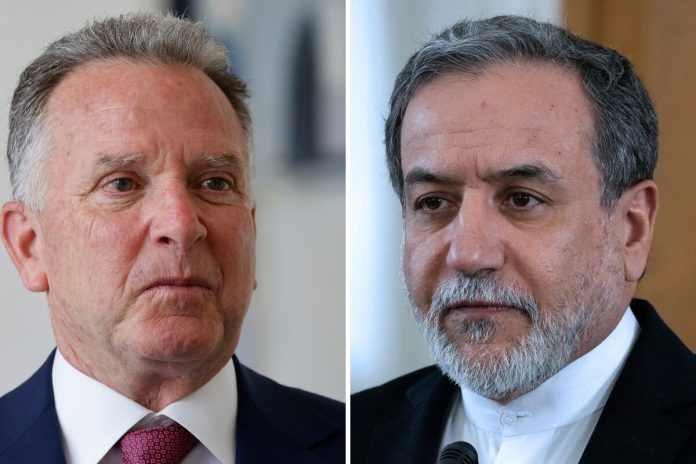
Seyed Abbas Araqchi’s op-ed, titled “Condemning the Three European Countries’ Attempt to Trigger the Snapback Mechanism”, was published in Indonesia’s Jakarta Post newspaper.

The op-ed states that the attempt by the three European countries (the UK, France, and Germany) to activate the snapback mechanism for the automatic reimposition of sanctions will inflict irreparable damage on Europe’s international image and credibility.

He added that the move by the three European states to trigger the snapback mechanism lacks legal and legitimate basis and is considered politically destructive. “Countries that do not fulfill their obligations have no right to benefit from an agreement they themselves have undermined,” Araqchi stressed.

Araqchi noted that it was the United States — not Iran — that violated UN Security Council Resolution 2231 by unilaterally withdrawing from the Joint Comprehensive Plan of Action (JCPOA) in 2018, a destructive move compounded by the European trio’s failure to honor their own commitments under the deal.

The op-ed also condemned the three European states for supporting the United States’ illegal military strikes on Iran’s peaceful nuclear facilities in June 2025, which are protected under international law.

Araqchi further warned that in this game, the three European countries will not emerge victorious and will be sidelined from future diplomatic processes. “If this short window of opportunity to change course is missed, it will result in far-reaching and destructive consequences for West Asia and the international order,” he wrote.

The Iranian foreign minister emphasized that Iran remains committed to the peaceful use of nuclear energy under the Nuclear Non-Proliferation Treaty (NPT), while also reaffirming its readiness to engage in constructive and meaningful dialogue on the matter.

Iran FM: E3 Snapback Move in Line with US Maximum Pressure

E3 Snapback Move in Line with US Maximum Pressure

Araqchi made the remarks in a meeting with his British counterpart, Rt Hon Yvette Cooper, on the sidelines of the Annual Session of the United Nations General Assembly in New York.

Araqchi said the move by Britain, France ,and Germany constituted their complicity in a campaign of coercion and lawlessness.Reaffirming the Iranian people’s unwavering resolve to defend their rights and national interests,

Araghchi emphasized that neither sanctions, nor military aggression, nor diplomatic pressure would succeed in diverting a nation determined to preserve its independence and dignity.

Iran’s Foreign Minister strongly criticized the conduct of the three European countries with respect to Iran’s nuclear dossier, describing their insistence on reinstating the annulled UN Security Council resolutions as unfounded, unlawful, and irresponsible.

He stressed that the approach adopted by the E3 and the United States over the past decade has been driven by a singular logic: to deprive the Iranian nation of its legitimate rights under the Treaty on the Non-Proliferation of Nuclear Weapons (NPT).

He noted that this pattern reached its peak with the unlawful attacks carried out by the United States and the Zionist regime against Iran’s peaceful nuclear facilities—attacks that were met with complicit silence from the three European governments.

Referring to Iran’s responsible and principled approach in employing diplomacy to resolve any ambiguities concerning the nature of its nuclear program, Araghchi condemned the United States and the E3 for their continued bad faith and, subsequently, for the U.S. assault against Iran as a betrayal of both diplomacy and the non-proliferation regime.

He warned that the unpredictable consequences of this destructive course of action would rest squarely with the initiators and supporters of the so-called “snapback” mechanism.

Iran nuclear chief dismisses U.S. demands: “We take orders from no one”

Mohammad Eslami

AEOI chief Mohammad Eslami dismissed the comments by U.S. Energy Secretary Chris Wright, saying: “We take orders from no one. The statements of the U.S. Secretary of Energy mean nothing to us.”

Eslami underscored that the Islamic Republic has endured years of pressure, sanctions, aggression, wars, and conspiracies, but has nonetheless continued to advance its independent scientific and technological path.

“Our plans are clear. The International Atomic Energy Agency has exercised the heaviest inspections, and not a single report has ever indicated any diversion,” he emphasized.

Reaffirming the peaceful nature of Iran’s nuclear program, the AEOI chief stated: “We produce all the products and materials we need inside the country.”

His remarks came in response to Secretary Wright’s comments at the annual IAEA conference, where he alleged that Iran’s uranium enrichment and plutonium reprocessing capabilities “must be completely dismantled” to block what he claimed was a “path toward nuclear weapons.”

Iran’s second-highest peak Alam-Kuh turns white with first autumn snow

Located in the Kelardasht region of northern Iran, Alam-Kuh is the country’s second-highest summit after Mount Damavand and a crown jewel of the Alborz mountain range.

Known for its rugged northern face, the mountain’s steep granite walls are considered among the most technical and challenging routes for climbers and rock climbers in Iran.

The early autumn snow has given the iconic peak and its adjoining ridges a pristine winter-like appearance.

Several countries, including US, developing copies of Iran’s Shahed drone: WSJ

In a report published on Wednesday, The Wall Street Journal newspaper said that different corporations in the United States, China, France and the UK are developing armed unmanned aerial vehicles (UAVs) modeled after Iran’s Shahed.

The United States and its allies are “competing to develop low-cost, long-range replica weapons,” it added.

The report also noted that models similar to the Shahed stood out among 18 types of US-made drone prototypes displayed at an event held by the US Department of War this summer.

Those models, it added, included LUCAS and Arrowhead made by SpectreWorks and Griffon Aerospace companies, respectively.

“The Shahed and its knockoffs have become so widespread that corporations such as Griffon and Sweden’s Saab are even selling target-practice UAVs resembling Iran’s munitions,” the report said.

The Shahed drone is among the world’s most advanced UAVs, possessing exceptional reconnaissance, surveillance, and operational capabilities while maintaining an extremely cost-effective price. It can disable an opponent’s air defense systems when deployed in large numbers.

Back in May, US President Donald Trump praised the efficiency and affordability of Iranian drones while criticizing the high costs associated with American weapons manufacturers.

He contrasted Iran’s production costs of “$35,000 to $40,000” with US manufacturers quoting $41 million for comparable models.

Iran’s massive and rapid progress in drone technology and its capabilities to carry out long-range strikes in drone warfare with a high level of accuracy have cemented the country’s growing military might in West Asia.

The cutting-edge drone program has been among the Iranian military’s breakthroughs in manufacturing a broad range of indigenous defensive equipment to make the armed forces self-sufficient in the face of years-long US threats and sanctions.

Iranian officials have repeatedly warned that the country will not hesitate to strengthen its military capabilities, which are entirely meant for defense.


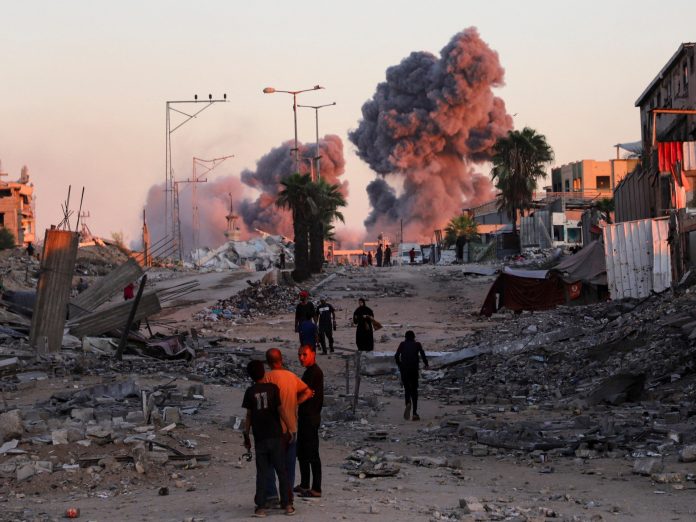
US pushes 21-point Gaza plan with ceasefire, Israeli withdrawal, new administration: Report

Gaza War

According to the outlet, Trump told participants at a meeting on the sidelines of the United Nations General Assembly that the war must end urgently, warning that each day it continues, Israel becomes increasingly isolated internationally.

Axios reported that the plan’s main elements include the release of all remaining Israeli hostages, a permanent ceasefire and a phased Israeli withdrawal from the Gaza Strip.

It also envisions a new administration in Gaza without Hamas, with some involvement from the Palestinian Authority, alongside a multinational security force made up of Palestinians and troops from Arab and Muslim countries.

The proposal further calls for Arab and Muslim states to fund reconstruction and support the new administration in Gaza.

Axios added Trump stressed Washington would not allow Israel to annex parts of the occupied West Bank or Gaza.

Secretary of State Marco Rubio and Witkoff later met with foreign ministers from several Arab states to discuss turning the principles into an operational framework. Trump told leaders the next step would be to present the plan to Israeli Prime Minister Benjamin Netanyahu during their upcoming meeting at the White House next week.

‏The Israeli opposition and hostage families accuse Netanyahu of prolonging the war for political survival, warning that any withdrawal from Gaza could topple his coalition.

The Israeli army has continued a brutal offensive on Gaza, killing more than 65,500 ‏Palestinians since October ‏2023. The military campaign has devastated the enclave, which is facing famine.

UN investigators recently concluded that Israel is committing genocide in Gaza, home to a population of 2.4 million.

Israeli government officials have threatened to annex the West Bank in retaliation for a wave of Western recognition of Palestinian statehood.

Since Sunday, 11 countries – the UK, Canada, Australia, Portugal, Luxembourg, Belgium, Andorra, France, Malta, Monaco and San Marino – have officially recognized the state of Palestine, raising the total number of recognitions to 159 out of 193 UN member states.


Pezeshkian: No talks if only Iran abides by commitments

Masoud Pezeshkian

“While we were negotiating, the Zionist regime attacked our country,” Pezeshkian said.

“When the JCPOA was signed, the Islamic Republic of Iran fully complied with it. Who tore it apart? What kind of negotiation is this, where we must adhere to our commitments but they do not honor theirs?”

The President stressed that aggressive powers commit any form of aggression and crime, yet label every act of resistance against such aggression as terrorism.

He reiterated: “Iran seeks peace and stability, but it will never submit to coercion. The reimposition of sanctions is undesirable, but it is not the end of the road, and we will not surrender in the face of it.”

Pezeshkian underlined that as long as the language of coercion prevails, no meaningful dialogue can take place.

“Iran has never sought, and does not seek, nuclear weapons,” he said.

“We do not reject dialogue, but dialogue only has meaning when it is pursued without coercion and on an equal footing.”

Referring to Washington’s record of hostility toward the Islamic Republic since the 1979 Revolution, Pezeshkian remarked: “The United States has consistently tried to create problems for Iran and fuel insecurity and war in the region. The Islamic Republic does not seek war or conflict, but any act of aggression will be met with powerful and decisive retaliation that leaves the aggressor to regret its actions.”

Ukraine: International institutions are too weak to stop Russia

Zelensky addressed the United Nations General Assembly warning that the podium is only good for words and not meaningful action.

“Nations can speak about their pain from stages like this, but even during bloodshed, there isn’t a signal international institution that can truly stop it,” he said.

“That’s how weak these institutions have become.”

“And because international institutions are too weak, this madness continues,” he added.

The Ukrainian leader further warned that a new arms race is determining how countries interact, underscoring the lack of influence of international forums to enforce peace and security.

He added, “Weapons decide who survives.”

Zelensky is pushing for more pressure from the international community against Russian President Vladimir Putin to halt the war in Ukraine. Russia, a veto-holding member of the United Nations Security Council, has successfully blocked any effort at binding resolutions that could impose sanctions or deploy military action.

Although the Ukrainian president secured a political win following a meeting with President Donald Trump on Tuesday.

Trump posted on Truth Social that he supports Ukraine retaking all its territory Russia currently occupies — a departure from his earlier position warning that Kyiv would have to cede territory for a peace deal.

The president raised in his own speech to the U.N. General Assembly that he could impose more economic pressure on Russia but called for Europe to commit to joining any U.S. action, a move that is difficult given European bureaucratic and political challenges.


Tehran has no plans to pursue nuclear weapons: Iran’s president

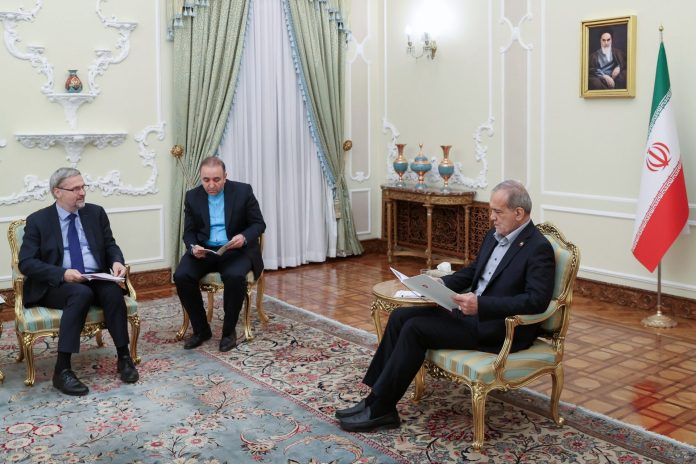
In a meeting with Swiss President Karin Keller-Sutter on the sidelines of the 80th session of the UN General Assembly in New York on Wednesday, the Iranian president emphasized Iran’s readiness to undergo verification of this stance within the framework of international laws and its rights.

Pezeshkian expressed Iran’s openness to diplomatic discussions aimed at resolving issues, but cautioned that if the snapback mechanism is activated, further dialogue would lose its significance.

During the meeting, he highlighted the humanitarian crisis in Gaza, stating that innocent women and children are suffering from a lack of medicine and food, urging Switzerland to take effective measures to prevent the continuation of atrocities by the Israeli regime.

The Iranian president also announced Iran’s willingness to expand cooperation and enhance relations with Switzerland.

In response, President Keller-Sutter appreciated President Pezeshkian’s constructive positions, noting that both Iran and Switzerland share a common goal of establishing peace globally.

She expressed Switzerland’s support for any constructive engagement between Iran and the International Atomic Energy Agency (IAEA), firmly believing that diplomatic dialogue is the best way to resolve problems and strengthen relations.

Keller-Sutter also condemned the Israeli attacks on Gaza, Iran, and Qatar, reaffirming her country’s commitment to achieving a swift ceasefire in the besieged strip.

Iran’s relations with Europe have not progressed as planned: Pezeshkian

In a meeting with Finnish President Alexander Stubb on the sidelines of the 80th session of the UN General Assembly in New York on Wednesday, Pezeshkian acknowledged the existing distrust towards the West, stemming from past violations of commitments by the United States and European countries, as well as military actions against Iran during negotiations.

Pezeshkian emphasized that diplomacy is the only path to overcoming this mistrust, reaffirming that Iran has no intention of developing nuclear weapons, asserting that there are no issues regarding transparency in this matter.

During the meeting, the Iranian president also advocated for promoting multilateralism and avoiding unilateralism as effective strategies for enhancing international interactions.

He called on international organizations, particularly the United Nations, to take more responsible actions in establishing and maintaining peace, emphasizing the need for practical measures to halt the crimes of the Israeli regime.

President Stubb stressed that dialogue and understanding through diplomacy are essential for overcoming challenges in the international arena.

He highlighted the need for genuine multilateralism and warned against allowing a multipolar world to replace true multilateral cooperation.