Saturday, April 4, 2026
Home Blog Page 139

President Pezeshkian says Iran not to become battleground for foreign aggressors

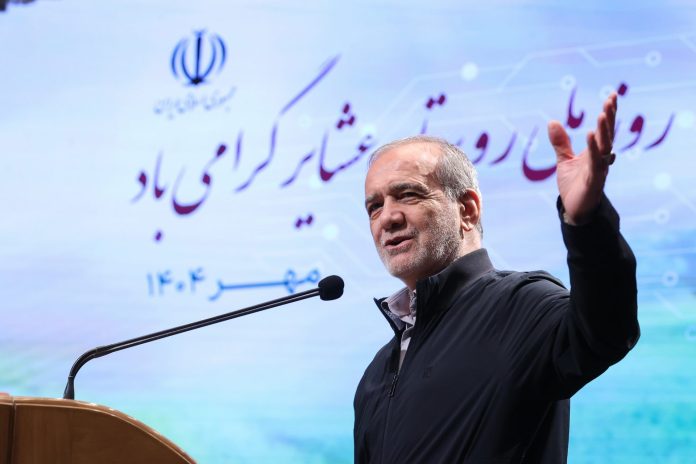
Speaking at the National Day of Villages and Nomads, President Masoud Pezeshkian stressed, “We will never allow Iran to become a field for bandits or foreign aggressors.”

Pezeshkian declared, “We will overcome all challenges with strength. Through knowledge, unity, and wisdom, we will emerge from every crisis with our heads held high.”

He added that “false claimants of human rights, blinded by money and power, will never stop their oppression.”

The president further stated, “The world’s bullies remain blind to their own crimes.”


Iran’s navy cmdr.: New joint Caspian drill planned soon

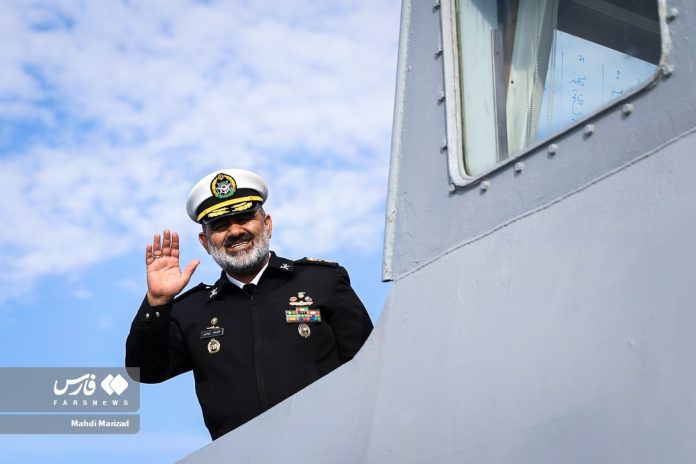
Shahram Irani

Speaking at a meeting of Caspian Sea naval commanders hosted by Russia in St. Petersburg, Rear Admiral Irani expressed satisfaction over the recent combined exercise in Bandar Anzali and the southern Caspian coast, describing it as a successful example of regional cooperation.

“The Caspian Sea belongs exclusively to its five littoral states—Iran, Russia, Kazakhstan, Turkmenistan, and the Republic of Azerbaijan—and all issues concerning it must be resolved only by these countries,” he said.

“The Caspian Sea is no place for transregional powers, and the coastal nations will not permit their interference.”

He underscored that the littoral countries possess sufficient capability to ensure lasting security in the region while promoting economic vitality and addressing environmental challenges.

Admiral Aleksandr Moiseyev, Commander of the Russian Navy, praised the strong coordination among the Caspian states, saying such meetings help align perspectives, strengthen regional synergy, and create equitable opportunities for economic cooperation.

The gathering brought together the naval commanders of Iran, Russia, Kazakhstan, and Azerbaijan to reinforce maritime collaboration in securing stability, supporting economic activity, and addressing shared issues in the Caspian basin.

Rear Admiral Irani attended the meeting accompanied by Iran’s ambassador to Russia and senior naval officers.

Iranian gov’t spokesperson briefly leaves press conference due to illness

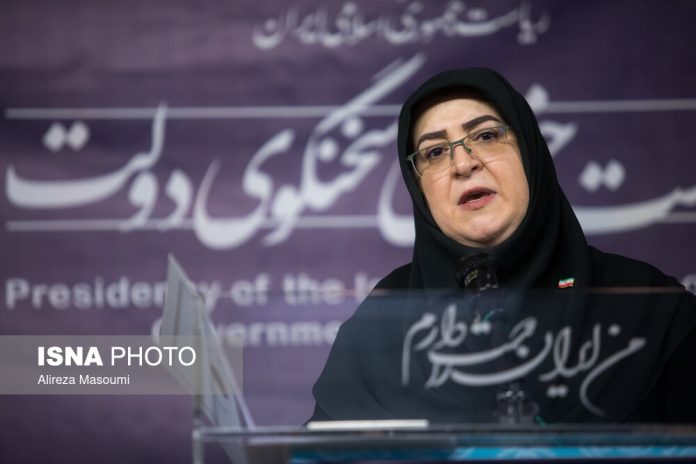
According to local media, the incident occurred during Mohajerani’s meeting with reporters when she left the room unexpectedly, prompting a brief pause in the event.

Upon her return, Mohajerani apologized to journalists for the interruption, explaining that her condition was due to exhaustion.

“I apologize, it happens to anyone. The workload and pressure sometimes cause weakness,” she said with a smile.

The press conference resumed shortly afterward, during which Mohajerani addressed a range of issues including Iran’s regional diplomacy, economic reforms, and recent comments about potential US proposals.

Day one of Gaza ceasefire talks ends on ‘positive’ note in Egypt

Gaza War

Negotiators are set to return for more discussions on Tuesday.

Sources told Al Jazeera Arabic that the meeting in the Red Sea resort city of Sharm el-Sheikh on Monday was “positive” and that a roadmap was drawn up for how the current round of talks would continue.

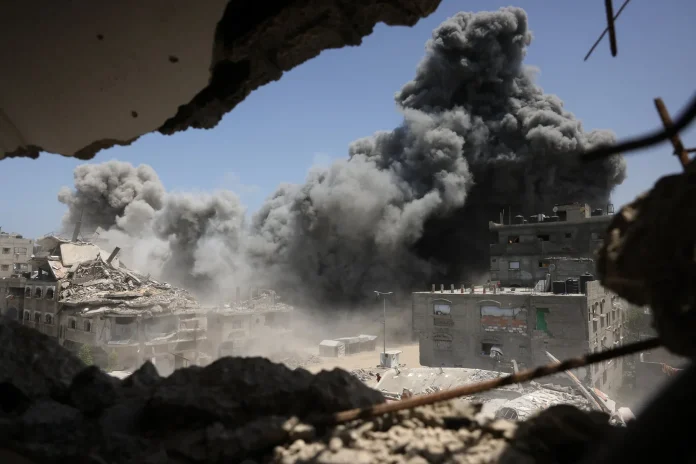
The Hamas delegation told mediators that Israel’s continued bombing of Gaza poses a challenge to negotiations on the release of captives, Al Jazeera Arabic reported.

The Hamas delegation included Hamas leaders Khalil al-Hayya and Zaher Jabarin, two negotiators who survived an Israeli assassination attempt in Qatar’s capital Doha that killed five people last month.

The day-one talks covered the proposed exchange of prisoners and captives, a ceasefire, and humanitarian aid entering Gaza, according to Egypt’s state-linked Al-Qahera News.

White House press secretary Karoline Leavitt also said Trump was pushing for an early exchange of Israeli captives and Palestinian prisoners, in a bid to build “momentum” to implement other parts of his plan to end the Gaza war.

“The technical teams are discussing that as we speak, to ensure that the environment is perfect to release those hostages,” Leavitt stated, adding that teams were “going over the list of both the Israeli hostages and also the political prisoners who will be released”.

Trump, speaking to reporters from the Oval Office on Monday afternoon, said “we have a really good chance of making a deal”, while also noting that he still has his own “red lines”.

“But I think we’re doing very well. And I think Hamas has been agreeing to things that are very important,” Trump added.

Trump’s son-in-law, Jared Kushner, a real estate developer, is also reportedly part of the US delegation.

Al-Qahera has also confirmed that the talks were expected to continue on Tuesday, which marks two years since the Hamas attack on Israel that killed 1,200 people and saw about 250 people taken captive.

Since then, Israel has killed at least 67,160 Palestinians and wounded 169,679 in Gaza, in a war that has been described as genocidal by a United Nations inquiry, leading genocide scholars and leading human rights groups, including Israeli nonprofits.

Even as the talks were held on Monday, Israel killed at least 10 Palestinians in attacks across Gaza, including three who were seeking humanitarian aid, according to Al Jazeera sources.

United Nations Secretary-General Antonio Guterres shared a social media post late on Monday, according to time in New York, acknowledging the second anniversary of Hamas’s “abhorrent large-scale terror attack on Israel” on October 7, 2023.

Guterres also said the “recent proposal” put forward by Trump “presents an opportunity that must be seized to bring this tragic conflict to an end”.

“A permanent ceasefire and a credible political process are essential to prevent further bloodshed and pave the way for peace,” the UN chief added.

 

Two security forces killed in terrorist attack in western Iran

IRGC

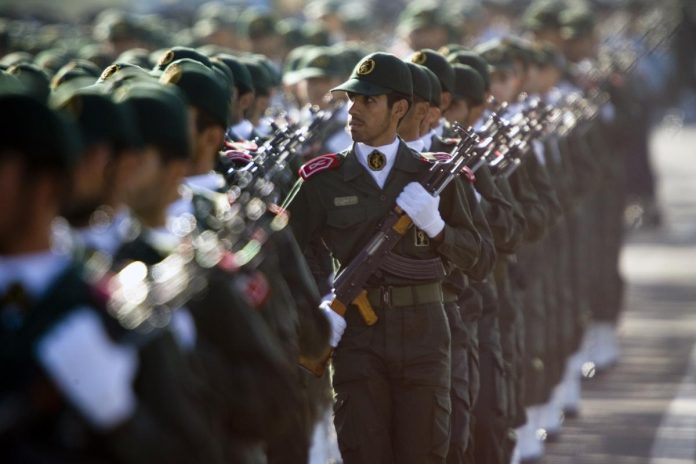
The IRGC’s Beit-al-Moqaddas Command in Kordestan announced that the assault targeted the Hezbollah Resistance Base at the Sarvabad three-way junction in western Iran.

The attackers reportedly used a hand grenade during the incident.

The victims were identified as Alireza Valizadeh and Ayoub Shiri.
Three other individuals were injured and transferred to a local hospital for treatment.

Authorities have condemned the attack, labeling it a terrorist act carried out by members of “anti-revolutionary groups.” Security forces have reportedly launched an operation to identify and apprehend those responsible.

Iranian security forces have periodically clashed with armed groups, mostly foreign-based, on the western border.

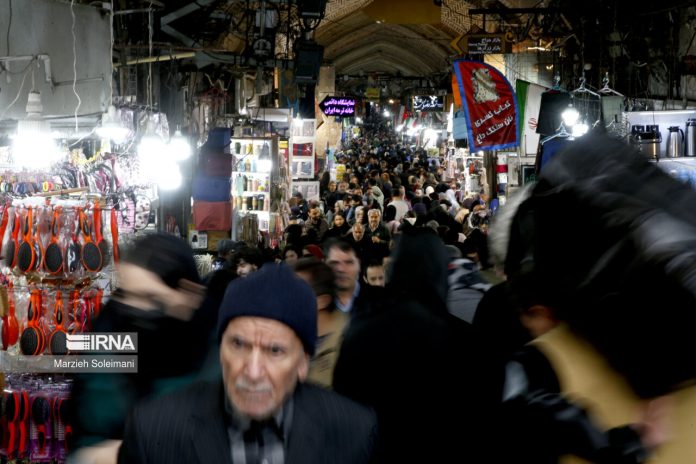
Iran daily criticizes years of delay over CFT approval

Tehran Grand bazaar

According to the paper, the Expediency Council last week conditionally approved the Combating the Financing of Terrorism (CFT) bill, a key measure linked to Iran’s potential cooperation with the Financial Action Task Force (FATF).

The report claimed that one cleric’s statement declaring the CFT “forbidden and illegitimate” was among the factors that stalled the decision.

The newspaper questioned the cleric’s authority to issue such religious judgments, saying his “unfounded remarks” contributed to years of economic stagnation and currency devaluation, from 15,000 to 118,000 tomans per US dollar during that period.

The editorial also held the Expediency Council responsible for the delay, asking why members who now consider the bill beneficial opposed it for so long.

It further called for accountability and structural reform within the council, arguing that its members must meet high intellectual and ethical standards to properly safeguard national interests.

The Jomhouri-e Eslami concluded that Iran’s decision-making bodies need greater transparency and responsibility to prevent similar costly delays in the future.

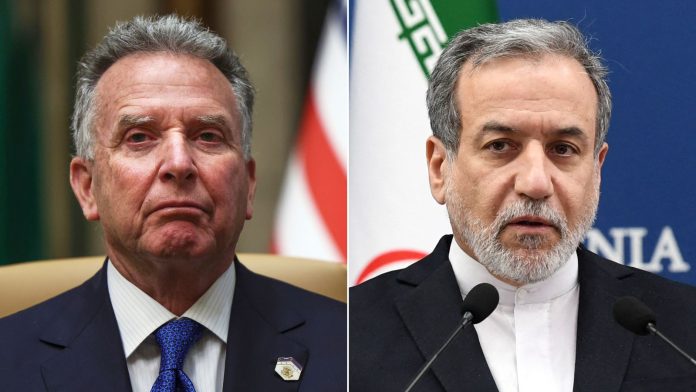
Iranian gov’t spokesperson: US conditions not yet official, cannot be seriously reviewed

Araghchi Witkoff

Addressing questions about reports of a potential meeting between Iranian Foreign Minister Seyed Abbas Araghchi and US envoy Steve Witkoff, Mohajerani said government officials act based on collective decisions rather than personal opinions.

“Neither the foreign minister nor I have the right to express or act upon personal views. The executive branch implements only those matters that have been collectively agreed upon,” she stated.

Speaking at her weekly press conference, Mohajerani also outlined the government’s foreign policy priorities, highlighting regional diplomacy and stronger ties with neighboring countries, including through the Shanghai Cooperation Organization (SCO).

She said Iran is pursuing trade initiatives such as barter mechanisms, border markets, and special economic zones, while also focusing on budget discipline, financial balance, and structural reforms to improve government efficiency.

Mohajerani also emphasized that Iran supports any sustainable peace that leads to an end to the Israeli genocide in Gaza.

Data shows Iran’s oil exports surged in run up to UN sanctions

Iran Oil

Figures released on Monday by a major international tanker tracking service showed that Iran’s oil exports had reached a seven-year record of nearly 2 million barrels per day (bpd) in September.

“Iran’s September 2025 crude oil exports reached levels unseen since mid-2018,” said Tanker Trackers in a post on its X account.

“Boost is believed to be partly attributed to the UN snapback sanctions,” it added, making a reference to the UN sanctions on Iran that were snapped back in late September.

That comes as the US and allies in Europe had anticipated that the UN sanctions and warnings issued about them in September could negatively impact the flow of oil from Iran to major customers like China.

Tanker Trackers’ figures confirm earlier statements by experts and authorities in Iran suggesting that UN sanctions wouldn’t affect Iran’s ability to supply oil to the international markets.

Oil Minister Mohsen Paknejad said last week that UN sanctions would not add any new pressure on the country’s oil exports

Paknejad added that Iran had overcome some of the harshest American sanctions targeting its oil industry in recent years.

The UN re-imposed six sanction resolutions on Iran that had been lifted in 2015 when the country reached an agreement with world powers to settle disputes surrounding its nuclear program.

The sanctions mostly target people and equipment related to Iran’s nuclear activities, as well as an embargo on arms trade.


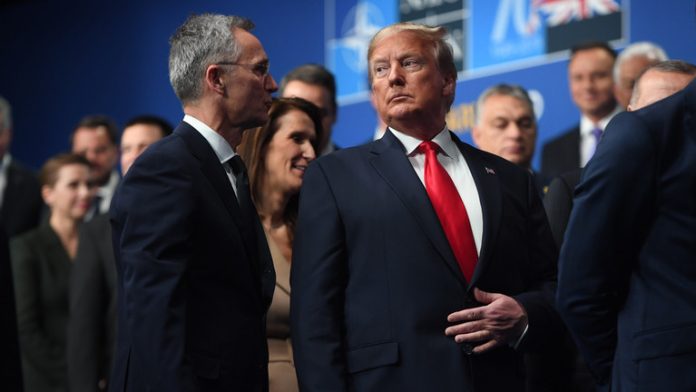
Trump threatened to pull US out of NATO: Ex-bloc chief

In excerpts from his upcoming memoir On My Watch, Stoltenberg recalls that ahead of a 2018 NATO summit in Brussels, Trump, then in his first term, complained that the US was paying 80-90% of the bloc’s expenses and wasn’t going to do so anymore, threatening to leave.

“Look, if we leave, we leave. You need NATO, desperately. We don’t need NATO,” Stoltenberg quoted Trump as saying, noting that if the US had withdrawn from the bloc, “the alliance would be dead.”

Trump later reportedly made similar remarks during the summit, stating the US “doesn’t need NATO” and would “do our own thing” unless European members increased military spending to 2% of GDP. He also reportedly threatened to walk out, adding, “There’s no reason for me to be here anymore.”

Trump’s attitude reportedly prompted fears that the bloc could fall apart. Stoltenberg says Germany’s then-Chancellor Angela Merkel and French President Emmanuel Macron tried to calm tensions, while former Dutch Prime Minister Mark Rutte, who now leads NATO, helped persuade Trump to stay by noting that bloc members had increased spending by $33 billion.

Stoltenberg says Trump agreed to remain after being publicly credited for that spending rise.

The former NATO chief wrote that if Trump had walked out, it would’ve made the bloc’s treaty and security guarantees worthless. He also added that the episode highlighted how dependent it was on US participation.


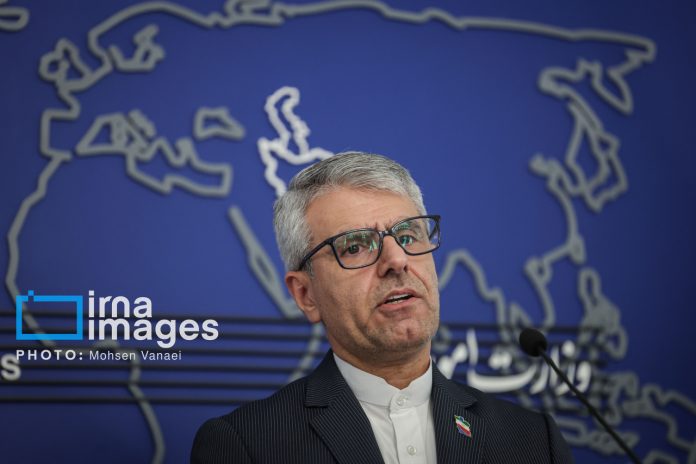
Spokesman: Europe has no authority to comment on Iran’s defense capabilities

Esmail Baghaei

The PGCC — comprising Saudi Arabia, the UAE, Bahrain, Kuwait, Oman, and Qatar — and the EU issued a joint statement on Monday during their 29th ministerial meeting, calling on Iran to halt its missile program and to cooperate with the International Atomic Energy Agency (IAEA).

In response, spokesperson Esmail Baqaei on Tuesday dismissed the joint statement’s “baseless and interventionist claims,” including the UAE’s repeated assertions regarding Iran’s sovereignty over the Greater Tunb, Lesser Tunb, and Abu Musa islands.

He condemned the “unwarranted interference” in Iran’s defense and nuclear affairs and warned against divisive European policies in the Persian Gulf.

Baqaei reaffirmed that the three islands are an inseparable part of Iranian territory, stressing that “repeated baseless claims in political statements have no legal value and cannot change geographical and historical facts.”

He advised southern Persian Gulf states to stop repeating “tired and unfounded accusations” against Iran’s territorial integrity and to focus instead on building mutual trust, strengthening regional friendship, and addressing the greatest threat to peace and stability — the Israeli regime.

Criticizing the “subversive role” of certain European countries such as Germany and France — supporters of “the genocidal Israeli regime,” which remains the only nuclear-armed entity in the region — Baqaei said EU interference in Persian Gulf and Sea of Oman affairs does nothing to resolve regional disputes.

The spokesperson also described the joint PGCC–EU statement on Iran’s defense capabilities as “unwarranted and unacceptable interference in matters related to Iran’s national sovereignty.”

He added: “Those who have turned our region into a vast arsenal of advanced and destructive weapons worth hundreds of billions of dollars — and who, through inaction in the face of an expansionist, genocidal regime or by providing it with comprehensive military and political support, have plunged West Asia into endless wars — are in no position whatsoever to comment on Iran’s indigenous and defensive capabilities.”

Baqaei further expressed regret that PGCC member states, instead of holding the EU accountable for its regional policies, have “provided a platform for its deceptive blame-shifting.”