Tuesday, December 30, 2025
Home Blog Page 1364

Hezbollah chief says resistance front foiled US Middle East project

Seyyed Hassan Nasrallah

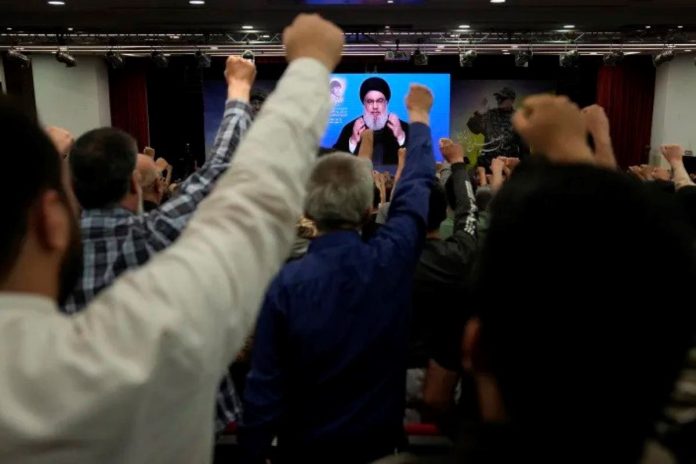
Speaking at a televised address on Wednesday, Nasrallah said the 2006 war was a key part of America’s Greater Middle East project, which he said aimed to solidify Israeli dominance over the region under American influence.

Nasrallah made the address on the 17th anniversary of the 2006 Israeli war on Lebanon.

He stated the victory of the resistance front in 2006 also foiled the so-called Greater Israel Project and put the regime on the decline.

Nasrallah added the 2006 war’s goal was to crush the Lebanese resistance and to subjugate Lebanon, but such goals were never realized and Israelis and the Americans both admitted the failure of the war on Lebanon on several occasions.

He said the 2006 victory marked a defining moment in Lebanon’s history, shaping its destiny in the region for the years to come, adding that the victory also laid the groundwork for putting up deterrence that continues to exist to this day and has led to the erosion of Israeli deterrence.

Commenting on the recent desecration of a copy of the Holy Qur’an in Sweden, the Hezbollah leader stressed that the act of sacrilege was committed with the goal of “sowing division between Muslims and Christians.”

The perpetrator of the heinous act of profanity “is in liaison with [the Israeli spy agency] Mossad and sought to create division between” the people of the two faiths, Nasrallah stated.

The Christian clergy, however, stepped in and condemned the sacrilege, thus contributing much towards the prevention of sedition, he noted.

The Hezbollah chief, meanwhile, called on the people of the region to demand their respective governments to adopt more decisive stances on the issue of the desecration of the Muslim holy book.

Nasrallah added that Israel had suffered defeat in its recent operation against the city of Jenin and its refugee camp in the northern part of the occupied West Bank.

“The goal sought by the Israelis in the aggression against Jenin was [creation of] deterrence,” he continued.

“However, the Israelis obtained a very opposite image,” said the Hezbollah leader, noting that “continuation of the resistance’s operations in the West Bank serves as the evidence of the defeat of the [Israeli regime’s] incursion in Jenin,” he stated.

Nasrallah, meanwhile, condemned the Israeli regime’s setting up of barbed wires and erection of a wall in the border village of Ghajar, considering the move to be a “re-occupation” of the village in question.

“Sovereignty [over the village] cannot be divided up,” he said, warning that the resistance would not remain silent on the issue.

“The village is part of Lebanon’s soil and should return to Lebanon without any condition,” he added.

Live Update: Russia’s “Special Operation” in Ukraine; Day 505

Russia Ukraine War

Russia could withdraw from Black Sea grain deal: Putin

President Vladimir Putin has said that Russia could withdraw from the Black Sea grain deal until other sides fulfil their promises.

The deal, which allows for the safe export of Ukrainian grain and fertiliser from Black Sea ports, is due to expire on Monday. Moscow has repeatedly threatened to block its extension over aspects of its implementation affecting Russia’s own exports.

Putin, speaking on state television on Thursday, stated that Russia was in contact with the United Nations on the matter but said he had not seen a message addressed to him from the UN Secretary General suggesting a compromise to salvage the deal.


New weapons supply to Ukraine only escalates conflict: Putin

Russian President Vladimir Putin has said that supplies of new weapons to Ukraine would change nothing on the battlefield, but would only further escalate the conflict there.

Putin, speaking on state television on Thursday, also stated tanks provided by Western powers to Ukraine would be a “priority target” for Russian forces fighting there.

He reiterated his opposition to Ukraine joining NATO, saying this would threaten Russia’s own security.


Lavrov discusses Ukraine with Chinese diplomat

Russian Foreign Minister Sergey Lavrov says he discussed Ukraine with China’s top diplomat, Wang Yi, on the sidelines of an Association of Southeast Asian Nations (ASEAN) meeting in Indonesia.

“An exchange of views took place on the current situation around the Ukrainian crisis. Attention was paid to assessing the efforts of the international community to launch a peaceful negotiation process on Ukraine,” the ministry said in a statement.


EU to help UN and Turkey in brokering grain deal

The European Commission is helping the United Nations and Turkey try to extend the Black Sea grain export deal, which could expire on Monday unless an agreement is negotiated.

Anonymous sources familiar with the discussions told the Reuters news agency that the EU is considering connecting a subsidiary of the Russian Agricultural Bank (Rosselkhozbank) to the international payment network SWIFT to allow for grain and fertilizer transactions.

An EU spokesperson said the commission’s priority is to ensure that Ukrainian grain can reach the world market and it calls on all parties to extend the deal. Heavily sanctioned Russia has baulked at renewing it.

“We are, of course, open to explore all solutions that contribute to our objective whilst continuing to ensure that Russia’s ability to wage war in Ukraine is hampered as much as possible,” the EU spokesperson said.


Biden: ‘No one can join NATO while a war is going on’

US President Joe Biden predicts Ukraine will join NATO and Putin will eventually decide it is not in the interests of Russia to continue the war.

Ukraine’s NATO membership, though, must be timed right, he said.

“No one can join NATO while a war is going on” because it would guarantee a third world war, Biden added.

Biden made the comments at a news conference with Finnish President Sauli Niinisto in Helsinki after a US-Nordic summit.


Ukraine’s allies pledge $1.68bn in military aid: Defence minister

Ukraine’s allies have pledged more than 1.5 billion euros ($1.68bn) in military aid for Kyiv during a two-day NATO summit this week, Defence Minister Oleksii Reznikov says.

“Meetings in Vilnius were very productive,” Reznikov wrote on Twitter.

“Ukraine will receive over €1.5 billion in military aid from its international partners,” he added.

Among those that pledged aid was Germany, which plans to send a 700-million-euro ($785m) aid package, which he said included 25 Leopard 1A5 tanks.

Reznikov also hailed aid packages from France, Britain, the Netherlands, Canada and Norway and from non-NATO member Australia.

NATO leaders said Ukraine should be able to join the military alliance at some point in the future.


US President Biden to meet Nordic alliance after NATO summit

US President Joe Biden held talks with Nordic leaders at Finland’s presidential palace, visiting NATO’s newest member a day after a summit in Lithuania.

Biden travelled to Finland to participate in a US-Nordic summit with the leaders of Finland, Sweden, Denmark, Iceland and Norway.

Finland’s decision to join NATO broke with seven decades of military non-alignment after Russia invaded Ukraine last year.

Ahead of a bilateral meeting with Finnish President Sauli Niinisto, Biden hailed Finland as an “incredible asset”.

“I don’t think NATO has ever been stronger,” he told reporters at the palace, adding, “Together we’re standing for shared democratic values.”

Niinisto said Finland’s NATO membership heralded “a new era in our security”, and applauded Biden for “creating unity” at the Vilnius summit.


Ukrainian general confirms that Kyiv has received cluster munitions from US

A Ukrainian general confirmed to CNN Thursday that Ukraine has received controversial cluster munitions from the US, after President Joe Biden said last week that he had taken the “difficult decision” to approve their transfer to Ukraine.

“We just got them, we haven’t used them yet, but they can radically change [the battlefield],” Brig. Gen. Oleksandr Tarnavskyi, commander of the Tavria Joint Forces Operation, said in an interview Thursday with CNN’s Alex Marquardt.

“The enemy also understands that with getting this ammunition, we will have an advantage. The enemy will give up that part of the terrain where it is possible to use this,” he added.

The arrival of the American clusters has not been previously reported.

Senior leadership will decide on the “areas of territory where it can be used,” Tarnavskyi said, noting that “this is a very powerful weapon.”

Tarnavskyi emphasized the restrictions on the use of clusters, saying their use is prohibited in heavily populated areas, even if occupied by Russian forces. The US has said they have written assurances from Ukraine that they will not be used in areas with civilians and that their use will be tracked for eventual de-mining operations.

“The Russians think that we will use it on all areas of the front,” he continued, adding, “This is very wrong. But they are very worried.”

The US said the decision to provide Ukraine with cluster munitions is due to Kyiv’s low supply of standard artillery rounds. The supply of clusters is “temporary,” according to US National Security Advisor Jake Sullivan.

“Once [production] hits a level where unitary round production can satisfy Ukraine’s needs, then there will be no need to continue giving cluster munitions,” he said Tuesday, declining to provide a timeline.

Cluster munitions are canisters that carry tens to hundreds of smaller bomblets, which break open above an intended target, dispersing the bomblets over that area. They are fused by a timer to explode closer to or on the ground, spreading shrapnel that is designed to kill troops or take out armoured vehicles such as tanks.

The weapons have been banned by more than 100 nations, because the bomblets they disperse fall over a wide area, posing a risk to non-combatants. Russia has, however, used these munitions during its invasion of Ukraine.


“No doubt” Ukraine will join NATO after war: US defense chief

US Secretary of Defense Lloyd Austin said Thursday he has “no doubt” Ukraine will join NATO once its war with Russia is over.

“We heard just about every country in the room say as much,” Austin said in an interview with CNN’s Wolf Blitzer in Vilnius following the NATO summit in the Lithuanian capital.

Austin stated that there is “still work to be done” in bringing Ukraine’s equipment and training up to NATO standards.

While “we are doing this work now as they fight this war,” he added, “there is more that will need to be done to ensure that they have a full complement of capabilities.”


1 person dead and 2 injured as Ukraine intercepts Russian UAVs over Kyiv region: Local officials

One person was killed in Kyiv after Ukrainian air defenses intercepted unmanned aerial vehicles (UAVs) over the region early Thursday morning, Mayor Vitali Klitschko said.

According to Klitschko, the body of a man was found while responders were extinguishing an apartment building fire in Kyiv’s Podil district.

Air defense systems intercepted Russian airstrikes launched early on Thursday morning, the Kyiv Regional Military Administration wrote on Telegram.

“Air defense is operating in the region, on the outskirts of Kyiv city. Stay in shelters until the air raid is over!” stated Serhii Popko, the head of the Kyiv city military administration.

Klitschko reported damage in several parts of the capital and said two injured people in the Darnytsia district have been hospitalized.


“We have removed any doubts” that Ukraine will join NATO: Zelensky

President Volodymyr Zelensky has expressed optimism about Ukraine’s path to becoming a member of NATO.

“It is very important that during these two days of the summit we have removed any doubts and ambiguities about whether Ukraine will be in NATO. It will be! For the first time, not only do all allies agree on this, but a significant majority in the alliance is vigorously pushing for it,” he said in his nightly address on Wednesday following the NATO summit in Vilnius, Lithuania.

At the summit, US President Joe Biden and G7 leaders unveiled a substantial show of support for Ukraine, offering a joint declaration of support for Ukraine aimed at bolstering the war-torn country’s military capability.

“These are concrete security guarantees that are confirmed by the top 7 democracies in the world. Never before have we had such a security foundation,” Zelensky added.

In his address, he also thanked the countries that are set to begin training Ukrainian pilots on F-16 combat aircraft.


Russia says NATO has returned to its “Cold War schemes” following summit in Lithuania

The Russian foreign ministry announced on Wednesday that the results of the NATO summit in Vilnius, Lithuania, demonstrate that the military alliance has “finally returned to the Cold War schemes.”

“The ‘collective West’ led by the United States is not ready to put up with the formation of a multipolar world and intends to defend its hegemony by all available means, including military ones,” the ministry said in a statement.

“NATO’s attempts to cover up their aggressive aspirations and actions with the UN Charter do not stand up to scrutiny. The Alliance and the world organization have nothing in common,” it added.

In the same statement, the foreign ministry stressed Moscow will carefully analyze the results of the summit in Vilnius and respond in a timely manner “using all means and methods at our disposal.”

The ministry also vowed that Russia would continue to strengthen its military and defense system.


Biden: “Our commitment to Ukraine will not weaken”

Speaking at the end of the two-day NATO summit in Vilnius, Lithuania, US President Joe Biden reaffirmed US support for Ukraine.

“We will not waiver. I mean that. Our commitment to Ukraine will not weaken. We will stand for liberty and freedom today, tomorrow, and for as long as it takes,” he said Wednesday.

“The United States has built a coalition of more than 50 nations to make sure Ukraine defends itself, both now and is able to do it in the future as well,” he added.

Biden remarked that despite nearly a year and a half of war, Ukraine remains free and independent. He also emphasized that everyone wants the war to end on just terms which withhold the basic principles of the United Nations charter — sovereignty and territorial integrity.

NATO has remained unified throughout the war in Ukraine, while Russian President Vladimir Putin was betting the conflict would break the alliance apart, Biden stressed.

BHe emphasized that the alliance is “more vital to our shared future”, adding Putin “thought our unity would shatter at the first testing. He thought democratic leaders would be weak. But he thought wrong”.

The US and NATO “stepped up” together, Biden said, pointing to the beginning of the war when he said he was in constant contact with other world leaders in the alliance and the European Union. He added from then on, allied countries have continued to support Ukraine as they “defend their integrity and sovereignty.”


Russia is militarily and politically fragile: French president

Russia is currently “fragile, militarily and politically,” French President Emmanuel Macron said Wednesday in a speech at the NATO summit in Lithuania.

He said there are “signs of division in Russia,” seemingly referring to the recent short-lived rebellion led by Yevgeny Prigozhin’s Wagner group.

The French president pledged to “be there” for Ukraine, even if the war is a “war of attrition,” adding that the support for Kyiv is sustainable.

However, the French leader said NATO allies must do more for Ukraine, adding that the time to do so is now, during the Ukrainian counteroffensive.


UK is not “Amazon” for weapons deliveries: British defense secretary says he told Ukraine last year

British Defence Secretary Ben Wallace said on Wednesday that Kyiv’s allies “want to see gratitude” from Ukraine for their support while recalling how he told Ukrainian officials during a visit to Kyiv in June of 2022 that the UK was not “Amazon,” the global retail site, when he was given a list of weapons demands.

“There is a slight word of caution here which is that, whether we like it or not, people want to see gratitude,” Wallace told reporters on the sidelines of the NATO summit in the Lithuanian capital of Vilnius.

“I said to the Ukrainians last June, when I drove 11 hours to be given a list, I’m not Amazon,” he said.

Wallace stated ally countries are helping Ukraine, not just for their sovereignty, but also for wider freedoms. He added Ukrainian officials sometimes need to persuade officials to authorize that aid, like lawmakers on Capitol Hill in the United States, for example.

“You’ve got to persuade doubting politicians in other countries that it’s worth it and it’s worthwhile and they’re getting something for it,” Wallace continued, adding, “And you will sometimes hear grumbles not from the administration in the American system, but you’ll hear from lawmakers on the Hill: ‘We’ve given $83 billion worth or whatever, you know, we’re not Amazon,'” again referring to the online store.

President Volodymyr Zelensky, in response to the defense secretary’s comments, said, “We have always been very grateful to the United Kingdom, always grateful to the prime minister, or perhaps I should say prime ministers, and to the defense minister, Mr. Wallace.”

“I just don’t really understand what the issue is. We are grateful, Britain is our partner. Maybe the minister wants something special?” he added.


Ukrainian official says G7 declaration is an “important victory” for country

The head of Ukrainian President Volodymyr Zelensky’s office, Andriy Yermak, described the NATO summit in Lithuania as successful for Ukraine, stressing that the Group of 7 declaration of support is an “important victory.”

Yermak stated in a Telegram post that the NATO summit had been “not easy, but successful.”

“We have powerful defense agreements and a Joint Declaration of Support for Ukraine agreed by the G7 countries. It is an important step towards the conclusion of a system of bilateral security agreements between Ukraine and individual guarantor countries on security guarantees for our country,” he said.

The G7 declaration was “an important victory for Ukraine on its way to NATO … that takes into account both the needs of Ukraine and the capabilities of the Allies,” Yermak added.

“The next step is to conclude a system of bilateral security agreements between Ukraine and individual guarantor countries,” he added.

Yermak also pointed to the creation of mechanisms for collecting reparations and prosecution of those responsible for alleged war crimes against Ukraine.

“It is important that we win the war and sign security guarantees for our country before the NATO summit in Washington in 2024. They will be valid until we join NATO,” he concluded.

What’s in the G7 declaration: The document outlined that G7 countries will work with Ukraine on “bilateral, long-term security commitments and arrangements” toward three goals, including:

  • “Ensuring a sustainable force capable of defending Ukraine now and deterring Russian aggression in the future”
  • “Strengthening Ukraine’s economic stability and resilience”
  • “Providing technical and financial support for Ukraine’s immediate needs stemming from Russia’s war as well as to enable Ukraine to continue implementing the effective reform agenda”

Terrorist arrested in Iran’s Sistan and Balouchestan Province

Iran Police

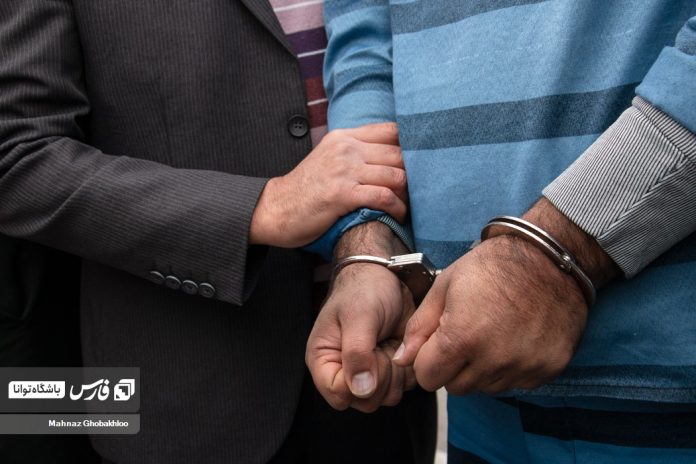
The terrorist was identified and arrested by the operatives of the Islamic Revolurion Gaurds Corps’ intelligence in Sistan and Balouchestan Province.

Jaish al-Adl is the same terror group that carried out a deadly attack in the provincial city of Zahedan several days ago.

The attack on a police station killed two security forces. All four attackers were also killed in the incident that was claimed by the group.

Jaish al-Adl is responsible for a series of terrorist attacks in Iran that killed a number of people.

The deadliest attack happened in 2016 and targeted a bus carrying Iranian soldiers in Sistan and Balouchestan Province, killing 27.

The terror entity openly says it is a separatist group and seeks to cede Sistan and Balouchestan from Iran.

Advisor to Iran Leader says Russia’s support of Arab states’ claim about Iranian islands shows “naiveté”  

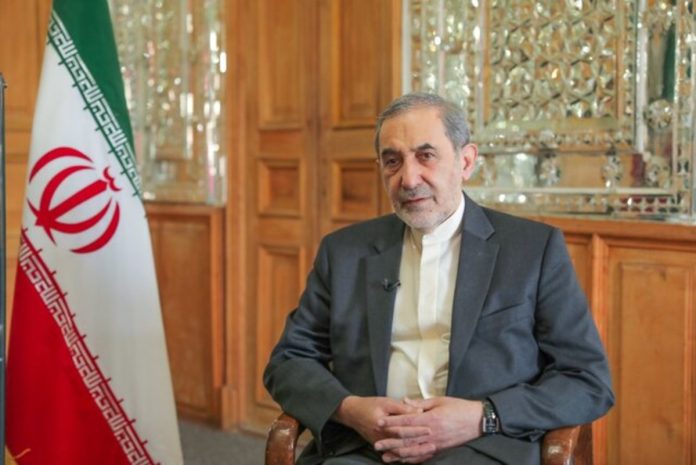
Ali Akbar Velayati

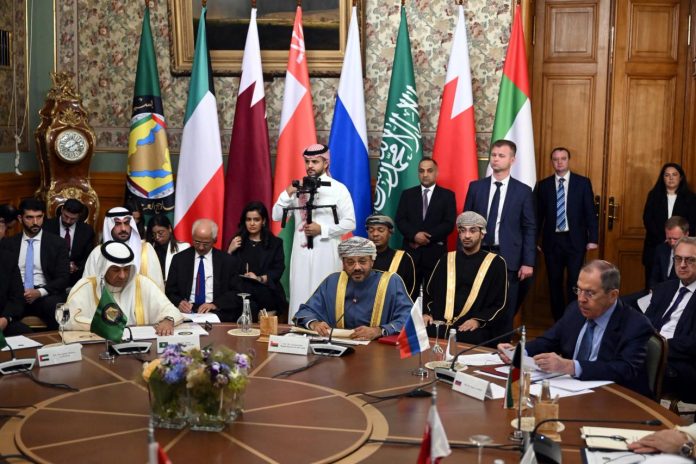
Ali Akbar Velayati was referring to the joint statement of the Persian Gulf Cooperation Council member states and Russia in support of the United Arab Emirates’ claim to the islands.

Addressing Russia, Velayati said, “Don’t be naïve”.

He further cited the historical records that confirm Iran’s sovereignty over the islands, saying the Russian’s fell into the same trap that the Chinese did several months ago.

Velayati noted that the Russians think they will have profitable economic ties with the Emiratis if they support such irrelevant claims.

He said the Russians just do not have deep understanding of the regional countries.

Iranian MP says Russia “made a mistake” over Persian Gulf islands

Russia PGCC

Vahid Jalalzadeh, the chairman of the National Security and Foreign Policy Commission of Iran’s parliament, told Hamshahri Online that Russia made a mistake like China did, in an apparent reference to a similar move by Beijing several months ago.

He noted that a similar mistake by China undermined the Iranian public opinion’s trust in Beijing.

The Iranian MP noted that the international community is now pressuring Iran to stop supporting Russia and “our backing for Moscow is conditional”.

The MP added that Russia has a powerful foreign diplomacy apparatus and “we did not expect them to give in to such illegal demands”.

Jalalzadeh described the statement by the (P)GCC in favor of the United Arab Emirates as hackneyed and illegal.

He said such communiqués are not new, but what is new is the unfriendly stance of some other governments.

The lawmaker said the Iranian parliament will definitely ask Foreign Minister Hossein Amirabdollahian to give an appropriate response to such acts.

Jalalzadeh stressed that Iran will never negotiate with anyone over its territory and does not care about such claims.

Iran showcases indigenous agricultural and mapping drones during Raisi’s visit to Kenya

Iran Drone Kenya

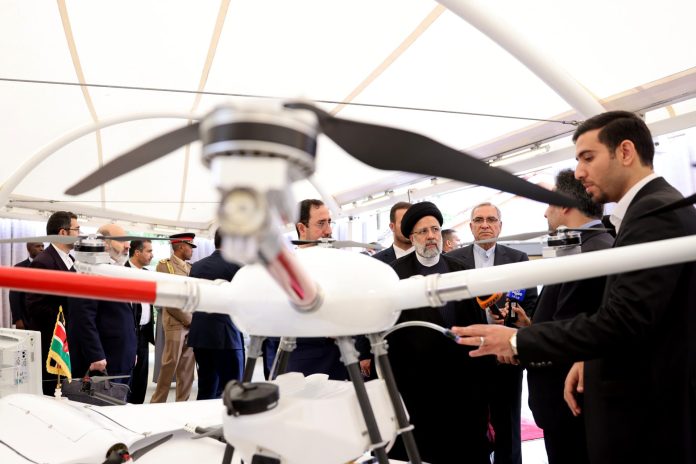
President Raisi and his accompanying delegation on Wednesday visited Iran’s House of Innovation and Technology in the Kenyan capital of Nairobi, as one of the leading centers in the development of the export of knowledge-based products.

During the visit, the Pelikan multipurpose agricultural drone and Dorna mapping drone, both manufactured by Iranian knowledge-based companies, were introduced to Kenya.

More than 35 Iranian knowledge-based companies in this center have introduced and exported their products to Kenya in the fields of medicine, medical equipment, agriculture, construction and architecture.

The Iranian president arrived in Kenya on Wednesday on the first leg of his three-nation tour of Africa aimed at expanding ties and signing multiple economic and cooperation agreements.

In the presence of President Raisi and his Kenyan counterpart William Ruto, Iran and Kenya signed five memoranda of understanding (MoUs).

Raisi highlighted the existing capacities to boost ties with Kenya and said the two countries aim to materialize a 10-fold growth in their economic cooperation.

The Iranian president’s three-day trip to Africa will also take him to Uganda and Zimbabwe.

Iraq says to pay for Iranian gas with crude oil

Iraq Gas

“The agreement aims to address the gas supply crisis for power plants, while tackling payment issues and complications arising from US sanctions,” said the statement from the prime minister’s office.

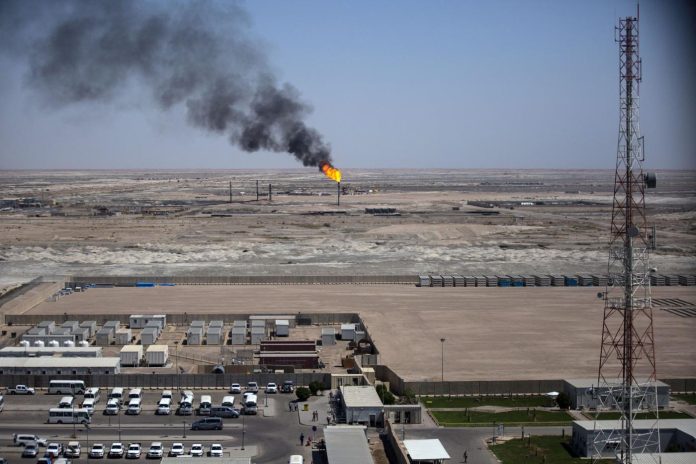
Iraq is reliant on Iranian gas for a third of its energy needs, but is unable to directly pay for it as a result of US sanctions on Iran, forcing the country to resort to a complicated mechanism for transferring funds.

According to the mechanism, payments were to be held in a bank account and – following approval from Washington – be used by Tehran to fund imports of food and medicines, a method which left Iraq in heavy arrears.

Earlier this month, Iran halved its supply of gas to Iraq because of unpaid bills of more than $12 billion, according to Sudani.

Speaking in a televised address on Tuesday, he stated that “as the American side did not give the necessary permission for the transfer of funds… the supply of Iranian gas was stopped.”

“Because of the transfer mechanism and its complexity, we were unable to obtain authorisation to transfer these outstanding payments so our Iranian neighbour could continue to supply us” with gas, he continued.

He added, however, that a recent payment to Iran of around $1.9 billion had been made and that as a result of Tuesday’s agreement “we will be able to guarantee that the gas will continue to flow.”

In recent years, Iraq has seen widespread unrest and demonstrations, triggered in large part by failing energy supplies during intensely hot summers.

Corruption, crumbling infrastructure and continuing instability after decades of conflict and sanctions have left the country’s energy sector in a dire state, despite having some of the world’s largest oil reserves.

Baghdad has recently also been exploring several possibilities for reducing reliance on Iranian gas, such as imports Qatar and recovering flared gas from oilfields.

There has also been criticism of Washington for its refusal to allow the release of funds to Iran.

On Sunday, The Coordination Framework – a coalition of Iran-linked Shia parties that form the largest bloc in parliament – called on the government in a “to contact the US side and urge the immediate unlocking of the unpaid bills related to Iranian gas imports”.

Russia dismisses Ukraine’s claim Wagner fighters reached nuclear base

Wagner Group
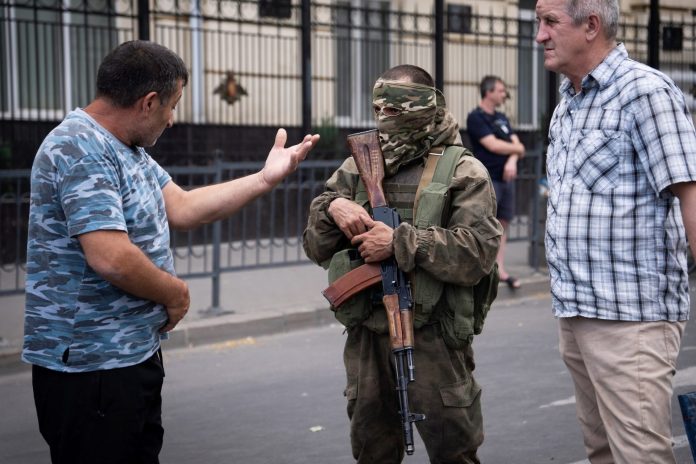
A local resident speaks with a member of Wagner Group in Rostov-on-Don, on June 24, 2023.

“The Kremlin has no such information and it looks like a new piece of fake news,” the Russian presidential spokesman said, commenting on the corresponding claim by Ukrainian Military Intelligence Head Kirill Budanov.

Budanov claimed in an interview with the news agency Reuters that Wagner fighters had allegedly reached a high-security facility but could not get inside.

Wagner fighters staged a mutiny attempt on June 23-25. The Telegram channel of Wagner private military company founder Yevgeny Prigozhin posted several audio records with his statements on the evening of June 23, in which he claimed that strikes had allegedly been delivered against his formations and accused the country’s military leadership of that. The Russian Defense Ministry dismissed this information as false.

Chairman of the State Duma Defense Committee Andrey Kartapolov said that before the mutiny attempt Prigozhin refused to sign a contract with the Defense Ministry, following which he was notified that the Wagner group would no longer participate in the special military operation in Ukraine.

The units of the Wagner private military company that supported Prigozhin moved towards the southern city of Rostov-on-Don and Moscow. On the evening of June 24, Belarusian President Alexander Lukashenko held negotiations with Prigozhin, following which the Wagner fighters agreed to return to their field camps.

Later, the Kremlin announced that Prigozhin “will depart for Belarus” while Wagner fighters would escape persecution.

Traditional Iranian medicine: A solution for a healthy lifestyle

Traditional Iranian medicine

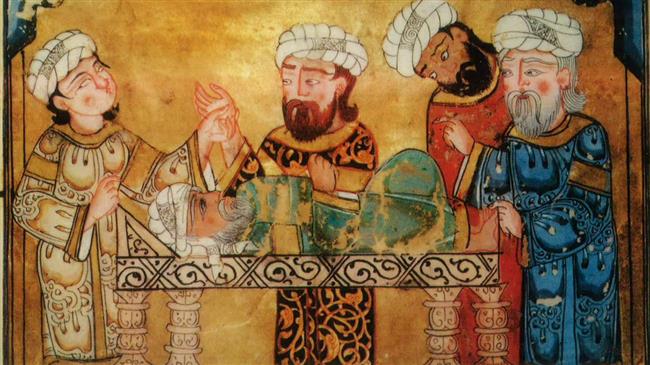
Given the wide use of traditional and complementary medical services all over the world, as well as the popularity of traditional  medicine with different strata of the Iranian society and its rich historical and cultural background, we at IFP decided to introduce traditional medicine and its place in the Iranian society.

Therefore, first of all, we will give a general outline of this traditional practice, and from now on, we will regularly offer some general recommendations and solutions of Iranian traditional medicine.

In this school of traditional medicine, maintaining health is prioritized over treatment, and the correct principles of lifestyle are presented depending on conditions of each person.

Being one of the most important cultural and civilization works of Iranians from ancient times to date, traditional Iranian medicine is of interest to many people and healthcare sector experts.

Traditional drugs have fewer side effects compared with chemical ones. But this is only one reason why Iranian traditional medicine has become so popular today.

Traditional Iranian medicine

Iranian medicine is a holistic school, which means that in order to correctly diagnose the disease and provide the appropriate treatment, the health of all parts of the body, genetics, living conditions, mental characteristics, age, geographical conditions, etc., must be taken into account to identify the factors that disturb the physical balance of the patient.

In traditional medicine, to treat the disease, the lifestyle and especially the nutrition of the patient is corrected in the first stage.

This done, drug and medical treatment (called therapeutic methods done by hand) such as massage are used to get the desired result. Drug therapy in this school is done very cautiously contrary to what many of self-styled practitioners thereof do.

Basics of traditional Iranian medicine

The foundations of traditional Iranian medicine build on the six principles of health: Air, drinks and food, sleep and wakefulness, movement and stillness, retention and vomiting (retention means the art of keeping what the body needs, and what, if lost due to negligence, illness etc., damages physical health.

Vomiting is the opposite of retention and it means the art of cleaning the body and the mental state of a person from what is harmful.)

In order to have a healthy life, it is necessary to observe the six principles of traditional medicine. Deficiency in any of them will cause damage to health.

Another principle of traditional medicine is the recognition of four mucus. Mucus is a fluid which is moist. This substance is made in the first stage of food digestion and after that, it flows in the veins.

The four mucus in traditional medicine are: Blood, phlegm, melancholia and bile.

The key to health is balance between the four mucus. Factors such as seasons, nutrition, weather, gender, etc. can affect the mixture. Hence, each type has its own unique characteristics.

Blood is about spring and represents passion and childhood. The element of air is directly linked to blood.

Bile is related to summer and represents anger and youth. The element of fire is directly linked to bile.

Melancholia is about autumn and represents sadness and middle age. Earth is the natural element related to melancholia.

Phlegm is related to winter and the old age and it represents lethargy in the future. The natural elements related to phlegm is water.

Moreover, sometimes mucus disorders vary in different body organs. For example, a person may have a stomach with a predominance of blood and a heart with a predominance of melancholia, which ought to be diagnosed by a doctor.

Difference between mucus and temperament in Iranian medicine

One should note that mucus and temperament are two different concepts. In fact, temperaments are defined based on mucus but the six principles that are proportionate to the temperament of each person must be followed properly to maintain the balance of the body.

Excess or deficiency in mucus causes imbalance in the body and predictable changes will occur there.

Sometimes, the dominance of mucus or bad temper or both of them causes a disease.

Knowledge of temperaments in Iranian traditional medicine

Knowledge of temperaments is a key topic in traditional medicine. By knowing the temperament correctly, one can make a sound diagnosis about the cause of some diseases and the type of treatment. The type of nutrition, the amount of rest and the psychological states of a person are, among others, directly related to his mood.

A person’s appearance such as skin color, hair condition, hair growth rate, body muscle size, mental states, etc. can be effective in recognizing their mood. In addition, paleness or flushing of the face, lack of sleep, lethargy, short temper, facial swelling, etc. are possible symptoms of a bad mood that should be treated.

Everything in our surroundings including humans, animals, inanimate objects, etc. have temperament.

The knowledge of mood helps one maintain the balance in the soul and body. This is done through choosing a diet proper for that mood.

Knowledge of temperament tells us that all foods are classified according to warmth, coldness, wetness, or dryness.

Among them, the four main moods are: warm and wet, warm and dry, cold and wet, and cold and dry. In our next edition, we will bring you more about the specifications of each temperament.

Related Article:

UNSC rejects Russia-proposed resolution on extending aid mechanism in Syria

Syria Damascus

The draft was supported by Russia and China. The United Kingdom, the United States, and France voted against it. The rest abstained.

Earlier in the day, Russia vetoed a draft resolution initiated by Switzerland and Brazil envisaging a nine-month extension of the operation of the only checkpoint at Bab al-Hawa on Syria’s border with Turkey.

The cross-border aid mechanism has been in place since 2014.

The cross-border aid mechanism in Syria is being used by the West to provide for terrorists in Idlib, Russian Permanent Representative to the United Nations Vasily Nebenzya said on Tuesday.

“You are completely giving yourself away by calling what the resolution must contain by definition concessions to Russia and Syria. It simply reveals your true attitude to the cross-border mechanism you want to use only to support terrorists nesting in Idlib,” he added.

Russia will support only its version of an extension of the cross-border aid mechanism in Syria, and there will be no technical extension, Nebenzya stated.

“The only way out of the deadlock is by supporting our draft, which was put to a vote after the Swiss one and offers practical measures to improve the cross-border aid mechanism. I would like to warn that if our draft is not supported, the mechanism will have to be shut down. In the current situation, we will not support a technical extension for any term,” he continued.