Tuesday, December 30, 2025
Home Blog Page 135

Iran undermines UN snapback sanctions as ‘illegal,’ vows non-compliance

He said Iran would not comply with related resolutions, including demands to suspend uranium enrichment, which he asserted remained protected under international law.

Speaking during a parliamentary session marking the anniversary of Iran’s 1980-88 war with Iraq, Ghalibaf said Russia and China, as two permanent members of the UN Security Council, have publicly rejected the legality of the snapback process. Therefore, he added, no country is obligated to follow the revived sanctions.

He warned that Iran would deliver a “serious and reciprocal response” if any state acted against Tehran under the “illegal resolutions.”

The speaker also scolded the three European signatories to the 2015 nuclear accord, Britain, France, and Germany, for triggering the mechanism, saying they “will see Iran’s reaction.”

Ghalibaf emphasized that Iran has pursued diplomacy to resolve disputes but insisted negotiations without strengthening national power only serve as tools of pressure.

He pointed out that maintaining deterrence through military capability and national unity remains the primary safeguard of Iran’s security.

Top military advisor says Iran should join Saudi-Pakistan defense pact for regional cooperation

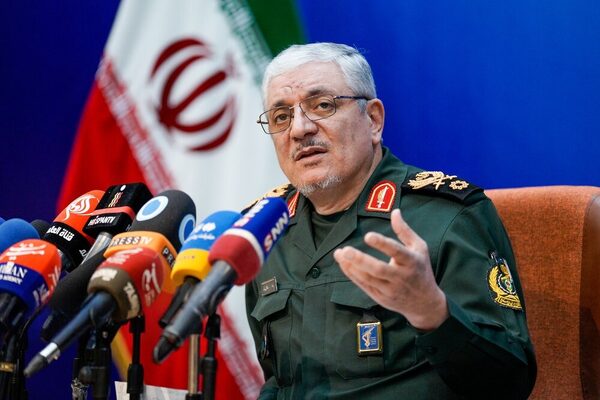
Major General Yahya Rahim Safavi

Major General Yahya Rahim Safavi, senior advisor to Iran’s Leader, said in a televised interview that Tehran should actively pursue participation in the pact, which Islamabad has indicated is open to additional members.

He suggested Iran, Saudi Arabia, Pakistan, and Iraq could work toward a collective security arrangement, while noting that external influence, particularly from the US, remains a downside in such agreements.

Reflecting on Iran’s 12-day conflict with the US-Israeli alliance in June, General Safavi clarified Iran had launched more than 500 long-range missiles during the fight and shifted the balance of power after initial setbacks.

He acknowledged weaknesses in air defense and intelligence but asserted that international assessments viewed Iran as having achieved victory, since Israel failed to meet its objectives.

General Safavi emphasized that Iran is working to rebuild its defensive and offensive capabilities after the conflict, pledging to strengthen deterrence across military, technological, and intelligence domains.

He underlined that national unity, public resilience, and government management during the conflict contributed to Iran’s performance.

Russia says has no intentions to attack NATO, EU

Addressing the 80th session of the United Nations General Assembly in New York on Saturday, the official dismissed claims made by certain European officials, according to whom the Kremlin is considering attacking NATO in the coming years.

”Russia has not had such intentions,” Lavrov insisted, echoing Russian President Vladimir Putin, who previously described such speculations as “nonsense.”

According to the official, Moscow has repeatedly invited NATO member states to work out “legally binding security guarantees” in Europe, but the West has ignored these overtures.

The Russian diplomat expressed concern over the fact that certain EU and NATO officials “are beginning to seriously talk about a third world war as a potential scenario.”

He accused the Western powers of seeking to impose their unipolar approaches on the entire global community while ignoring other nations’ legitimate interests.

Lavrov also stated that the Russian military never intentionally launches kamikaze drones or missiles toward NATO member states.

Earlier this month, Poland accused Russia of sending a volley of unmanned aerial vehicles into its airspace – an allegation Moscow has denied.

According to subsequent media reports, the drones may have been decoys that strayed off course due to electronic warfare measures.

UN sanctions on Iran come into effect after nuclear negotiations fail

Nuclear Talks in Vienna

The sanctions, which came into effect late on Saturday and three months after Israel and the US bombed Iran, bar dealings related to Tehran’s nuclear and ballistic missiles program and are also expected to have wider effects on its troubled economy.

European and US diplomats stressed immediately after the resumption of sanctions that diplomacy was not over.

The US secretary of state, Marco Rubio, urged Tehran to “accept direct talks, held in good faith”.

He also called on UN member states to “immediately” implement sanctions to “pressure Iran’s leaders to do what is right for their nation and best for the safety of the world”.

The British, French and German foreign ministers said in a joint statement they would continue to seek “a new diplomatic solution to ensure Iran never gets a nuclear weapon”.

They also called on Tehran “to refrain from any escalatory action”.

An 11th-hour effort by Iran’s allies Russia and China to postpone the sanctions until April failed to win enough votes in the security council on Friday, leading to the measures taking effect at midnight on Sunday GMT.

The sanctions are a “snapback” of measures frozen in 2015 when Iran agreed to major restrictions on its nuclear program under a deal negotiated by former US president Barack Obama.

The US already imposed massive sanctions, including trying to force all countries to shun Iranian oil, when Donald Trump withdrew from the accord in his first presidential term.

Iran and the US had held several rounds of Omani-brokered talks earlier this year before they collapsed in June when first Israel and then the US attacked Iranian nuclear facilities.

Tehran won’t yield to coercion: Iran’s FM

Abbas Araghchi

The top diplomat made the remarks in a letter addressed to United Nations Secretary-General Antonio Guterres on Saturday concerning efforts by the UK, France, and the United States to reinstate UN Security Council’s sanctions against the Islamic Republic.

The letter noted how the allies had chosen to go down the path of confrontation rather than cooperation, despite Tehran’s consistently demonstrating its readiness for diplomacy aimed at fair, balanced, and sustainable solutions.

He identified the stubborn approach to be rooted in the countries’ “wrongly assuming that Iran will yield to coercion.”

However, Araghchi asserted that “history has proven this assumption false — and it will do so again.”

“The Islamic Republic of Iran will continue to defend its sovereign rights and interests firmly,” the official added.

“Any attempt to harm Iran will be met with appropriate responses, and full responsibility will rest with those who choose confrontation and pressure over cooperation.”

In August, the European trio triggered the so-called “snapback” mechanism inside a 2015 nuclear deal between Iran and others in order to have the sanctions restored.

The move built upon decades of the countries’ wrongfully trying to accuse Iran of “diverting” its peaceful nuclear energy program, despite lack of any evidence provided by the International Atomic Energy Agency across no less than 15 thorough investigative reports.

On Friday, the US, the troika, and many countries supporting them vetoed a draft resolution submitted by China and Russia aimed at delaying enactment of the “snapback.”

Araghchi reiterated that such attempts were “legally and procedurally flawed and therefore null and void.”

He reminded that the Western states had already forfeited any right to trigger restoration of the sanctions due to their own sheer non-commitment to the nuclear accord.

The foreign minister reiterated Iran’s readiness for diplomacy, but cautioned that any harm inflicted on Iran as a result of the allies’ hostile measures would lead to “appropriate responses” with full responsibility falling on those who opt for confrontation rather than cooperation.

Additionally, the official called on the UN to prevent Western misuse of its mechanisms, saying “no UN resources should be allocated” to revive the sanctions committees or panels that were set up back in 2006 to enforce the economic bans.

Iran urges justice, punishment of Israel over assassination of Nasrallah

Iranian Foreign Ministry

In a statement issued on Saturday, the Ministry of Foreign Affairs of Iran recalled the September 27, 2024, Israeli strike in Beirut that, with advanced US weaponry, resulted in the martyrdom of Nasrallah in the heart of a residential neighborhood.

It described the attack as a blatant violation of international law and the UN Charter, and a clear act of terrorism and assassination targeting an independent UN member state.

The statement stressed that calls to punish the “Zionist criminals” behind this atrocity will remain a lasting demand of regional nations and freedom-seekers worldwide.

Praising Nasrallah’s three decades of leadership, the Foreign Ministry said he played a decisive role in strengthening Lebanon’s deterrence against aggression and occupation. One year on, the ministry added, it has become even clearer that the Israeli regime’s expansionist ambitions, including the so-called “Greater Israel” project, pose the greatest threat to regional stability and security, underscoring the legitimacy and necessity of resistance.

The statement also paid tribute to other figures martyred alongside Nasrallah, including senior IRGC commander General Abbas Nilforoushan and Hezbollah’s Seyed Hashem Safieddine, who dedicated their lives to defending their nations, supporting the Palestinian cause, and confronting the Zionist regime’s genocide and warmongering.

Reiterating its strong condemnation of the assassination, the ministry reminded all governments and the international community of their responsibility to act urgently against the Israeli regime’s aggression and expansionism.

It concluded by affirming Iran’s unwavering support for a strong and dignified Lebanon and called on regional states to recognize the growing dangers posed by the Zionist regime, to back Lebanon’s sovereignty and territorial integrity, and to assist in preserving its stability and national strength.

Putin preparing to attack another European state: Zelensky

Volodymyr Zelensky

Speaking in Kyiv after his meeting with Donald Trump at the UN in New York, the Ukrainian president said Russia was preparing for a bigger conflict.

“Putin will not wait to finish his war in Ukraine. He will open up some other direction. Nobody knows where. He wants that,” he added.

Ukraine’s president noted the Kremlin was deliberately checking Europe’s capacity to protect its skies, after drone sightings in Denmark, Poland and Romania and the violation of Estonian airspace by Russian fighter jets. More drones were spotted on Friday night above a Danish military base, and over a Norwegian base on Saturday.

Zelensky suggested EU governments were struggling to deal with this new and dangerous threat.

Zelensky’s remarks follow what he said were “very nice” talks with Trump on the sidelines of the UN general assembly. After the meeting, the US president stated he believed Ukraine could win back all the territory it has lost since 2022, with the support of Europe and NATO.

Trump also noted Russia’s economy was in big trouble and described its military as a “paper tiger”. Asked to explain this apparent warmer tone towards Ukraine, Zelensky said he had briefed Trump about the realities on the battlefield. He told him Russia’s advances were often fleeting: “It’s not success. It’s temporary presence.”

The US president now had greater “faith” in Ukraine and has discovered that Russia treated him and everyone else with “disrespect”, Zelensky said. He declined to comment on reports that he had asked the White House for US Tomahawk cruise missiles capable of striking Moscow, saying: “It’s a sensitive issue.”

In recent months Kyiv has carried out a series of successful strikes against Russian oil refineries using domestically produced long-range drones. Zelensky added that if the Kremlin tried to destroy Ukraine’s energy infrastructure again this winter its own capital will experience retaliatory blackouts.

Deal reached with Europe on snapback mechanism, but US opposes it: Iran’s president


Pezeshkian noted that he had met with the President of France as well as officials from Norway, Finland, Switzerland, and the President of the European Council, during which he presented Iran’s positions.

“They also expressed dissatisfaction with the current situation,” he said, “but in practice, no action is taken. Dialogue with the Americans, too, was accompanied by constant excuse-making.”

He added that in meetings with think tanks and research centers, it became clear that “the United States does not want a powerful Iran and seeks to gradually weaken us. This requires us to be more vigilant.”

Referring to the nuclear issue and accusations made by some countries, the president stressed: “We have declared our readiness for dialogue and transparency regarding our nuclear program, but the other side, with continuous pretexts, shows no real willingness to resolve the issue.”

Iran security chief warns Israel of “harsh lesson” in the event of a new aggression

Larijani warned Israel against acting “foolishly”, saying that any such action would result in a “harsh lesson”.

At the same news briefing, Larijani praised the initiative of Hezbollah Secretary General Sheikh Naeem Qassem to engage in dialogue with Saudi Arabia.

He described Qassem’s stance as “completely correct” and a step in the right direction and stressed that “today is a day of cooperation”.

Larijani noted that Saudi Arabia is “our brotherly country” and confirmed that consultations are ongoing between Tehran and Riyadh.

He added that both sides share concerns about common adversaries, and that Qassem’s initiative represents a constructive move toward regional stability and the well-being of the people.

EU seeking to develop ‘drone wall’ amid regional airspace violations

Friday’s announcement comes after rogue drones entered Polish airspace on September 10, rattling eastern EU members.

Earlier this week, Denmark closed some of its airports after drones were flown near them, with the country’s Prime Minister Mette Frederiksen warning that hybrid attacks were becoming more frequent.

Although Danish authorities have not concluded their investigations, Frederiksen stressed that Russia was currently the primary threat to European security.

The Kremlin has denied any involvement in the drone incidents in Poland and Denmark.

“The repeated violations of our airspace are unacceptable. The message is clear: Russia is testing the EU and NATO. And our response must be firm, united and immediate,” EU Defence Commissioner Andrius Kubilius said after chairing a virtual meeting of 10 countries on Europe’s eastern flank on Friday.

Kubilius, who called the meeting a “milestone”, added the drone shield could take a year to build, and that envoys from the countries would meet soon to develop “a detailed conceptual and technical roadmap” for the path ahead.

The top priority is an “effective detection system,” he continued.

EU officials say that within the first year, a network of sensors will be developed to better spot drone incursions. The longer-term plan is to build the capabilities to intercept drones.

When drones were detected in Polish airspace earlier this month, NATO jets scrambled to shoot them down with expensive missiles.

Ukraine, which has developed cheaper ways to down drones amid its ongoing war with Russia, also attended the EU talks on Friday.

“The drone wall will create a fundamentally new defence ecosystem in Europe, of which Ukraine is ready to be a part,” Ukraine’s Defence Minister Denys Shmyhal wrote on social media.

Kubilius, speaking to the AFP news agency on Friday, said: “We need to move fast. And we need to move, taking all the lessons from Ukraine and making this drone wall together with Ukraine.”

Estonia, Finland, Latvia, Lithuania and Poland had already been working on a drone wall project. However, in March, the European Commission rejected a joint Estonia-Lithuania request for funds to launch the initiative.

The EU’s executive branch has changed its stance after the recent drone incursions.

Earlier this month, Ursula von der Leyen, the EU Commission president, called for a drone wall to be developed.

Von der Leyen has stated that the EU will spend 6 billion euros ($7bn) on establishing a drone alliance with Ukraine.

The drone wall is expected to be discussed further at an EU summit in Copenhagen next week and at a meeting later this month in Brussels.