Tuesday, December 30, 2025
Home Blog Page 136

UN lists over 150 firms tied to illegal Israeli settlements

The UN human rights office on Friday updated its database, listing 158 firms operating inside settlements deemed unlawful by the International Court of Justice (ICJ).

While most of the companies are Israeli, the list also includes multinationals registered in the United States, Canada, China, France, and Germany.

The report emphasised that businesses have a duty to avoid fuelling abuses.

“Where business enterprises identify that they have caused or contributed to adverse human rights impacts, they should provide for or cooperate in remediation through appropriate processes,” it said.

The update added 68 companies since the last publication in June 2023, and it removed seven firms, including British-registered online travel company Opodo and Spanish-domiciled online travel agent eDreams.

The majority of the other firms were tied to construction, real estate, mining, and quarrying sectors that are central to Israel’s settlement expansion efforts. More than 300 additional firms remain under review.

UN human rights chief Volker Turk stated that the findings highlight corporate responsibility in conflict zones.

“This report underscores the due diligence responsibility of businesses working in contexts of conflict to ensure their activities do not contribute to human rights abuses,” he added.

The review comes amid heightened scrutiny of Israel’s occupation and ongoing apartheid in the West Bank and the ongoing genocide it has been committing in Gaza since October 2023.

In the West Bank, armed Jewish settlers, emboldened by government backing, have terrorised Palestinian communities, killing civilians, displacing families, and grabbing land in what human rights groups describe as ethnic cleansing.

Settlements have been expanding relentlessly since Israel seized the West Bank in the 1967 war, carving up the territory with roads, walls, and checkpoints that keep Palestinians confined and under military rule.

A separate UN Commission of Inquiry this week accused Israel of pursuing a deliberate strategy to forcibly displace Palestinians, entrench Jewish-only settlements, and move towards full annexation of the West Bank.


Iran rejects foreign pressure on missile program

Iran Missile

Brigadier General Reza Talaeinik, spokesperson for the Ministry of Defense, said on Saturday that Iran’s national security and interests form the basis of its missile program.

He rejected US and European demands to limit missile range or restrict development, calling such pressure unacceptable.

“The defensive capacity of the Iranian nation is tied to safeguarding national security,” Talaeinik said, adding that preserving defense capabilities against potential threats is a fundamental principle for Iran.

He added, “No foreign power will be allowed to interfere in determining the scope of our defense requirements.”

His remarks come amid renewed Western efforts to link missile restrictions to broader talks with Tehran.

Ali Larijani, Secretary of Iran’s Supreme National Security Council, recently confirmed that the US has been pressing for missile issues to be included in negotiations, a demand Iran has firmly rejected.

Iran has repeatedly stated that its missile program is defensive in nature and not subject to compromise in diplomatic talks.

‘Intense’ negotiations underway on Gaza: Trump

Donald Trump

“Intense negotiations have been going on for four days, and will continue for as long as necessary in order to get a Successfully Completed Agreement,” Trump wrote on his Truth Social platform.

All countries in the region are participating, the Palestinian resistance group, Hamas, is aware of the discussions, and Israel, including Prime Minister Benjamin Netanyahu, has been informed at every level, he said.

There is more eagerness and goodwill to reach a deal, “after so many decades, than I have ever seen before,” stated Trump, adding that everyone is eager to leave this era of “Death and Darkness” behind.

Taking pride in being involved in the talks, the US president noted: “We must get the Hostages back, and get a PERMANENT AND LONGLASTING PEACE!”

The Israeli army has killed nearly 66,000 Palestinians, most of them women and children, in Gaza since October 2023. Months of air and ground assaults have left Gaza largely uninhabitable, pushing its population into famine.


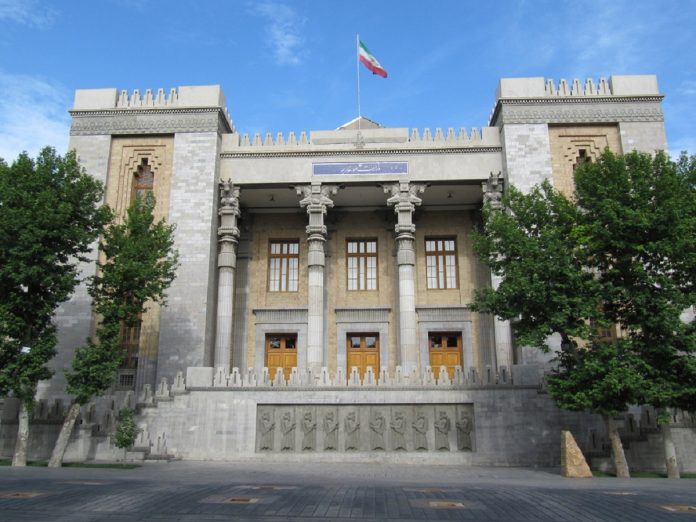
Iran recalls envoys from Britain, France, Germany

Iranian Foreign Ministry

On September 27, the three European countries triggered the “snapback” mechanism in a letter to the UN Security Council — a process aimed at reimposing UN sanctions on Iran that had been lifted under the nuclear deal.

After a 30-day period, this process concluded early Sunday morning, resulting in the reactivation of six previously terminated Security Council resolutions against Iran.

On Friday night, a draft resolution proposed by Russia and China to extend UN Security Council Resolution 2231 for six months failed to pass.

During a Security Council session Friday night, Iranian Foreign Minister Seyed Abbas Araghchi stated that, just as military attacks have failed to achieve their declared objectives, the snapback mechanism will also fail.

Araghchi emphasized that dialogue is the only solution and that Iran will never respond to threats or pressure.


Iranian FM slams US, Europe over UN vote, defends Iran’s nuclear compliance

Abbas Araghchi

Speaking to reporters following the vote on Friday, Araghchi thanked China, Russia, Algeria, and Pakistan for supporting the draft and praised Guyana and South Korea for abstaining rather than opposing it.

He said those countries were “on the right side of history” by choosing diplomacy over confrontation.

Araghchi reiterated that Iran has complied with its obligations under the Nuclear Non-Proliferation Treaty and the Joint Comprehensive Plan of Action (JCPOA), which was unanimously endorsed by Resolution 2231.

He rebuked Washington for undermining diplomacy by withdrawing from the accord in 2018 and pressuring others to follow suit, while faulting European states for failing to deliver on promised commitments.

“The US betrayed diplomacy, but it is the E3 who buried it,” he declared, rejecting claims that Iran violated its safeguards agreements.

Araghchi dismissed the European push to trigger the “snapback” mechanism that would reinstate UN Security Council Resolutions on Iran as “legally void, politically reckless, and procedurally flawed,” insisting that all nuclear-related restrictions under Resolution 2231 will permanently expire on October 18, 2025.

“The only solution is dialogue,” Araghchi concluded, warning that efforts to revive expired sanctions would damage the UN’s credibility and escalate tensions further.

Pezeshkian: Trump’s actions could ‘set fire’ to Middle East

Pezeshkian

“President Trump has said that his administration has come to create peace but the path that they have embarked upon will set fire to the entire region,” Pezeshkian said in an appearance on “NBC Nightly News with Tom Llamas.”

His comments followed remarks he made Wednesday at the United Nations General Assembly, where the Iranian president accused the U.S. and Israel of inflicting a “grievous blow upon international trust and the very prospect of peace in the region.”

“The aerial assaults of the Zionist regime and the United States of America against Iran’s cities, home, and infrastructures [came] precisely at a time when we were treading,” Pezeshkian stated.

Israel deployed warplanes and drones targeting Iranian nuclear sites and key generals and scientists, starting a 12-day war between the two sides in June. The U.S. joined the conflict by bombing three nuclear facilities

The war ended with hundreds of casualties for Iran, including the deaths of military leaders, scientists and civilians. Twenty-eight Israelis died over the course of the war. During his NBC appearance, Pezeshkian noted he sustained a leg injury during the conflict, described as a “hematoma formed in the region of the knee.”

“We dropped the needed liquid and blood and after that, we got over it,” he added.

Pezeshkian’s visit to the U.S. signals Tehran’s attempt to engage in last-minute talks to stop the U.N. from imposing sanctions on the country over its nuclear program. The president told NBC host Tom Llamas that international nuclear inspectors were welcome to come to Iran, adding that he had agreed to allow inspectors from the International Atomic Energy Agency to “come and inspect on the ground.”


Moscow slams ‘reckless’ NATO threats to shoot down Russian fighter jets

Kremlin

Earlier this month, Poland alleged that multiple Russian drones had entered its territory. Estonia made similar claims of airspace violations last Friday, requesting urgent consultations with fellow NATO member states.

Moscow has denied any breaches of the military bloc’s airspace. Responding to the Estonia claim, the Russian Defense Ministry said three MiG-31s were conducting a routine flight from Karelia Region, east of Finland, to an airfield in Kaliningrad Region, a Russian exclave bordering Poland and Lithuania, and that they strictly flew over neutral waters of the Baltic Sea.

When asked to comment on a report by Bloomberg, in which Western diplomats were cited as threatening to shoot down intruding Russian warplanes, Peskov said on Friday that “this is a very reckless and irresponsible statement.”

“Allegations against Russia that its warplanes have violated someone’s airspace are groundless,” the official added, noting that “no credible evidence has been produced” to corroborate the claims.

The Bloomberg report cited anonymous officials as claiming that earlier this week, British, French, and German representatives had held a closed-door meeting with Russian officials in Moscow. According to the publication, the Western diplomats warned that NATO was prepared to shoot down Russian warplanes in the event of airspace violations.

Earlier this week, NATO Secretary-General Mark Rutte stated that he would not rule out such a scenario, but that decisions are made strictly on a case-by-case basis.


Iran FM says snapback vote carries no legal force

The top diplomat made the remarks on Friday, addressing the Security Council after a vote on whether to activate the so-called “snapback” mechanism inside a 2015 nuclear agreement between Iran and others that would return the bans.

The United States and its allies, including the troika, vetoed a draft resolution on the matter as a means of trying to trigger restoration of the sanctions by the weekend.

Araghchi noted how the Islamic Republic had invariably acted in full compliance of the nuclear deal, the Nuclear Non-Proliferation Treaty, and the NPT’s Safeguards Agreement as verified by 15 International Atomic Energy Agency reports.

The compliance, he stated, has rendered all attempts at tarnishing Iran’s peaceful nuclear energy program illegal.

The foreign minister also reminded that the US and the trio have been trying hard to bring pressure to bear on Iran over their false allegations concerning the Islamic Republic’s nuclear program, despite their own numerous violations of either the nuclear accord or the international law to target the country.

He cited the US’s illegal and unilateral withdrawal from the deal in 2018, the E3’s breaking its promise of returning Washington to the accord, and the unlawful and unprovoked American attacks on Iran’s nuclear facilities in June as some examples.

Accordingly, Araghchi described the push to return the Security Council’s sanctions as a “stark abuse of power.”

The Friday vetoes, cast in this context, are likewise “legally void, politically reckless, and procedurally flawed,” he added.

Additionally, the official underlined that October 18 would mark the automatic “Termination Day” under Resolution 2231, which has endorsed the nuclear agreement.

All nuclear-related restrictions “will end permanently” on that day, he underscored.

Araghchi, hence, called on the UN secretary-general “to avoid any attempt to revive sanctions-related mechanisms within the Secretariat.”

The official denounced the US’s actions for “betraying diplomacy,” but called the E3 the actual side responsible for “burying it.”

Araghchi also condemned the Western allies for misrepresenting Iran’s peaceful nuclear program and echoing “the Israeli regime’s baseless allegations.”

He denounced the American attacks on the nuclear sites that took place to boost Israeli aggression against Iran, despite the Islamic Republic’s openness to diplomacy, as an instance where the country’s pursuit of diplomacy had been “met with aggression.”

The West’s actions “obliterated whatever remaining trust” of the Iranian people, he said, urging the Western allies to correct course.

The foreign minister underscored that “Iran will never respond to threats or pressure. We respond only to respect.”

Addressing reporters following the vote, Araghchi said diplomacy “never dies,” but “has become more difficult” in light of the hostile actions taken against the Islamic Republic.

The official pointed to the drawn-out history of the Islamic Republic’s being betrayed by the US, despite giving diplomacy a chance.

“We have had very bad experiences negotiating with the US, and there is no reason to trust America.”

Araghchi cited Leader of the Islamic Revolution Ayatollah Seyyed Ali Khameni as describing negotiations with Washington as a complete dead end.

The Leader “was entirely correct in saying so,” he stated.

The official, meanwhile, praised the countries that had voted in favor of extension of sanction relief – China, Russia, Pakistan, and Algeria – for their “choosing the right side of history” by keeping the door to dialogue open.


Ukraine rules out territorial concessions to Russia

Volodymyr Zelensky

Zelensky made the remarks in an interview with Axios aired on Friday, shortly before he departed the UN General Assembly in New York. The Ukrainian leader reiterated his longstanding position that Kiev would never recognize the loss of territory to Russia.

“We will never recognize these territories that are temporarily occupied by Russia. We cannot do this,” he stated.

Opting for diplomacy to get the territories back instead of sticking to purely military means is regarded as a good “compromise” by the Ukrainian leader.

“If we don’t have power to bring back these territories, so we are ready to speak about it. We are ready to get it back sometime in the future by diplomatic way, not with weapon. And I think this is a good compromise for everybody, is that we have to decide such things now in dialogue and less losses,” Zelensky stressed.

Ukraine lays claims to the Donetsk (DPR) and Lugansk People’s Republics (LPR), Kherson and Zaporozhye regions, as well as the Crimean peninsula. Moscow has repeatedly signaled the status of its new territories is not negotiable and regards them as an integral part of Russia.

Crimea broke away from Ukraine in early 2014 in the aftermath of a Western-backed coup in Kiev that toppled the country’s then president, Viktor Yanukovych, and ultimately triggered a conflict in Donbass. Crimea subsequently joined Russia via a referendum.

The four other regions joined Russia in late 2022 following a series of referendums during which the idea was overwhelmingly backed by locals. While the Russian military has liberated the entirety of the LPR territory, Moscow’s control over other former Ukrainian regions remains partial.


Israel-Syria negotiations collapse: Reuters

Israeli Army

Israel had asked to open a “humanitarian corridor” to Sweida province to deliver aid, but Damascus rejected the request as a breach of its sovereignty, Reuters wrote on Friday. Israeli forces invaded southern Syria after the fall of the Bashar Assad government in December.

According to Syrian and US sources, it was Tel Aviv’s demand that derailed the deal.

Earlier on Friday, Israeli Prime Minister Benjamin Netanyahu announced that the two sides had begun talks.

”Israel’s victories over the Iranian terror axis have opened up possibilities of peace that were unthinkable two years ago. Take Syria, today we have begun serious negotiations with the new Syrian government,” the PM stated.

In recent weeks, Damascus and Tel Aviv had come close to agreeing on the broad outlines of a pact after months of US-brokered discussions. US Special Envoy for Syria Tom Barrack said on Tuesday that they were already close to striking a “de-escalation” agreement.

Under the terms, Israel would stop its attacks while Syria would agree not to place any machinery or heavy equipment near the Israeli border. A demilitarized zone would include the province of Sweida, where hundreds of people from the Druze community were killed in recent months.

The talks come as Syria’s interim president, Ahmed al-Sharaa, whose forces ousted Assad, made a landmark visit to New York for the United Nations General Assembly. He voiced hope for a security agreement, adding that Damascus is not “creating problems for Israel.”

“We are scared of Israel, not the other way around,” he claimed.

Sharaa also downplayed prospects for a more historic agreement in which Syria would recognize Israel.

Tel Aviv, which has a 120,000-strong Druze minority whose men serve in the Israeli military, has announced it will protect Druze in Syria and carried out military strikes under the banner of defending them.