Friday, April 17, 2026
Home Blog Page 113

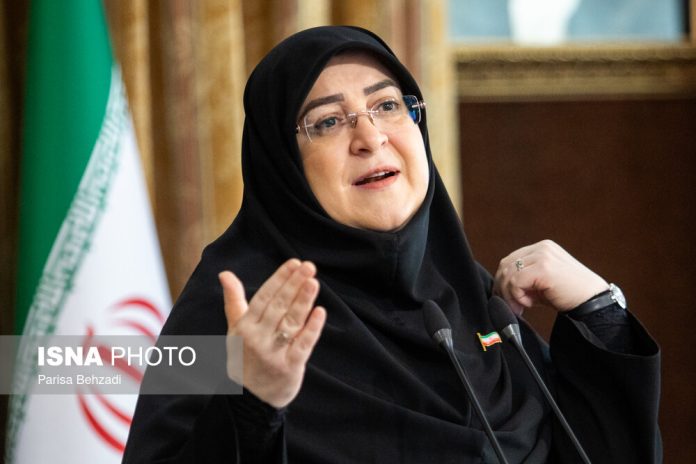
Govt. spokeswoman: War, negotiation both strategic tools in Iran’s foreign policy

Her comments came as the Foreign Minister also reiterated the importance of continuing dialogue with international counterparts.

Mohajerani thanked the people for their patience during the difficult past year and explained that the cabinet was effectively formed in wartime, immediately facing severe economic imbalances.

She noted that the government chose transparency with the public rather than concealment.

Referring to the administration’s priorities, she underlined that education justice is central, with nearly fifty meetings between the President and education officials focused on improving public schools. On the pursuit of social calm, she emphasized honesty with citizens even on difficult issues such as power cuts.

Responding to people’s concerns, Mohajerani said the government prioritized not cutting electricity to industries to preserve jobs, while promoting solar energy and repairs to power plants.

On livelihoods, she pointed to food coupons as a relief measure. Addressing internet filtering, she admitted costs had risen due to restrictions, noting the government is working to lift them, though some platforms remain blocked.

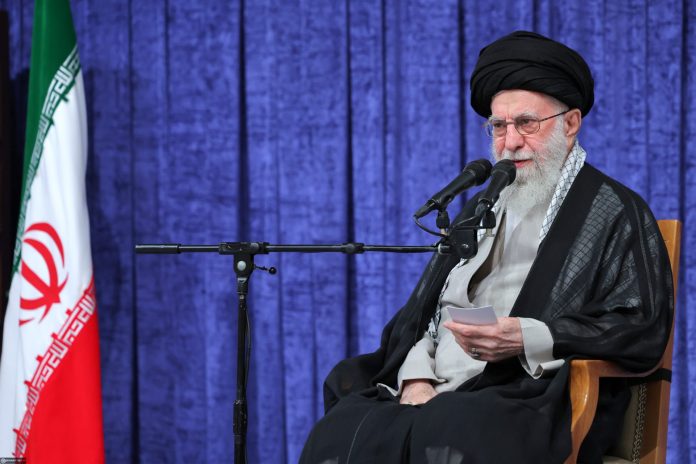
Iran’s Leader rejects US pressure, calls for unity amid regional tensions

Speaking during a ceremony marking the martyrdom anniversary of the eighth Shia Imam, Ali ibn Mussa al-Reza, Ayatollah Khamenei criticized those advocating direct talks with Washington, calling them “short-sighted,” and said Iran’s firm stance has foiled hostile plans.

“Forty-five years of US hostility, sanctions, threats, and pressure, all stem from one reason: they want Iran to take orders from them,” Ayatollah Khamenei said.

He condemned a meeting held in a European capital a day after the recent Israeli attack on Iran, where “opponents of the Islamic Republic discussed finding a replacement government for Iran.”

Calling the gathering “foolish,” the Leader said, “the Iranian nation, standing with its armed forces, the government, and the system, dealt a strong blow to these plots.”

Ayatollah Khamenei urged unity among the public, government, and armed forces, describing it as a “steel shield” against external pressures.

“The enemies, after failing in their military confrontation, are now trying to create internal divisions,” he warned.

The Leader called for strong public support for the administration, particularly for “the hardworking and active president,” emphasizing that unity is essential to safeguarding the country’s sovereignty and national interests.

Highlighting Iran’s resilience, Ayatollah Khamenei reiterated that “insults and threats will only strengthen the nation’s determination” and vowed that Iran will continue to stand firm against foreign pressures while maintaining its independence.

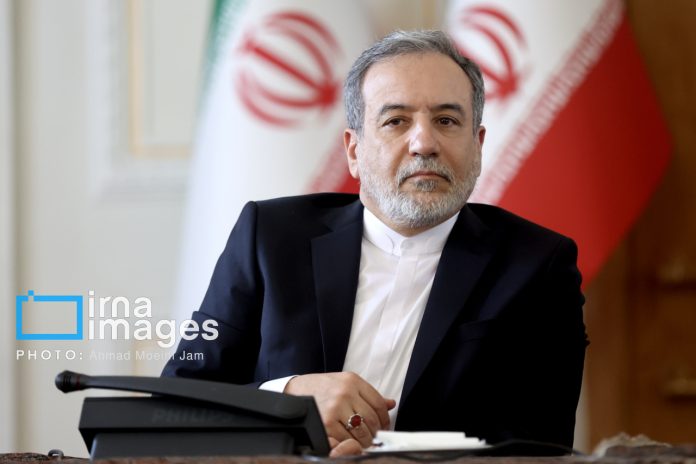
Iran FM urges Islamic nations to unite against “Greater Israel” threat

Abbas Araghchi

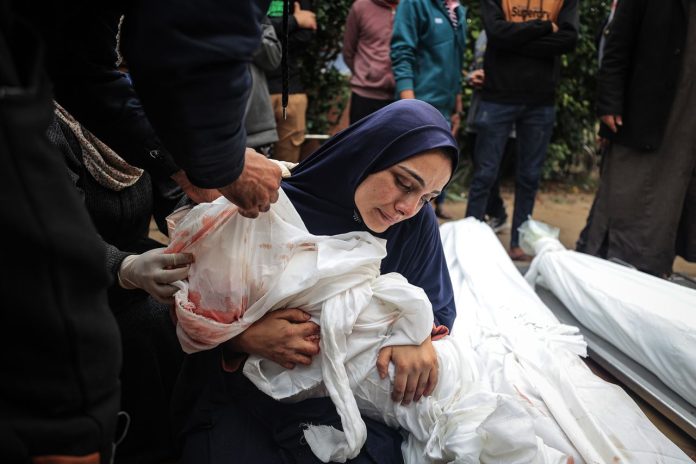
In an op-ed published by Asharq Al-Awsat ahead of an emergency meeting of the Organization of Islamic Cooperation (OIC) in Jeddah, Araghchi condemned “organized genocide and ethnic cleansing” by Israel in Gaza, with Western support enabling “unprecedented crimes.”

“The Zionist regime has turned Gaza into scorched earth, using starvation as a weapon and turning food distribution points into death traps for innocent civilians,” Araghchi wrote.

He said Israel’s actions in Gaza, the West Bank, Lebanon, Syria, and Yemen reflect an aggressive strategy aimed at regional domination under the notion of the so-called “Greater Israel.”

He urged the upcoming OIC summit to move beyond symbolic statements and adopt “decisive, coordinated measures,” including diplomatic pressure, international legal action, and economic and military sanctions against Israel.

Araghchi also called for the immediate creation of a UN- and OIC-supervised humanitarian corridor to deliver aid to besieged Gazans, adding that unity among Islamic nations is critical to safeguarding regional security and advancing the cause of an independent Palestinian state with Al-Quds as its capital.

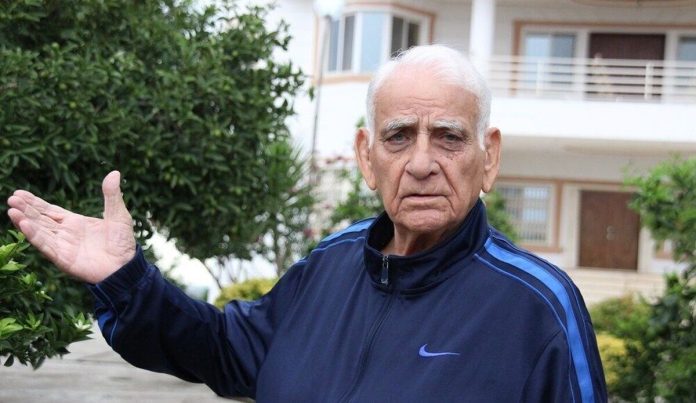
Iranian wrestling legend Emam-Ali Habibi passes away at 94

Born on May 26, 1931, in a village near Babol, Habibi, widely known as the “Tiger of Mazandaran,” began his wrestling journey with the traditional local style “Locho” before entering professional freestyle wrestling in the early 1950s.

Habibi made history at the 1956 Melbourne Olympics by winning gold in the 67 kg category, becoming the first Iranian wrestler to achieve the feat.

He later secured three world championship titles in 1959, 1961, and 1962, along with a gold medal at the 1958 Asian Games in Tokyo.

Renowned for his speed and mastery of techniques such as “one arm-one leg” and “head-and-arm,” Habibi was considered the fastest wrestler of his era.

His remarkable skills earned him a place in the United World Wrestling Hall of Fame in 2012, and since 2010, an international tournament in northern Iranian province of Mazandaran, his hometown, has been held in his honor.

After retiring from competition, Habibi briefly coached new wresters.

Erdogan’s wife urges Melania Trump to speak up for Gaza’s children

Gaza War

Emine Erdogan asked Donald Trump’s spouse to write to Israeli Prime Minister Benjamin Netanyahu to show mercy to Gaza’s children.

In a letter presented to Russian President Vladimir Putin at the Alaska Summit earlier this month, she appealed to him to make peace in Ukraine for the sake of the children.

Turkey’s First Lady wrote: “I have faith that the important sensitivity you have shown for the 648 Ukrainian children who have lost their lives in the war will be extended to Gaza as well, where, in the span of two years, 62,000 innocent civilians, including 18,000 children, have been brutally killed.”

“As a mother, as a woman, and as a human being, I deeply share the sentiments expressed in your letter, and I hope that you will give the same hope to the children of Gaza, who also yearn for peace and tranquillity,” Emine wrote to Melania.

Turkey’s President Recep Tayyip Erdogan has tried to act as a mediator between Russia and Ukraine during the war, which is in its fourth year.

On Tuesday, he accused Israel of using hunger as a weapon in Gaza, stating the images coming from the Palestinian enclave were worse than “Nazi camps”.

The United Nations on Friday officially declared a famine in Gaza, which Netanyahu dismissed as a “blatant lie”.

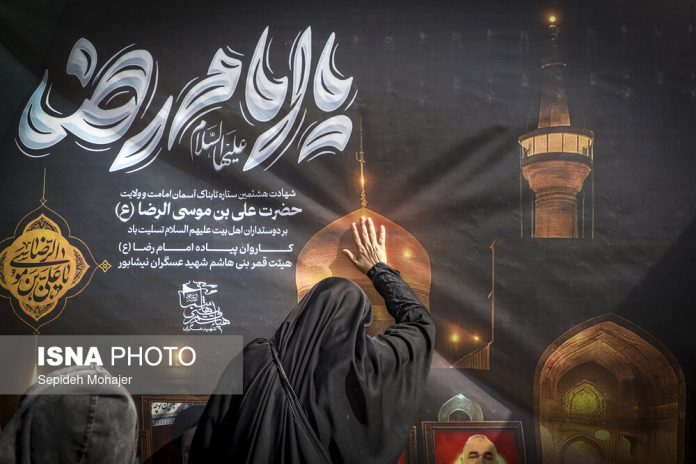
Iran observes martyrdom anniversary of Imam Reza with massive pilgrimage

The northeastern city of Mashhad, home to the revered Imam’s shrine, has become the focal point of mourning and devotion.

According to official reports, millions of pilgrims, including visitors from abroad, arrived in Mashhad by the eve of the martyrdom anniversary, on Saturday evening.

Among them, thousands made the journey on foot, a powerful gesture of reverence and spiritual commitment, as confirmed by the governor of Khorasan Razavi province.

Similar mourning rituals and gatherings are taking place in cities across the country, including Qom, where Imam Reza’s sister, Hazrat Masoumeh, is buried.

The nationwide observance reflects the deep emotional and religious significance of the occasion.

Imam Reza was martyred in 818 AD, poisoned by the Abbasid ruler Caliph Ma’mun. His martyrdom anniversary, which falls on August 24 this year, is recognized as a national holiday in Iran, drawing millions into collective remembrance.

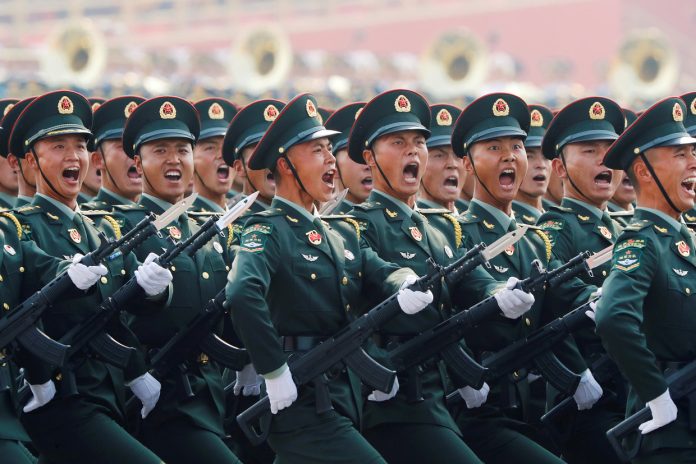
China ready to dispatch peacekeeping troops to Ukraine: Welt

China Army

However, China is prepared to do so only “if the peacekeeping forces were deployed on the basis of a mandate from the United Nations (UN),” the sources told Welt.

China is the latest country to wade into the discussion of what peacekeeping forces could be deployed to Ukraine in the future, and under what conditions, as U.S.-mediated peace talks between Russia and Ukraine stumble.

In the past week, the discussions have heavily focused on what security guarantees could be offered to Ukraine.

Ukraine has stressed the need for robust security guarantees backed by international support as part of any peace negotiations, noting that Russia has repeatedly violated its international agreements, including prior agreements to respect Ukraine’s sovereignty.

According to Welt, reactions to China’s announcement were mixed, with some believing that a coalition of countries beyond Ukraine’s traditional Western allies would make the prospect of peacekeeping forces more acceptable to Russia.

On the other hand, “there is also a danger that China primarily wants to spy on Ukraine and, in the event of a conflict, will take a clearly pro-Russian position instead of a neutral position,” a senior EU diplomat familiar with the ongoing discussions told Welt.

Sending foreign troops to Ukraine as part of support offered by a group of allies known as the “Coalition of the Willing” is one of several proposals that have been put forth to ensure that a ceasefire is respected in the event of a deal with Russia.

Around ten European allies are willing to send troops to Ukraine, Bloomberg has recently reported. The U.K., France, Lithuania, and Estonia have publicly declared their readiness to provide troops on the ground.

The United States has ruled out sending its own troops to Ukraine though has said it is open to offering other security guarantees.

Russia, however, has rejected the idea of stationing European troops in Ukraine. Doing so would amount to “foreign military intervention,” which Moscow won’t support, Russian Foreign Minister Sergey Lavrov has stated.

Pentagon barred Ukrainian long-range attacks in Russia with US missiles: WSJ

Russia Ukraine War

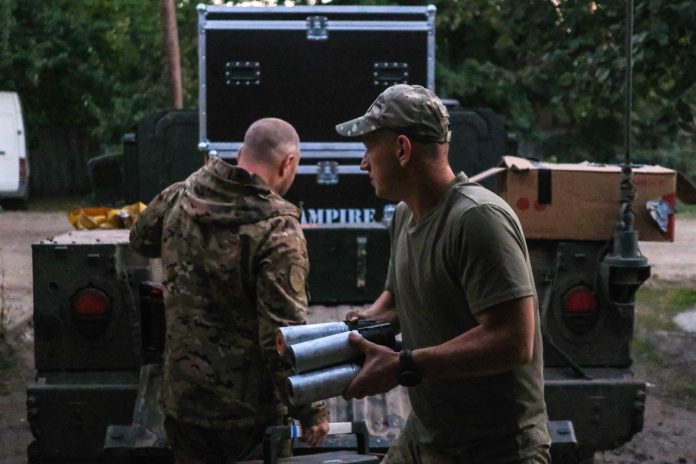
The unannounced high-level Defense Department approval process has prevented the use of Army Tactical Missile Systems (ATACMS) against targets inside Russia since the late spring, an unnamed official said.

U.S. President Donald Trump has said that Ukraine had “no chance of winning” if not permitted to attack Russia and criticized former U.S. President Joe Biden for not letting Kyiv “fight back, only defend.”

Despite this, Trump has previously stated he disagreed “very vehemently” with the previous White House administration’s decision to permit Ukrainian long-range strikes against Russia with U.S. weapons.

The review mechanism was developed by the Pentagon’s policy undersecretary, Elbridge Colby, and oversees Ukraine’s use of American-made weapons and European weapons, which rely on U.S. intelligence and components, WSJ reported.

In addition to the review process for missile strikes, a rating system has been reportedly implemented to assess whether the U.S. has enough stock of a particular weapon. Red, yellow, and green categories were introduced by Colby to help decide what weapons may be supplied to Ukraine.

The new review process applies to the British long-range Storm Shadow missiles due to its reliance on U.S. targetting data, a British offical and two U.S. officials said.

On at least one occasion, Ukraine has planned to use ATACMS against a target within Russian territory but was denied approval, two U.S. officials noted.

Ukraine last received a shipment of ATACMS authorized by the former White House administration in the spring, unnamed U.S. officials told WSJ.

Despite Trump’s recent remarks that Ukraine can not win the war against Russia without fighting back, U.S. officials have stated Trump’s statement does not signal a policy change. Trump may change his mind and permit expanded offensive operations against Russia, one senior White House official told WSJ.

Kyiv has proposed buying U.S. weapons worth $90 billion as part of security guarantees, as Ukraine and its allies aim to maintain interest from the White House.

The proposal aims to secure U.S. security guarantees and cement Washington’s long-term commitment to Ukraine by tying Kyiv’s defense needs to a boost for American industry.

The plan would reportedly be financed by Ukraine’s European allies, which would fund the purchase of U.S. weapons.

Ukraine first received shorter-range versions of ATACMS in the fall of 2023. In the spring of 2024, the U.S. began supplying upgraded models with a range of up to 300 kilometers. At the time, Kyiv was only permitted to deploy these missiles against targets in occupied Ukrainian territory.

Trump again threatens Russian sanctions if Ukraine war doesn’t end

Trump

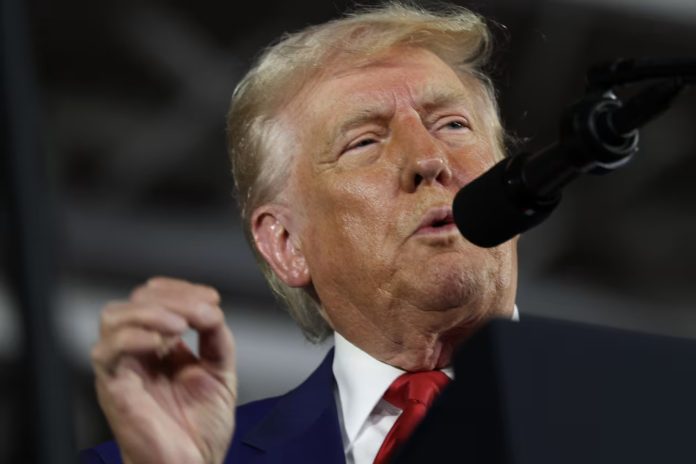
“I’m not happy about anything about that war — nothing, not happy at all,” Trump said Friday, adding, “I think over the next two weeks, we’re going to find out which way it’s going to go. And I better be very happy”.

He said he would then make a decision “whether or not it’s massive sanctions or massive tariffs or both — or do we do nothing and say, ‘it’s your fight’”.

The threat, which came in response to questions from reporters in the Oval Office, is the latest case of Trump’s whipsawing stance toward Russia and Putin. Trump had demanded a ceasefire before he met with Putin in Alaska a week ago, but said after the meeting he was hopeful about the prospects for a deal.

But the likelihood of a truce dimmed again in the days since the summit, with Russian officials noncommittal about a possible meeting between Putin and Ukrainian President Vladimir Zelensky.

Officials have also said Russia should have a say in security arrangements for Ukraine.

Speaking at a news conference with NATO Secretary General Mark Rutte in Kiev on Friday, Zelensky reiterated his readiness for both a bilateral leaders’ meeting with Putin as well as a trilateral format including Trump.

“He is currently the only person who can stop Putin,” Zelensky said in Kiev.

It wasn’t immediately clear how seriously to take the latest threat.Trump often suggests that something will happen in “two weeks” when he’s looking to buy time. Last month, Trump threatened 100% tariffs on Russia if it did not comply with his calls for a truce, and on July 28, he gave Russia 10 days to reach a ceasefire with Ukraine.

That deadline came and went without action. And Trump’s own team has offered contradictory views about possible sanctions.

In an interview with NBC News last Sunday, Secretary of State Marco Rubio stated he didn’t think “new sanctions on Russia are going to force him to accept the ceasefire”.

Even as Trump threatened Russia anew on Friday, he held up a photo of himself and Putin from their Alaska summit and said he would sign it for the Russian leader. Trump also raised the possibility Putin could attend the 2026 World Cup, which is being held in the US, Mexico and Canada.

“He’s been very respectful of me and of our country, but not so respectful of others,” Trump said, adding, “That’s a man named Vladimir Putin, who I believe will be coming, depending on what happens.”

The Russian leader on Friday also offered praise for his US counterpart, calling the Alaska summit “just the start of a full recovery of our relations”, with the US. However, the outcome depends on numerous Western nations and the US is “bound by its obligations” to its partners, including NATO, he noted.

“But I am sure that leadership qualities of the current president, President Trump, are a good guarantee that the relationships will be restored,” Putin stressed at a meeting with nuclear scientists in the city of Sarov, where the first Soviet nuclear bomb was made.

Meaningful negotiations possible only if West acknowledges war threats will not work against Iran: Security chief

Ali Larijani

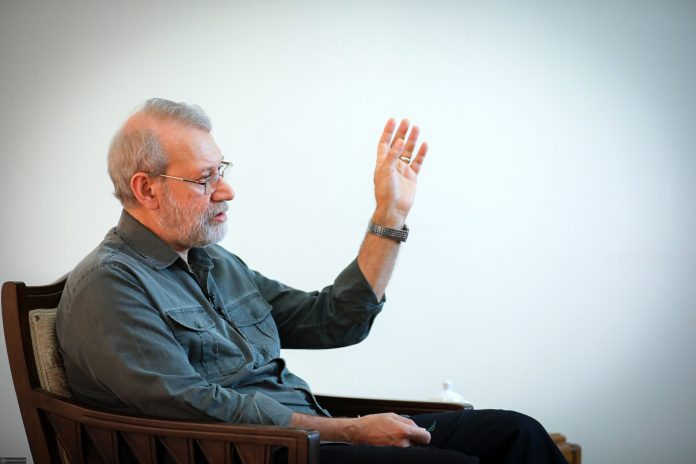
In a recent interview with the website of Islamic Revolution Leader Ayatollah Seyyed Ali Khamenei, Larijani, who serves as the Secretary of Iran’s Supreme National Security Council, emphasized that diplomacy remains a central tool for the Islamic Republic, but only when conducted in good faith.

“My advice has always been that Iran must never abandon diplomacy, because diplomacy itself is a tool,” he stated.

“The Islamic Revolution Leader has also asserted that the flag of negotiation must always be held in our hands. That is absolutely correct.”

Larijani, however, cautioned that negotiations cannot succeed if the West uses them as cover for hostile actions.

“If the enemy turns the diplomatic scene into a theater, or uses it merely to justify another course of action, then that is not diplomacy,” he stated, adding, “But if diplomacy means that we realize war is useless and we want peace, then that is real diplomacy.”

Iran’s mistrust of the United States and its allies has deepened in recent weeks. On June 13, the Israeli regime carried out an unprovoked strike against Iran, assassinating senior military commanders, nuclear scientists, and civilians.

Less than ten days later, the US officially entered the war by bombing three peaceful nuclear facilities, which were safeguarded by the International Atomic Energy Agency, in clear violation of the UN Charter and the Non-Proliferation Treaty (NPT).

These attacks came even as Iran and the United States, with Oman’s mediation, had held five rounds of indirect nuclear negotiations since April and were preparing for a new round of talks in Muscat on June 15.

Against this backdrop, Larijani pointed out that the West has exploited diplomacy as a tactic rather than a genuine avenue for peace.

“I feel that the diplomacy they are pursuing is just for creating excuses,” he said. “We must not say we are cutting off diplomacy… [but] real negotiations bear fruit only when the other side understands that war is useless.”

Larijani was clear about Iran’s red lines. “If you are seeking war, then go ahead. Whenever you regret it, come for negotiations,” he said.

“But if you truly understand that this resilient nation cannot be forced into submission, then there is a basis for real talks.”

He pointed out that Western rhetoric about pressuring Iran into surrender has already proven hollow. “In this war, they themselves realized that Iranians are not the kind to surrender,” he added.

Asked about Iran possibly leaving the NPT in case of increased pressure on the country, Larijani did not rule out the option.

“This possibility has always existed.”

“I’m not saying anyone will do it now, because this too must be approached with prudence… We are not pursuing a [nuclear] bomb, but the reality is that the NPT has brought us no benefit.”

He argued that what matters in the international arena is strength, not empty agreements.

“Whenever you act with power, you advance. But if you think problems are solved through mere diplomatic embrace, no, such a thing does not exist. If you have power, you will move forward; so Iran should seek power,” he added.

He also criticized European efforts to revive the so-called “snapback” mechanism, describing it as a threat that undermines constructive engagement.

He stated the European nations are effectively serving Washington’s agenda. “Their behavior is clear; they are carrying out part of America’s operation.”

Snapback mechanism would reinstate six UN Security Council resolutions against Iran, bringing back the expired arms embargo, asset freezes, and travel bans. Iran insists the European states have no legal or moral authority to invoke such measures, arguing that they failed to honor their commitments under the 2015 nuclear deal in the first place.

Larijani dismissed the approach by the European countries as both legally flawed and politically biased.

“This mechanism was meant for a party that failed to honor the JCPOA commitments. Who violated the agreement? Our facilities were bombed, yet they want to use snapback against us,” he said. “From the perspective of international law, the situation is tragic.”

He also pointed out procedural violations.

“If you want to use the snapback mechanism, you cannot go straight to the [UN] Security Council. First, you submit your request, then a panel of experts, then ministers evaluate it. Yet they rushed directly to the Council,” Larijani explained.

Larijani argued that the logical way forward is through genuine dialogue, not pressure. “The reasonable path was to solve the issue through negotiation,” he said. “But they want to solve it through pressure — either the American way with bombings, or the European way with threats.”